Description
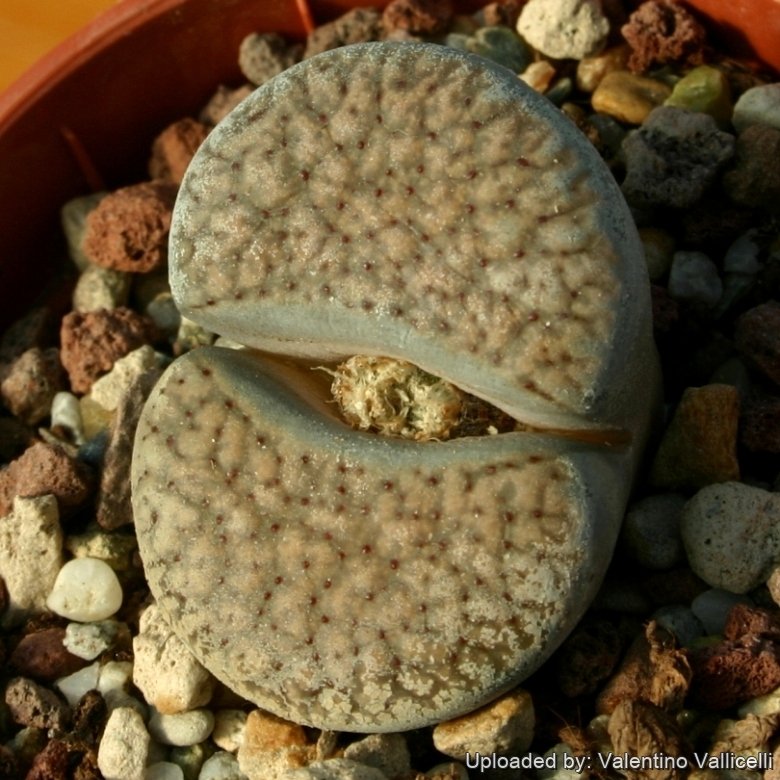
Lithops inae (=Lithops verruculosa) is recognizable for the characteristic small shiny red verruculae or pimples on the face, and shows a large variety of flower colours. It form small groups up to 8 or more heads (usually 2-4). Lithops inae should be distinguished for the mostly greyish green top face with blood-red dots tucked into its grooves, but the difference with Lithops verruculosa are so minimal that’s impossible to tell one apart from the other.
Desmond Cole field number C196: This population is quite similar to the standard variety but with a peculiar dark bluish-pink colour.
Origin and Habitat
85 km S of Pofadder, South Africa
Cultivation and Propagation
Need an open mineral, fast draining mix and the maximum amount of light you are able to give them. The basic cultivation routine is: Stop watering after flowering. Start watering after the old leaves completely dry. (Usually late March or Early April) Water freely during the growing season, soak the compost fully but allow it to dry out between waterings, no water when cold. Some growers fertilize frequently, some hardly ever. Keep them dry during the winter. Nearly all problems occur as a result of overwatering and poor ventilation especially when weather conditions are dull and cool or very humid. This plant is best for a well lit area (Bright shade to full sun).
Remarks: After flowering in the autumn and extending through winter season the plant doesn’t need watering, but they will still be growing, the new bodies will be increasing in size extracting water from the outer succulent leaves, allowing them to shrivel away. In fact the plant in this time extracts water and nutrient stored in the outer succulent leaves, allowing them to dehydrate relocating the water to the rest of the plant and to the new leaves that form during this period until the old leaves are reduced to nothing more than “thin papery shells”.
Notes
Lithops are partly subterranean, with only the clear ‘window’ in each leaf tip exposed above soil. A type of optical system exists whereby a layer of apical tissue rich in calcium oxalate crystals acts as a filter to intense sunlight before it reaches the thin chlorophyllous layer below. They are also called mimicry plants as they show a striking similarity to their background rocks and are difficult to detect when not in flower. These are the commonly known as pebble plants or living stones; each species is associated with one particular type of rock formation and occurs nowhere else. Its soil-embedded, subterranean growth form also reduces the need for chemical defences against herbivores.
Gallery