Publication: Cact. Suc. Mex. 12: 13. 1967
Description
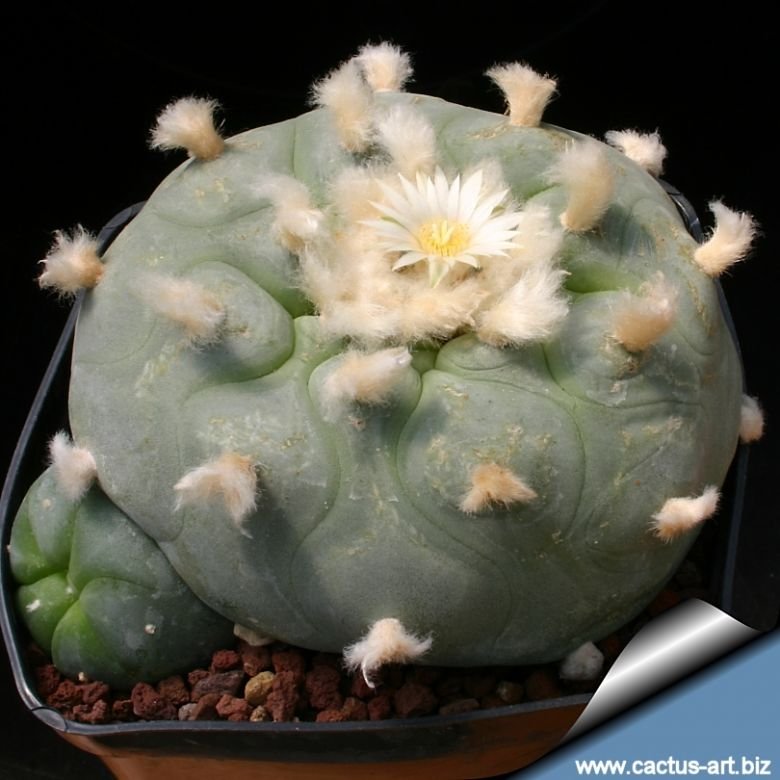
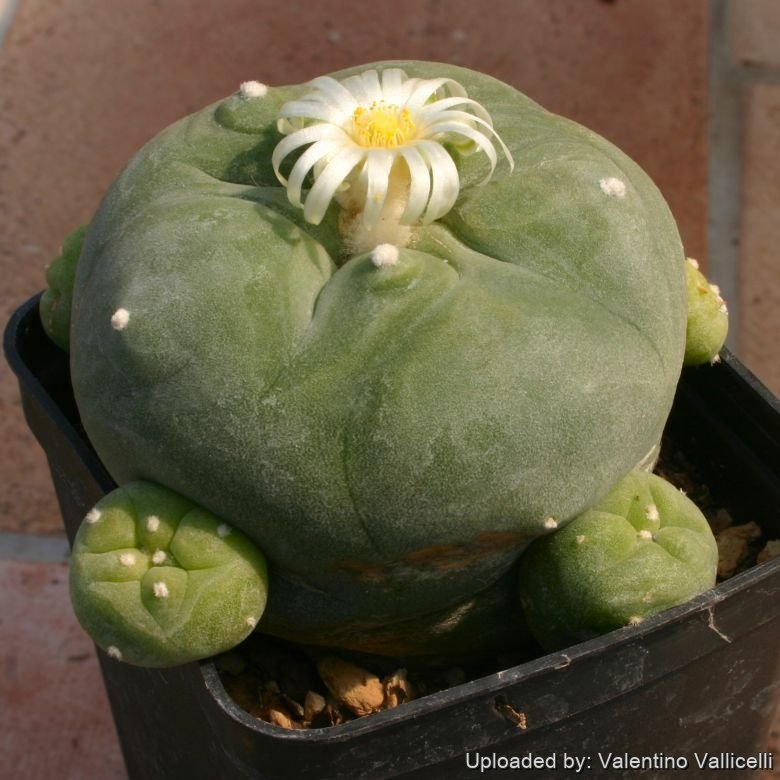
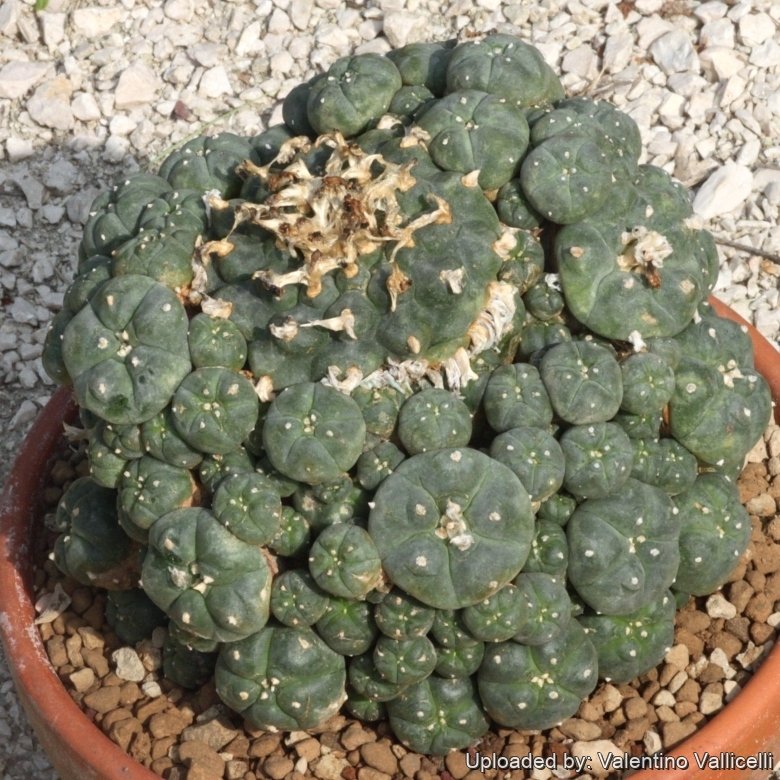
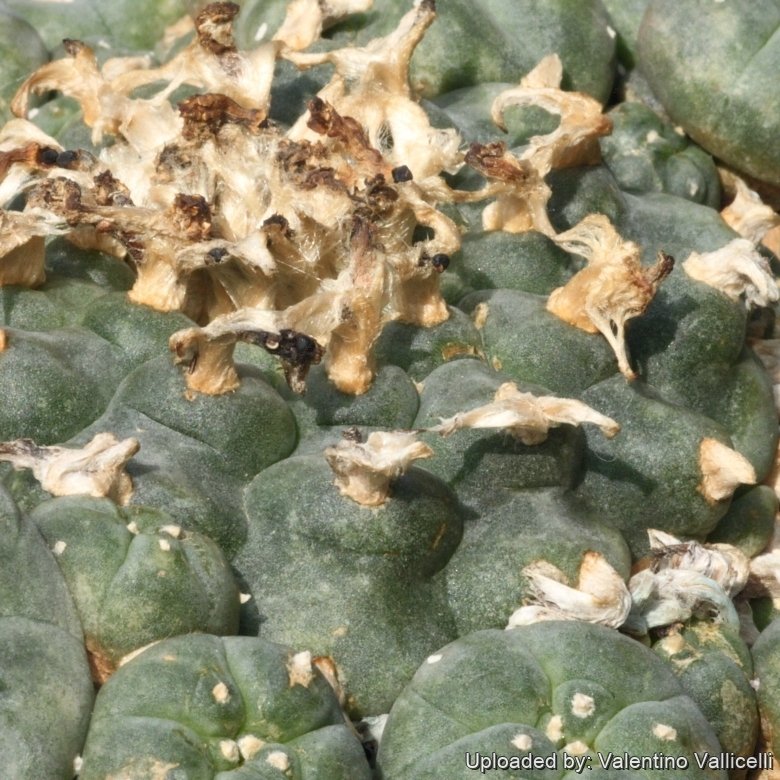
Globular spineless cactus with large tap root. Solitary or forming variable stemmed clumps with few stems or sometime large mounded group with several heads. This is the more primitive species of Lophophora.
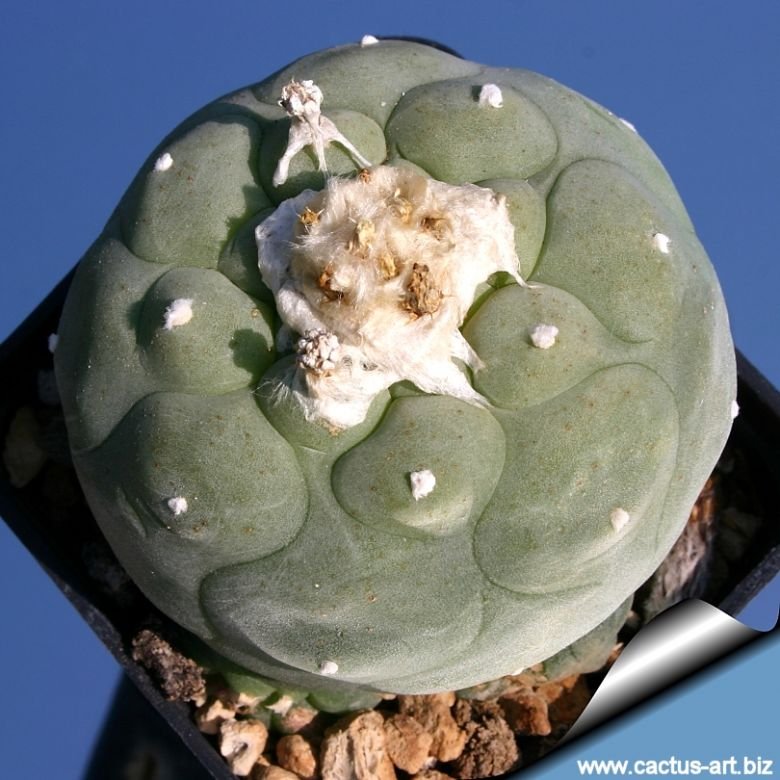
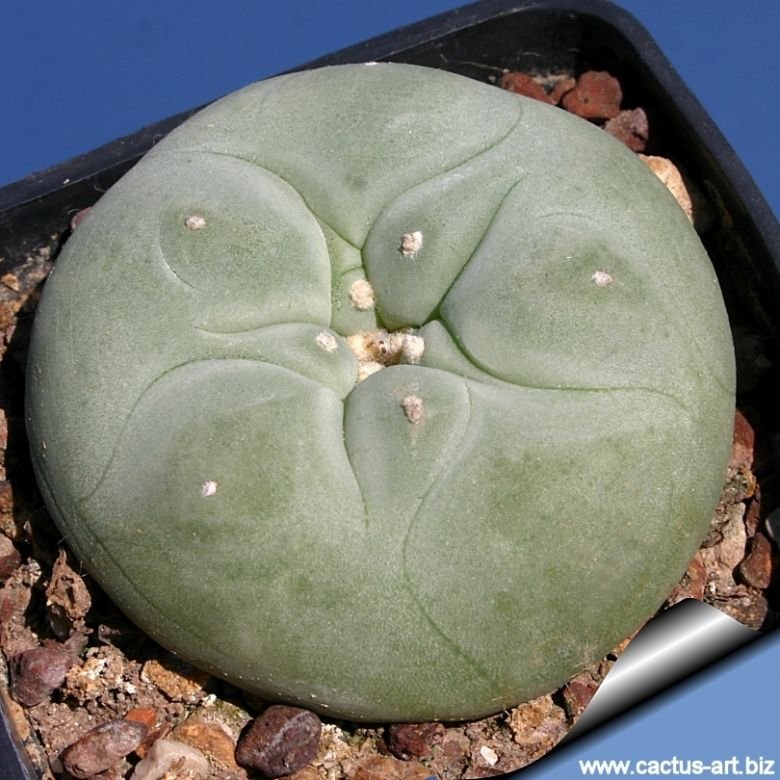
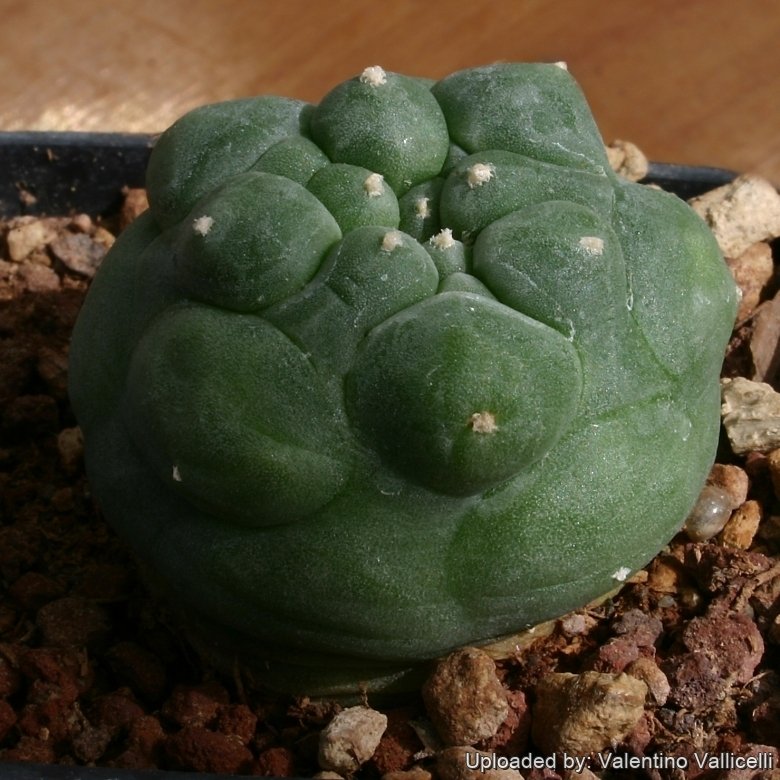
Stem: 2-7 cm tall, 5-12 cm in diameter (some population have larger stems up to 20-25 cm in diameter) Yellow-green or grey-green, usually lacking well-defined ribs and furrows.
Ribs: 5 to 13 the podaria are rarely elevated, wavy, broad and flat.
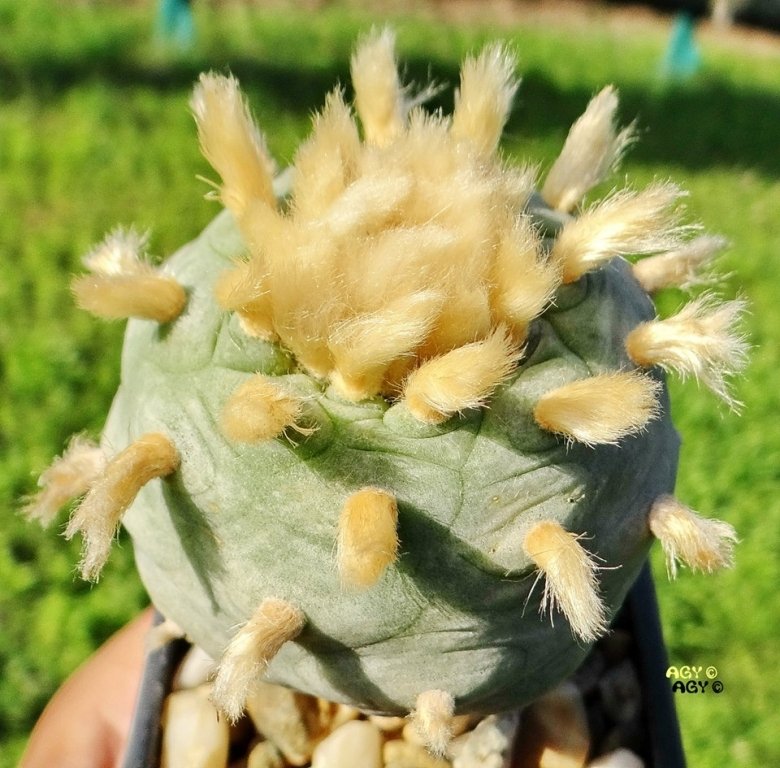
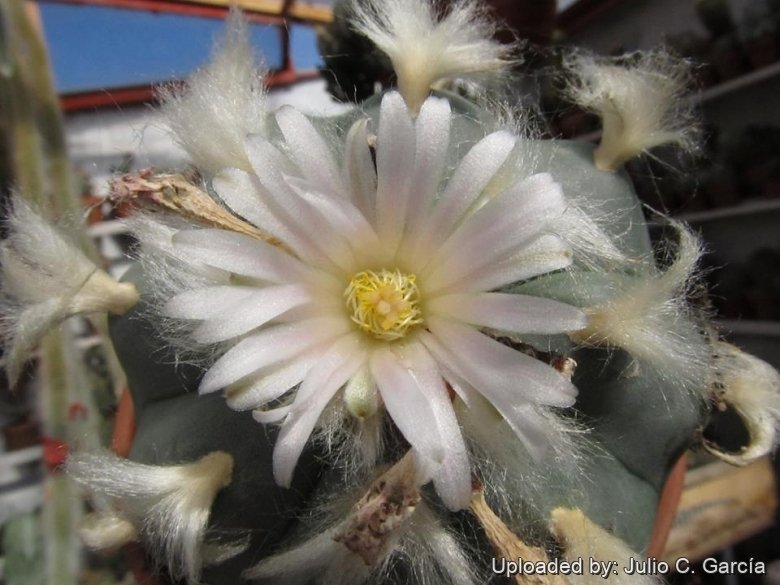
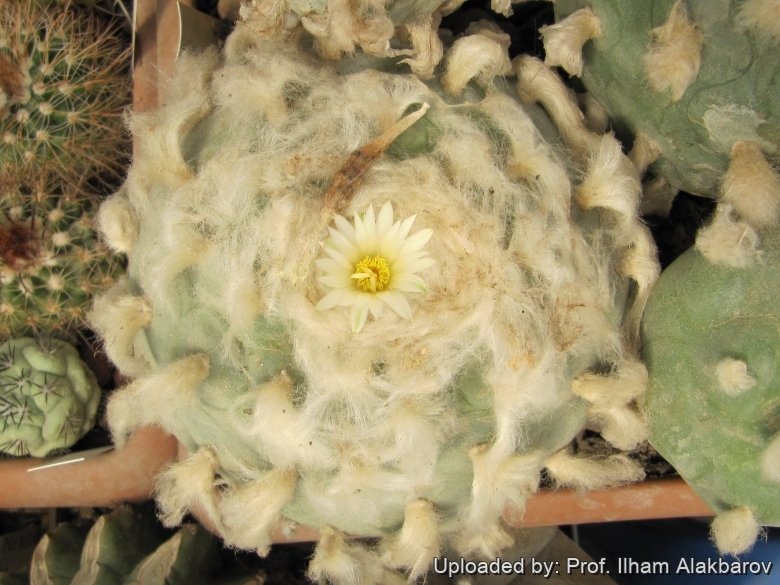
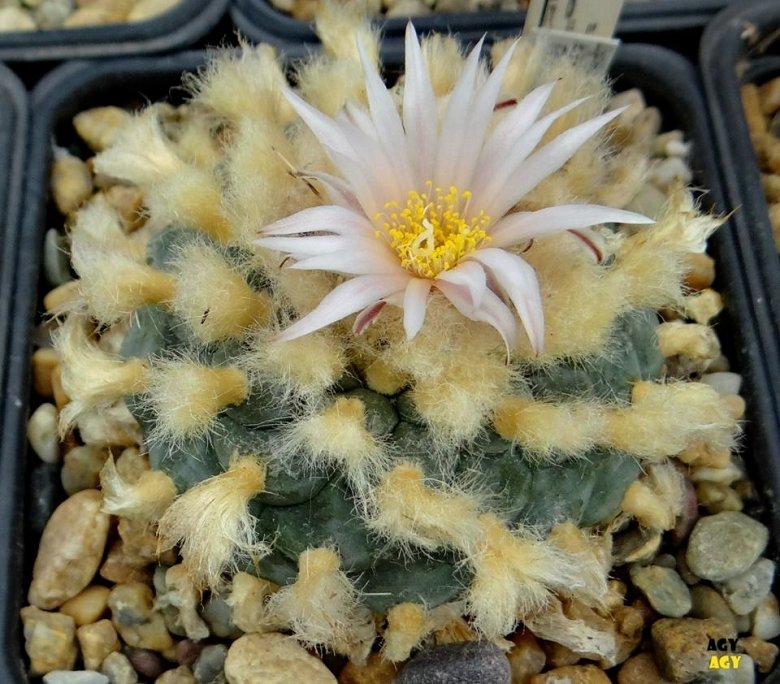
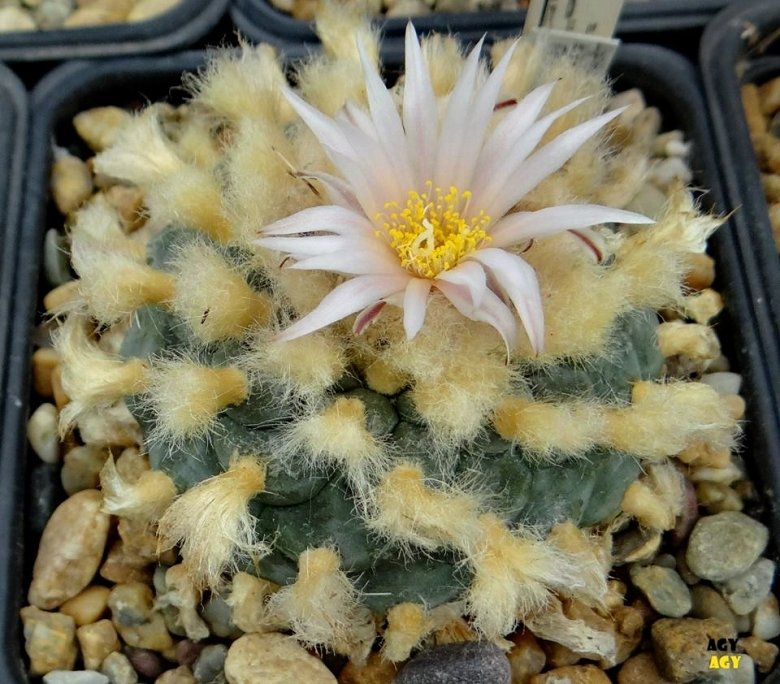
Areoles: With tufts of hairs that usually spread unequally on the prominent podaria.
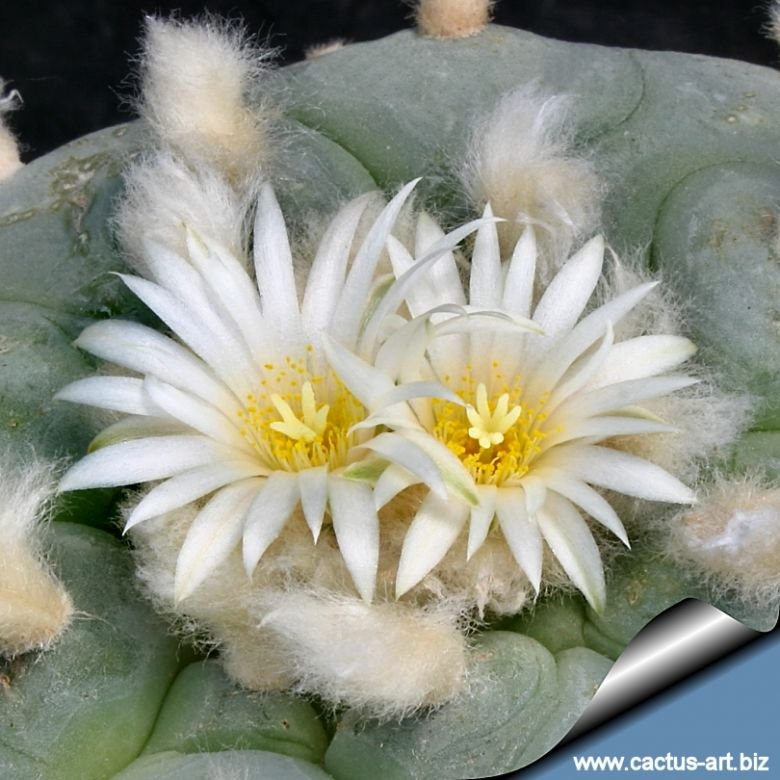
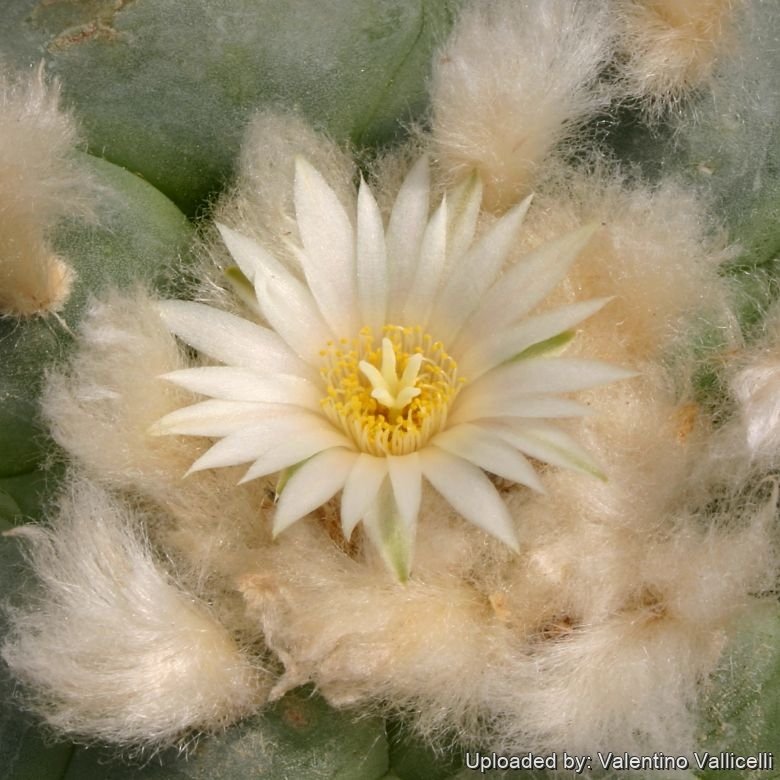
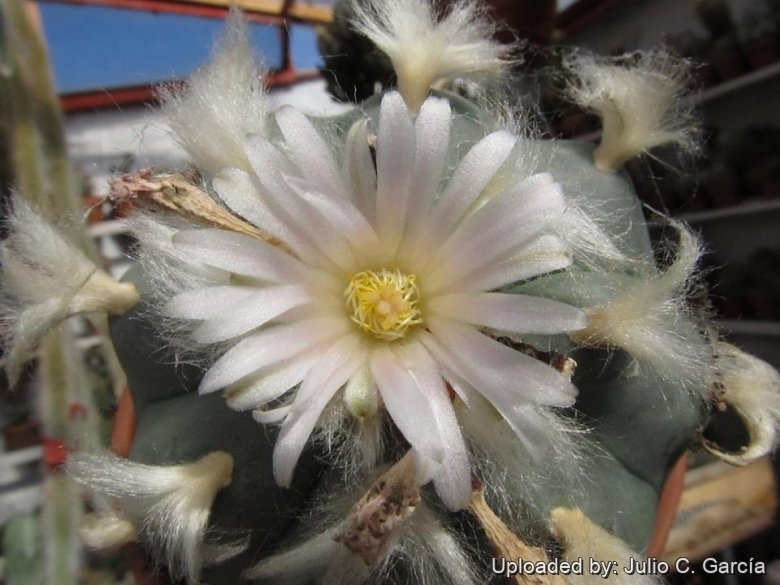
Flowers: Commonly whitish to yellowish-white (or pinkish white), 1,5-3 centimetres in diameter.
Note: Lophophora diffusa is geographically isolated, but questionably distinct from Lophophora williamsii.
Origin and Habitat
This is the southernmost population of Lophophora endemic of the of the state of Querétaro, México it grows only in a small area in the hight desert in a valley between Vizarron, Bucareli, and Toliman (Extent of occurrence about 300 km²). L. diffusa occurs at the south end of the range of the genus.
Altitude: It grows at an elevations of 1,300 to 1,800 metres above sea level.
Habitat and Ecology: Driest and stoniest desert Xerophytic shrubland, on calcareous soils where the soil is deep enough to allow the tuberous root to grow. L. diffusa grows mainly beneath the canopy of some locally dominant shrub and possible nurse plant (e.g. Larrea tridentata and Acacia sororia). The species is threatened by illegal collecting and use by indigenous people for medicine, and by collectors for ornamental trade.
Cultivation and Propagation
Slow growing Requires half shade in summer, full sun the rest of the year.
Grow it in a narrow and deep container to accommodate the tap root, they are very rot prone, so use highly gritty compost with much drainage.
Waterings should be rather infrequent to keep the plant compact and not to become excessively elongated and unnatural in appearance, watering it properly is often difficult because this plant tends to crack open or rot if over-watered. The fact that the plant retracts into the soil and assume a grey-green colouring between watering, is perfectly natural and doesn’t cause any damage.
Like other arid zone cacti, they require a dry and cool over-wintering otherwise they may succumb to rot. It also promotes flowering. Assure a good ventilation.
Propagation: Seeds.
Seed should be sown in spring in sterile cacti mix. Cover with a humidity dome or plastic wrap and leave in a warm spot in 50-75% shade. Fluctuating temperatures are best (ie. high day temperature and low night temperature) as they simulate the desert environment.
Keep constantly humid as seedlings cannot survive if to dry. Seedlings will emerge in 7-21 days and can be grown in the same environment for a number of months. Mulch with thin layer of small quartz gravel (1-2mm diameter) this helps them stay upright, hinders algae growth and regulates moisture. As they get older the watering can become less frequent. Potting up can be done when 5-10mm in diameter.
Notes
This is a relative of Lophophora williamsii, the true Peyote. It has many morphological and chemical differences and does not contain the same substances as L. williamsii. This species contains none to trace amounts of mescaline as the Peyote. But it does contain a lot of other alkaloids the principal of which is pellotine. It is not narcotic and is not specifically named in the law, and probably legal to possess.
Bibliography
Major references and further lectures
-
Gómez-Hinostrosa, C., Sánchez , E., Guadalupe Martínez, J. & Terry, M. 2013. Lophophora diffusa. In: IUCN 2013. “IUCN Red List of Threatened Species.” Version 2013.2. <www.iucnredlist.org>. Downloaded on 24 February 2014 .
-
Edward Anderson “The Cactus family” Timber Press, Incorporated, 2001
-
James Cullen, Sabina G. Knees, H. Suzanne Cubey “The European Garden Flora Flowering Plants: A Manual for the Identification of Plants Cultivated in Europe, Both Out-of-Doors and Under Glass” Cambridge University Press, 11/Aug/2011
-
David R Hunt; Nigel P Taylor; Graham Charles; International Cactaceae Systematics Group. “The New Cactus Lexicon” dh books, 2006
-
Edward F. Anderson “Peyote: The Divine Cactus” University of Arizona Press, 1996
From llifle page Lophophora echinata var. lutea
Description
Lophophora lutea (= Lophophora diffusa) is a globular spineless cactus with large tap root. Solitary or forming variable stemmed clumps with few stems or sometime large mounded group with several heads. This is the more primitive species of Lophophora. It is rare in cultivation:
Stem: 2-7 cm tall, 5-12 cm in diameter (some population have larger stems up to 20-25 cm in diameter), yellow-green or grey-green, usually lacking well-defined ribs and furrows.
Ribs: 5 to 13 the podaria are rarely elevated, wavy, broad and flat.
Areoles: With tufts of hairs that usually spread unequally on the prominent podaria.
Flowers: Commonly whitish to yellowish-white, 1,5-3 centimetres in diameter.
Note: Lophophora lutea (= Lophophora diffusa) is geographically isolated, but questionably distinct from Lophophora williamsii.
Origin and Habitat
Lophophora lutea (=Lophophora diffusa) is the southernmost population of Lophophora endemic of the of the state of Querétaro, México it grows only in a small area in the hight desert in a valley between Vizarron, Bucareli, and Toliman (Extent of occurrence about 300 km²). L. diffusa occurs at the south end of the range of the genus.
Altitude: It grows at an elevations of 1,300 to 1,800 metres above sea level.
Habitat and Ecology: Driest and stoniest desert Xerophytic shrubland, on calcareous soils where the soil is deep enough to allow the tuberous root to grow. L. diffusa grows mainly beneath the canopy of some locally dominant shrub and possible nurse plant (e.g. Larrea tridentata and Acacia sororia). The species is threatened by illegal collecting and use by indigenous people for medicine, and by collectors for ornamental trade.
Source: Lophophora echinata var. lutea, LLIFLE - Encyclopedia of living forms, CC-BY-SA, retrieved 2026-10-25.
From llifle page Lophophora koehresii
Description
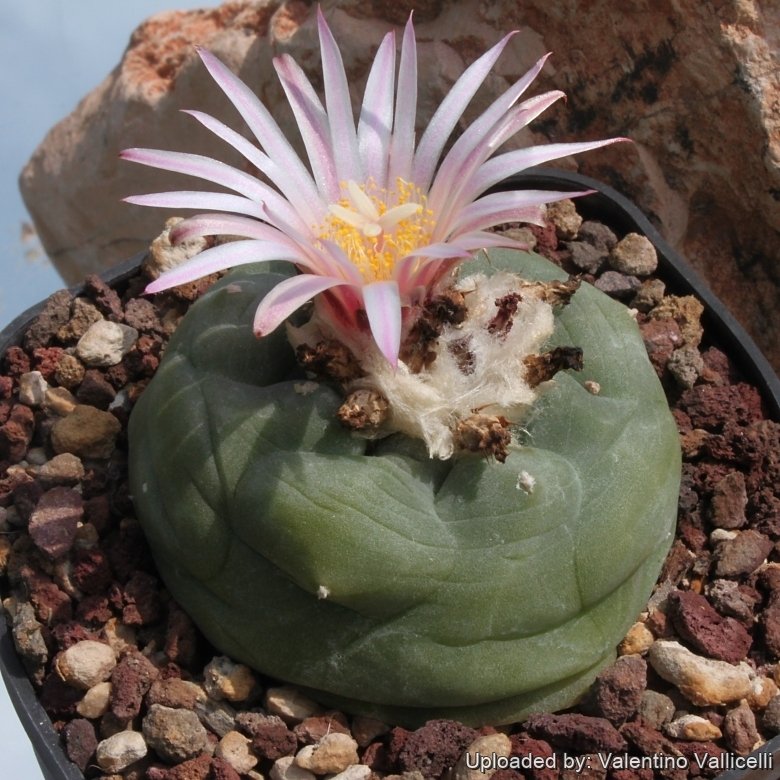
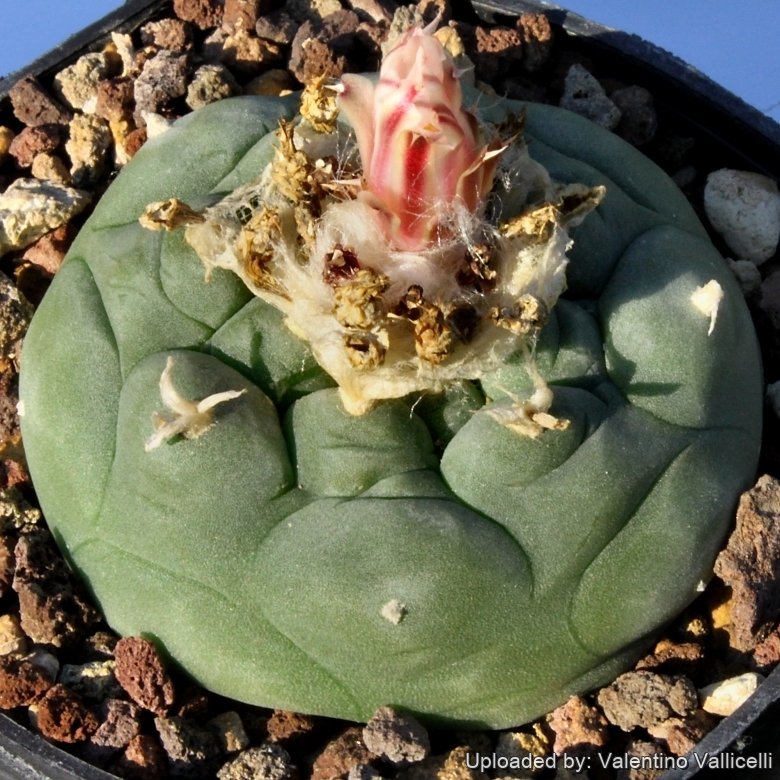
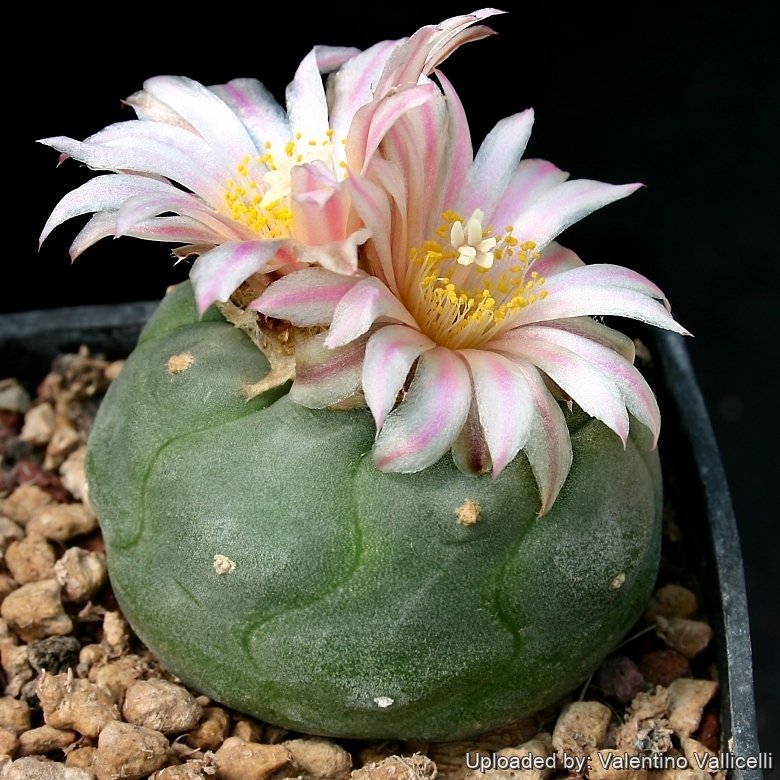
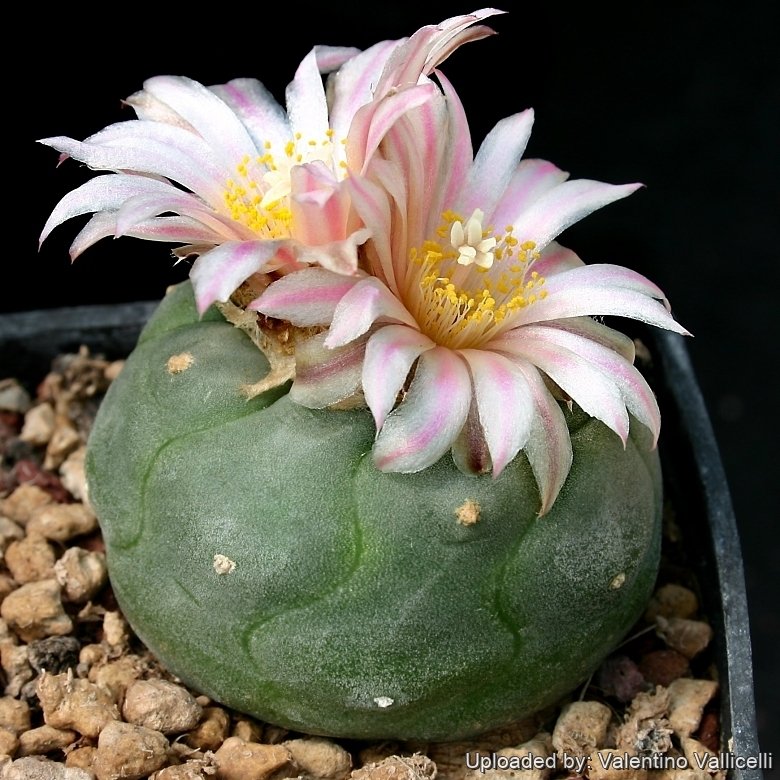
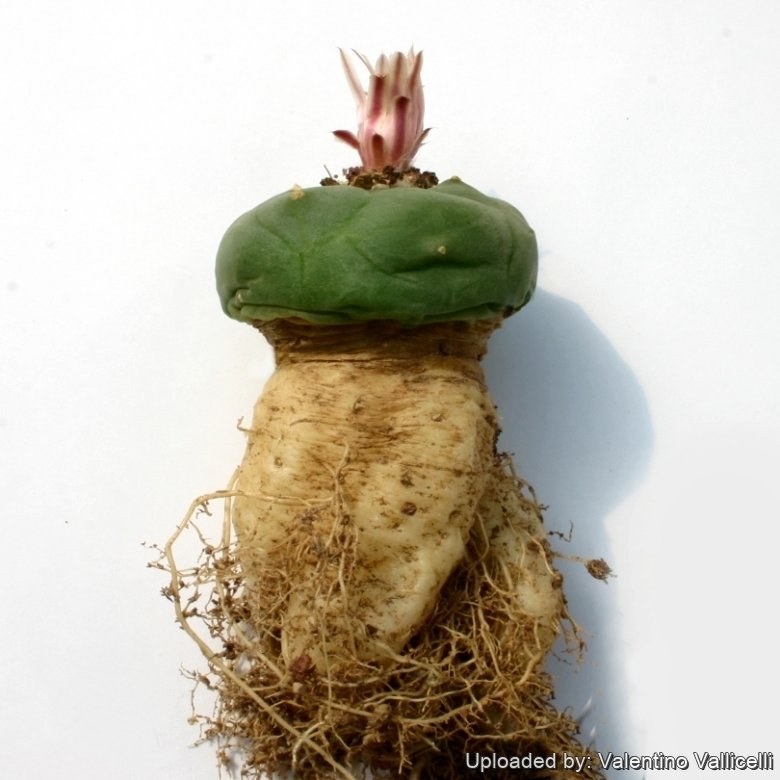
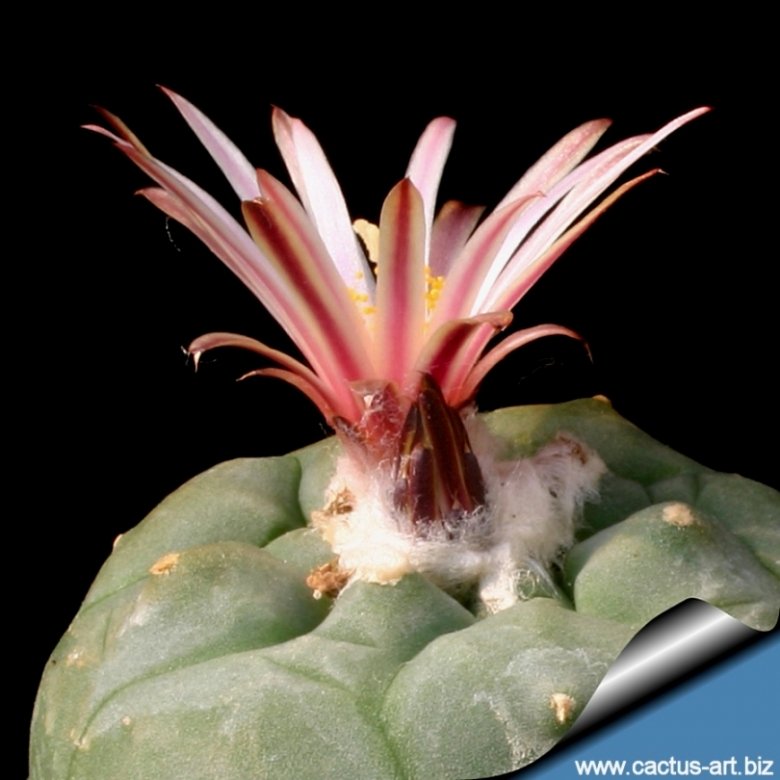
Lophophora diffusa var. koehresii is a globular spineless cactus with large tap root and very interesting flower with pink to brownish coloured strips. It differs from the closely related Lophophora diffusa by being a characteristically dark green colour. It is also a smaller size (smaller than any other plant within the entire Lophophora family), and the ribs are more strongly in relief. Although this species usually grows as a single headed plant in its native habitat, in cultivation with time, once a mature plant reaches 5-6 centimetres in width, pups do begin showing themselves.
Stem: 6-10(-12) cm in diameter. It has the darker skin tone than any other lophophora.
Root: It has a huge fat underground tap-root that greatly exceeds the size of the aerial stem. May be this is one of the largest and deeper tuberous roots, when compared to others within the genus of Lophophora of the same age. Although the tuber is one of the largest when compared to its body and stem it is indeed one of the smallest grower with dimensions of ten centimetres in diameter rarely reached.
Flowers: Pinkish to cream with a darker pink or brownish midrib, reaching over 3 cm in diameter. Unlike the somewhat wider flower petals of Lophophora diffusa and Lophophora williamsii, this variety has unusually thin petals. Like Lophophora diffusa, it is also self-sterile and requires cross pollination to produce seed.
Fruits: Creamy-white, often turning to a nice rosy pink. Each fruit containing twenty plus seeds.
Seeds: Lophophora koehresii has a seed testa structure completely different from the other lophophoras. The hilum is open and almost circular. The testa is reticulated, not nodulated. The individual cells of the testa almost merge.
Origin and Habitat
Lophophora diffusa var. koehresii grows around the outskirts of Queretaro Mexico spanning quite a bit further than Lophophora diffusa inhabiting a large flat basin (lagoon) between the Rio Verde in San Luis Potosi and Tula in Tamaulipas.
Altitude range: Around 1050 metres above sea level.
Habitat: This species is mainly restricted to shallow lake beds in the soft alluvial sediments of the drainless basin and becomes totally covered by water for days if not weeks at a time during the rainy season. During the dry season, L. Diffusa var. koehresii pull itself deep into the ground to a point of being completely buried until the rainy season appears.
Cultivation and Propagation
Slow growing, it requires half-shade in summer, full sun the rest of the year. Grow it in a narrow and deep container to accommodate the tap root. This species is quite resilient to the elements and possibly the most hardy within the “diffusa” group of plants.
Soil: Use highly gritty compost with much drainage.
Moisture: Waterings should be rather infrequent, to keep the plant compact and not to become excessively elongated and unnatural in appearance. Watering it properly is often difficult, because this plant tends to crack open or rot if over-watered. The fact that the plant retracts into the soil and assumes a grey-green colouring between waterings is perfectly natural, and doesn’t cause any damage.
Overwintering: Like other arid zone cacti, they require a dry and cool over-wintering; otherwise they may succumb to rot. This also promotes flowering. Assure good ventilation.
Use: Lophophora diffusa var. koehresii tends to maintain a smaller size than any other plant within the entire Lophophora genus, which makes it a nice window sill plant for many years without taking up much space.
Propagation: Seeds germinate quite readily and the plant is one of the easiest to grow within the Lophophora family as it seems to be quite resistant to rot. Seeds should be sown in spring, in sterile cacti mix. Cover with a humidity dome or plastic wrap and leave in a warm spot in 50-75% shade. Fluctuating temperatures are best (ie. high day temperature and low night temperature), as they simulate the desert environment. Keep constantly humid, as seedlings cannot survive if too dry. Seedlings will emerge in 7-21 days and can be grown in the same environment for a number of months. Mulch with thin layer of small quartz gravel (1-2mm diameter). This helps them stay upright, hinders algae growth and regulates moisture. As they get older, the watering can become less frequent. Potting up can be done when 5-10 mm in diameter.
Notes
This is a relative of Lophophora williamsii, the true Peyote. But although this species has many morphological and chemical differences, it does not contain the same substances as L. williamsii, it is not narcotic, it is not specifically named in the law, and it’s probably legal to possess (depending on local legislation).
Bibliography
Major references and further lectures
-
Cactus and Succulent Journal, Volume 81, Editions 1-6, page 299, 2009
-
Gómez-Hinostrosa, C., Sánchez , E., Guadalupe Martínez, J. & Terry, M. 2013. Lophophora diffusa. In: IUCN 2013. “IUCN Red List of Threatened Species.” Version 2013.2. <www.iucnredlist.org>. Downloaded on 24 February 2014 .
-
Edward Anderson “The Cactus family” Timber Press, Incorporated, 2001
-
James Cullen, Sabina G. Knees, H. Suzanne Cubey “The European Garden Flora Flowering Plants: A Manual for the Identification of Plants Cultivated in Europe, Both Out-of-Doors and Under Glass” Cambridge University Press, 11/Aug/2011
-
David R Hunt; Nigel P Taylor; Graham Charles; International Cactaceae Systematics Group. “The New Cactus Lexicon” dh books, 2006
-
Frank Valente “Growers Notes… New Species or Not?? Lophophora Diffusa var. koehresii” MagiCactus.com <http://www.magicactus.com/l\_d\_koehresii.html\> Web. 5 Jun. 2015.
Source: Lophophora koehresii, LLIFLE - Encyclopedia of living forms, CC-BY-SA, retrieved 2026-10-25.
Cultivars and forms (3)
Subspecies (1)
Gallery