Publication: Gartenflora 77: 69 1928
Description
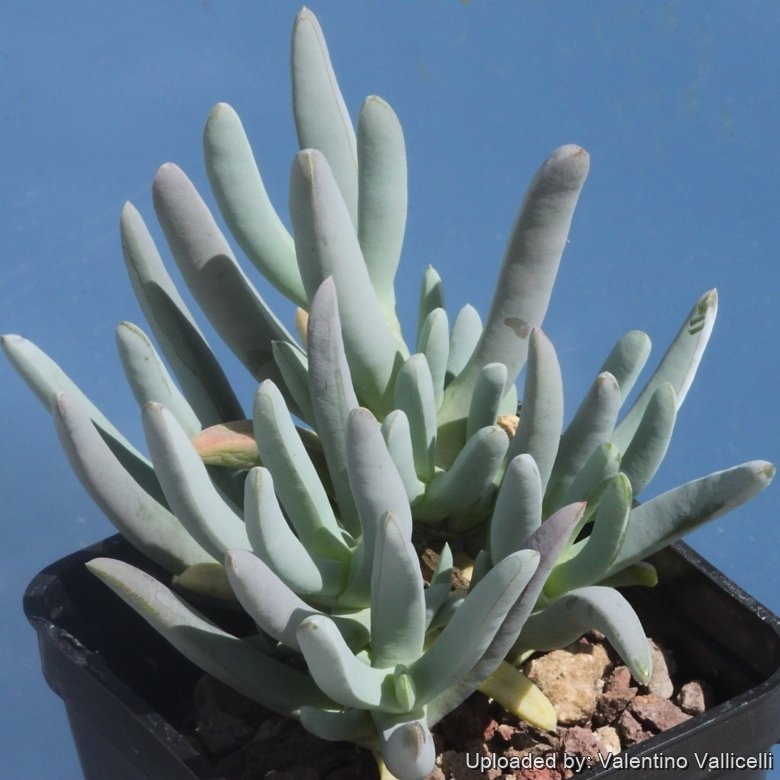
It is a highly branched shrub up to 30 cm tall that spreads into a broad rounded mass.
Stems: Many, very short, weak, at first erect then prostrate.
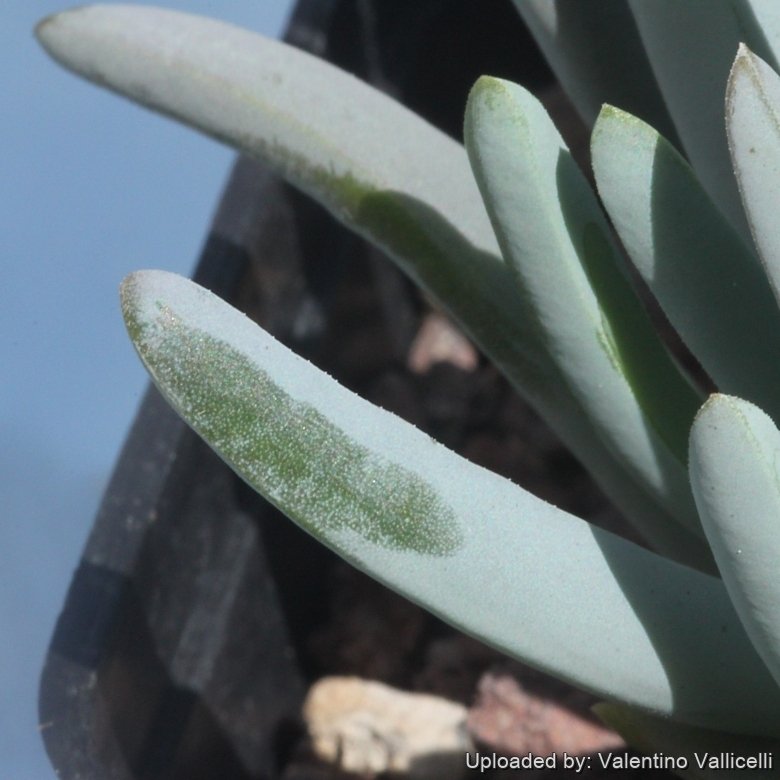
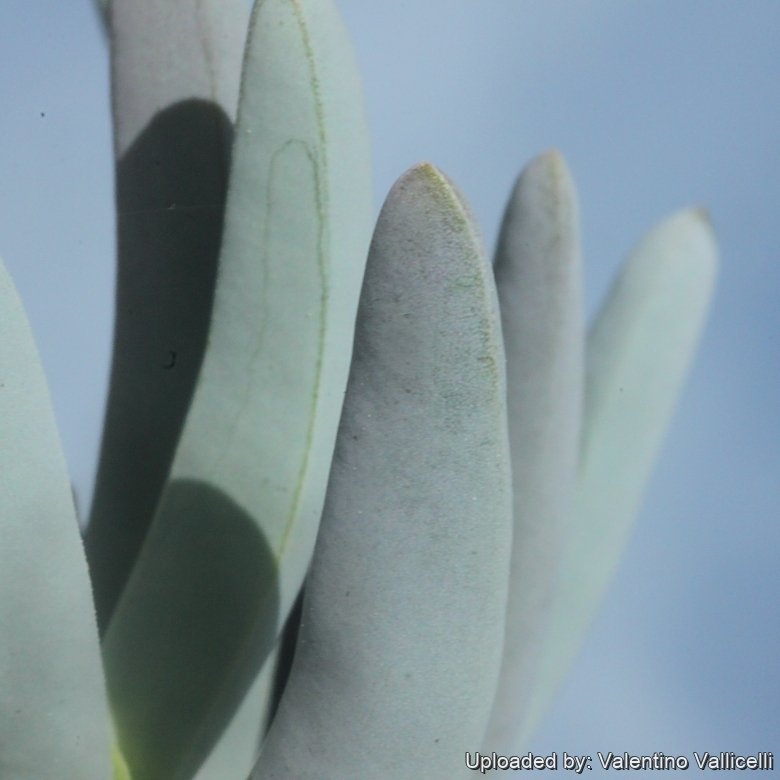
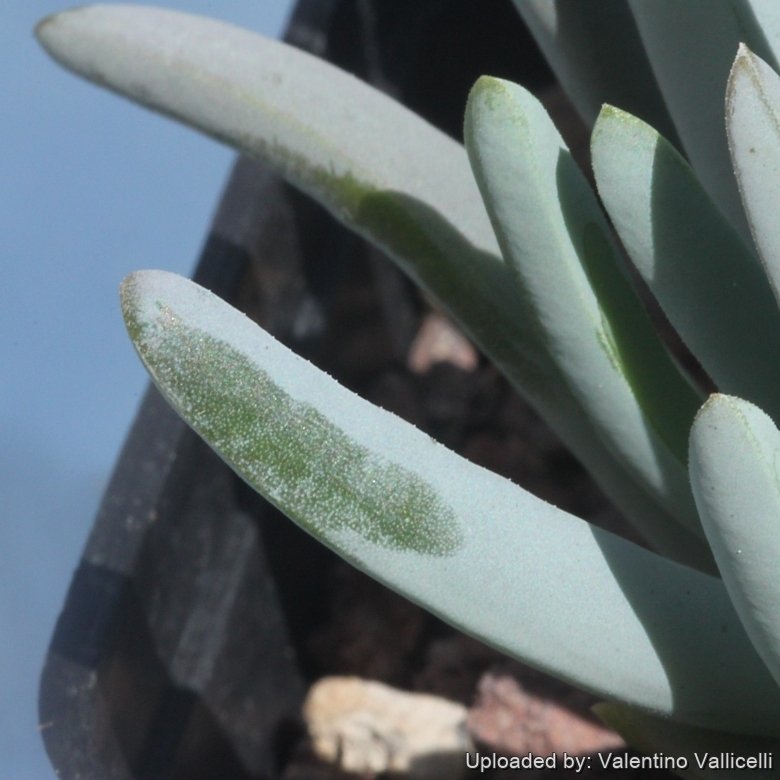
Leaves: Crowded on short shoots, 2,5-4,5 cm long 6 mm in diameter, terete, semicilindrical, slightly, 3-angled, compressed, blunt keel and point, smooth, grey green to blue green, bloomed with a very dense blue layer of wax that can be rubbed-off easily a finger.
Flower stalk: 2,5-4,5 cm long.
Flower: Solitary, terminal, about 3 cm in diameter salmon-pink to reddish-purple.
Note: The similar Malephora crocea, with the adaxial surfaces of the petals yellow-orange and the abaxial surfaces purplish distinguish from Malephora purpureo-crocea with petals purplish on bolth sides.
Origin and Habitat
Northern Cape and Western Cape provinces, South Africa.
Altitude: 175-1100 m.
Cultivation and Propagation
The plants in this genus represent some of the more easily cultivated succulent species. Water moderately from early spring to the end of autumn, and keep the compost quite dry when the plants are dormant watering, only if the plant starts shrivelling (, but they will generally grow even in winter if given water) In areas prone to frost, grow in an intermediate greenhouse or conservatory, in pots of cactus compost, obtainable from good garden centres. Provide maximum light all the year round.
Propagation: Seeds or cuttings. Seeds can be sown in early to mid-spring and germinated in heated humid environment. Alternatively, use stem cuttings taken towards the end of summer.
USES: It is an easy-to-grow groundcover, ideal for low-maintenance and water-wise gardens. It can be used to control erosion on moderately steep areas. They are also recommended for highway plantings because their inconspicuous flowers do not distract motorists.