Publication: Blätt. Kakteenf. 1937(2): [3] genus 131, sp. 7 (fig.). as Mamillaria
Description
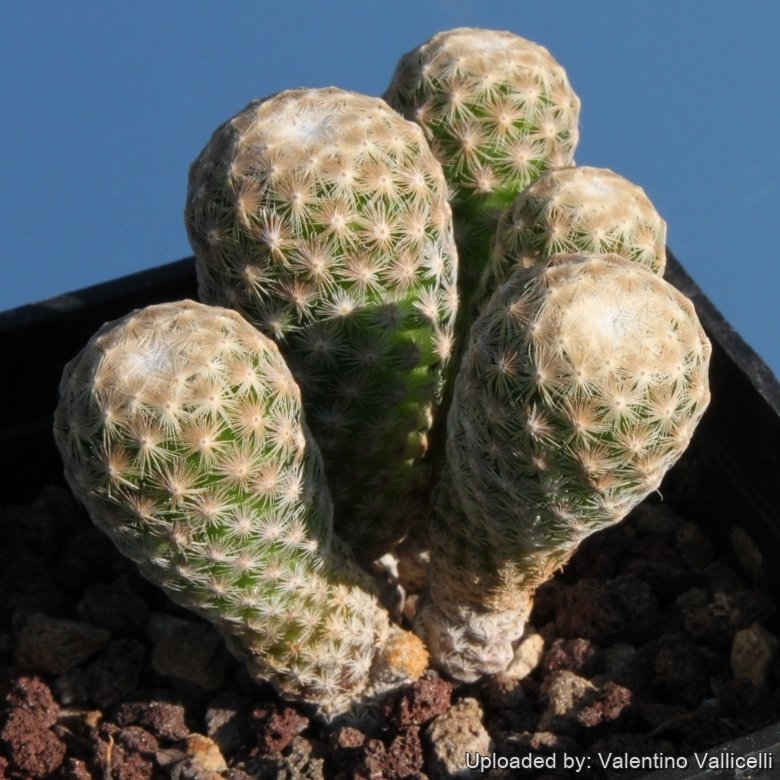
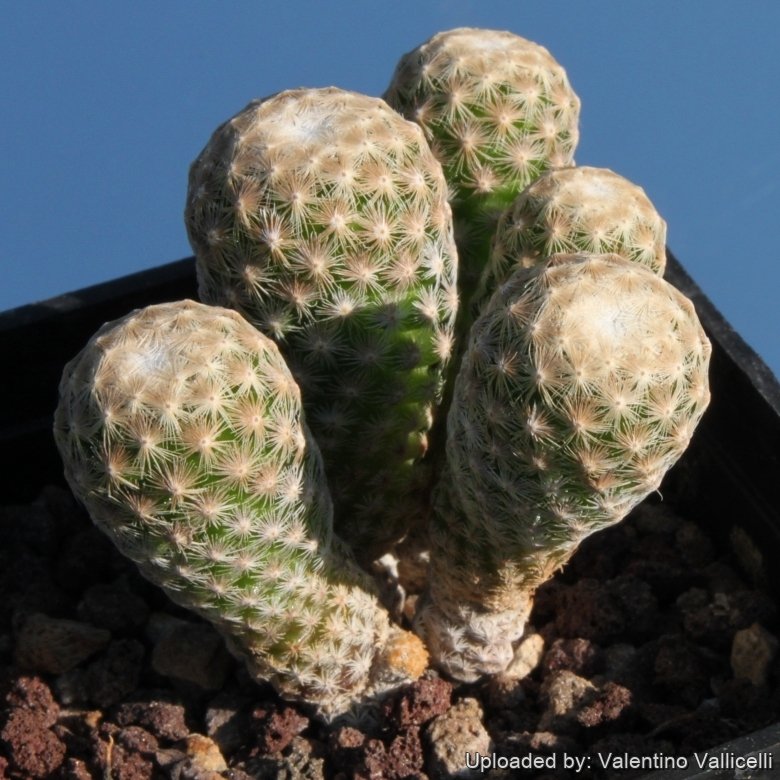
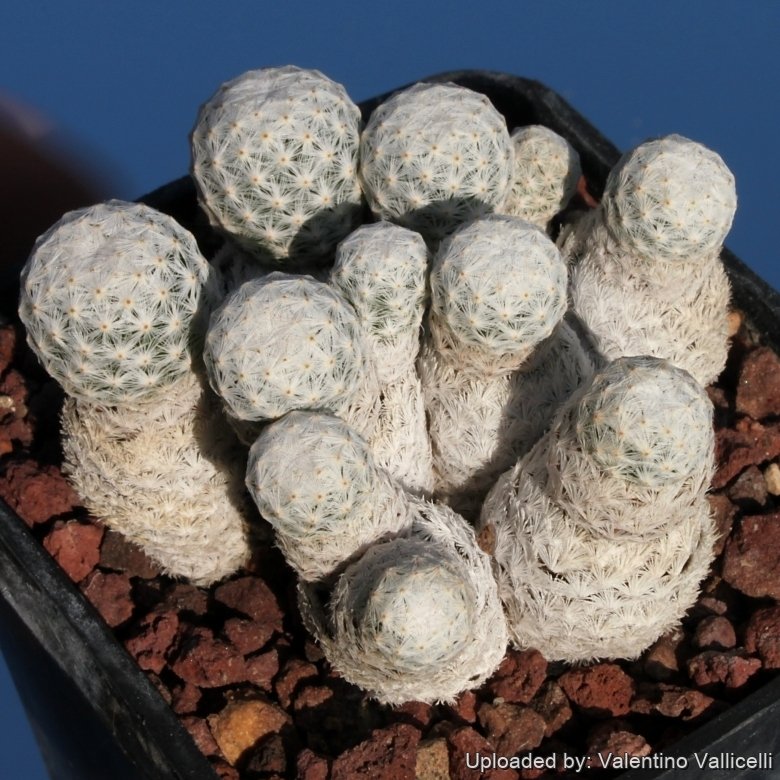
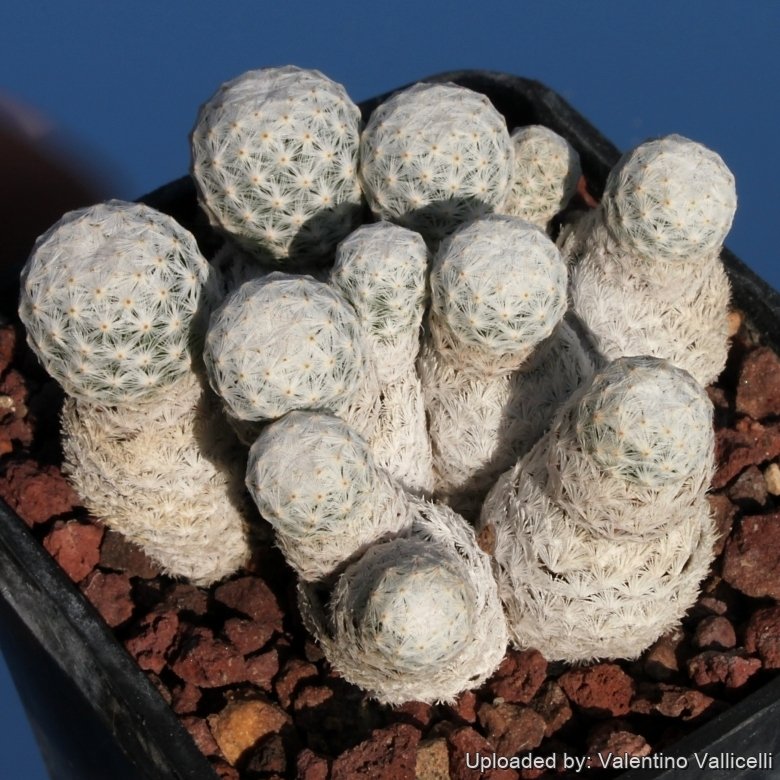
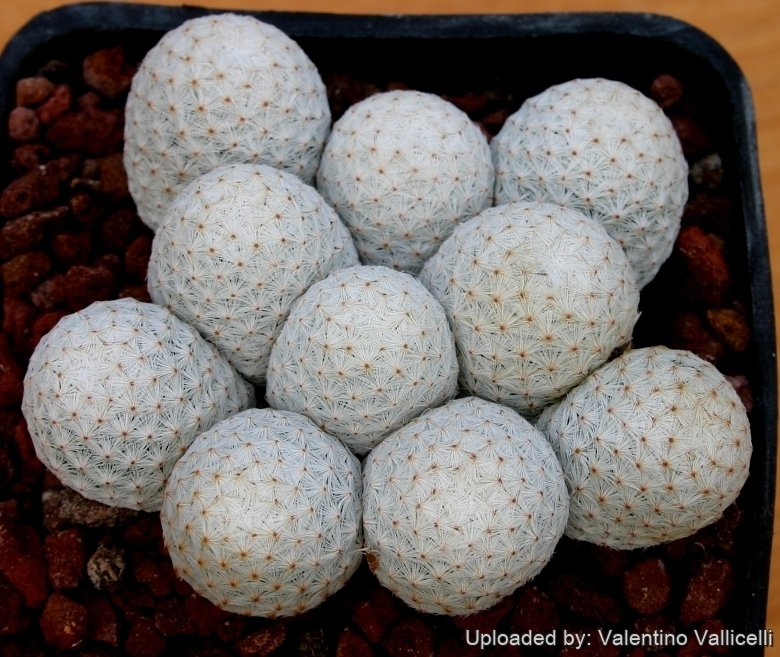
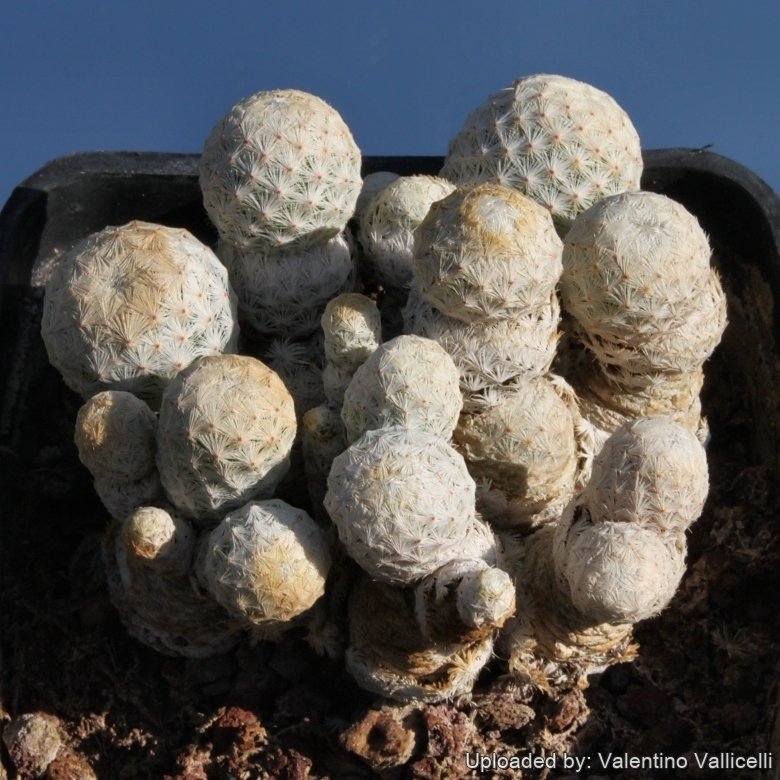
it is a small cactus, usually solitary, globular or cylindrical (clusters of stems can be seen in cultivation)
Stem: Somewhat cylindrical, slender, about 2 cm wide and 5-7 cm high, obscured by the spines. Stem and tubercles without latex. The axil is naked.
Spines: 60-80 radial spines (less than in M. herrerae which has 100 or more), white, fine and interlacing. No central spines.
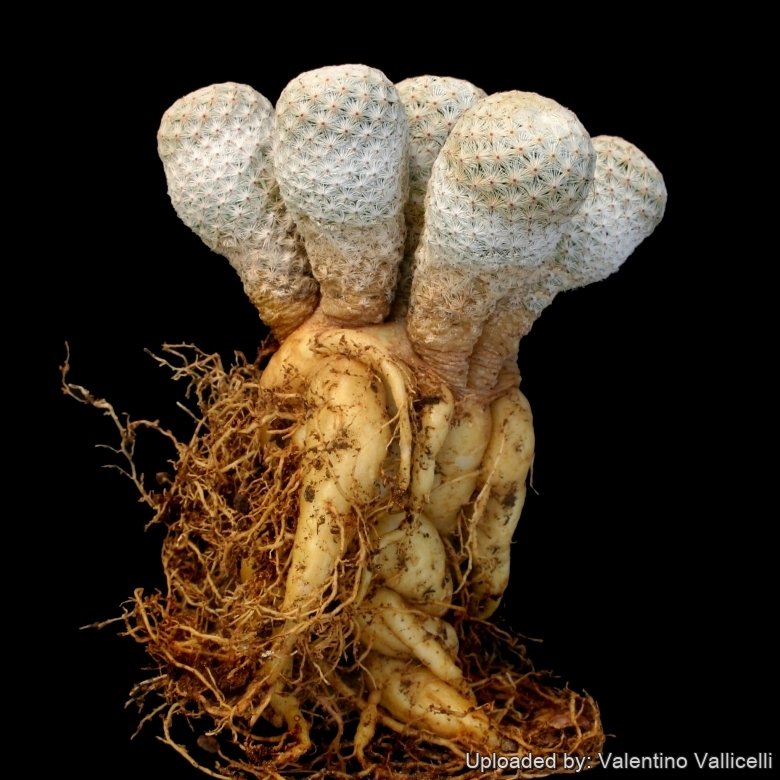
Roots: Taproot
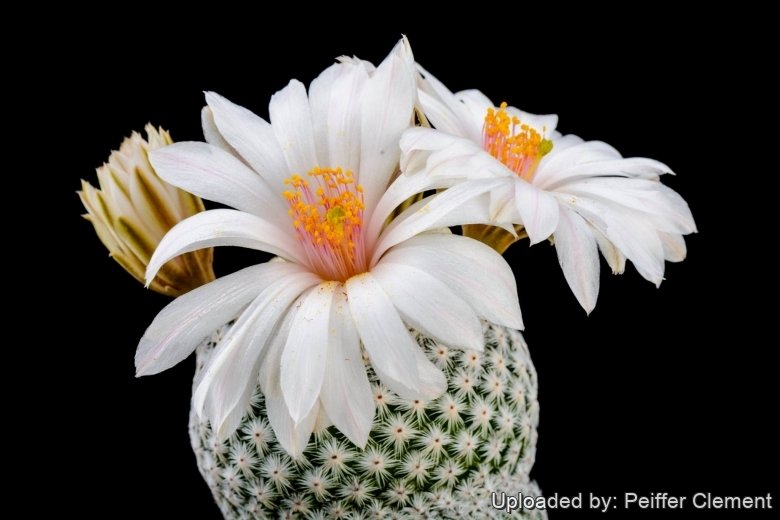
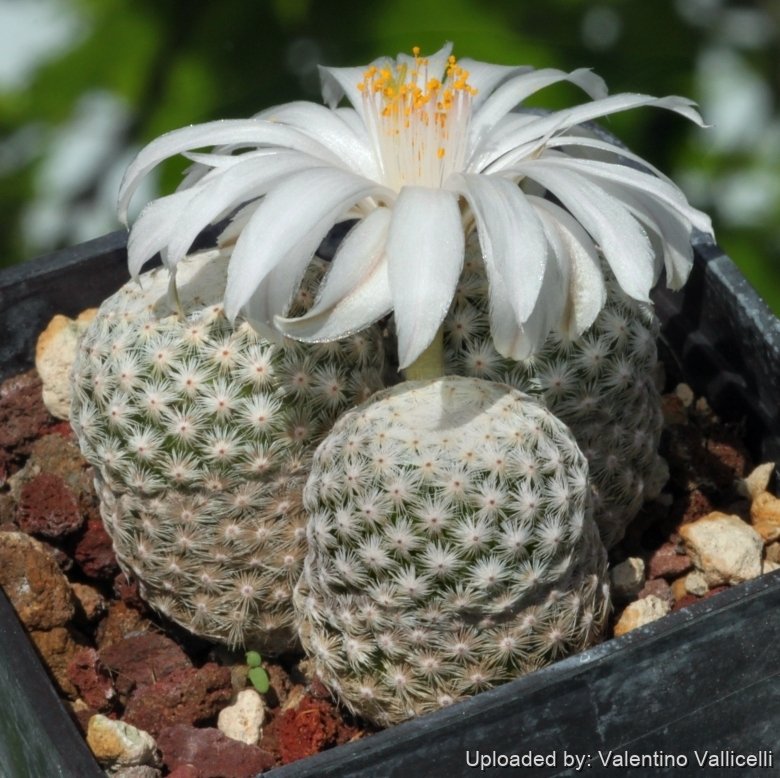
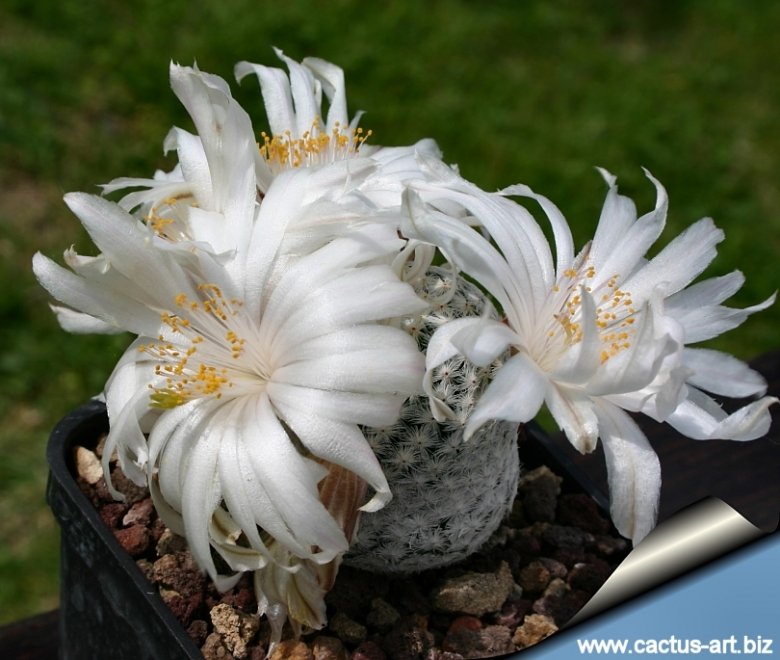
Flower: 3,5 cm long and wide, white (rarely with a pinkish flush when grown in full sun). Flowering period (in Europe): April-May
Fruit: Whitish, retained within the spines, but not within the plant body. (see: cryptocarpy).
Seeds: Black.
Origin and Habitat
South of Pozos, Guanajuato, Mexico (Calera and road from Pozos to San Jose Iturbide) at 50 or more km from the habitat of Mammillaria herrerae.
Habitat: It grows at 2150-2200 metres in altitude.
Cultivation and Propagation
This plant is not famous for being easy to cultivate, but in good conditions with excellent ventilation, it grows without difficulty. It is especially sensitive to over-watering. So careful watering and an open mineral potting soil are a must. Avoid the use of peat or other humus sources in the potting mixture, and eventually add some limestone. Can be sensitive to frost (but if dry they are resistant to -5° C). It requires maximum sun exposure to reach its full potential, and to achieve success in flowering. A winter rest that allows the plant to shrivel (perhaps losing up to 25% of its summer height) will encourage flowering and long time survival. Be careful to encourage slow growth. Provide very good ventilation.
Propagation: Direct sow after last frost. (it usually doesn’t produces offsets)
Gallery