Publication: Kakteen Sukk. 39: 79, figs. 1988
Description
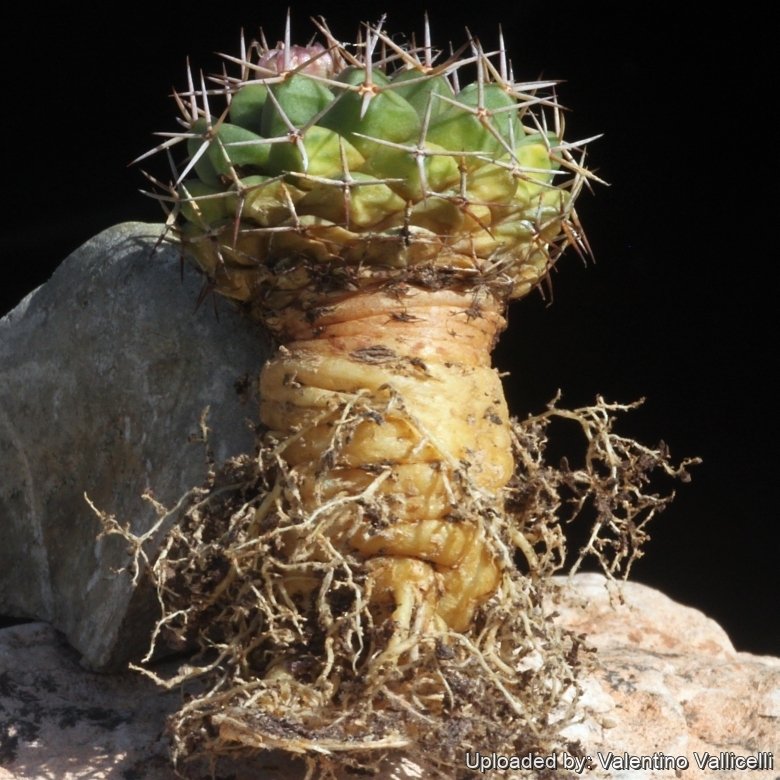
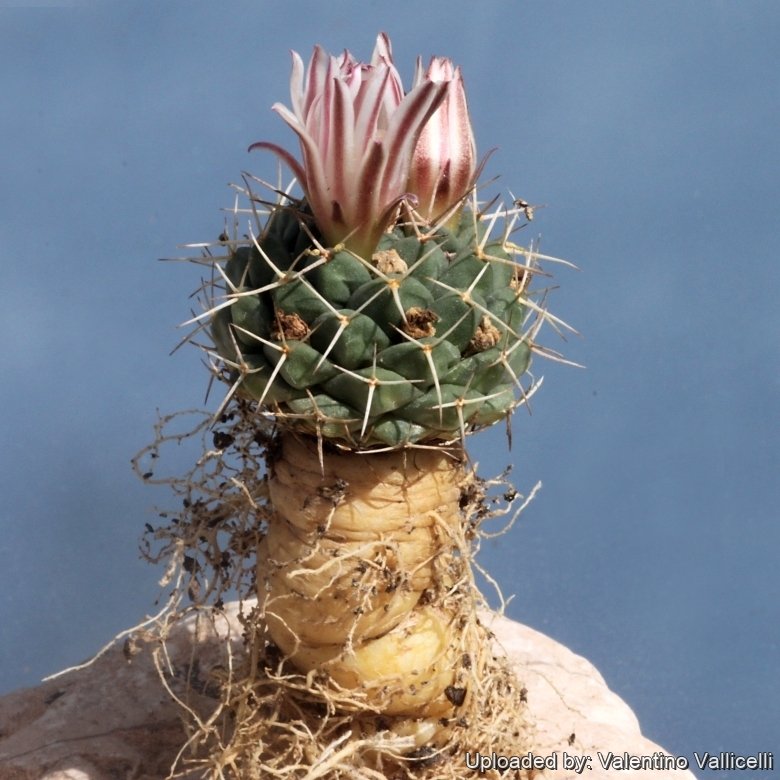
It is a tiny solitary plant most of it is underground with a large tapering tap root at least five times the height of the stem above the ground.
Stem: Flattened globose, blue-green, 1-3 cm tall, 2,5-5,5 in diameter.
Roots: Tuberous, long and thick up to 10 cm long or more.
Tubercles: Widely separated, conical.
Axil: Naked.
Radial spine: This plant has only central spines.
Central spine: 4-5, needle-like, yellowish brown, 4-7 mm long, the lower longer, straight or slightly curving, grey-brown with darker tips.
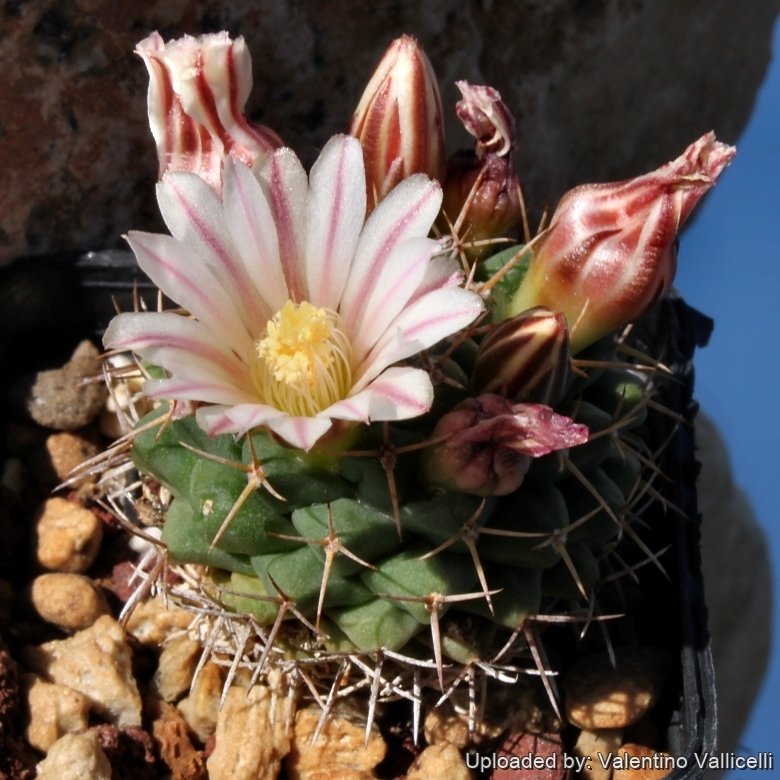
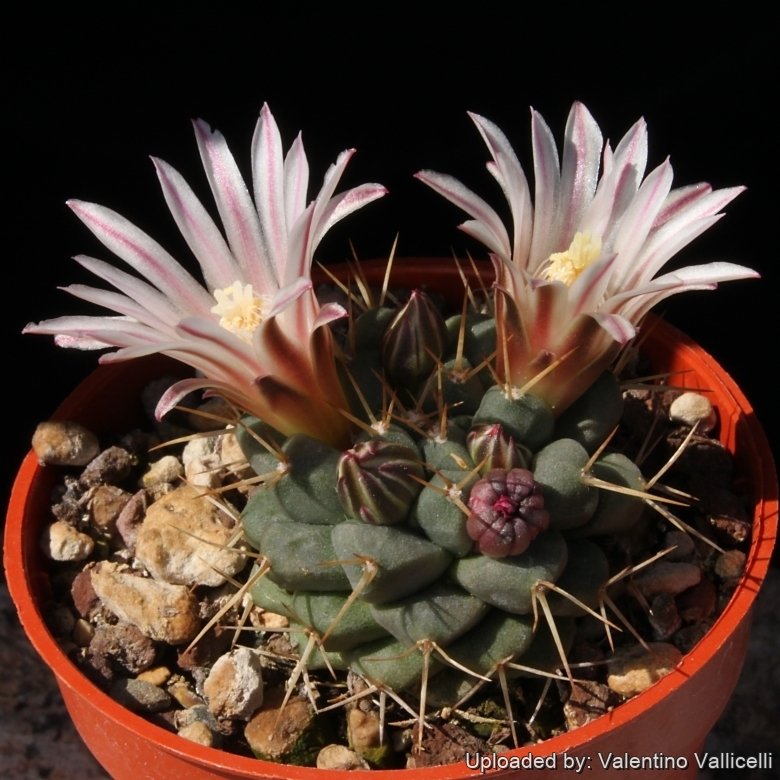
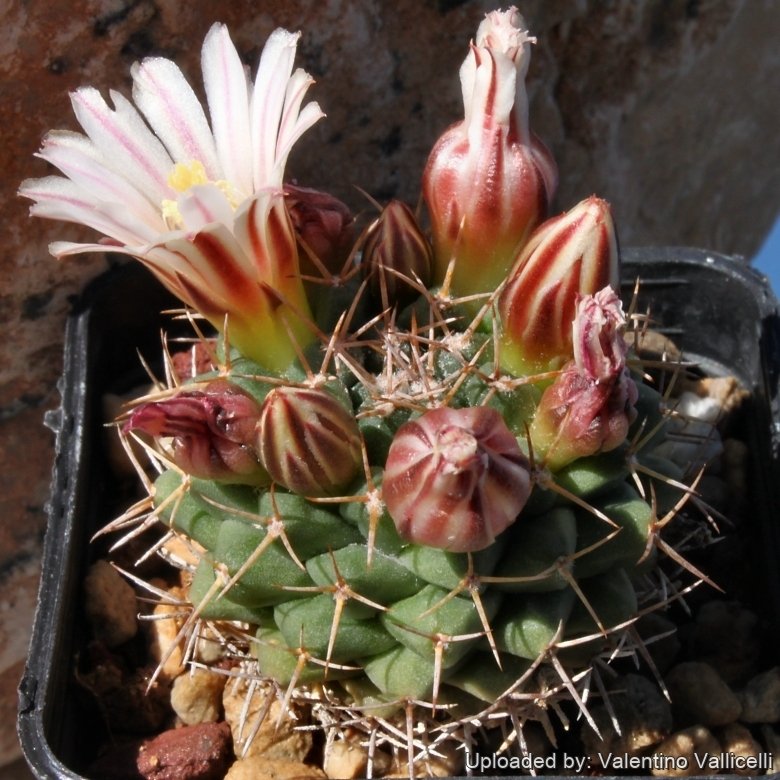
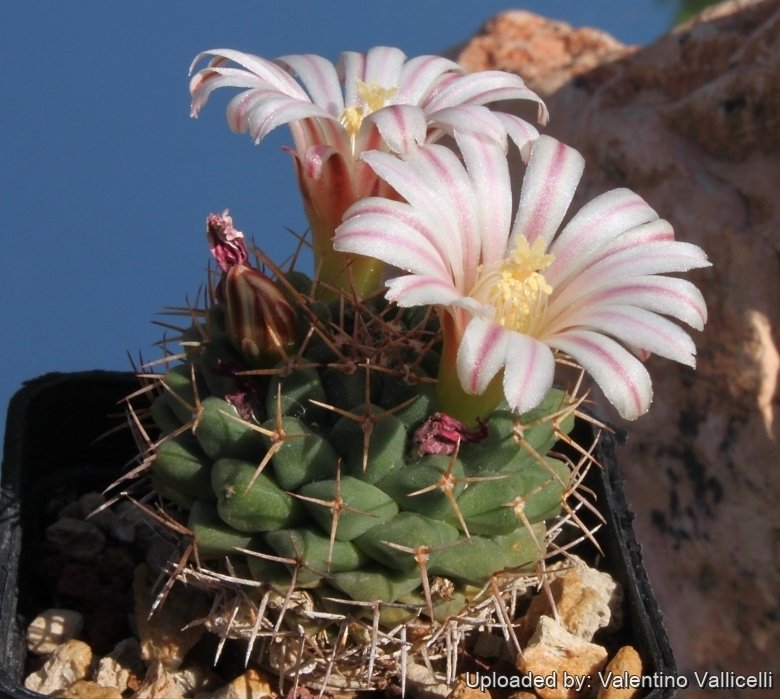
Flower: Funnelform 18-20 mm long, 20-24 mm in diameter, white, pink striped of a size somewhat larger than of many others of the genus. Stigmas yellow.
Blooming season: It is one of the earlier flowering Mammillarias that start flowering in March.
Fruit: Pear shaped, red, 7 - 10 mm long.
Seed: Dark brown or black.
Notes: It has been variously allied to Mammillaria uncinata, Mammillaria heyderi as well as Mammillaria lloydii. However it appears to be a quite distinct plant.
Origin and Habitat
Zacatecas, Mexico.
Type locality: Pozo de Gamboa, Zacatecas.
Altitude: 2.300 m.
Cultivation and Propagation
This species has few special demands. Whatever view one adopts, it is worth a place in every Mammillaria collection. The only problem is that it is very slow growing and for its long root, necessitates a rather larger, or deeper at least, pot that one might expect for the size of plant. Like all thick-rooted species, it requires careful watering (rot sensitive), and patience to match its slow growth. During the winter rest, the plant may pull near the surface of the potting mix.
Propagation: Direct sow after last frost. (it usually doesn’t produces offsets).
Gallery