Publication: Monatsschr. Kakteenk. 20: 149 (fig.). 1910
Description
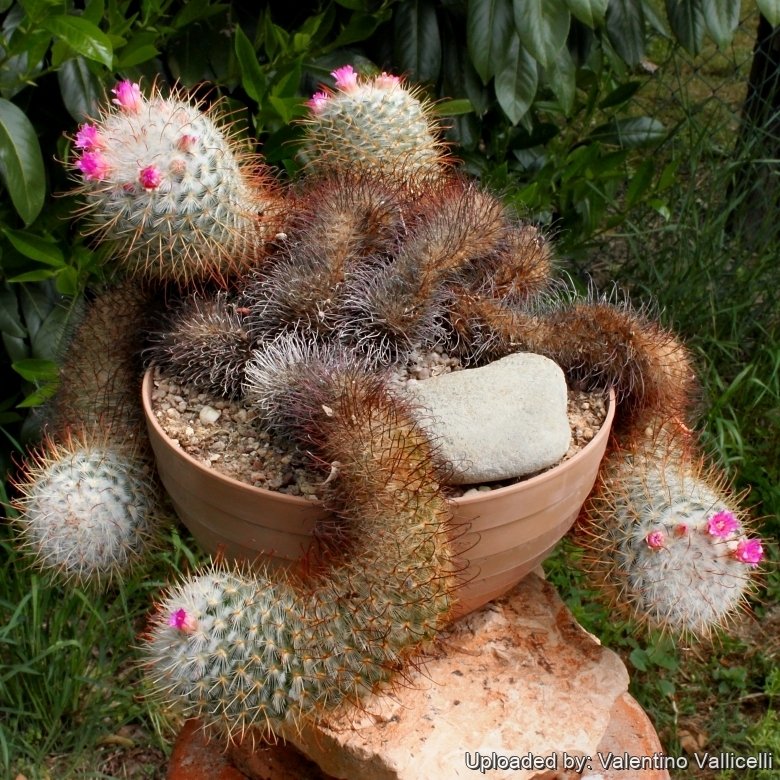
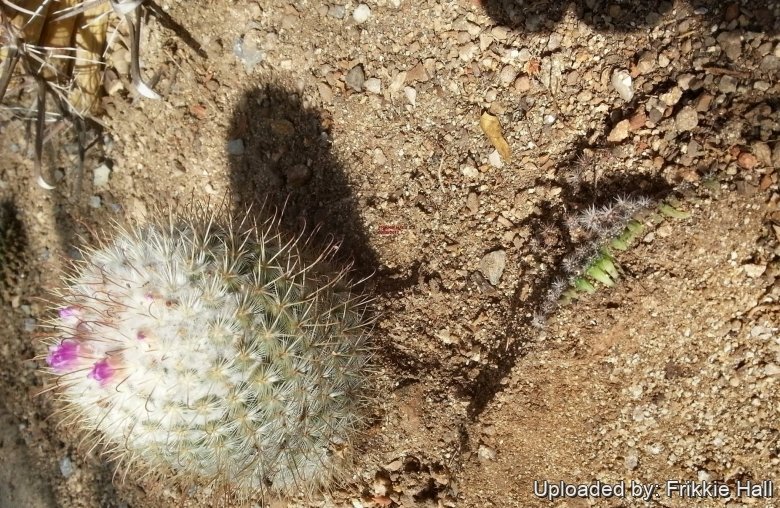
Mammillaria bombycina is a popular solitary or clustering species, some clones cluster aggressively and can form 50-90 cm wide, gorgeous mounds as they matures.
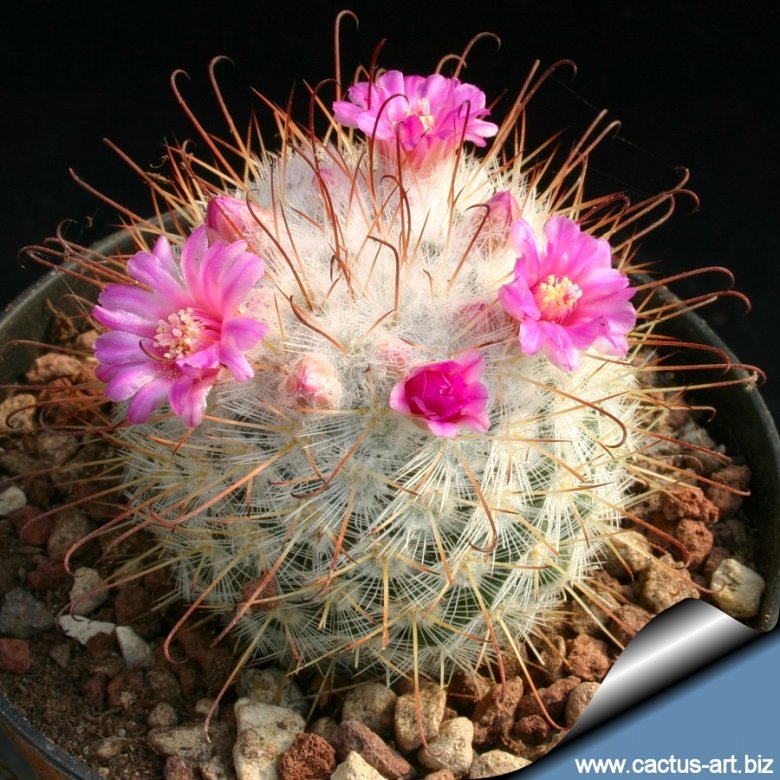
Stems: Depressed globose to club shaped, bright-green to grey-green, 7-14 cm high, 5-6 cm in diameter.
Tubercles: Conical to cylindrical, firm, latex in tubercules only occasionally. Axil: With dense wool and bristles.
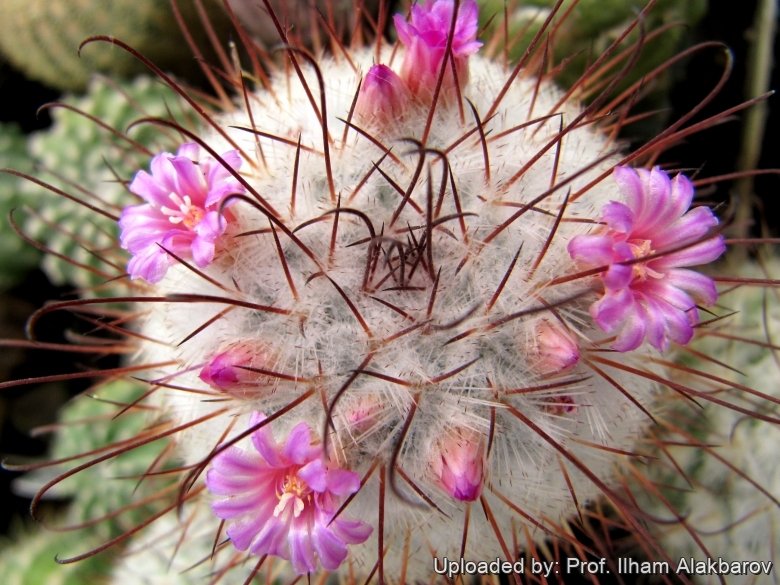
Radial spine: 30-65, have a glassy appearance white, to yellowish white stiff, thin, needle-like, pectinately arranged, that almost conceal the epidermis to 8 mm long.
Central spine: 3-8 (usually 4), yellow with dark tips, or orange-reddish brown, lowermost one hooked downwards and to 20 mm long, others straight and to 11 mm long. hooked spines.
Radial spines: Many, 30-64, stiff, thin, needle-like, pectinated, glassy white to yellowish white, up to 8 mm.
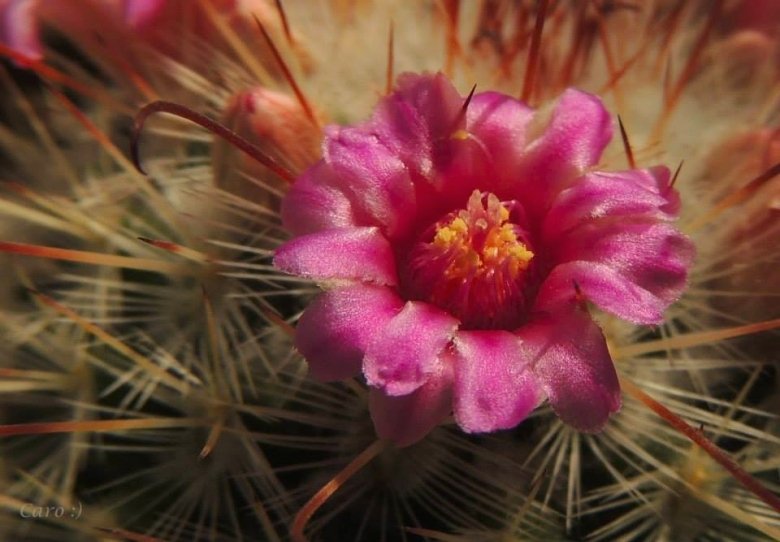
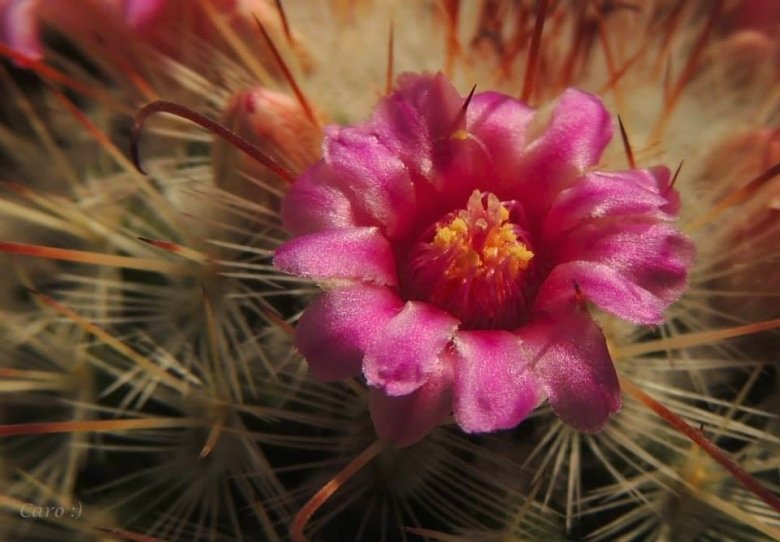
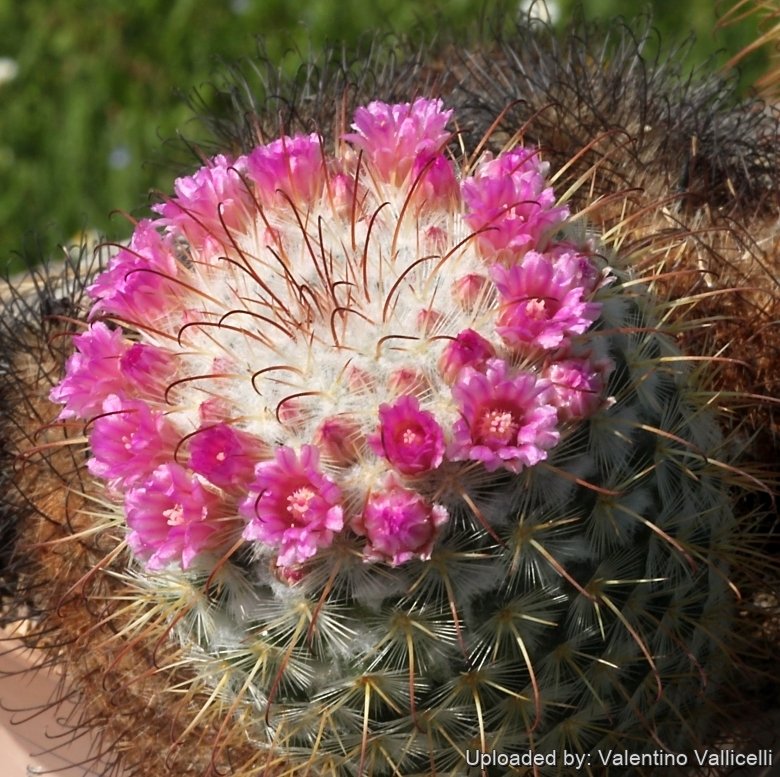
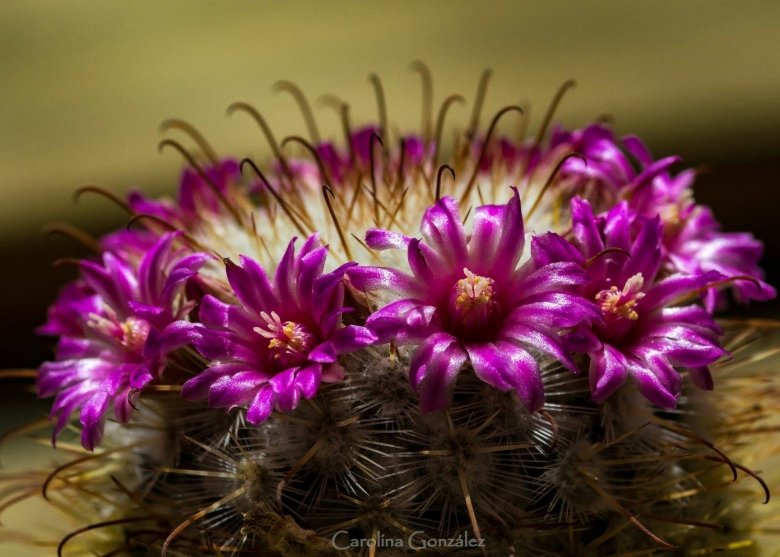
Flower: Light carmine, pink or white, funnelform, to 15 mm long and in diameter in circles around the crown of the plant.
Blooming: Come only to mature plants in Spring
Fruits: Pale pinkish green.
Remarks: Mammillaria bombycina ssp. perezdelarosae is often condidered a good species. Therefore in this assessment only Mammillaria bombycina is considered.
Origin and Habitat
Originally described from eastern Jalisco, Mexico, additional populations have since been located in Aguascalientes just to the north. The area covers around 16 x 10 km. (extent of occurrence =160 km2, one location) .
Altitude: 2340 to 2600 metres above sea level.
Habitat and Ecology: It occurs in high mountains, in Quercus (oak) forests on steep slopes and grows in leaf-litter and sometimes on inaccesable cliffs together with Mammillaria fuscohamata, Arctostaphylos pungens, Acacia farinosa, Agave filifera, and Opuntia jaliscana. In the past illegal collection was a major threat, however, today this species is widely available from propagation and the pressure in wild populations is minimum.
Cultivation and Propagation
This is one of the easier species to grow, it is an easy bloomer and don’t requires any special treatment, it have consistently clean spination whether grown indoors or out but the plants are the most beautiful when cultivated in the full sun that encourage the heaviest spine formation. Regular water in summer. Keep dry in winter. Frost tolerance: 4° C.
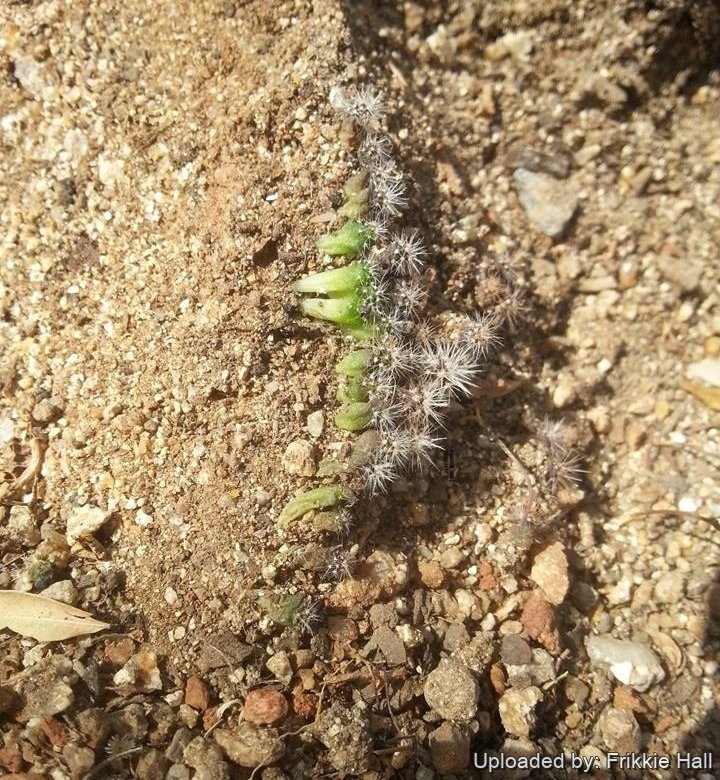
Propagation: Seeds or offsets.
Bibliography
Major references and further lectures
-
Edward Anderson “The Cactus family” Timber Press, Incorporated, 2001
-
James Cullen, Sabina G. Knees, H. Suzanne Cubey “The European Garden Flora Flowering Plants: A Manual for the Identification of Plants Cultivated in Europe, Both Out-of-Doors and Under Glass” Cambridge University Press, 11/Aug/2011
-
David R Hunt; Nigel P Taylor; Graham Charles; International Cactaceae Systematics Group. “The New Cactus Lexicon” dh books, 2006
-
John Pilbeam “Mammillaria: the cactus file handbook” Cirio Publishing Services Ltd Dec/30,/1999
-
Fitz Maurice, B & Fitz Maurice, W.A. 2013. Mammillaria bombycina. In: IUCN 2013. “IUCN Red List of Threatened Species.” Version 2013.2. <www.iucnredlist.org>. Downloaded on 20 February 2014.
Cultivars and forms (6)
Gallery