Description
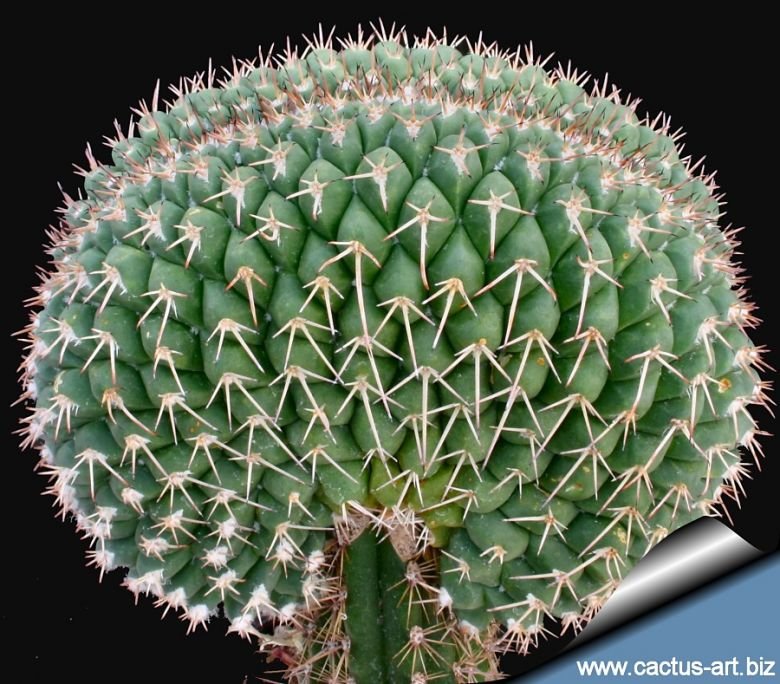
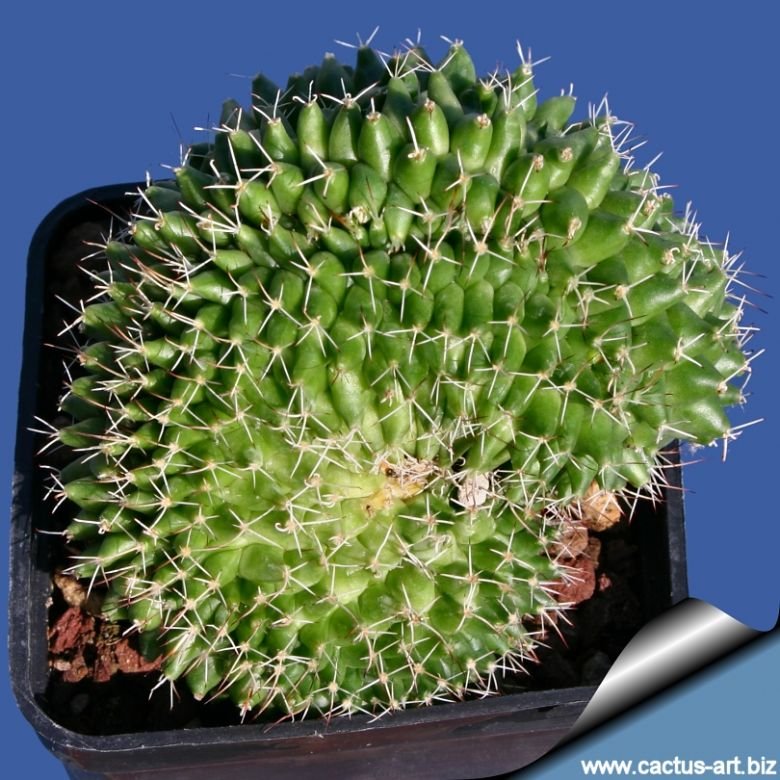
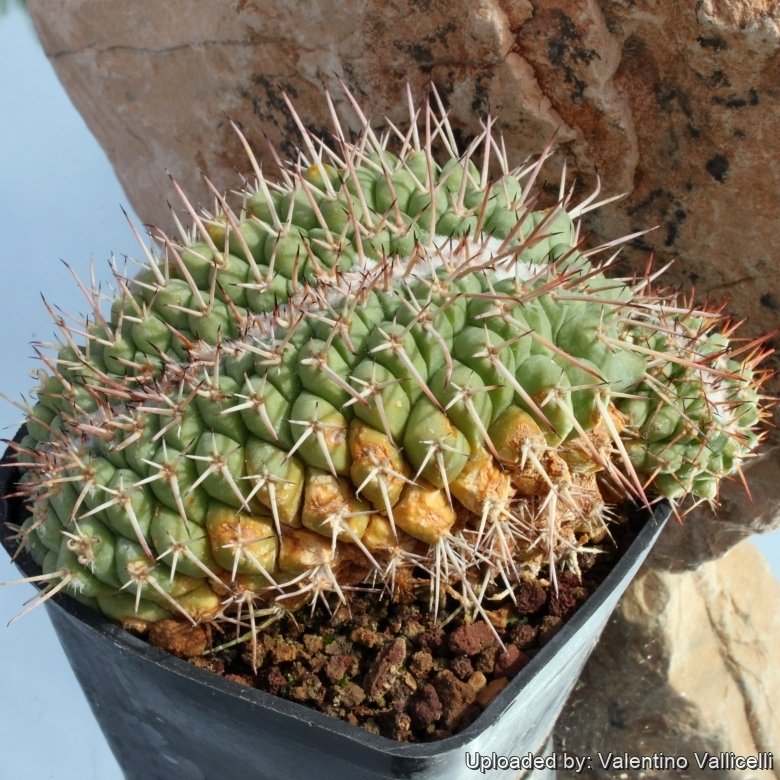
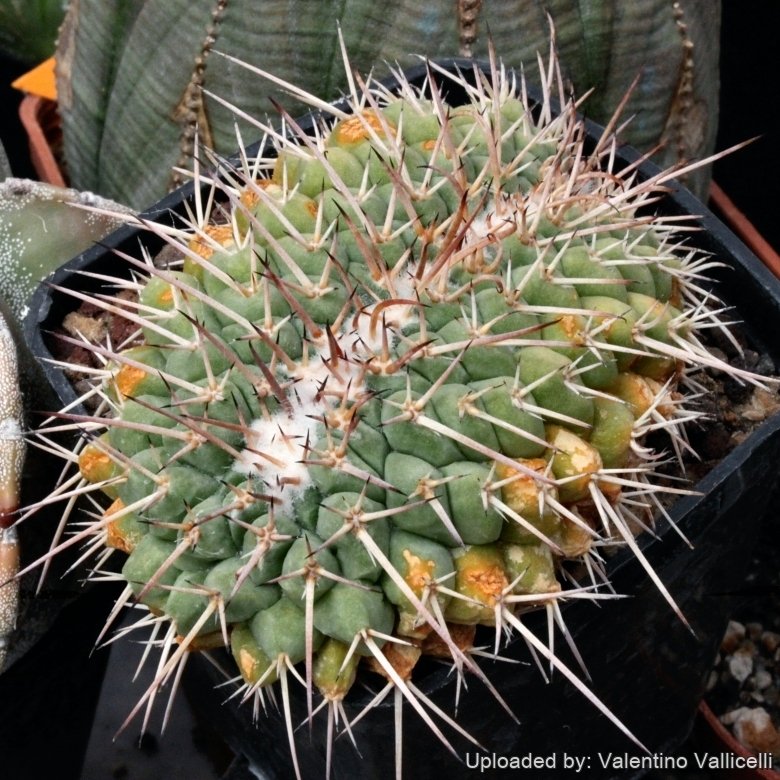
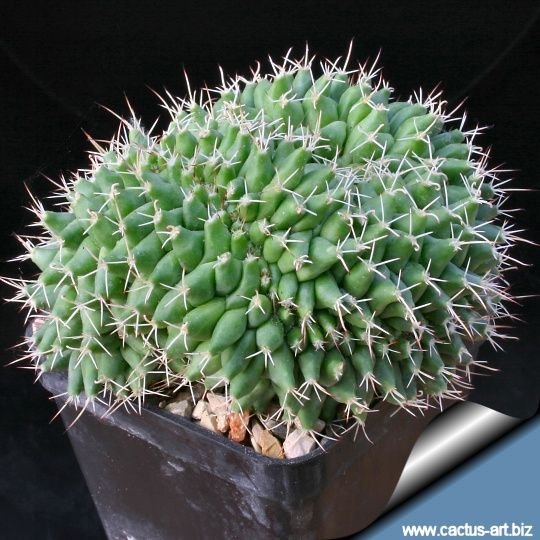
The standard Mammillaria compressa is a heavily clustering plant that form up to 1 m large cushions. It is among the most famous cacti for its easily clustering and easily flowering habit. The beautiful crested form develops huge brain-shaped hemispherical cushion. However there are several different crested clones, some of them very distinctive. (cf. Mammillaria compressa cv. Yokan) Older crested plant can get very large and are particularly priced.
Stems: Fan-shaped, bluish grey-green, up to 9 cm in width.
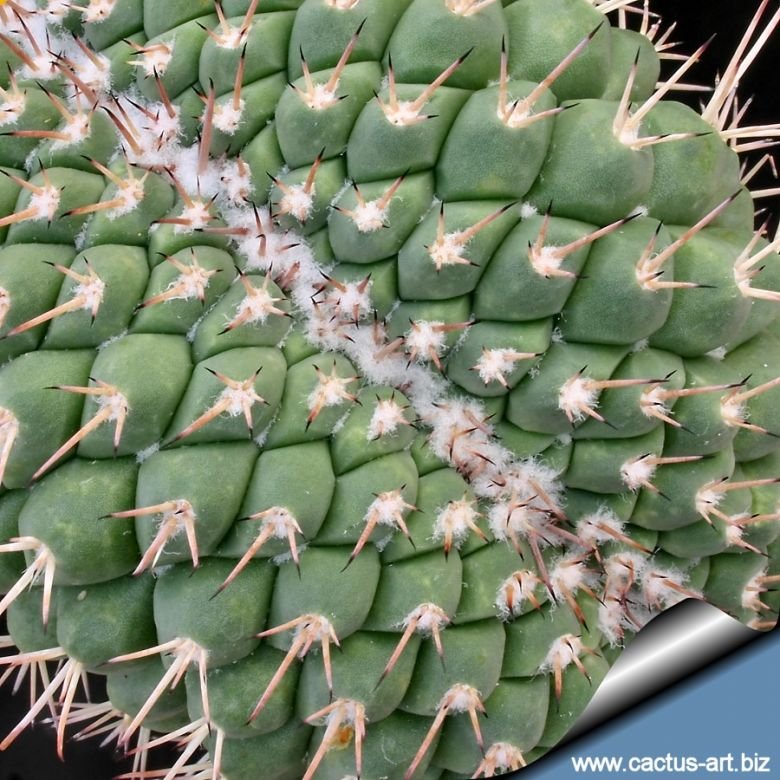
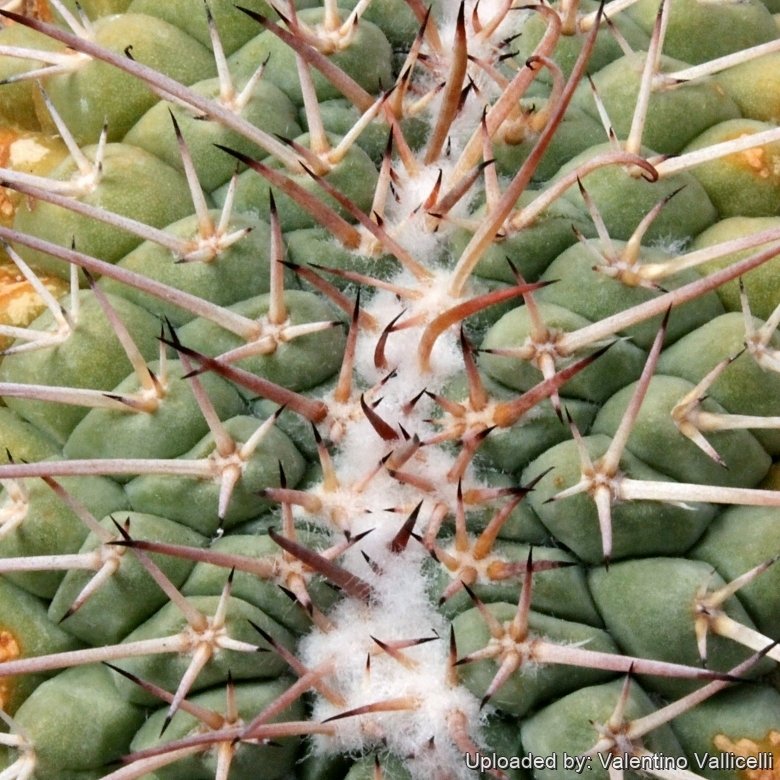
Tubercles: Prominent, close set, firm, bluntly angled and keeled. The Axil bears white wool and bristles. With latex.
Central spines: Absent.
Radial spines: 4-6, unequal, chalky white with brownish tips, 20-70 mm long, some very short.
Flowers: Bell shaped, purplish pink to deep red, 1-1,5 cm in diameter.
Blooming season: Winter, early spring.
Fruits: Club shaped, red.
Origin and Habitat
Garden origin (Nursery produced cultivar)
Cultivation and Propagation
It is a rapid growing species . Water regularly in summer, but do not overwater (Rot prone) Use pot with good drainage and a very porous potting media, keep dry in winter. Feed with a high potassium fertilizer in summer. It is quite frost resistant if kept dry, hardy as low as -5° C (some reports give it hardy to -12°C) Outside full sun or afternoon shade, inside needs bright light, and some direct sun.
Propagation: By stem cuttings from adult plants in spring or summer or by grafting. Pieces of crest must be dried out for at least 3 weeks before planting in coarse river sand. This is quite an easy alternative and success is almost always guaranteed.
Bibliography
Major references and further lectures
-
Edward Anderson “The Cactus family” Timber Press, Incorporated, 2001.
-
James Cullen, Sabina G. Knees, H. Suzanne Cubey “The European Garden Flora Flowering Plants: A Manual for the Identification of Plants Cultivated in Europe, Both Out-of-Doors and Under Glass” Cambridge University Press, 11/Aug/2011.
-
David R Hunt; Nigel P Taylor; Graham Charles; International Cactaceae Systematics Group. “The New Cactus Lexicon” dh books, 2006.
-
John Pilbeam “Mammillaria: the cactus file handbook” Cirio Publishing Services Ltd Dec/30/1999.
Gallery