Publication: Mitt. Arbeitskreises Mammillarienfr. 21(4): 202 (1997 publ. 1998) cf. Repert. Pl. Succ. (I.O.S.), 49: 19 (1998 publ. 1999)
Description
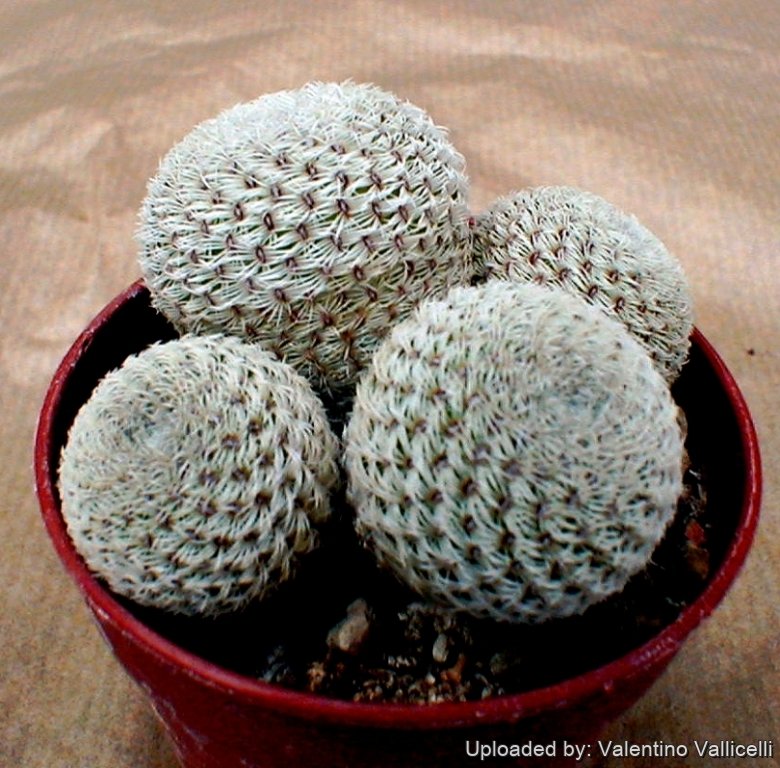
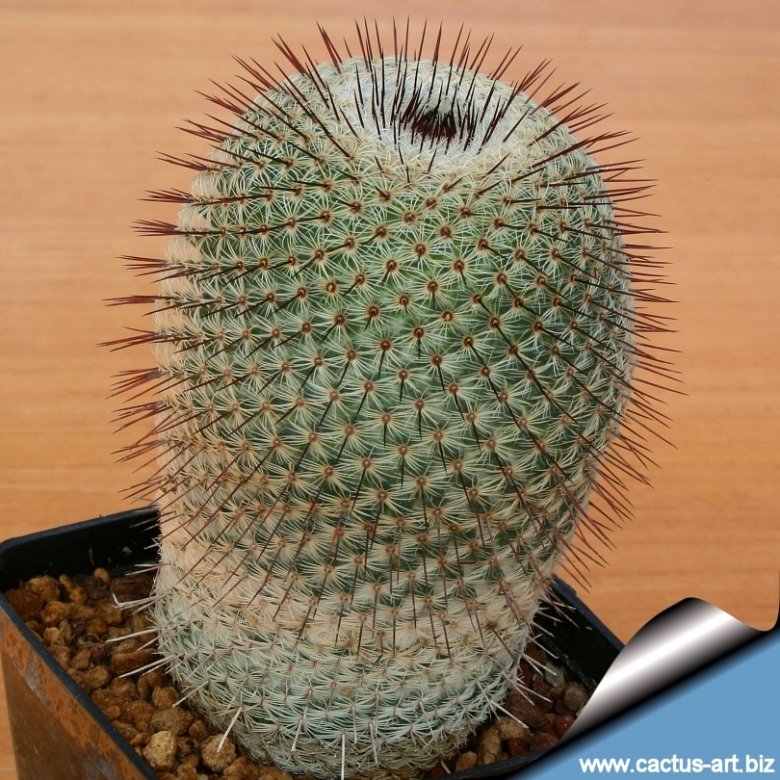
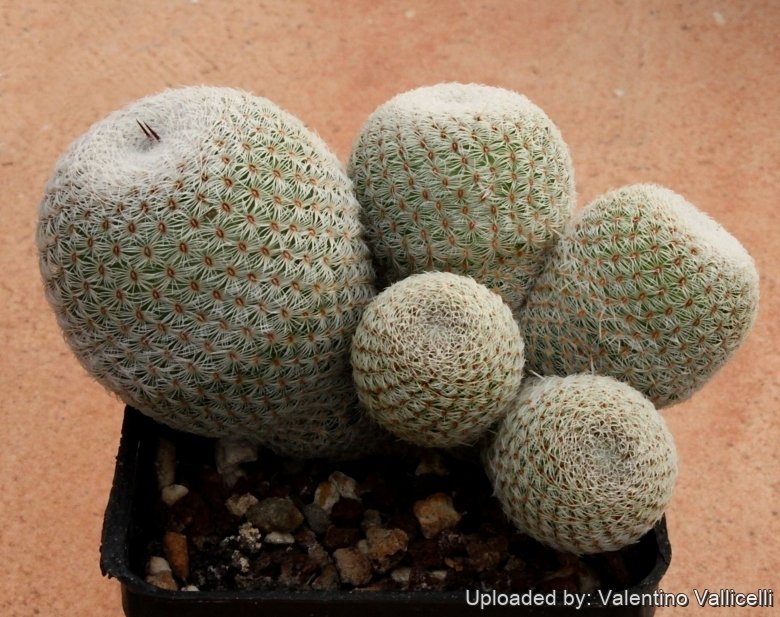
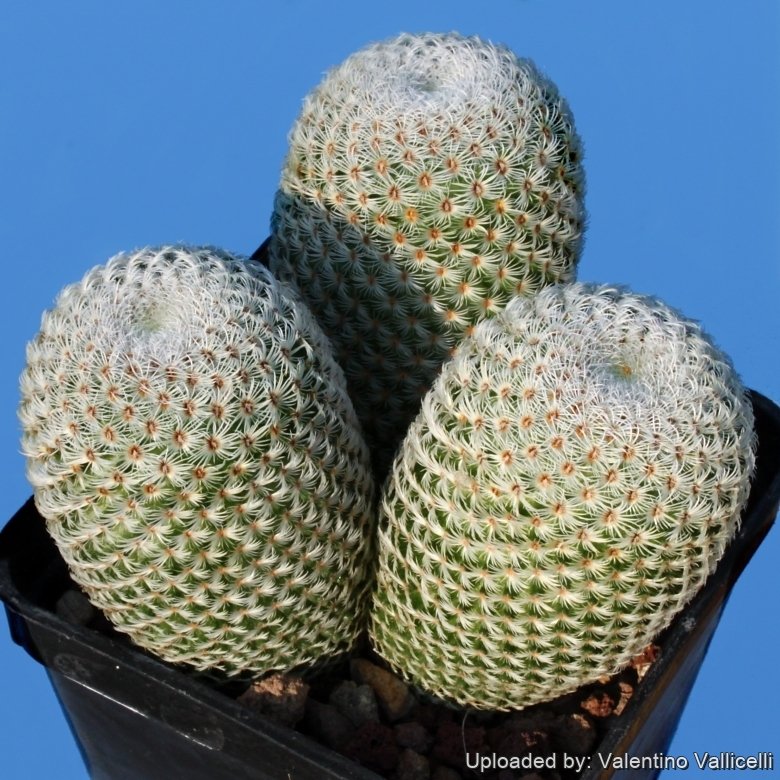
Mammillaria crucigera subs. tlalocii best known in cultivation as Mammillaria tlalocii is a globular cactus, solitary or clumping dichotomously. In nature usually this species doesn’t produce lateral shoots, but in cultivation are frequently seen plants that branch profusely from the base.
Stem: Fan shaped, forming brain shaped mounds up to 20 (or more) cm wide. The axil of tubercles is white-woolly.
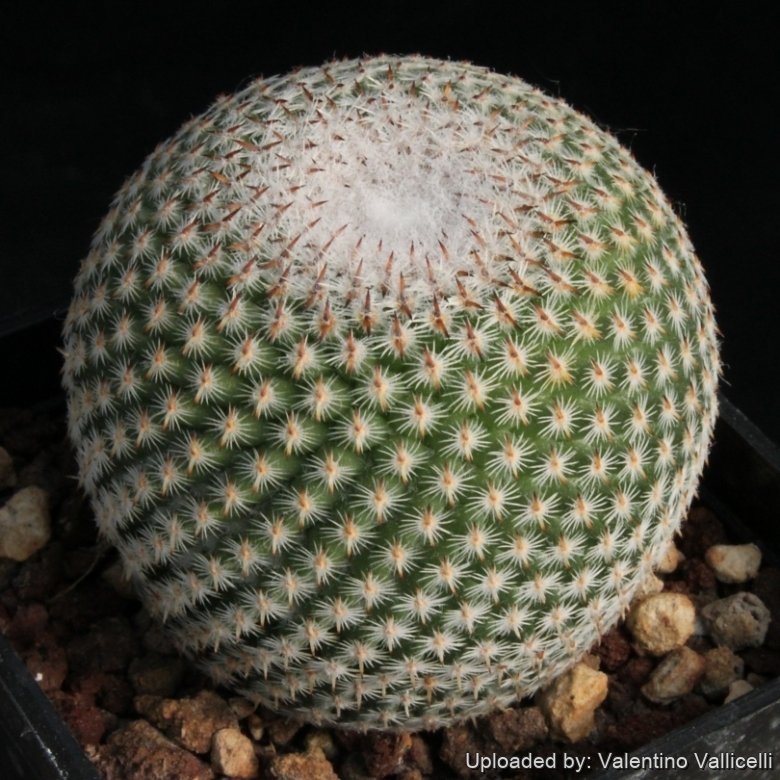
Radial spines: 16 to 22, glassy white, 1 to 2 mm long, the longer sideways pointing.
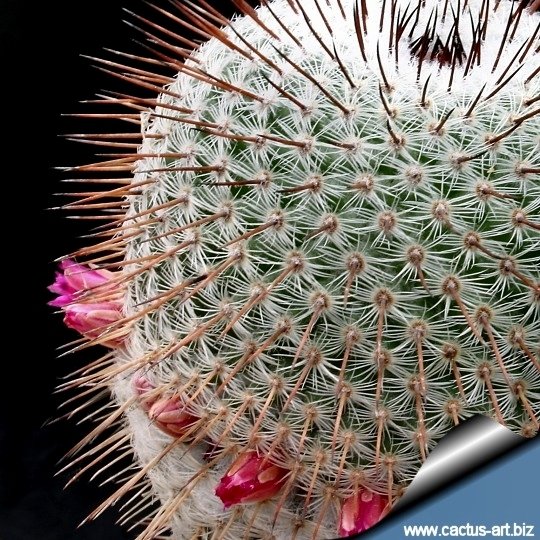
Central spines: On the areoles at the apex of the plant, with age, may appear a single longer brown-black central spine 6-10 mm long.
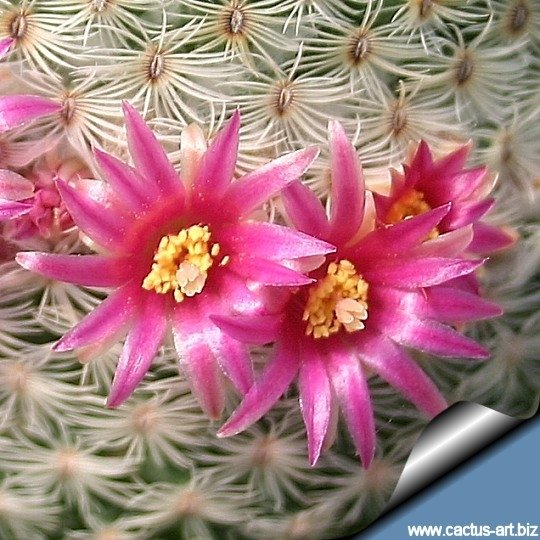
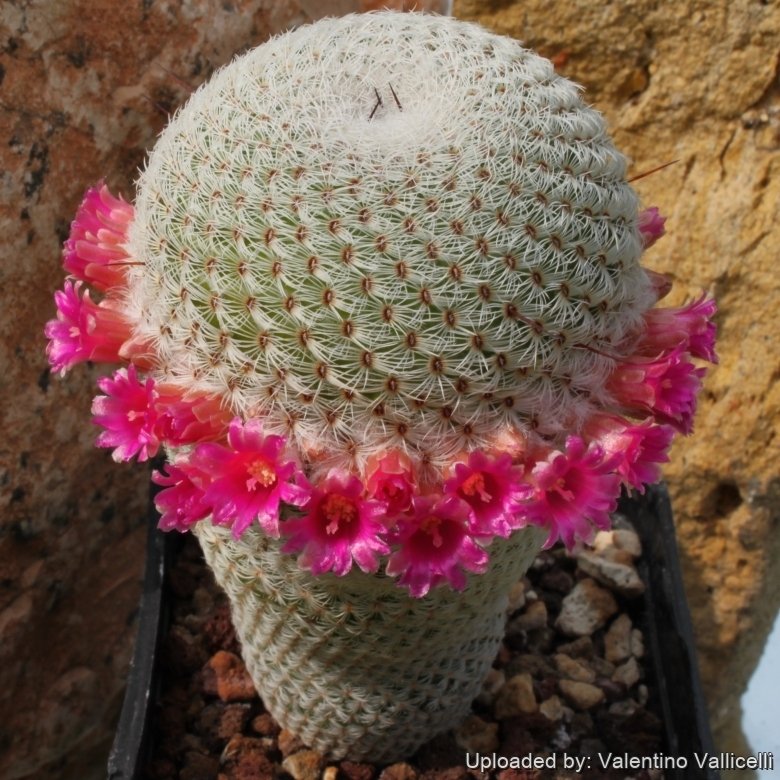
Flowers: Carmine-pink, 12 to 14 mm long, 8 to 10 mm wide.
Flowering time: Blooms in late winter, early spring.
Fruits: Carmine-pink small.
Seeds: Small, brown.
Origin and Habitat
Mexico, (at the border of the states of Puebla and Oaxaca).
Habitat: Altitude 800 to 1.000 m.
Cultivation and Propagation
It is a slow growing species . Use pot with good drainage and a very porous mineral-based potting mix, keep dry in winter. Pot plants are quite wet-sensitively. Care must be taken with watering (Rot prone) and needs good drainage. Water sparingly during the growing season, keep very dry in winter. Feed with a high potassium fertilizer in summer.
Usually it is recommended to overwinter this plant in a bright and warm greenhouse with at least 8-10° C , but it proved to be quite frost resistant (if kept dry it hardy as low as -5° C)Outside full sun or afternoon shade, inside needs bright light, and some direct sun.
Some plants will offset readily, and clumps can be produced in a very few years.
Propagation: Direct sow after last frost, cuttings or grafting.
Notes
This is one of the Mammillaria commonly called “Owl Eye Cactus”, known for dichotomous branching (forking or dividing into two parts). Although dichotomous branching is not a common occurrence in cacti in general, it happens for some reason in this particular species. What is interesting about this cactus is that it began as a single head, one head became two, and so on. Other Owl Eye Cactus among others comprise Mammillaria karwnskiana, Mammillaria formosa, Mammillaria microthele and Mammillaria perbella.
Bibliography
Major references and further lectures.
-
Robert T. Craig “The Mammillaria handbook: with descriptions, illustrations, and key to the species of the genus Mammillaria of the Cactaceae” E P Publishing, 1945
-
John Pilbeam “Mammillaria The Cactus File Handbook” Cirio Pub. Services, 01/Dec/1999
-
Edward Anderson “The Cactus family” Timber Press, Incorporated, 2001
-
James Cullen, Sabina G. Knees, H. Suzanne Cubey “The European Garden Flora Flowering Plants: A Manual for the Identification of Plants Cultivated in Europe, Both Out-of-Doors and Under Glass” Cambridge University Press, 11/Aug/2011
-
David R Hunt; Nigel P Taylor; Graham Charles; International Cactaceae Systematics Group. “The New Cactus Lexicon” dh books, 2006
Gallery