Publication: Descr. Cact. Nov. 3: 8. 1963 nom. inval. type collection not preserved [validated by Mottram Mammill. Index 24 (1980)]
Description
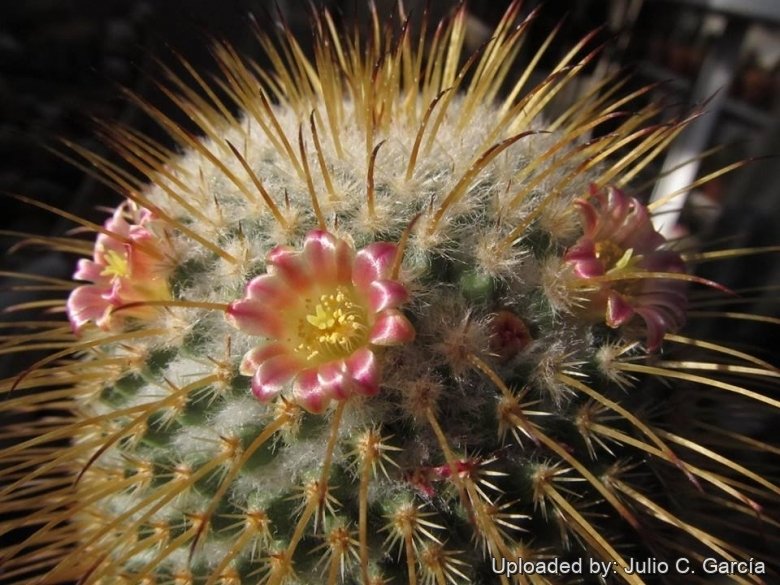
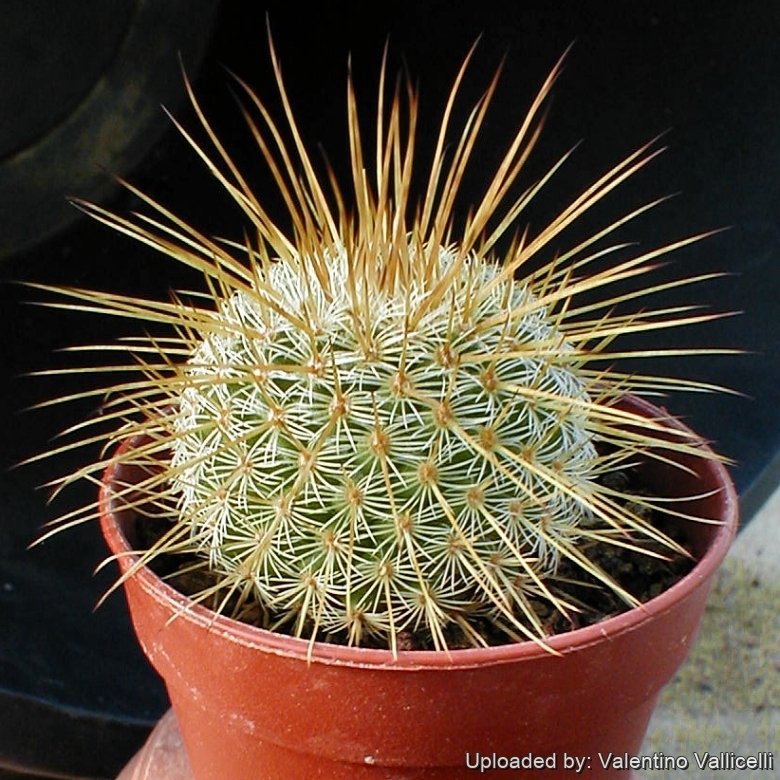
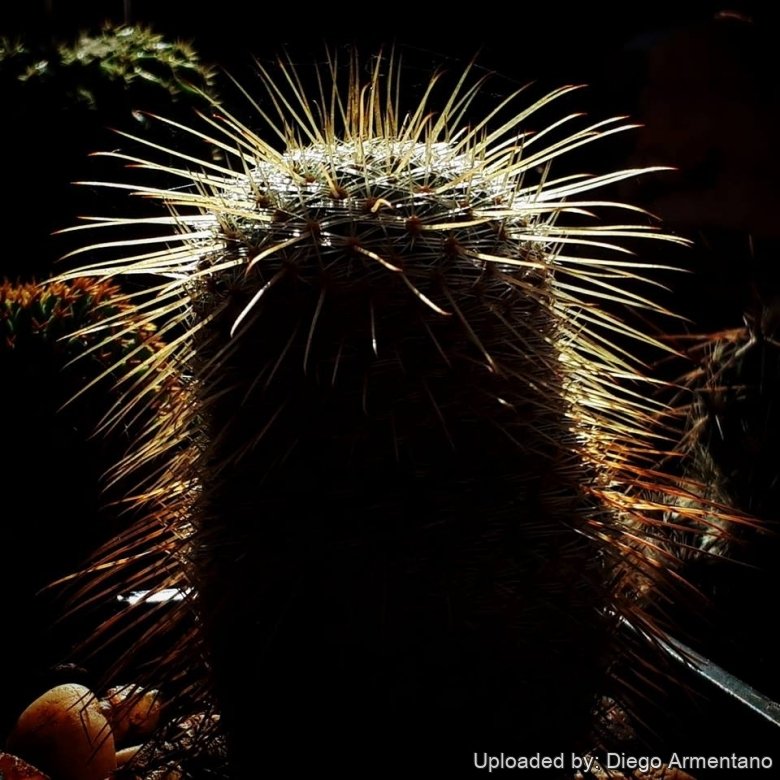
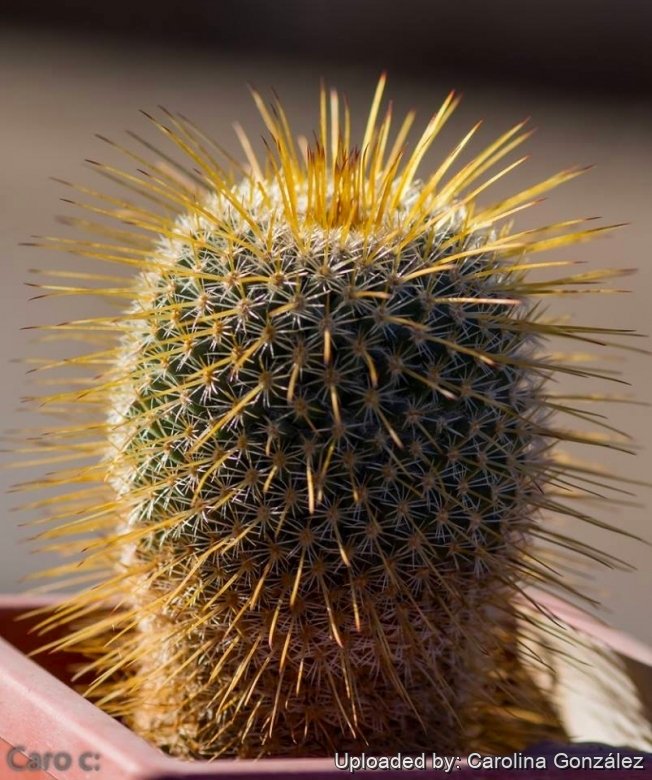
Mammillaria dixanthocentron is a robust cylindrical cactus species, up to 30 cm high. with two long, yellow, central spines. This Mammillaria with its lovely spination makes a wonderful feature plant.
Habit: Plants mostly solitary unbranched or occasionally forking dichotomously at maturity.
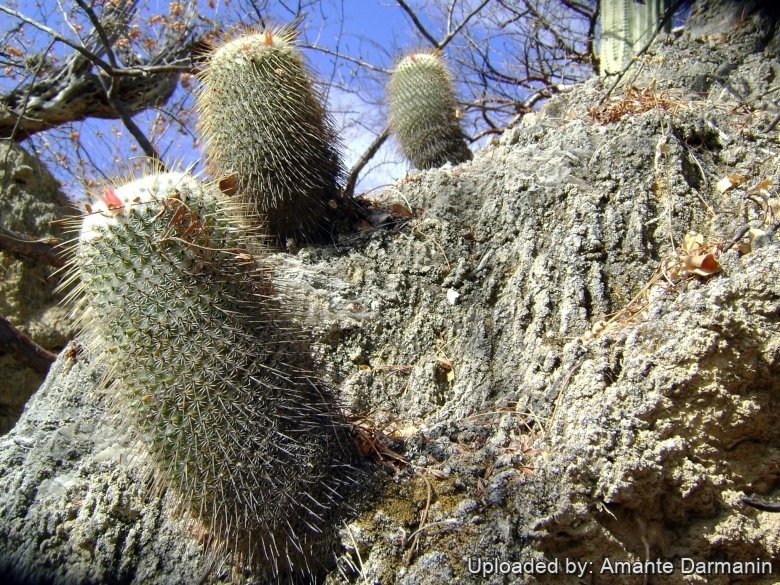
Stems: Stout, globose to short cylindrical to 20(-30) cm high, 7-8 cm in diameter.
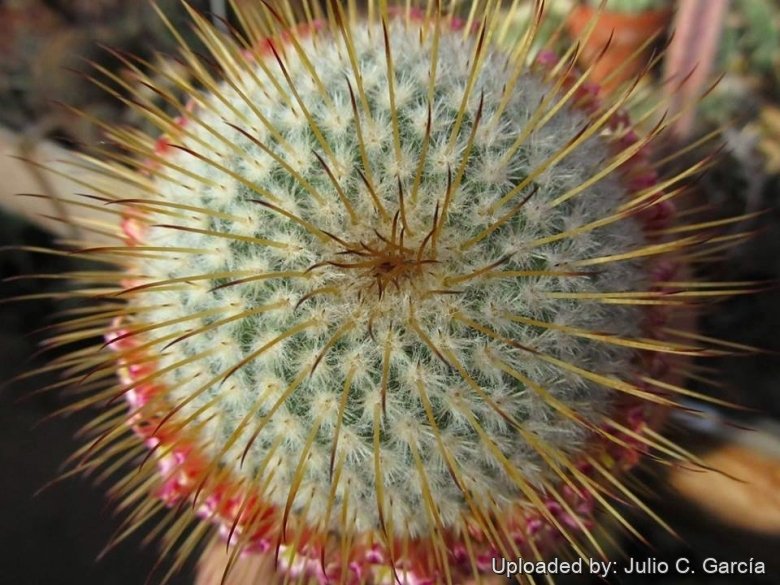
Tubercles: Cylindrical. Without latex. Tubercles-axil with scant wool at first, later with curly wool.
Radial spine: 19-20, thin, white, 2-4 mm long.
Central spine: 2-4, usually yellow, but also white to reddish, becoming brownish or whitish, with dark tips, upper central spine to 5 mm long, lower one up to15 mm long.
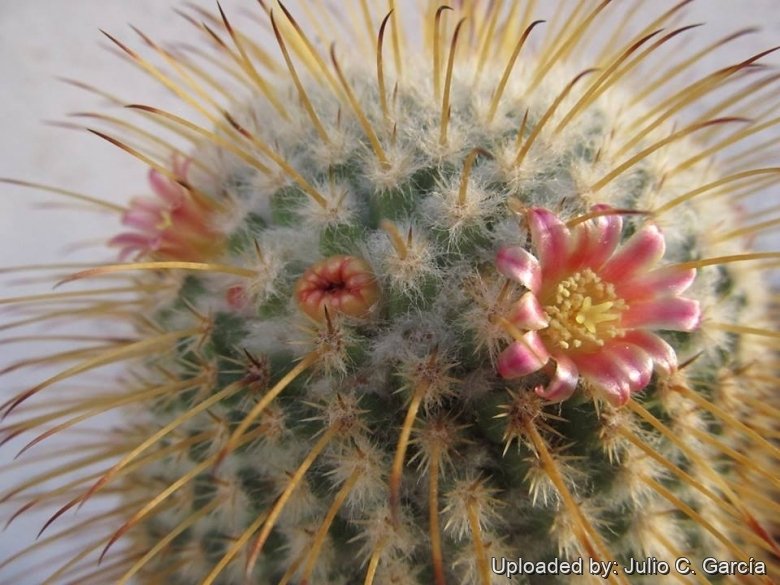
Flower: Small, 8-10 cm long and in diameter, light red to pale pinkish red.
Fruit: Yellow below, orange above.
Seed: Brown.
Origin and Habitat
Northwestern Oaxaca and southern Puebla, Mexico. (Mexico Southwest, Mexico, Northern America)
Altitude: 500-2500 metres above sea level.
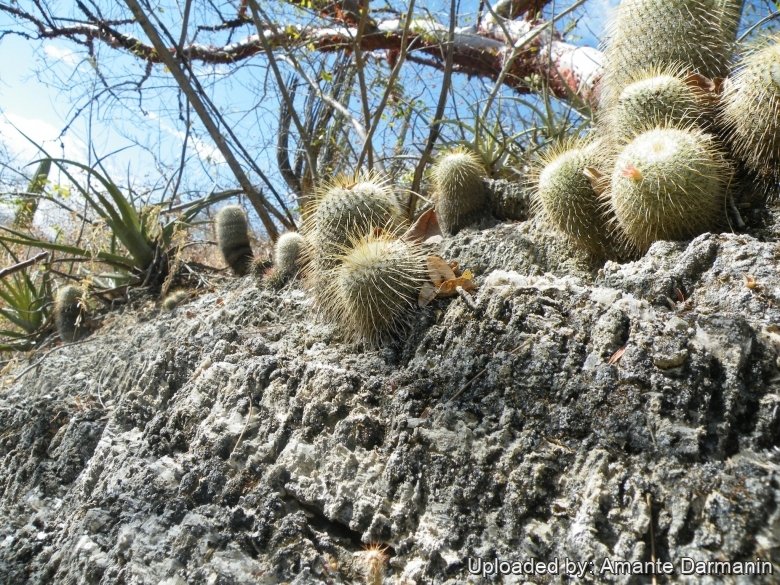
Habitat: Mammillaria dixanthocentron occours in dry tropical deciduous forest and Quercus-Pinus forest and is a facoltative saxicole that can be found either clinging on cliffs and steep rocky slopes and limestone walls and also on hills and on the shadier side, under the trees; the soil is alkaline (pH 7-8). This rocky habitats harbour a rich succulent flora comprising: Pilosocereus chrysacanthus, Mammillaria carnea, Mammillaria tonalensis, Ritterocereus pruinosus, Coryphantha calipensis, Ferocactus recurvus, Neobuxbaumia tetetzo, Cephalocereus hoppenstedtii, Myrtillocactus geometrizans, Stenocereus stellatus, Stenocereus pruinosus, Opuntia decumbens, Pachycereus weberi, Pachycereus hollianus, Plumeria rubra, Ipomoea arborescens, Bursera morelensis, Jatropha spathulata, Jatropha urens, Agave marmorata, and Agave macroacantha. The species is locally very abundant. It is known from at least 21 sites, where a total population of about 350,000 mature individuals is reported.
Cultivation and Propagation
Mammillaria dixanthocentron is not particularly difficult on own roots. No special cultural requirements.
Growth rate: It is an easily flowering species and a relatively rapid grower in comparison to other spherical species, the plant will increase the number of heads by dichotomous division. Large clumps can be produced in a few years given the best conditions.
Soils: It likes very porous standard neutral or slightly alkaline cactus mix soil.
Repotting: Use pot with good drainage.
Watering: It should be watered generously during the growing season, but do not overwater (Rot prone), keep dry in winter. Water it less than average if in bigger pots, small pots preferred.
Fertilization: Feed with a high potassium fertilizer in summer.
Hardiness: Reputedly sensitive to frost, but less so if kept on the dry side prior to, and during, cold weather. However warmth throughout the year will increase the grower’s success (8-12°C during rest season).
Exposition: Outside bright, hot conditions or afternoon shade, inside it needs bright light, and some direct sun. Strong light encourages flowering and heavy wool and spine production.
Uses: It is an excellent plant for container growing. It always looks good and stays small.
Pests & diseases: It may be attractive to a variety of insects, but plants in good condition should be nearly pest-free, particularly if they are grown in a mineral potting-mix, with good exposure and ventilation. Nonetheless, there are several pests to watch for:
- Red spiders: Red spiders may be effectively rubbed up by watering the plants from above.
- Mealy bugs: Mealy bugs occasionally develop aerial into the new growth among the wool with disfiguring results, but the worst types develop underground on the roots and are invisible except by their effects.
- Scales: Scales are rarely a problem.
- Rot: Rot is only a minor problem with cacti if the plants are watered and “aired” correctly. If they are not, fungicides won’t help all that much.
Propagation: Division, direct sow after last frost or (often) graft. Seeds germinate in 7-14 days at 21-27° C in spring, remove the glass cover gradually as the plants develops and keep ventilated, no full sun for young plants! To make a cutting twist off a branch and permit it to dry out a couple of weeks, lay it on the soil and insert the stem end partially into the soil. Try to keep the cutting upright so that the roots are able to grow downward.
Bibliography
-
Edward Anderson “The Cactus family” Timber Press, Incorporated, 2001
-
James Cullen, Sabina G. Knees, H. Suzanne Cubey “The European Garden Flora Flowering Plants: A Manual for the Identification of Plants Cultivated in Europe, Both Out-of-Doors and Under Glass” Cambridge University Press, 11/Aug/2011
-
David R Hunt; Nigel P Taylor; Graham Charles; International Cactaceae Systematics Group. “The New Cactus Lexicon” dh books, 2006
-
John Pilbeam “Mammillaria: the cactus file handbook” Cirio Publishing Services Ltd Dec/30,/1999
-
Arias, S., Valverde, T. & Zavala-Hurtado, A. 2013. Mammillaria dixanthocentron. In: IUCN 2013. IUCN Red List of Threatened Species. Version 2013.1. <www.iucnredlist.org>. Downloaded on 13 August 2013.
Cultivars and forms (3)
Gallery