Publication: Cactaceae (Backeberg) 5: 3185. 1961
Description
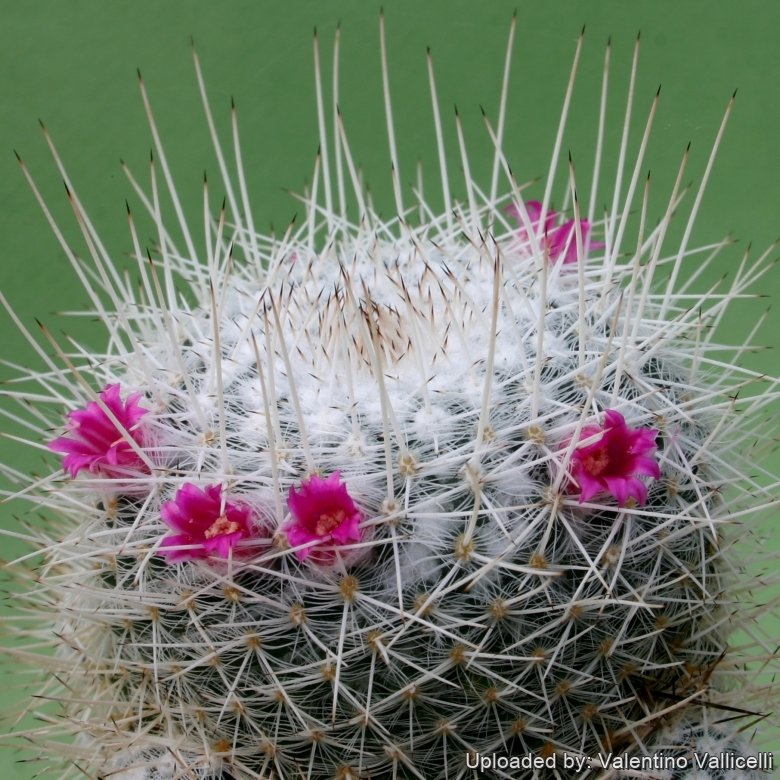
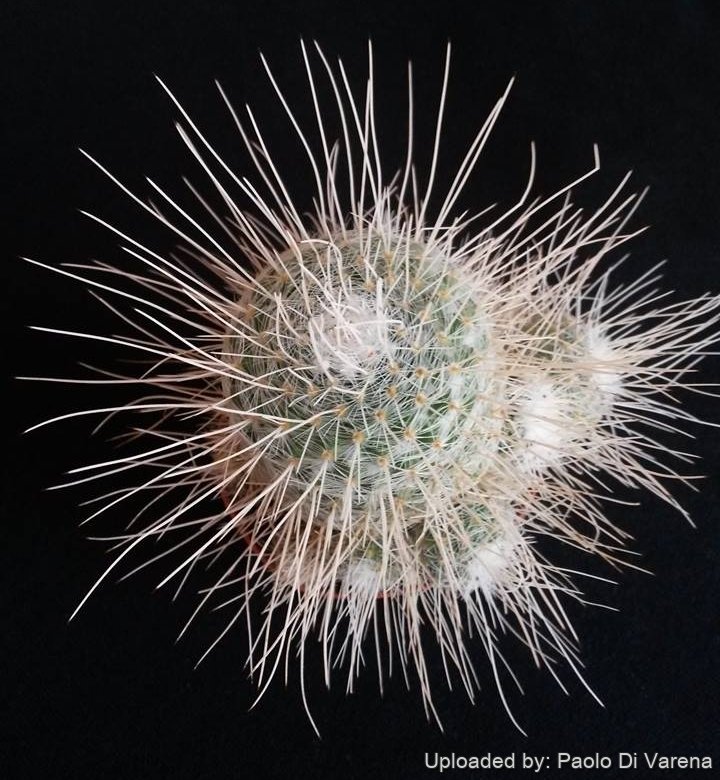
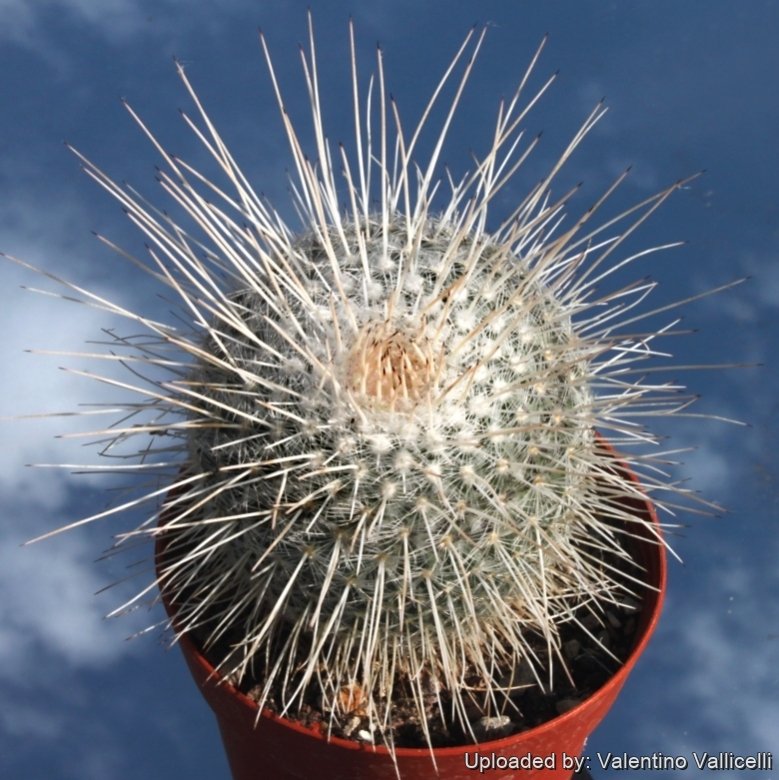
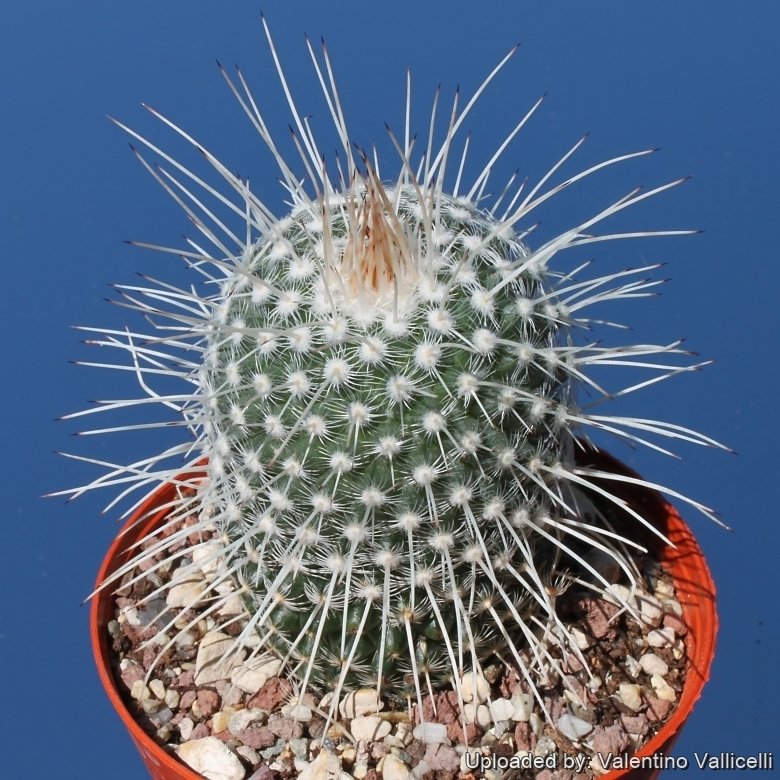
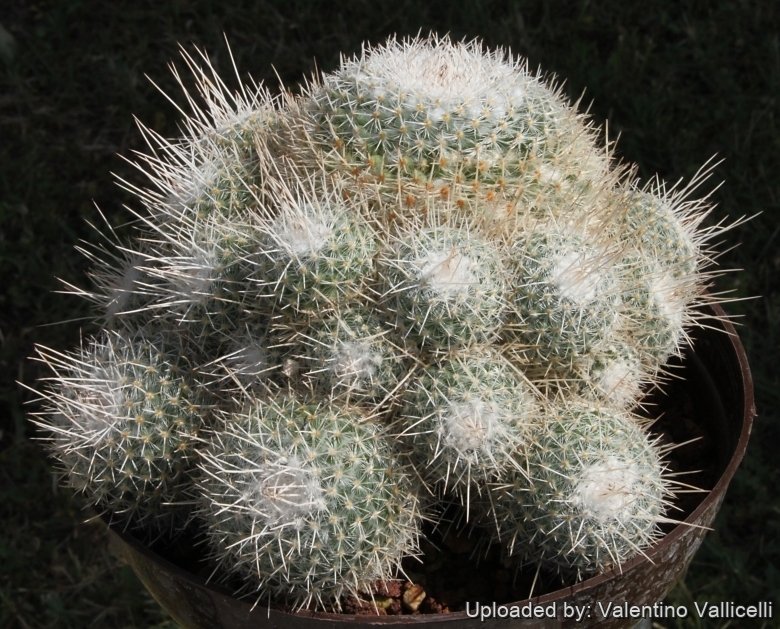
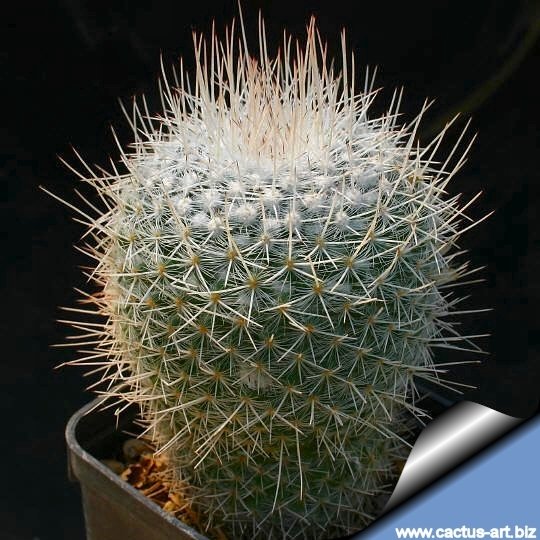
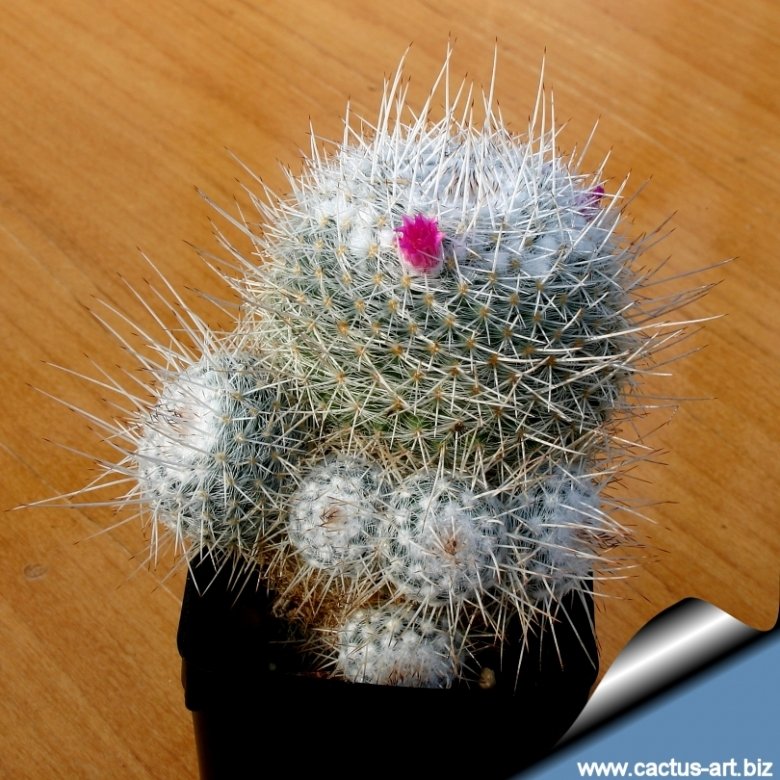
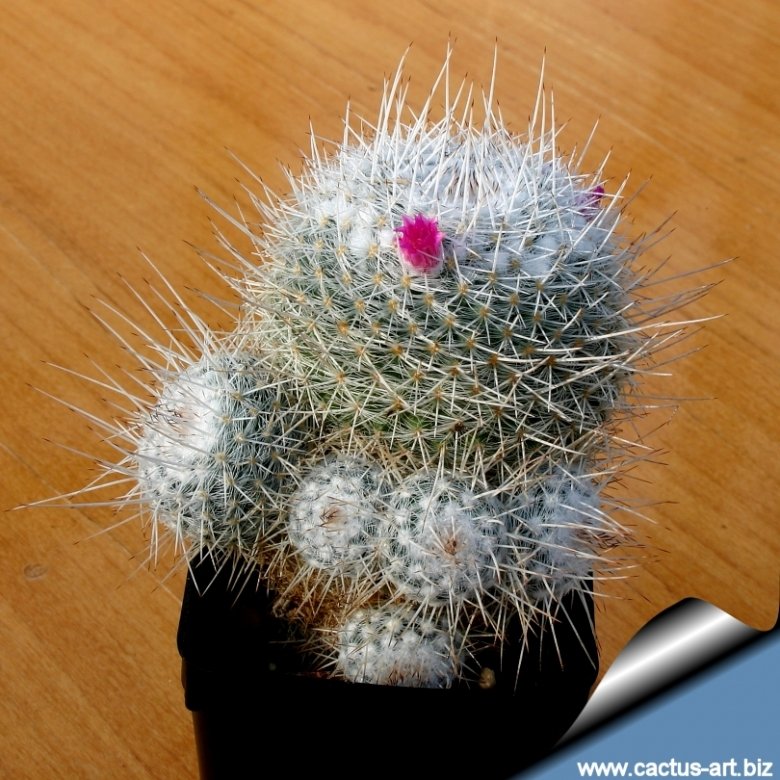
Mammillaria geminispina is a highly variable densely spined species. Some cluster aggressively and will eventually grow into a large plant form 30 to 90 cm large with many broad stiff stems. The var. nobilis is one of the finest species in the genus distinguished by fewer but longer central spines that are of the same lenght.
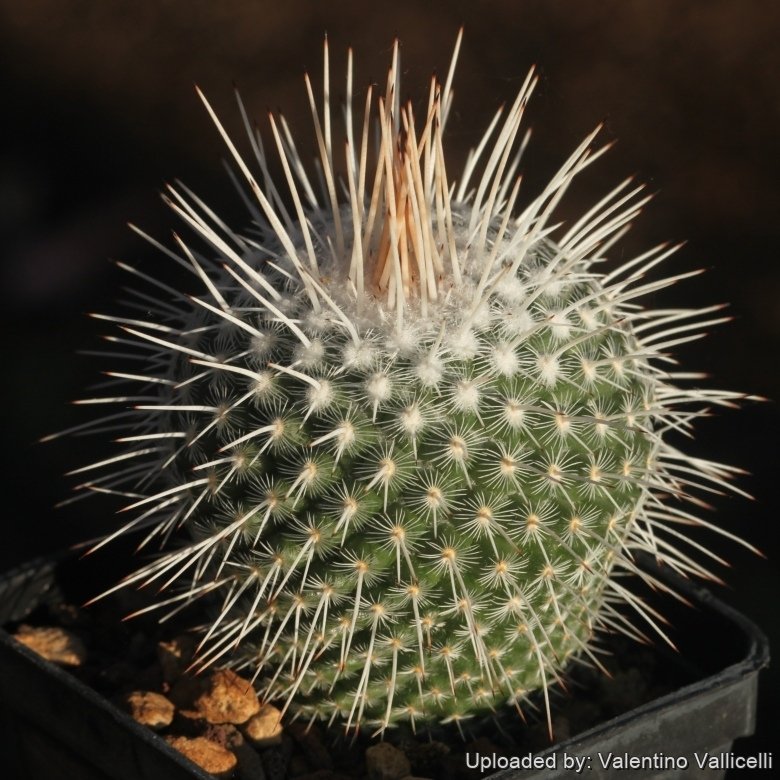
Stem: Short cylindrical, light green whit latex, up to 18 cm high and 8 cm in diameter.
Tubercles: Rounded with latex. The axil is filled by white wool and 10 - 20 long white bristles.
Spines: Spines variable but noticeably longer then in other form and varieties.
Central spines: 2 (to 6) pure white or white with dark tip that protrude far out from the rest, straight or slightly curved, up to 4 cm long (or more).
Radial spines: 16 to 20 chalky white, interlacing up to 7 mm long.
Flowers: Campanulate, pinkish to carmine red, with darker midveins, to 20 mm long and in diameter usually in a ring in the growth of the previous year but sometime more randomly over the body. If grown from seed, M. geminispina can take seven to eight years before flowering.
Fruits: Red
Seeds: Brown.
Origin and Habitat
Hidalgo, Queretaro and San Luis Potosi, Mexico. Altitude 1.000 - 1.850 m.
Cultivation and Propagation
It is a fairly easy plant to grow, don’t requires any special treatment, but need as much light as possible without burning the plant to encourage the heaviest spine formation, if kept too dark it may become overly lush and greener and could be prone to rotting due to over watering.
During the summer it is best to keep the plants outside where the temperature can rise to over 30 C with no harm to the plant. Furnish good drainage and use a an open and free draining mineral compost that allows therefore roots to breath. They like only a short winter’s rest and should be kept almost completely dry during the winter months, If the soil is allowed to be dry for too long root loss could follow but equally the same result would occur if the plants are both wet and cold. From March onwards the plant will begin to grow and watering should be increased gradually until late May when the plant should be in full growth.
Water regularly during the summer so long as the plant pot is allowed to drain and not sit in a tray of water. During hot weather you may need to water the plants more frequently so long as the plant is actively growing. From late September watering should be reduced to force the plant to go in to a state of semi dormancy, by October you should be back in to the winter watering regime.
Feeding may not be necessary at all if the compost is fresh then, feed in summer only if the plant hasn’t been repotted recently. Do not feed the plants from September onwards as this can cause lush growth which can be fatal during the darker cold months. Grown specimens resist to -4°C for a short time, but it is best to keep above 0° C to avoid ugly spots on the plant epidermis.
Propagation: Seeds or by stem cuttings from adult plants.
Bibliography
Major references and further lectures.
-
Robert T. Craig “The Mammillaria handbook: with descriptions, illustrations, and key to the species of the genus Mammillaria of the Cactaceae” E P Publishing, 1945
-
John Pilbeam “Mammillaria The Cactus File Handbook” Cirio Pub. Services, 01/Dec/1999
-
Edward Anderson “The Cactus family” Timber Press, Incorporated, 2001
-
James Cullen, Sabina G. Knees, H. Suzanne Cubey “The European Garden Flora Flowering Plants: A Manual for the Identification of Plants Cultivated in Europe, Both Out-of-Doors and Under Glass” Cambridge University Press, 11/Aug/2011
-
David R Hunt; Nigel P Taylor; Graham Charles; International Cactaceae Systematics Group. “The New Cactus Lexicon” dh books, 2006
-
Gómez-Hinostrosa, C., Sánchez , E., Guadalupe Martínez, J. & Bárcenas Luna, R. 2013. Mammillaria geminispina. In: IUCN 2013. “IUCN Red List of Threatened Species”. Version 2013.2. <www.iucnredlist.org>. Downloaded on 16 March 2014.
Gallery