Publication: Mém. Mus. Hist. Nat. 17: 113. 1828
Description
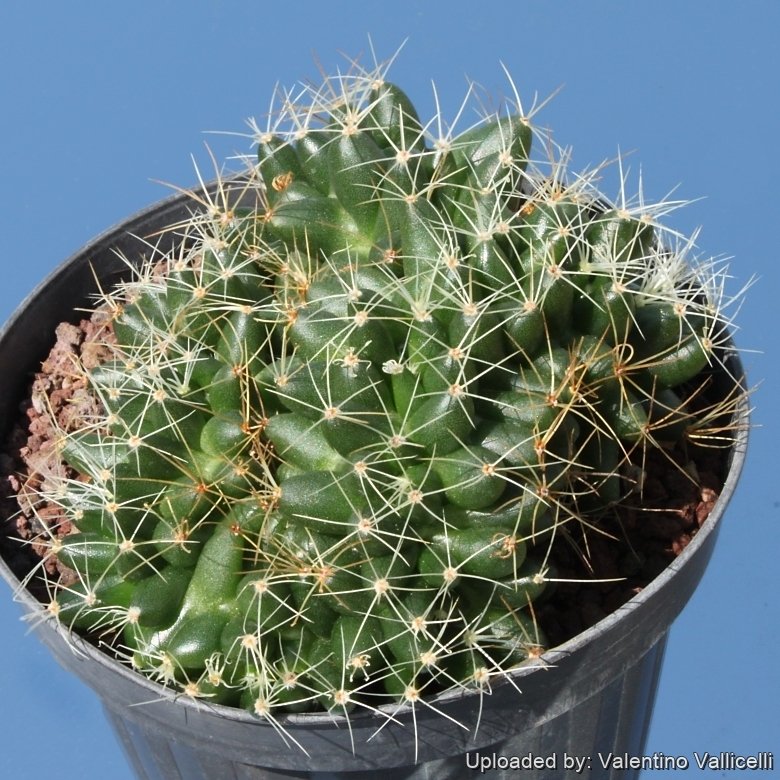
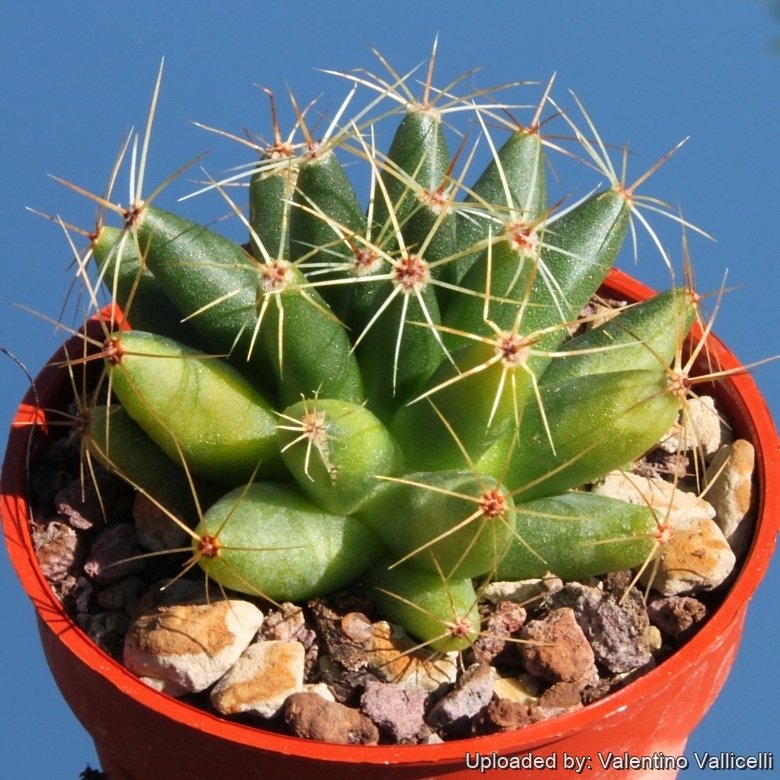
At first solitary, but clustering very young and forming dense clusters to 15 cm or more broad. With 10-30(-50) branches.
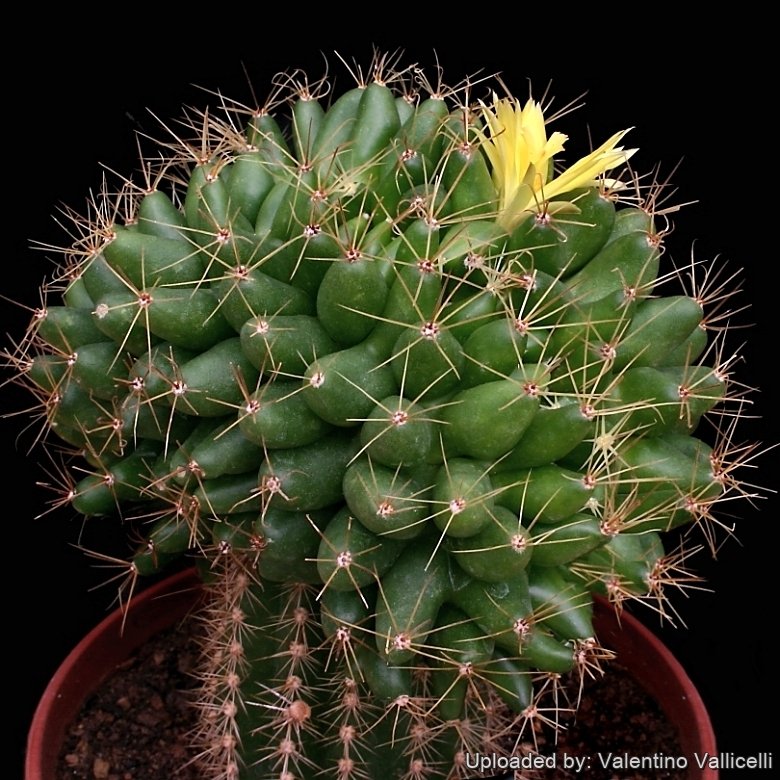
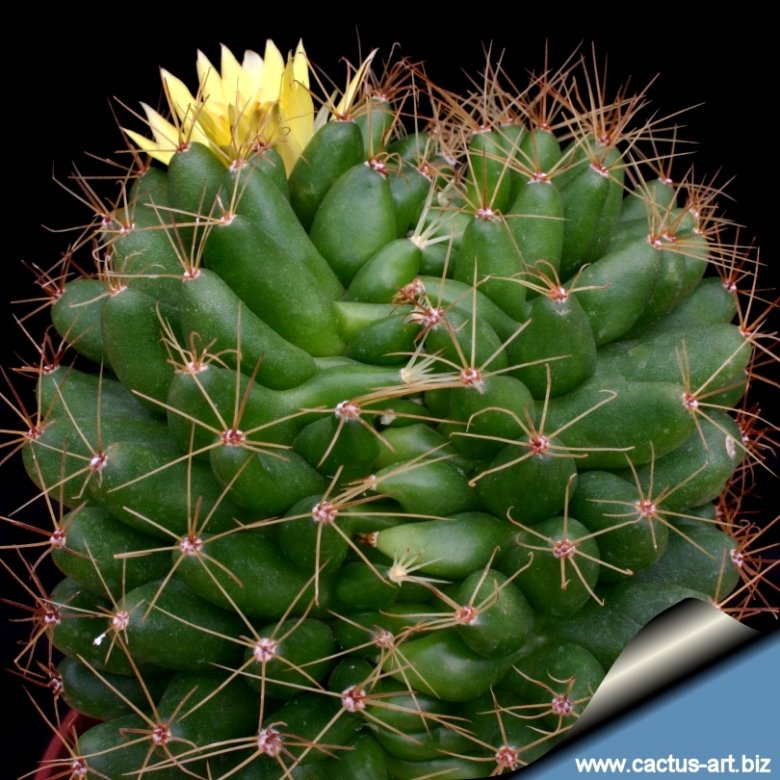
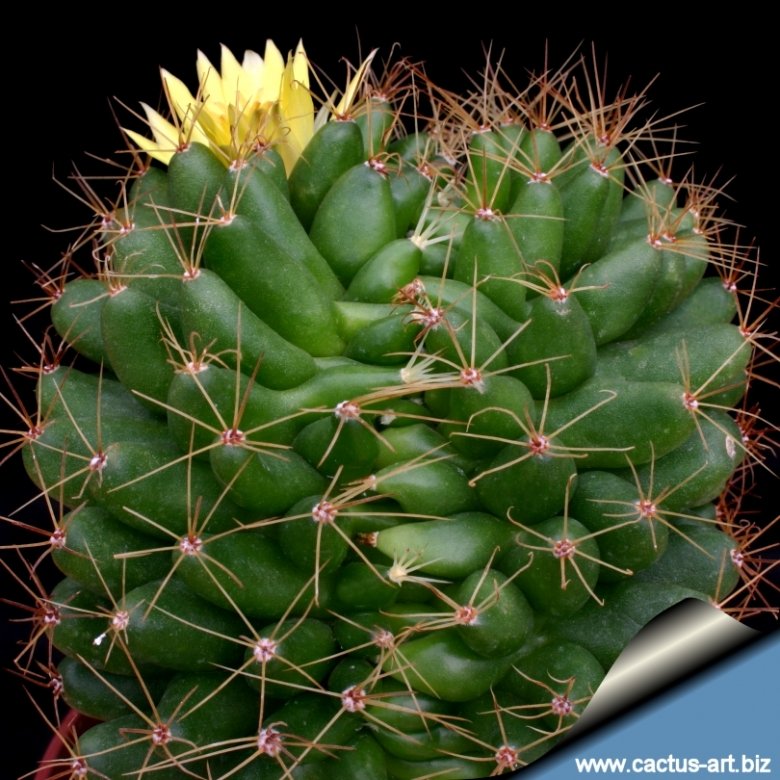
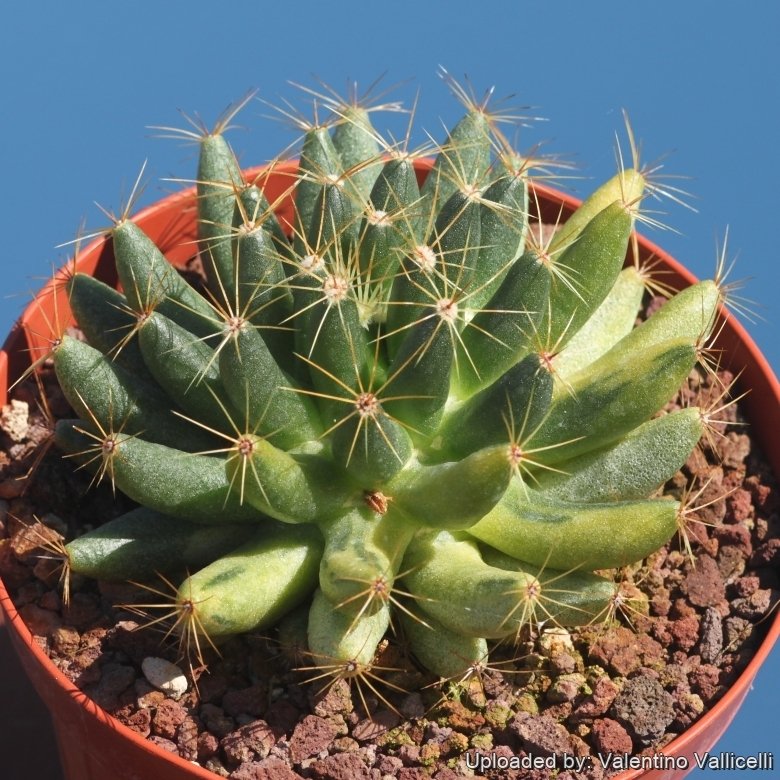
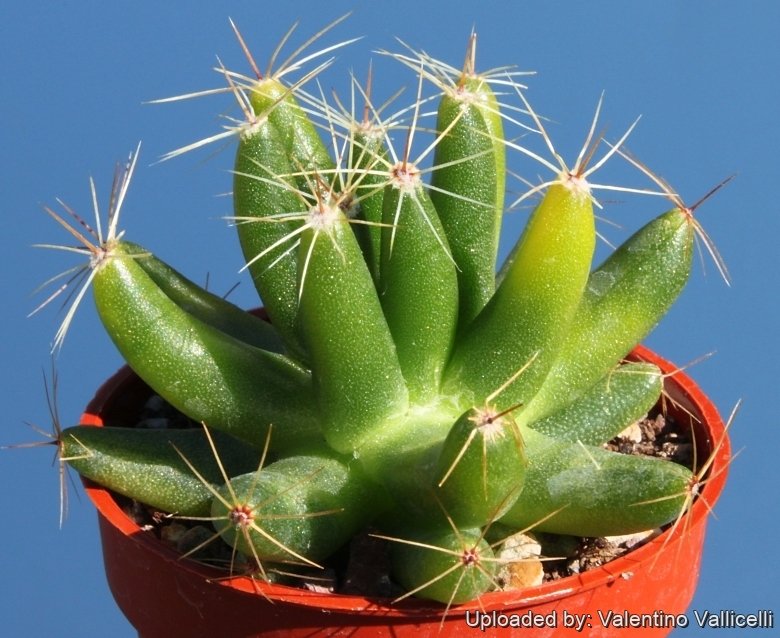
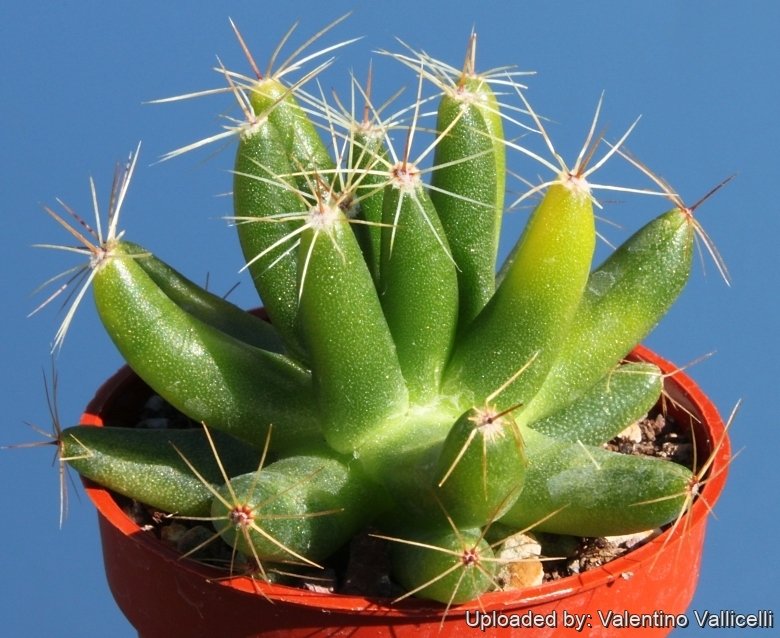
Stem: Spherical, green, 3-6(12 cm) cm in diameter, up to 10 tall. Without latex.
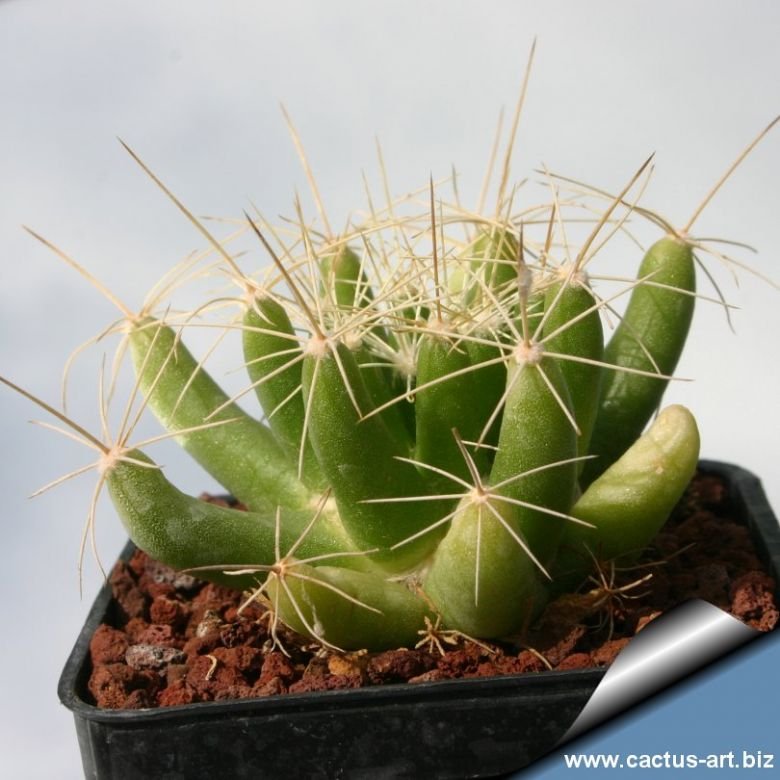
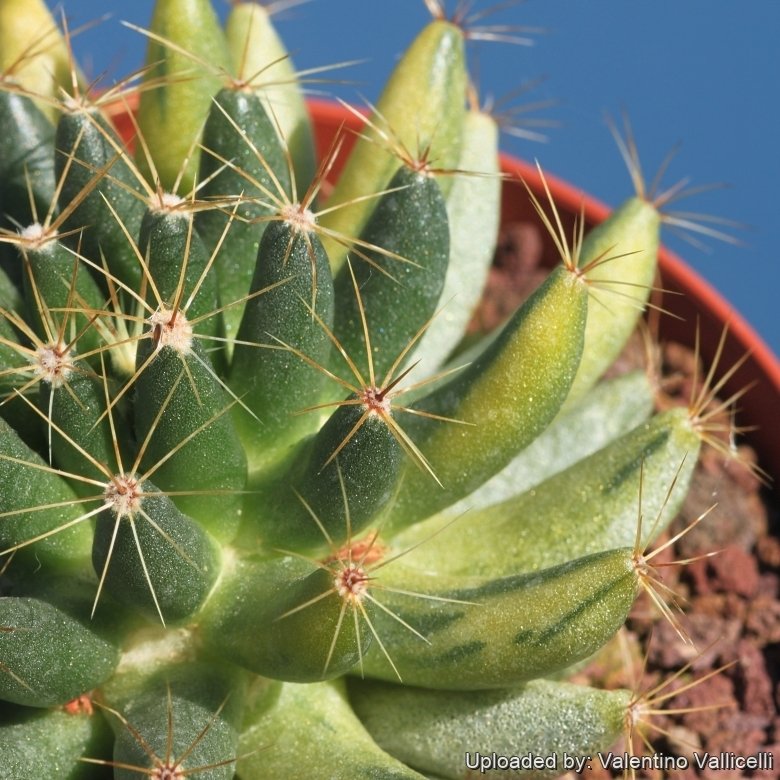
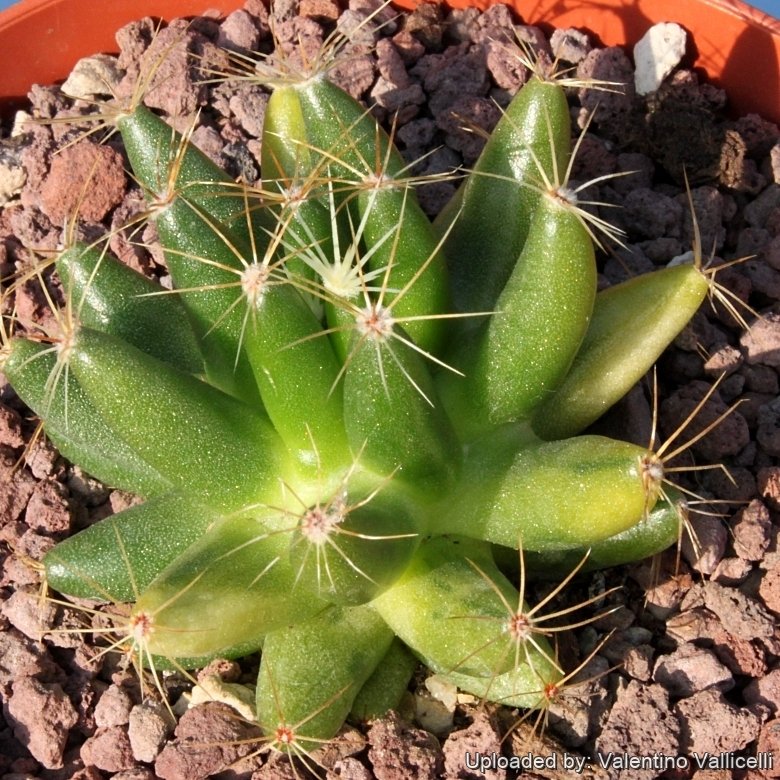
Tubercles: Very long soft and flaccid 12-25 ? 5-8 mm. the axil is sparsely woolly, without bristles.
Radial spines: About 8 to 10 for 12 to 20 mm long white-yellowish or brown.
Central spines: Usually 1 central spine, to 25 mm long, not hooked or curved, similar to radial spines. No Central spine for the var. uberiformis.
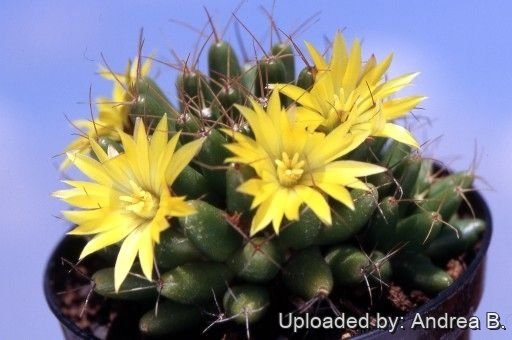
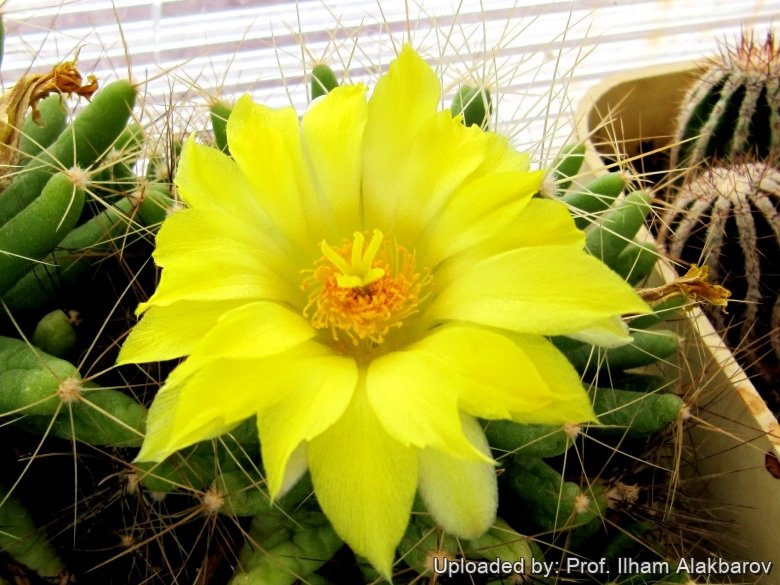
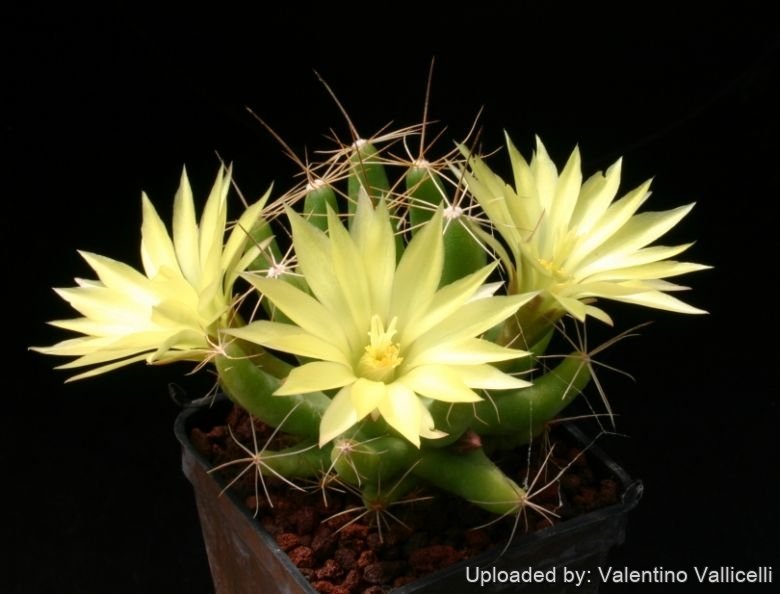
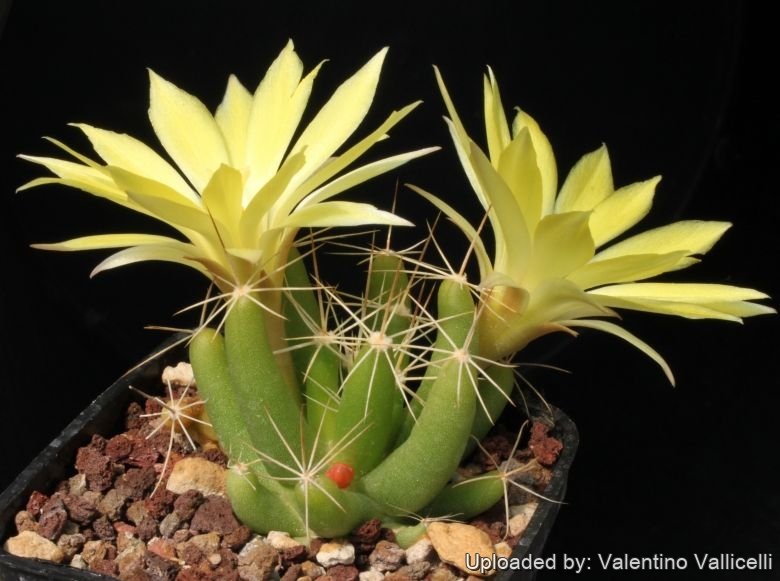
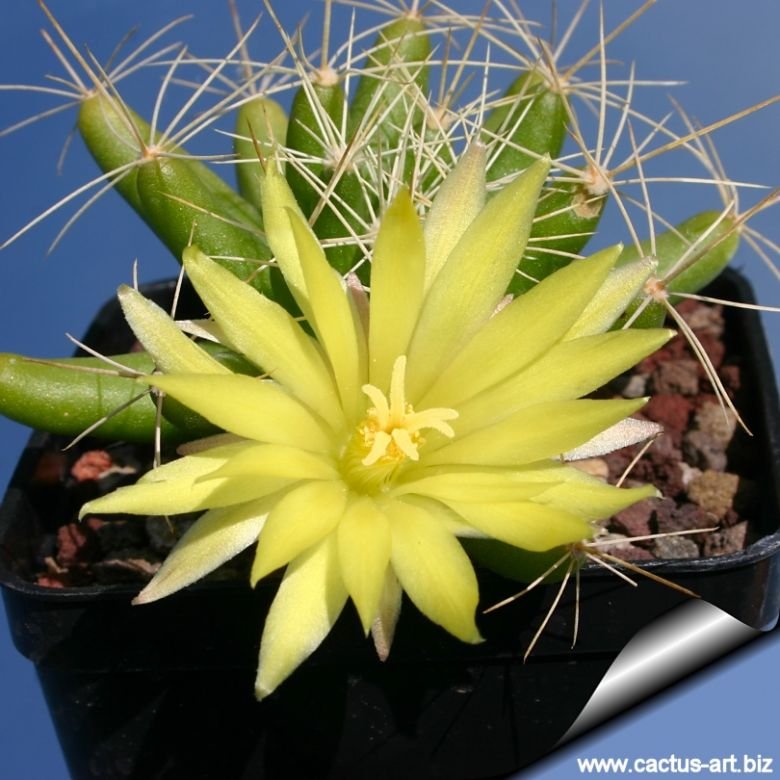
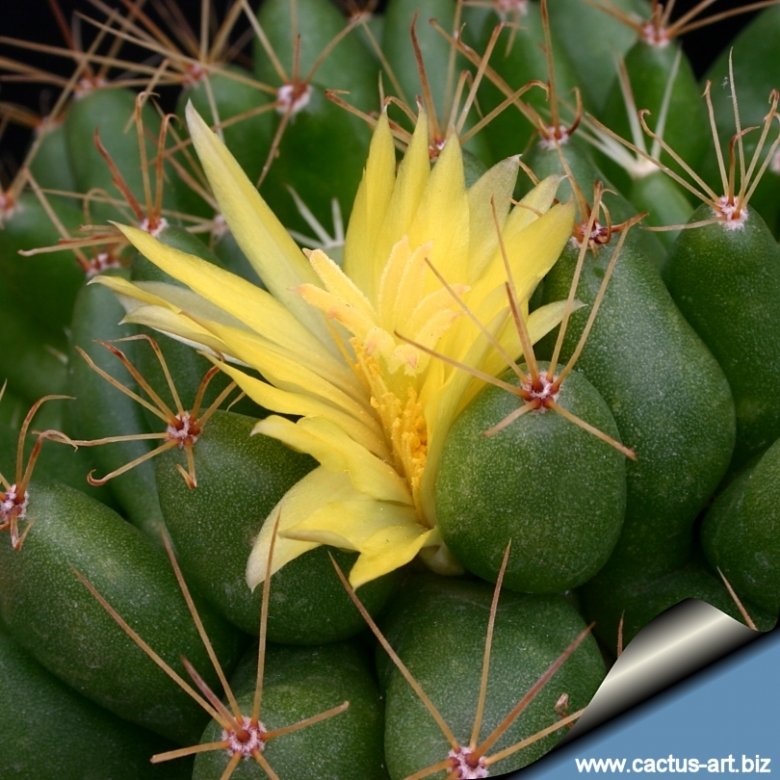
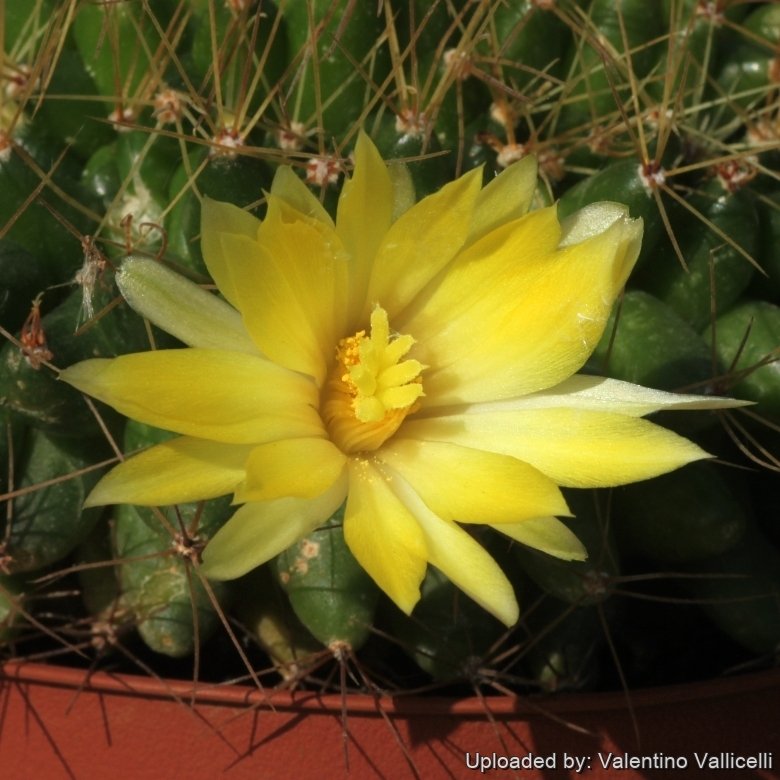
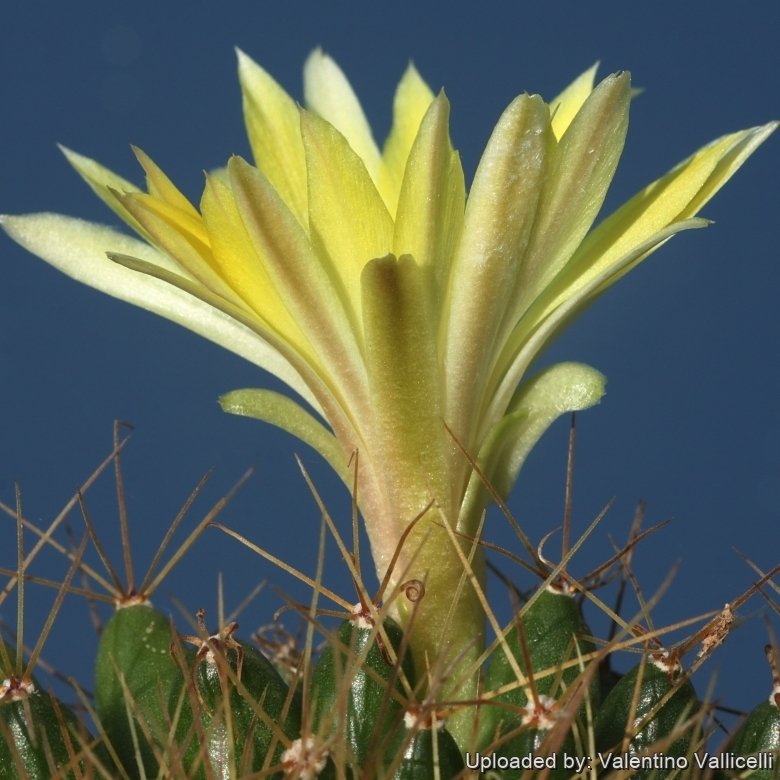
Flowers: Very large for this genus, 4-6 cm long, 4.5-6 cm wide with bright yellow petals in May-July; stigmas yellow.
Fruits: yellowish to green.
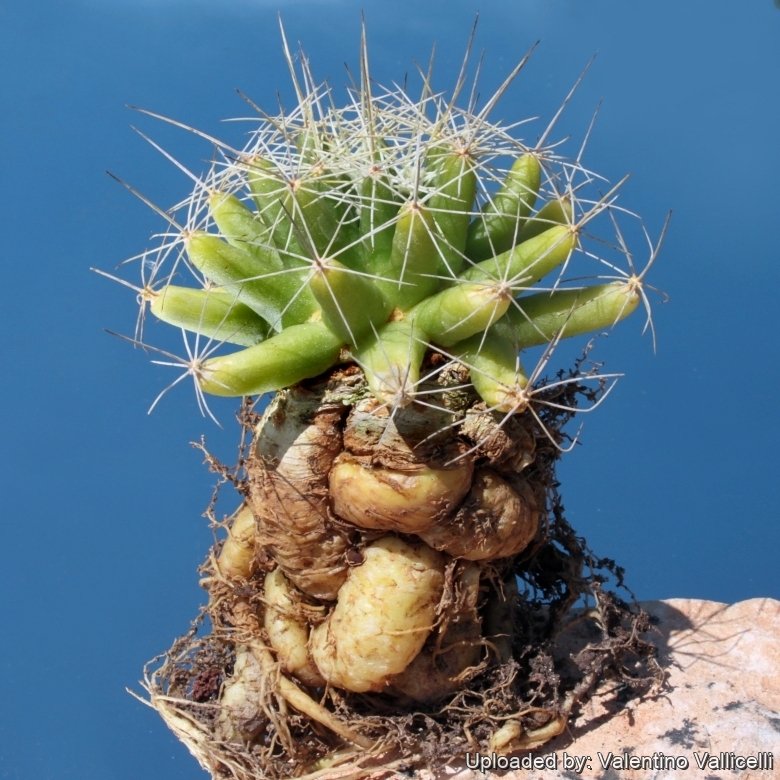
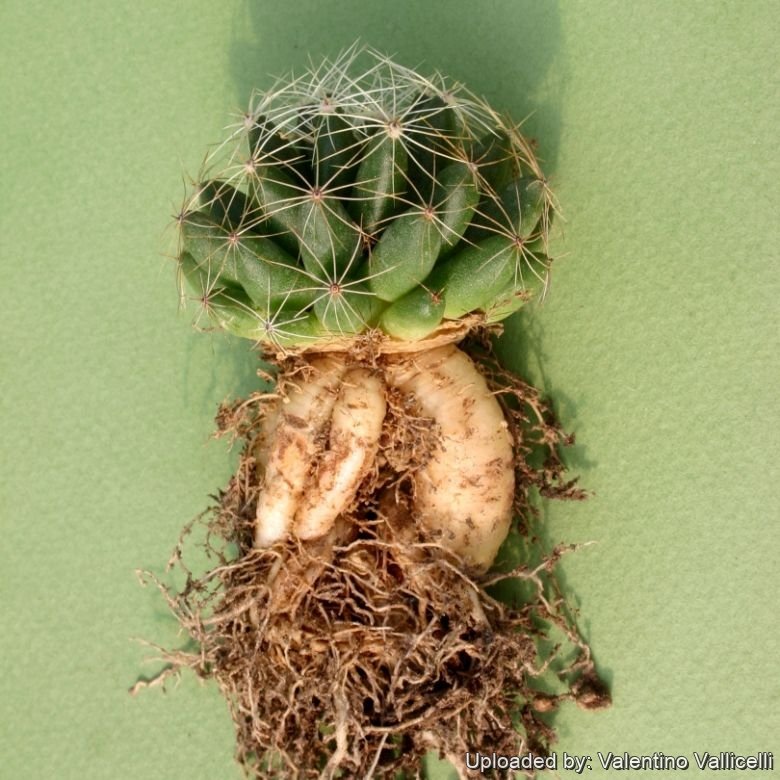
Roots: Thick taproots, large in upper portion.
Origin and Habitat
Guanajuato, Hidalgo, and Querétaro (extent of occurrence ca 15,000 km2). The species is rare across its range, severely fragmented and known from a total of 20 subpopulations.
Altitude range:* Between 1000 and 2400 metres above sea level.
Habitat and Ecology: This cactus is found on limestone and in volcanic soils, under low shrubs and sparse vegetation together whit: Astrophytum ornatum, Mammillaria wildii, Echinofossulocactus anfractuosus, Selenicereus spinulosus, Ferocactus glaucescens, Ferocactus histrix, Echinocactus platyacanthus, Brahea dulcis, Myrtillocactus geometrizans, Cephalocereus senilis, Stenocereus dumortieri, Opuntia imbricata, Echeveria coccinea, Tillandsia grandis, Hechtia podantha, Agave stricta, Agave celsii, Fouquieria purpusii, Bursera morelensis. This cactus is illegally collected in the wild as an ornamental, although this is localized. In some areas this species is trampled by cattle ranching.
Cultivation and Propagation
An easy species that will form large clumps with age. Mammillaria longimamma has a fairly large tap root, and should be kept in a deep pot with a very draining mineral substrate. Watering during the active growing season (spring and summer); this will encourage steady growth, and prevent the large tubercles from becoming flabby. But be careful with watering, which all thick rooted species require (rot sensitive). Keep dry during the winter rest, when the plant may pull near the surface of the potting mix. Fertilize every 2 weeks with diluted high potassium fertilizer when the plant is in bud. Need light shade to shade.
Propagation: Seeds, offsets, tubercles (Tubercles can be removed from the plant, let to dry a day or 2, and planted)
Bibliography
Major references and further lectures.
-
Robert T. Craig “The Mammillaria handbook: with descriptions, illustrations, and key to the species of the genus Mammillaria of the Cactaceae” E P Publishing, 1945
-
John Pilbeam “Mammillaria The Cactus File Handbook” Cirio Pub. Services, 01/Dec/1999Edward Anderson “The Cactus family” Timber Press, Incorporated, 2001
-
James Cullen, Sabina G. Knees, H. Suzanne Cubey “The European Garden Flora Flowering Plants: A Manual for the Identification of Plants Cultivated in Europe, Both Out-of-Doors and Under Glass” Cambridge University Press, 11/Aug/2011
-
David R Hunt; Nigel P Taylor; Graham Charles; International Cactaceae Systematics Group. “The New Cactus Lexicon” dh books, 2006
-
Gómez-Hinostrosa, C., Sánchez , E., Guadalupe Martínez, J. & Bárcenas Luna, R. 2013. Mammillaria longimamma. The IUCN Red List of Threatened Species. Version 2014.2. <www.iucnredlist.org>. Downloaded on 15 August 2014
-
Ulises Guzmán, Salvador Arias, Patricia Dávila, “Catálogo de cactáceas mexicanas” Universidad Nacional Autónoma de México, Mexico 2003, p.114.
-
Urs Eggli, Leonard E. Newton: “Etymological Dictionary of Succulent Plant Names” Birkhäuser 2004
From llifle page Cactus alpinus
Notes
This plant has not been identified. Its large flowers, 2.5 cm. broad, suggest a species of
Coryphantha or a form of Mammillaria longimamma. It was collected by Karwinsky in the state of Oaxaca.
Source: Cactus alpinus, LLIFLE - Encyclopedia of living forms, CC-BY-SA, retrieved 2026-10-25.
From llifle page Dolichothele longimamma var. gigantothele
Origin and Habitat
N of Santa Maria, 2000-3000 m, Tucumán (Argentina)
Source: Dolichothele longimamma var. gigantothele, LLIFLE - Encyclopedia of living forms, CC-BY-SA, retrieved 2026-10-25.
From llifle page Cactus longimamma f. cristata
Description
This is a very nice crested Mammillaria, easily recognizable for its long soft fresh green tubercle.
Stem: Very fat (quite large for a crested plant ( 8 to 10 cm thick) it can form in age a large convoluted mound.
Spines: 8 to 10 all quite similar in shape, thin, needle like, yellow to amber coloured up to 20 mm long, of which one central spine slightly longer (up to 25 mm long)
Flowers: Very large for this genus, 4-6 cm. long, 4.5-6 cm. wide with bright yellow petals in May-July.
Remarks: The cause of cresting is not fully explained. Biologists disagree as to why some plants grow in this unusual form. Some speculate that it is a genetic mutation. Others say it is the result of a strike of lightning or freeze damage, but whatever the stimulus, the growth point of the stem has switched from a geometric point, to a line, which folds and undulates as the crest expands. Though these crested M. longimamma are very rare, cresting occurs naturally, and can be encountered in many other cactus species.
Origin and Habitat
Garden origin.
Cultivation and Propagation
The grafted plants are easy to grow and will form a large brain-like mounds with age. Watering during the active growing season (spring and summer); this will encourage steady growth, and prevent the large tubercles from becoming flabby.
The plants on their own roots has fairly large tuberose roots, and should be kept in a deep pot with a very draining mineral substrate. But be particularly careful with watering, which all thick rooted species require (rot sensitive). Keep dry during the winter rest, when the plant may pull near the surface of the potting mix.
Propagation: Grafting or stem cutting.
Source: Cactus longimamma f. cristata, LLIFLE - Encyclopedia of living forms, CC-BY-SA, retrieved 2026-10-25.
From llifle page Cactus longimamma f. variegata
Description
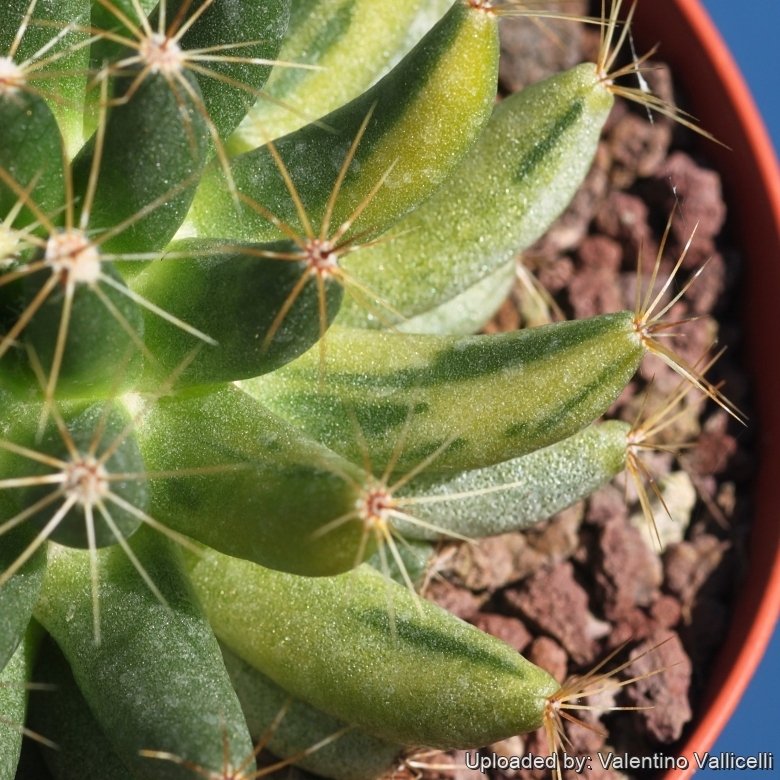
At first solitary, but clustering very young and forming dense clusters to 15 cm or more broad. With 10-30(-50) braches. The variegata (variegated form) has tubercles stripped in pale yellow and green.
Stem: Spherical, green, 3-6(12 cm) cm in diameter, up to 10 tall. Without latex.
Tubercles: Very long soft and flaccid 12-25 ? 5-8 mm. the axil is sparsely wooly, without bristles.
Radial spines: About 8 to 10 for 12 to 20 mm long white-yellowish or brown.
Central spines: Usually 1 central spine, to 25 mm long, not hooked or curved, similar to radial spines. No Central spine for the var. uberiformis.
Flowers: Very large for this genus, 4-6 cm long, 4.5-6 cm wide with bright yellow petals in May-July; stigmas yellow.
Fruits: Yellowish to green.
Roots: Thick taproots, large in upper portion.
Origin and Habitat
Garden origin (Nursery produced cultivars).
Cultivation and Propagation
An easy species that will form large clumps with age. Mammillaria longimamma has a fairly large tap root, and should be kept in a deep pot with a very draining mineral substrate. Watering during the active growing season (spring and summer); this will encourage steady growth, and prevent the large tubercles from becoming flabby. But be careful with watering, which all thick rooted species require (rot sensitive). Keep dry during the winter rest, when the plant may pull near the surface of the potting mix. Fertilize every 2 weeks with diluted high potassium fertilizer when the plant is in bud. Need light shade to shade.
Propagation: Offsets, tubercles (Tubercles can be removed from the plant, let to dry a day or 2, and planted)
Notes
Variegated Mammillaria can be found (although not commonly) in cultivation, and some of these variegated plants have a place in any collection. All variegates are mutants. Something has gone wrong with the cellular structure of the growth tip (apical meristem) of the plant. As a result of this mutation, chlorophyll is missing from some or all layers of the plant epidermis. The odd variegate appears in many seedling batches in a small percentage, and is generally separated from normal plants. Variegated plants grow more slowly, and are generally smaller than non-variegates of the same species. Coloured areas are also generally weaker, and more susceptible to fungus, sunburn and other defects.
Source: Cactus longimamma f. variegata, LLIFLE - Encyclopedia of living forms, CC-BY-SA, retrieved 2026-10-25.
Cultivars and forms (3)
Gallery