Publication: Monatsschr. Kakteenk. 1915 xxv. 76. ( = M. marcosii ? )
From llifle page Mammillaria marcosii
Description
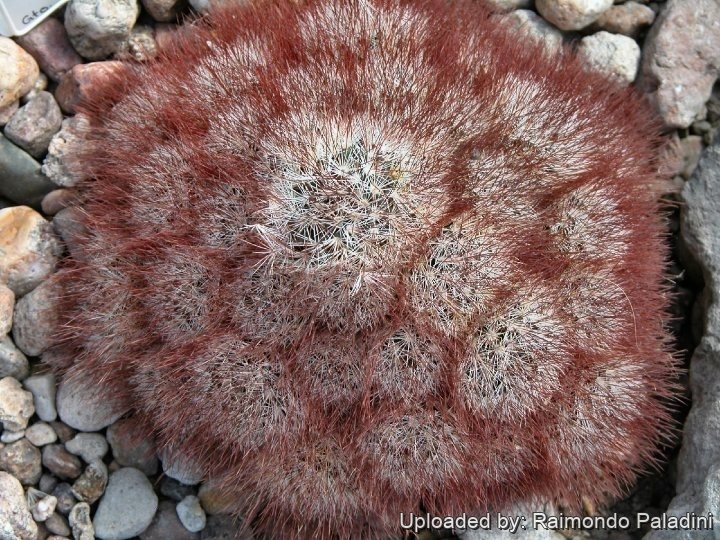
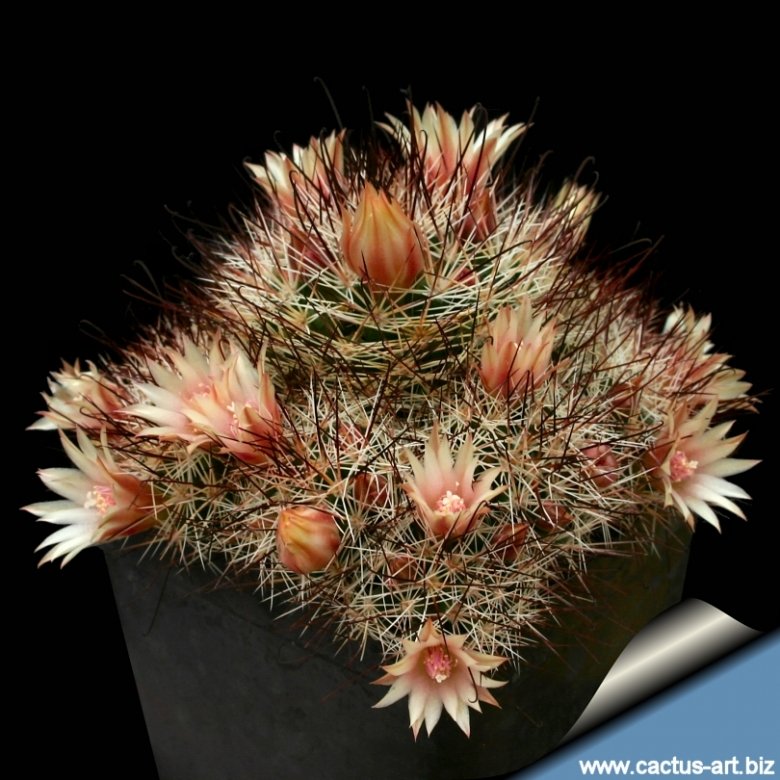
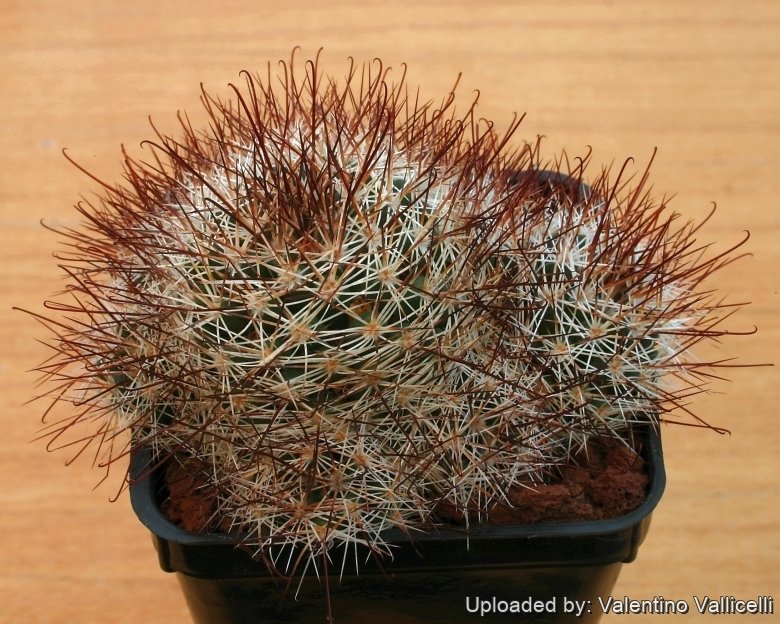
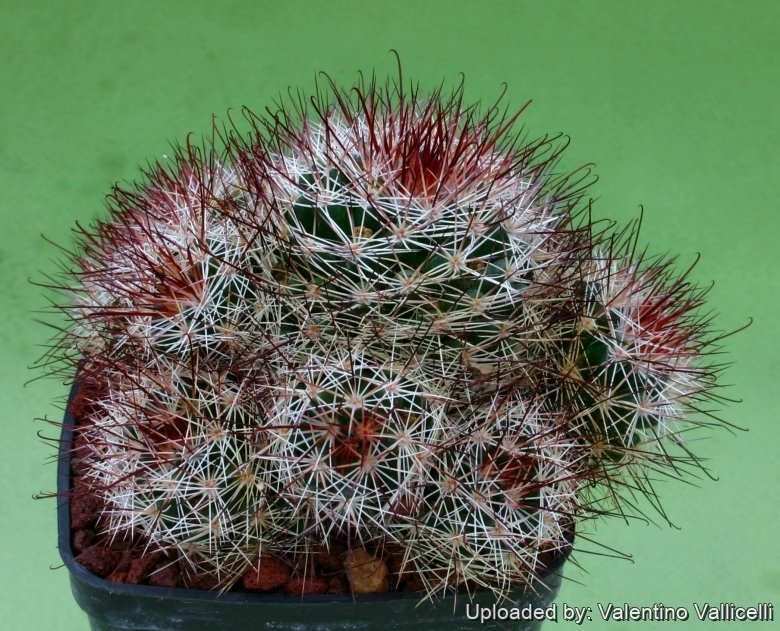
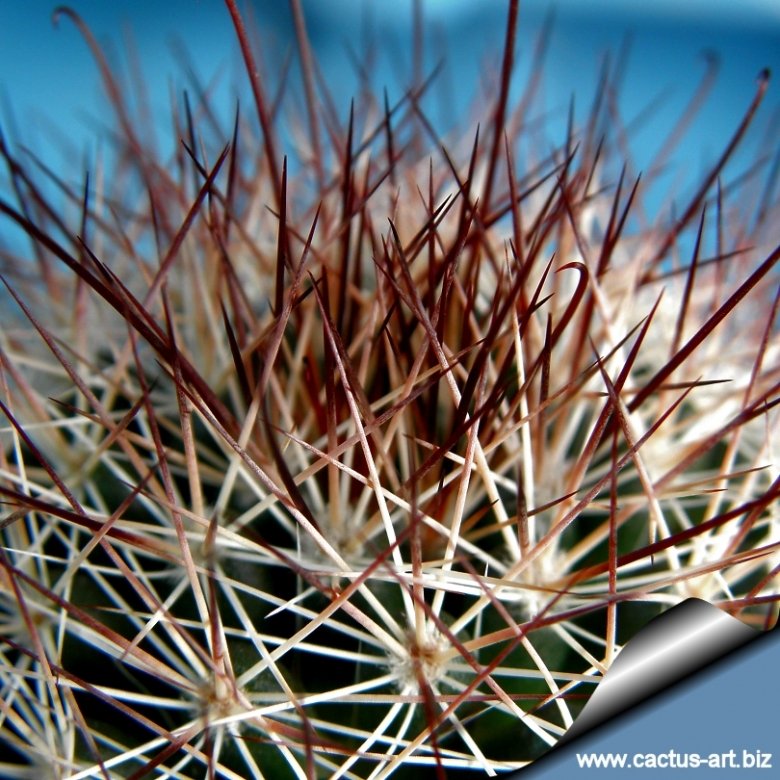
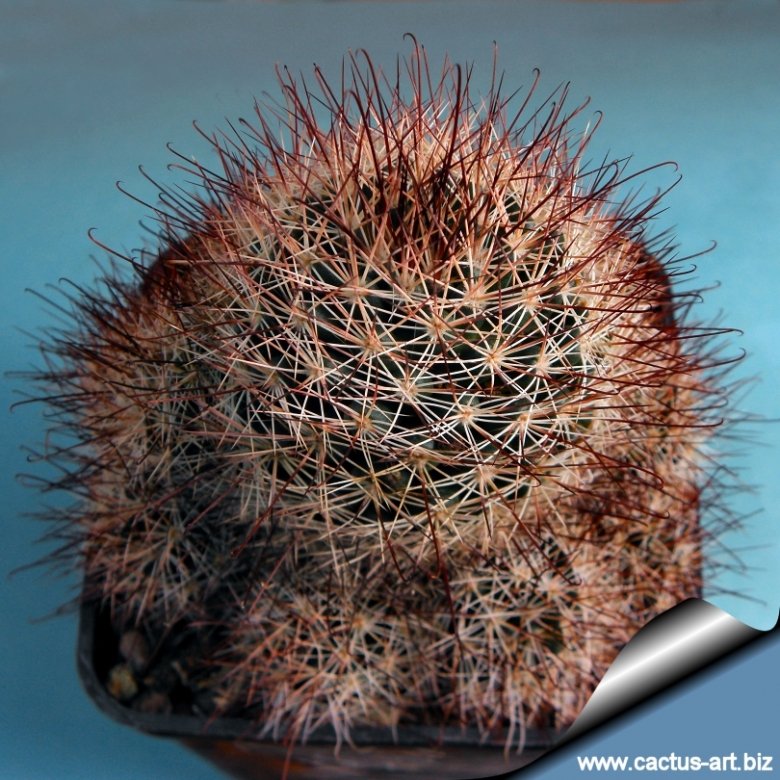
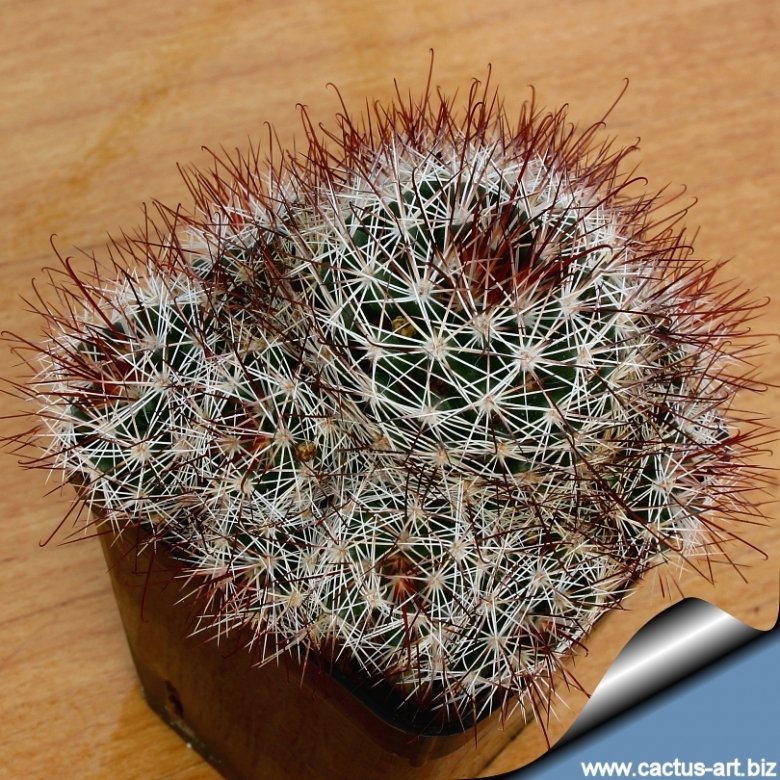
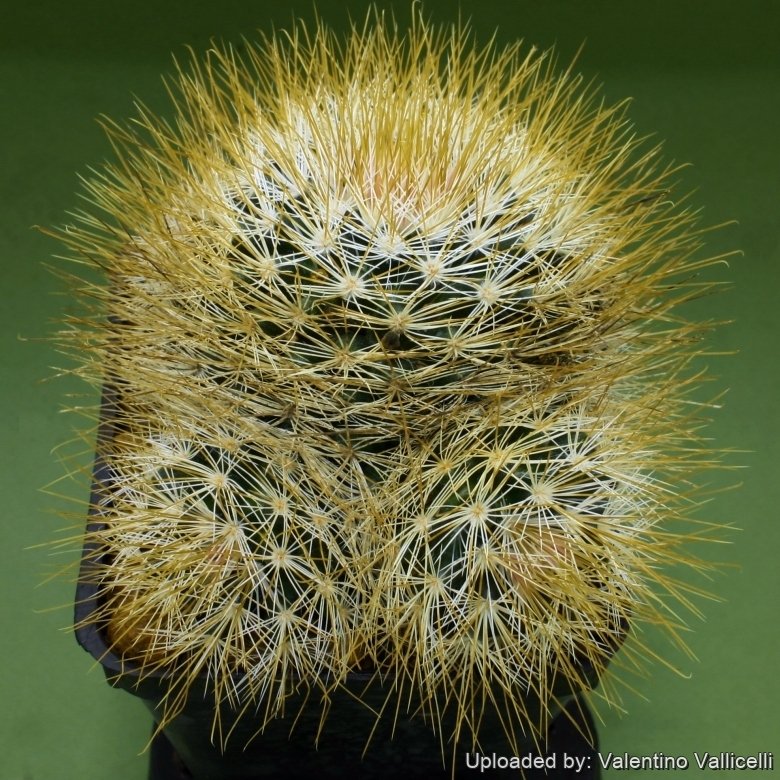
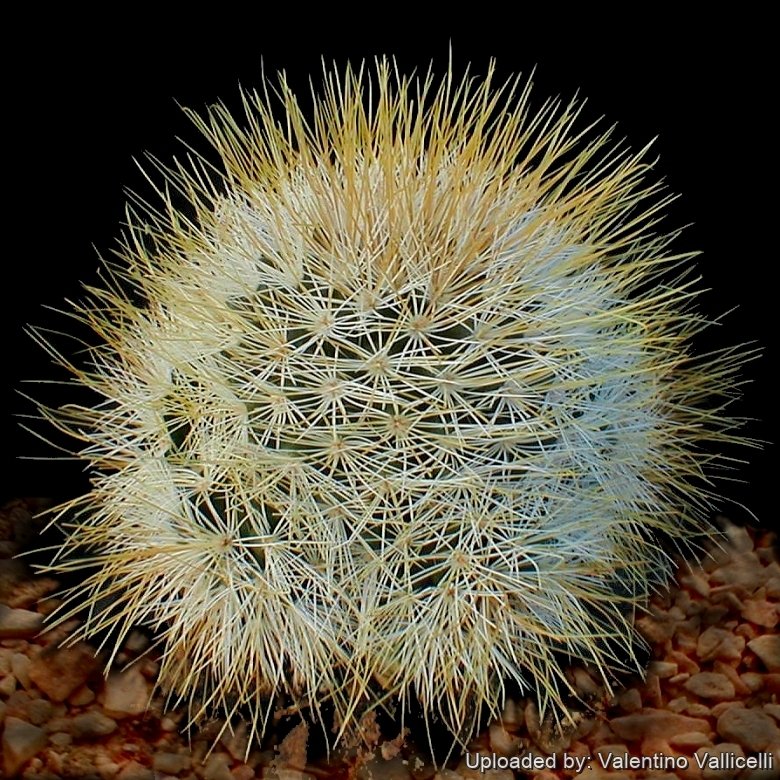
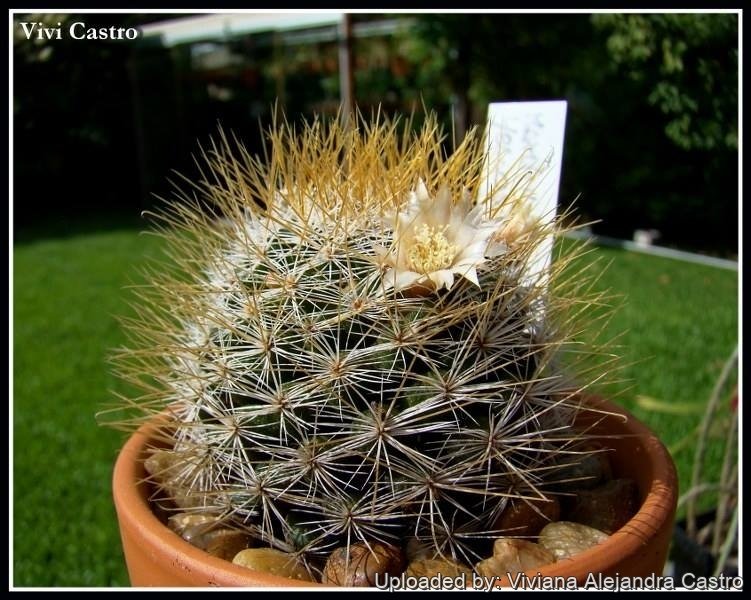
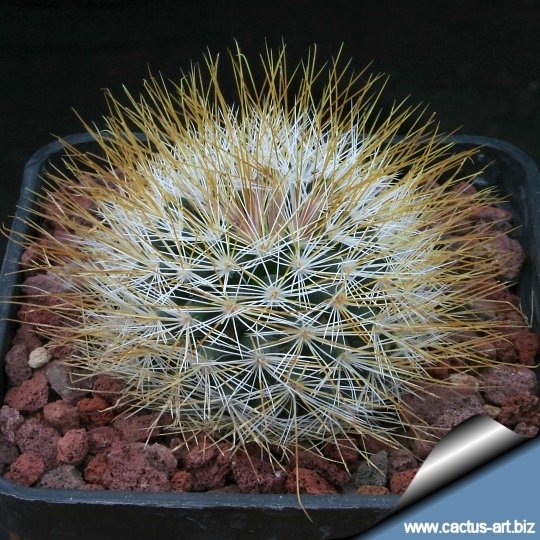
Mammillaria marcosii is a small cactus that readily forms irregular clumps with dense spination. In habitat the clumps may grow up to 25 cm in diameter, with up to 30 heads. The spines are bicoloured (usually red and white, but they may occur in a wide range of colours).
Derivation of specific name: This member of the Cactaceae family was given this name in by the Mexican cactus grower Marcos Sierra Pichardo from the city of San Miguel de Allende, who discovered the species.
Stems: Low, round to short cylindrical, up to 5 cm in diameter. Without latex.
Tubercles: Soft, cylindrical, with round tips. In the axil there is wool and up to 15 bristles, up to 15 mm long.
Radial spines: 16-25, radiating, needle-like, straight, 4-12 mm long.
Central spines: 7-14, mostly needle-like, radiating, ascending, white, yellow, reddish brown or brown, 10-20 mm long, one of which is pointing downward and more or less hooked, all others straight.
Flowers: Bell shaped, to 15 mm long and up to 10 mm in diameter, not rising above the spines, yellowish or creamy-white, with pink throat and darker pinkish midrib, stigma pale yellow.
Fruits: Red, egg-shaped, 6 - 13 mm long, not arising above the spines.
Seeds: Brownish-black.
Origin and Habitat
Mammillaria marcosii is endemic to Guanajuato, Mexico, where it is found east of Xichú (El Guamúchil, Xichú to El Guamúchil to Atarjea) and grows over a range of less than 10 km². The current population is estimated to be less than 150 individuals.
Altitude range: This species is found at an altitude around 1,200-1,400 metres above sea level.
Habitat and Ecology: This species is found on steeply sloping volcanic rocky terrain in semi-desert (submontane matorral). Generation length is 5-10 years. This species is threatened by extensive illegal overcollecting. The habitat is now well known to both commercial and amateur collectors. The population has diminished by an estimated 90% due to illegal collecting and there is continuing decline of mature individuals.
Cultivation and Propagation
Mammillaria marcosii isn’t famous for being easy to cultivate, but in good conditions with excellent ventilation, it grows without difficulty. It is especially sensitive to over-watering. So careful watering and an open mineral potting soil are a must. Avoid the use of peat or other humus sources in the potting mixture.
Don’t add limestone to the potting mix, which must be moderately acidic. Can be sensitive to frost. Requires maximum sun exposure to reach its full potential. and in order to achieve success in flowering.
A winter rest that allows the plant to shrivel will encourage flowering and long term survival. Be careful to encourage slow growth.
Propagation: Direct sow after last frost (usually) or division, wait until the offsets that appear at the base of old clustered specimens are 1/3 the size of the parent and then detach and plant.
Bibliography
Major references and further lectures
-
Fitz Maurice, B, Fitz Maurice, W.A., Guadalupe Martínez, J. & Sánchez , E. 2013. Mammillaria marcosii. The IUCN Red List of Threatened Species 2013: e.T40840A2936060. Downloaded on 31 March 2016.
-
Anderson, E.F. “The Cactus Family”. Timber Press, Portland. 2001
-
Fitz Maurice, W. A., Fitz Maurice, B. and Glass, C. “A new species of Mammillaria (M. marcosii), Series Stylothelae, from northwestern Guanajuato, Mexico.” Cactus and Succulent Journal (US) 69(1): 10-14, ills. 1997.
-
Fitz Maurice, W. A., Fitz Maurice, B. and Glass, C. “Repercussions - Mammillaria marcosii.” Mammillaria Society Journal 37(4): ?.1997.
-
Hunt, D. “CITES Cactaceae Checklist”, 2nd ed. Royal Botanic Gardens, Kew and International Organization for Succulent Plant Study (IOS). 1999.
-
Pilbeam, J. “Mammillaria.” Cirio Publishing Services, Southampton. 1999.
-
Charles Glass “People and Their Plants: Marcos Sierra Pichardo and Mammillaria marcosii” British Cactus & Succulent Journal, pag 169, Cactus & Succulent Society, 1997
-
Urs Eggli, Leonard E. Newton “Etymological Dictionary of Succulent Plant Names”. Birkhäuser 2004
Source: Mammillaria marcosii, LLIFLE - Encyclopedia of living forms, CC-BY-SA, retrieved 2026-10-25.
From llifle page Mammillaria marcosii Yellow Spines
Description
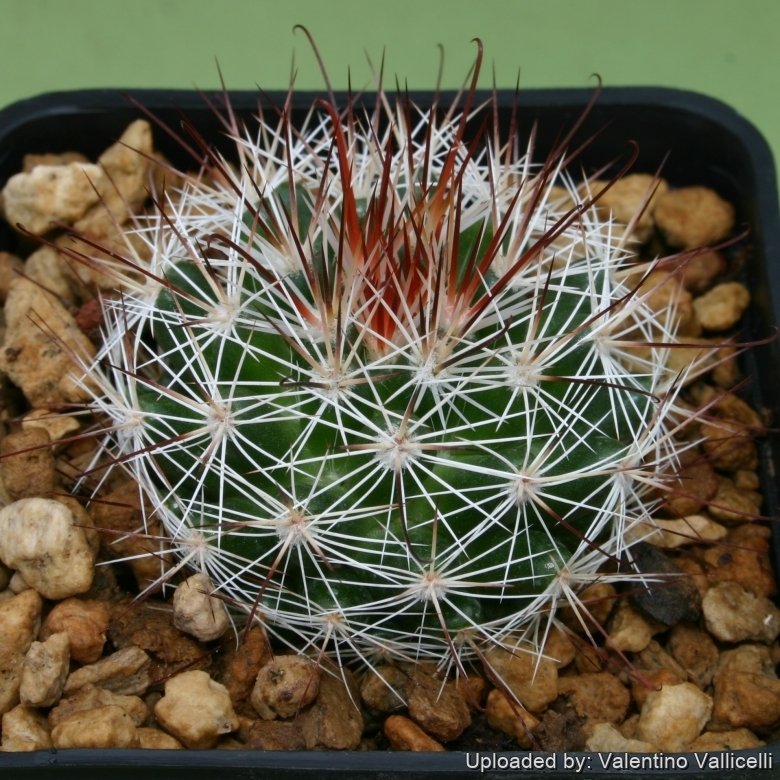
Mammillaria marcosii Yellow Spines forms irregular clumps of low round to short cylindrical stems up to 5 cm in diameter. Tubercle are soft, cylindrical, with round tips. In the axil there are wool and up to 15 bristles to 15 mm long.
Radial spines: 16 - 25, radiating, needle-like shining white, 4 - 12 mm long.
Central spines: 7 - 14, mostly needle-like, yellow, 10 - 20 mm long one of which is descending and slightly hooked, all other straight.
Flower: Yellowish white with pinkish tint up to 10 mm in diameter.
Fruits: Red, 6 - 13 mm long, not arising above the spines.
Origin and Habitat
Guanajuato (Municipio Atarjea east of Xichú), Mexico. Its area of occupancy is estimated to be less than than 10 km². The whole population consists of fewer than 150 plants.
Altitude range: 1.200-1.400 metres above sea level.
Habitat: Mammillaria marcosii grows on steeply sloping volcanic rocks. in semi-desert (submontane matorral). Generation length is 5-10 years. It is considered to be Critically Endangered due to its very small range and its occurrence in a single location. Furthermore, it does not occur in any protected area. The population has diminished by an estimated 90% due to illegal collecting. It is cultivated commercially for international trade.
Cultivation and Propagation
It is a slow growing species of easy culture, recommended for any collection that needs lots of light with ample airflow. Water regularly in summer, but do not overwater (very wet-sensitively, especially in light of its small root system) Water thoroughly only if soil is dry to the touch, let soil dry in between to prevent root rot, keep dry in winter. Use a very porous mineral-based potting mix, with excellent drainage, as can be achieved by the addition of extra perlite or pumice. Feed with a high potassium fertilizer in summer. Care must be taken with watering as they tends to become swollen and untidy in growth habit if given too much water and shade.
Sun Exposure: High levels of light are needed to flower and for good spine development. Can be sunburned if moved from shade/greenhouse into full sun too quickly. During the spring it may be able to take full sun until the heat arrives at the end of spring. In an area that has hot afternoon sun, it may be able to take full morning sun, but requires afternoon shade or afternoon light shade. If grown correctly, it will reward the grower with generous displays of flowers. It is quite frost resistant if kept dry, hardy as low as -5° C (or less) A resting period in winter and strong light are necessary so that it can flower properly.
Clustering in cultivation after several years and easily flowered. For best results, use a shallow pot, and only use the smallest diameter pot that will accommodate the plant. Sensitive to red spider mite. Overhead watering is helpful in controlling mites.
Propagation: Direct sow after last frost (usually) or division, wait until the offsets that appear at the base of old clustered specimens are 1/3 the size of the parent and then detach and plant.
Bibliography
Major references and further lectures.
-
Robert T. Craig “The Mammillaria handbook: with descriptions, illustrations, and key to the species of the genus Mammillaria of the Cactaceae” E P Publishing, 1945
-
John Pilbeam “Mammillaria The Cactus File Handbook” Cirio Pub. Services, 01/Dec/1999Edward Anderson “The Cactus family” Timber Press, Incorporated, 2001
-
James Cullen, Sabina G. Knees, H. Suzanne Cubey “The European Garden Flora Flowering Plants: A Manual for the Identification of Plants Cultivated in Europe, Both Out-of-Doors and Under Glass” Cambridge University Press, 11/Aug/2011
-
David R Hunt; Nigel P Taylor; Graham Charles; International Cactaceae Systematics Group. “The New Cactus Lexicon” dh books, 2006
-
Fitz Maurice, B, Fitz Maurice, W.A., Guadalupe Martínez, J. & Sánchez , E. 2013. Mammillaria marcosii. The IUCN Red List of Threatened Species. Version 2014.2. <www.iucnredlist.org>. Downloaded on 01 November 2014.
-
Ulises Guzmán, Salvador Arias, Patricia Dávila, “Catálogo de cactáceas mexicanas” Universidad Nacional Autónoma de México, Mexico 2003, p.114.
-
Urs Eggli, Leonard E. Newton: “Etymological Dictionary of Succulent Plant Names” Birkhäuser 2004
Source: Mammillaria marcosii Yellow Spines, LLIFLE - Encyclopedia of living forms, CC-BY-SA, retrieved 2026-10-25.
Gallery