Publication: Cactography 8 8 1926
Description
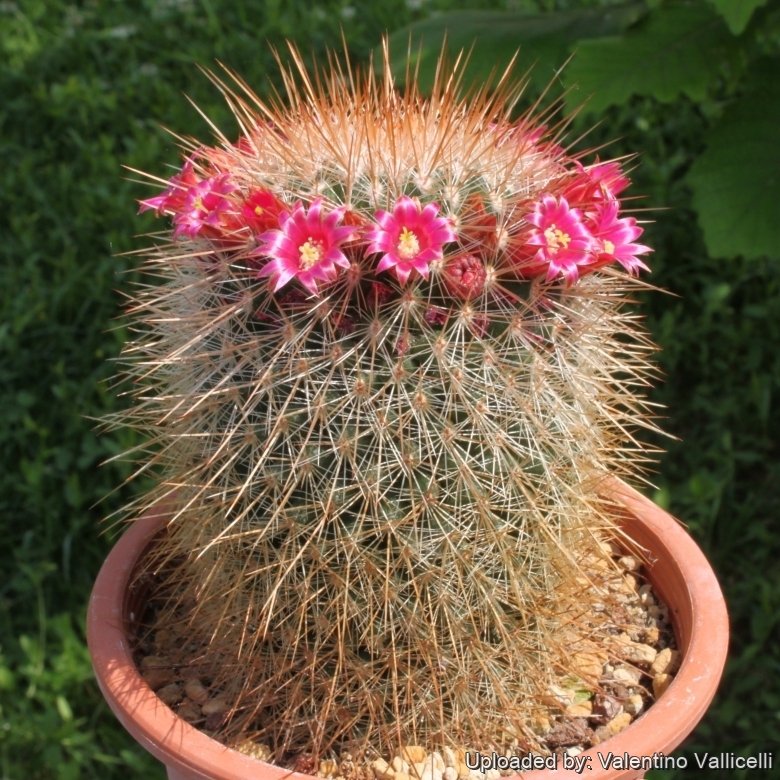
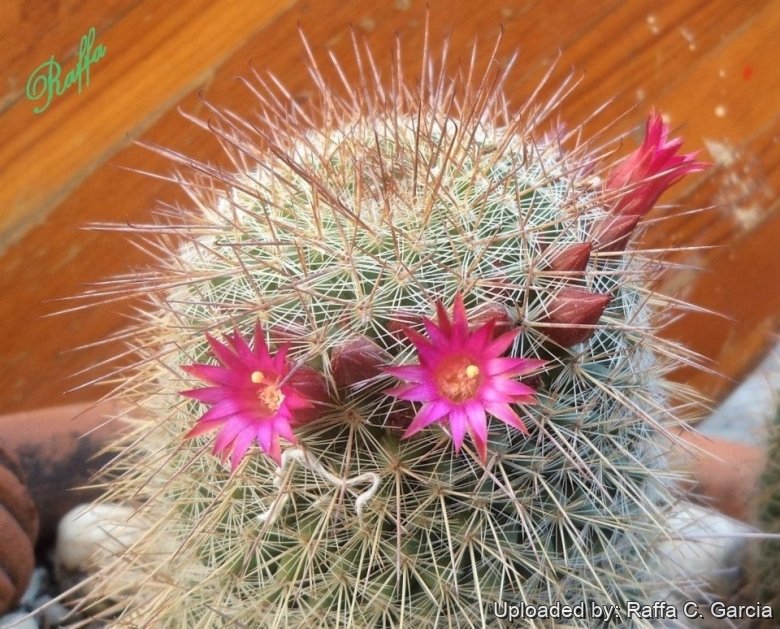
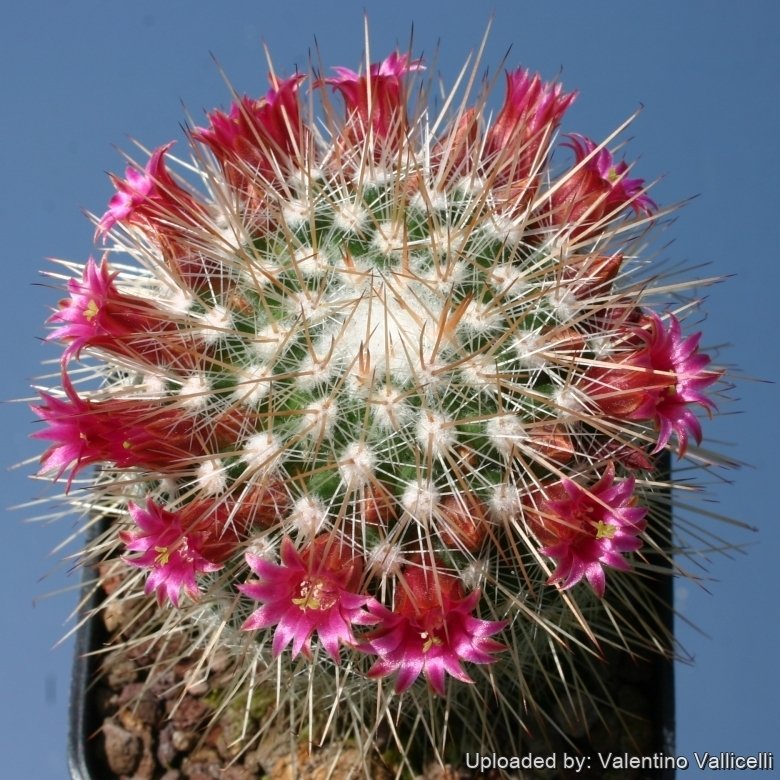
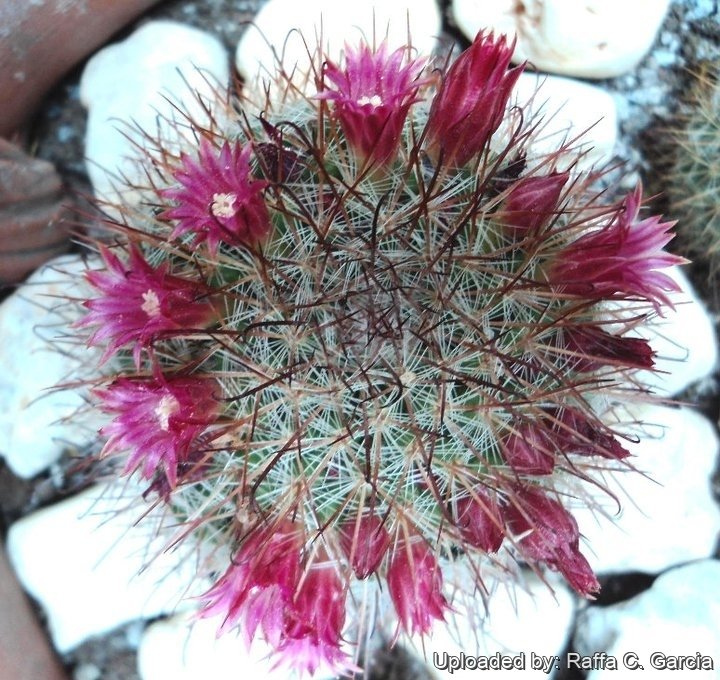
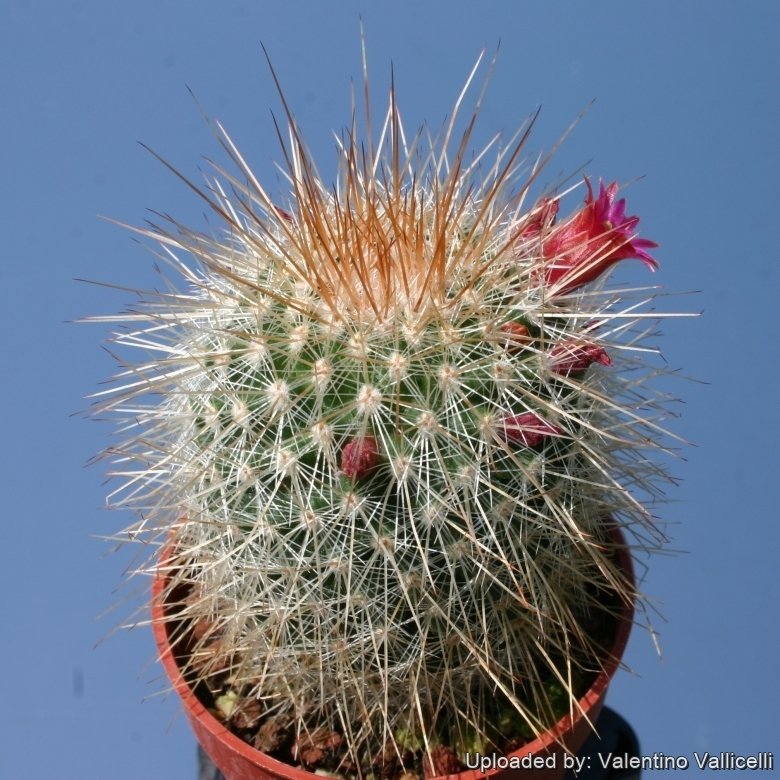
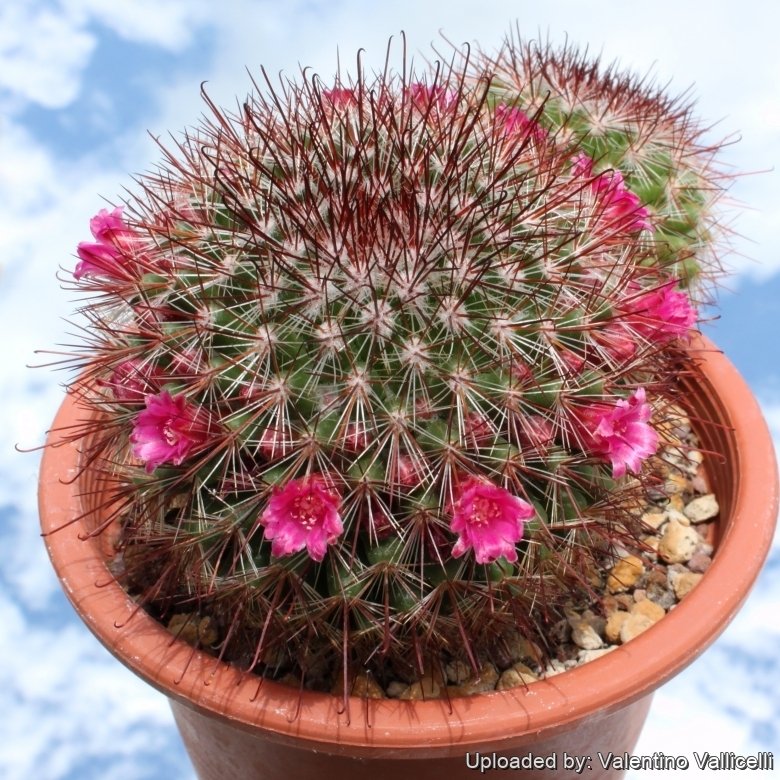
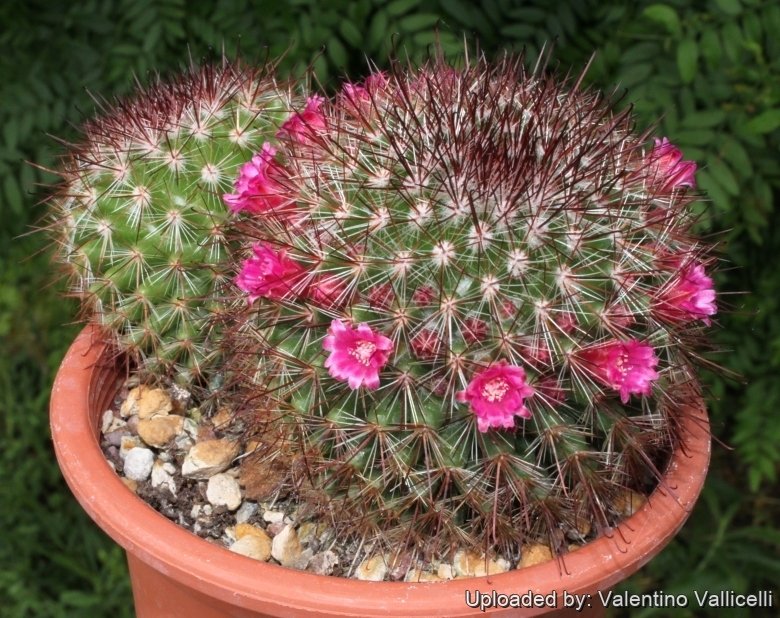
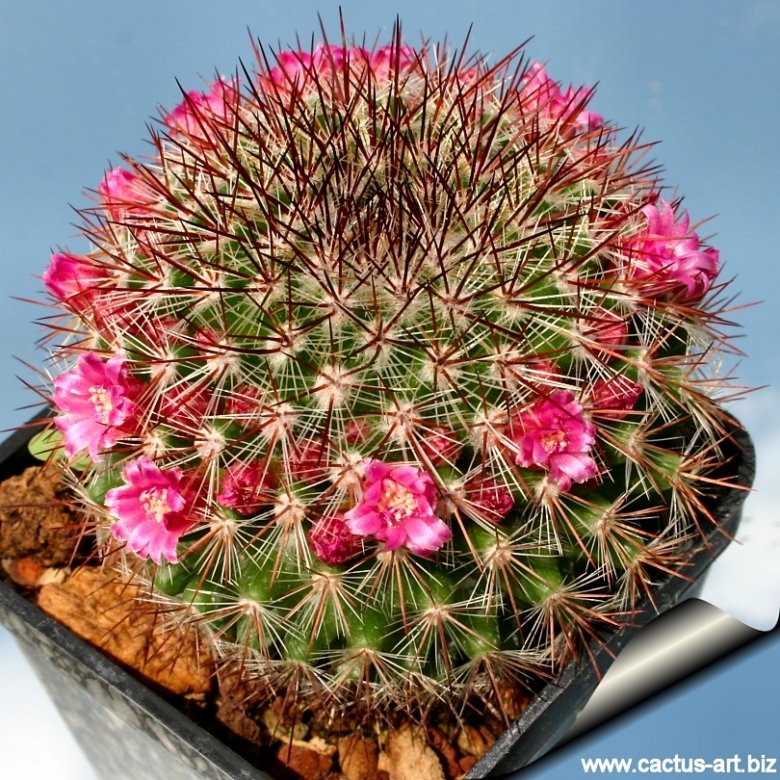
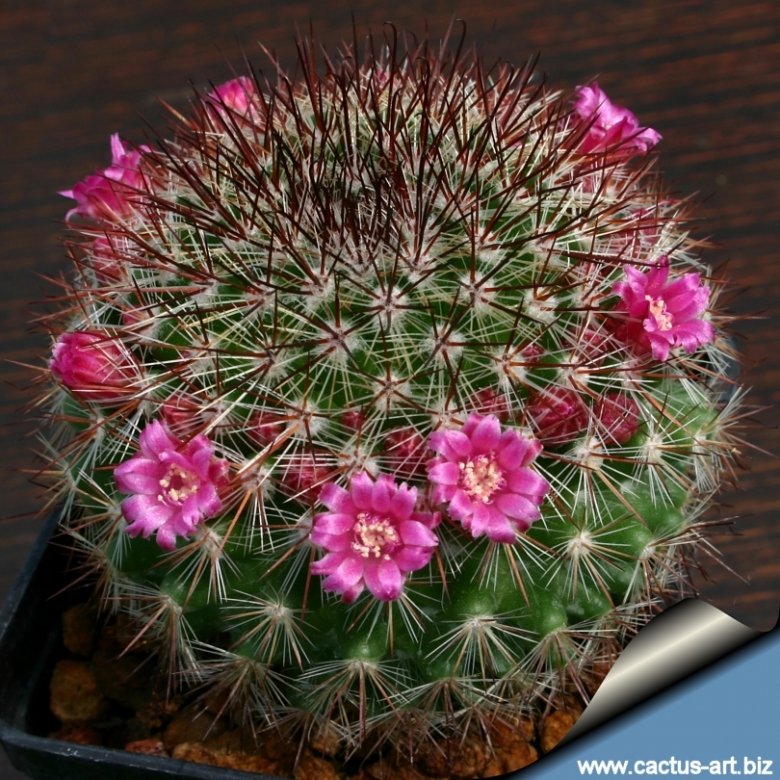
Mammillaria nunezii is a solitary or occasionally clustering cactus with showy flowers in June. It is somewhat variable in habit and has a dense spination. Two subspecies are recognized, the nominate subspecies and subspecies bella (Backeb.) D.R.Hunt.
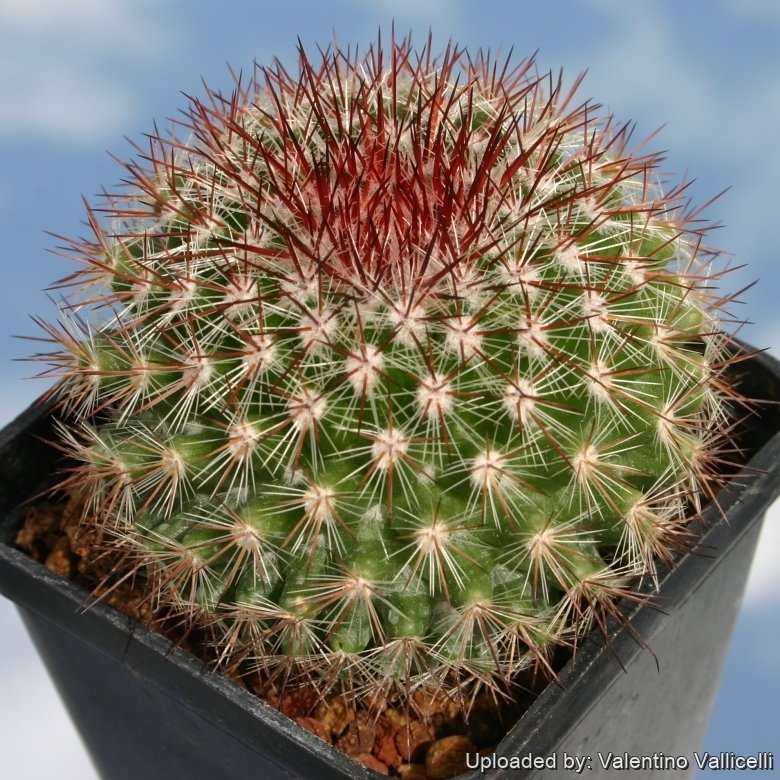
Stem: Robust, globose to cylindrical, pale-green to grey-green , sunken apically, 6-9 cm in diameter and up to 15 cm tall. Without latex.
Tubercles: Conical to bluntly four-angled, about 7-9 mm long and 5-7 mm in diameter, closely set, terete in section.
Parastichy number: 13-21.
Axil: With silky bristles and some wool.
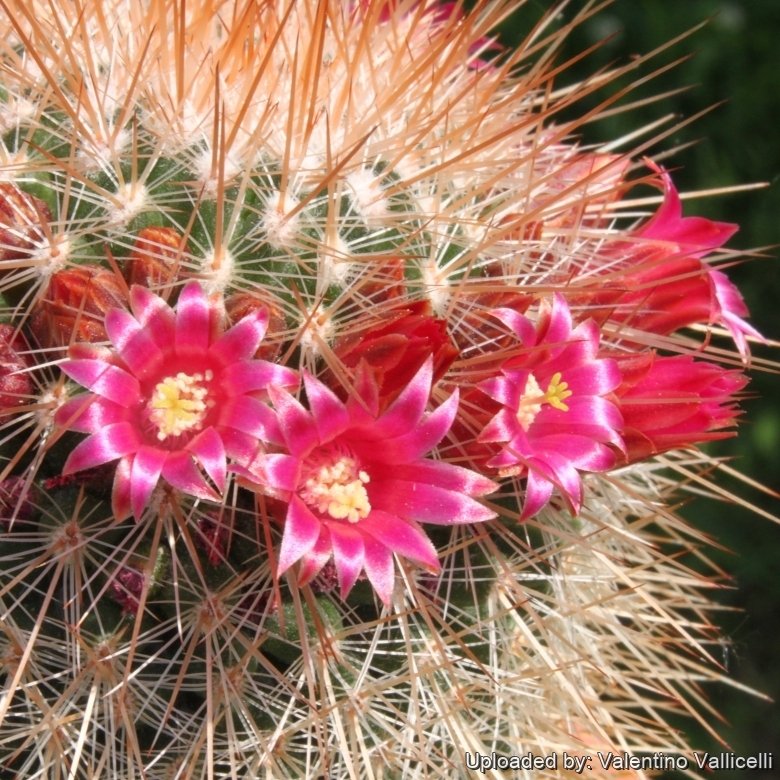
Areoles: Large, white and woolly.
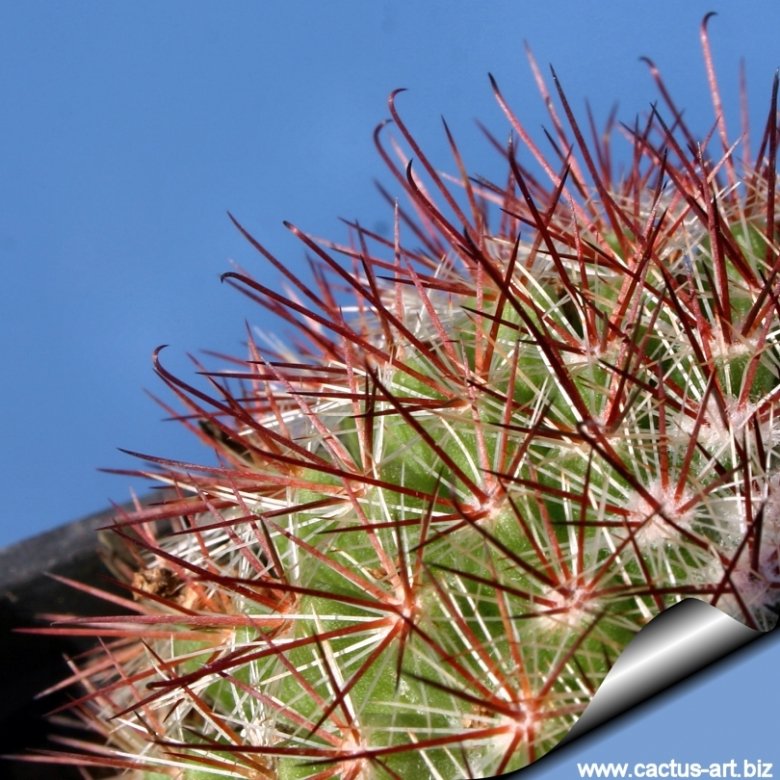
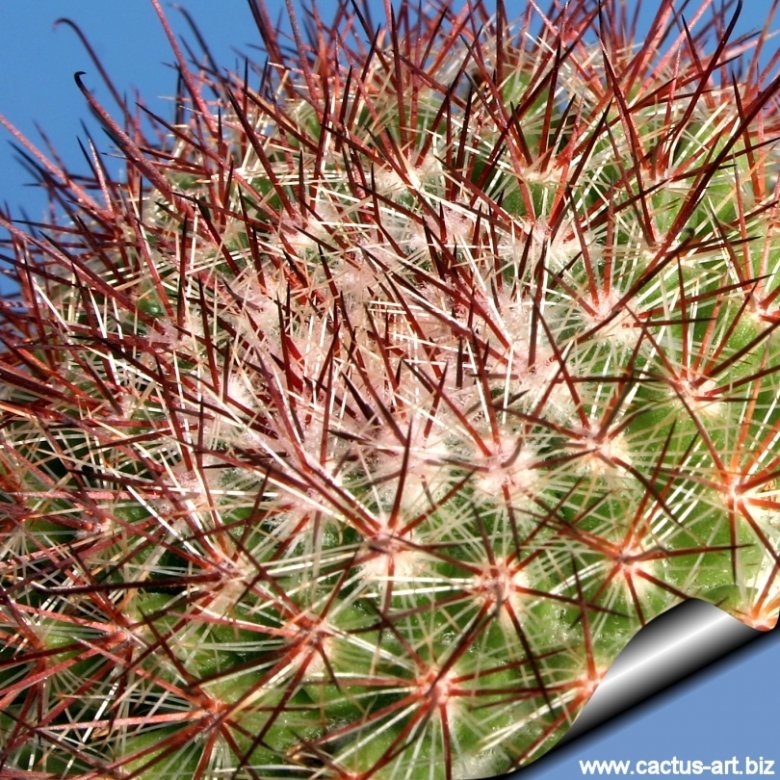
Radial spines: 10-30, stiff, slender, the uppermost being the shortest white, widely spreading, (3-)5-7 mm long.
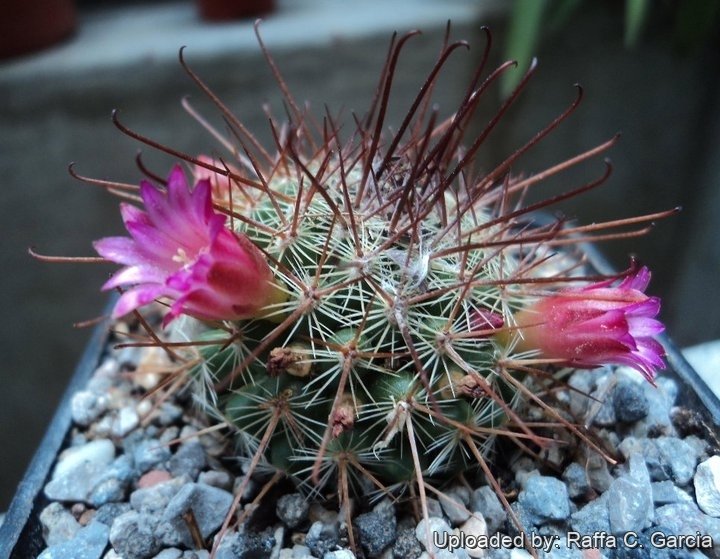
Central spines: 2-4(-9), unequal usually straight, but one may be hooked, reddish-brown or brown with blackish tips, (7-)10-15 mm long.
Roots: Fibrous.
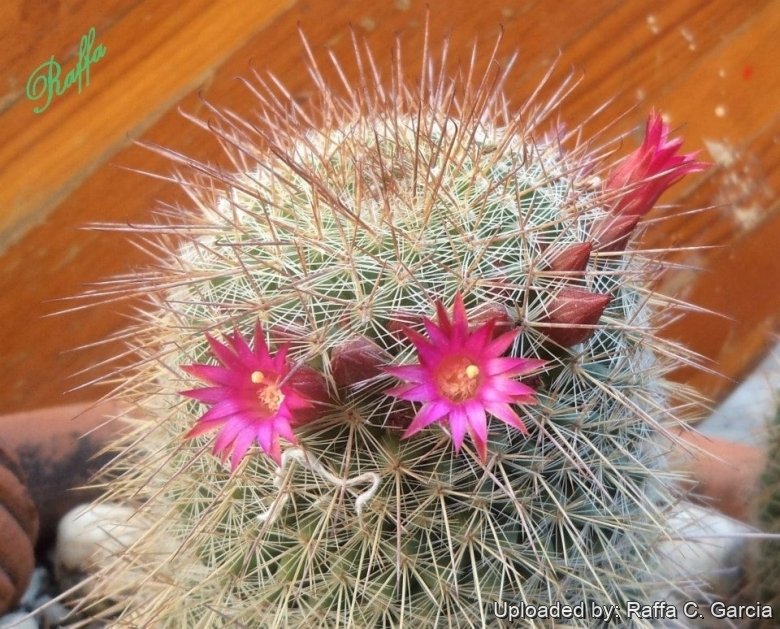
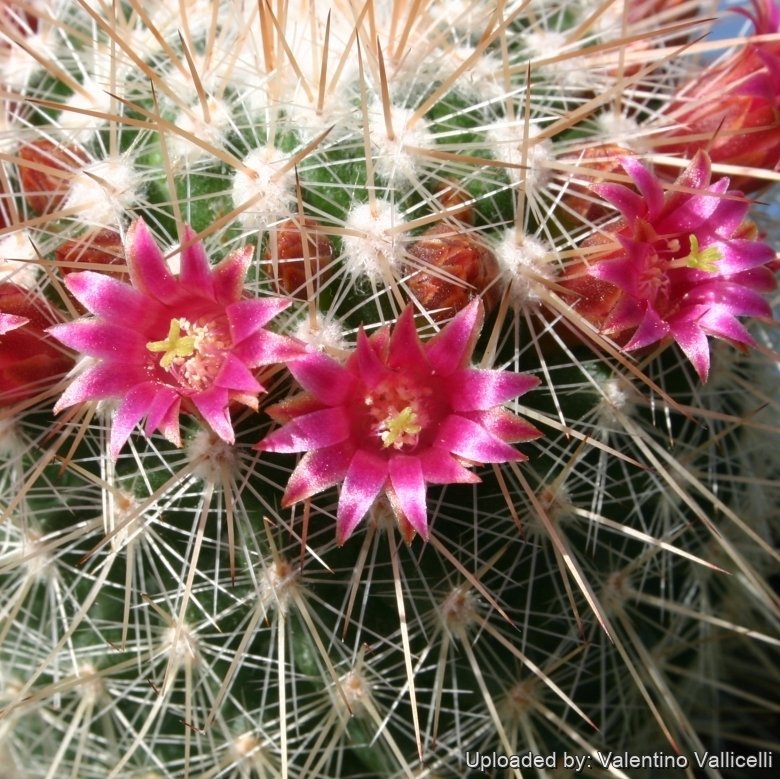
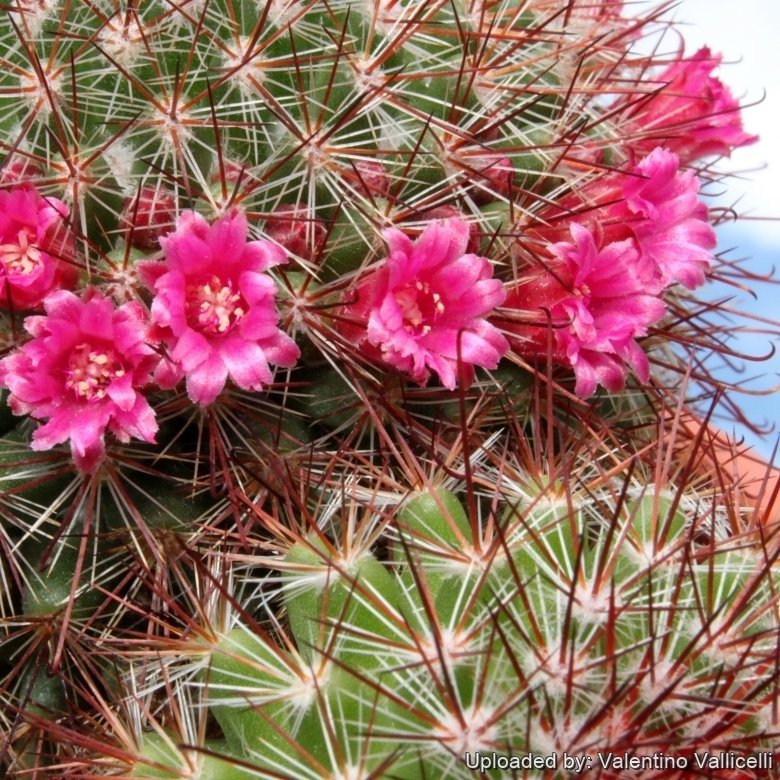
Flowers: Funnelform, deep pink to magenta 12-15 mm in diameter, narrowly opening. Stigma-lobes green.
Blooming season: It flowers with the freedom of Mammillaria spinosissima, in early summer.
Fruits: Club shaped, greenish white tinged with pink, to 25 mm long and 6-8 mm wide, ripens 12-14 months after flowering.
Seeds: Small brown, round to club-shaped, 0,9 mm long and 0,8 mm in diameter.
Origin and Habitat
Mexico (Guerrero, Morelos, Jalisco, Michoacan). Population size varies across the range (likely with elevation), and the species can be abundant or rare.
Altitude range; 1.000 - 1.600 metres above sea level.
Habitat and Ecology: The species occurs in oak (Quercus) forests. In some areas the species is threatened by subsistence and seasonal agriculture. This cactus is locally used as an ornamental plant.
Cultivation and Propagation
It is a slow growing species of easy culture, recommended for any collection, it doesn’t require any special treatment. Water regularly in summer, but do not overwater (Rot prone) Use pot with good drainage and a very porous potting media, keep dry in winter. Feed with a high potassium fertilizer in summer. It is quite frost resistant if kept dry, hardy as low as -5° C (some reports give it hardy to -5°C) Sun Exposure: High levels of light are needed to flower and for good spine development. Can be sunburned if moved from shade/greenhouse into full sun too quickly. During the spring it may be able to take full sun until the heat arrives at the end of spring. In an area that has hot afternoon sun, it may be able to take full morning sun, but requires afternoon shade or afternoon light shade. If grown correctly, it will reward the grower with generous displays of purple flowers.
Clustering in cultivation after several years and easily flowered. For best results, use a shallow pot, and only use the smallest diameter pot that will accommodate the plant. Sensitive to red spider mite. Overhead watering is helpful in controlling mites.
Propagation: Direct sow after last frost (usually) or division, wait until the offsets that appear at the base of old clustered specimens are 1/3 the size of the parent and then detach and plant.
Bibliography
Major references and further lectures.
-
Arias, S. & Arreola, H. 2013. “Mammillaria nunezii.” The IUCN Red List of Threatened Species. Version 2014.3. <www.iucnredlist.org>. Downloaded on 30 January 2015.
-
John Pilbeam “Mammillaria The Cactus File Handbook” Cirio Pub. Services, 01/December/1999
-
Edward Anderson “The Cactus family” Timber Press, Incorporated, 2001
-
James Cullen, Sabina G. Knees, H. Suzanne Cubey “The European Garden Flora Flowering Plants: A Manual for the Identification of Plants Cultivated in Europe, Both Out-of-Doors and Under Glass” Cambridge University Press, 11/August /2011
-
David R Hunt; Nigel P Taylor; Graham Charles; International Cactaceae Systematics Group. “The New Cactus Lexicon” dh books, 2006
-
Urs Eggli, Leonard E. Newton “Etymological Dictionary of Succulent Plant Names.” Birkhäuser 2004
-
Ulises Guzmán, Salvador Arias, Patricia Dávila: “Catálogo de cactáceas mexicanas.” Universidad Nacional Autónoma de México, Mexiko-Stadt 2003
From llifle page Mammillaria hubertmulleri
Origin and Habitat
Morelos (Mexico, Northern America)
Source: Mammillaria hubertmulleri, LLIFLE - Encyclopedia of living forms, CC-BY-SA, retrieved 2026-10-25.
From llifle page Mammillaria silvatica
Origin and Habitat
Los Cerritos, Jalisco (Mexico, Northern America)
Source: Mammillaria silvatica, LLIFLE - Encyclopedia of living forms, CC-BY-SA, retrieved 2026-10-25.
From llifle page Mammillaria supraflumen
Description
It is a small cactus covered with wool, spines and showy flowers in June. It is usually solitary, but occasionally forms offsets.
Stem: Pale green, spherical to cylindrical, sunken apically, 30 - 100 mm high, 40 - 70 mm in diameter (or more in cultivation). Without latex.
Tubercules: Conical to four-angled, pyramidal, firm, with a humpbacked epidermis, 7 - 9 mm long and 5 - 7 mm in diameter. The axil is scarcely wolly with a few bristles.
Areoles: Large, white and woolly.
Roots: Fibrous.
Radial spines: 20 - 25, stiff, bristle-like, straight, expanding, the uppermost being the shortest, glassy white, 3 - 7 mm long.
Central spines: 5 - 9, needle-like, straight (sometimes one is hooked), brown to reddish, 7 - 15 mm long.
Flowers: Funnel-form, dark carmine to magenta, 13 - 15mm long and 10 - 12 mm in diameter.
Fruits: Ovoid to club-shaped, carmine, 10 - 15 mm long and 6 - 8 mm wide, ripens 12 - 14 months after flowering. (while in Mammillaria nunezii the fruit is greenish-white, tinged with pink)
Seeds: Brown, round to club-shaped, 0,9 mm long and 0,8 mm in diameter, testa striated, hilum subbasal.
Blooming season: April - July.
Remarks: This plant is now referred to: Mammillaria nunezii. The differences with M. nunezii are very few: only the fruit’s colour, and its having fewer spines.
Origin and Habitat
Ferreria, Jalisco (Mexico, Northern America)
Habitat: The plant is found on porous stones and basalt rocks, in a bit of humus soil. Altitude 1500-1600 m.
Cultivation and Propagation
An easy-to-grow and easily flowering species, but not a fast grower, that may make large clumps given the best conditions. Some plants will offset, and moderately large-sized clumps can be produced in a few years.
Water regularly in summer, but do not over-water (rot prone). Use a pot with good drainage and a very porous potting media, and keep dry in winter. Feed with a high potassium fertilizer in summer. Avoid frost. Reputedly sensitive to low temperatures, but less so if kept on the dry side prior to, and during, cold weather. Outside full sun or afternoon shade, inside it needs bright light, and some direct sun. Tends to get yellowish in strong light, which encourages flowering and heavy wool and spine production.
Propagation: Direct sow after last frost, or division of larger plants.
Source: Mammillaria supraflumen, LLIFLE - Encyclopedia of living forms, CC-BY-SA, retrieved 2026-10-25.
From llifle page Mammillaria wuthenauiana
Origin and Habitat
Guerrero & Morelos, Mexico (Northern America)
Source: Mammillaria wuthenauiana, LLIFLE - Encyclopedia of living forms, CC-BY-SA, retrieved 2026-10-25.
Gallery