Publication: Dict. Hort. [Bois] 2: 804. 1898 cf. Britton & Rose. Cactaceae. 4: 64 (1923)
Description
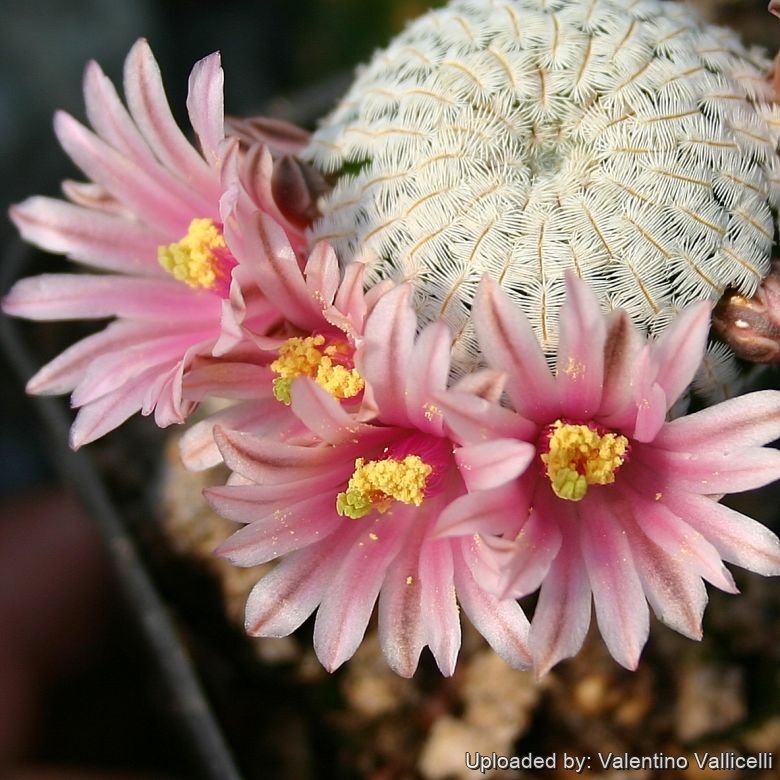
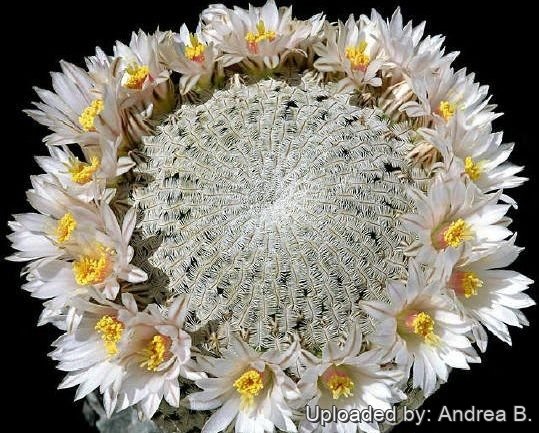
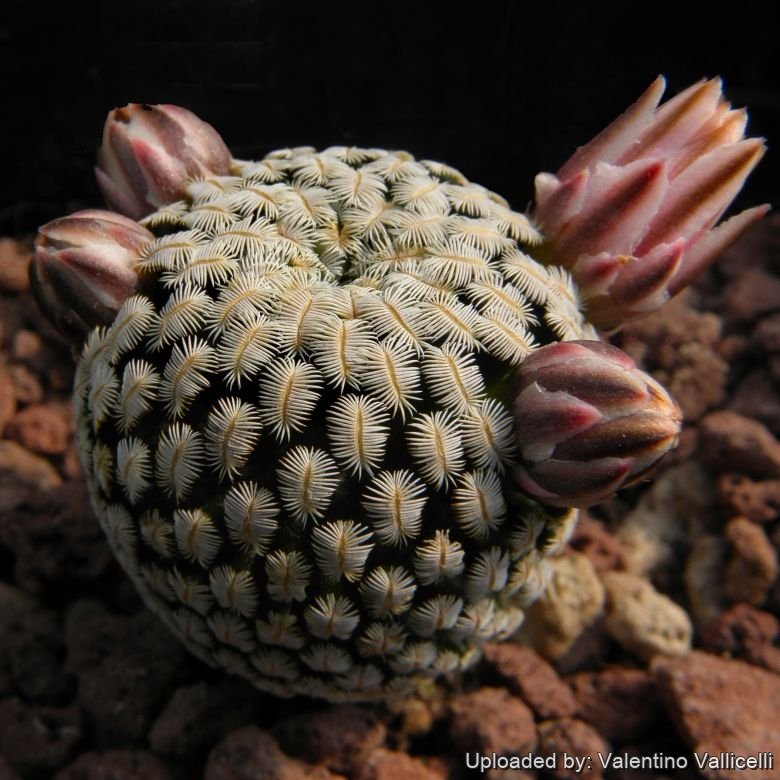
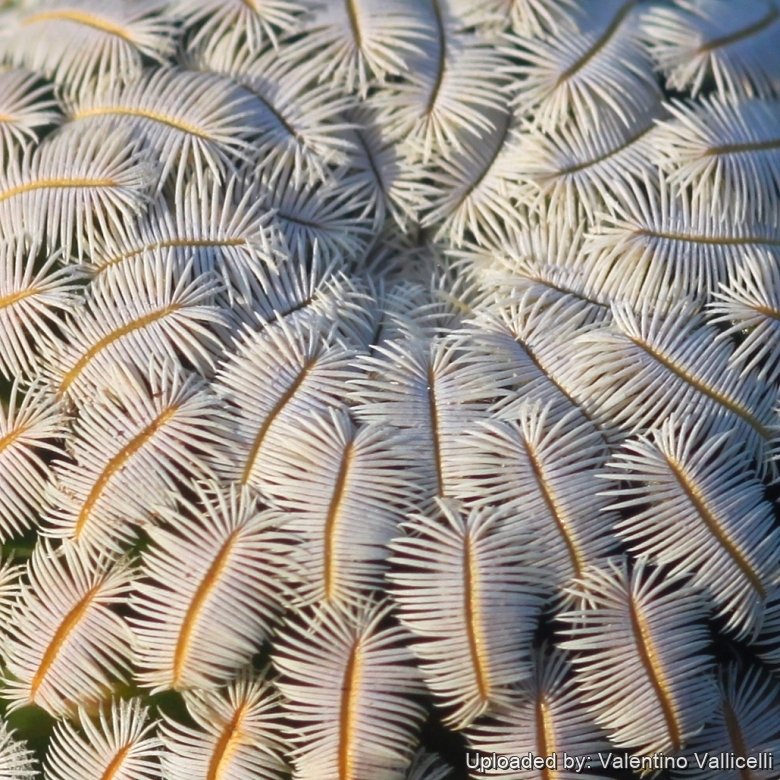
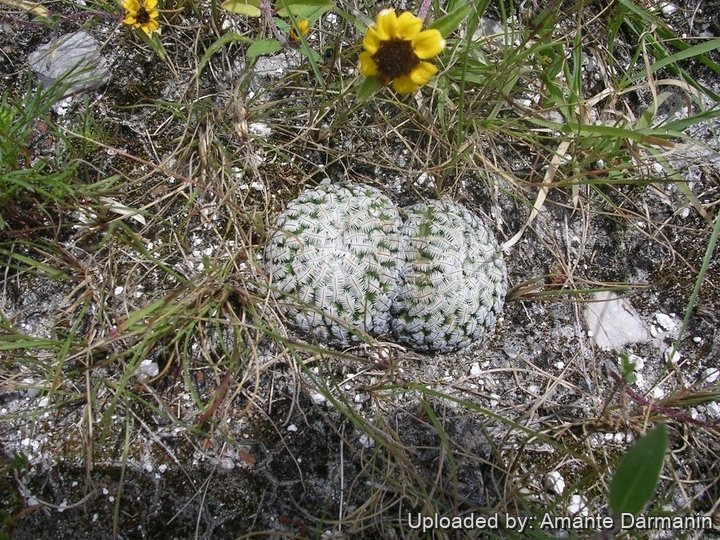
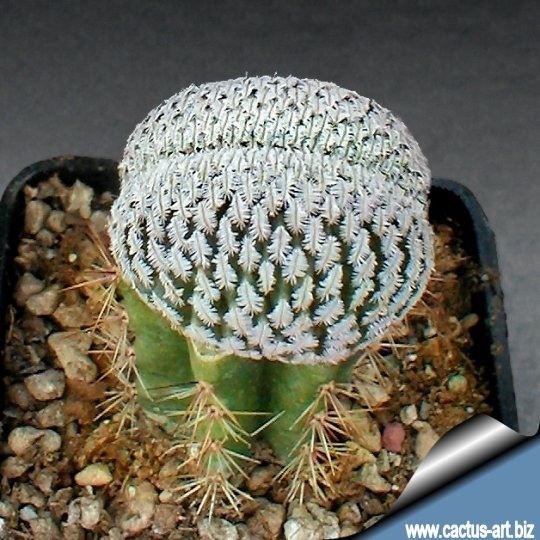
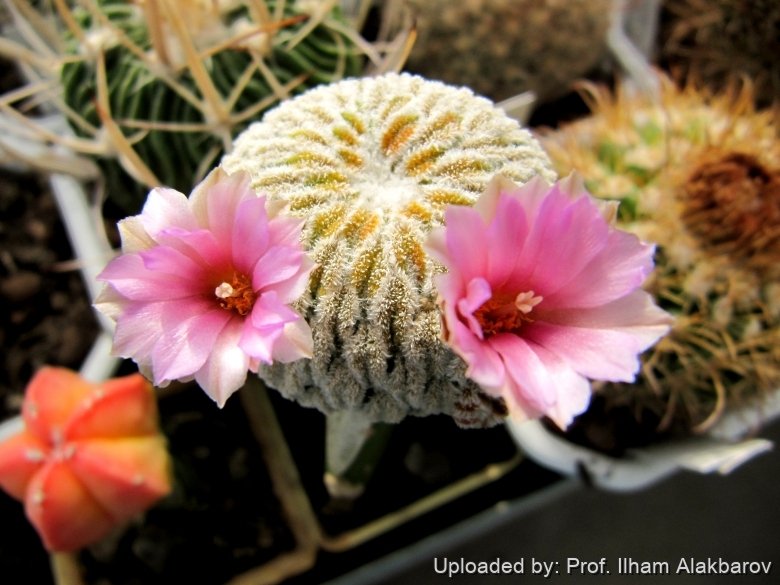
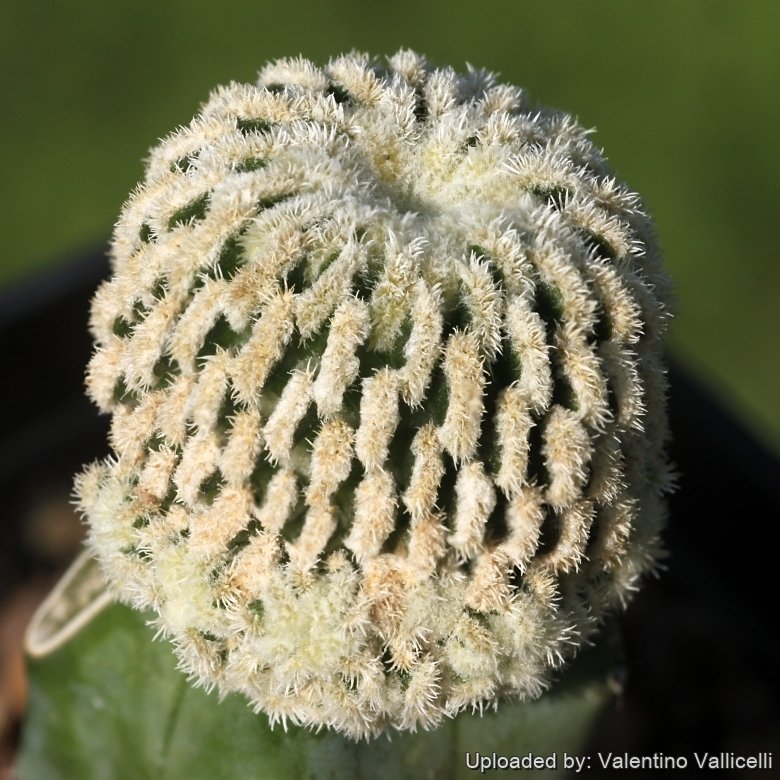
Mammillaria pectinifera, previously known as Solisia pectinata, is a small cactus that in habitat appears above the ground as a squat stem completely covered by flattened spines, and usually solitary, but in cultivation it will eventually produce clustering off-shoots with age.
Stem: 1-5 cm in diameter; with latex, spherical, flattened, centrally depressed, In cultivation the plant’s stem may be cylindrical.
areoles: Long narrow.
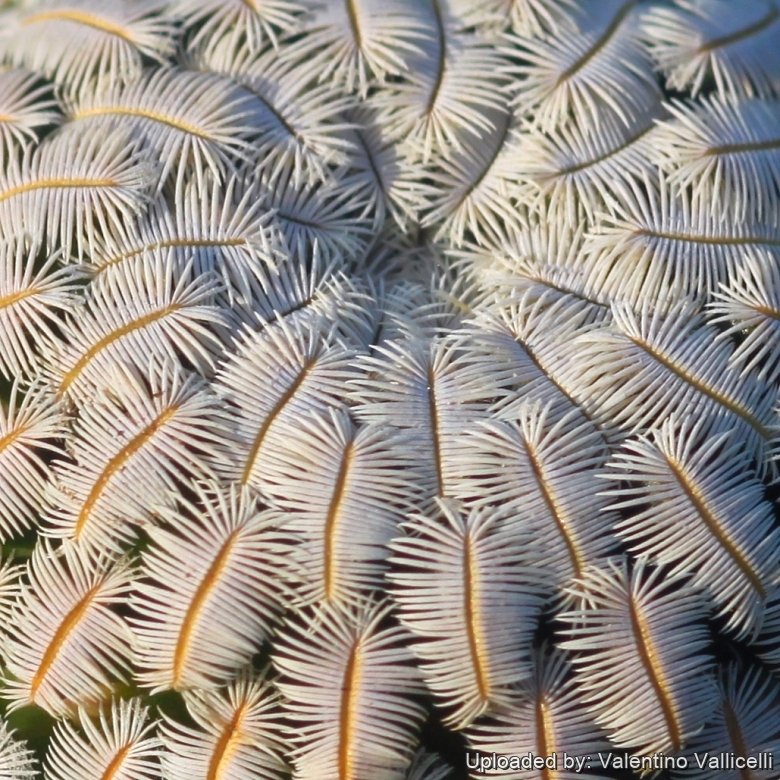
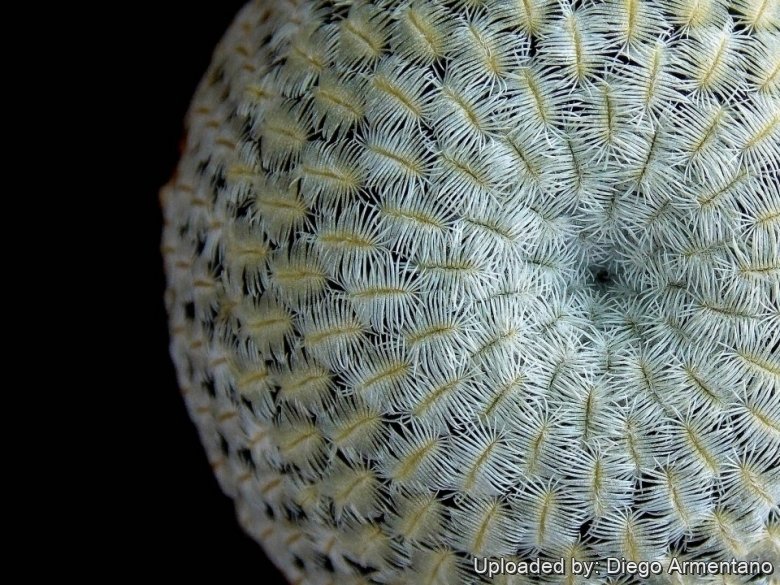
Spines: 20-40, pectinate (comb-like), flattened against the body, fine, numerous, white, 1.5 - 2 mm long. Lacking central spines.
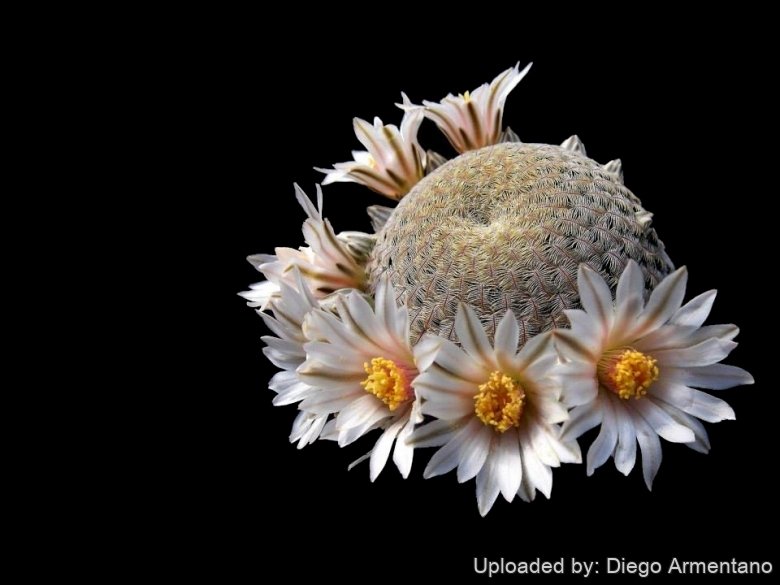
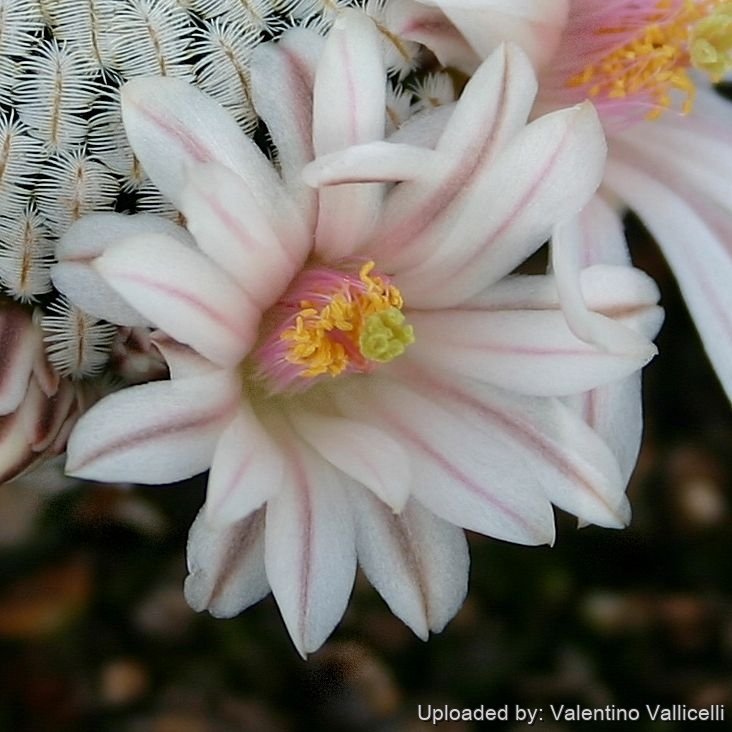
Flowers: Medium-sized in a ring around the sides of the globe, white to pink with darker mid-strip, 20-30 mm long and also in diameter. Stigmas are green.
Booming season: The species flowers from December to March. Reproduction in habitat starts at an age of eight years.
Fruits: Small, red a maturity, barely emerging above the spines.
Seeds: Black. Seeds are retained among the plant tubercules, and are released gradually.
Origin and Habitat
Mammillaria pectinifera is narrowly distributed , with 19 subpopulations well fragmented in the Tehuacán-Cuicatlán Valley, in the state of Puebla, Mexico(extent of occurrence is 4,000 km2). The plants in northwest of Oaxaca correspond to Mammillaria solisioides, which Hunt et al. (2006) consider to be a subspecies of Mammiillaria pectinifera (subsp. solisioides (Backeb.) D.R.Hunt).
Altitude: 1600-2300 metres above sea level.
Habitat and Ecology: Mammillaria pectinifera grows on relatively deep alkaline calcareous soils, with high water retention capacity on stony hills. The plants are localized on small isolated patches in xerophyllous scrub and grasslands together with Mammillaria conspicua, Mammillaria napina and Ferocactus latispinus. This species has abiotic nurses (i.e. rocks) that increase the survival of seedlings. The major threats are mining rock for construction, dumping of rubbish, collecting plants for horticulture and grazing of cattle and goats
Cultivation and Propagation
Slow growing, this plant is very rot prone and temperamental when cultivated on its own roots, but it is easy to grow if grafted.
Potting subtratum: Mammillaria pectinifera has a fairly large tap root, and should be kept in a deep pot with a very draining mineral substrate.
Moisture: Water regularly during the active growing season (spring and summer), this will encourage steady growth. But be careful with watering, which all thick rooted species require (rot sensitive). Keep dry during the winter rest.
Feeding: Fertilize every 2 weeks with diluted high potassium fertilizer when the plant is in bud.
Exposition: Light shade or full sun exposures.
Traditional uses: Though sometimes called peyote, there is little evidence for the ceremonial use or psychoactive properties of the cactus.
Propagation: Direct sow after last frost. (seldom produces offsets)
Bibliography
Major references and further lectures
-
Valverde, T. & Zavala-Hurtado, A. 2013. Mammillaria pectinifera. In: IUCN 2013. “IUCN Red List of Threatened Species.” Version 2013.2. <www.iucnredlist.org>. Downloaded on 16 February 2014.
-
David Hunt, Nigel Taylor “The New Cactus Lexicon” DH Books, 2006
-
John Pilbeam (1999) “Mammillaria The Cactus File Handbook” Nuffield Press.
-
Nathaniel Lord Britton, Joseph Nelson Rose “Cactaceae: Descriptions and Illustrations of Plants of the Cactus Family” vol. 4 The Carnegie Institution of Washington, Washington 1923
-
Edward F. Anderson “The Cactus Family” Timber Press, 2001
-
James Cullen, Sabina G. Knees, H. Suzanne Cubey “The European Garden Flora Flowering Plants: A Manual for the Identification of Plants Cultivated in Europe, Both Out-of-Doors and Under Glass”Cambridge University Press, 11/ago/2011
From llifle page Solisia pectinata f. cristata
Description
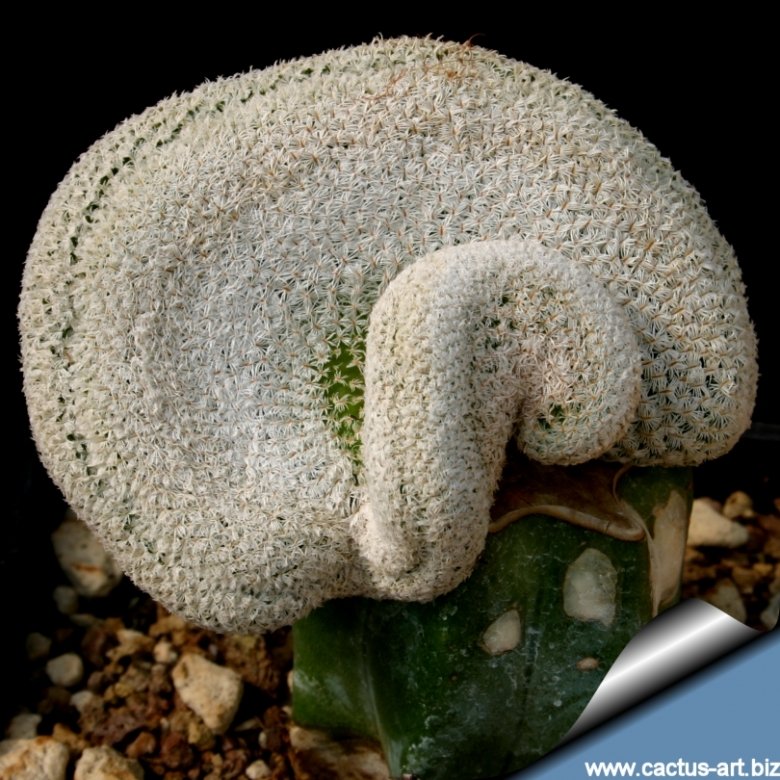
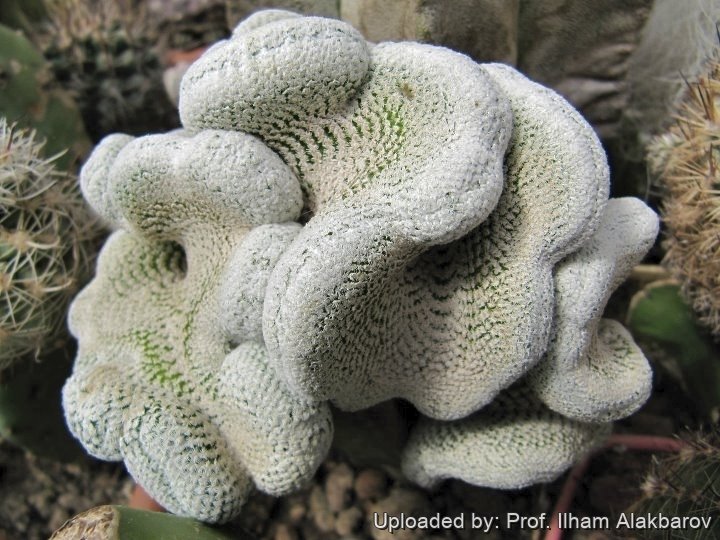
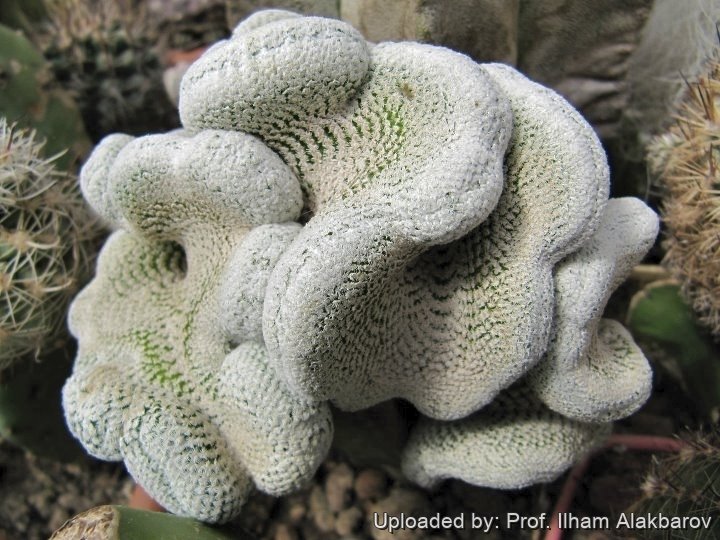
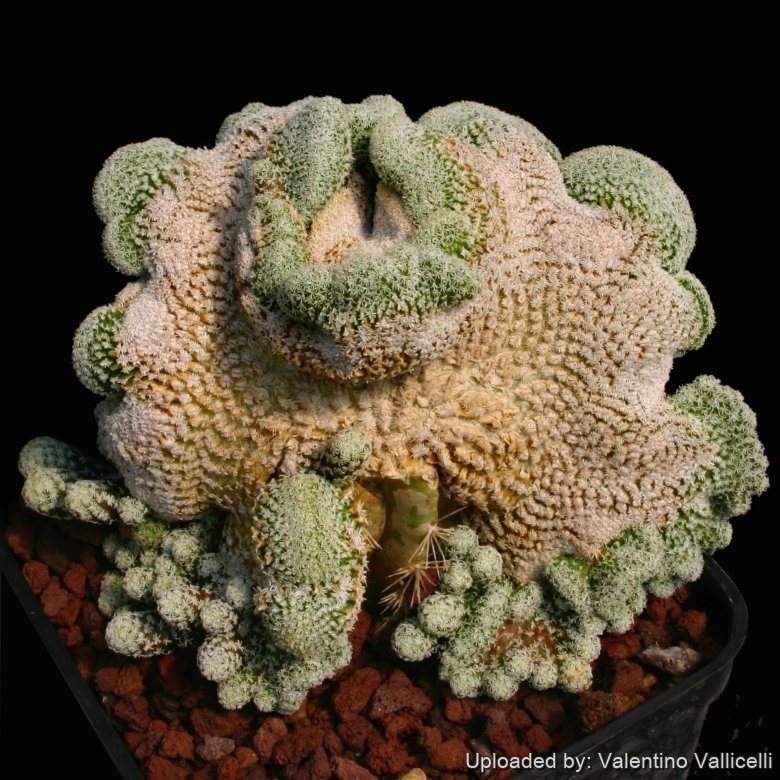
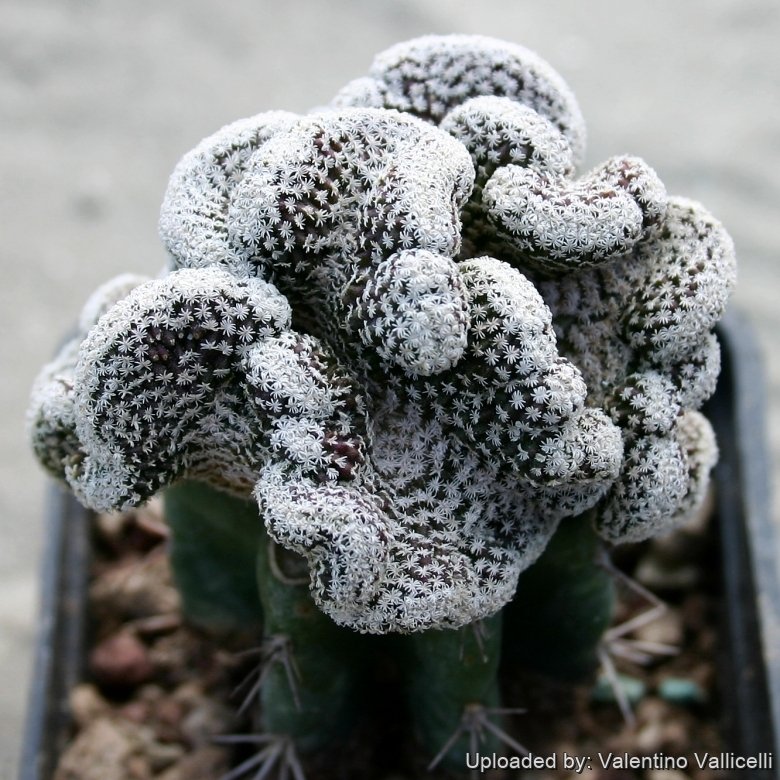
The standard Mammillaria pectinifera is a well known small cactus that appears above the ground as a squat, spherical stem, completely covered by pectinate (comb-like), flattened spines. The crested form Mammillaria pectinifera f. cristata - despite to its beauty - is still very rare and sought after by collectors, for its unique features.
Habit: It is a small low growing crested cactus that will slowly forms tangled groups up to 20 cm in diameter.
Spines: 20-40, pectinate (comb-like), flattened against the body, fine, numerous, white, 1,5-2 mm long. Lacking central spines.
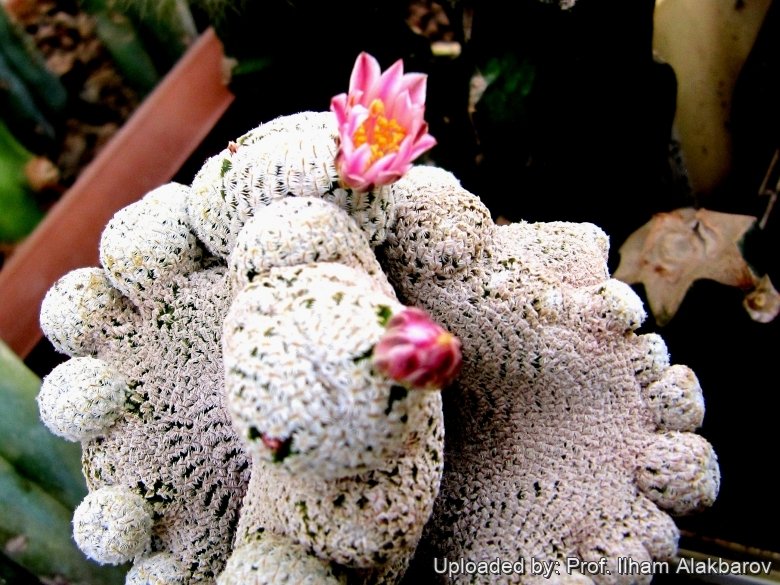
Flowers: Medium-sized in a ring around the sides of the globe, white to pink with darker mid-strip, 20-30 mm long and also in diameter. Stigmas are green. The crested plants usually do not flower, thought some flowers will be sporadically produced on the wide crested form.
Remarks: This plant has different crested forms some very thin and other wide and strong.
Origin and Habitat
Garden origin (Nursery produced cultivar)
Cultivation and Propagation
Theese plants grow slowly and are cold intolerant, make sure that your crest are not exposed to freezing temperatures. They need a well drained soil mix. Water regularly in summer but allow to dry fully before watering again. During the winter months they should be rather kept dry. Repotting should be done every other year or when the plant has outgrown its pot.
Sun Exposure: They like full sun, but some summer shade in the hottest hours of the day is beneficial.
Propagation: Grafting since cutting root hardly.
Notes
The cause of cresting: The cause of cresting is not fully explained, biologists disagree as to why some plant grow in this unusual form. Some speculate that it is a genetic mutation. Others say it is the result of a lightning strike or freeze damage, but whatever the stimulus, the growth point of the stem has switched from a geometric point, to a line, which folds and undulates as the crest expands. Though these crested cacti are somewhat rare (1 in 50,000 or less), cresting occurs naturally and can be encountered in many other cactus species.
Bibliography
Major references and further lectures
-
Valverde, T. & Zavala-Hurtado, A. 2013. Mammillaria pectinifera. In: IUCN 2013. “IUCN Red List of Threatened Species.” Version 2013.2. <www.iucnredlist.org>. Downloaded on 16 February 2014.
-
David Hunt, Nigel Taylor “The New Cactus Lexicon” DH Books, 2006
-
John Pilbeam (1999) “Mammillaria The Cactus File Handbook” Nuffield Press.
-
Nathaniel Lord Britton, Joseph Nelson Rose “Cactaceae: Descriptions and Illustrations of Plants of the Cactus Family” vol. 4 The Carnegie Institution of Washington, Washington 1923
-
Edward F. Anderson “The Cactus Family” Timber Press, 2001
-
James Cullen, Sabina G. Knees, H. Suzanne Cubey “The European Garden Flora Flowering Plants: A Manual for the Identification of Plants Cultivated in Europe, Both Out-of-Doors and Under Glass” Cambridge University Press, 11/ago/2011
Source: Solisia pectinata f. cristata, LLIFLE - Encyclopedia of living forms, CC-BY-SA, retrieved 2026-10-25.
From llifle page Solisia pectinata f. monstruosa
Description
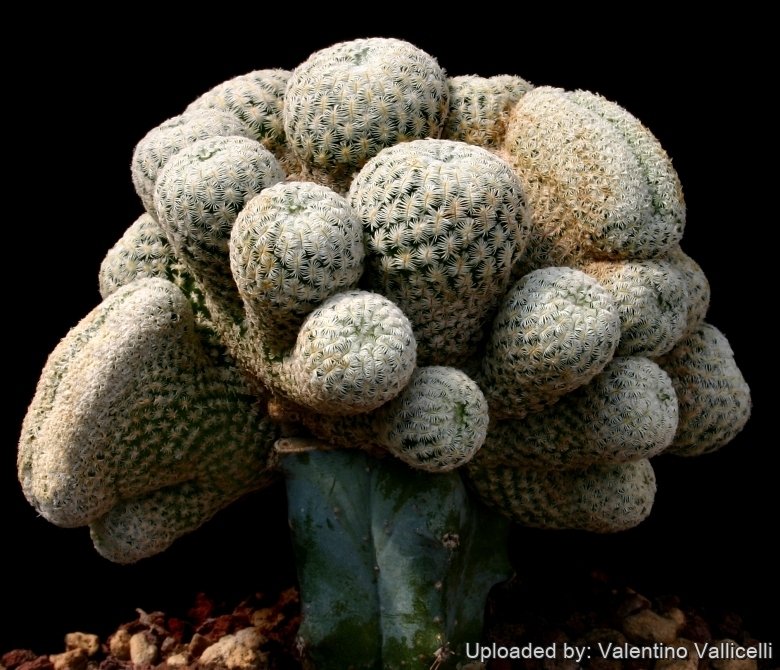
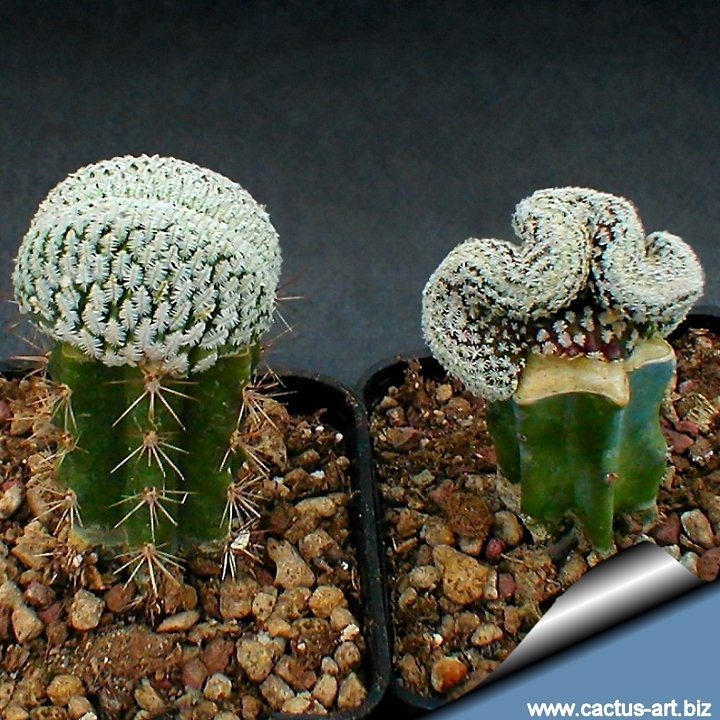
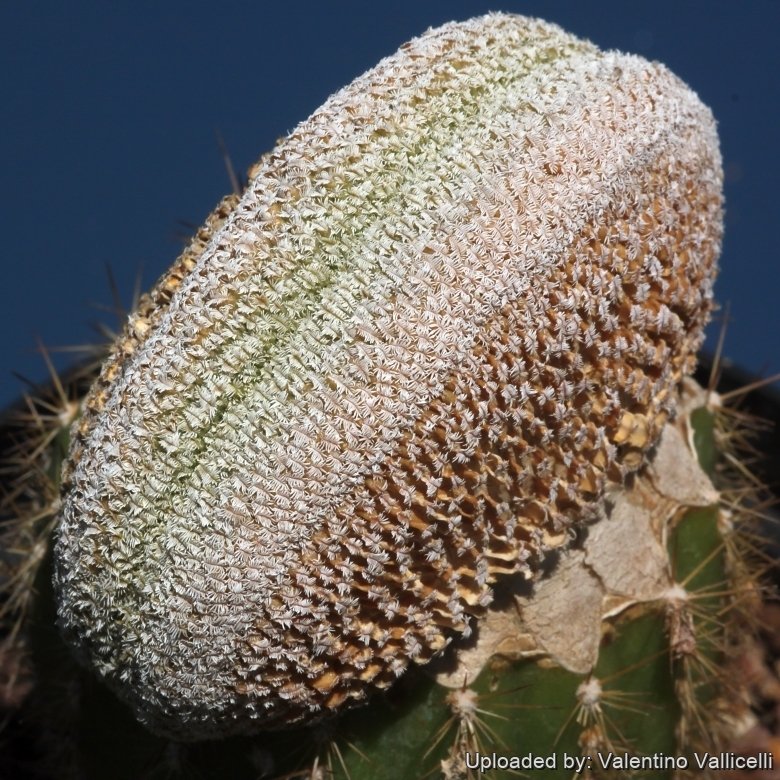
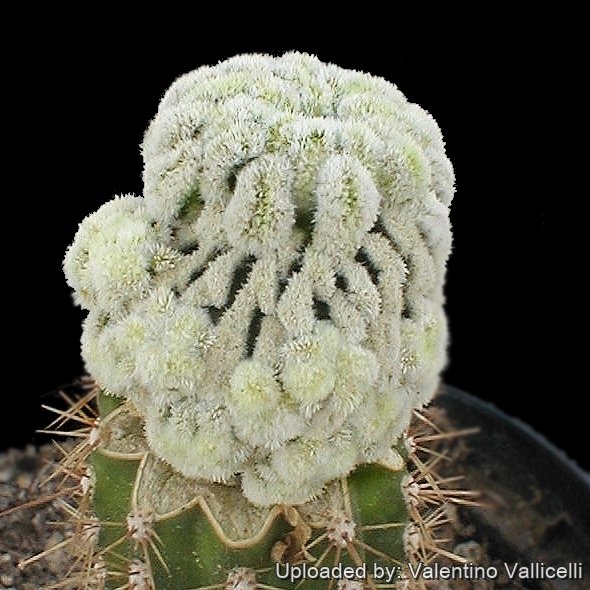
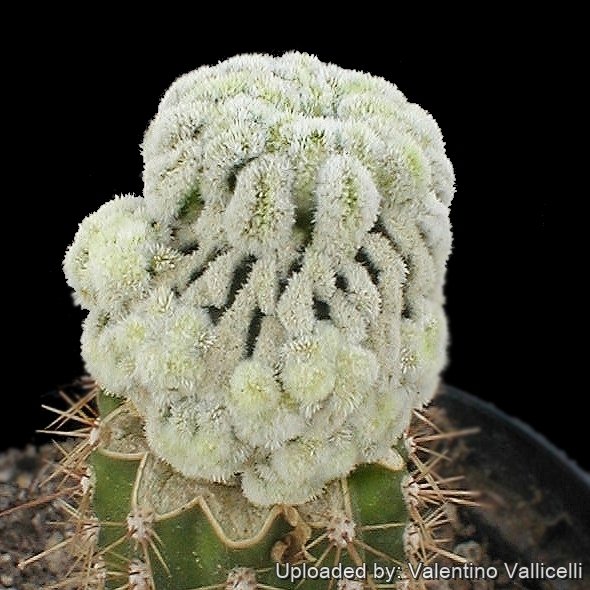
Mammillaria pectinifera f. monstruosa is an odd monstrous plant with narrow felt-like areoles derived from the well known Mammillaria pectinifera.
Habit: This cultivars is easily grown into small clumps or mounds, and tends to offset more abundantly than the normal form.
Stem: Depressed-globose to somewhat elongated (depending on growing condition) 3-7 cm in diameter, green, with white wool in the centre, and also in the older areoles.
Tubercles: Hatchet-shaped, laterally compressed, and often thinner than the above standing areoles.
Areoles: Very distinctive, creamy-white, conspicuous, in relief, extremely elongated, 5-12 mm long and 2-4 mm broad.
Spines: The dense felt that cover the areoles, if you look carefully, is formed by extremely, short bristle-like spines that give the areoles its characteristic felty appearance, in fact these areoles are firm to the touch because they are densely covered by innumerable tiny spines. The younger areoles at the stems apex are greenish.
Flowers. Not seen.
Similar cultivars: A similar abnormal uncoordinated form of vegetative growth, is also seen in Mammillaria cv. Chiara Blando.
Cultivation and Propagation
This plant is grown exclusively grafted. Keep well ventilated, protect from frosts and freezes. Give plenty of light to keep plant compact, but avoid direct sun exposure in the hottest part of the day during the summer.
Source: Solisia pectinata f. monstruosa, LLIFLE - Encyclopedia of living forms, CC-BY-SA, retrieved 2026-10-25.
Cultivars and forms (3)
Gallery