Publication: Cact. Succ. J. (Los Angeles) 73(5): 264. 2001
Description
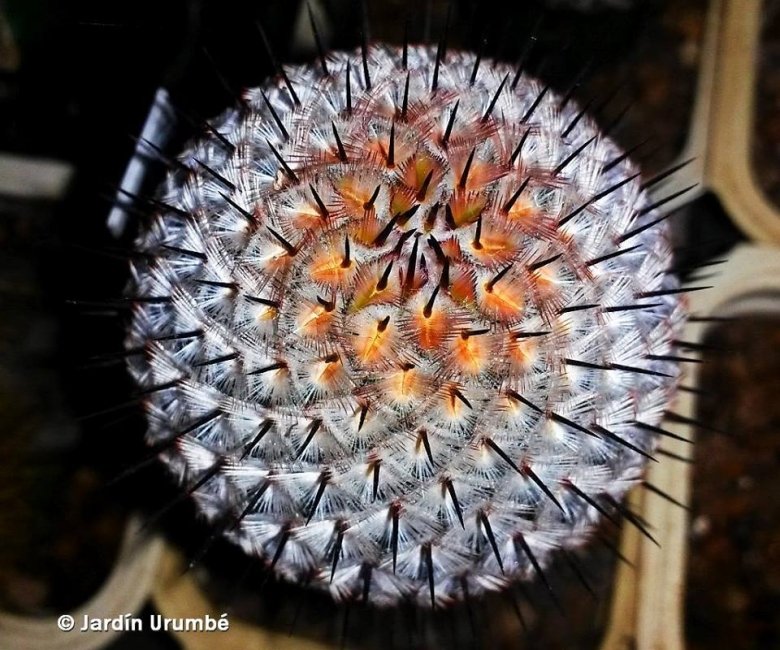
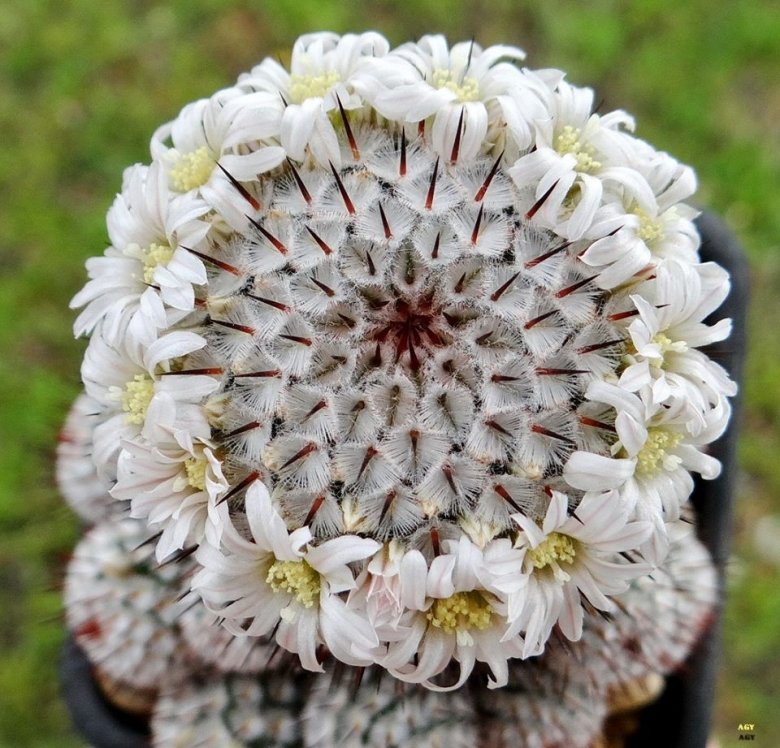
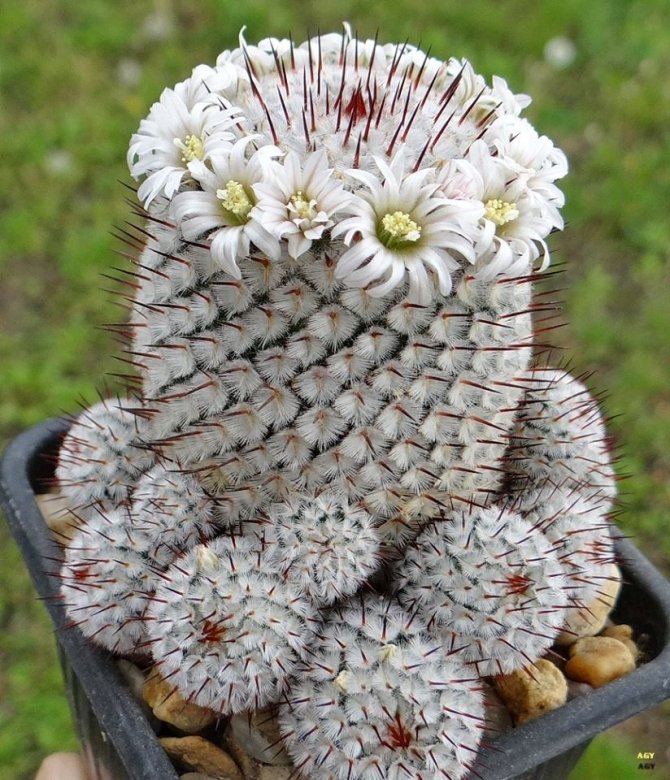
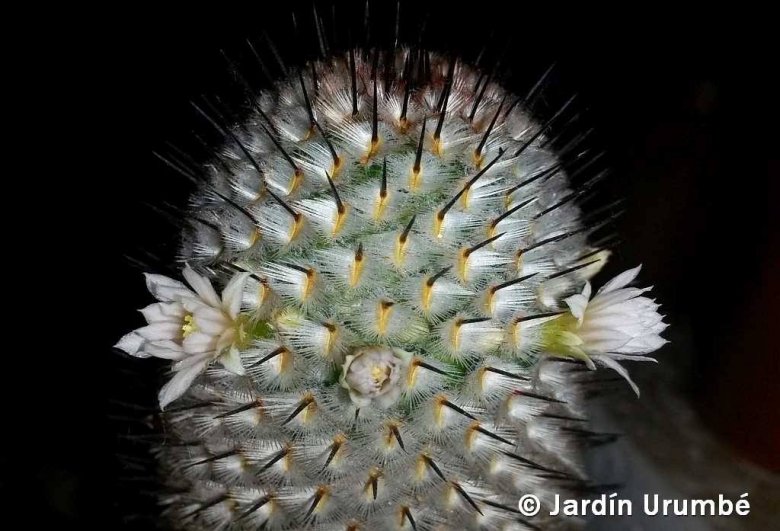
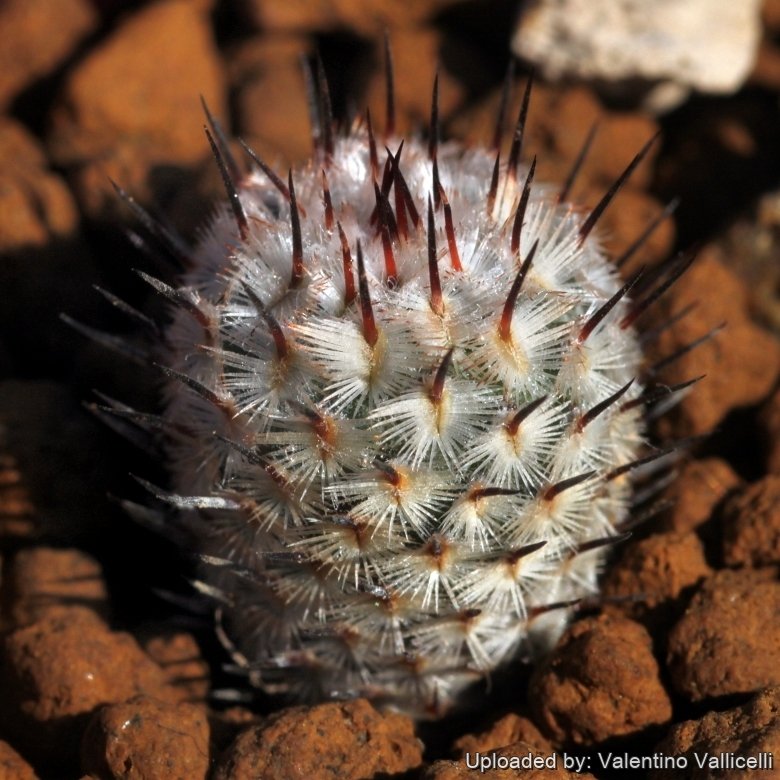
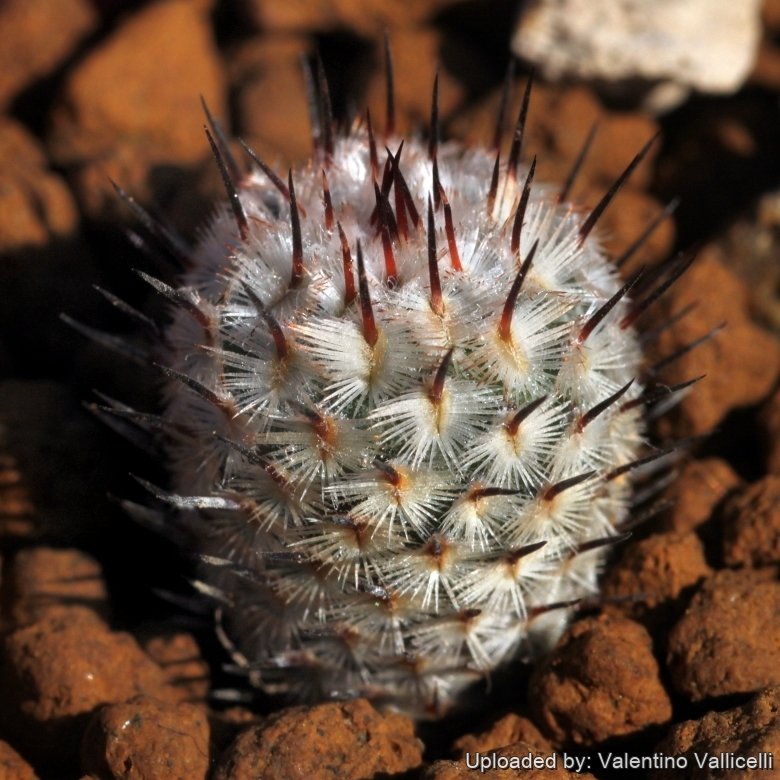
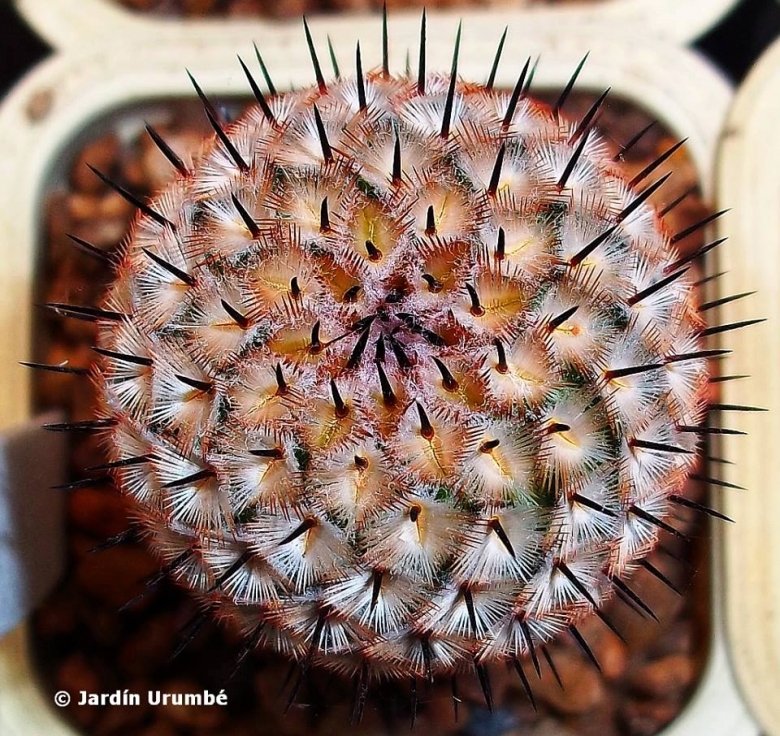
Mammillaria perezdelarosae v. andersonii is a marvellous tiny cactus distinguishable from the standard species for its smaller size, slower growth and straight central spines (not hooked). It is believed to be one of the most beautiful Mammillaria.
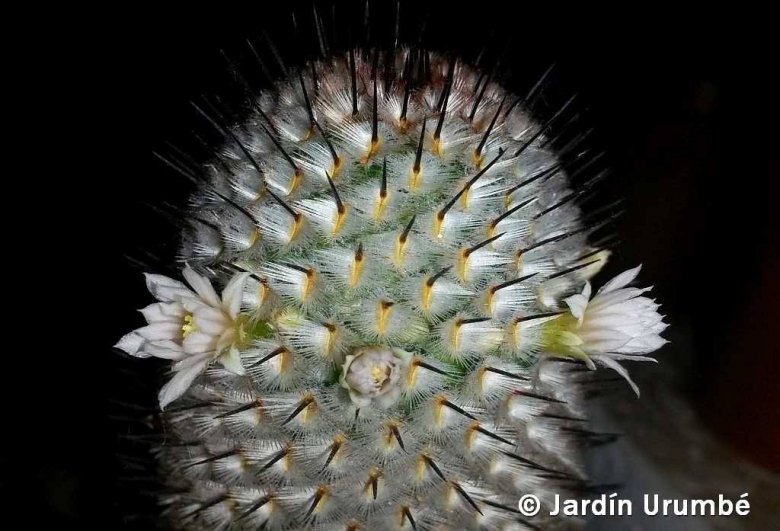
Stem: Solitary, globose to somehow elongated in cultivation about 2-(-5) cm tall and maybe 2,5 cm in diameter, it is one of those plants that grows much taller in cultivation in our light levels than it does in habitat, but this subspecies doesn’t seem to share that tendency. Usually without latex.
Tubercles: Conical with rounded tips, 2 mm wide and long.
Axil:With some wool.
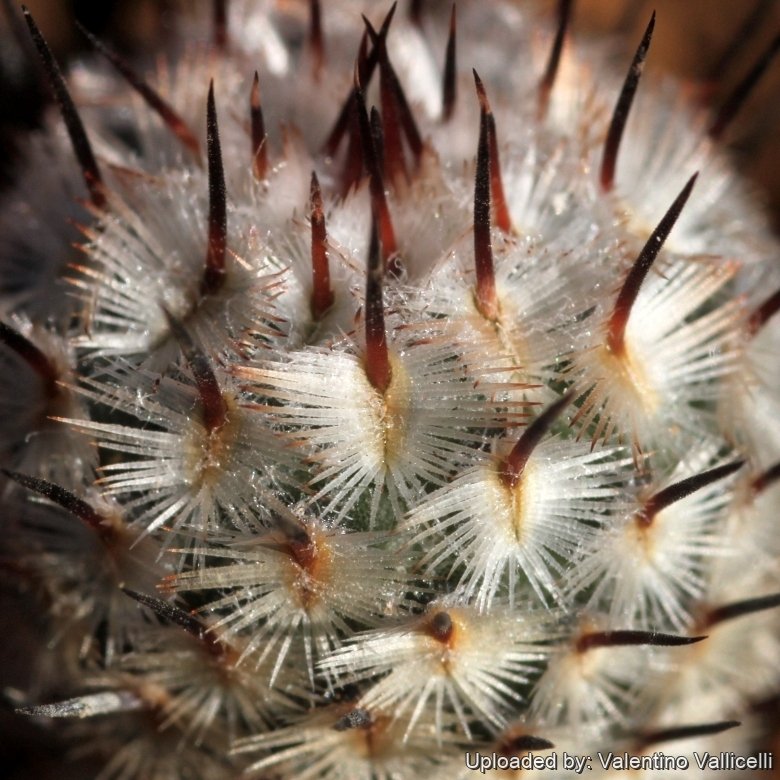
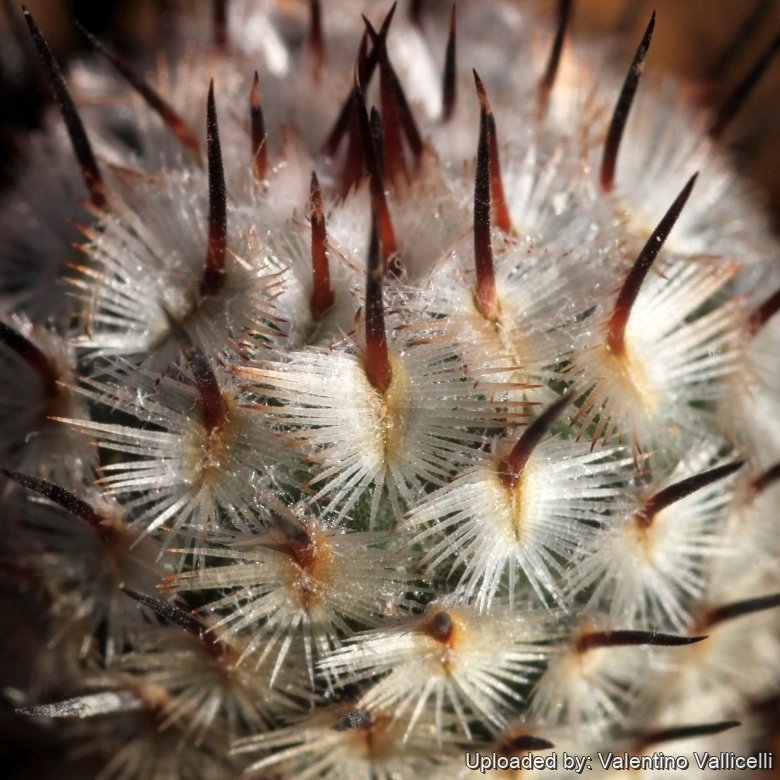
Radial spines: 50-63 about 4 mm long, symmetrically arranged, pectinate, aciculate, white to hyaline.
Central spines: One straight, ascending, dark brown or black (red-brown when young) with brownish to yellowish base.
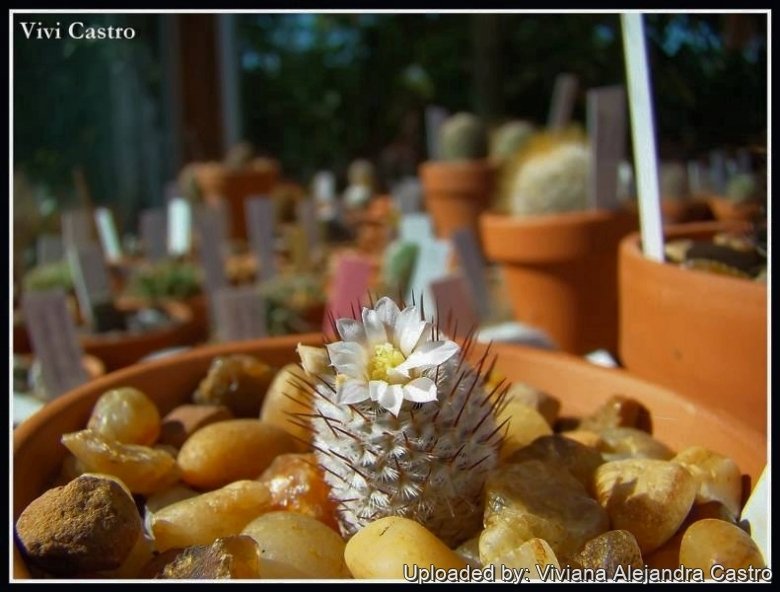
Flowers: Funnelform, 6 mm long and 8 mm wide, shiny, pale yellowish (not pink) with pale brownish midstripe. It is not surprising to see them in flower at little more that 1cm across.
Fruit: Green, club shaped, 2 mm long and wide.
Seed: Brownish black, 1 mm long and 0.6 mm wide.
Origin and Habitat
Mexico Northeast, Zacatecas, Municipio Via Garcia, Mexico.
Altitude : 2.000 m. above sea level.
Habitat: It grow among volcanic rocks. It is a critically endangered species with less than 1000 individuals surviving in habitat.
Cultivation and Propagation
Mammillaria perezdelarosae subs. andersoniana is a great looking cactus with showy greenish white flowers, but is very sensitive overwatering.
Soil: Plants should be allowed to become crowded in their pot. Keep in shallow pot.
Soils: It likes very porous standard neutral cactus mix soil.
Repotting: Use pot with good drainage. Plants should be allowed to become crowded in their pot. Keep in shallow pot.
Fertilization: Feed with a high potassium fertilizer in summer.
Water requirements: It needs regular water but do not water again until dry, as it is specially sensitive to over watering. Also, it is a species that is dormant in the winter and require very little water (maybe even none) during the cold months.
Frost Tolerance: Light frost protection required. Minimum of 5ºC for safe growing (but hardy up to -5°C or less.)
Sun Exposure: High levels of light are needed to flower and for good spine development. Can be sunburned if moved from shade/greenhouse into full sun too quickly. During the spring it may be able to take full sun until the heat arrives at the end of spring. In an area that has hot afternoon sun, it may be able to take full morning sun, but requires afternoon shade or afternoon light shade.
Propagation: Seeds. Seeds germinate in 7-14 days at 21-27° C in spring, remove the glass cover gradually as the plants develops and keep ventilated, no full sun for young plants!
Bibliography
Major references and further lectures
-
Edward Anderson “The Cactus family” Timber Press, Incorporated, 2001
-
James Cullen, Sabina G. Knees, H. Suzanne Cubey “The European Garden Flora Flowering Plants: A Manual for the Identification of Plants Cultivated in Europe, Both Out-of-Doors and Under Glass” Cambridge University Press, 11/Aug/2011
-
David R Hunt; Nigel P Taylor; Graham Charles; International Cactaceae Systematics Group. “The New Cactus Lexicon” dh books, 2006
-
John Pilbeam “Mammillaria: the cactus file handbook” Cirio Publishing Services Ltd Dec/30,/1999
Gallery