Description
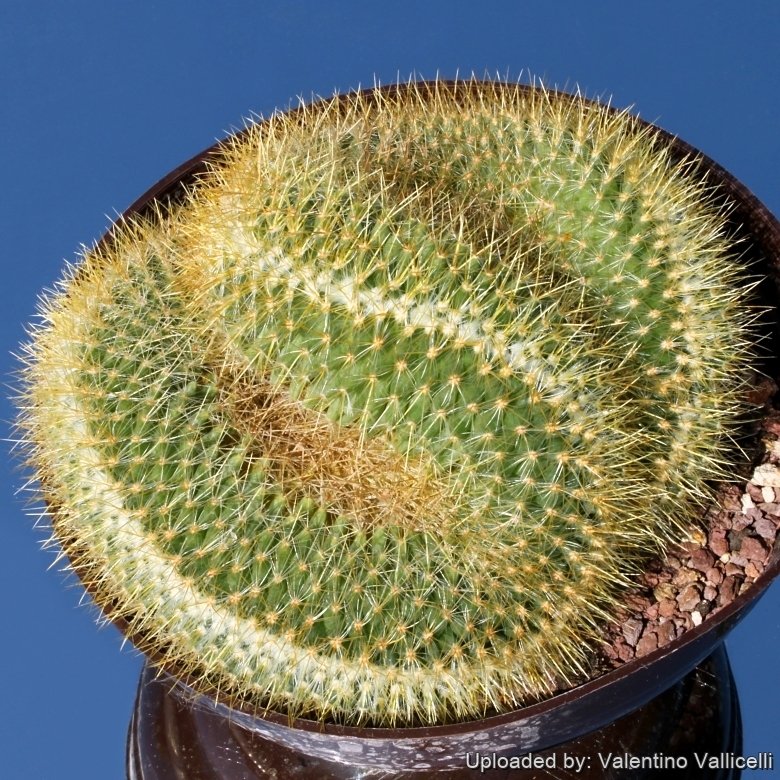
The typical Mammillaria pringlei is generally a solitary ball cactus with a ovoid or globular shaped green stem covered by yellow or amber spines.
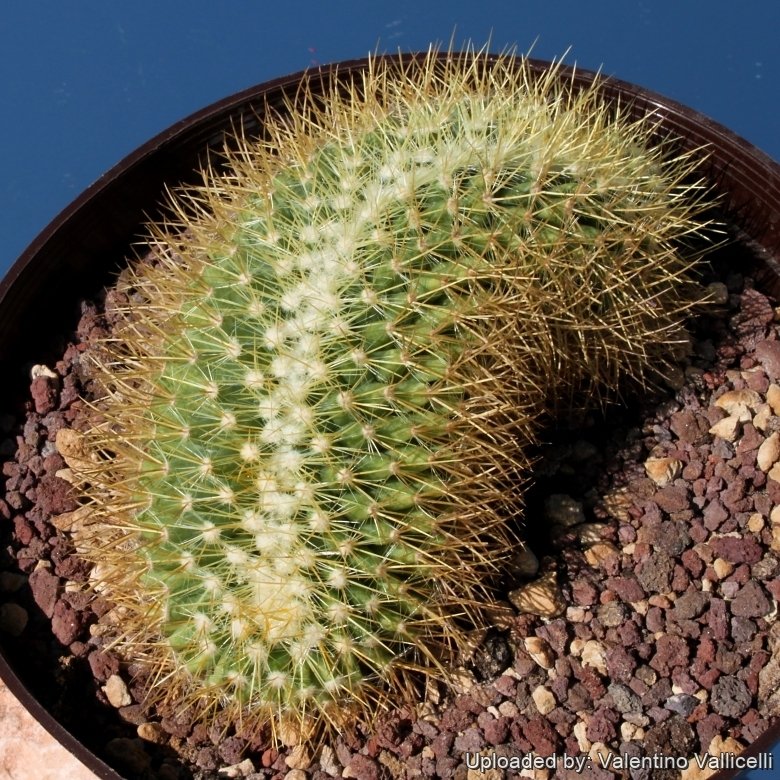
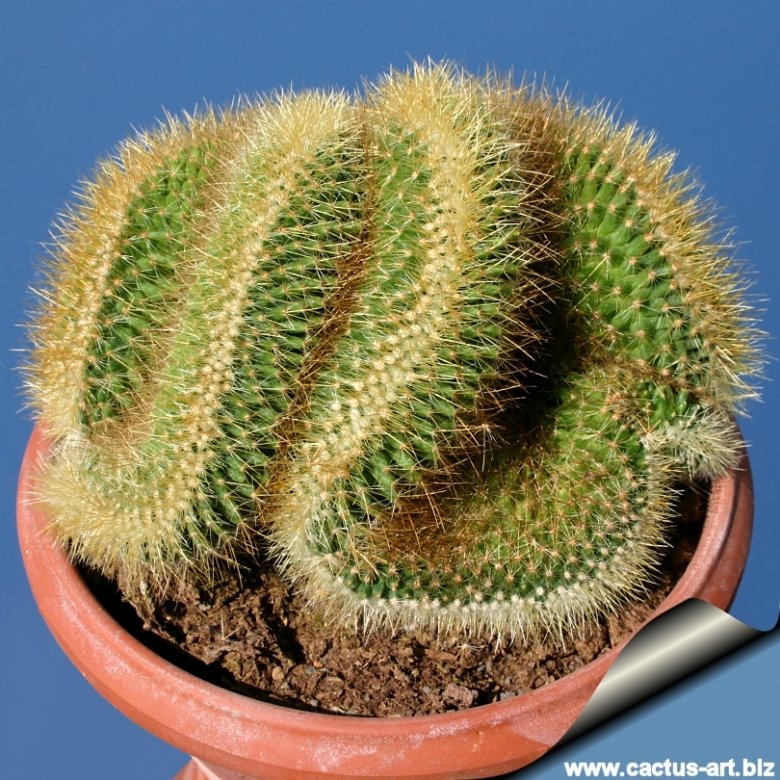
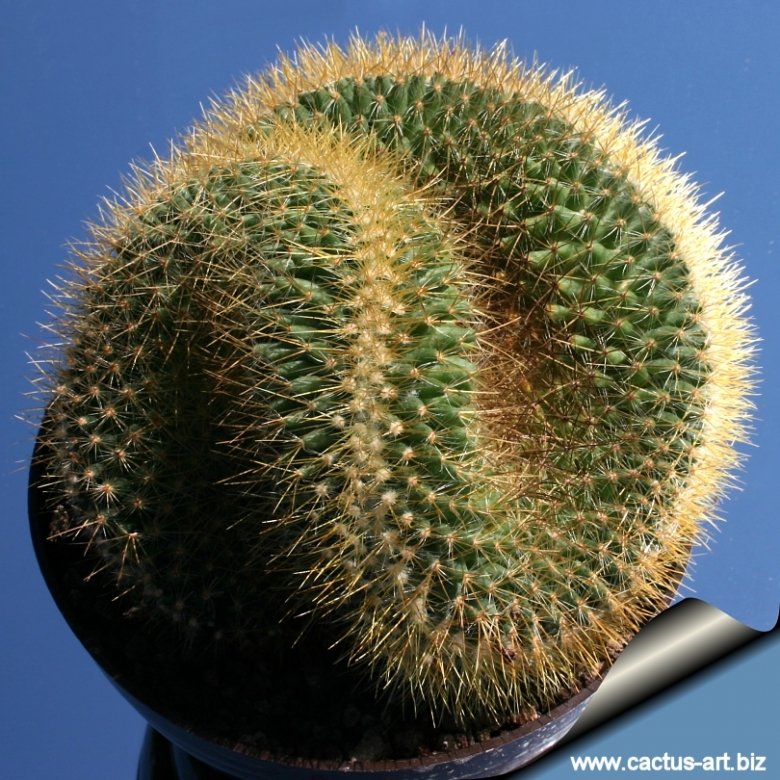
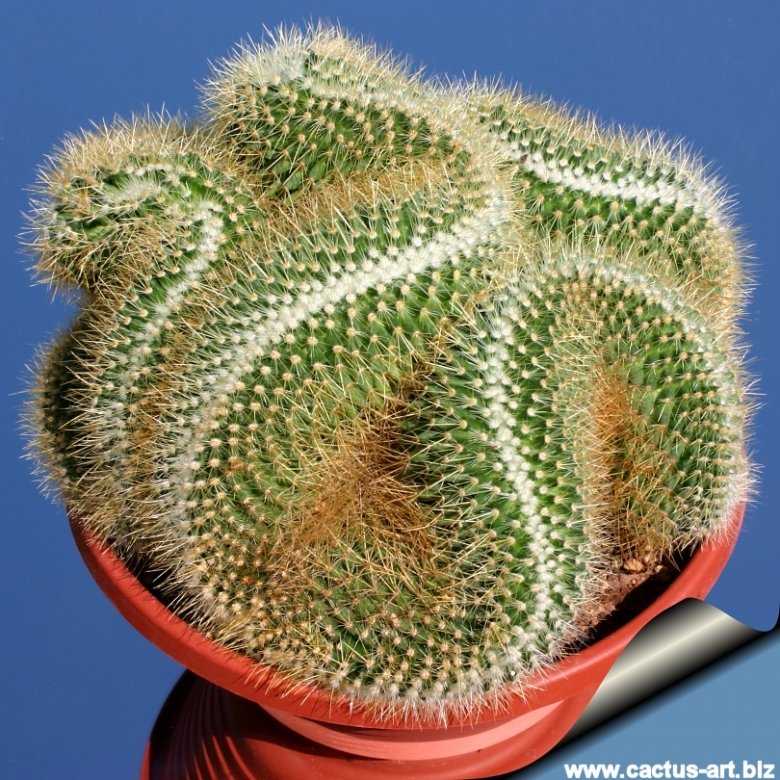
Cristate form: (Mammillaria pringlei f. cristata) is one of the most priced and common cristate cacti which can form robust convoluted mounds up to 50 or more cm in diameter.
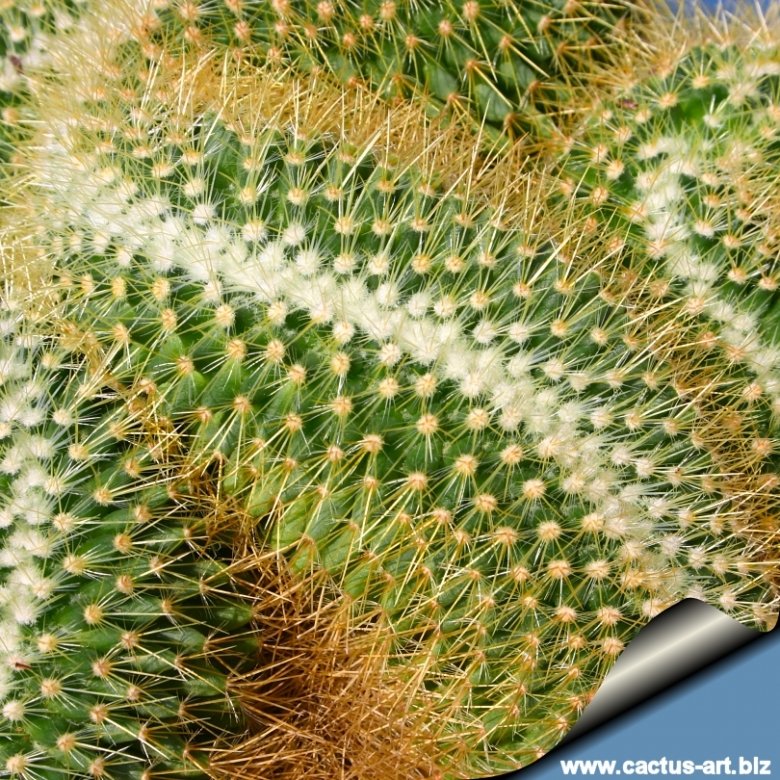
Spines: It is one of the few Mammillaria that is completely covered with yellow spines. The spines on this species seem to radiate light, almost making it appear to glow.
Radial spines: White and spreading.
Central spines: Recurved (curved backward), deep yellow to golden in colour.
Flowers: The small red flowers are 8-12 mm long.
Blooming season: Flowers can appear any time of the year.
Origin and Habitat
Garden origin (Nursery produced cultivar)
Cultivation and Propagation
It is a relatively easy plant to grow, both grafted or on its own roots. During the summer it is best to keep the plants outside, where the temperature can rise to over 30 C with no harm to the plant. Furnish good drainage and use a an open and free draining mineral compost that allows therefore roots to breath. They should be kept almost completely dry during the winter months. From March onwards the plant will begin to grow, and watering should be increased gradually until late May, when the plant should be in full growth.
Water regularly during the summer, so long as the plant pot is allowed to drain and not sit in a tray of water. During hot weather you may need to water the plants more frequently, as long as the plant is actively growing. From late September watering should be reduced, to force the plant to go into a state of semi-dormancy. By October you should be back in to the winter watering regime.
It needs full sun, avoiding only the harshest summer sun. If kept too dark, plants may become overly lush and greener, and could be prone to rot, due to over-watering.
Feeding may not be necessary at all if the compost is fresh. Then feed in summer only if the plant hasn’t been repotted recently. Do not feed the plants from September onwards, as this can cause lush growth, which can be fatal during the darker cold months. Grown specimens resist to -4°C for a short time.
Propagation: By vegetative propagation grafting or stem cuttings from adult plants.
Bibliography
Major references and further lectures
-
David Hunt, Nigel Taylor “The New Cactus Lexicon” DH Books, 2006
-
John Pilbeam (1999) “Mammillaria The Cactus File Handbook” Nuffield Press.
-
Nathaniel Lord Britton, Joseph Nelson Rose “Cactaceae: Descriptions and Illustrations of Plants of the Cactus Family” vol. 4 The Carnegie Institution of Washington, Washington 1923
-
Stuart Max Walters “The European Garden Flora: Dicotyledons (Part I)” Cambridge University Press, 1989
-
Edward F. Anderson “The Cactus Family” Timber Press, 2001
-
Cházaro, M. 2013. Mammillaria pringlei. In: IUCN 2013. IUCN Red List of Threatened Species. Version 2013.2. <www.iucnredlist.org>. Downloaded on 19 December 2013.
Gallery