Publication: Mitt. Arbeitskreises Mammillaria 27(2): 50 (-51). 2003
Description
Mammillaria saboae subs. roczekii is a solitary (or rarely clustering from the base) geophyte succulent. It is the fourth discovered species of the Saboae group and very similar to the other conspecific taxa.
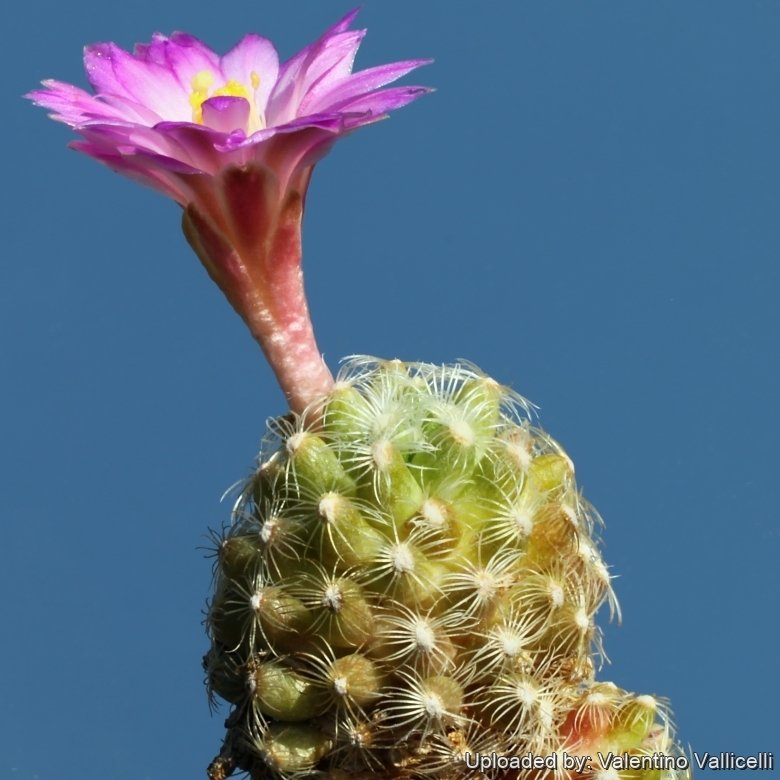
Stem: Tiny, round, soft-bodied, flattened globose, oblong,10-20 mm in diameter, 20-40 mm tall. Axils bare, without latex.
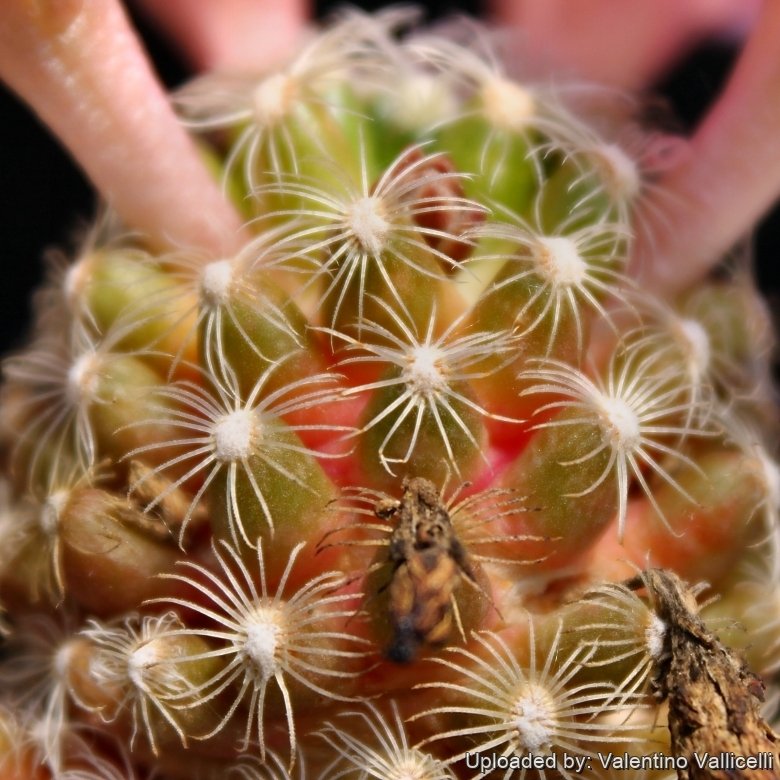
Tubercles: Conical, dark green, widely separated, rounded at the top, somewhat soft, 5 mm wide, 7-9 mm long. The axil is naked or with some tiny bristles.
Roots: Fleshy taproot (sometime branching) 15 - 50 mm long and 35 mm in diameter.
Radial spines: 19-25, glassy white, interlacing, smooth, thin, a little curved, 3 to 4 mm long.
Central spines: Absent.
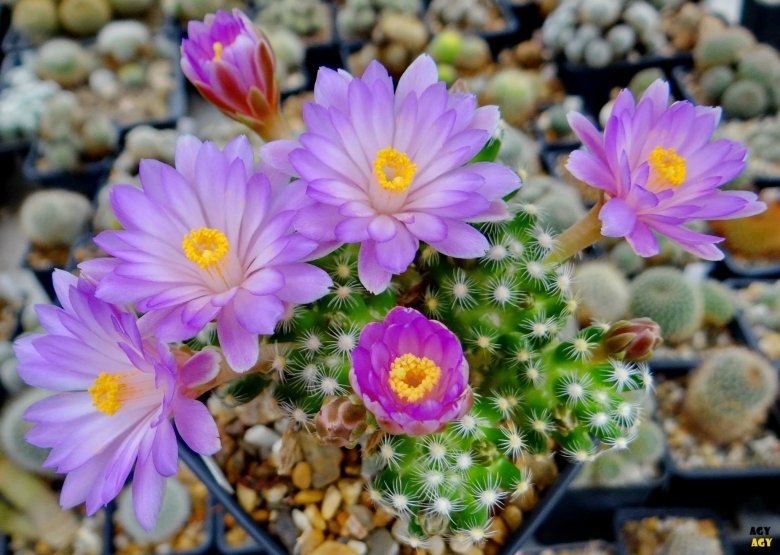
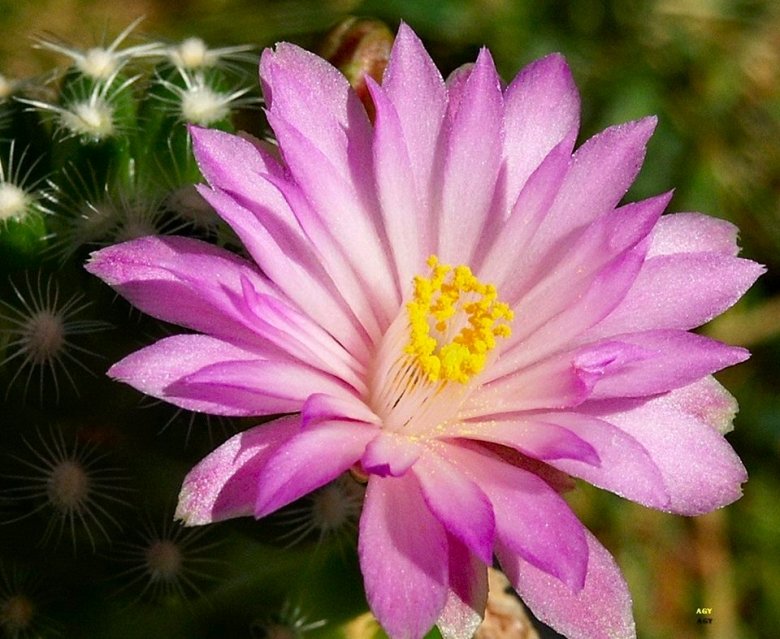
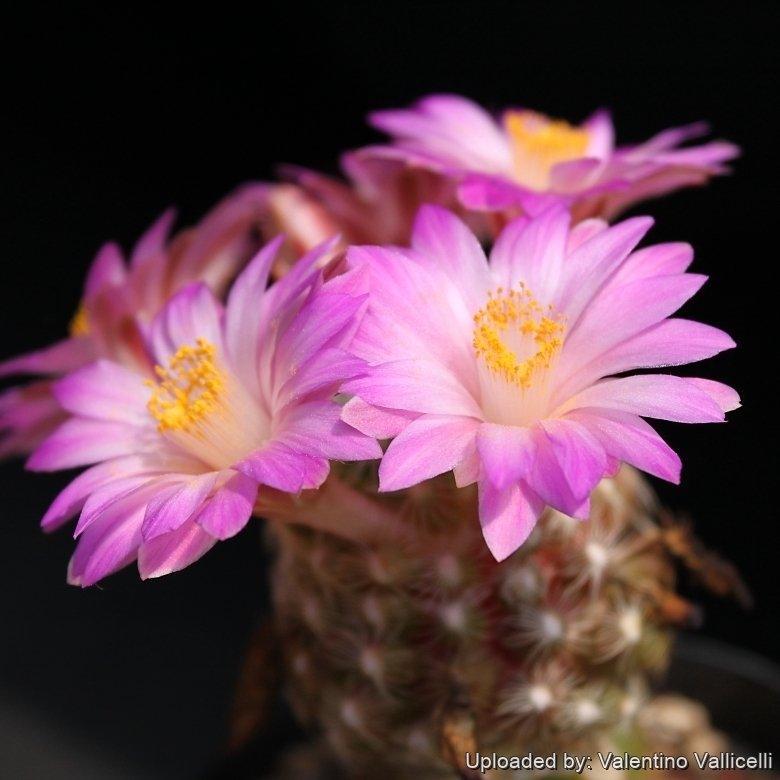
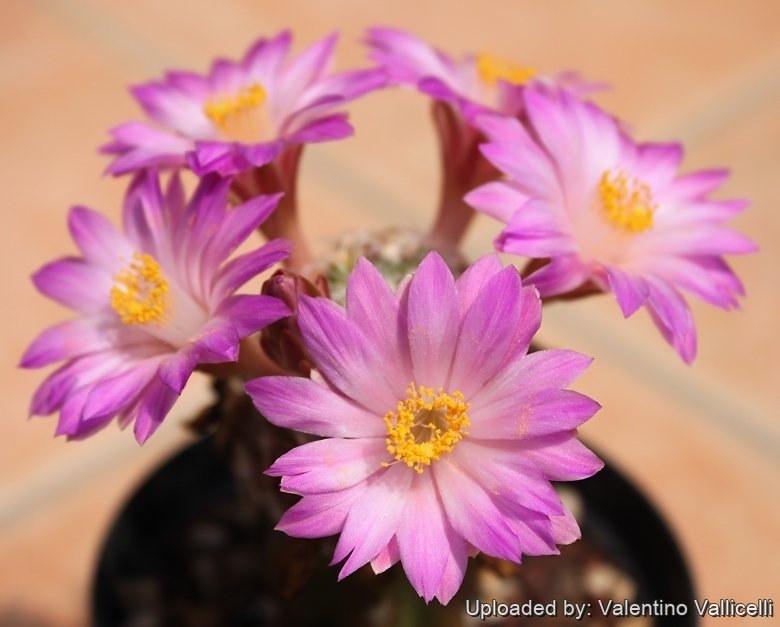
Flowers: Funnelform, large 35 - 50 mm long, 30 - 40 mm wide dark lilac-pink to pinkish magenta, larger and deeper coloured than the type, stigmas yellow.
Blooming season: May. It has a reputation of being shy to flower, at least when on its own roots.
Fruits: Brownish, 4-5 mm wide and long. The fruits mature inside the plant and remain for years sunken into the stems, as in the type.
Origin and Habitat
Durango, Mexico - near Canatlan.
Habitat: Grows on volcanic rocks with sandy humus soil. In habitat, the plants contract considerably during the dry season, sometimes pulling down completely under the soil. Their flowers can push up through the dirt.
Cultivation and Propagation
Clustering in cultivation and easily flowered it is not really easy. It has a thick tuberous root system and is susceptible to over-watering, and it’s especially prone to rot. Therefore, underpot in a shallow pot with good drainage, filled with a very open mineral-based potting mix, and only use the smallest diameter pot that will accommodate the plant. Plants need to be kept dry in winter. Feed with a high potassium fertilizer in summer. Can be sunburned if moved from shade/greenhouse into full sun too quickly. During the spring it may be able to take full sun until the heat arrives at the end of spring. In an area that has hot afternoon sun, it may be able to take full morning sun, but requires afternoon shade or afternoon light shade. If grown correctly, it will reward the grower with generous displays of huge pink-violet flowers.
Initially this species appears easy to cultivate, but the grower should not be surprised if clumps suddenly dry up, especially in the winter season. Hardy to -5°C.
Propagation: Seeds, division off larger clumps or graft. Seeds can be sown in the spring or summer. The seedlings should not be disturbed until they are well rooted, after which they can be planted separately in small pots. To make cuttings wait until the offsets that appear at the base of old clustered specimens are 1/3 the size of the parent and then detach and plant.
Bibliography
Major references and further lectures
- Werner Rischer and Wolfgang Krüger “Mammillaria saboae ssp. roczekii RISCHER & KRÜGER” Mitteilungsblatt des Arbeitskreises für Mammillarienfreunde 27(2): 50 - 58 (2003)
Gallery