Description
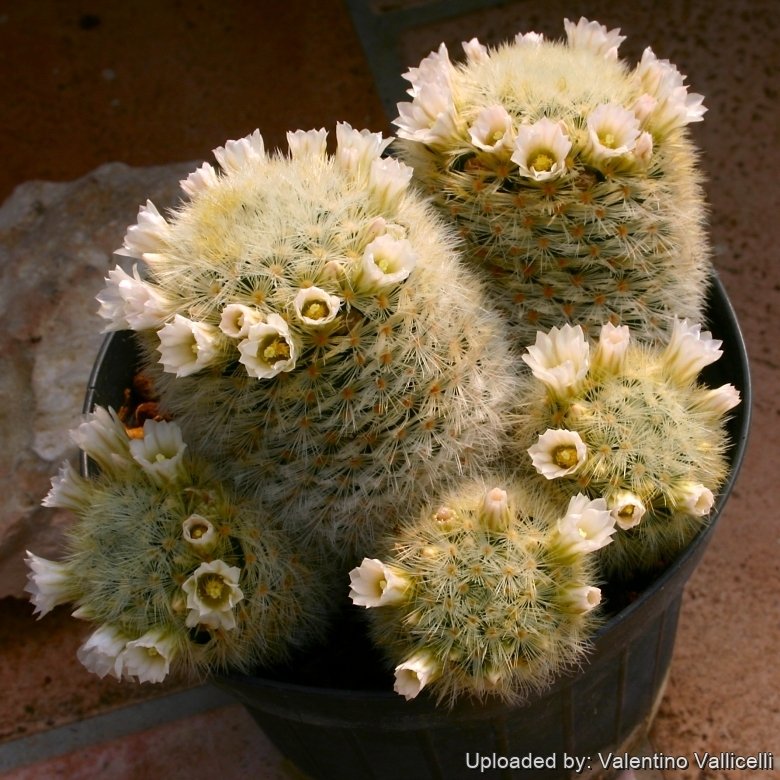
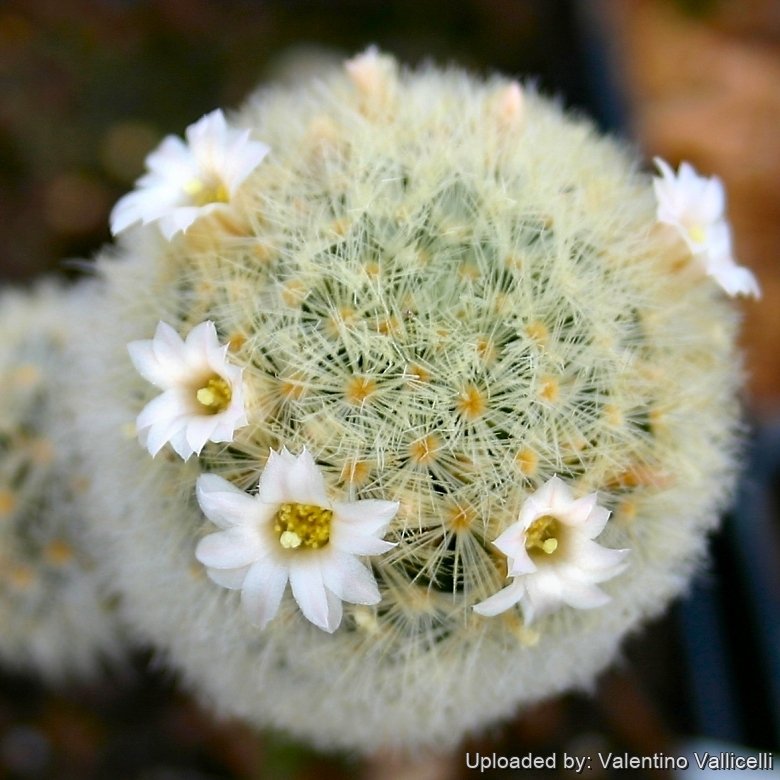
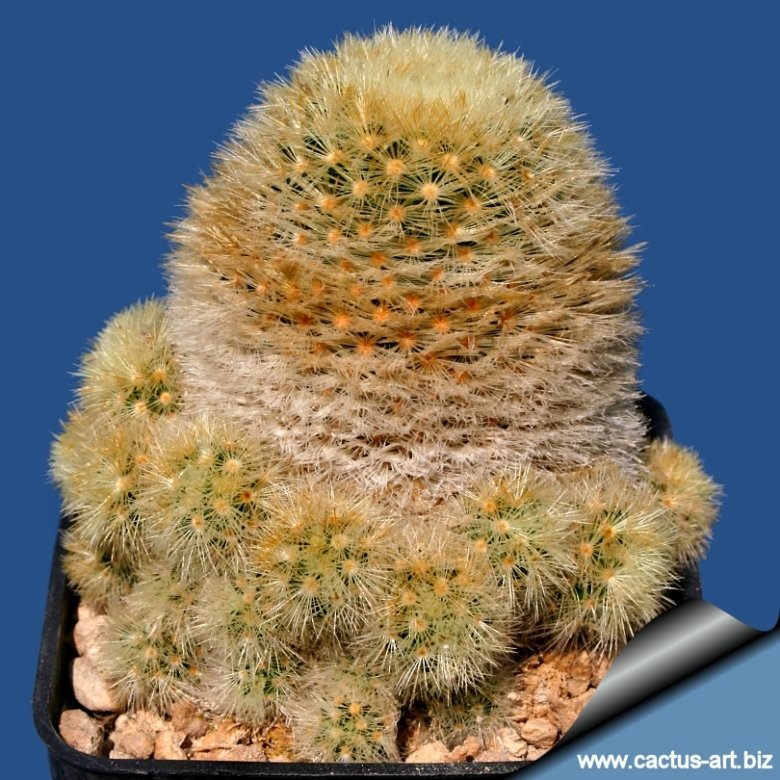
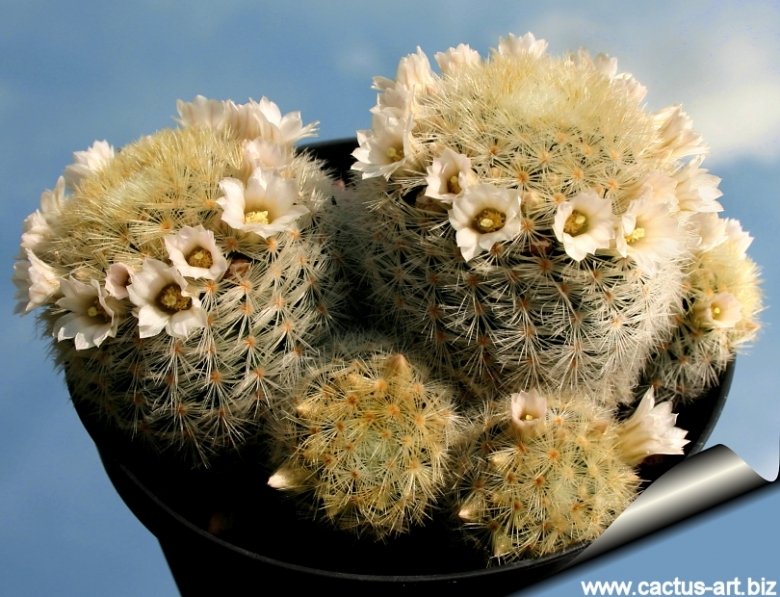
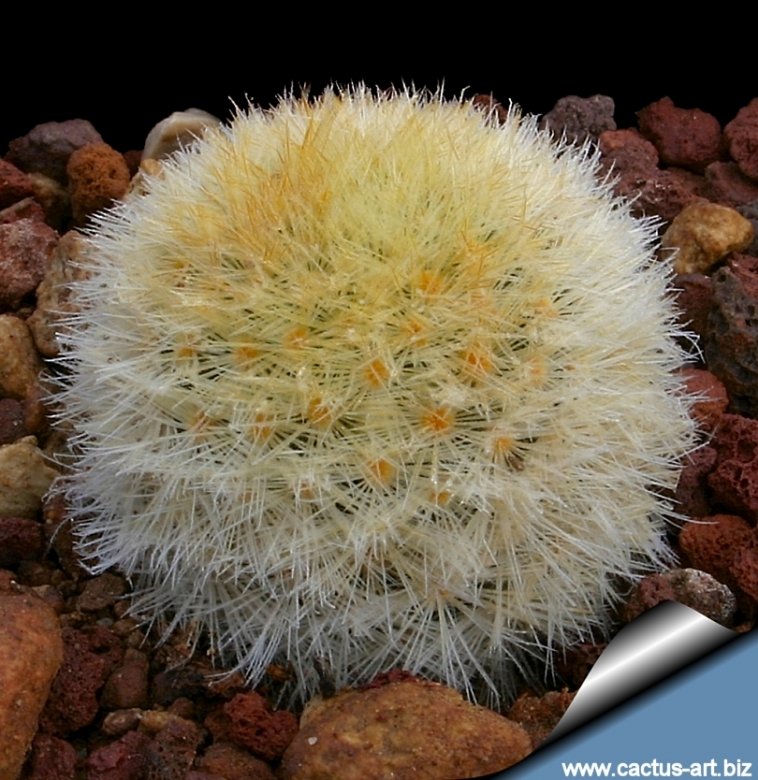
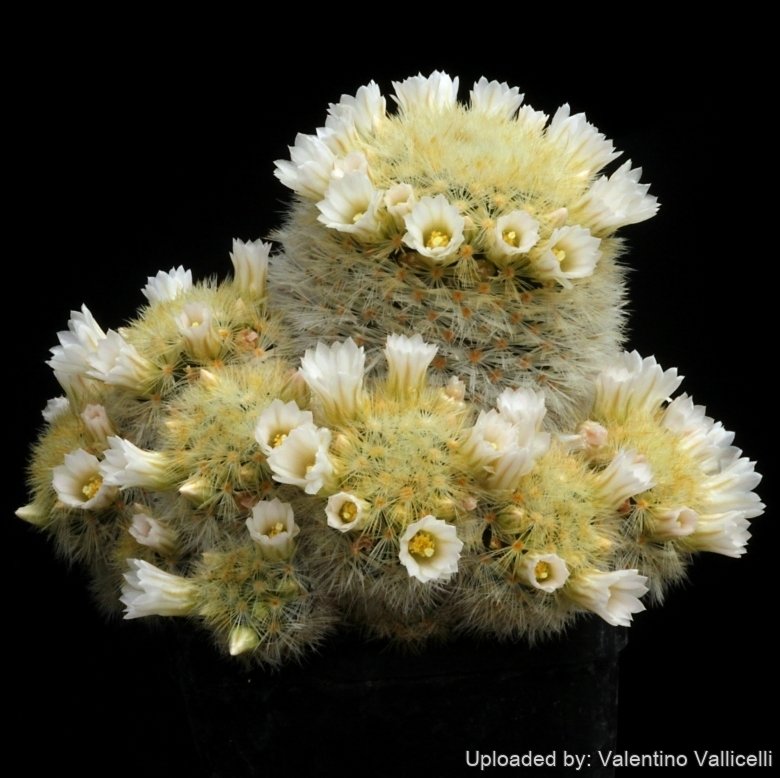
Mammillaria schiedeana subs. giselae f. albiflora is an odd cultivars that develops a lovely white puffs with eventual offsets and splendid pure white blooms. The flowers are tiny white but otherwise look like mammillaria flowers. Its spherical to egg-shaped stems and general appearance suggests an hybrid origin. Some growers suppose that it could be a cross beetween Mammillaria schiedeana subs. giselae and Mammillaria carmenae.
Habit: It is a slow growing attractive plant with short, closely interwoven, hairy spines. It is solitary to densely caespitose.
Roots: Thick root
Stem: Globular to shortly cylindrical, more or less rounded at the top, dark green, soft-fleshed, 2,5-10 cm tall 4 to 6 cm thick.
Tubercles: Green, close together, terete, long and thin, tapering toward the tips, without latex, 6-10 mm long; axil with long bristle-like white or yellowish hairs protruding above the tubercles or absent.
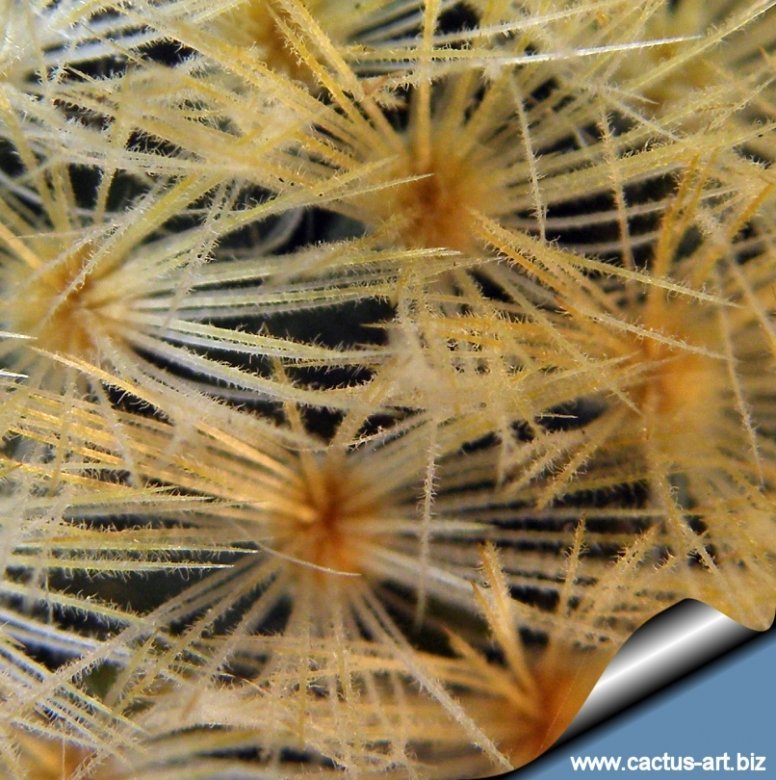
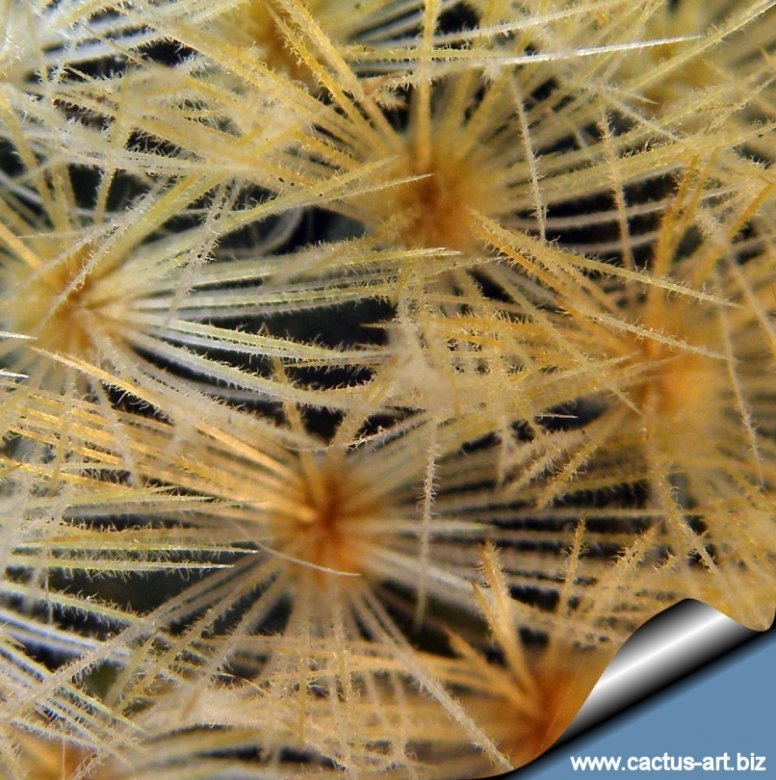
Spines: Not differentiated as central and radials, very numerous (up to 50 or more) in several series, white to creamy-yellow with yellow bases, spreading, fine, bristle-like, slightly puberulent, 2-5 mm long, tips hairlike.
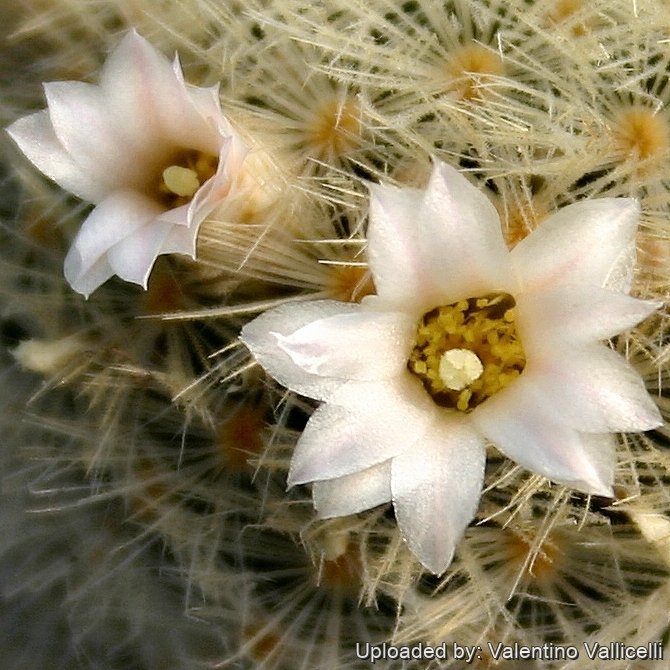
Flowers: White to creamy-white coloured, 8-15 mm long; inner perianth segments white; filaments white, style cream-coloured; stigma lobes 4, short, obtuse.
Blooming season: It produces ring after ring of flowers throughout most of the winter.
Fruits: not seen.
Seeds: not seen.
Origin and Habitat
Garden origin (Nursery selected white flowering selection)
Cultivation and Propagation
It is a slow growing species of easy culture, recommended for any collection, it doesn’t require any special treatment. Water regularly in summer, but do not overwater (Rot prone) Use pot with good drainage and a very porous potting media, keep dry in winter. Feed with a high potassium fertilizer in summer. It is quite frost resistant if kept dry, hardy as low as -5° C (some reports give it hardy to -5°C) Sun Exposure: High levels of light are needed to flower and for good spine development. Can be sunburned if moved from shade/greenhouse into full sun too quickly. During the spring it may be able to take full sun until the heat arrives at the end of spring. In an area that has hot afternoon sun, it may be able to take full morning sun, but requires afternoon shade or afternoon light shade. If grown correctly, it will reward the grower with generous displays of purple flowers.
Clustering in cultivation after several years and easily flowered. For best results, use a shallow pot, and only use the smallest diameter pot that will accommodate the plant.
Propagation: Grafting (usually) or division, wait until the offsets that appear at the base of old clustered specimens are 1/3 the size of the parent and then detach and plant. (Cuttings root quickly).
Bibliography
Major references and further lectures
-
Edward Anderson “The Cactus family” Timber Press, Incorporated, 2001
-
James Cullen, Sabina G. Knees, H. Suzanne Cubey “The European Garden Flora Flowering Plants: A Manual for the Identification of Plants Cultivated in Europe, Both Out-of-Doors and Under Glass” Cambridge University Press, 11/Aug/2011
-
David R Hunt; Nigel P Taylor; Graham Charles; International Cactaceae Systematics Group. “The New Cactus Lexicon” dh books, 2006
-
John Pilbeam “Mammillaria: the cactus file handbook” Cirio Publishing Services Ltd Dec/30,/1999
Gallery