Publication: Mém. Mus. Hist. Nat. 17: 114 114 1828.
Description
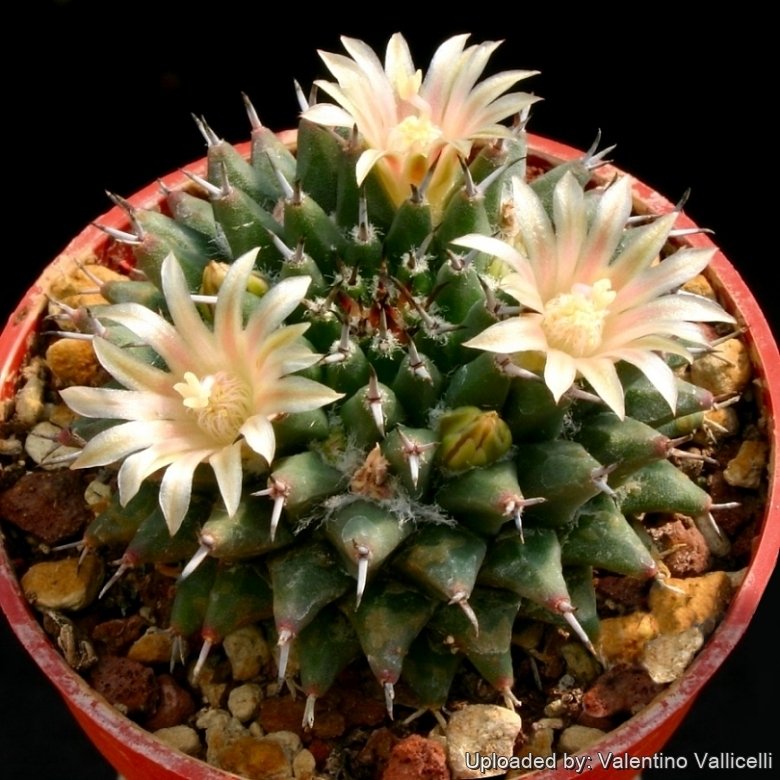
Solitary at first, or slowly clumping flat with ground.
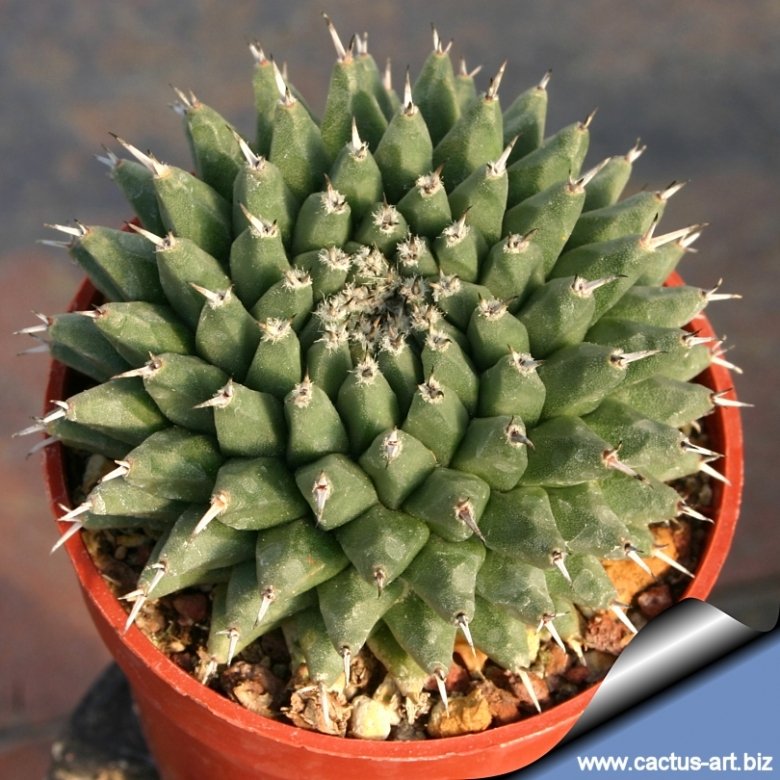
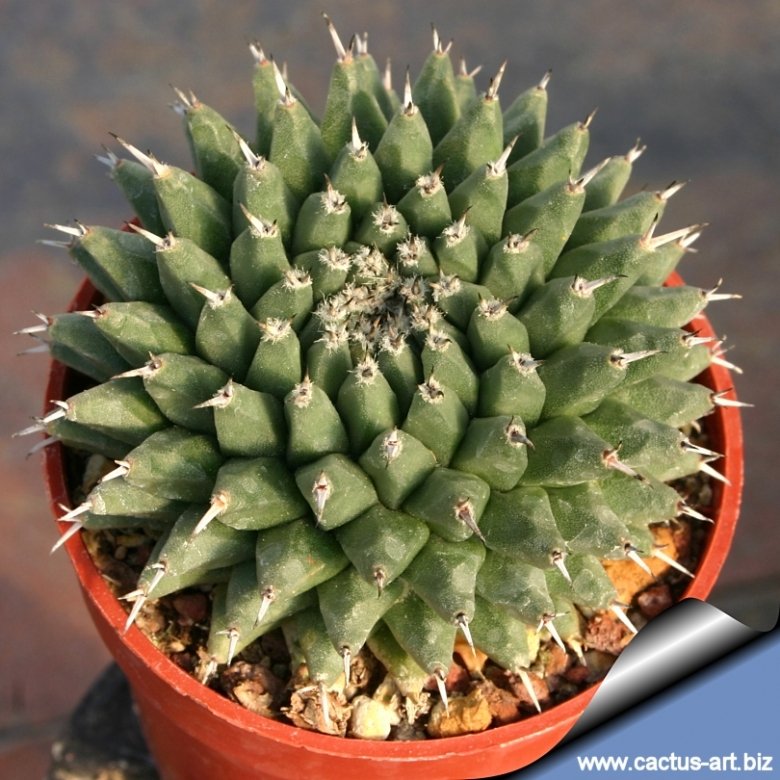
Stem: Flattened globose to depressed globose and not rising much above ground level, dull grey-green 7.5 cm wide (eventually gets to 10 or 15 cm in diameter)
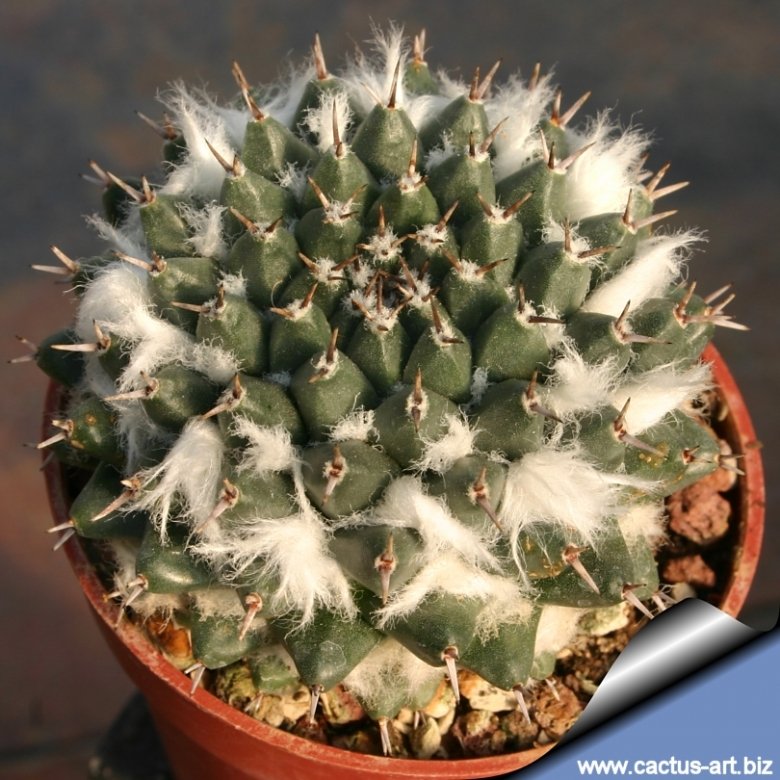
Tubercles: Pyramidal, firm. The axil is furnished by abundant wooll. Tubercles arrangement 13 - 21
Radial spines: Mostly hidden under white wool, usually on young stems only, 2 - 6, white, bristle-like, to 3 mm long.
Central spines: 2-3, very short, stout, reddish brown to black, becoming grey with age, to 4 mm long (occasionally the lowermost longer).
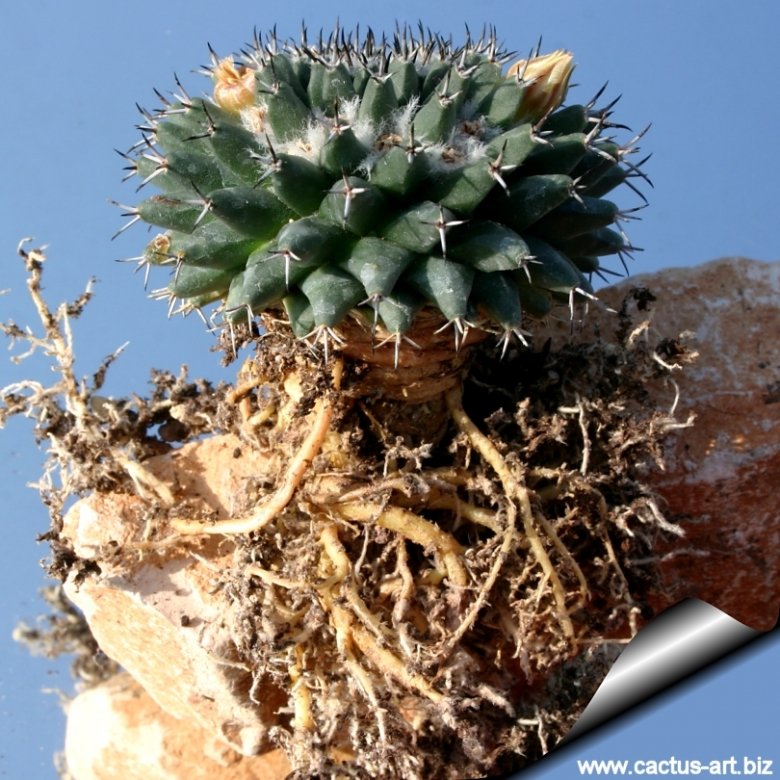
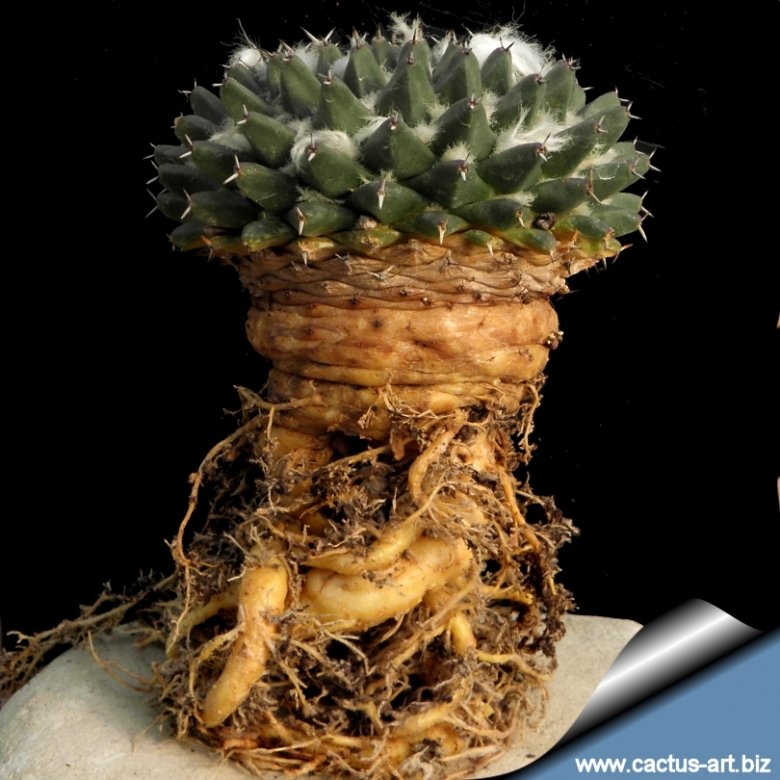
Roots: Taproots large.
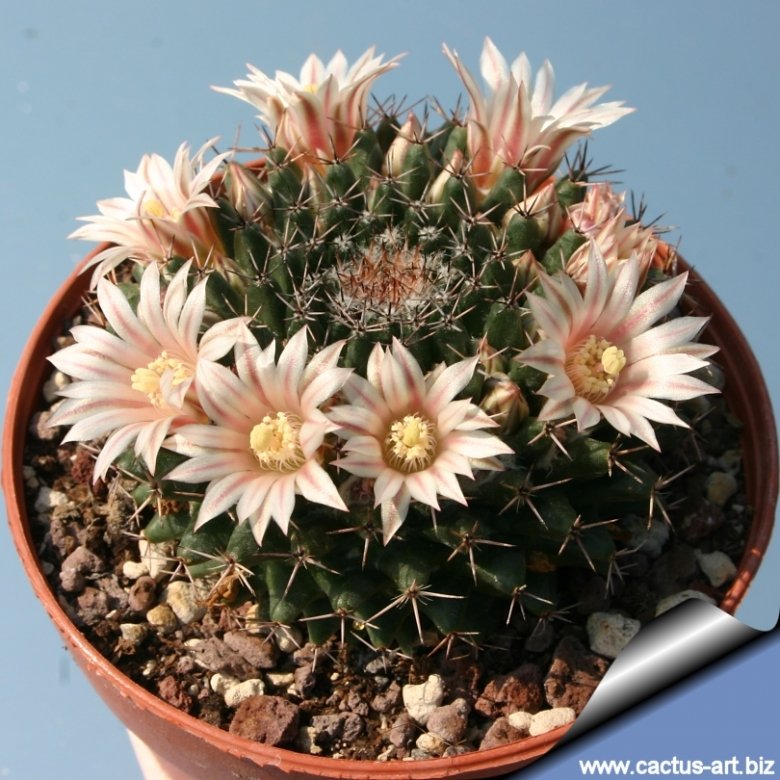
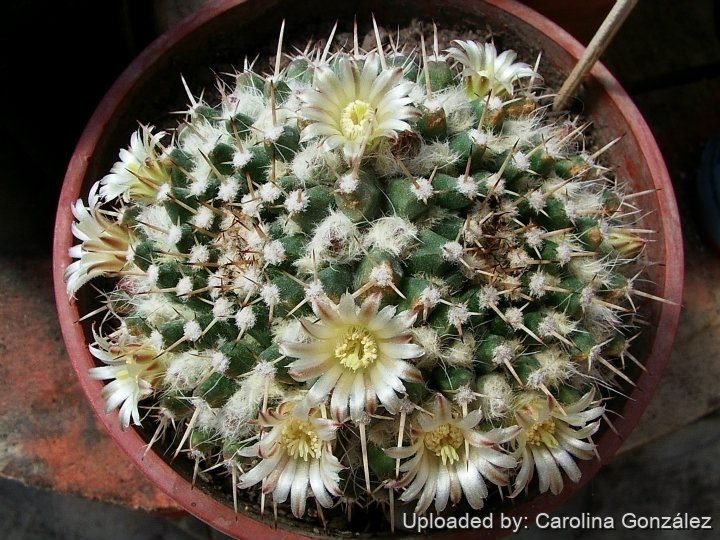
Flowers: Funnelform in a rings on the crown barely rising above the tubercles, whitish to pale yellow with pinkish midstripe, 1-2 cm long and diameter.
Blooming season: Flowering period spring
Fruits: Club-shaped, red, to 10 mm long.
Remarks: The var. caput-medusae and var. tetracantha; often mentioned in literature and sometimes offered in seed lists, should be fully synonymized with the type variety.
Origin and Habitat
Mammillaria sempervivi has a widespread distribution in Central and northern Mexico (Hidalgo, San Luis Potosi, Nuevo Leon, Guanajuato, Queretaro)
Altitude: Grows at altitudes of 1200 to 2250 metres above sea level.
Habitat: This species is rare across its range and occurs in submontane matorral in calcareous soils.
Cultivation and Propagation
This is a popular slow growing and easy to cultivate cactus species. Water regularly in summer, but do not overwater (Rot prone) Use pot with good drainage and a very porous potting media, keep dry in winter. Feed with a high potassium fertilizer in summer. It is quite frost resistant if kept dry, hardy as low as -5° C Outside full sun or afternoon shade, inside needs bright light, and some direct sun.
Easily flowered. Some plants will slowly offset , and clumps can be produced in time.
Propagation: Direct sow after last frost.
Notes
The white wool between the areoles makes this species a pleasure to look at and grow, but the diversity among individual specimens is considerable and the best plants have abundant white axillary wool. Hence, it is worth raising a batch of seedlings and selecting one or two that have the most wool.
Bibliography
Major references and further lectures
-
David Hunt, Nigel Taylor “The New Cactus Lexicon” DH Books, 2006
-
John Pilbeam (1999) “Mammillaria The Cactus File Handbook” Nuffield Press.
-
Nathaniel Lord Britton, Joseph Nelson Rose “Cactaceae: Descriptions and Illustrations of Plants of the Cactus Family” vol. 4 The Carnegie Institution of Washington, Washington 1923
-
Stuart Max Walters “The European Garden Flora: Dicotyledons (Part I)” Cambridge University Press, 1989
-
Edward F. Anderson “The Cactus Family” Timber Press, 2001
-
Guadalupe Martínez, J., Sánchez , E., Bárcenas Luna, R. & Gómez-Hinostrosa, C. 2013. Mammillaria sempervivi. In: IUCN 2013. “IUCN Red List of Threatened Species.” Version 2013.2. <www.iucnredlist.org>. Downloaded on 17 January 2014.
From llifle page Mammillaria staurotypa
Notes
The name Mammillaria staurotypa is unresolved, but some data suggest that it is synonymous with Mammillaria sempervivi
Source: Mammillaria staurotypa, LLIFLE - Encyclopedia of living forms, CC-BY-SA, retrieved 2026-10-25.
Gallery