Publication: Cactography 8. 1926 [ cf: Gentry - Publ. Carnegie Inst. Wash. No. 527 (Rio Mayo Pl.) 196 (1942). ]
Description
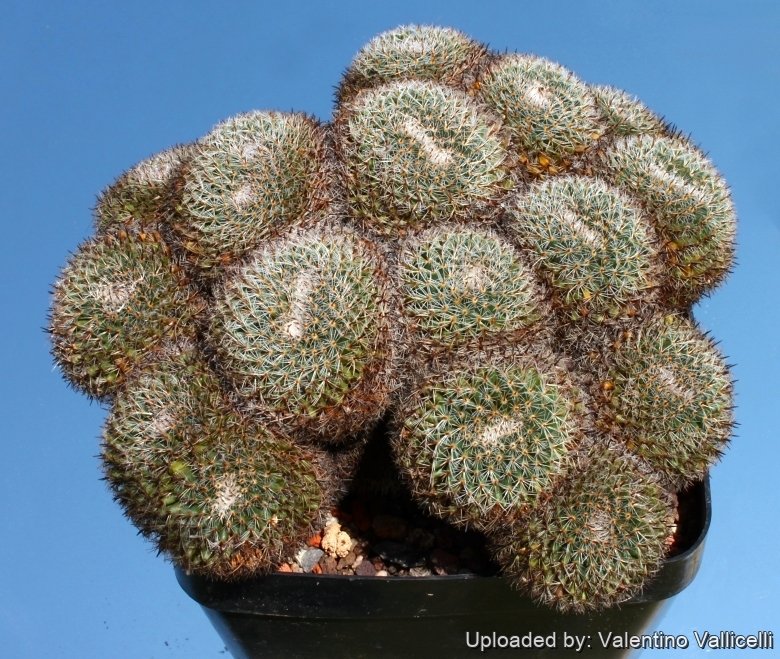
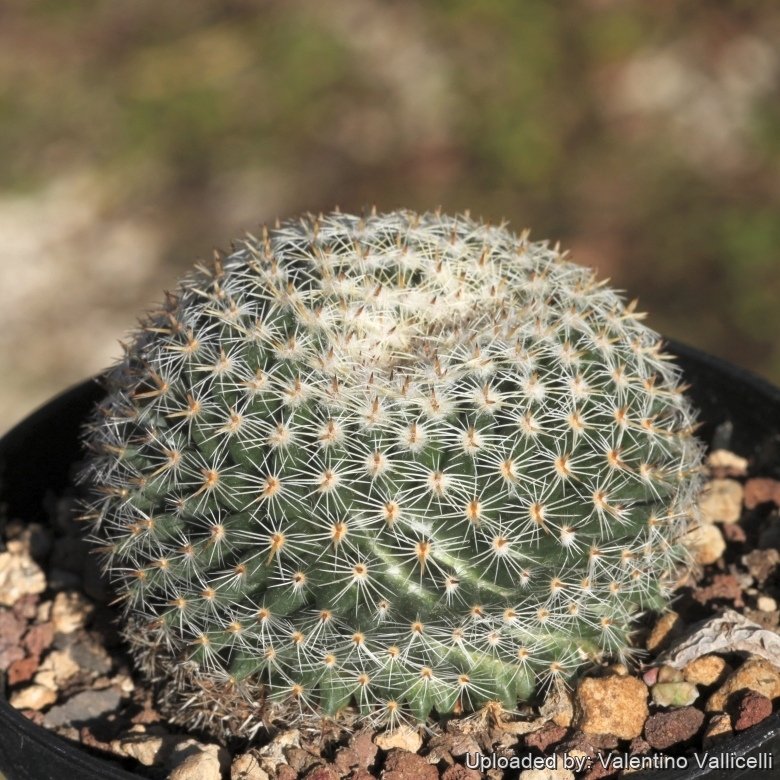
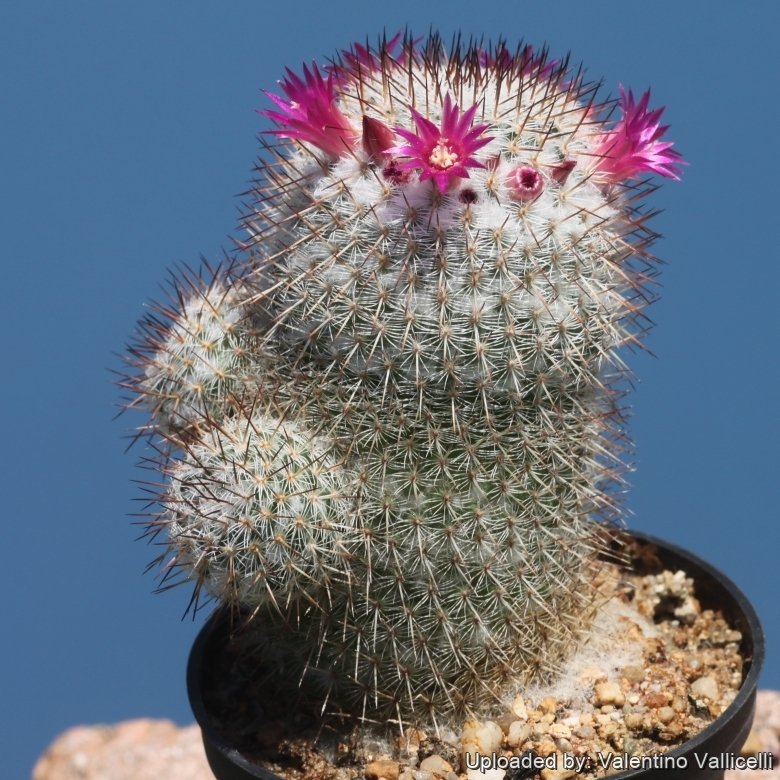
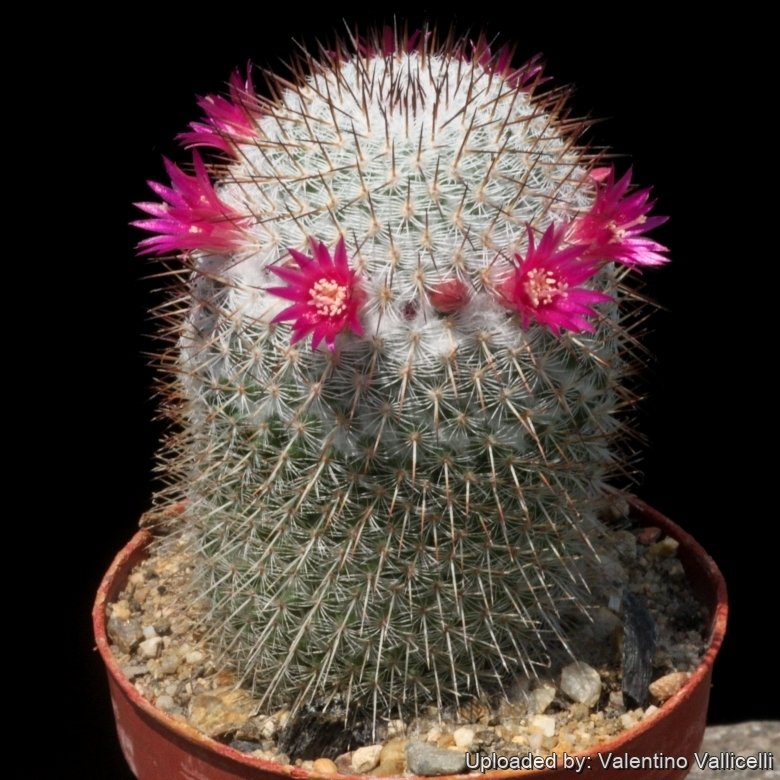
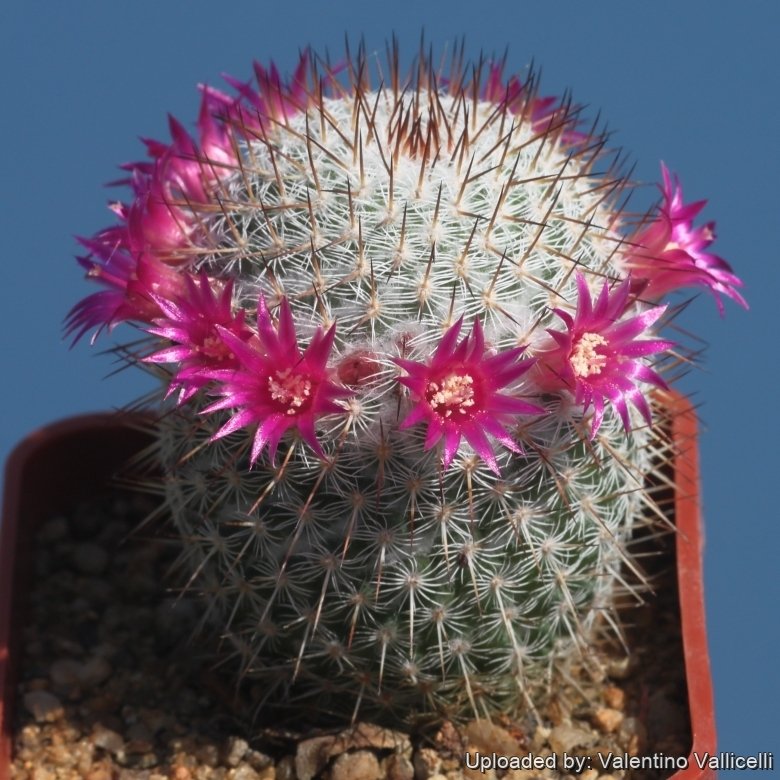
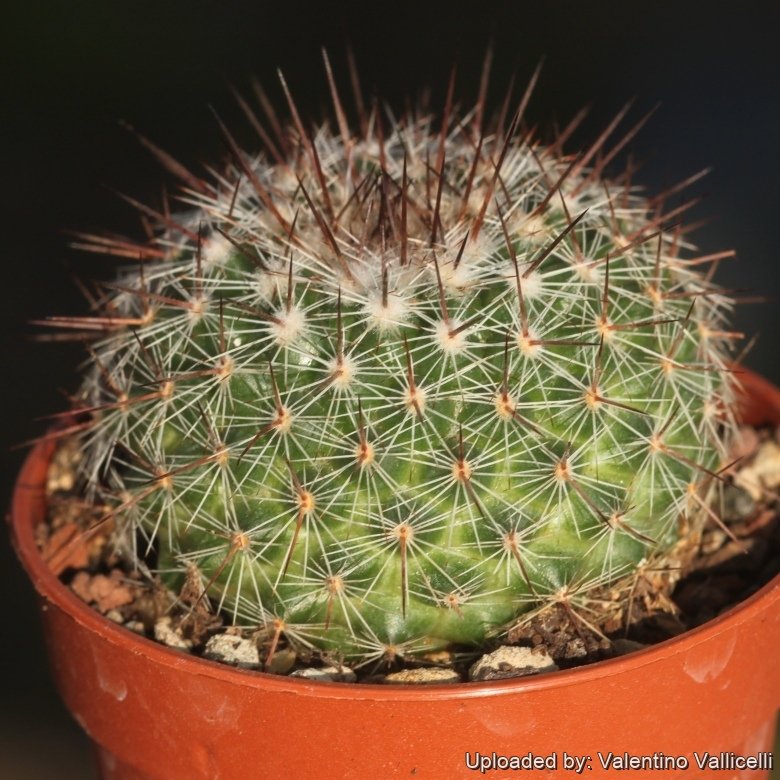
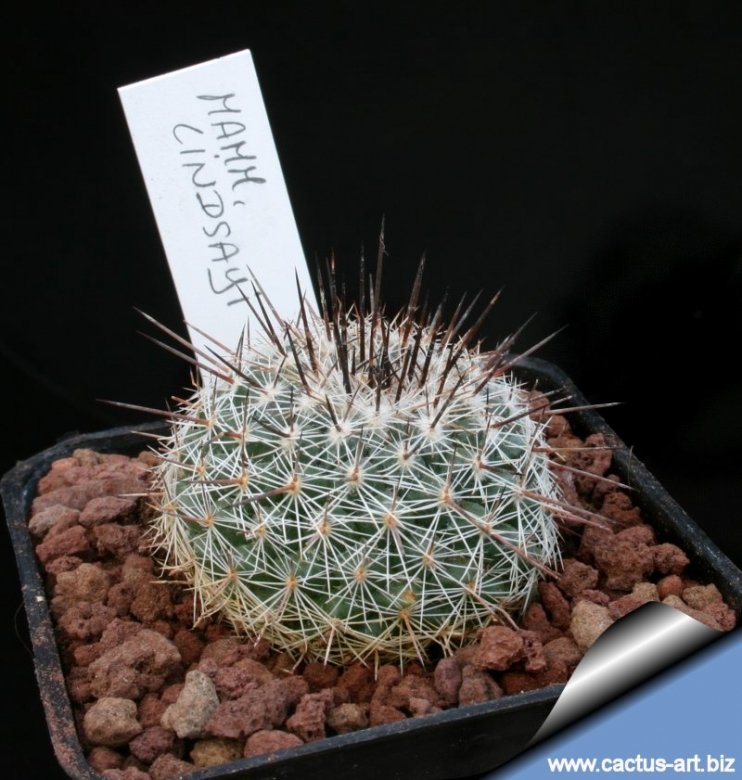
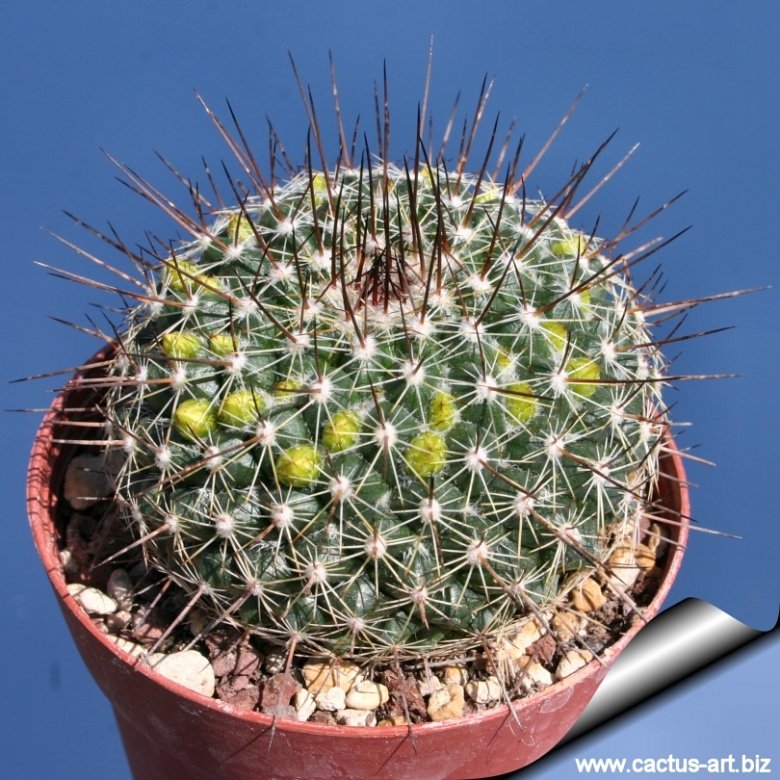
Mammillaria standleyi is a very variable species with white wool between the tubercles, particularly towards the apex, with white radial spines and brownish centrals. It form a complex of related species along with Mammillaria canelensis, Mammillaria hertrichiana, Mammillaria miegiana, Mammillaria montana, Mammillaria movensis, Mammillaria sonorensis, Mammillaria tesopacensis, & several more. It is still unclear whether this variable complex is one or several species. There is so much variation in characters such as spination, woolliness, and flower colour that most authors choose to lump them together until further studies are done.
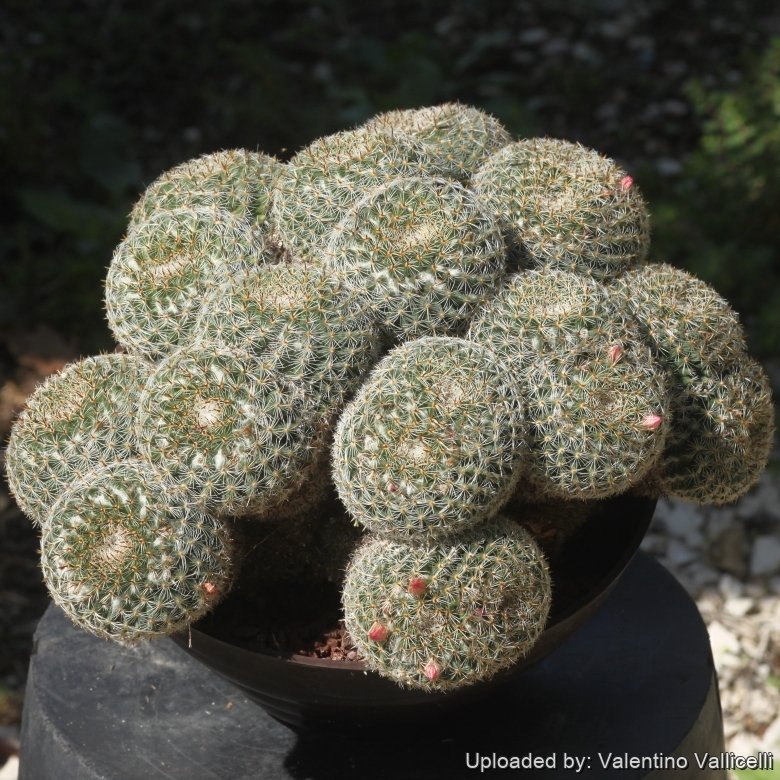
Habit: Plants usually solitary but at times forming large clumps of nearly 1 meter wide, densely covered
with spines;
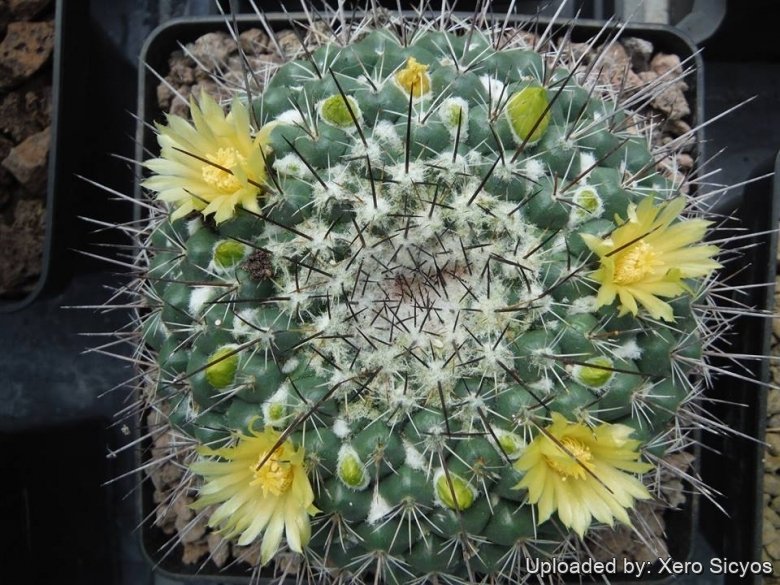
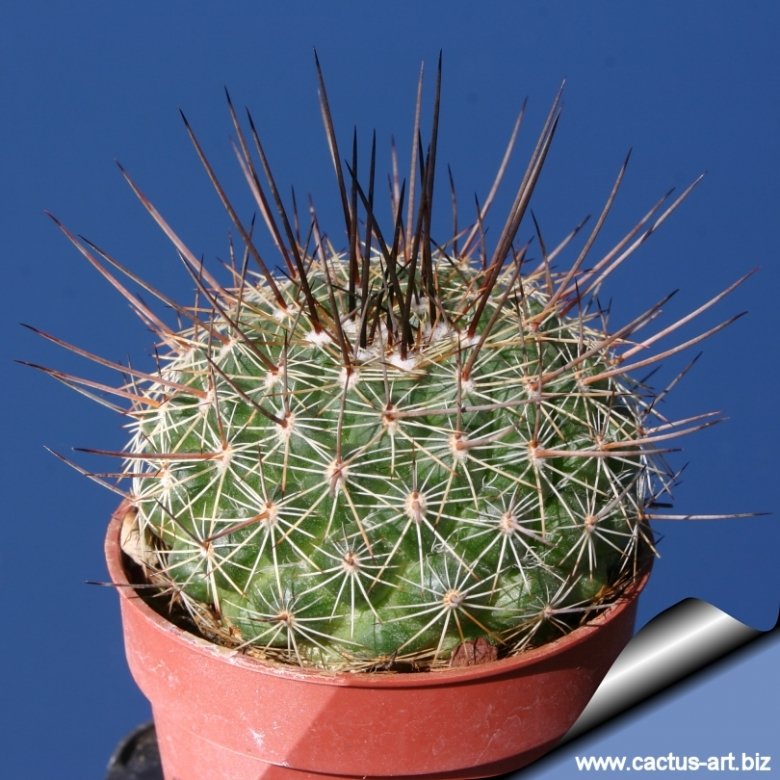
Stems: Flattened globose, pale green, up to 10 cm in diameter, occasionally dichotomously branched.
Tubercles: Firm, conical, keeled, with latex.
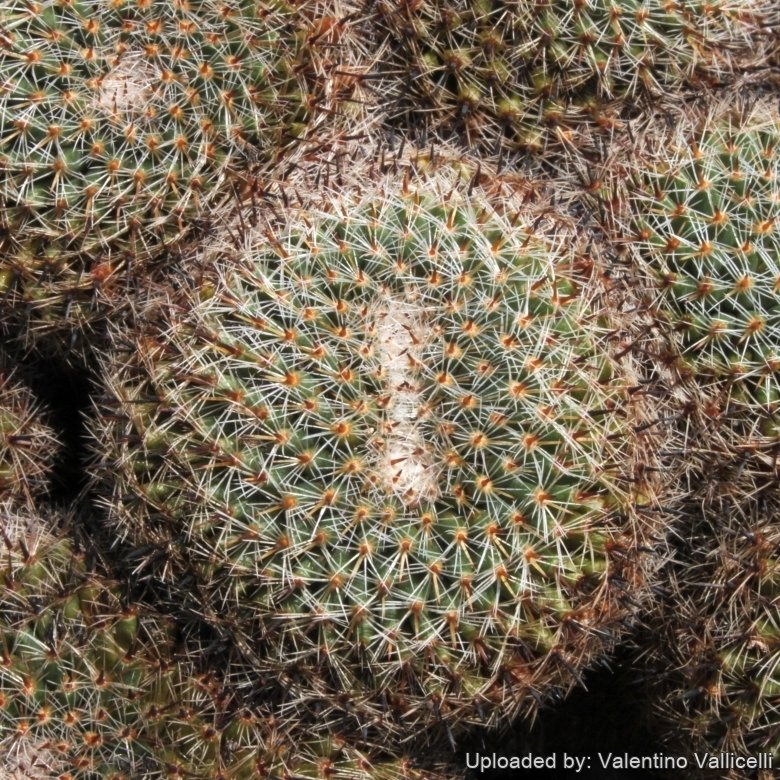
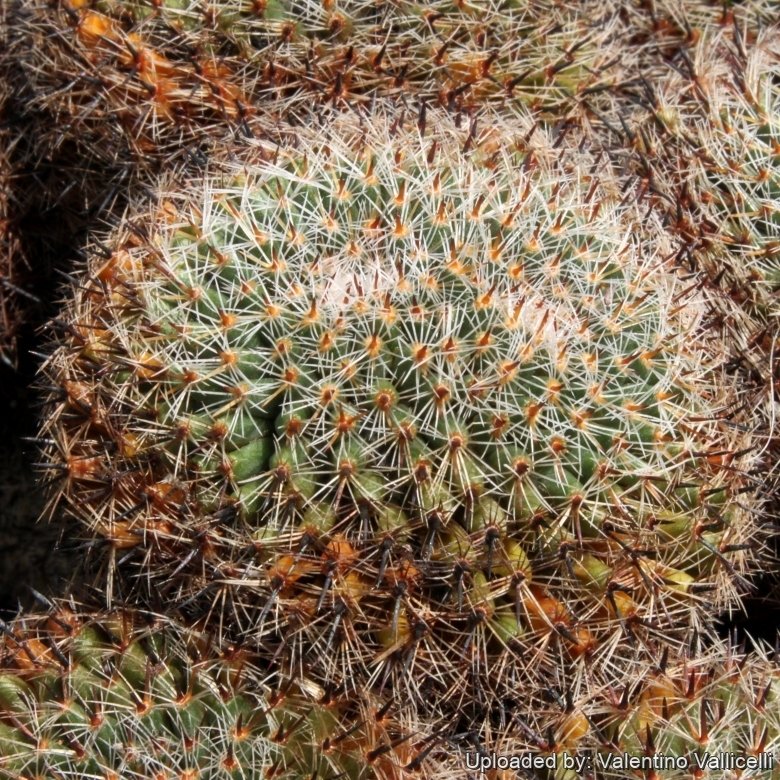
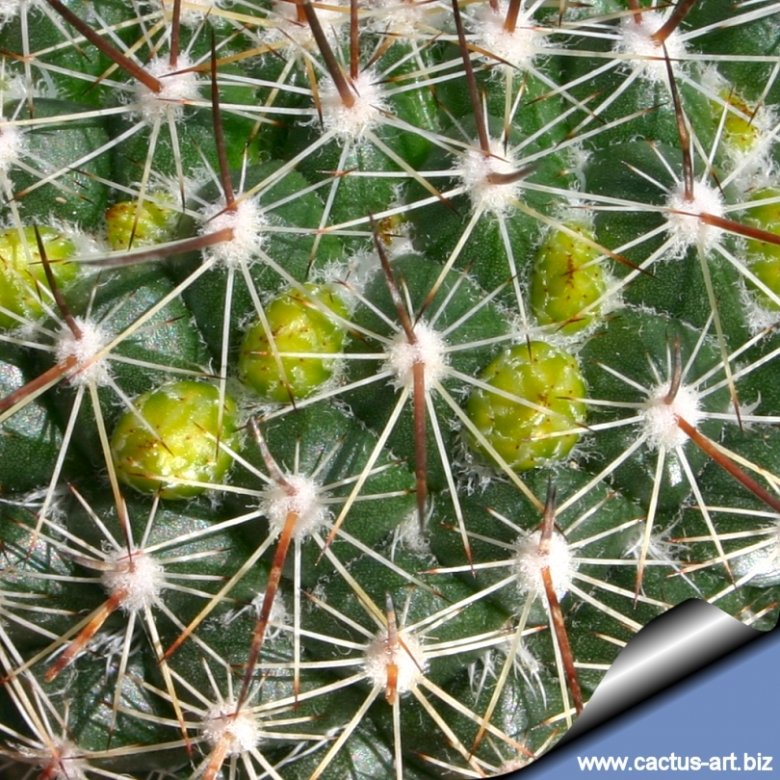
Axils: More or less woolly when young, later with five to seven white bristles, the flowering and fruiting axils are filled with dense white wool.
Central spines: (2-)4, reddish brown, longer and stouter than the radials, erect, 5-9 mm long.
Radial spines: About 16, slightly spreading, white with darker
tips, 4-8 mm long.
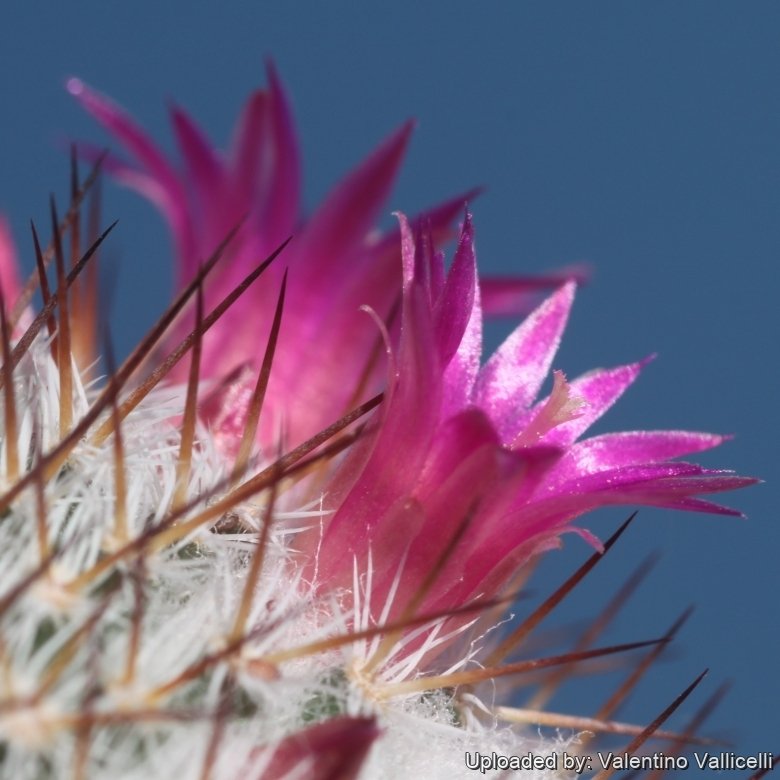
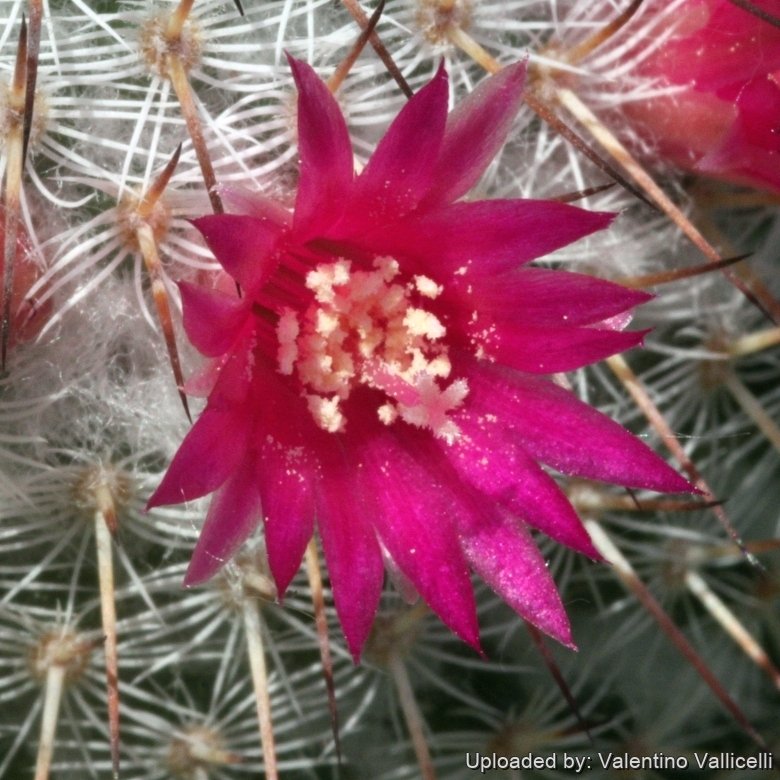
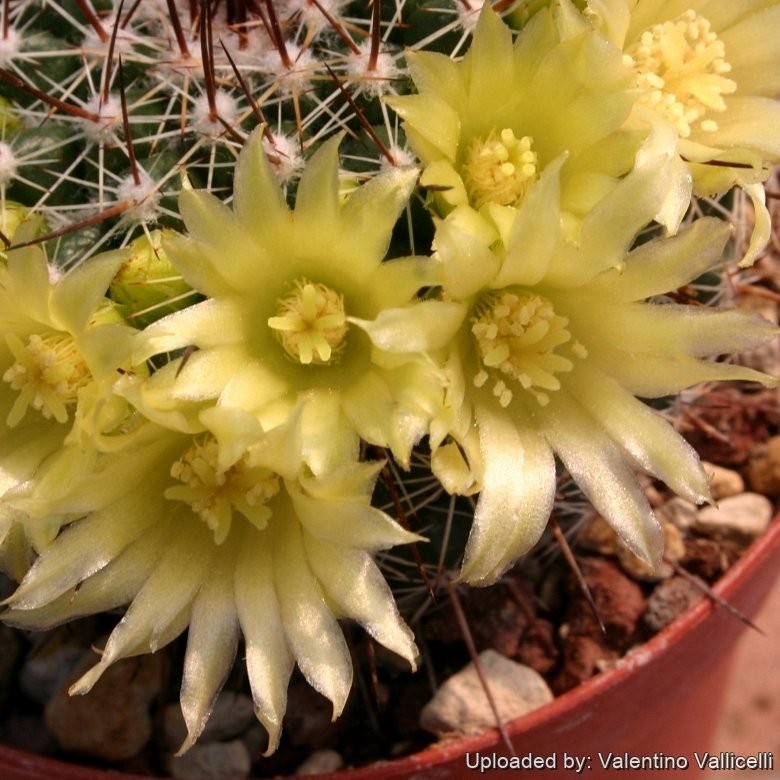
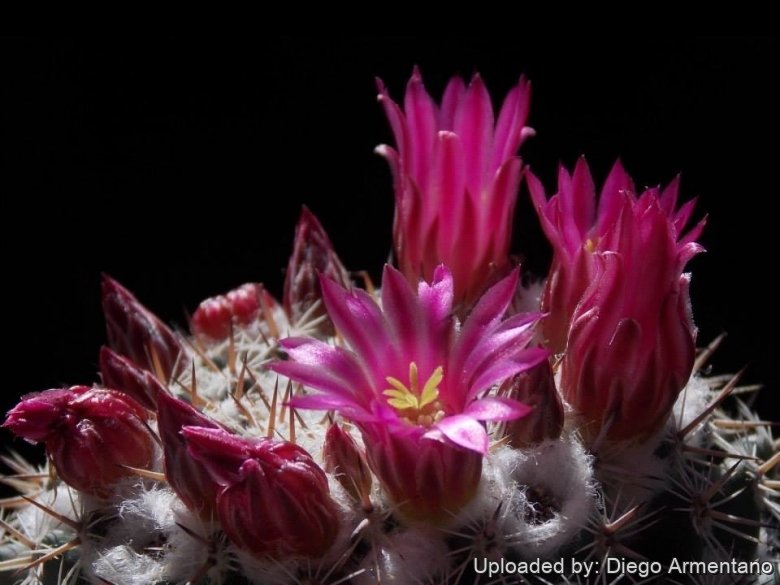
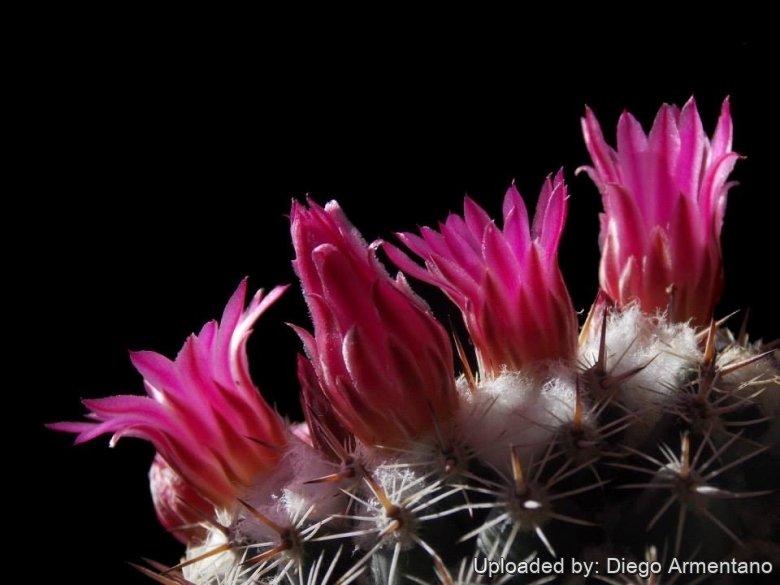
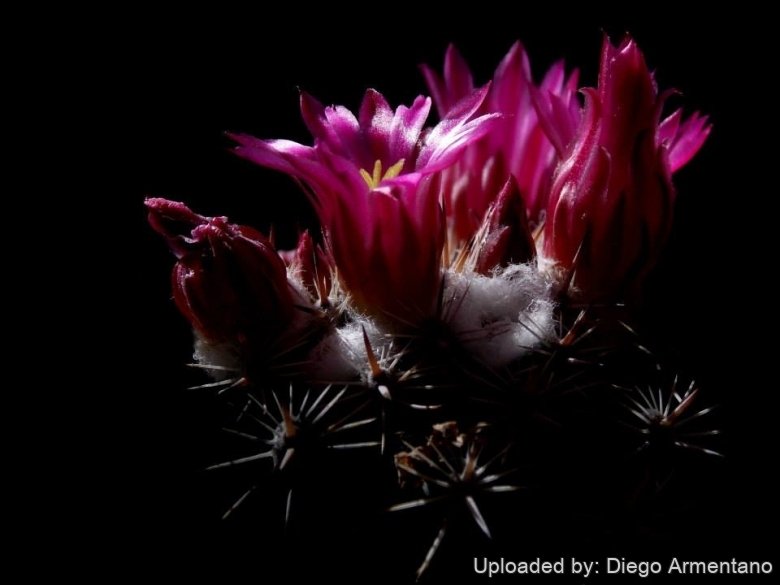
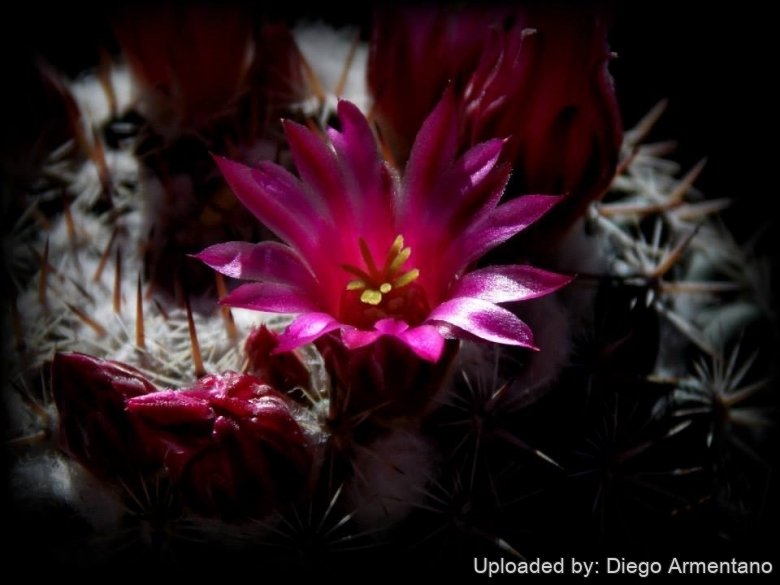
Flowers: Funnelform, purplish red, rather small up to 12 mm long and in diameter. Inner perianth-segments oblong, entire; filaments pale; stigma-lobes green;
Fruits: Club shaped, scarlet, 12-16 mm long.
Seeds: Brown.
Origin and Habitat
Chihuahua, Sinaloa, and Sonora, Mexico.
Altitude: 450 to 1750 metres above sea level.
Habitat and Ecology: The species is widespread and common in the mountains in rocky slopes, in foothill thorn scrubs, in low dry forest and in pine-oak woodlands together with Mammillaria gueldemanniana. There are no threats to this species.
Cultivation and Propagation
It is relatively rare in cultivation but it is not particularly difficult to grow.
Growth rate: Slow-growing.
Soil: Grow it in an open sandy-gritty cactus compost.
Pots: It needs a relatively shallow pot to accommodate its fibrous roots and provide a very good drainage. It may stay in the same pot for many years.
Watering: Water in moderation, it prefer a completely dry place during winter. Mature individuals easily rot and die especially after planting so be extremely cautious with watering. Keep dry in winter or when night temperatures remain below 10° C. Water it less than average if in bigger pots.
Special need: Provide very good ventilation. Nearly all problems occur as a result of overwatering and poor ventilation, especially when weather conditions are dull and cool or very humid.
Fertilization: Feed them once during the growing season with a fertilizer specifically formulated for cactus and succulents (high potash fertilizer with a dilute low nitrogen), including all micro nutrients and trace elements diluted to ½ the strength recommended on the label. They thrive in poor soils and need a limited supplies of fertilizer to avoid the plants developing excess vegetation, which is easily attacked by fungal diseases.
Exposure: It will do its best with lots of sun and become stressed with inadequate light which could result in poor growth and unnatural shape.
Hardiness: It likes warmth (recommended minimum winter temperature 5° C) however plants kept perfectly dry can can survive low temperatures, approx. -5°, but for safe cultivation it is best to avoid freezing temperatures.
Use: This is a good pot plant suited for a non heated green house. It can be also cultivated outdoors in raised beds, terraces if sheltered from winter rain. This cactus continues to be, a particular prize among collectors
Pests & diseases: These cacti may be attractive to a variety of insects, but plants in good condition should be nearly pest-free, particularly if they are grown in a mineral potting-mix, with good exposure and ventilation. Nonetheless, there are several pests to watch for:
- Red spiders: Red spiders may be effectively rubbed up by misting the plants from above.
- Mealy bugs: Mealy bugs occasionally they develop aerial into the new leaves and flowers with disfiguring results, but the worst types develop underground on the roots and are invisible except by their effects.
- Rot: Rot is only a minor problem if the plants are watered and “aired” correctly. If they are not, fungicides won’t help all that much.
Propagation: Seeds. The seeds can be sown in pots of fine, well-drained sandy soil, any time during the spring when temperatures are warm. Cover the seeds with a fine layer of grit and water from below with a fungicide to prevent damping off. For the 1-2 weeks cover the pots with a sheet of glass/clear perspex to keep the humidity levels high. Remove the glass and replace it with light shade-cloth and mist once or twice a day for the next two weeks after which most seeds should have germinated. From then on mistings can be reduced to every second and then every third day as the little plants grow.
Bibliography
Major references and further lectures
-
Edward Anderson “The Cactus family” Timber Press, Incorporated, 2001
-
James Cullen, Sabina G. Knees, H. Suzanne Cubey “The European Garden Flora Flowering Plants: A Manual for the Identification of Plants Cultivated in Europe, Both Out-of-Doors and Under Glass” Cambridge University Press, 11/Aug/2011
-
David R Hunt; Nigel P Taylor; Graham Charles; International Cactaceae Systematics Group. “The New Cactus Lexicon” dh books, 2006
-
N.L.Britton and J.N.Rose “The cactaceae” Volume IV 1923
-
Burquez Montijo, A. & Felger, R.S. 2013. Mammillaria standleyi. In: IUCN 2013. “IUCN Red List of Threatened Species.” Version 2013.2. <www.iucnredlist.org>. Downloaded on 12 January 2014.
From llifle page Mammillaria floresii
Description
Mammillaria floresii is one of the several controversial form of the very variable Mammillaria standleyi which form a complex of related species along with Mammillaria canelensis, Mammillaria hertrichiana, Mammillaria miegiana, Mammillaria montana, Mammillaria movensis, Mammillaria sonorensis, Mammillaria tesopacensis, & several more. It is still unclear whether this variable complex is one or several species. There is so much variation in characters such as spination, woolliness, and flower colour that most authors choose to lump them together until further studies are done.
Habit: Plants usually solitary but at times forming clumps.
Stems: Globose to elongate.
Central spines: (2-)4, reddish brown, longer and stouter than the radials, erect, 5-9 mm long.
Radial spines: few to up to 16, slightly spreading, white with darker tips, 4-8 mm long.
Flowers: Funnelform, purplish red, rather small up to 12 mm long and in diameter.
Origin and Habitat
San Bernardo and adjacent areas, Sonora, Mexico.
Altitude: 200-1300 metres above sea level.
Altitude: The species is widespread and common in foothill thorn scrubs and in low dry forest where it grows together with Stenocereus thurberi, Pachycereus pecten-aboriginum, Opuntia thurberi, Opuntia lindheimeri, Agave vilmoriniana, Agave bovicornuta, Antigonon leptopus, Bursera laxiflora, and Sabal mexicana.
Source: Mammillaria floresii, LLIFLE - Encyclopedia of living forms, CC-BY-SA, retrieved 2026-10-25.
From llifle page Mammillaria cobrensis
Description
Mammillaria lindsayi var. cobrensis is a local or morphological form of Mammillaria lindsayi distinguishable from the type for the stem that is always solitary with a very woolly apex. The stem is dark green and lacks of bristles in the woolly tubercles axil.
Stem: Symmetrically globose, dark-green, depressed, with apex that appears completely covered by dense white wool, 12-15 cm high and in diameter. With latex.
Tubercles: Conical to quadrangular, keeled, arranged in numerous, close-set spirals. (Parastichy number 13-21) with dense white axillary wool and up to 8 white, without twisted bristles.
Areoles: Oval and with white wool when young.
Radial spines: 10-14, white with tan to golden yellow bases, 2 - 8 mm long, upper ones shortest.
Central spines: 2-4, straight, acicular/subulated, rigid, divergent, golden brown, reddish to almost black, the 2-3 uppermost short (approx 4 mm long) long, The lowermost longest 4-12 mm long (or more).
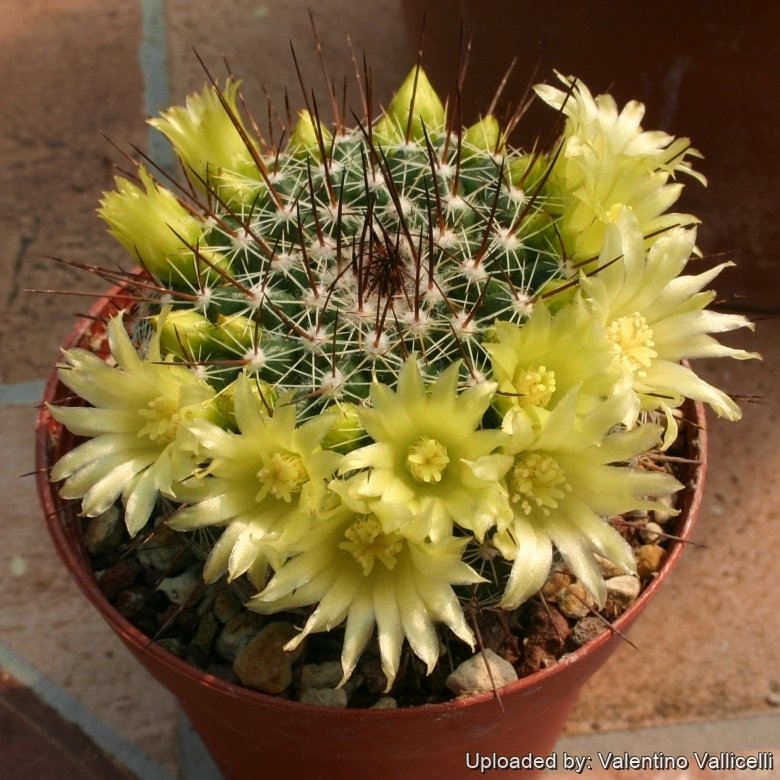
Flowers: Small, funnelform, 15-20 mm long, to 10 mm in diameter, light greenish yellow with orange-yellow midveins. Stamens above the nectar-chamber.
Fruits: Club shaped to cylindrical, attractively deep coloured dull pinkish-red to scarlet, up to 20 mm long and 2-3 mm wide.
Seeds: Brown.
Origin and Habitat
Barranca del Cobre, Chihuahua, Mexico
Altitude: 2200-2300 metres above sea level.
Source: Mammillaria cobrensis, LLIFLE - Encyclopedia of living forms, CC-BY-SA, retrieved 2026-10-25.
From llifle page Mammillaria lindsayi
Description
Mammillaria lindsayi is solitary or cespitose cactus branching from base, sometime forming very large clumps up to 1 m wide. Some authors consider this species only a form of the widespread an very variable Mammillaria standleyi.
Stem: Symmetrically globose, depressed, with apex that often appears completely white, grey green, 12-15 cm high and in diameter. With latex.
Tubercles: Conical to quadrangular, keeled, arranged in numerous, close-set spirals. (Parastichy number 13-21) with dense white axillary wool and up to 8 white, twisted bristles.
Areoles: Oval and with white wool when young.
Radial spines: 10-14, white with tan to golden yellow bases, 2 - 8 mm long, upper ones shortest.
Central spines: 2-4 , straight, acicular/subulated, rigid, divergent, golden brown, reddish to almost black, the 2-3 uppermost short (approx 4 mm long) long, The lowermost longest 4 - 12 mm long (or more).
Flowers: Small, funnelform, 15 - 20 mm long, to 10 mm in diameter, light greenish yellow with orange-yellow midveins, .
Fruits: Club shaped to cylindrical, attractively deep coloured dull pinkish-red to scarlet, up to 20 mm long and 2 - 3 mm wide. .
Seeds: Brown.
Origin and Habitat
Chihuahua ( Los Molinos, Sierra Colorado, Barranca de Cobre, La Reforma, etc.) and Sinaloa (Mazatlan, Culiacan, El Nacimiento, Potrero de Cancio, Zapote de Madriles, Presa Huites, etc.), Mexico.
Altitude: 250-2000 metres above sea level.
Habitat: Grows in partial shade of canyon walls or rocky slopes, in leaf-mould in cracks in the rocks, in foothill thorn scrubs, in low dry forest and in pine-oak woodlands.
Cultivation and Propagation
This plant is easy to cultivate but very slow growing. Cultivate it in a well drained and mineral substratum. Water regularly, avoid the use of peat or other humus sources in the potting mixture. It need full sun, so it keep a compact and flat shape. It does not tolerate intense cold, but tolerates some cold if kept dry. Frequent transplantations of the young plants protect the lower part of the stem from the lignification, to which the plant has a tendency.
Reproduction: It is propagated by seed. Sometimes old plants forms large clumps with several joints - but the removal of one of these joints may prove fatal to the plant.
Bibliography
Major references and further lectures
-
Pilbeam J., “The Cactus file, Mammillaria” 6: 120, Cirio Pub. Services, 01/Dec/1999
-
John Pilbeam “Cacti for the Connoisseur: A Guide for Growers & Collectors” Timber Press, 01/lug/1987
-
James Cullen, Sabina G. Knees, H. Suzanne Cubey “The European Garden Flora Flowering Plants: A Manual for the Identification of Plants Cultivated in Europe, Both Out-of-Doors and Under Glass” Cambridge University Press, 11/Aug/2011
-
David R Hunt; Nigel P Taylor; Graham Charles; International Cactaceae Systematics Group. “The New Cactus Lexicon” dh books, 2006
-
Edward Anderson “The Cactus family” Timber Press, Incorporated, 2001
-
Burquez Montijo, A. & Felger, R.S. 2013. Mammillaria standleyi. In: IUCN 2013. “IUCN Red List of Threatened Species.” Version 2013.2. <www.iucnredlist.org>. Downloaded on 13 January 2014.
Source: Mammillaria lindsayi, LLIFLE - Encyclopedia of living forms, CC-BY-SA, retrieved 2026-10-25.
From llifle page Mammillaria lindsayi var. robustior
Origin and Habitat
Chihuahua (Mexico, Northern America)
Source: Mammillaria lindsayi var. robustior, LLIFLE - Encyclopedia of living forms, CC-BY-SA, retrieved 2026-10-25.
From llifle page Mammillaria bellacantha
Origin and Habitat
Chihuahua & Sonora, Mexico (Northern America)
Source: Mammillaria bellacantha, LLIFLE - Encyclopedia of living forms, CC-BY-SA, retrieved 2026-10-25.
From llifle page Mammillaria miegiana
Description
Mammillaria miegiana, is a large, solitary species with subglobose stems, appearing white and producing large, dark reddish-pink flowers with scarlet midveins. It is often included within (as a synonym of) the very variable Mammillaria standleyi, suggesting that there is not really a fundamental difference between the two. It is one of the most densely covered by spines.
Derivation of specific name: This member of the Cactaceae family was given this name in honour of the US cacti collector Charles E. Mieg from Scottsdale. Mieg’s mammillaria.
Stems: Globose to short cylindrical, to 16 cm tall and up to 10 cm across. With latex
Tubercles: Four-angled, axils woolly at first, later naked.
Radial spines: 10-11, dirty white, greyish to somewhat dull pink, straight or slightly curved, 8-9 mm long.
Central spines: 2, upper ascending, lower erect, brown, 7-8 mm long.
Flowers: Reddish pink with scarlet midveins, to 20 mm long and 25 mm in diameter.
Fruits: Club shaped, cherry red, to 25 mm long.
Seeds: Reddish brown.
Origin and Habitat
Northem Sonora between Moctezuma and Nacozari, Mexico. Mammillaria miegiana occupies the northernmost part of the Mammillaria standleyi distribution area.
Altitude range: Altitude 500 - 1.300 metres above sea level.
Habitat and ecology: Mammillaria miegiana grows on hills in a mountanious area together with Echinocereus polyacanthus, Echinocereus pectinatus, Coryphantha recurvata, Stenocereus thuberi and Agave parryi.
Cultivation and Propagation
This plant is easy to cultivate but slow growing. Cultivate it in a well drained and mineral substratum. Water regularly, avoid the use of peat or other humus sources in the potting mixture. It need full sun, so it keep a compact and flat shape. It does not tolerate intense cold, but tolerates some cold if kept dry. Frequent transplantations of the young plants protect the lower part of the stem from the lignification, to which the plant has a tendency.
Reproduction: It is propagated by seed. Sometimes old plants forms large clumps with several joints - but the removal of one of these joints may prove fatal to the plant.
Bibliography
Major references and further lectures
-
Edward F. Anderson “The Cactus Family” Timber Press, 2001
-
Orrell T. (custodian) (2016). ITIS Global: The Integrated Taxonomic Information System (version Sep 2015). In: Species 2000 & ITIS Catalogue of Life, 25th March 2016 (Roskov Y., Abucay L., Orrell T., Nicolson D., Kunze T., Flann C., Bailly N., Kirk P., Bourgoin T., DeWalt R.E., Decock W., De Wever A., eds). Digital resource at www.catalogueoflife.org/col. Species 2000: Naturalis, Leiden, the Netherlands. ISSN 2405-8858.
-
Ulises Guzmán, Salvador Arias, Patricia Dávila “Catálogo de cactáceas mexicanas.” Universidad Nacional Autónoma de México, Mexiko-Stadt 2003
-
Urs Eggli, Leonard E. Newton “Etymological Dictionary of Succulent Plant Names.” Springer, Berlin/Heidelberg 2010, ISBN 978-3-642-05597-3, S. 154.
-
Saguaroland Bulletin. Desert Botanical Garden, 26:77 1972.
-
John Pilbeam “Mammillaria The Cactus File Handbook” Nuffield Press. 1999
-
Nelocactus; la uep de les Mammillaries, Echinocereus, Orquidees , Bonsais…i algo de valencianisme – Mammillaria miegiana – Results retrieved 16 April 2016 from <http://www.nelocactus.org/miegiana.html\>
-
Cactus and Succulent Field Number Finder – Mammillaria miegiana – Results retrieved 16 April 2016 from <http://ralph.cs.cf.ac.uk/Cacti/finder.php?Plant=Mammillaria+miegiana+\>
Source: Mammillaria miegiana, LLIFLE - Encyclopedia of living forms, CC-BY-SA, retrieved 2026-10-25.
Gallery