Description
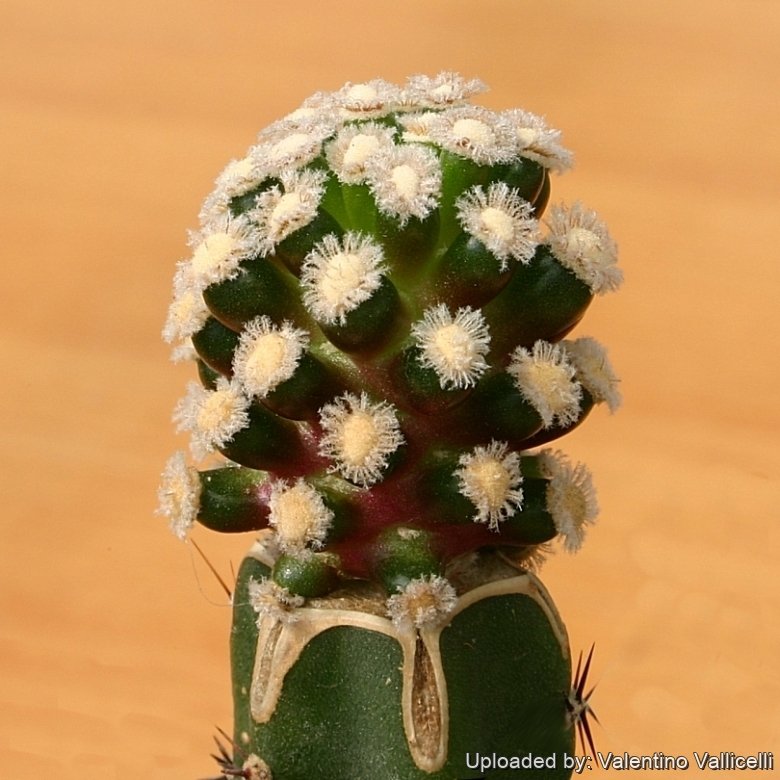
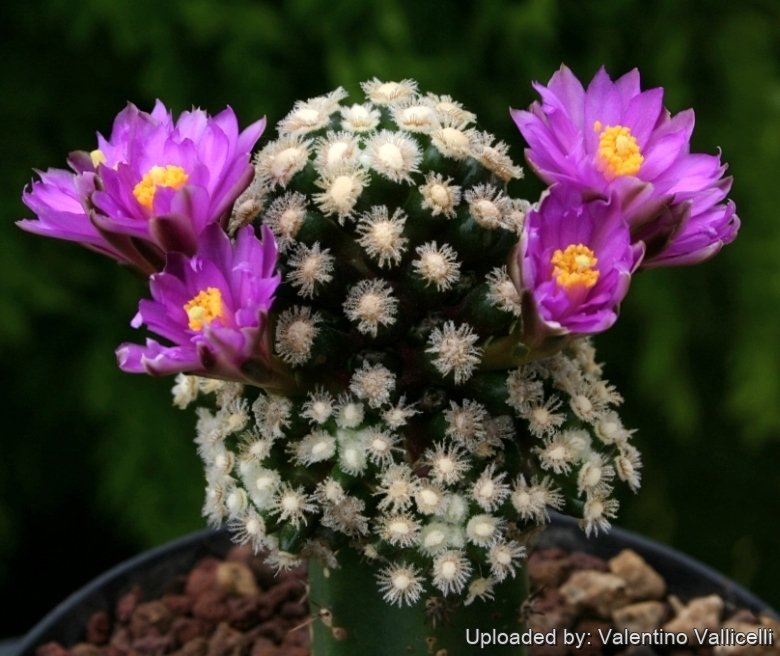
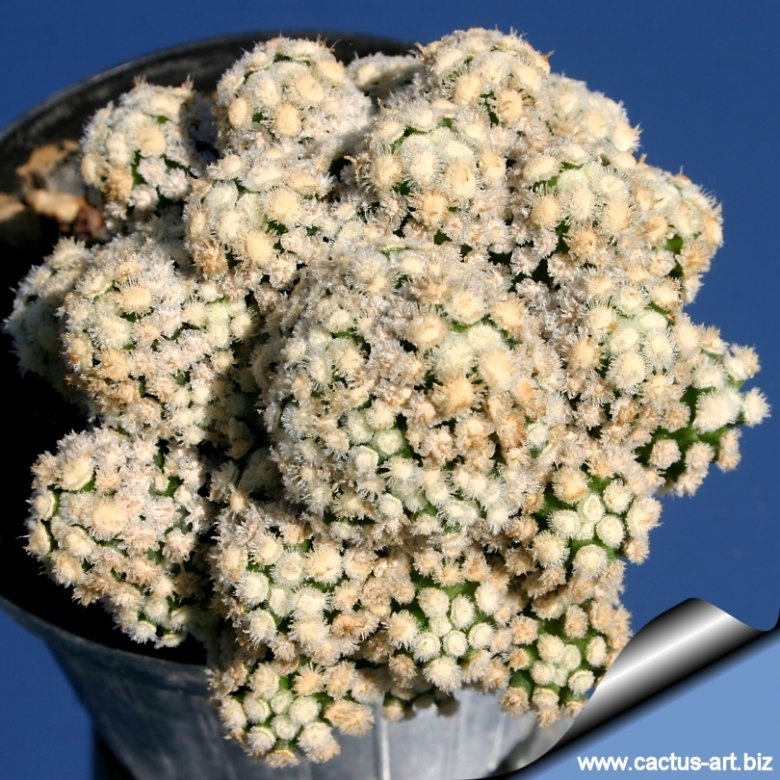
Subglobose to cylindrical, olive green, with magenta-red tint, to 4 cm high, 1 - 3 cm in diameter.
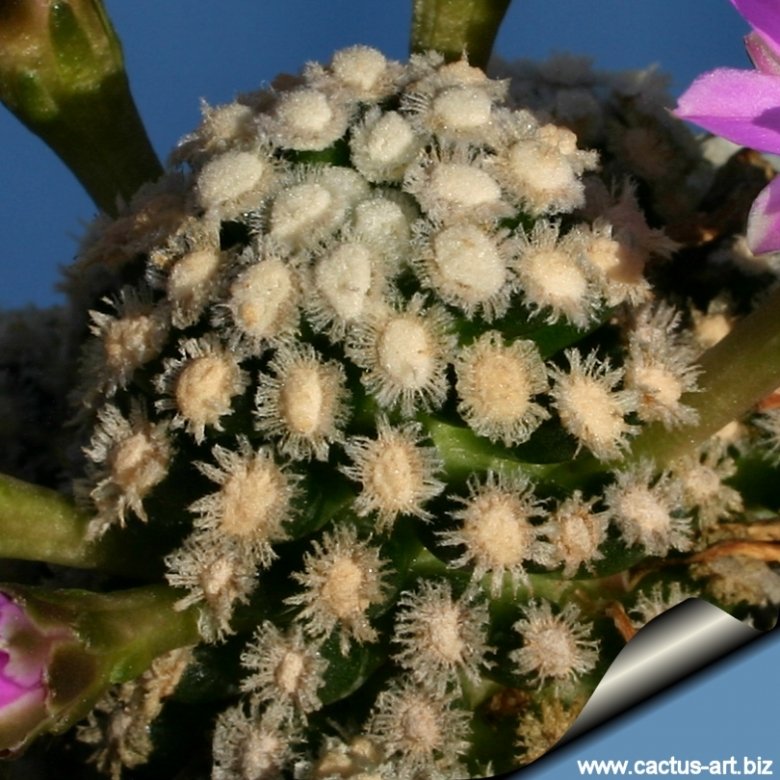
Tubercles: Small, cylindrical/conical.
Spines: Radial: 22 - 30, plumose, pinnated, translucent, white to yellowish white, to 1 mm long, forming little spines clusters at the tubercle apexes. Central spine: Absent.
Roots: Strong taproot
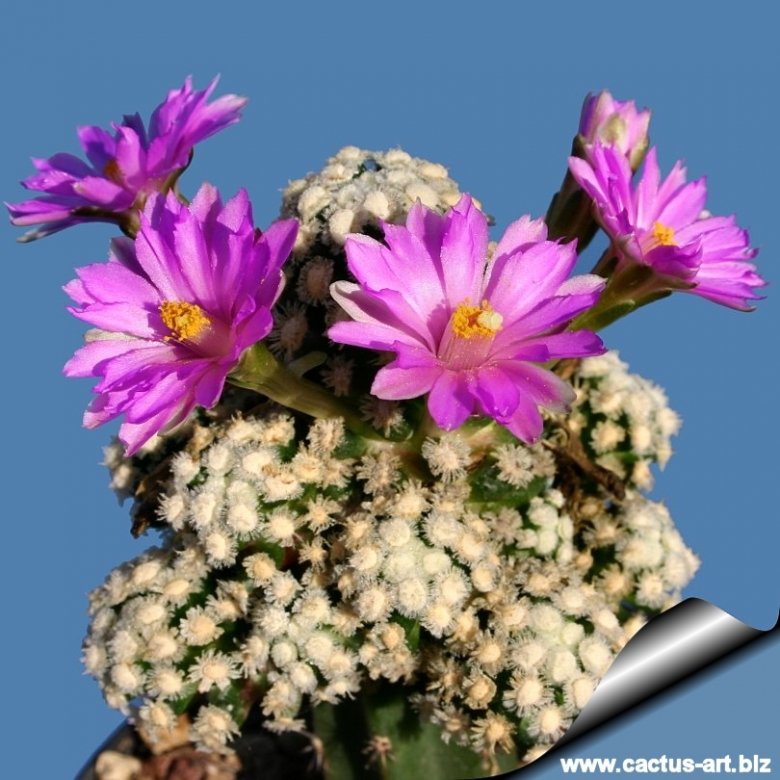
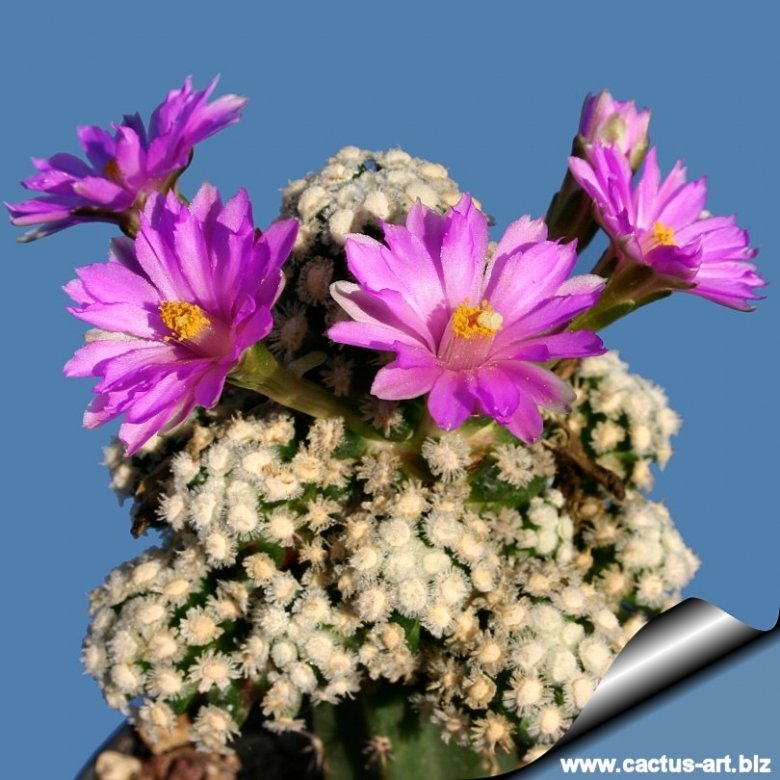
Flower: Crocus-like, funnelform, pink, unusually long-stemmed for a Mammillaria (3.5 cm in diameter and up to 5 cm long) that are many times larger than the plant body itself, at least with plants on their own roots. Stigmas pale yellow.
Blooming season: Blossoming time: May (but plants grafted flowers repeatedly from April to September)
Origin and Habitat
Garden origin (Nursery produced cultivar)
Cultivation and Propagation
Mammillaria theresae - like the other Mammillarias of the saboae group - is not the easiest of Mammillarias to grow and keep, this is though it is easier than some of its relatives such as M. goldii. But all this species require similar growing conditions, and a mineral-based potting mix is preferred. They need to be kept dry in winter.
Pot plants are quite wet-sensitively. Care must be taken with watering and needs good drainage. Water sparingly during the growing season, keep very dry in winter. But plants grown outdoor seems to tolerate easily the winter wetness. Usually it is recommended to overwinter this plant in a bright and warm greenhouse with at least 8-10° C , but it proved to be quite frost resistant and demonstrated to survive safely outdoor under a cover of snow at a temperatures of -15° C. Sun Exposure: Full sun - Light shade
Propagation: cuttings or (usually) grafting.
Bibliography
Major references and further lectures
-
Edward Anderson “The Cactus family” Timber Press, Incorporated, 2001
-
James Cullen, Sabina G. Knees, H. Suzanne Cubey “The European Garden Flora Flowering Plants: A Manual for the Identification of Plants Cultivated in Europe, Both Out-of-Doors and Under Glass” Cambridge University Press, 11/Aug/2011
-
David R Hunt; Nigel P Taylor; Graham Charles; International Cactaceae Systematics Group. “The New Cactus Lexicon” dh books, 2006
-
John Pilbeam “Mammillaria: the cactus file handbook” Cirio Publishing Services Ltd Dec/30,/1999
Gallery