Publication: Mammillaria Postscripts 6: 8 (1997)
From llifle page Mammillaria bambusiphila var. parva
Description
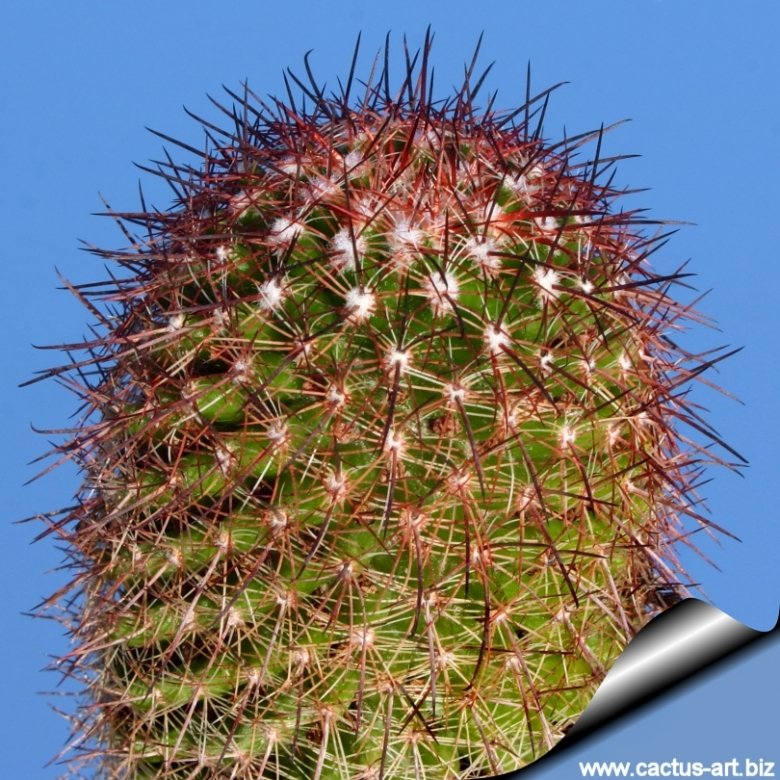
Solitary or (rarely) clumping.
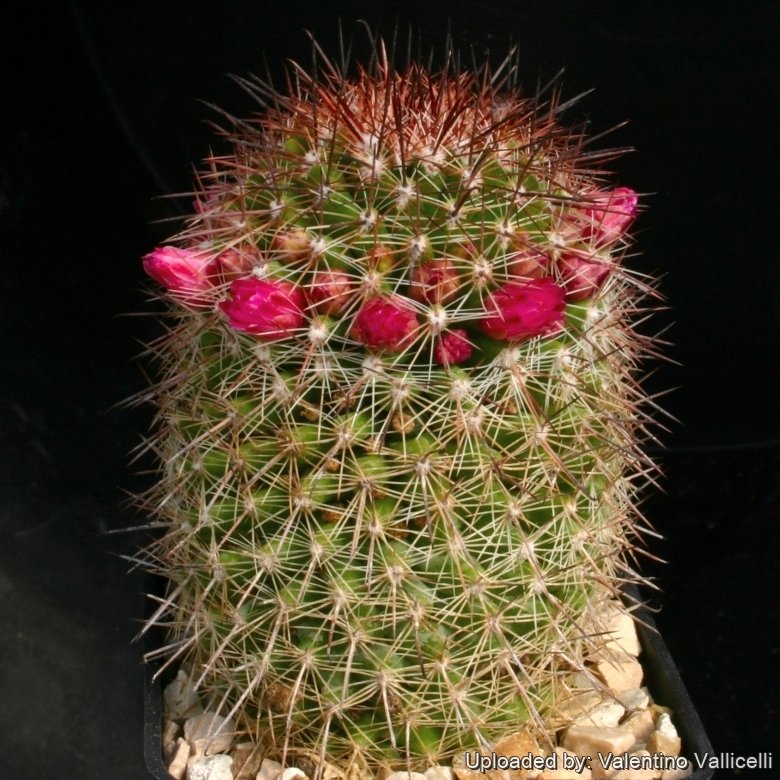
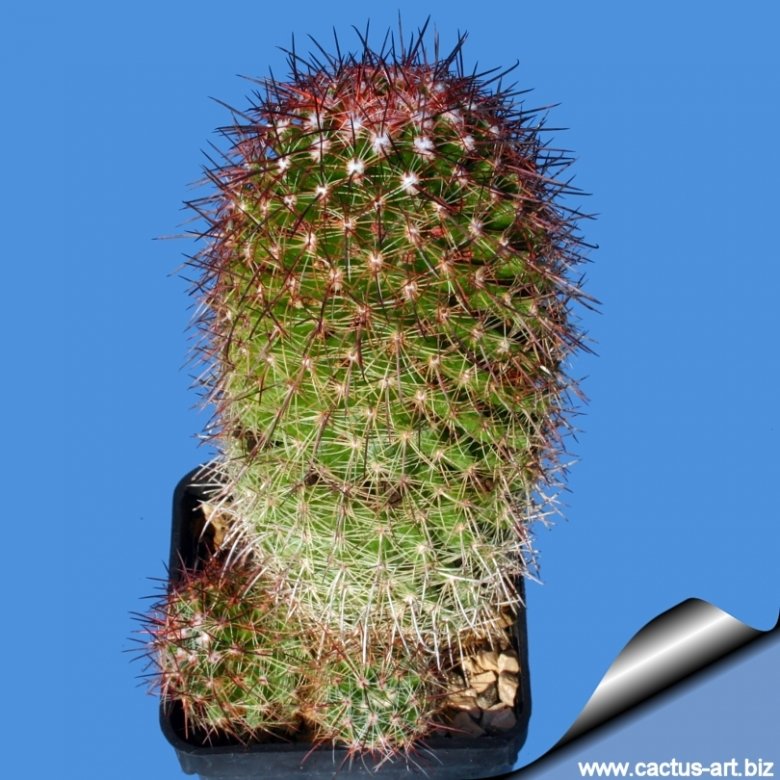
Stems: Cylindrical, up to 20 cm tall 4 - 8 cm in diameter. The axil of tubercles is naked or with a little wool.
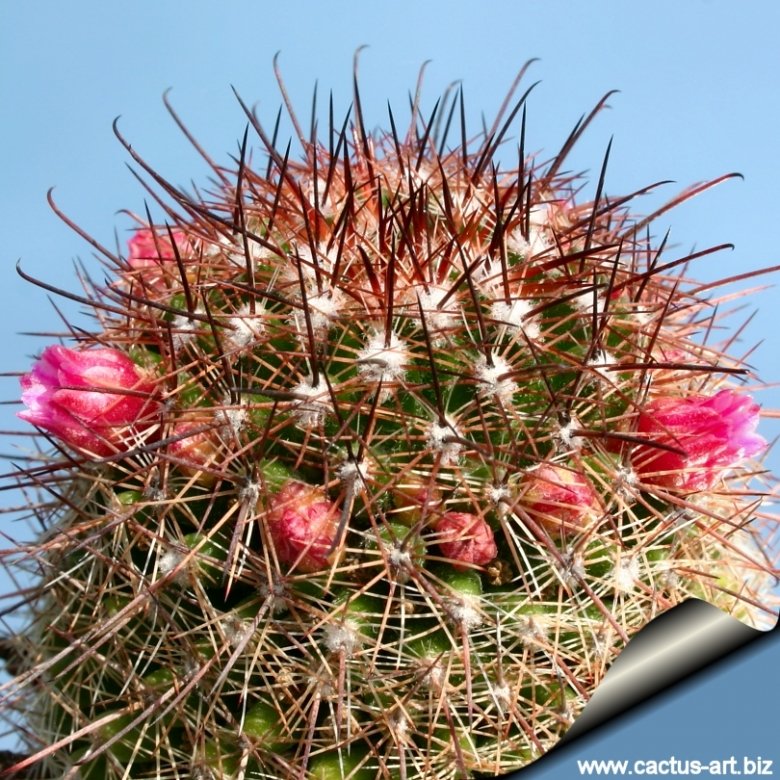
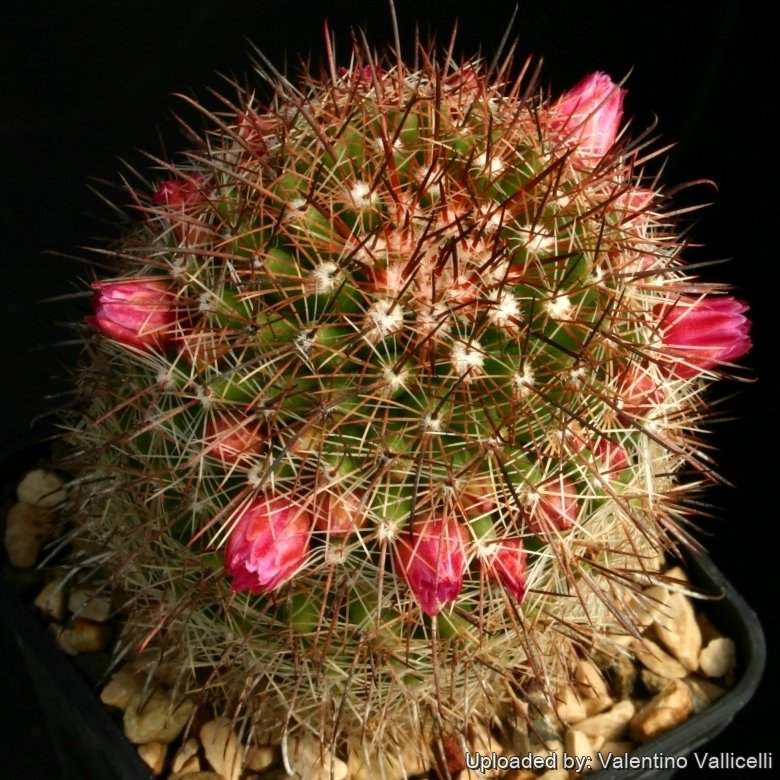
Central spines: 3 to 5 central spines, straight, (sometimes hooked) , the lower longer, glassy white or pale brown, black at the tips, 5 - 11 mm long.
Radial spine: About 16-20 straight, very thin white with brown at the base and the tips. 3 - 5 mm long, the upper spines the shorter,
Flowers: Carmine, 15 - 17 mm in length, 5 - 7 mm in diameter, narrowly opening.
Blooming season: June.
Fruits: Reddish brown or greenish.
Seeds: Brown.
Origin and Habitat
Origin: Mexico (Michoacán: Huacana) Altitude 800-1200m.
Cultivation and Propagation
It is a slow growing species of easy culture, recommended for any collection that needs lots of light with ample airflow. Water regularly in summer, but do not overwater (very wet-sensitively, especially in light of its small root system) Water thoroughly only if soil is dry to the touch, let soil dry in between to prevent root rot, keep dry in winter. Use a very porous mineral-based potting mix, with excellent drainage, as can be achieved by the addition of extra perlite or pumice. Feed with a high potassium fertilizer in summer. Care must be taken with watering as they tends to become swollen and untidy in growth habit if given too much water and shade.
Sun Exposure: High levels of light are needed to flower and for good spine development. Can be sunburned if moved from shade/greenhouse into full sun too quickly. During the spring it may be able to take full sun until the heat arrives at the end of spring. In an area that has hot afternoon sun, it may be able to take full morning sun, but requires afternoon shade or afternoon light shade. If grown correctly, it will reward the grower with generous displays of flowers. It is quite frost resistant if kept dry, hardy as low as -5° C (or less) A resting period in winter and strong light are necessary so that it can flower properly.
Clustering in cultivation after several years and easily flowered. For best results, use a shallow pot, and only use the smallest diameter pot that will accommodate the plant. Sensitive to red spider mite. Overhead watering is helpful in controlling mites.
Propagation: Direct sow after last frost (usually) or division, wait until the offsets that appear at the base of old clustered specimens are 1/3 the size of the parent and then detach and plant.
Source: Mammillaria bambusiphila var. parva, LLIFLE - Encyclopedia of living forms, CC-BY-SA, retrieved 2026-10-25.
Gallery