Description
The standard Matucana oreodoxa has usually solitary, or slowly branching stems. For its particular shape it vaguely remembers of Lophophora.
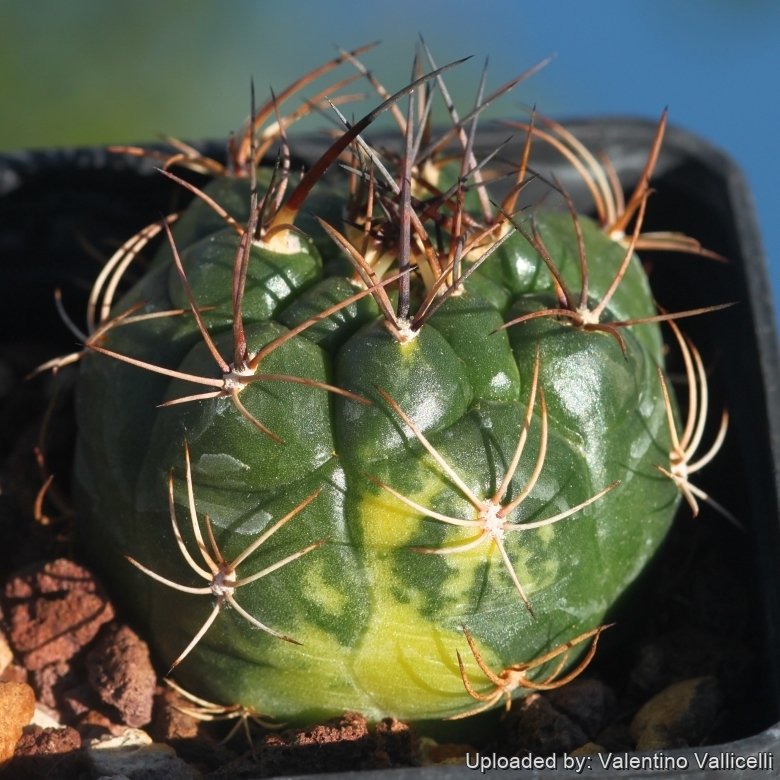
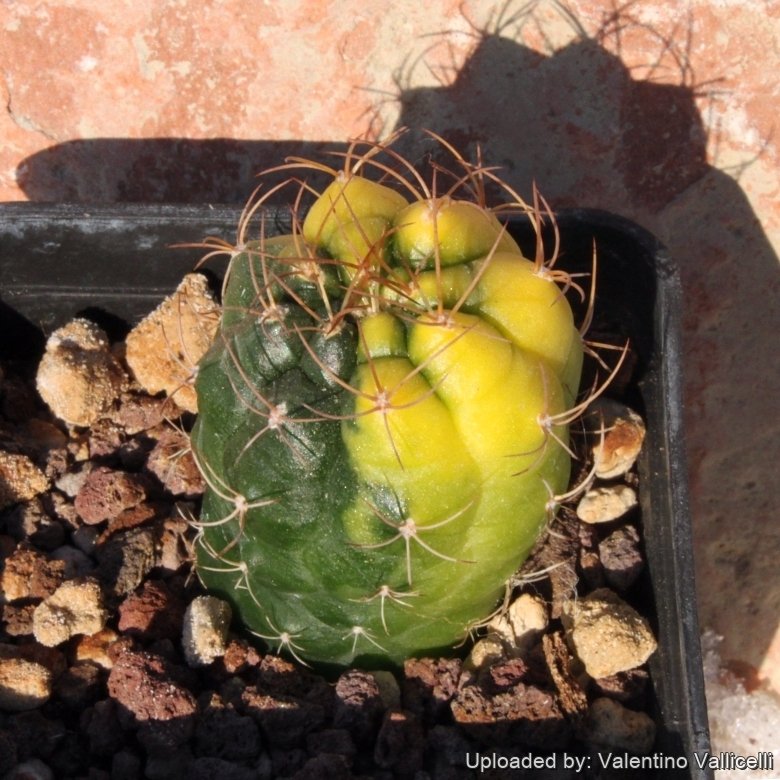
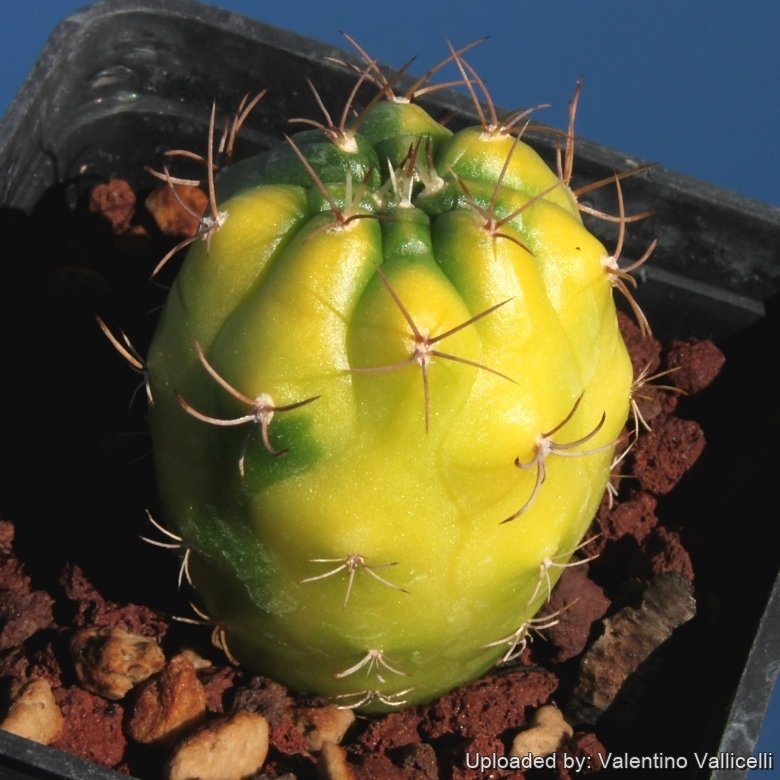
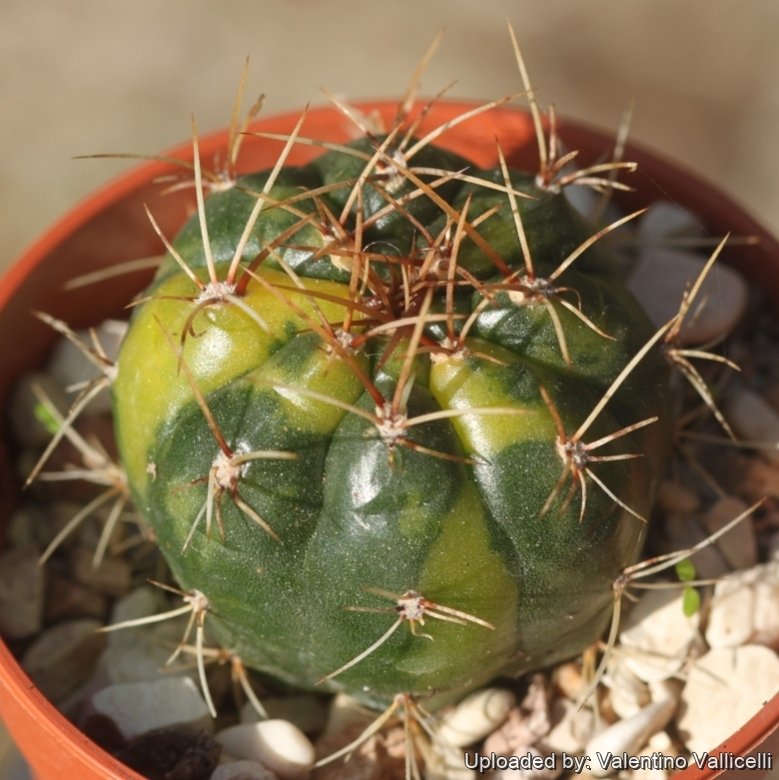
Variegated form: A limited number of variegated specimens appear with a variable frequency among normal seedlings. These have sectors, patches or stripes with distinct shades of yellow. Plants with variegated body are often highly prized.
Stem: Flattened globose to short columnar, grass green, dull grey-green to dark green, 8-15 cm tall, up to 8 cm in diameter.
Ribs: 7-12, Broad, flattened. Forming round tubercles, with transverse grooves.
Roots: Large tap-root.
Radial spines: 4—10, 10-30 mm long, cream coloured, brownish to blackish, becoming grey, flexible, straight or somewhat curved. They are fragile and detach easily, so the older basal parts of the stem are often naked.
Central spines: None or sometime 1 or 2, 15-40 mm long.
Flowers: Slender, infundibuliform, radially symmetrical, bright orange-red, 8-10 cm long and 3-5.5 cm in diameter.
Fruits: Oval, pale green, about 8 mm in diameter.
Origin and Habitat
Garden origin (Cultivated form)
Cultivation and Propagation
They grow slowly in their natural habitats, but in greenhouses or grafted they grow quickly, with tissues that are less firm. Grow in rich, porous soil and let their soil dry out between watering. They need good drainage.
Exposures: They benefit from a full sun or half sun exposure but should be protected from excessive heat and severe sunlight in summer.
Manteinance: Generally, they should be re-potted every other year, in order to provide fresh soil. However, this doesn’t necessarily mean they’ll need larger containers. Re-pot in the spring when their roots become cramped. After re-potting, do not water for a week or more.
Propagation: Seeds, but plants are often grafted making them easier to grow, particularly through the winter. If possible using a rootstock that is more hardy than the Matucana is the ideal.