Publication: Entwicklungslin. Kakt. 78, fig. 63. 1926
Description
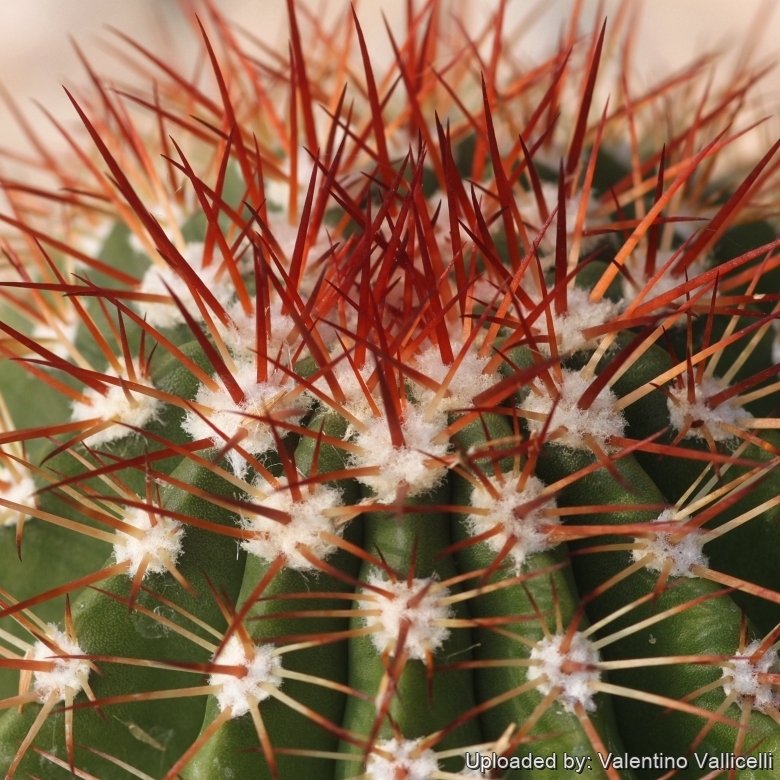
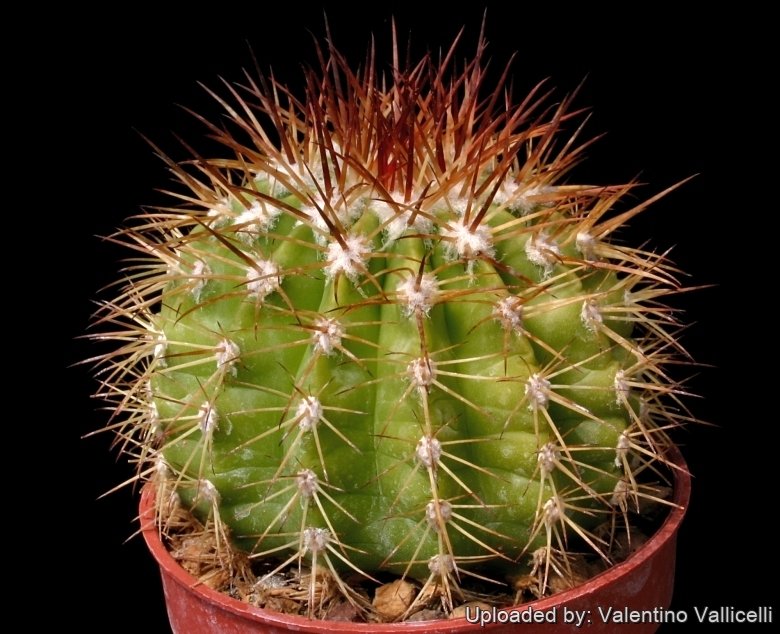
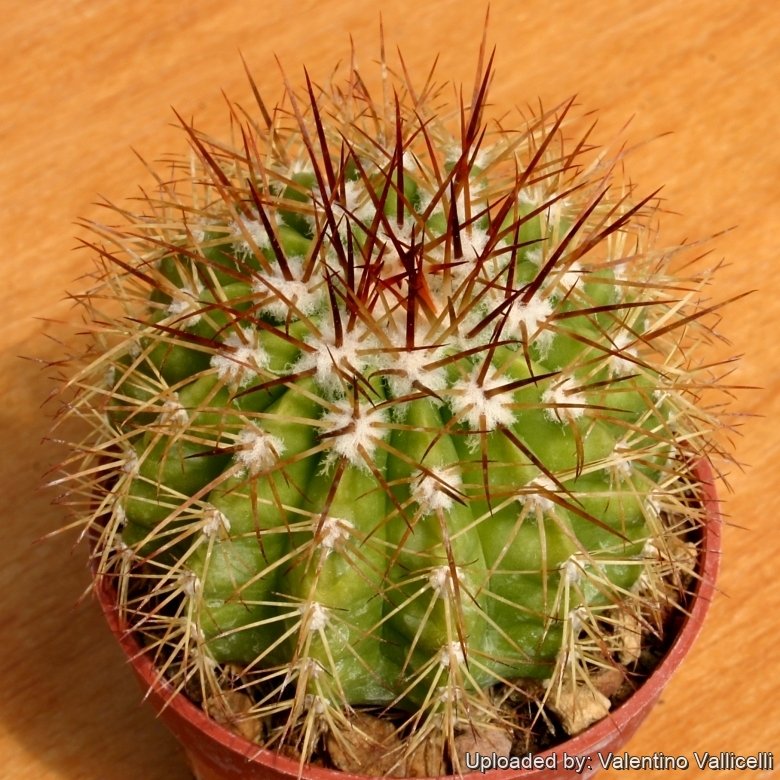
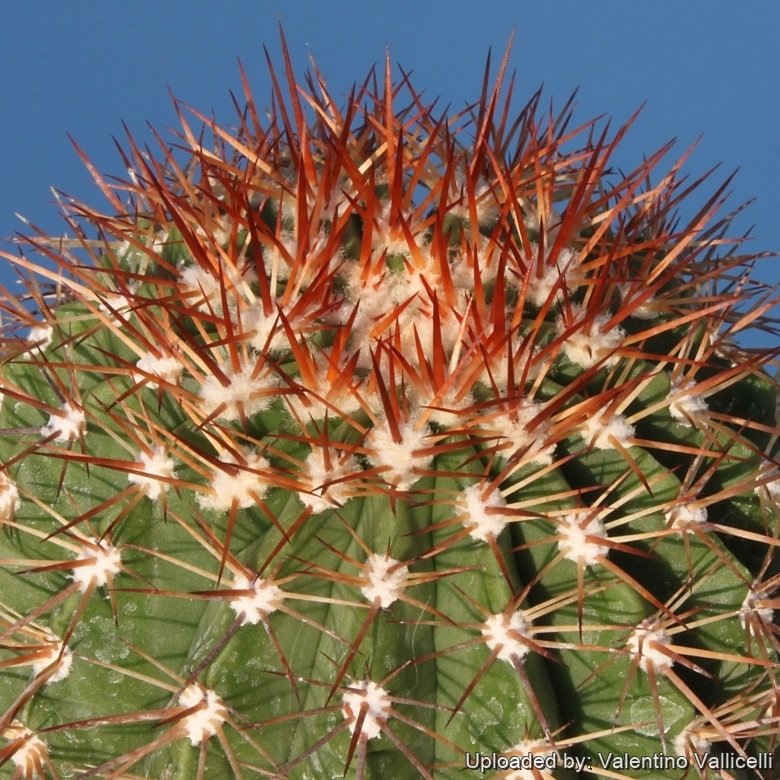
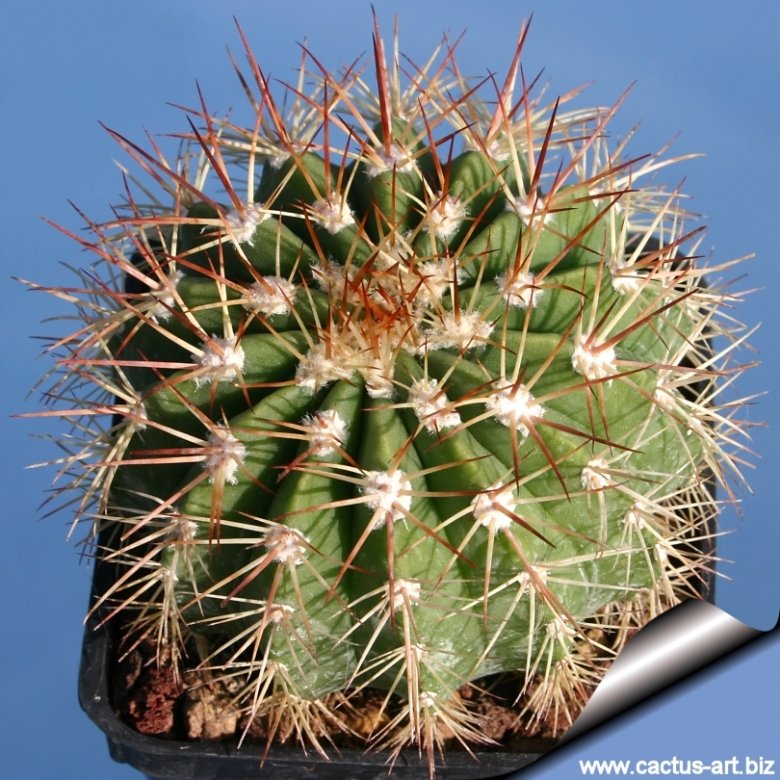
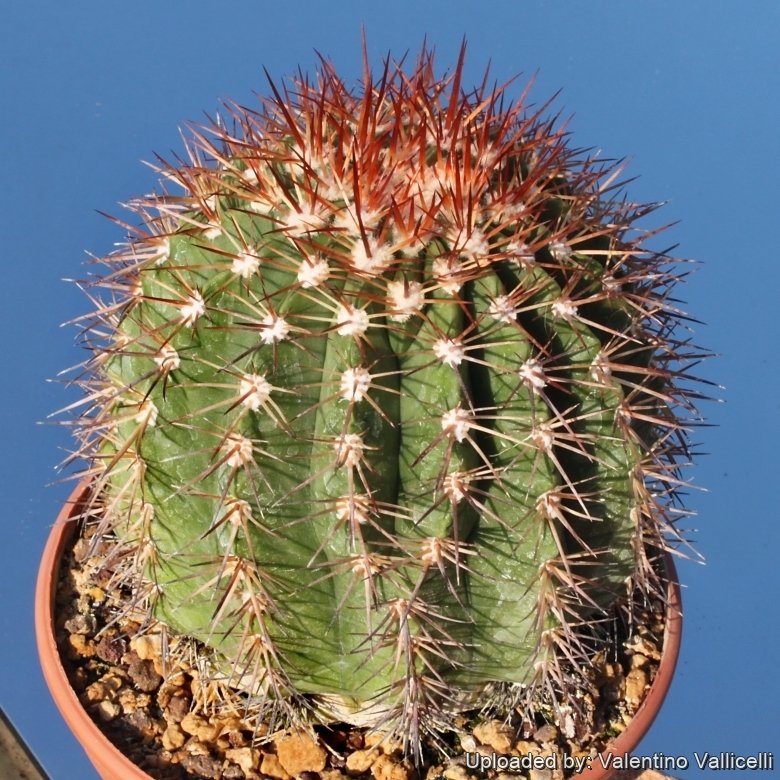
Usually stay solitary, mature plants are easily recognizable by their cephalium. The immature plant looks like a smallish barrel cactus, and there is nothing in its appearance that would suggest a Melocactus.
Stem: Round to conical strongly longitudinally ribbed body, up to 20 cm tall, up to 20 cm in diameter.
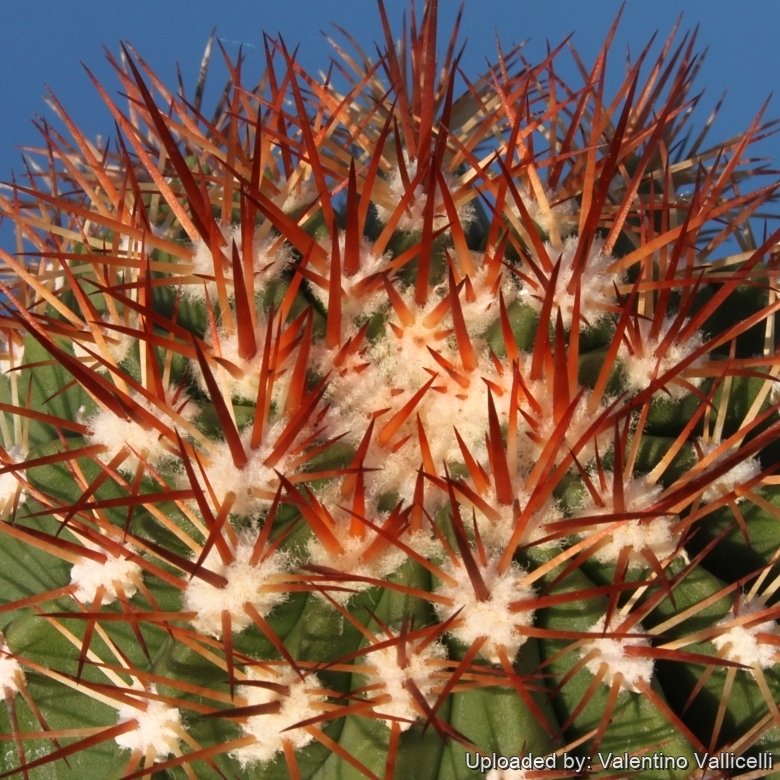
Cephalium: White with brownish-red bristles.
Ribs: 13-18.
Flowers: Small inconspicuous bright pink to purple grow at the top of the cephalium.
Fruits: Red pear shaped.
Origin and Habitat
West Indies (Lesser Antilles,Granada and Tobago)
Cultivation and Propagation
These cacti are not the easiest things to grow and aren’t plants for beginners. Melocactus broadwayi grows from April to October, it can’t endure long stretches of total dryness, and also too much water will rot it, as its weak root systems tends to be inefficient at sucking up water from wet soil. Nonetheless, again as a result of their tropical origins, they need a fair amount of water, but allow the soil to dry quite a bit before watering again. Melocactus rests from October to April but can’t stand cold, or even fairly cool temperatures, so is indispensable to keep it above 8-12°C at all times, severe damage or death occurring at temperatures that the great majority of cacti wouldn’t mind in the least and prefer more frequent water in winter than other cacti, say once a month. Do not feed in winter.
The root system is weak and generally resents being repotted and can take a long time to re-establish. The soil mix should be very quick draining, prefers very bright light, not as much as the most arid growing cacti, but plenty nonetheless.
Propagation: Exclusively by Seeds. Sow in February-march in a light, sandy, porous soil. Cover germinating tray with glass to prevent seed from drying out. Germination is most successful at a temperature of 18 to 22° C.
Notes
The most remarkable part of a Melocactus is its cephalium a bristle-coated structure on the summit of the plant, only Melocactus, and the similar genus Discocactus possesses this type of permanent, apical, hatlike appendage. It’s only when Melocactus s reaches maturity that the cephalium begins to grow. Cylindrical, with a diameter distinctly smaller than that of the plant body below, the cephalium will keep growing for the rest of the plant’s life, but the body of the plant stops growing the moment the cephalium starts to form. . As the plants age the cephalium doesn’t increase in circumference it will steadily grow taller.
Gallery