Publication: Gartenflora 1928, lxxvii. 68.
Description
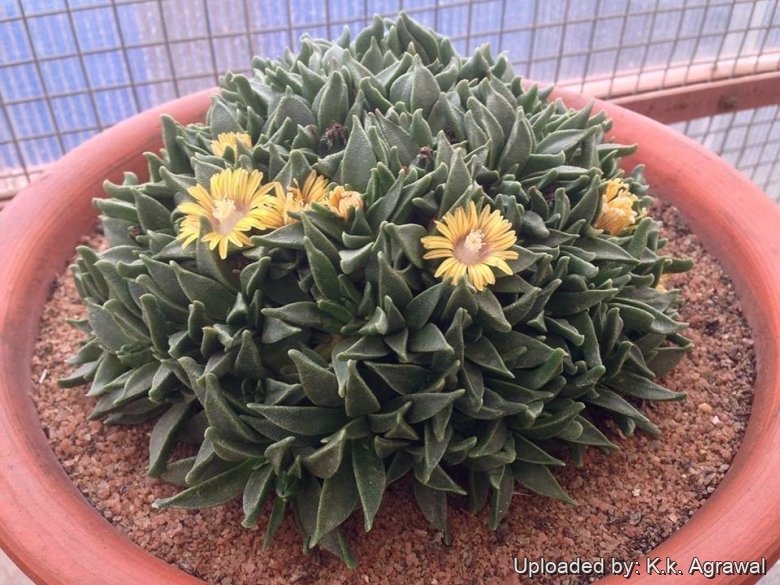
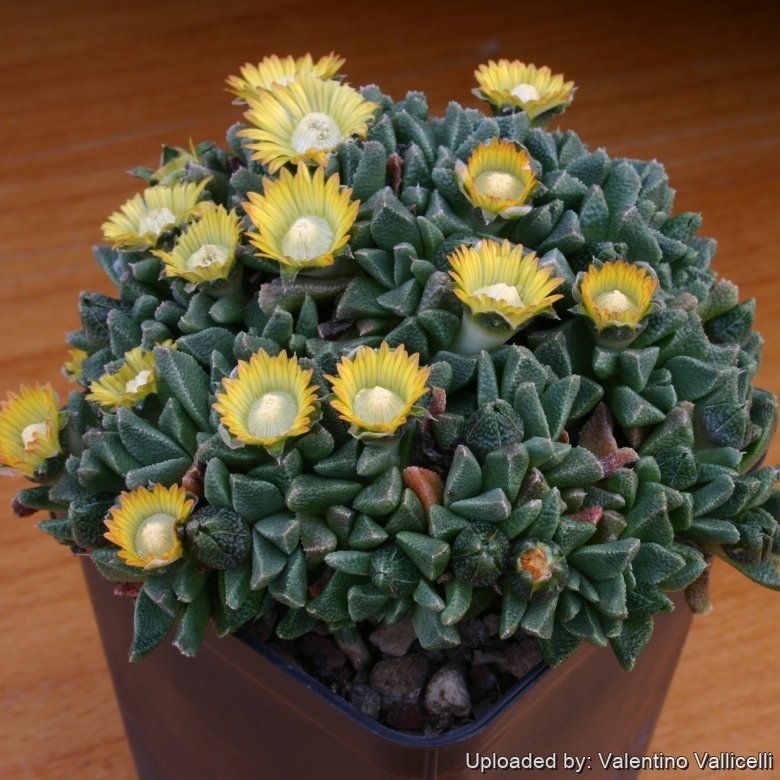
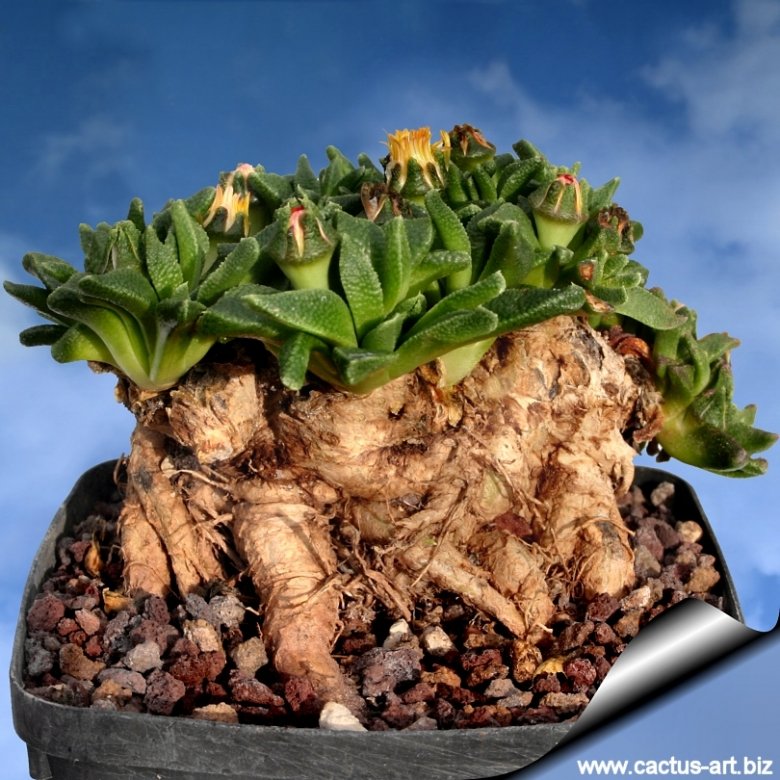
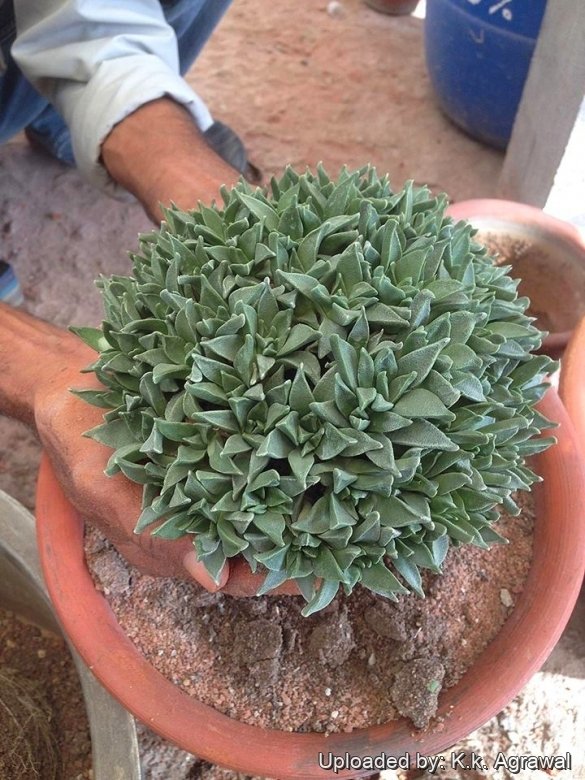
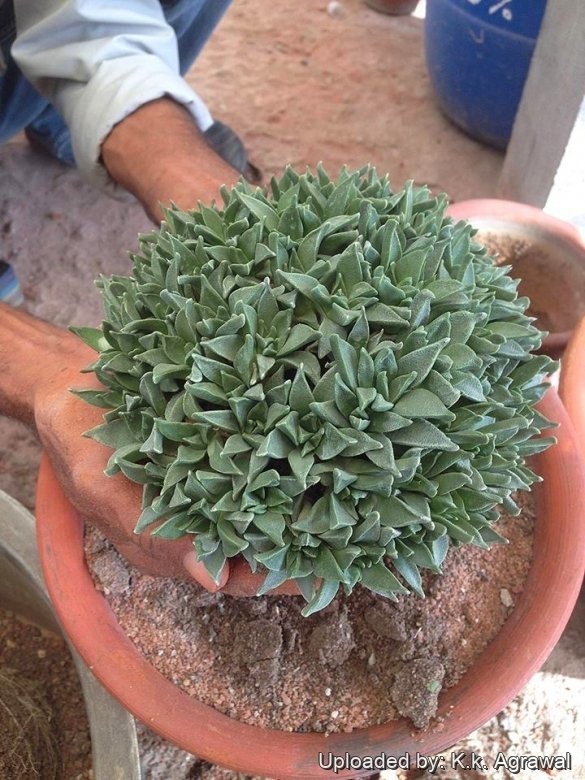
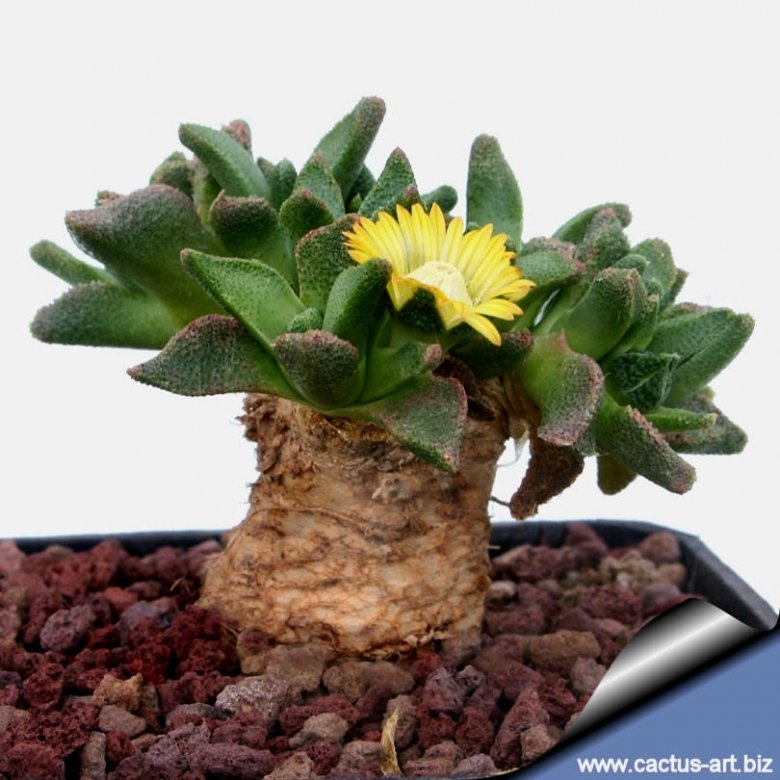
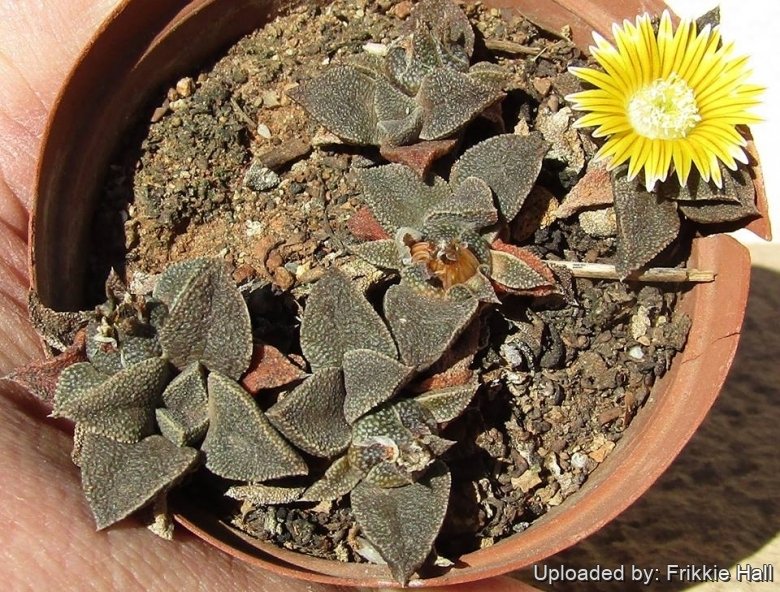
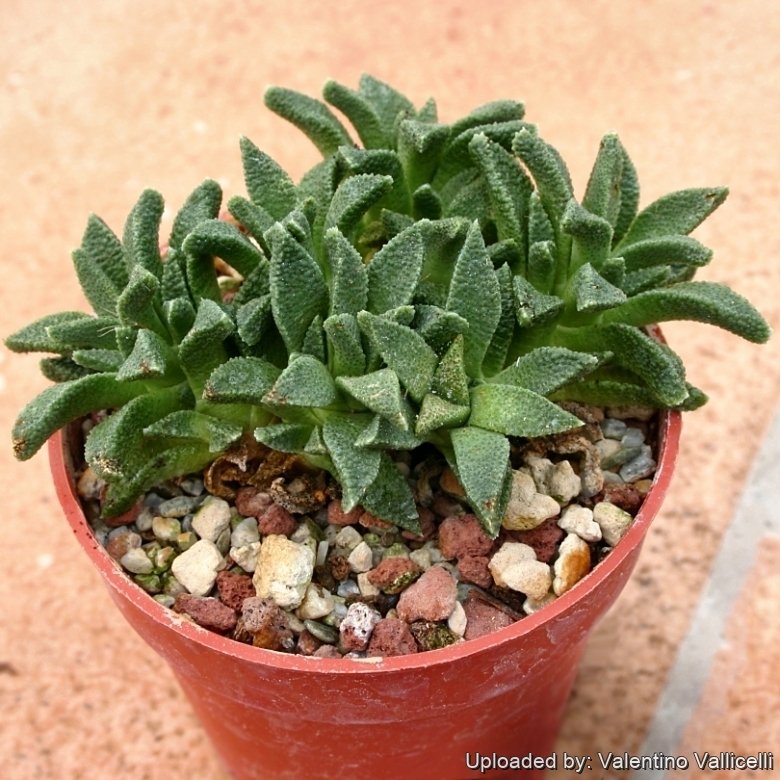
Nananthus vittatus is a low, multi-branching, wrinkled, plant forming a mat with succulent leaves arranged in low rosettes and carrot like roots, will eventually form large caudex in time. It is very cold hardy.
Note: In the past identification of the genus Nananthus and especially Nananthus vittatus was problematic. In fact the plants in habitat show different growth phases and their appearance can change dramatically throughout the year and under different growing conditions. Such variations has led to establishment of several unnecessary names for this species.
Stem: Stemless.
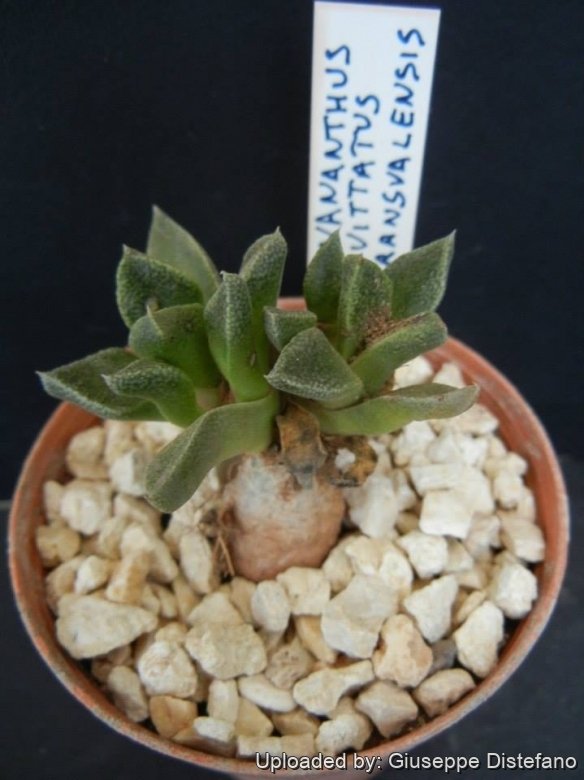
Roots: Tuberous, gorgeous, fleshy up to 18 cm long.
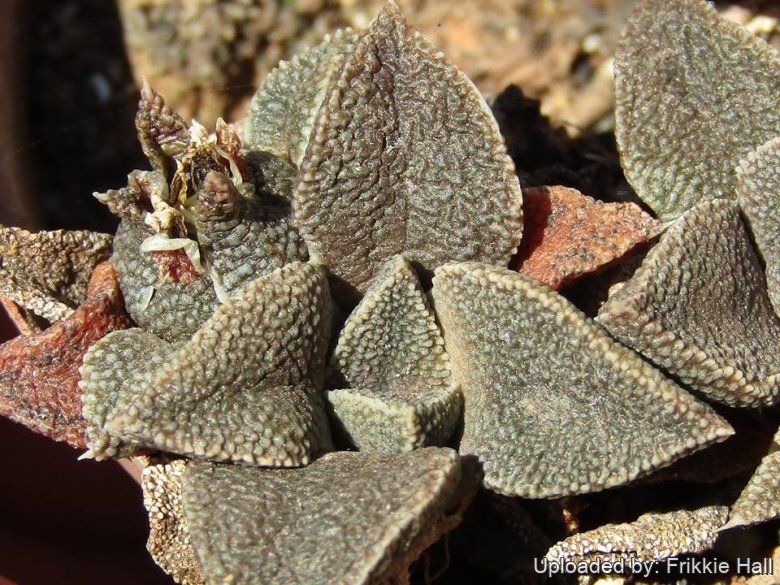
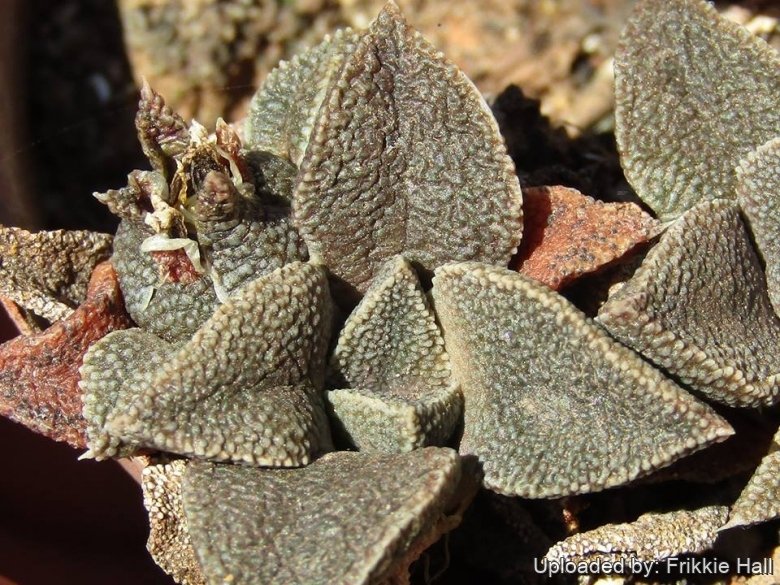
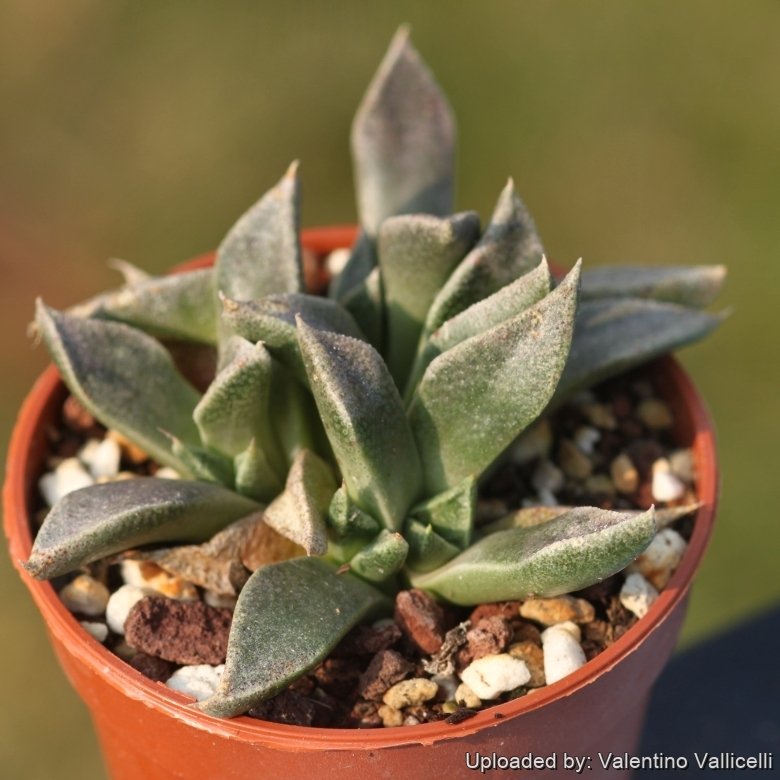
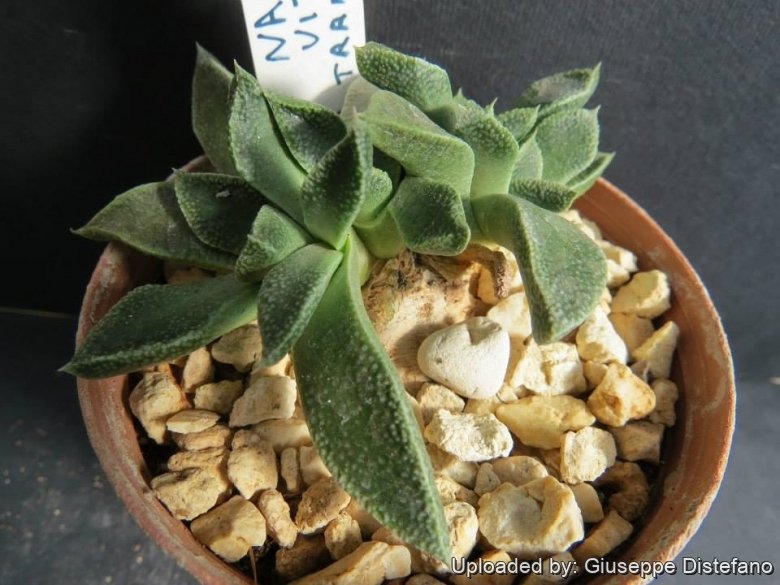
Leaves: In 6-8 pairs, 20-30 mm long, 6-9 mm wide, 3-4 mm thick. They are opposite but of different lengths, spreading diagonally at most (Often erected under dry conditions) generally dark-green or dark olive-green, soft, ovate, lanceolate, sharpened on the top, keeled, the upper surface is slightly convex especially near the points, The adaxial and abaxial surfaces are rough and textured with fine warts (idioblasts) prominent in the upper leafs surface, sometime with a central channel.
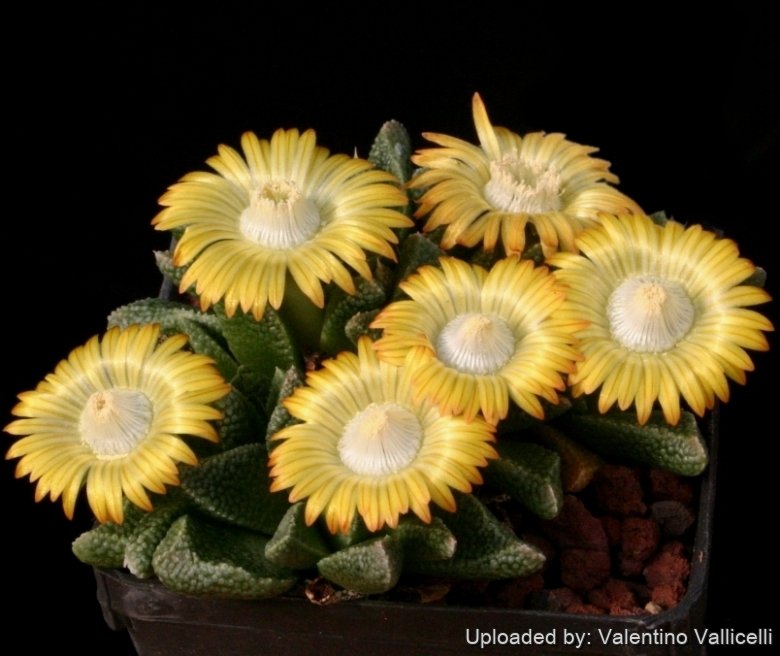
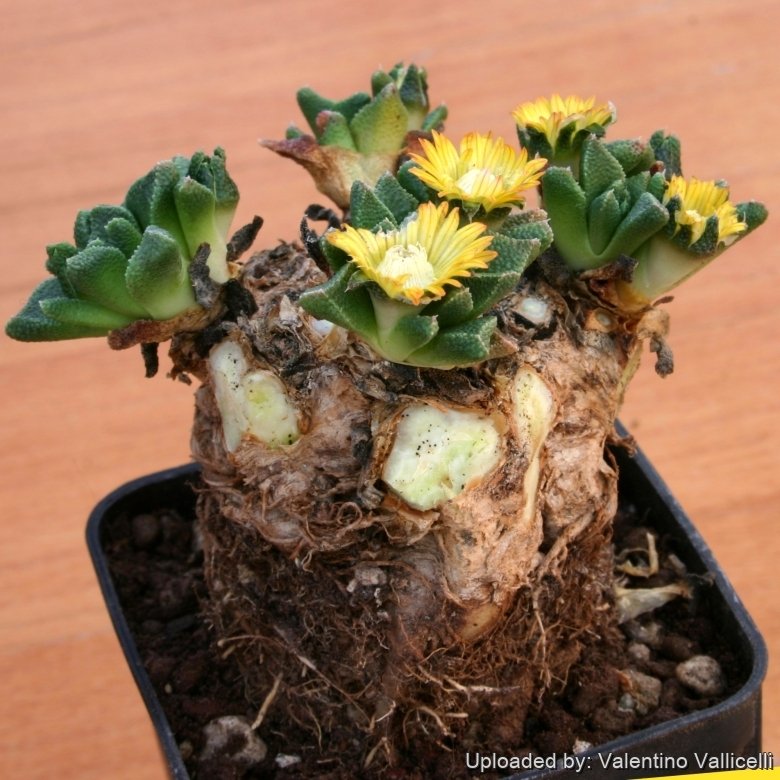
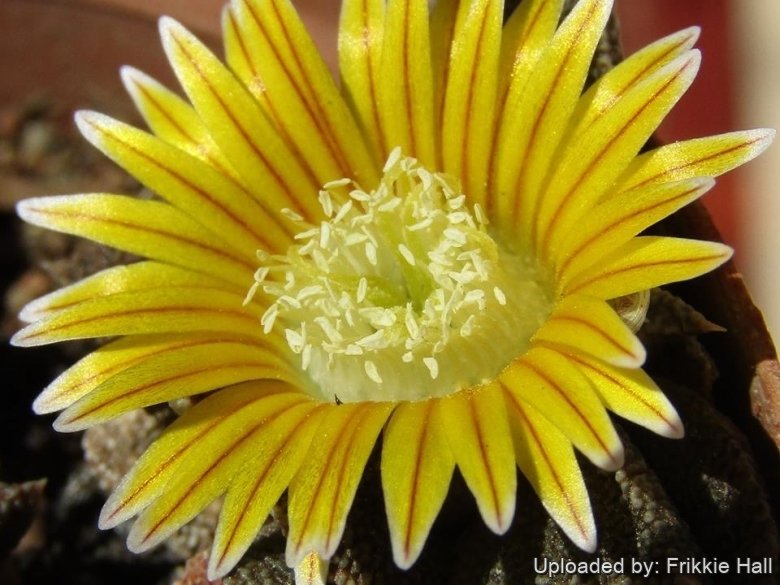
Flowers: 2-2,5 cm in diameter, daisy-like flowers, yellow with a red stripe down each petal.
Blooming season: Winter.
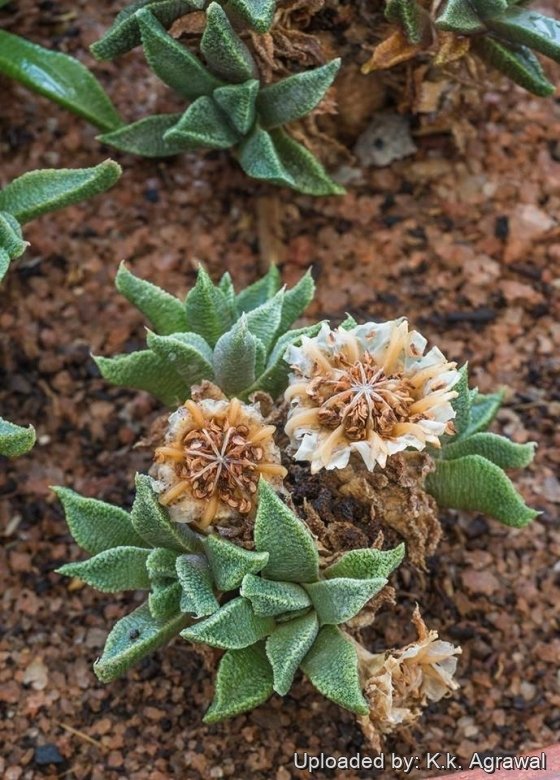
Fruits: Capsules up to 8 mm tall and 8-11 mm wide (valve wings approx 2-3 times as broad as the expanding keels).
Seeds: 1,4-1,9 mm long, 1,2-1,6 mm large.
Origin and Habitat
South-east part of Northern cape and South east part of North-western South Africa.
Habitat: Grows usually in plains or on gentle slopes on fine loamy soils rich in lime, often among grasses in areas with sparse Acacia trees, the plants are often overlooked because of the dense vegetation cover. The rainfall are predominantly in winter ( 300-400 mm/year).
Ecology: The mechanism of seed dispersal is through a higrochastic fruit and the seed is only dispersed in the immediate environment, which results in local small communities.
Cultivation and Propagation
Nananthus are easy and rewarding plants. They grow on winter rain areas and were heading for summer dormancy. Suggestions have been made to keep them cool, shaded and dry in summer. This species usually “wakes up” in mid-Fall. Water minimally in summer, only when the plant starts shrivelling. (but it is indeed a very adaptable species that can grow opportunistically in summer too if the water availability and growing condition are favourable). They need full sun or light shade on the other seasons.
Soil: Because of the tap root they need a highly gritty compost with much drainage.
Frost Tolerance: Nananthus will take a small amount of frost for a short time (it is reported to be hardy to at least -12° C). Keep cool in summer.
Comment: It has a gorgeous, thick root system and when it is potted up, the plant can be progressively raised over the ground so that some of the roots can be seen and is especially cultivated for their looks. Architecturally it is a real stunner. When the “caudex” shape of the raised roots is adequately in evidence this plant is incomparable. They also tend to grow more “heads” when they are raised.
Propagation: Cuttings or (rarely) seeds.
Bibliography
Major references and further lectures
-
Heidrun E. K. Hartmann “Aizoaceae F – Z” Springer, 2002
-
James Cullen, Sabina G. Knees, H. Suzanne Cubey “The European Garden Flora Flowering Plants: A Manual for the Identification of Plants Cultivated in Europe, Both Out-of-Doors and Under Glass - Casuarinaceae to Aristolochiaceae” Cambridge University Press, 11/ago/2011
-
Hermann Jacobsen, Vera Higgins “Succulent Plants: Description, Cultivation and Uses of Succulent Plants, Other Than Cacti” Williams and Norgate, Limited, 1935
-
Jacobsen. “Handbook of succulent plants” 1960
-
H. Herre “The genera of the Mesembryanthemaceae” Tafelberg-Uitgewers Beperk, 1971
From llifle page Aloinopsis broomii
Description
Nananthus broomii is a local or morphological form of Nananthus vittatus with somewhat smaller leaves, which is considered by Steven Hammer a distinct species. However it is quite similar to the latter and not easily separable by any important character from the other vittatus. The leaves take a brown or red colouring under stress conditions. It is very cold hardy.
Habit: It is a low, multi-branching, wrinkled, plant forming a mat with succulent leaves arranged in low rosettes and carrot like roots, will eventually form large caudex in time.It grows in a tuft like a little aloe, eventually closing in to form a mat covered with small daisy-like yellow flowers.
Stem: Stemless.
Roots: Tuberous, gorgeous, fleshy up to 18 cm long. The tuberous roots (often improperly considered a caudex) are very decorative and in many plants in cultivation are often raised above the soil. In seed raised plants, the “caudex” tend to be much larger and solitary (or few branched) while in plants which have been raised from cuttings, the tuberose roots tend to be thinner, and are more branched, eventually producing tangled masses of many fat roots.
Leaves: In 6-8 pairs, less than 3 cm long, 0,6 cm wide, 3-4 mm thick. They are opposite but of different lengths, spreading diagonally at most (Often erected under dry conditions) generally dark-green or dark olive-green, soft, ovate, lanceolate, sharpened on the top, keeled, the upper surface is slightly convex especially near the points, The adaxial and abaxial surfaces are rough and textured with fine warts (idioblasts) prominent in the upper leafs surface, sometime with a central channel.
Flowers: 2-2,5 cm in diameter, daisy-like flowers, yellow, straw-yellow or orangish flowers with a red stripe down each petal.
Blooming season: Winter.
Fruits: Capsules.
Origin and Habitat
Northern cape. South Africa.
Habitat: Grows usually in dry plains on fine loamy soils rich in lime, often overlooked by the dense grassy vegetation cover. The rainfall are predominantly in winter ( 300-400 mm/year).
Ecology: The mechanism of seed dispersal is through a higrochastic fruit and the seed is only dispersed in the immediate environment, which results in local small communities.
Source: Aloinopsis broomii, LLIFLE - Encyclopedia of living forms, CC-BY-SA, retrieved 2026-10-25.
From llifle page Aloinopsis transvaalensis
Description
Nananthus transvaalensis is a rejected name used to describe a not specifically distinct populations of Nananthus vittatus with (perhaps) slightly larger leaves. The species name transvaalensis indicate the plants found in Transvaal, but they are in fact almost identical and not easily distinguishable from Nananthus vittatus to which this plant must be rightly placed. In the past identification of the genus Nananthus and especially Nananthus vittatus was problematic. In fact the plants in habitat show different growth phases and their appearance can change dramatically throughout the year and under different growing conditions. Such variations has led to establishment of several unnecessary names for this species.
Habit: It is a low, multi-branching, wrinkled, plant forming a mat with succulent leaves arranged in low rosettes and carrot like roots, will eventually form large caudex in time. It is very cold hardy.
Stem: Stemless.
Roots: Tuberous, gorgeous, fleshy up to 18 cm long.
Leaves: In 6-8 pairs, 20-30 mm long, 6-9 mm wide, 3-4 mm thick. They are opposite but of different lengths, spreading diagonally at most (Often erected under dry conditions) generally dark-green or dark olive-green, soft, ovate, lanceolate, sharpened on the top, keeled, the upper surface is slightly convex especially near the points, The adaxial and abaxial surfaces are rough and textured with fine warts (idioblasts) prominent in the upper leafs surface, sometime with a central channel.
Flowers: 2-2,5 cm in diameter, daisy-like flowers, yellow with a red stripe down each petal.
Blooming season: Winter.
Fruits: Capsules up to 8 mm tall and 8-11 mm wide (valve wings approx 2-3 times as broad as the expanding keels).
Seeds: 1,4-1,9 mm long, 1,2-1,6 mm large.
Origin and Habitat
Transvaal, South Africa.
Source: Aloinopsis transvaalensis, LLIFLE - Encyclopedia of living forms, CC-BY-SA, retrieved 2026-10-25.
From llifle page Nananthus aff. broomii
Description
Nananthus aff. broomii (MG 1781.45) is a tiny form with smaller leaves and stout turnip-roots. It is a local or morphological form of Nananthus vittatus and not easily separable by any important character from the other vittatus. It is very cold hardy.
Habit: It is a low, multi-branching, wrinkled, plant forming a mat with succulent leaves arranged in low rosettes and carrot like roots, will eventually form large caudex in time.It grows in a tuft like a little aloe, eventually closing in to form a mat covered with small daisy-like yellow flowers.
Stem: Stemless.
Roots: Tuberous, gorgeous and fleshy. The tuberous roots (often improperly considered a caudex) are very decorative and in many plants in cultivation are often raised above the soil. In seed raised plants, the “caudex” tend to be much larger and solitary (or few branched) while in plants which have been raised from cuttings, the tuberose roots tend to be thinner, and are more branched, eventually producing tangled masses of many fat roots.
Leaves: In 6-8 pairs, less than 3 cm long, 0,6 cm wide, 3-4 mm thick. They are opposite but of different lengths, spreading diagonally at most (Often erected under dry conditions) generally dark-green or dark olive-green, soft, ovate, lanceolate, sharpened on the top, keeled, the upper surface is slightly convex especially near the points, The adaxial and abaxial surfaces are rough and textured with fine warts (idioblasts) prominent in the upper leafs surface, sometime with a central channel.
Flowers: 2-2,5 cm in diameter, daisy-like flowers, silver or gold flowers with a red stripe down each petal.
Blooming season: Winter.
Fruits: Capsules.
Source: Nananthus aff. broomii, LLIFLE - Encyclopedia of living forms, CC-BY-SA, retrieved 2026-10-26.
Gallery