Publication: Gard. Dict., ed. 8. 4 1768. [16 Apr 1768]
From llifle page Opuntia bergeriana
Description
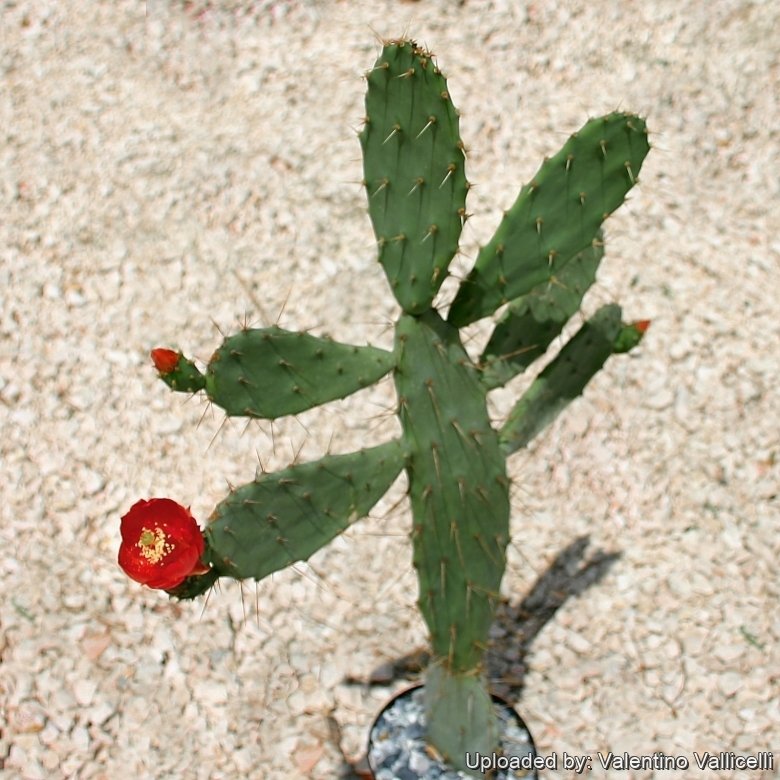
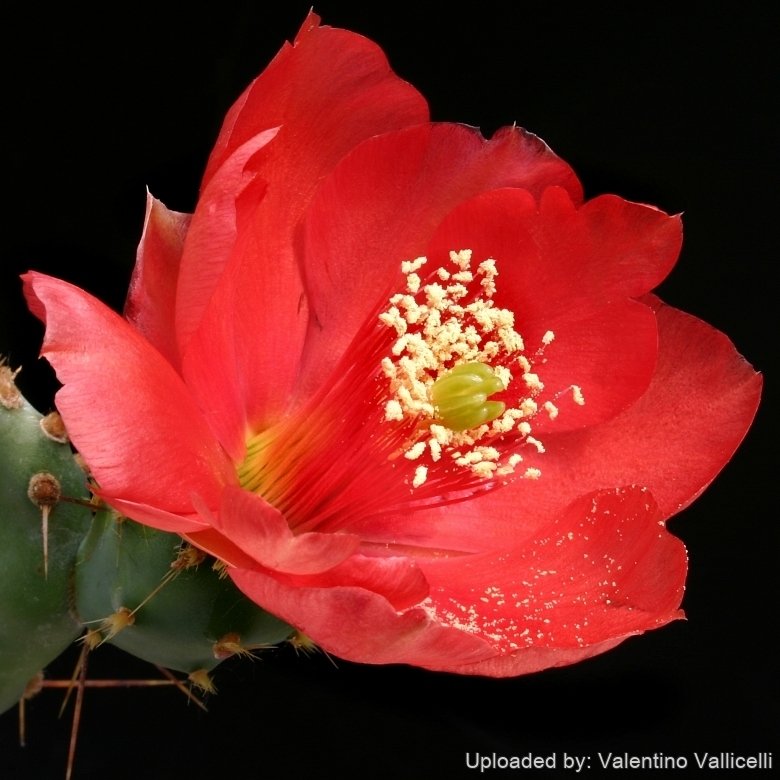
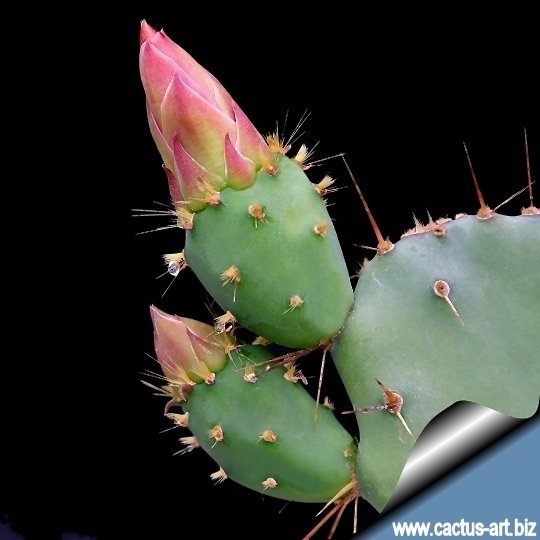
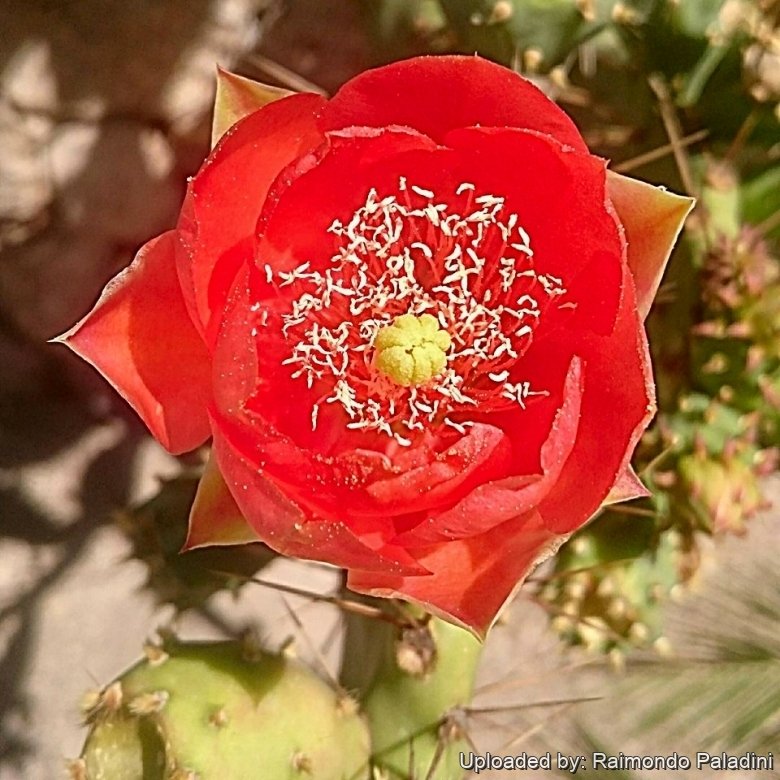
O. bergeriana is a strong shrubby species, it can grows up to 4.5 m with pads that can be up to 40 cm long. This plant produces bright red flowers in profusion also in small specimen.
Origin and Habitat
Described from cultivated material, it plant is native of the Caribbean, Central America and northern South America, but actually it is fully naturalized in many part of the world like Mediterranean, Australia, Africa and India.
Cultivation and Propagation
It is a low maintenance plant that tolerate considerable neglect and will naturalize . Easy to cultivate outdoor in dry, sandy or gravely, well-drained soils. May be grown in clay soils as long as drainage is good and soils do not remain wet, it is very adaptable both in acid, neutral and basic (alkaline) soils, but prefers a pH in the range 6 to 7.5. No serious insect or disease problems.
Watering Needs: Must be kept fairly dry in winter but likes a reasonable supply of water in the growing season, tolerate dry condition but suffer if exposed to prolonged and severe drought. A position at the base of a south-facing wall or somewhere that can be protected from winter rain is best for this plant, but is however resistant to moisture and rain.
Sun Exposure: Full sun (only), in semi shaded position wont produce many flowers.
Frost Tolerance: Plants are reasonably cold-hardy , tolerating temperatures of -5° to -10° C (depending on clone), they are also quite tolerant of winter wet. (In good drained soils)
Propagation: Propagated by cuttings of leaf pads at any time in the growing season.
Source: Opuntia bergeriana, LLIFLE - Encyclopedia of living forms, CC-BY-SA, retrieved 2026-10-25.