Publication: Descr. Cact. Nov. 10. 1956
Description
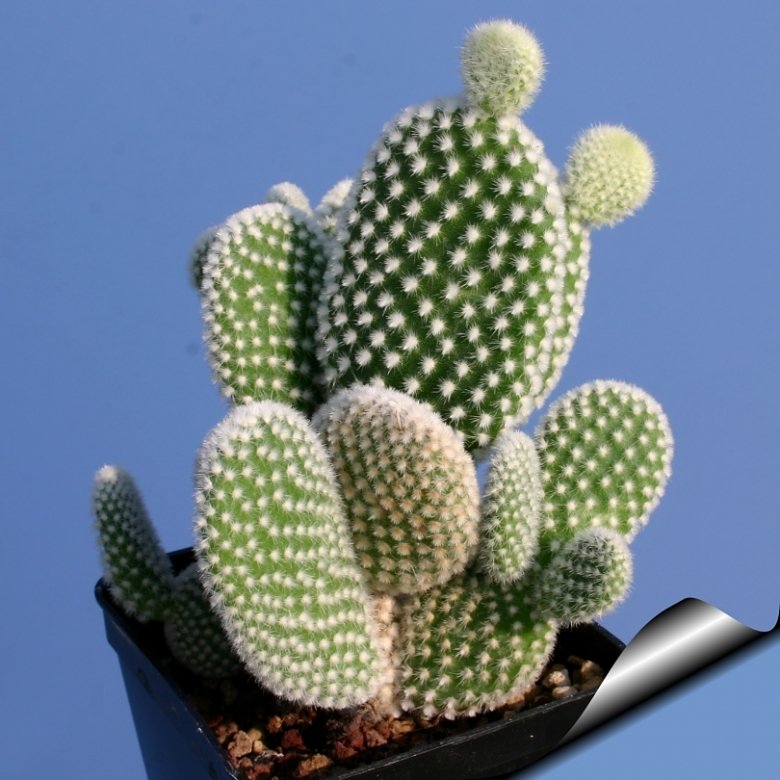
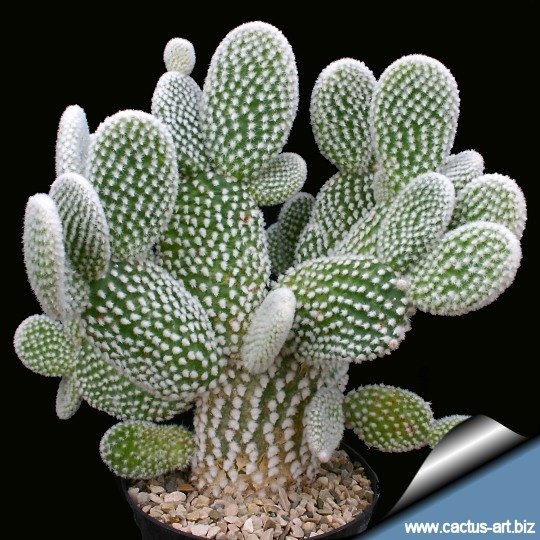
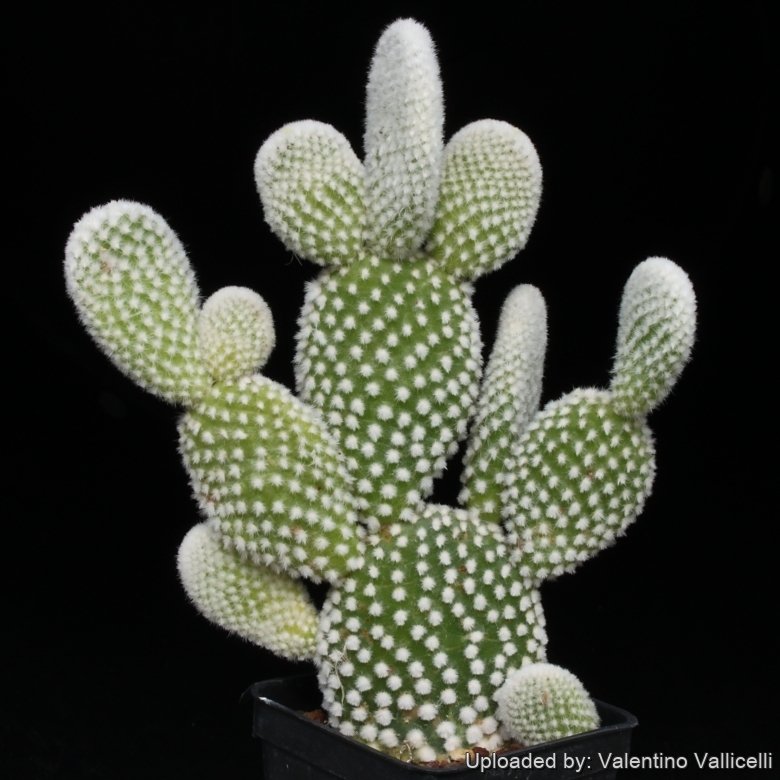
Freely clustering succulent with miniature pads. It forms a dense shrub, to 40-60 (occasionally more) cm high, up to1.5 m across.
Cladodes: 7.5-15 cm long by half as wide.
Spines: It has no spines, but instead has numerous white hair-like glochids 2-3 mm long in dense clusters.
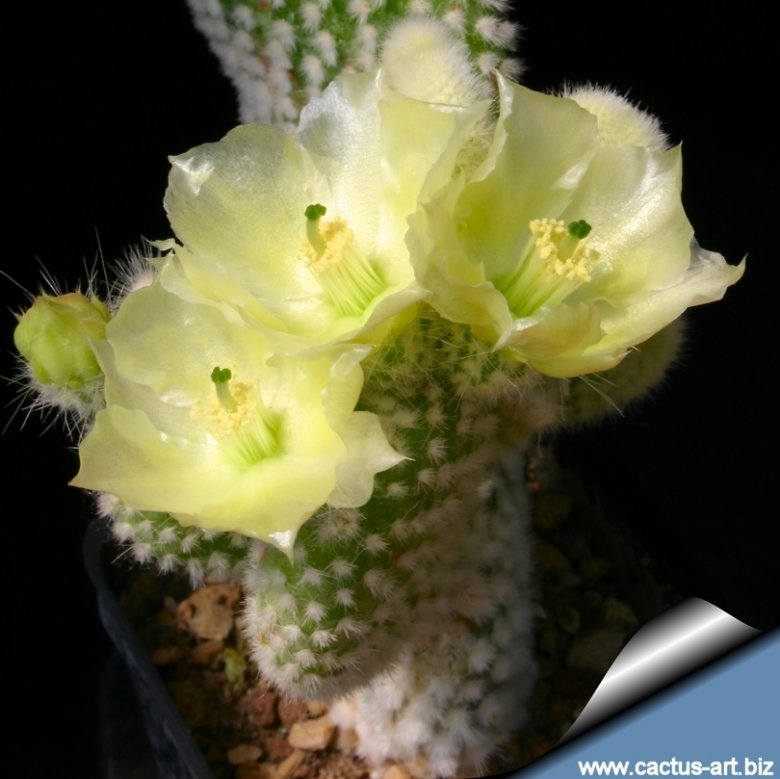
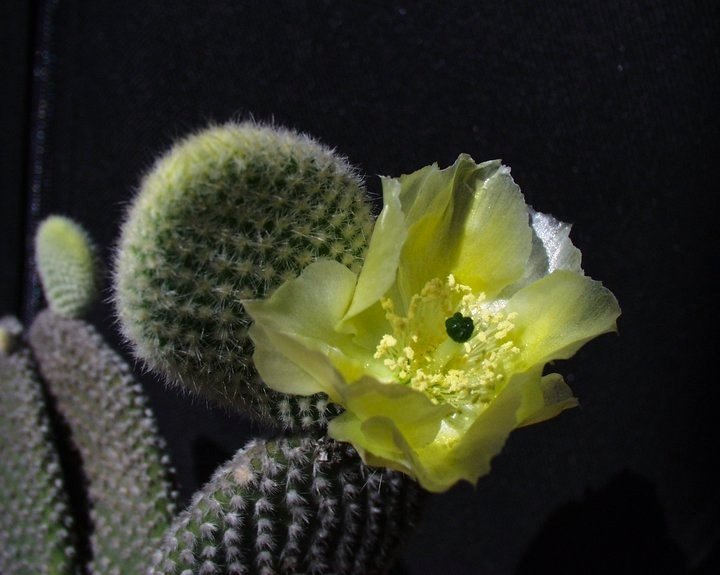
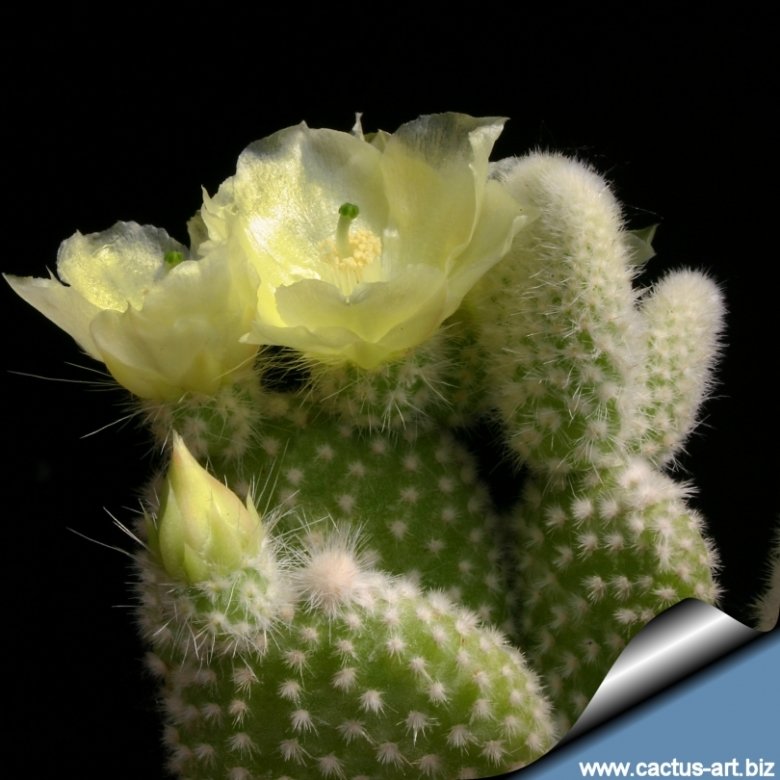
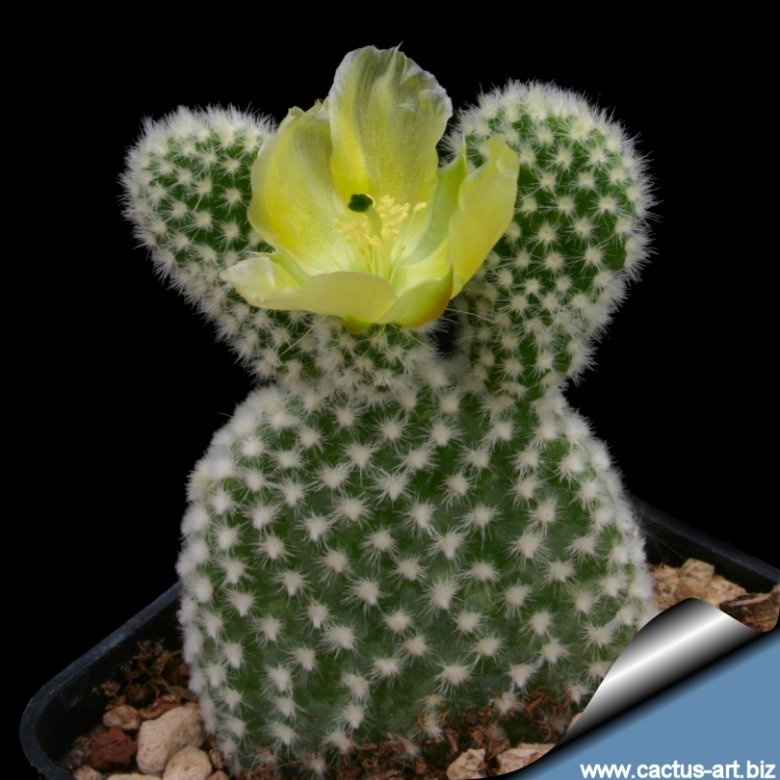
Flowers: Lemon yellow flowers, 3-5 cm in diameter followed by red fruits.
Origin and Habitat
Garden origin (Nursery selected cultivar)
Cultivation and Propagation
They are easy to culture. Require full sun to partial shade with a well-drained soil mix. The plants are watered and allowed to dry thoroughly before watering again. During the winter months, the plants enjoy a cold place where the temperature is dropped to 5/10° C, but hardy to -5° C for short periods of time if very dry. During this period water only enough to keep the pads from shrivelling.
Propagation: Cuttings taken at any time in the growing season. Remove a pad from the plant and then leave it in a dry sunny place for a couple of days to ensure that the base is thoroughly dry and has begun to callous. Pot up into a porous compost. Very easy, rooting within a month.
Notes
The very closely related Opuntia rufida differs in having reddish-brown glochids; it occurs further north in northern Mexico, and into western Texas. Some botanists treat the two as a single species.
Gallery