Publication: Prodr. [A. P. de Candolle] 6: 478. 1838 [1837 publ. early Jan 1838]
Description
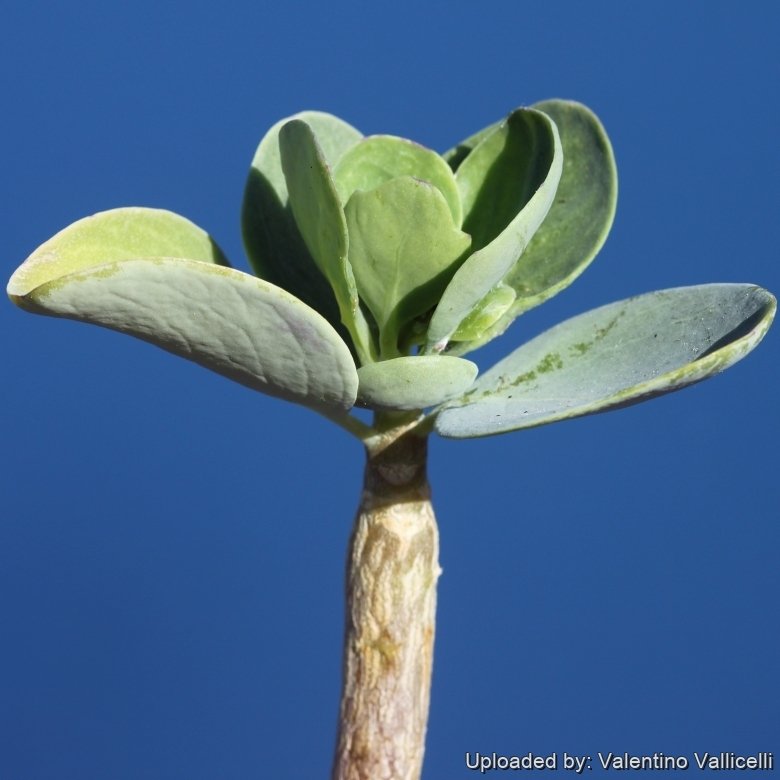
It is a a thick, evergreen, fleshy-stemmed (pachycaul) shrublets with short branches and leaves crowded at the tips.
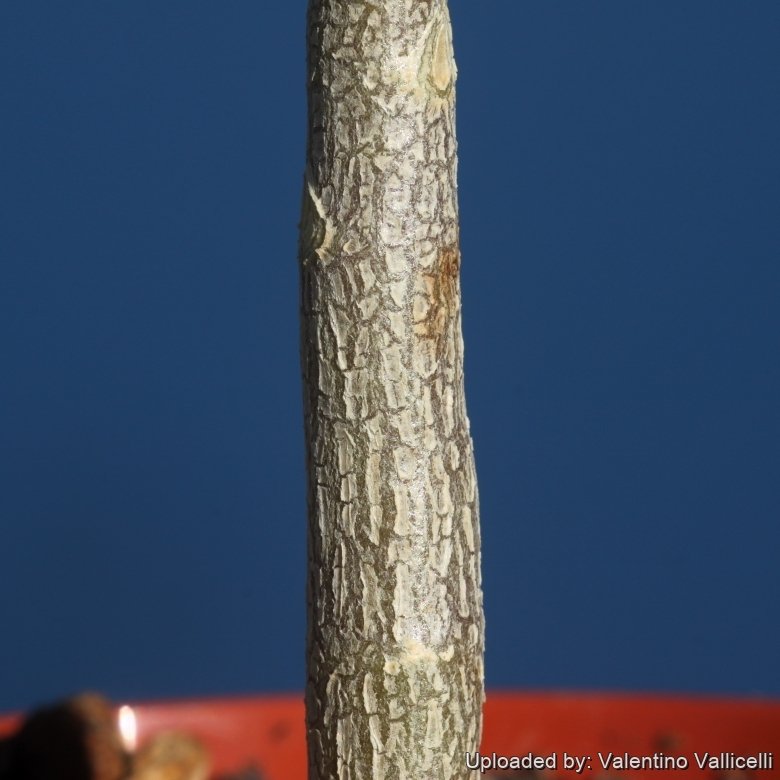
Stem (caudex): Shrubby carnose swollen at the base, glabrous, short, subsimple or forked up to 4 cm thick (or more) and 40 cm tall, the lower part nude (leafless), cicatricised; cicatrices glabrous.
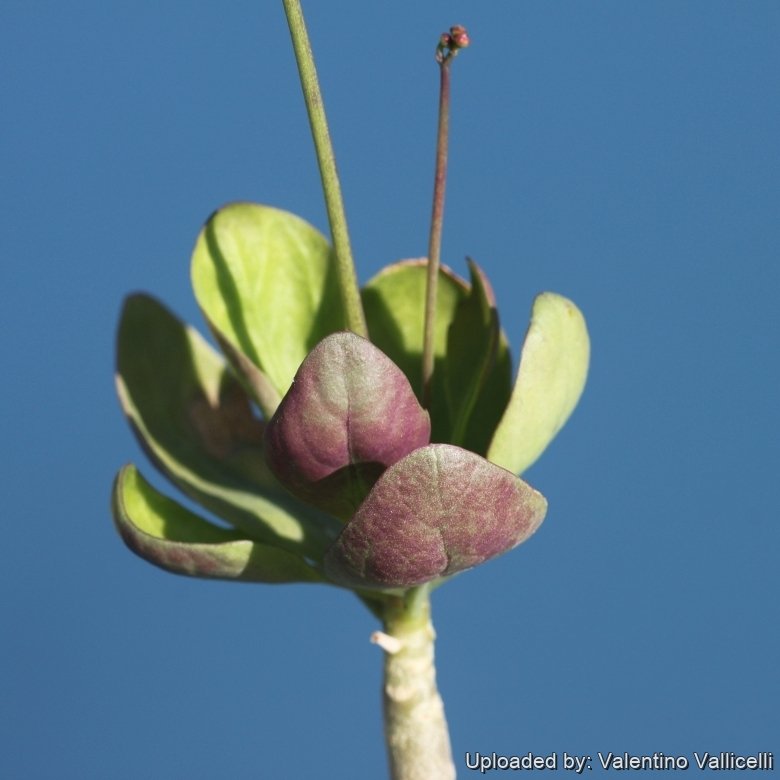
Leaves: Crowded toward the apices, 6-7 cm long (comprising petiole), 2,5 cm wide, obovate, obtuse, tapering at base into a slender petiole, drying thin, from the middle 3-nerved, netted-veined, quite entire or repand; slightly fleshy when young, almost membranous, and pellucid if carefully dried.
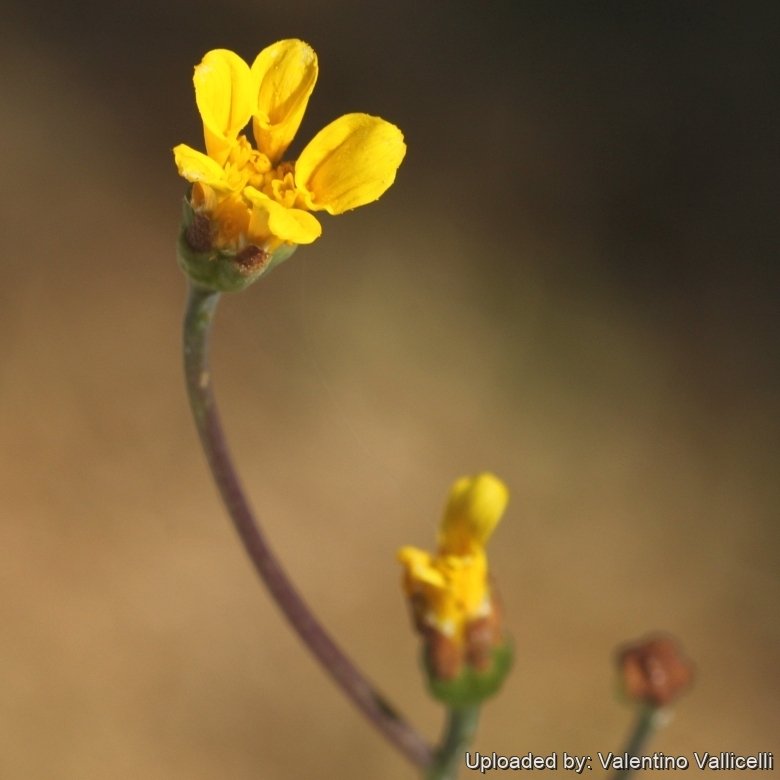
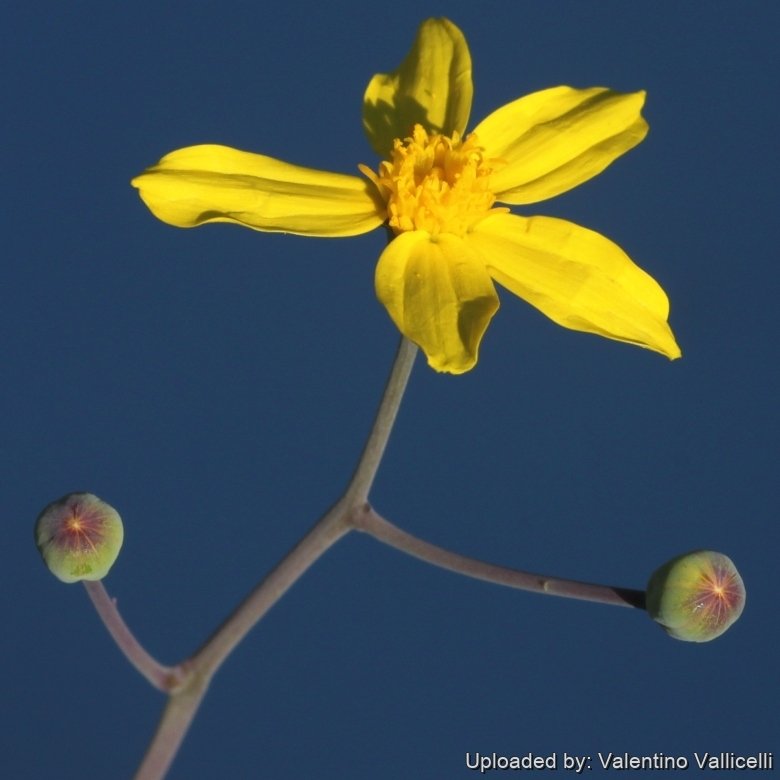
Inflorescence: Terminal, loosely corymbose, few or several headed, peduncle somewhat longer than the leaves.
Flowers: Rays about 5 bright-yellow, conspicuous. Pedicels 7-10 cm long
Fruit: Villous achenes.
Origin and Habitat
South Africa, Eastern Cape.
Altitude: It grows at an altitude of more or less 400-800 m.
Habitat: It grows in crevices and on ledges of sheer, east-facing aspects on mineral-poor quartzitic sandstone soil. Rainfall occurs during both winter (cold fronts) and summer (mainly thunder showers) and amounts to about 500–600 mm per annum. The average daily maximum temperature is about 26°C and the average daily minimum temperature is about 11°C. Winters are cooler but frost is rare or absent.
It shares its habitat with other cliff-dwelling plants such as Haworthia gracilis var. picturata, Haworthia viscosa, Cyrtanthus montanus, Plectranthus verticillatus, Gasteria glauca, Crassula lactea and Lampranthus affinis. The plant has been well established in cultivation (ex situ conservation) and is grown by succulent plant growers all over the world.
Cultivation and Propagation
Othonna triplinervia is probably a winter grower and need water from October, when the new leaves can be seen forming on the growing tip. In April the leaves begin to go yellow and drop off, so now it rests quite dry in to summer. But others suggest to water it moderately all year round as it tends to be an evergreen if water is available. They must be grown very hard in the nursery as close to the natural conditions as possible. This ensures that they keep their compact habit.
Bibliography
Flora Capensis, Vol 3, page 44 (1894) Author: (By W. H. HARVEY).
Gallery