Publication: Oxalis [Jacquin] 33. 1794
Description
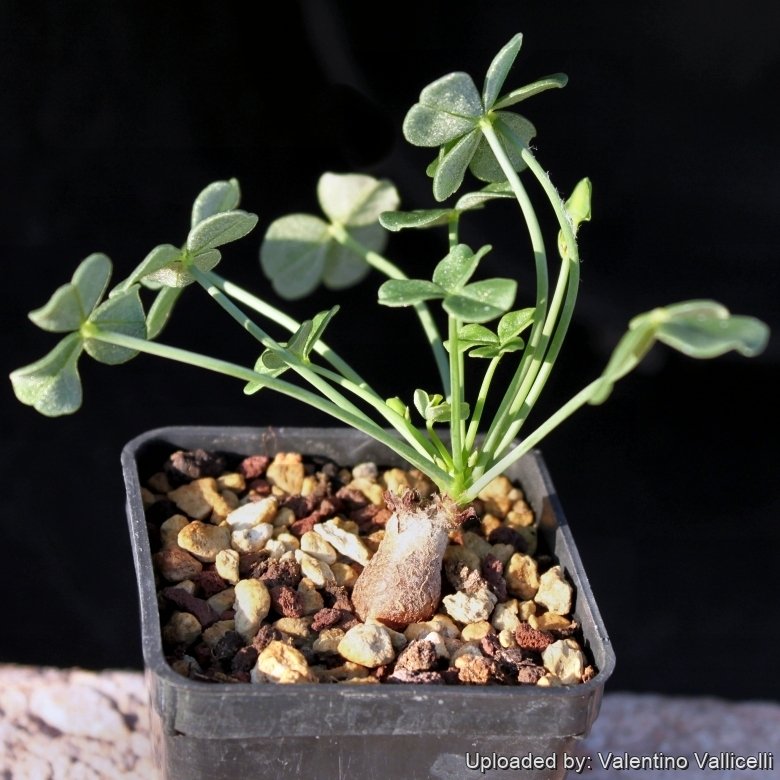
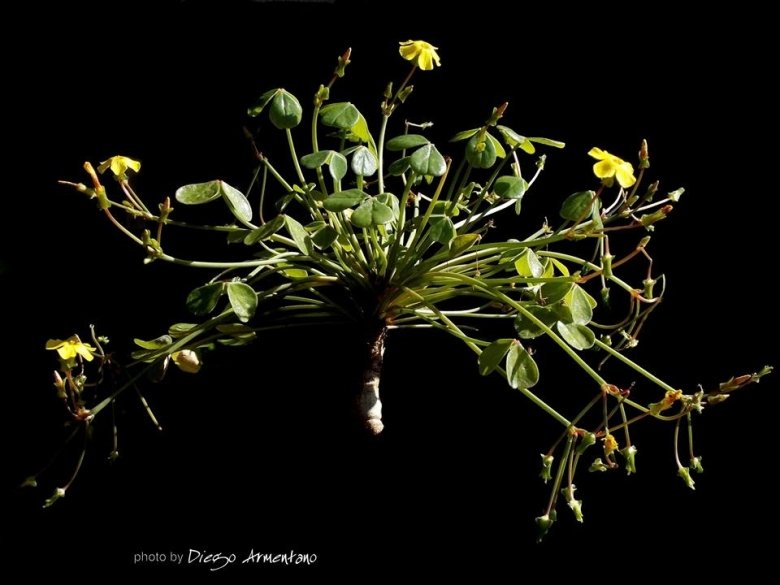
Oxalis megalorrhiza is a low-growing perennial herb, about 20 centimetres tall with a swollen rootstock and short frutticose stems leafy and floriferous only at apex. This species is singular for the great size of the root whence its trivial name. The heads of it resemble so many suffruticose stems. The shining, fleshy, deep green leaves form a small clump, whilst the flowers have yellow petals that are surrounded by distinctive heart-shaped sepals. This South American plant is better known by its synonym O. carnosa.
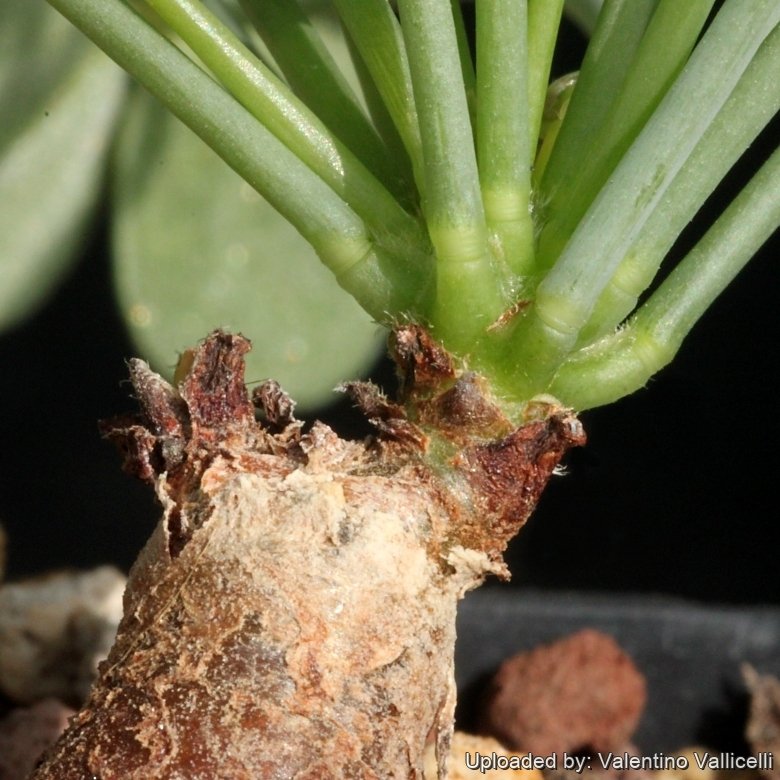
Stem: Stout, dark, fleshy, elongating upward with growth, simple or Single or sparingly forked with few heads erect 4-10 centimetres tall, scaly apically with persistent bases of fallen petioles, to 1.5 cm thick.
Caudex (Rhizomatous rootstock): Perennial, subligneous-fleshy, cylindrical up to 3 centimetres thick, about 20 cm long, single or divided below into branching legs, covered with a double bark, the outer very thin ash-coloured, the inner thicker dull red, watery, acrid. Internal part white, watery, acrid with some red fibres in it running from the centre to the circumference.
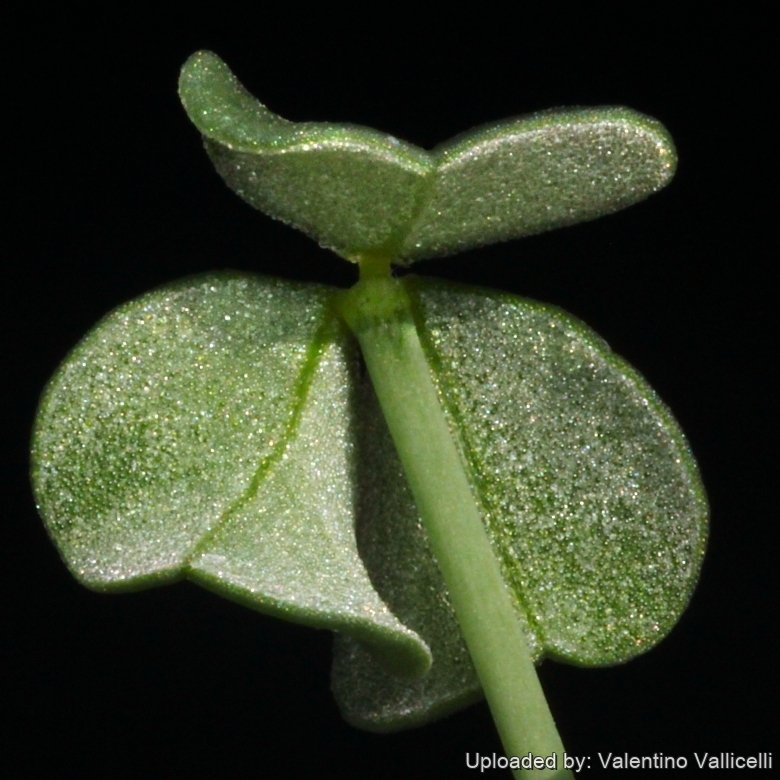
Leaves: Numerous, alternate, radial, several, palmately compound, fleshy; leaflets 3, equal, subsessile, obcordate, emarginate, sparingly appressed-pubescent beneath, surface finely reticulate, midvein prominent, 10-12 mm long, 9-12 mm wide. Petioles filiform, strict, minutely glandular-stipitate, dehiscing near base, to 7 cm long.
Inflorescence: Axillary, umbel-like cymes with 1-3 flowers. Peduncles ascending, filiform, strict, glabrous, to 7 cm long, bracts ovate-lanceolate, ciliate, about 1 mm long.
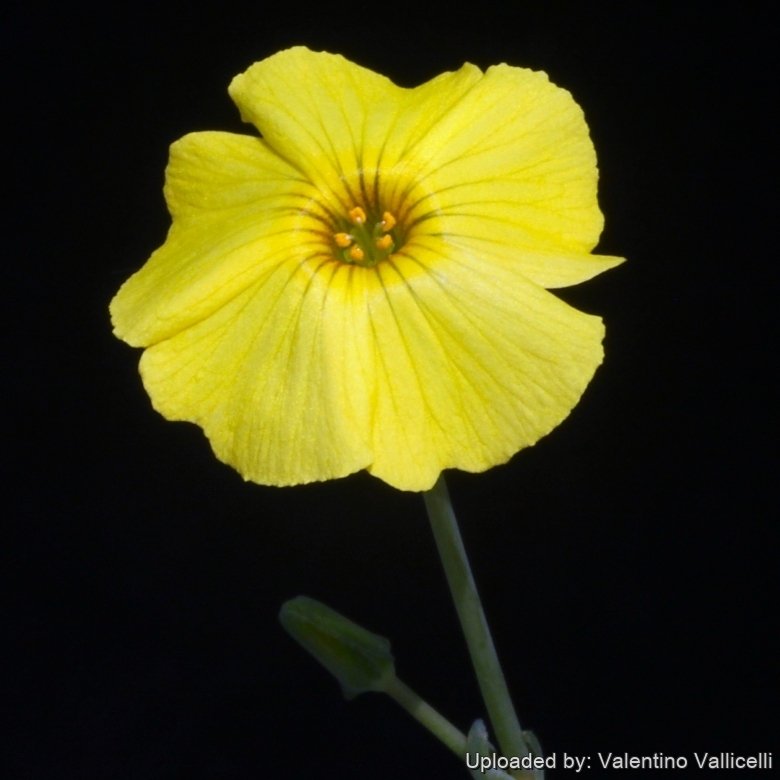
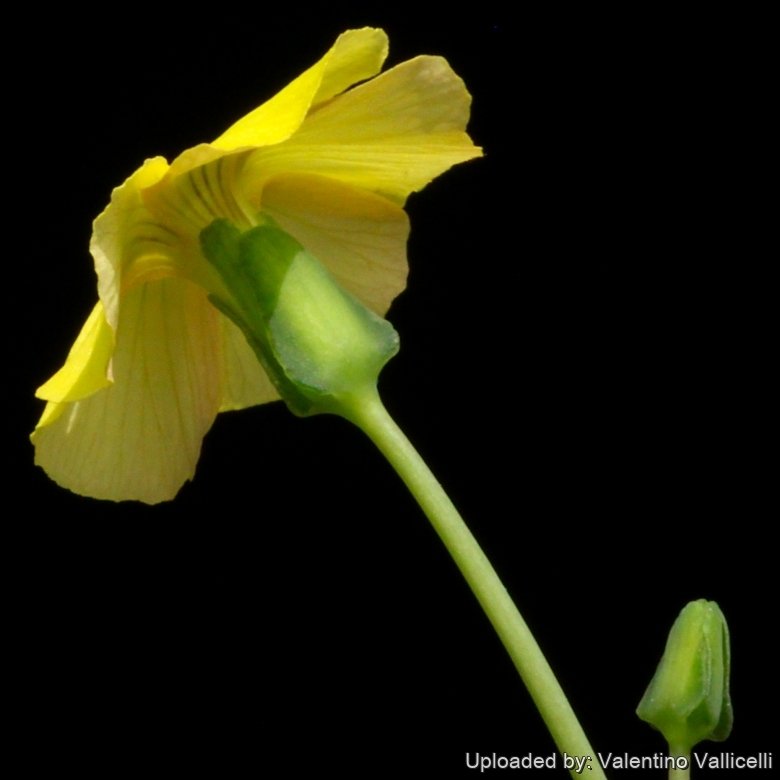
Flower: Yellow, sometimes orange along the veins and cleistogamous (they are self-fertilised even before they open). Petals 5-6 mm long; sepals, unequal, in 2 series, 2 outer broadly ovate, apex obtuse, base nearly hastate, 4-5 mm long, 3-4 mm wide, 3 inner narrowly oblong, 4-5 mm long, to 2 mm wide, nearly hidden by outer pair in bud, all more or less connate basally; stamens 10 linear-subulate, glabrous; bracts ovate-lanoeolate, ciliate, about 1 mm long. Ovary oblong-cylindrical, glabrous; styles filiform, connate basally, slightly pubescent, 2 mm long.
Blooming season: Spring to autumn.
Fruit. Capsule, cylindrical, 1-1,6 cm long. When the fruit is ripe, a special mechanism is set off and seeds spread fast, thanks to it’s exploding seed-capsules.
Seeds: Numerous brown.
Origin and Habitat
South America (Bolivia, Peru, Ecuador Chile and the Galapagos Islands), but naturalized in other tropical regions throughout the world.
Cultivation and Propagation
This is a winter/spring-grower, but can grow all year.
Reproduction: Seeds. Of the three fully succulent Oxalis species grown, only O. megalorrhiza qualifies for this list. Also it is the only succulent Oxalis in general cultivation that seeds. These are produced in the typical explosive capsules of this genus that ensures the seeds are dispersed up to a few metres from the parent. After Umbilicus rupestris it is the next biggest nuisance in the succulent collections.
Bibliography
Major references and further lectures
-
Ira Loren Wiggins, Duncan M. Porter, Edward F. Anderson “Flora of the Galápagos Islands” Stanford University Press, 1971
-
“Encyclopaedia Londinensis, or, Universal dictionary of arts, sciences, and literature, Volume 18” Copertina anteriore 1821
-
Urs Eggli “Illustrated Handbook of Succulent Plants: Dicotyledons” Springer Science & Business Media, 2002
-
W.R.Sykes, “Succulents misbehaving in my gardens” New Zeland Botanical Society Newsletter, Number 75 , March 2004
From llifle page Acetosella paposana
Origin and Habitat
Peru (Western South America, Southern America)
Source: Acetosella paposana, LLIFLE - Encyclopedia of living forms, CC-BY-SA, retrieved 2026-10-25.
From llifle page Acetosella succulenta
Origin and Habitat
Type locality: Chile, Coquimbo, sur les rochers maritimes.
Source: Acetosella succulenta, LLIFLE - Encyclopedia of living forms, CC-BY-SA, retrieved 2026-10-25.
From llifle page Oxalis carnosa
Description
The Wood Sorrel, (Oxalis carnosa), is generally included within (as a synonym of) Oxalis megalorrhiza, suggesting that there is not really a fundamental difference between the two. The name carnosa, meaning “fat, succulent”, refers to the swollen rootstock and short frutticose stems leafy and floriferous only at apex. The succulent roots helps distinguish this sorrel from the other herbaceous species.
For more details see: Oxalis megalorrhiza |
Cultivation and Propagation
This is a winter/spring-grower, but can grow all year.
Reproduction: Seeds. Of the three fully succulent Oxalis species grown, only O. megalorrhiza (syn: O. carnosa) qualifies for this list. Also it is the only succulent Oxalis in general cultivation that seeds. These are produced in the typical explosive capsules of this genus that ensures the seeds are dispersed up to a few metres from the parent. After Umbilicus rupestris it is the next biggest nuisance in the succulent collections.
Source: Oxalis carnosa, LLIFLE - Encyclopedia of living forms, CC-BY-SA, retrieved 2026-10-26.
From llifle page Oxalis paposana var. hirta
Origin and Habitat
Type locality: Chile, Atacama, Chañaral, vic. Puerto Chañaral, hills back of El Barquito.
Source: Oxalis paposana var. hirta, LLIFLE - Encyclopedia of living forms, CC-BY-SA, retrieved 2026-10-26.
From llifle page Oxalis solarensis
Origin and Habitat
Type locality: Peru, Morro Solar, near Chorrillos, 200 m.
Source: Oxalis solarensis, LLIFLE - Encyclopedia of living forms, CC-BY-SA, retrieved 2026-10-26.
From llifle page Oxalis tarapacana
Origin and Habitat
Type locality: Chile, Tarapacá, Sotoca.
Source: Oxalis tarapacana, LLIFLE - Encyclopedia of living forms, CC-BY-SA, retrieved 2026-10-26.
Gallery