Description
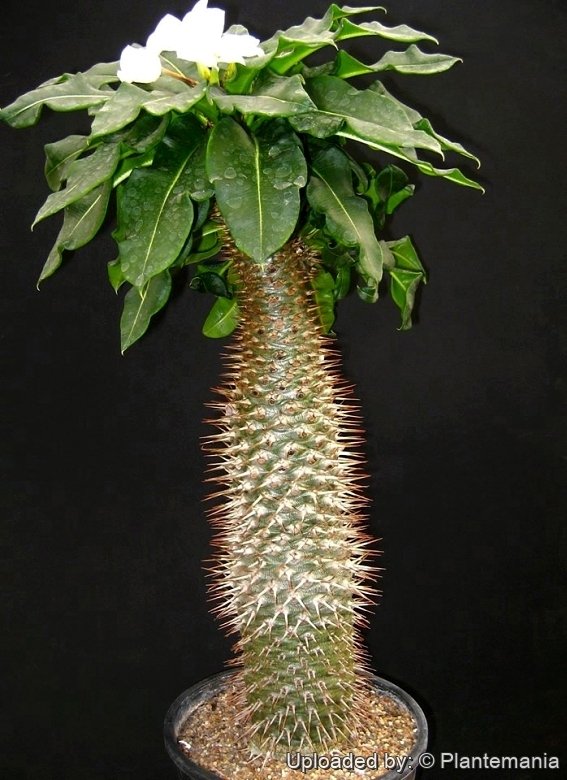
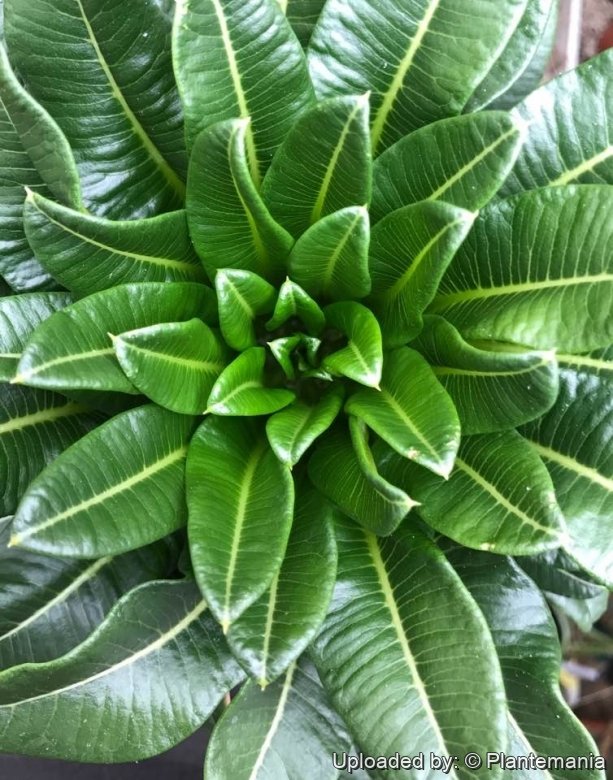
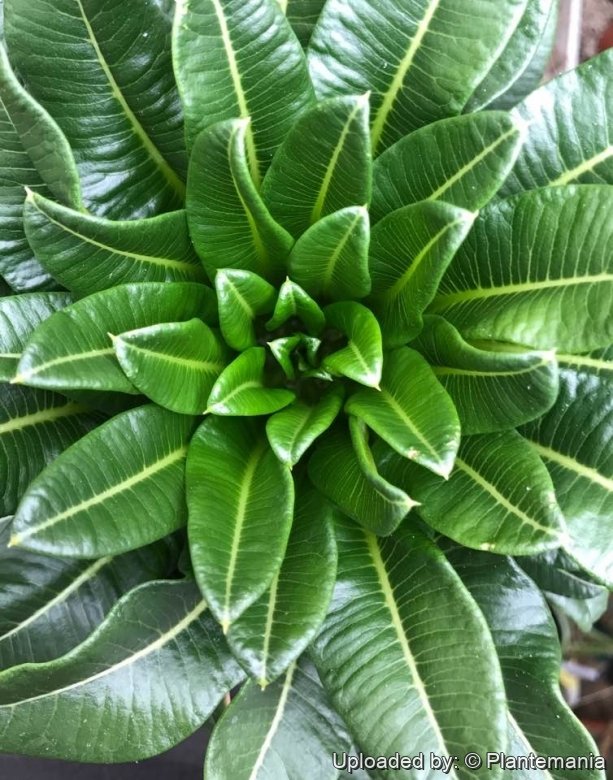
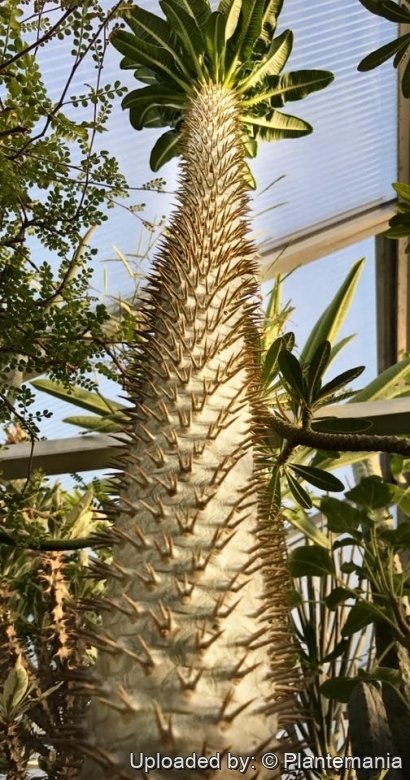
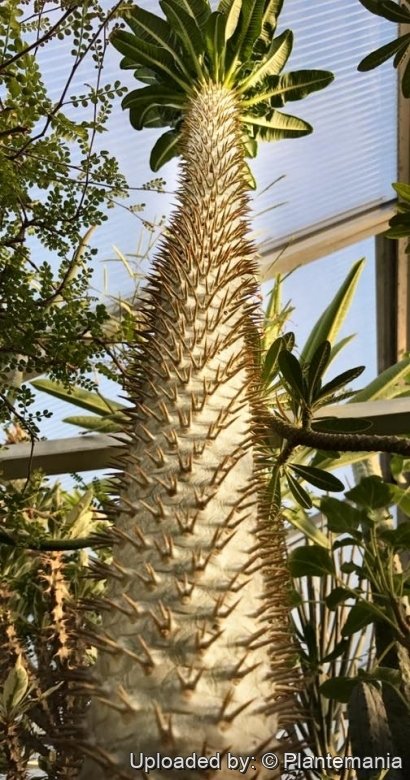
The typical Pachypodium lamerei is a semitropical succulent or pachycaul tree that is spiny semidecidous or deciduous, 2,5-6 m tall, or more with optimal conditions. (As a houseplant, it is much smaller) It grows initially as a single stem, but then branches forming massive ascending crowns.
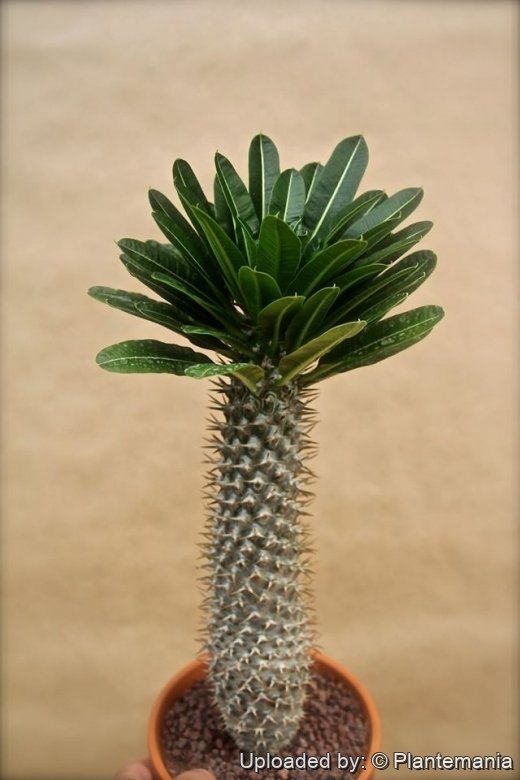
Compact form: (Pachypodium lamerei f. compacta) is a significantly more compact growing form of the popular and widely grown P. lamerei, or better know as the “Madagascar Palm”, despite in not being a palm at all. Compact P. lamerei are cultivated for their dwarf reduced growing habit and do not get as large as the standarf species. Plants exhibit a slow growth rate but it is possible to increase the speed of growth to some extent by grafting the compact form on a normal green specimen, called the stock.
Origin and Habitat
It is a nursery produced form known only in cultivation. The natural species comes from Madagascar.
Cultivation and Propagation
Pachypodium lamerei f. compacta is probably one of the most rare cultivars in cultivation.
Exposure: It needs full sun or high interior lighting with a very well drained soil mix and freely circulating air.
Watering: Plants are watered and allowed to dry thoroughly before watering again.
Fertilization: If fertilizer is used, it should be diluted to ¼ (one-quarter) the recommended rate on the label.
Hardiness: It is a frost tender species that must be protected in the greenhouse over the winter but established plants should tolerate temperatures as low as 0° C (Avoid any frost!). If grown in the home environment, the ideal temperatures should run between 20° to 30° C with winter time temperatures around 10°C. During the winter months, the plant will drop all of its leaves and no water should be given during this period.
Maintenance: Not freely branching. Once this plant is established in its new pot, it should be cut back to encourage branching. The cutting removed can be rooted easily, and the process repeated.
Propagation: It is propagated from cuttings taken in the spring or by grafting.
Gallery