Publication: Cact. d’Argentine ed. 2: 207. 1997 1998
Description
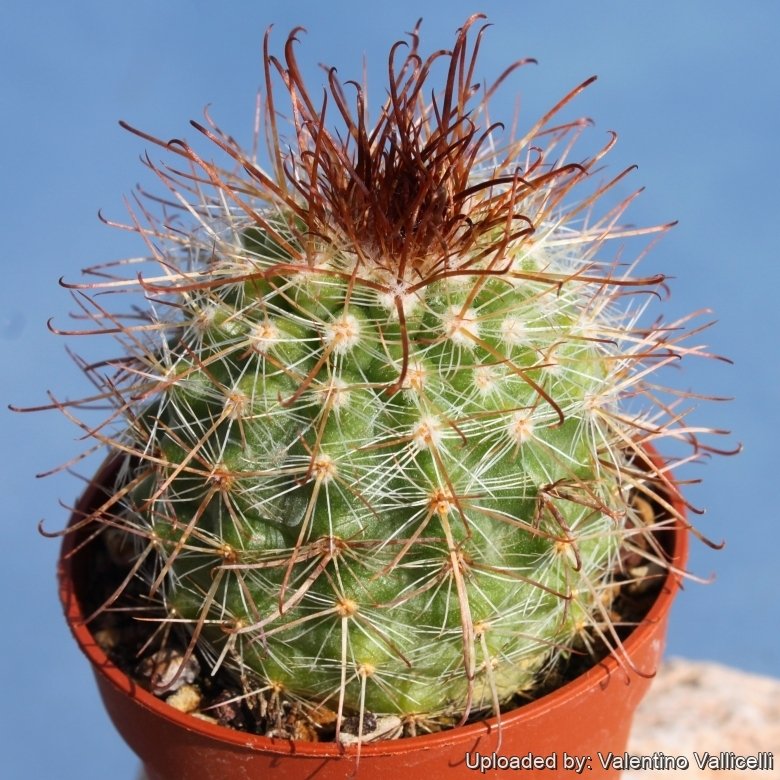
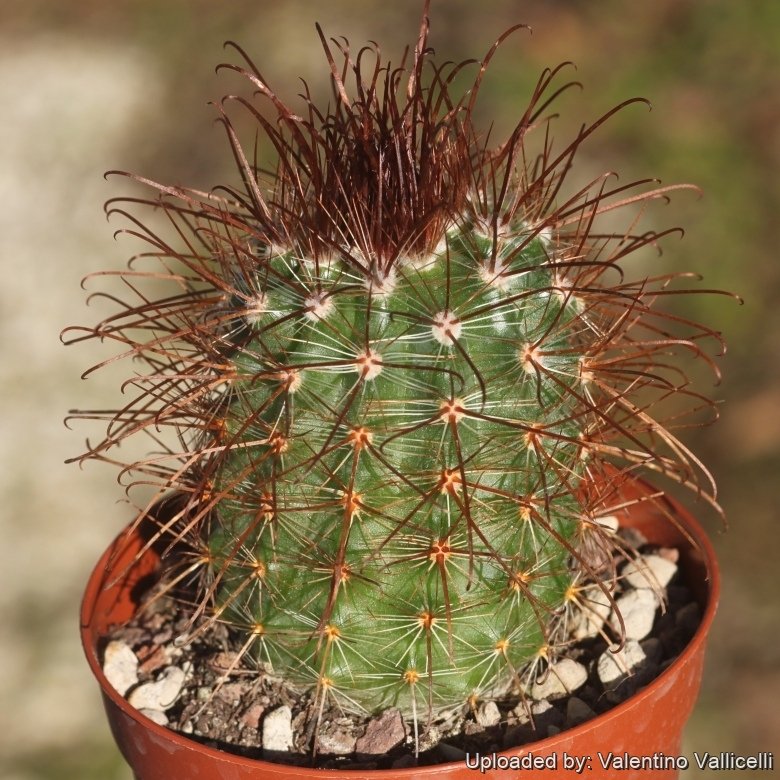
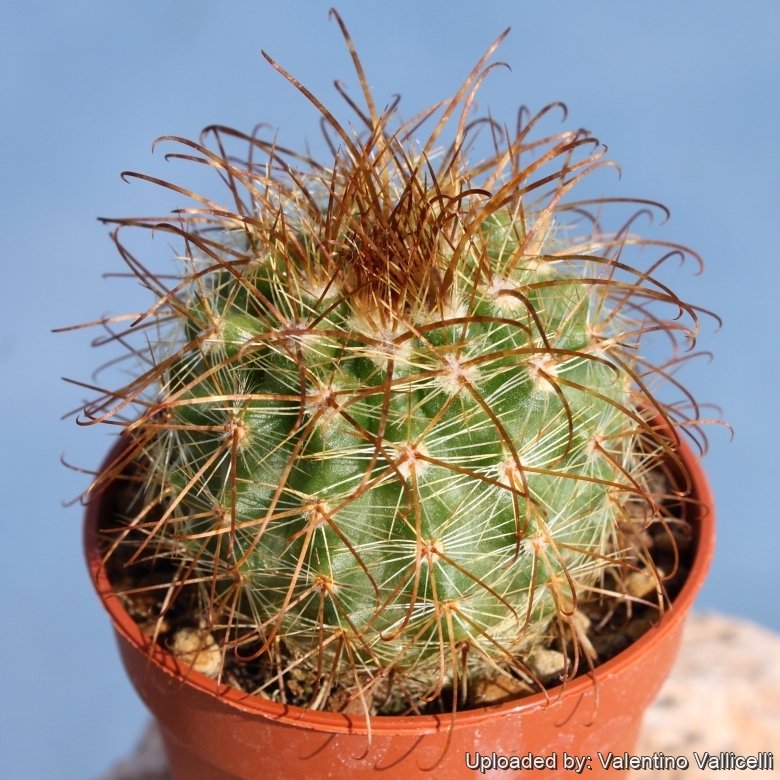
It is a shortly columnar plant with strong yellow-brown spination. It is very similar to Parodia aureicentra but with some differences in the spination.
Stem: Bright green, cylindrical-elongated, exceeding 50 cm in height and 15 cm in diameter.
Ribs: Straight or slightly spiralling, separated by deep furrows.
Tubercles: Rounded.
Areoles: Circular 7 mm in diameter, 12 to 13 mm apart, with white wool, but this is missing in the bottom of the plant.
Radial spines: Up to 15, fine, slightly bent, white to pale-yellowish.
Central spines: Erect, more or less curved and hooked, honey yellow, amber to reddish brown, about 25-30 mm long.
Flower: About 32 mm long and 35 mm in diameter. Outer tepals with a yellow-orange mid stripe. Inner tepals yellow-orange. (but varying from pure yellow to red)
Flower tube Bright orange with pink or yellow scales, richly covered with white wool and brownish bristles.
Stamens: Filaments red with pale yellow anthers.
Pistil: Pale yellowish-green with 11 to12 bright yellow stigma lobes.
Fruit: About 25 mm long and 9 mm wide, very woolly, at first yellowish, pink when ripe.
Seeds 0.6 x 0.5 mm, testa black and slightly warty, strophiola (corky outgrowth protecting the hilum), creamy white.
Origin and Habitat
Argentina, Salta, known localities: La Angostura (T.L.), Rumibola, Abra de Molinos, San Martin, Angastaco.
Habitat: Grows on slate cliffs consisting of rock of striking bright colours.
Cultivation and Propagation
It is a summer-growing species that offers no cultivation difficulty. Water regularly in summer (but do not over-water). It needs good drainage and very porous soil. Keep rather dry in winter. Feed with a high potassium fertilizer in summer. It is quite frost resistant if kept dry. It needs a bright exposure.
Propagation: Direct sow after last frost.