Publication: Bradleya 5: 93 (1987)
Description
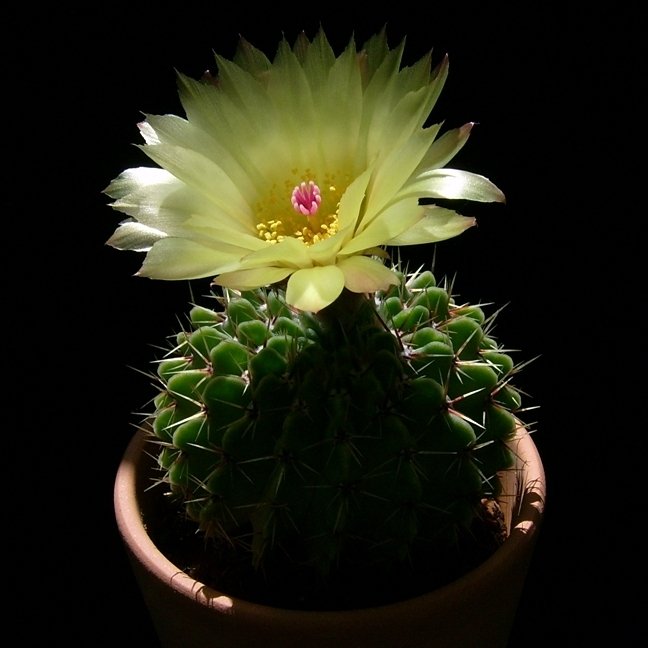
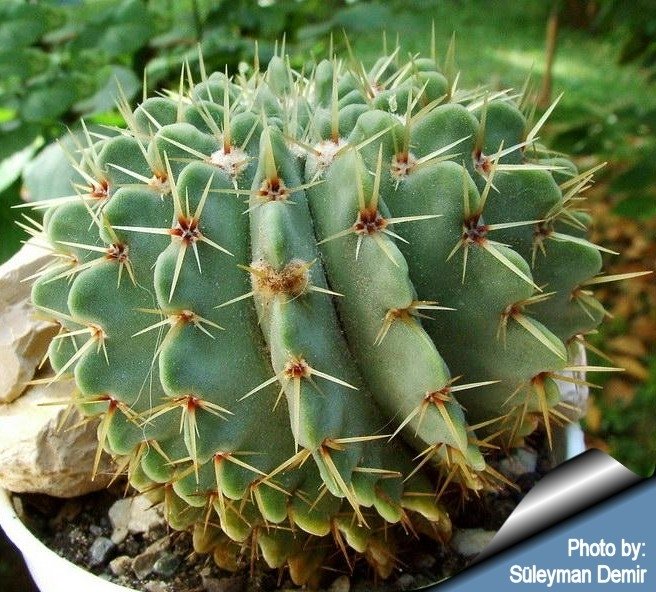
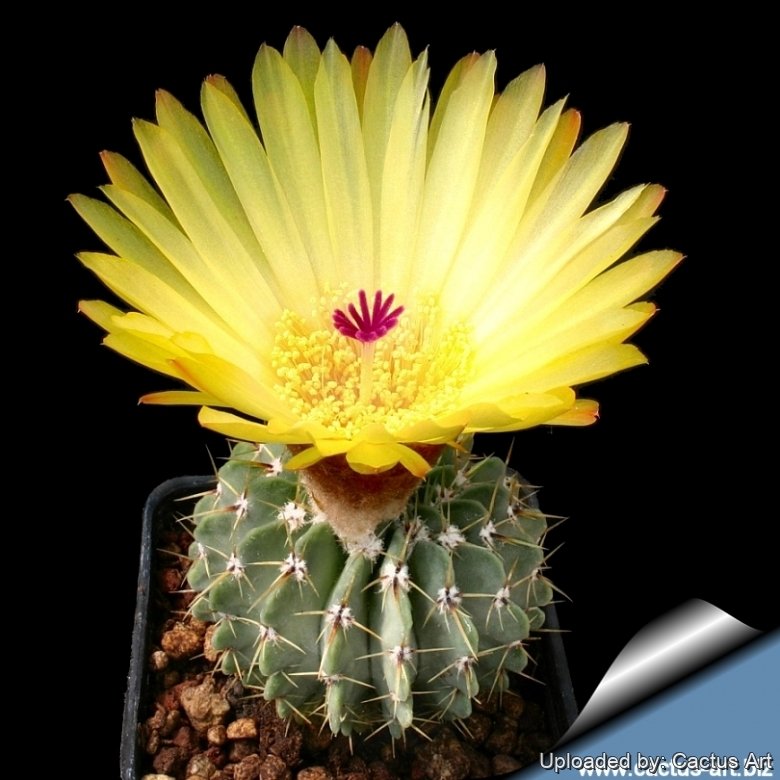
Parodia buiningii (Buxbaum) N.P. Taylor is a solitary, flattened cactus only a few cm in height with long, straw-yellow spines. It bears large and showy yellow flowers, and produces hairy fruit and black seeds.
Stem: Simple, depressed-spherical to spherical, or oblate, , not woolly apically, grass green, pale grey, bluish to bright emerald green, up to 8 cm tall and 12 cm in diameter.
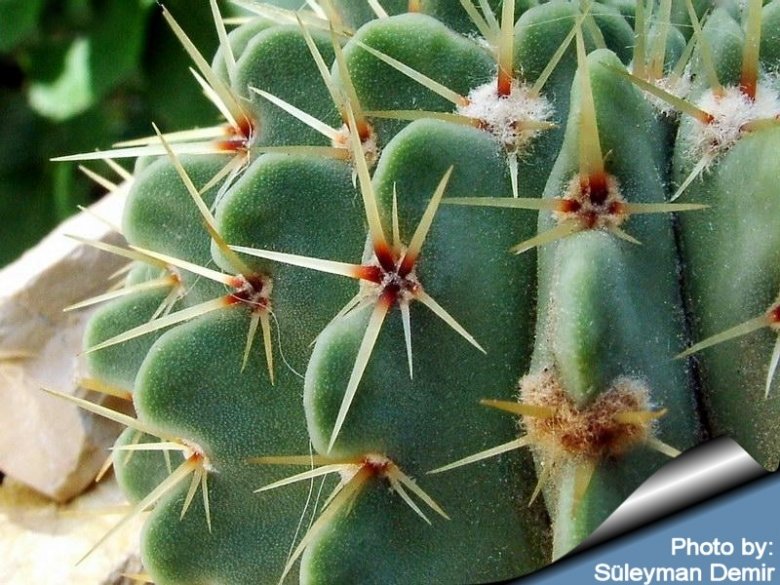
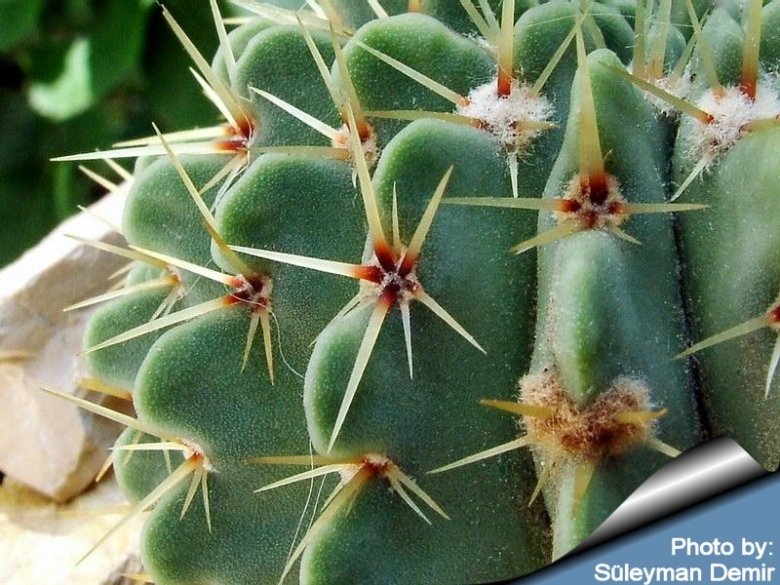
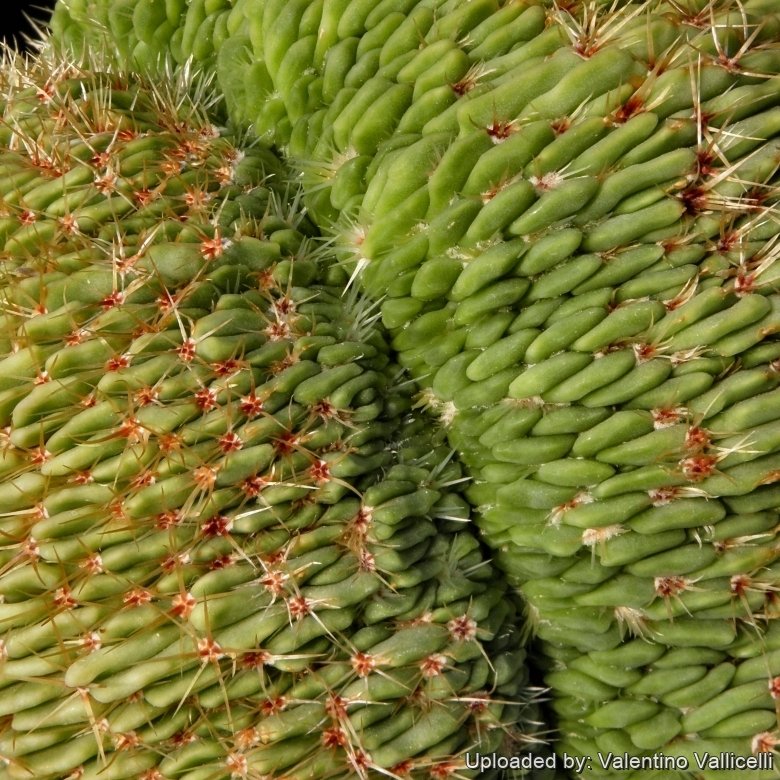
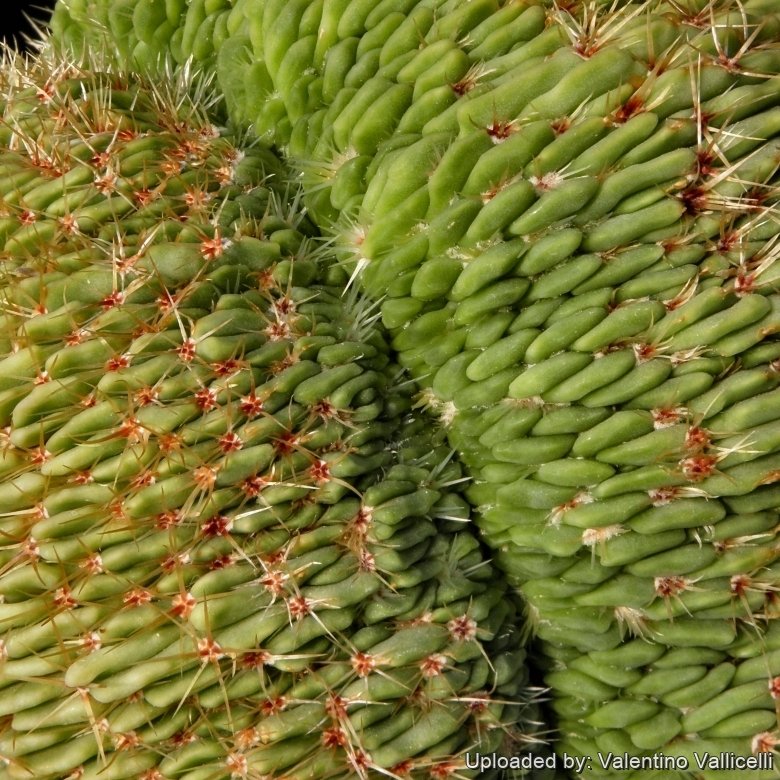
Ribs: About 16, pronounced, straight and sharp, up to 2 centimetres in height, with narrow blade-like tubercles between the areoles.
Areoles: Sunken under the tubercles, initially woolly, losing the wool as they mature.
Central spines: (3-)4, forming a cross, straight, stiff, yellowish or straw-coloured, dark brown at base 2-3 cm long.
Radial spines: 2-3, very similar to the centrals but smaller.
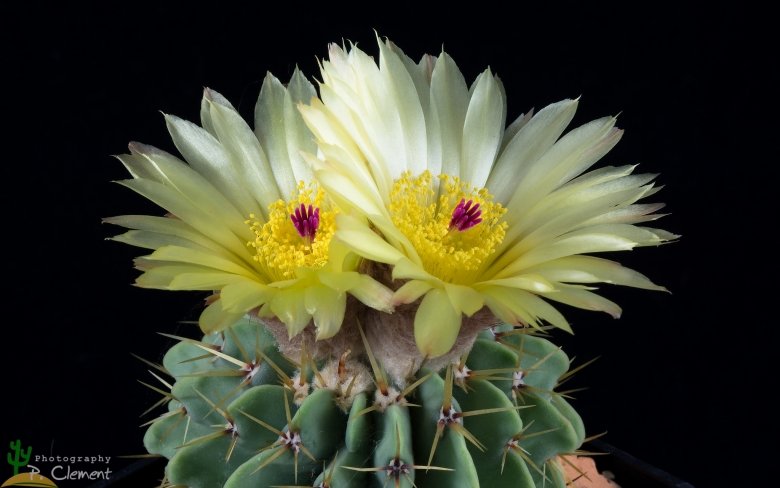
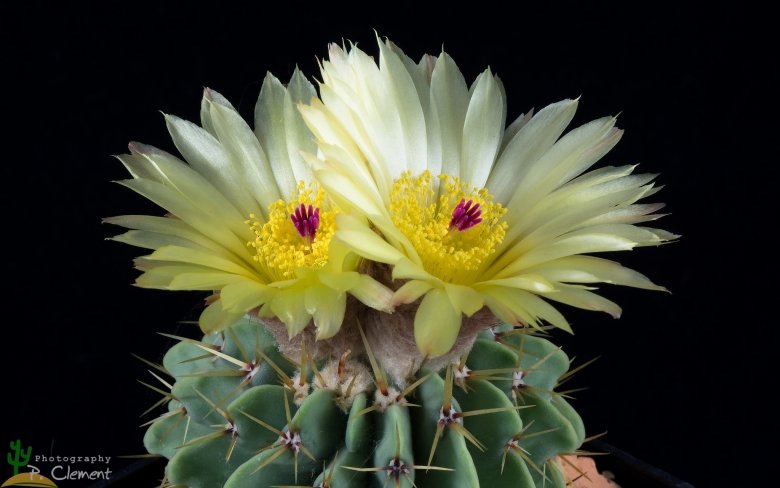
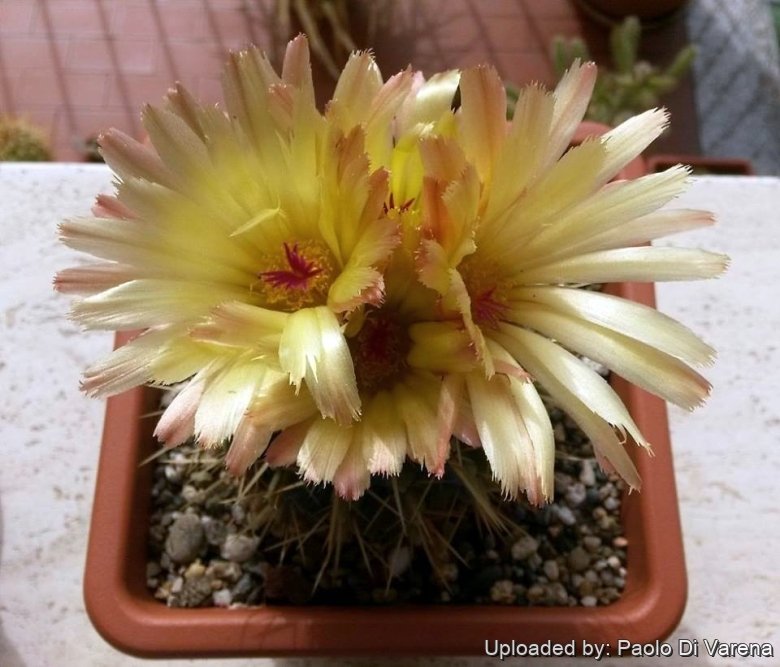
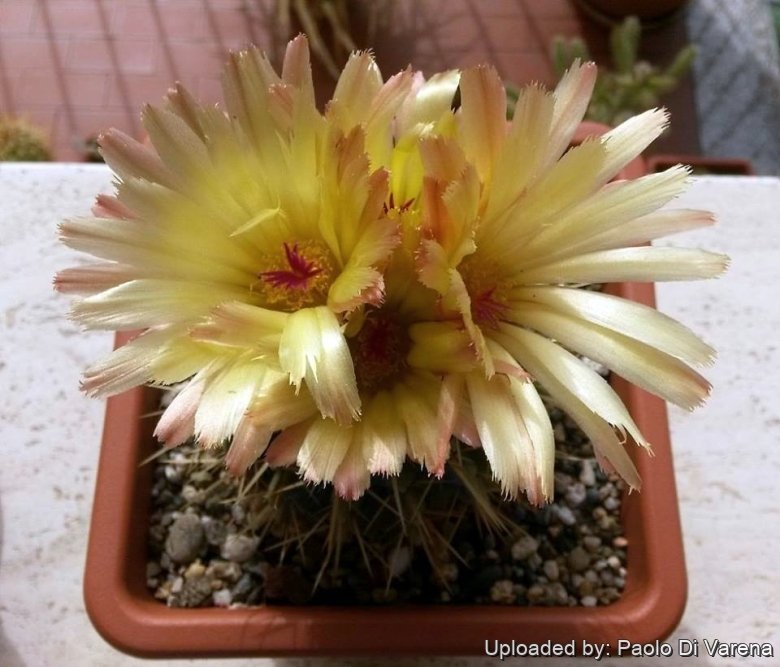
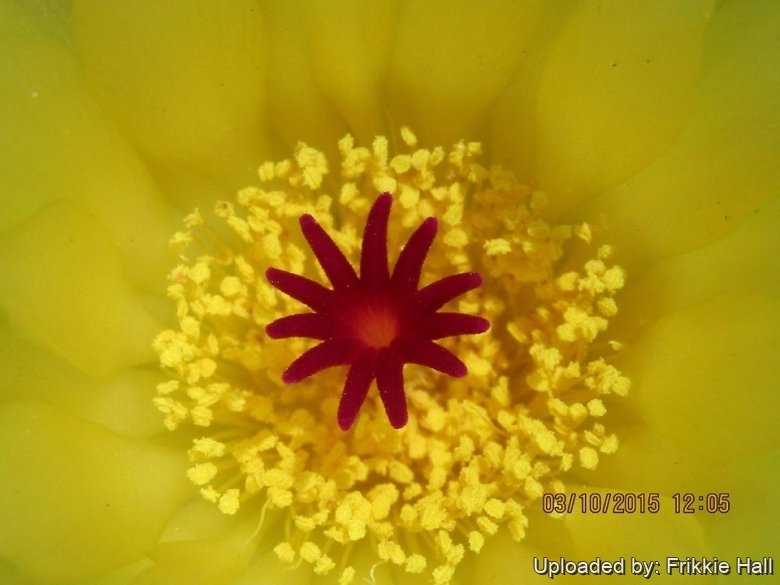
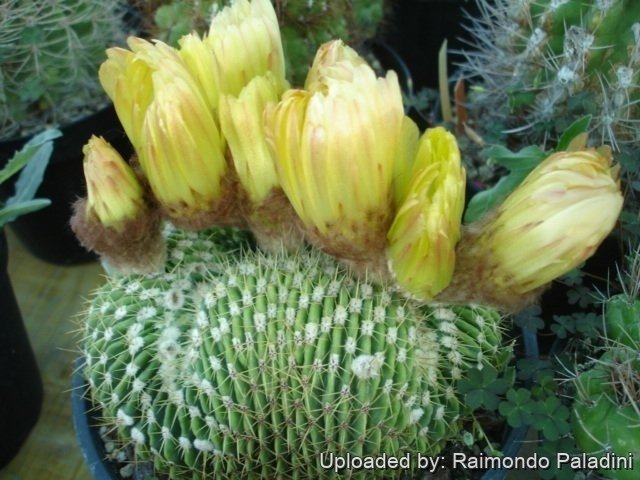
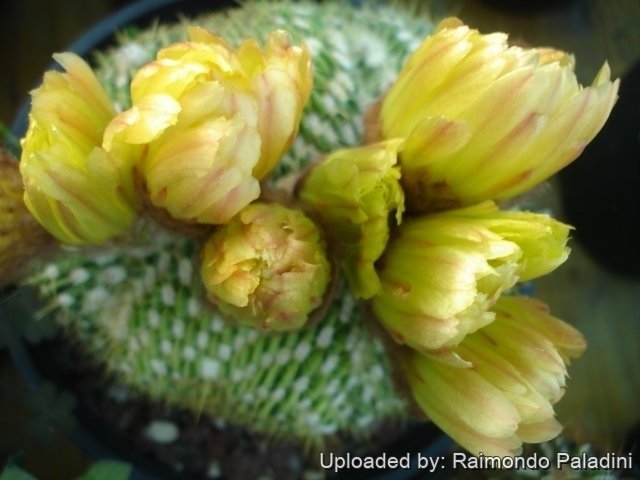
Flowers: 7 cm long, 8 cm in diameter, shiny, pale yellow with a distinct red-violet stigma. Pericarpel and tube with thick dark to light brown wool.
Blooming season: Summer.
Fruit: Elongating at base, up to 3 cm long.
Seeds: Helmet-shaped to 1.4 mm, finely tuberculate, matt black.
History: The species was first described as Notocactus buiningii by F. Buxbaum in 1968, and was given its current name by N. P. Taylor in 1968, based on Buxbaum’s earlier description. Despite remonstrance from hobbyists (among whom Notocactus species were popular) Notocactus (and others) have now been synonymised under Parodia.
Origin and Habitat
Southern Brazil, northern Uruguay
Cultivation and Propagation
This is an easy plant to cultivate. It likes to be kept cool, and needs only a short rest in winter. It can can tolerate light frost. Grow in full sun or light shade, but it doesn’t like full, hot blazing sun in the central summer months. Water occasionally in winter so the roots do not dry out completely, and water regularly in summer. Some growers suggest to use exclusively rain water. But be careful, as it will rot easily if the substrate is wet and cold. It tends to lose its roots in winter. The root system of this plant is comparatively small, and it is best to grow it in a shallow pot using a neutral to slightly acidic compost, with plenty of extra grit. Give an occasional tonic of sequestrated iron.
Reproduction: Usually by seeds, as it seldom produces offsets.
Bibliography
Major references and further lectures
-
Hunt, D., Taylor, N. and Charles, “The New Cactus Lexicon”} dh Books, Milborne Port, UK. 2006
-
Larocca, J., Machado, M. & Duarte, W. 2013. {{Parodia buiningii. The IUCN Red List of Threatened Species 2013: e.T152944A698169. http://dx.doi.org/10.2305/IUCN.UK.2013-1.RLTS.T152944A698169.en. Downloaded on 06 February 2016.
-
Edward Anderson “The Cactus family” Timber Press, Incorporated, 2001
-
James Cullen, Sabina G. Knees, H. Suzanne Cubey “The European Garden Flora Flowering Plants: A Manual for the Identification of Plants Cultivated in Europe, Both Out-of-Doors and Under Glass” Cambridge University Press, 11/Aug/2011
-
Wikipedia contributors. “Parodia buiningii.” Wikipedia, The Free Encyclopedia. Wikipedia, The Free Encyclopedia, 26 May. 2014. Web. 6 Feb. 2016.
-
Hirao. “Colour Encyclopaedia of Cacti”, f. 449, 1979
-
Hecht. “BLV Handbuch der Kakteen”. 336, 1982
-
Eggli, U.; Nyffeler, R. “Proposal to Conserve the Name Parodia against Frailea (Cactaceae)”. Taxon 47 (2): 475–6. 1998
-
Eggli, U.; Nyffeler, R. “Parodia allosiphon (Marchesi) N. P. Taylor (Cactaceae - Cactoideae) - a cladistically ‘basal’ species with a restricted distribution range. (Notes towards a checklist of Cactaceae of Uruguay”. Bradleya 25: 37-44. 2007
From llifle page Notocactus buiningii f. cristata
Description
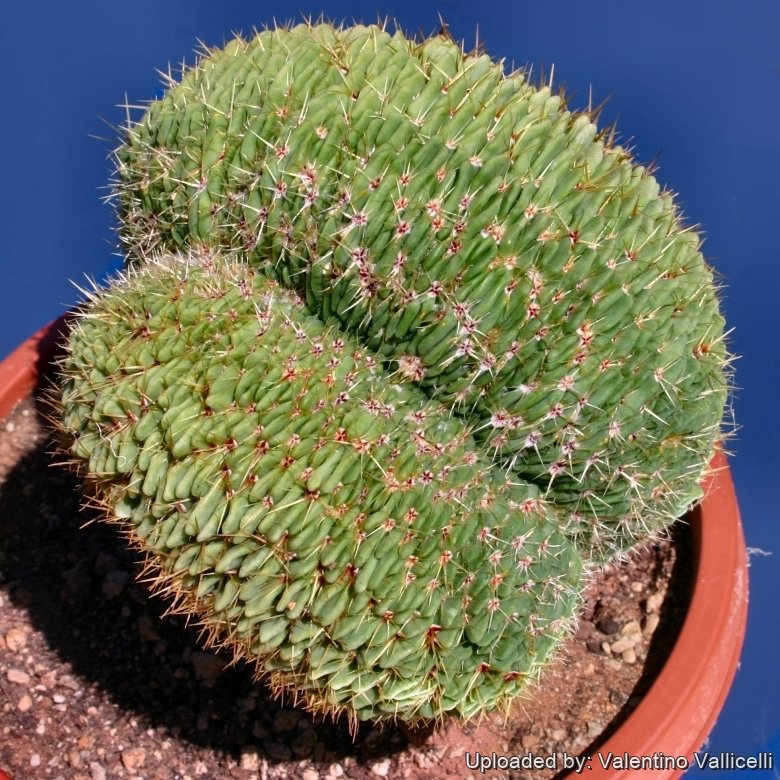
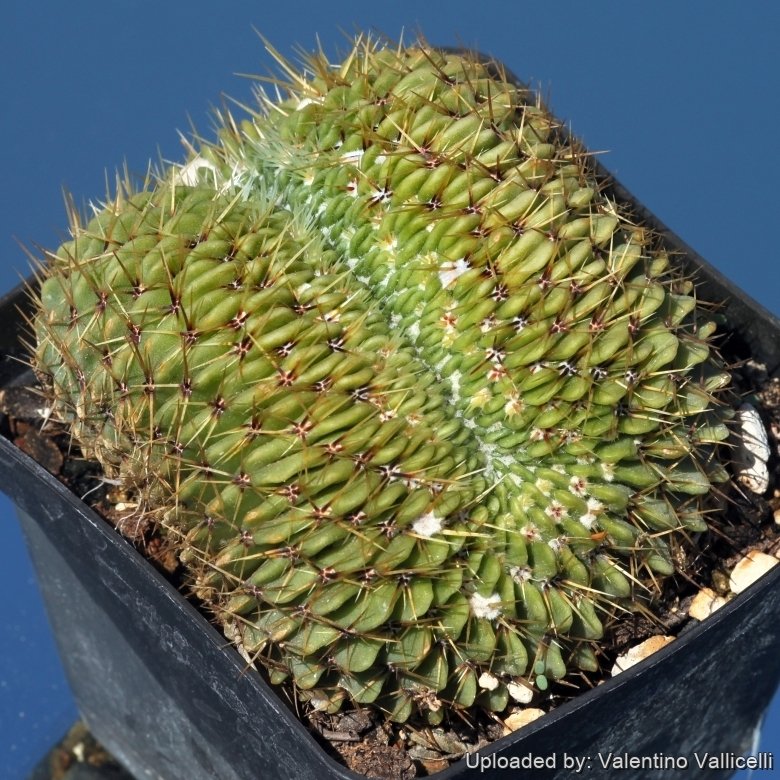
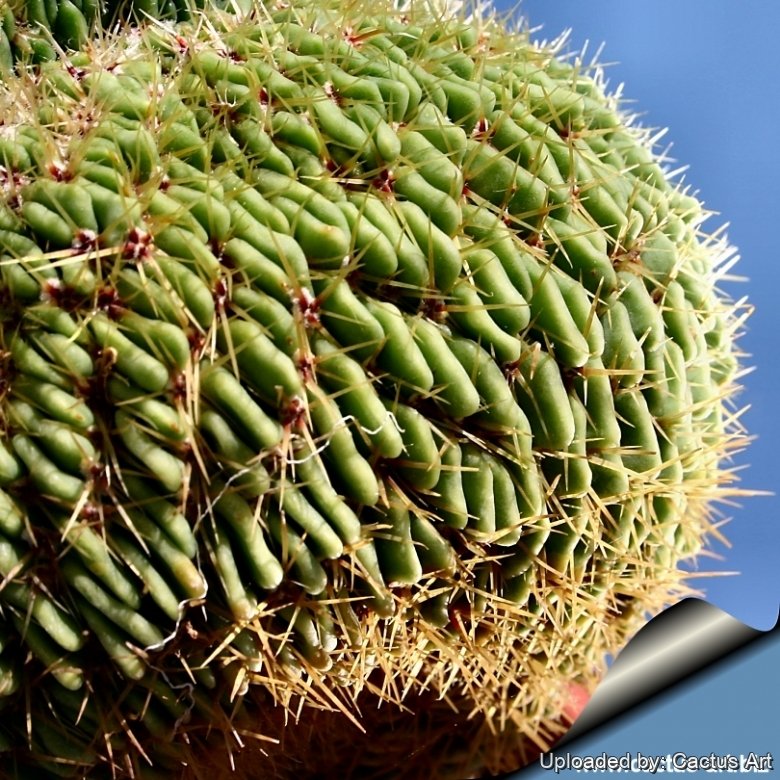
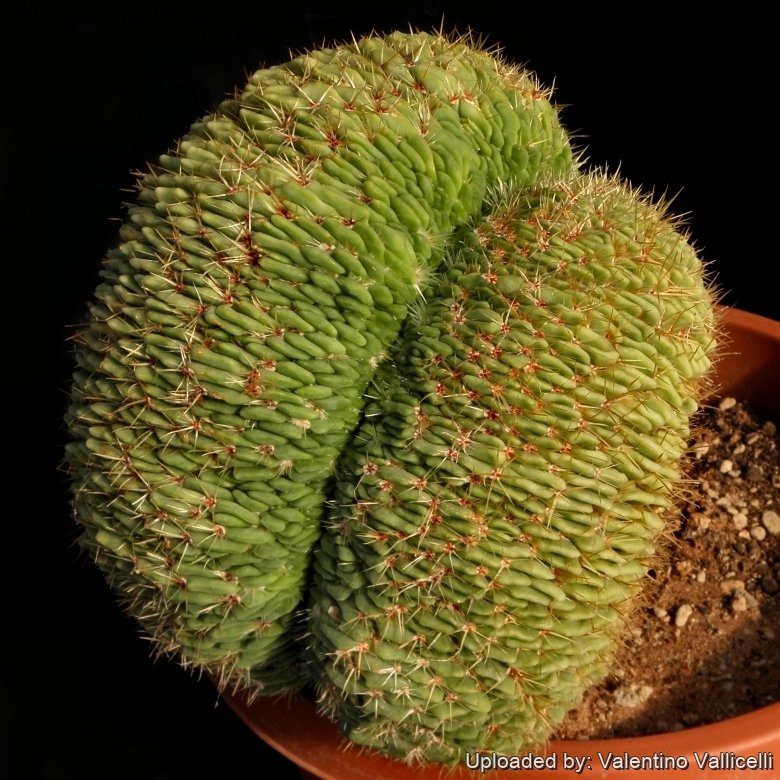
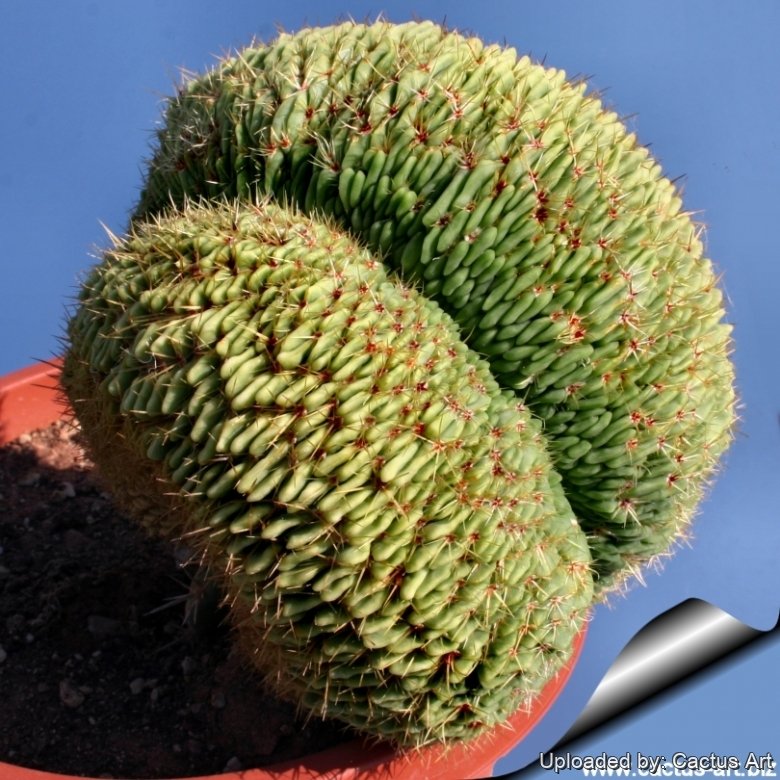
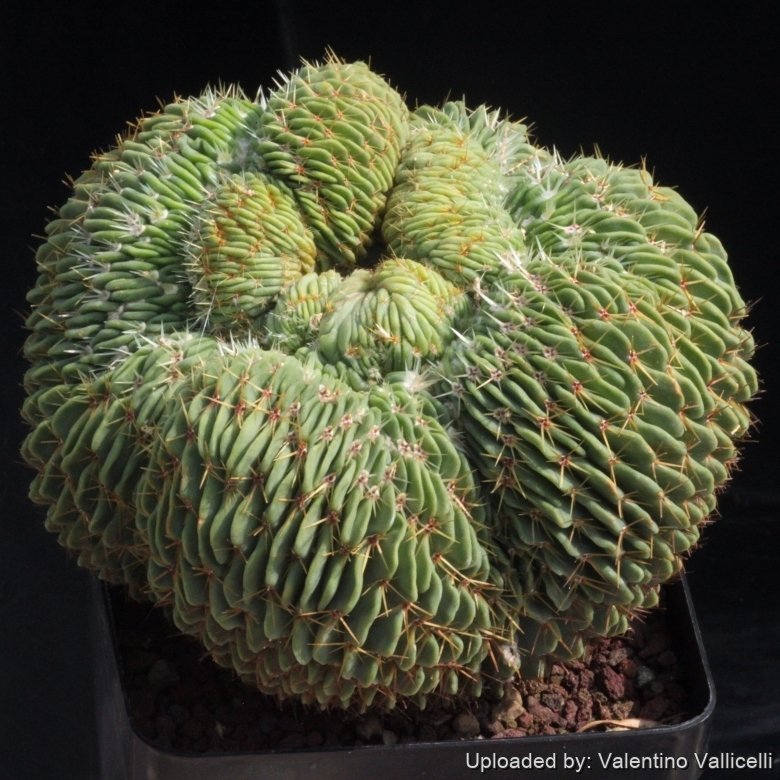
The typical Parodia buiningii f. cristata (Notocactus buiningii f. cristata) is a solitary, flattened cactus with bluish to bright emerald green stems, up to 8 cm tall and 12 cm in diameter. It has pronounced, and sharp ribs and short, straw-coloured spines. The flowers are very large and showy, shiny, pale yellow with a distinct red-violet stigma.
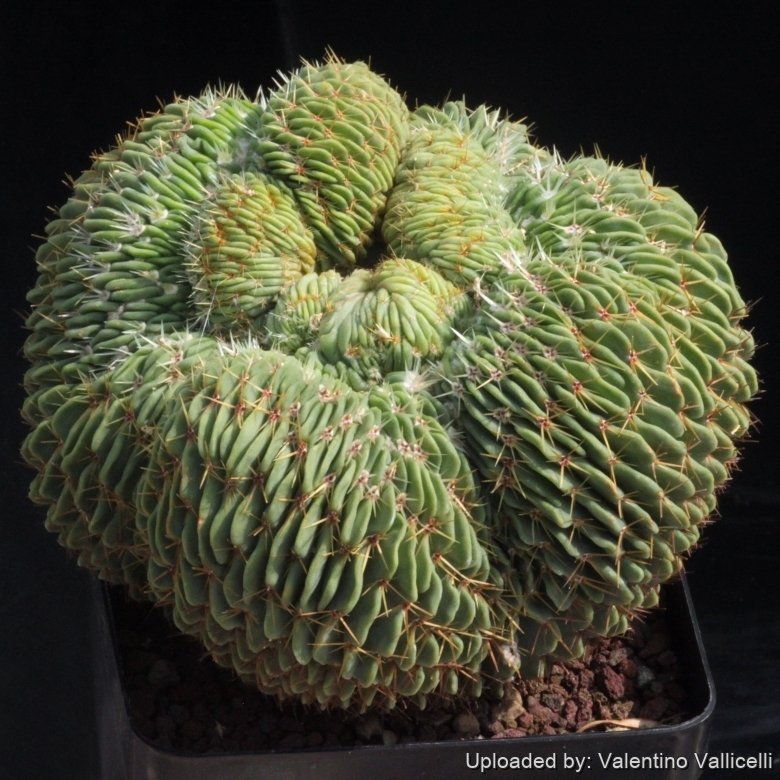
Crested form: The crested form is cultivated for its fan shaped bluish stem with thin sharp tubercled ribs. Flowers are produced on the the apex of crested stems too. Crested specimens are often grafted on stronger species, called the stock, that can be any number of different columnar cactus.
Origin and Habitat
Garden origin: The natural species comes from Southern Brazil, northern Uruguay.
Source: Notocactus buiningii f. cristata, LLIFLE - Encyclopedia of living forms, CC-BY-SA, retrieved 2026-10-25.
Cultivars and forms (1)
Forms (1)
Gallery