Publication: Revista Agric. (Cochabamba) 7(6): 24 (fig.). 1951
Description
Parodia mairanana is considered currently a synonym Parodia comarapana and are assessed together. However, some authors tend to separate them as two different species.
Origin and Habitat
Parodia comarapana (assessed together Parodia mairanana) is strictly endemic to a small area in Santa Cruz and Florida in the north of Comarapa, Bolivia. It has a relatively small extent of occurrence (Extent of occourance about 1,600 km2), however the it is very abundant in its habitat and there are more than 10 locations, however in the eastern part of the distribution (what is suspected to be P. comarapana) it grows in small populations with few individuals.
Altitude range: 1,500-2,300 m above sea level.
Habitat and Ecology: This species grows in humid rocky outcrops in grassland and inter-Andean valleys (Parodia mairanana). The same area support endemic succulents and xerophyte plants such as Sulcorebutia krahnii, Samaipaticereus corroanus and the orchid Epidendrum ibaguense. The major threats is habitat destruction through subsistence farming and agriculture, it grows on rocks which confers it some protection from land clearance for cultivation.
From llifle page Bolivicactus mairananus
Description
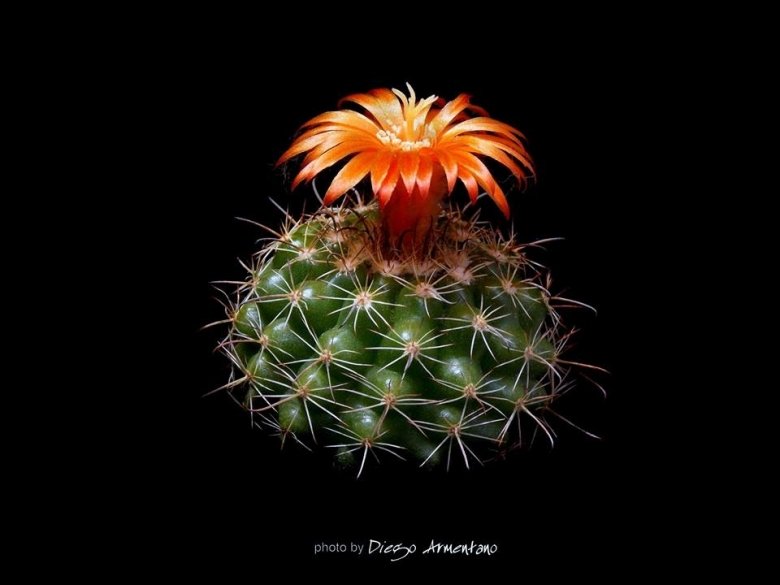
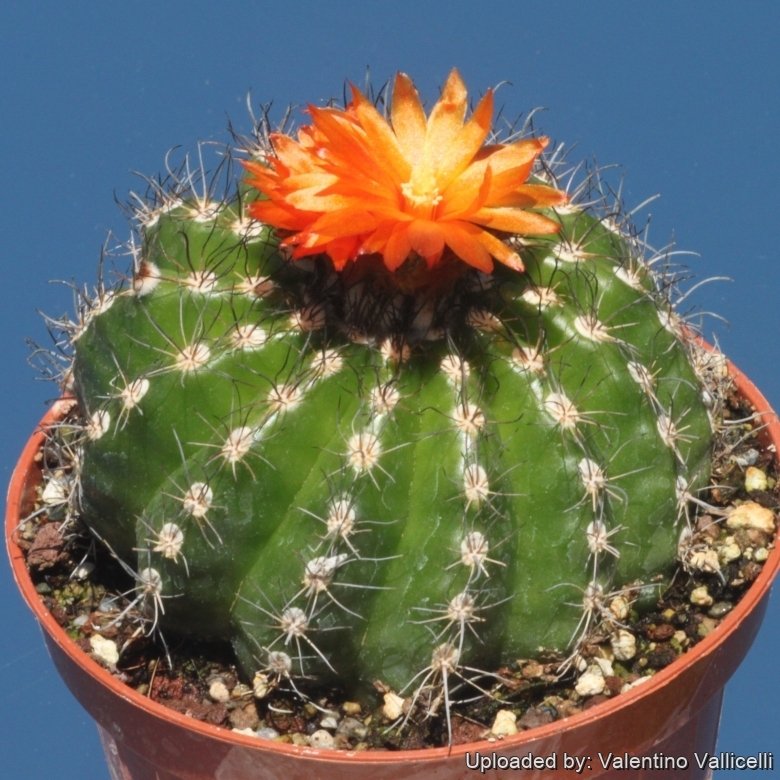
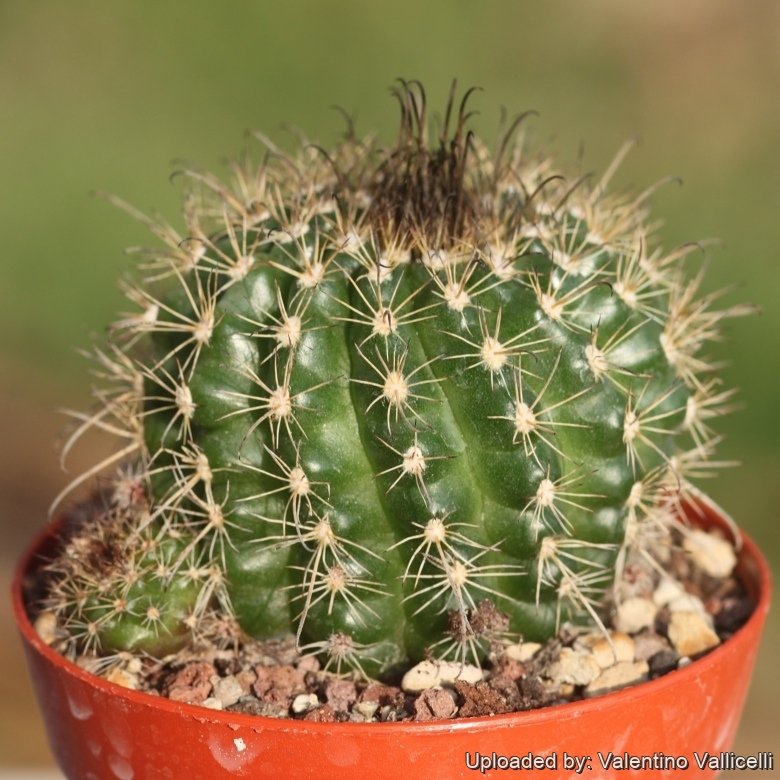
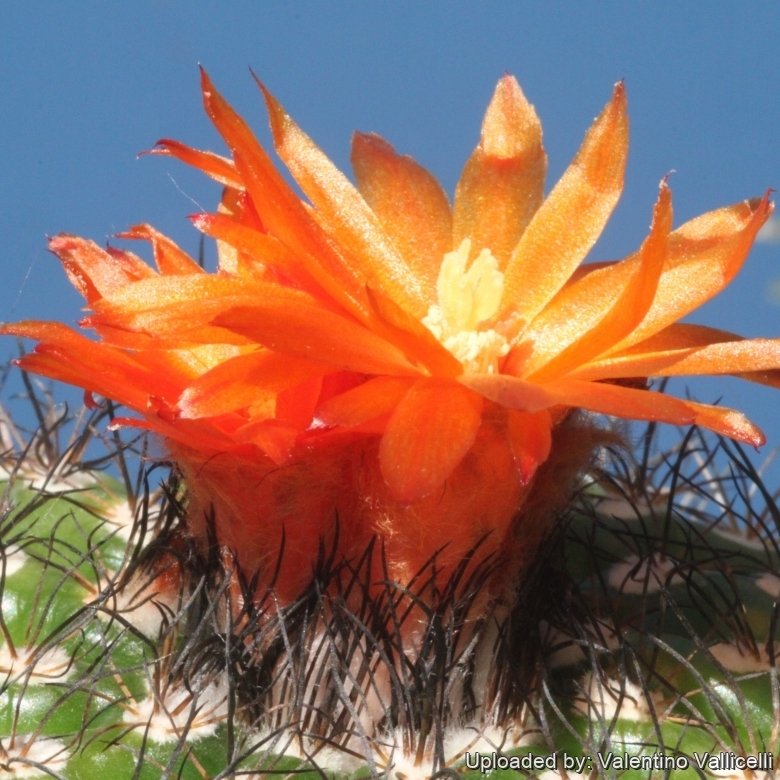
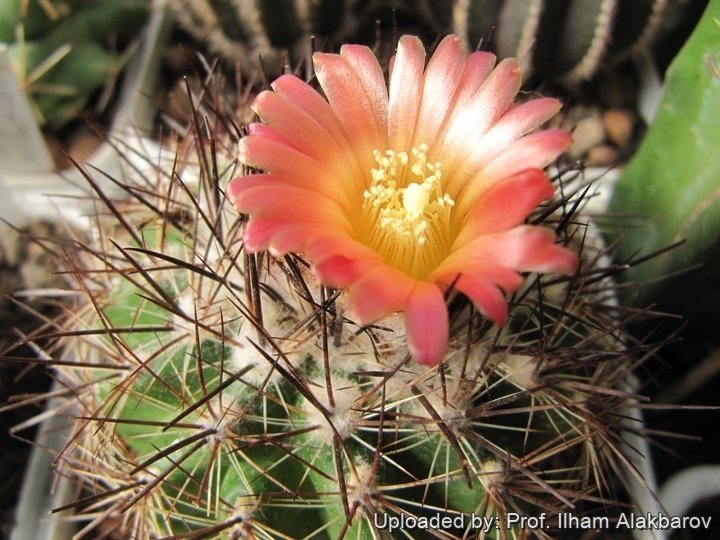
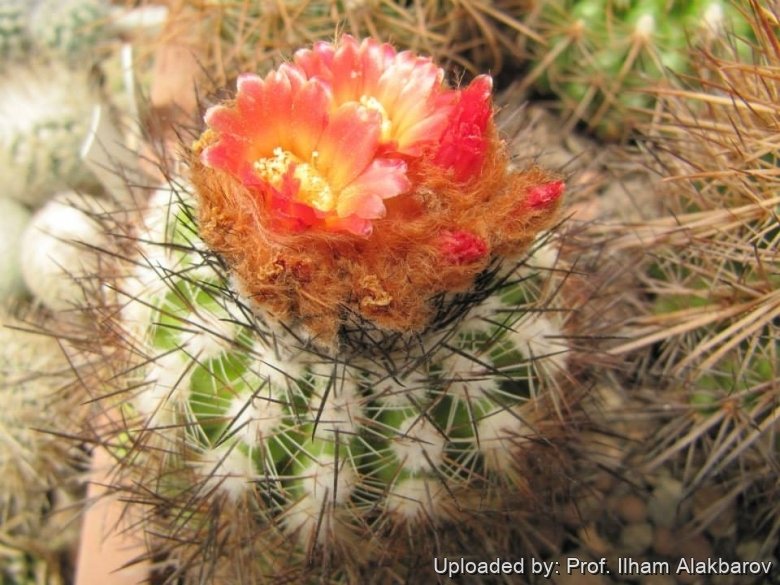
Parodia mairanana is a small free-flowering cactus, with many apical flowers mostly orange tinged with red or rusty-red, but plants with different flowers colours are often found in cultivation.
Remarks: Parodia mairanana is considered currently a synonym of Parodia comarapana and is assessed together. However some authors suggest to separate them as two different species. Parodia comarapana, as most Parodias, is quite variable and has received numerous names of controversial botanical value: Parodia mairanana is one of them.
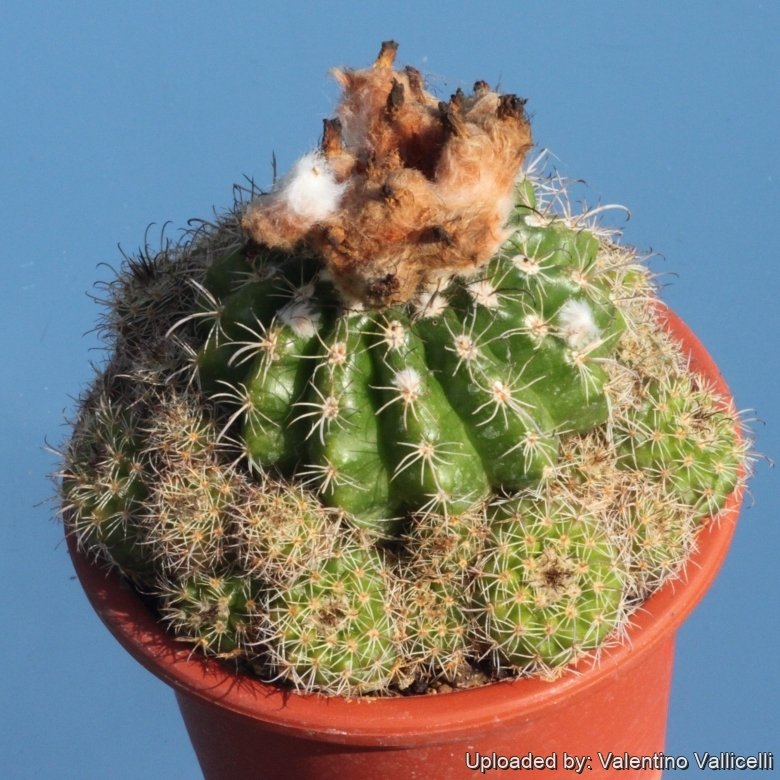
Habit: It is a small usually solitary or slowly offsetting around its base. In cultivation it is often found a very free branching form that readily fulfils a large bowl with dozen of heads in a few years.
Stem: Small, greyish-green to dull green, attaining about 8 cm in diameter and 4,5 cm in height.
Ribs: About 15 -16 (or more), forming small tubercles.
Areoles: Young areoles are relatively large, and filled with abundant white wool. Later they are naked.
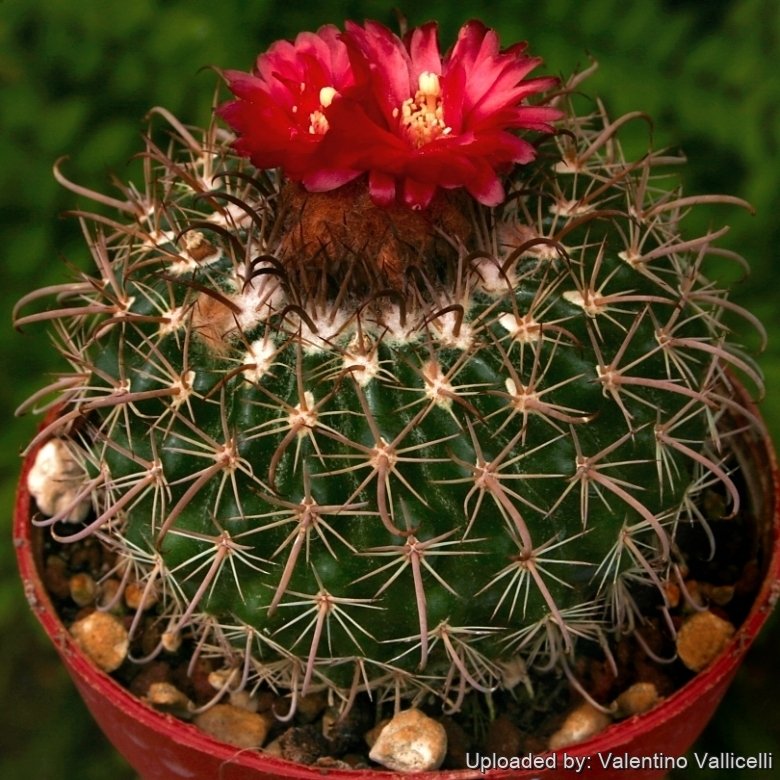
Radial spines: 9-15 or so, thin, whitish grey or yellow with a brownish tip, more or less curved (which is a useful recognition factor)
Central spines: 3 or 4, very similar to the radials. One of the centrals appears longer than all others, and and may occasionally be more or less hooked.
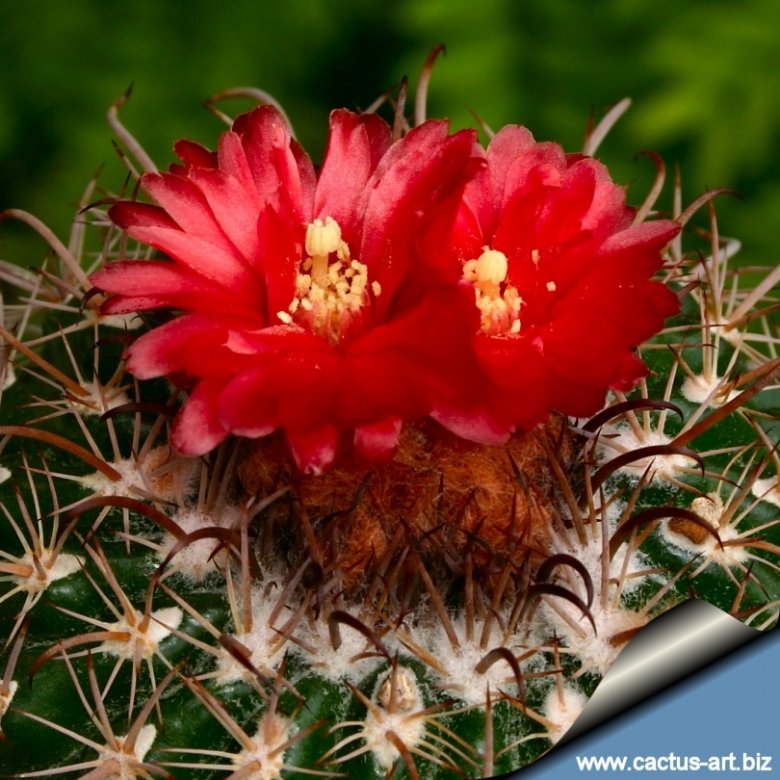
Flowers: Small, funnel-shaped, apical, mostly orange tinged with red or rusty-red (but ranging in color from yellow through pink to scarlet) 2-3.5 cm wide. Dried flowers remain for a long time on the plant body after blooming.
Blooming season: Spring to summer, but with favorable conditions this one blooms almost all year, just taking “catnaps” in-between.
Fruit: Red or green, with white hairs.
Origin and Habitat
Bolivia-Santa Cruz, Comarapa, department of Mairanana (extent of occurrence =1,600 km2).
Altitude: About 1500-2300 m over sea level.
Type locality: Above Agua Clara in the neighbourhood of Mairana.
Habitat and Ecology: This species grows in humid rocky outcrops in grassland and inter-Andean valleys. The major threats is habitat destruction through subsistence farming and agriculture. Parodia mairanana grows mostly in dense populations with many individuals.
Cultivation and Propagation
Water these plants regularly, and fertilize with a low nitrogen fertilizer every 6 to 8 weeks, from mid-spring to late summer. This plant should remain rather dry at other times (especially in winter), except for a quick, periodic misting on warmer days in late winter. If it is kept absolutely dry for a long period, it tends to lose its roots in winter. It can tolerate light frost (- 4C°), but rots easily if wet and cold.
If the local climate is warm enough to grow this plant outside, be sure that soil is well drained and sun if full, but with protection from strong midday rays.
Propagation: By Seeds that are very fine. Patience is required when growing various Parodia species from their small, slowly germinating seeds, some of which take as many as two years to germinate.
Bibliography
Major references and further lectures
-
Edward Anderson “The Cactus family” Timber Press, Incorporated, 2001
-
James Cullen, Sabina G. Knees, H. Suzanne Cubey “The European Garden Flora Flowering Plants: A Manual for the Identification of Plants Cultivated in Europe, Both Out-of-Doors and Under Glass” Cambridge University Press, 11/Aug/2011
-
David R Hunt; Nigel P Taylor; Graham Charles; International Cactaceae Systematics Group. “The New Cactus Lexicon” dh books, 2006
-
Lowry, M. 2013. Parodia comarapana. In: IUCN 2013. “IUCN Red List of Threatened Species.” Version 2013.2. <www.iucnredlist.org>. Downloaded on 01 January 2014
Source: Bolivicactus mairananus, LLIFLE - Encyclopedia of living forms, CC-BY-SA, retrieved 2026-10-25.
From llifle page Parodia mairanana var. atra
Description
Parodia mairanana var. atra is a small free-flowering cactus that also has orange, brick-red or rusty-red blossom, but differs from Parodia mairanana in having shiny dark green body with very dark spines, almost black especially in young areoles, later lighter, the central one more or less bent or hooked. The pericarpel (flower’s tube) is covered in dark-red hairs.
Remarks: Parodia mairanana is considered currently a synonym of Parodia comarapana and are normally assessed together. However some authors suggest to separate them as two different species. Parodia comarapana, as most Parodias, is very variable and many morphological forms has received varietal names of controversial botanical value: Parodia mairanana var. atra is one of them.
Habit: It is a small usually solitary or slowly offsetting around its base.
Stem: Small, greyish-green to dull green, attaining about 8 cm in diameter and 4,5 cm in height.
Ribs: About 15 -16 (or more), forming small tubercles.
Areoles: Young areoles are relatively large, and filled with abundant white wool. Later they are naked.
Radial spines: 9-15 or so, thin, whitish grey or yellow with a brownish tip, more or less curved (which is a useful recognition factor)
Central spines: 3 or 4, very similar to the radials. One of the centrals appears longer than all others, and and may occasionally be more or less hooked and dark-gray, brown or almost black, in var. atra.
Flowers: Small, funnel-shaped, apical, mostly orange tinged with red or rusty-red (but ranging in color from yellow through pink to scarlet) 2-3.5 cm wide. Dried flowers remain for a long time on the plant body after blooming.
Blooming season: Spring to summer, but with favorable conditions this one blooms almost all year, just taking “catnaps” in-between.
Fruit: Red or green, with white hairs (dark red in var. atra).
Origin and Habitat
Mairana, Florida, Santa Cruz, Bolivia
Altitude range: 1200-1600(-1800) metres above sea level.
Habitat end ecology: Parodia mairanana v. atra grows together with Parodia columnaris.
Bibliography
Major references and further lectures
-
Backeberg C., “Die Cactaceae”, 3 : 1601, 1959
-
Backeberg C., “Das Kakteenlexikon”, p. 345, 1966
-
Brandt F.H., Kakt. und Orch.-Rundschau, 7 : 56, 1982
-
Buining A.F.H., Succulenta, 44 : 102-103, 1965
-
Jelínek J., Kaktusy 80, 16 : 65, 1980
-
Königs G., Kakt. und and. Sukk., 12 : 23, 1961
-
Königs G., Succulenta, 40 : 31, 1961
-
Krahn W., Internationaal tijdschrift voor succulentenliefhebbers, 2 : 50, 1968
-
Krainz H., “Die Kakteen”, 1.3.1969
-
Lau A.B., Cact. Succ. J. (US), 54 : 125, 1982
-
Verheulpen W., Cactus, Antwerpen, p. 116-118, 1981
-
Weskamp W., “Die Gattung Parodia”, p. 208-209, 1987
Source: Parodia mairanana var. atra, LLIFLE - Encyclopedia of living forms, CC-BY-SA, retrieved 2026-10-25.
Gallery