Publication: Cactaceae Consensus Init. 4: 6. 1997 [Oct 1997]
From llifle page Notocactus erubescens f. schlosseri
Description
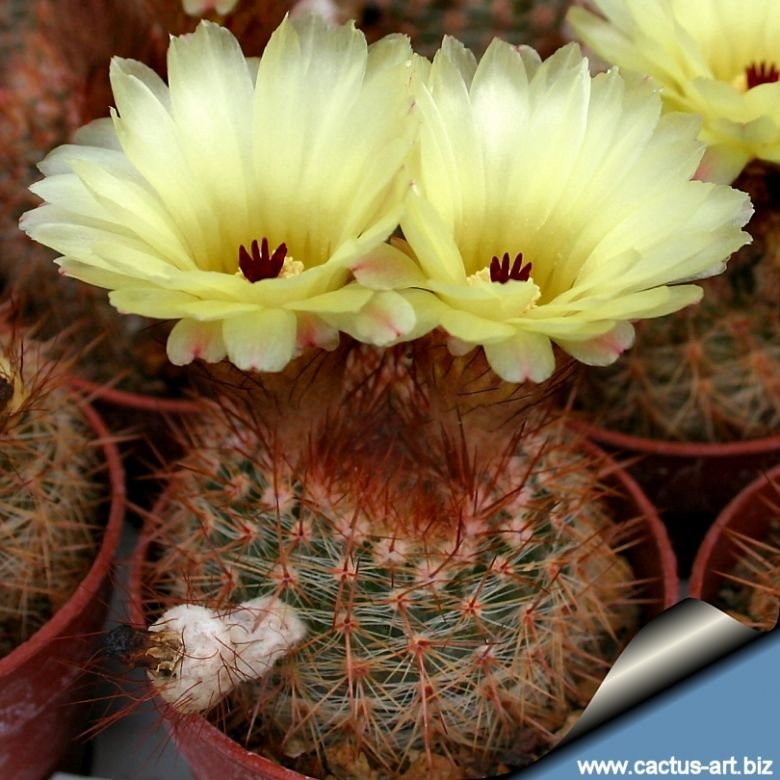
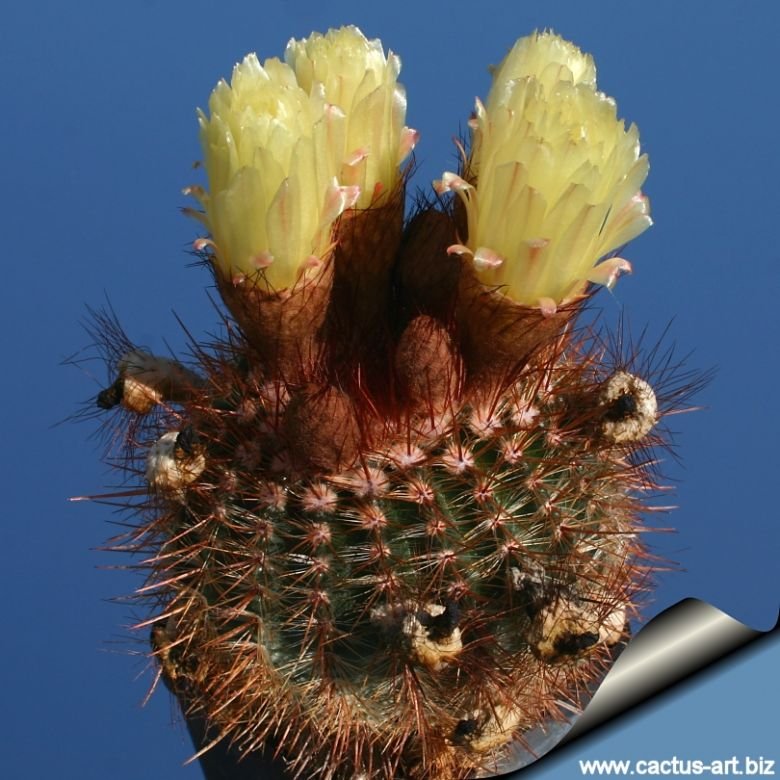
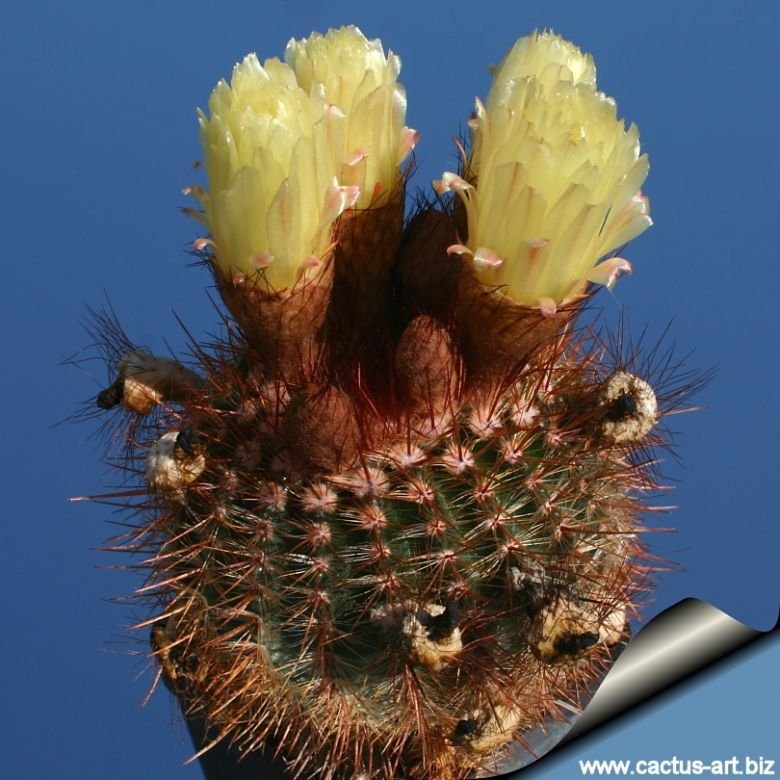
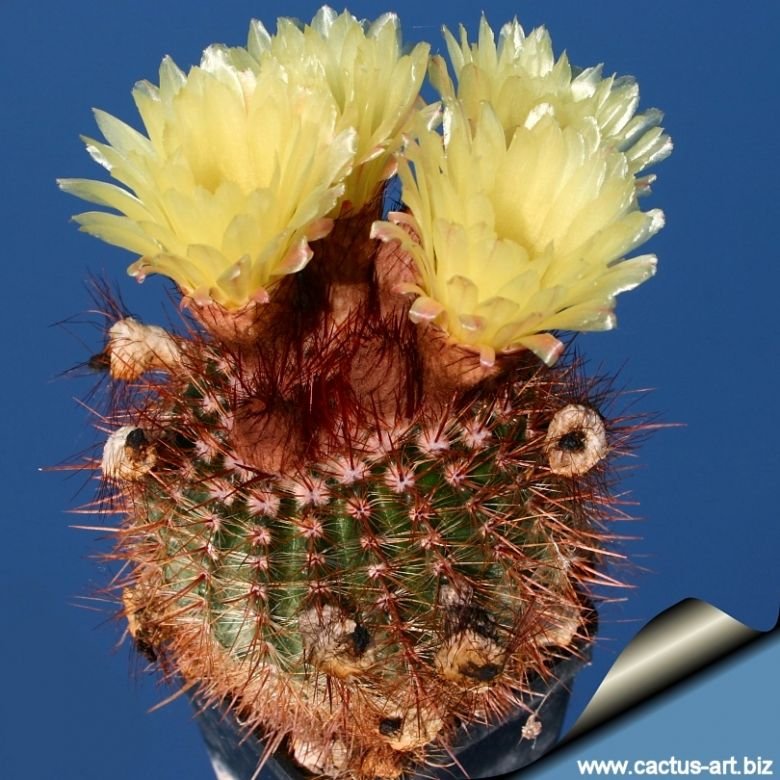
Parodia schlosseri (Vliet) N.P.Taylor, synonym Parodia erubescens (Osten) D.R.Hunt, is a usually solitary spherical to shortly cylindrical, upright cactus. It is related to Parodia mammulosa and with its very dense, reddish-spined young growth is an attractive plant, even without the shining lemon-yellow flowers with red stigma.
Derivation of specific name: This member of the Cactaceae family was given this name after the person who collected it in Uruguay, Hugo Schlosser. This plant was for many years known only by its collection number: Schlosser 51.
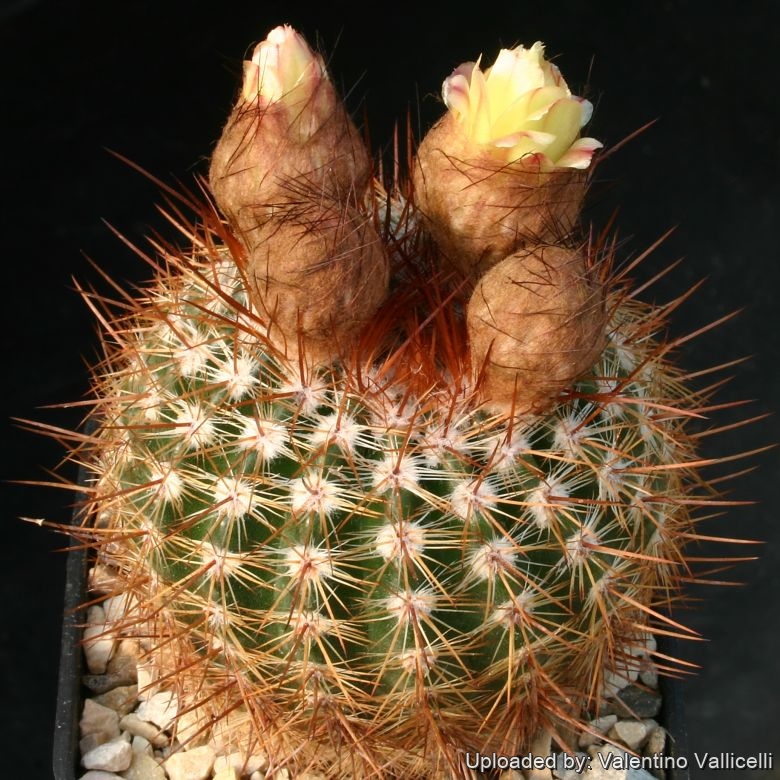
Stems: Green, solitary, club shaped to short cylindrical, up to about 20 cm high and 12 cm in diameter , with red spines and scanty white wool apically.
Ribs: 22 with chinlike protrusions between areoles.
Areoles: White, later grey.
Central spines: 4, forming a cross, short, stiff, sharp and erect; they are russet to orangish coloured with darker bases, 17-24 mm long
Radial spines: About 34, whiter with yellow bases, thinner, straight, needle-like, spreading against the body of the cactus, to 11 mm long.
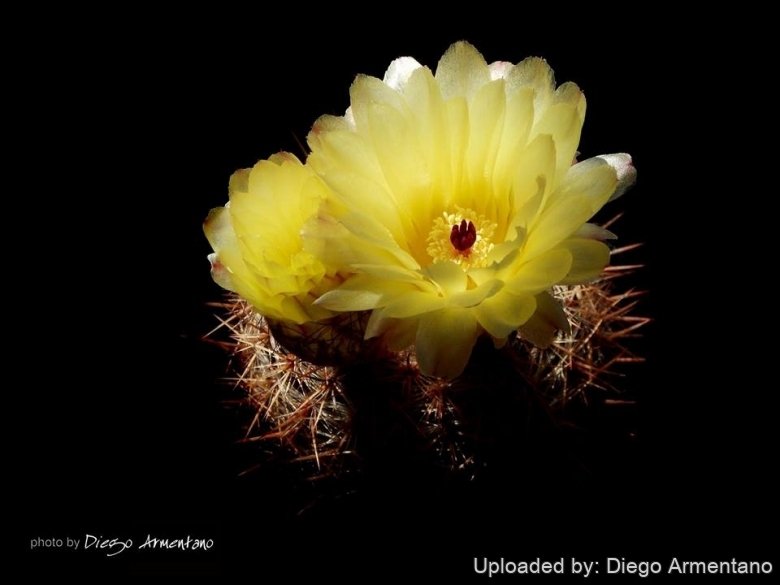
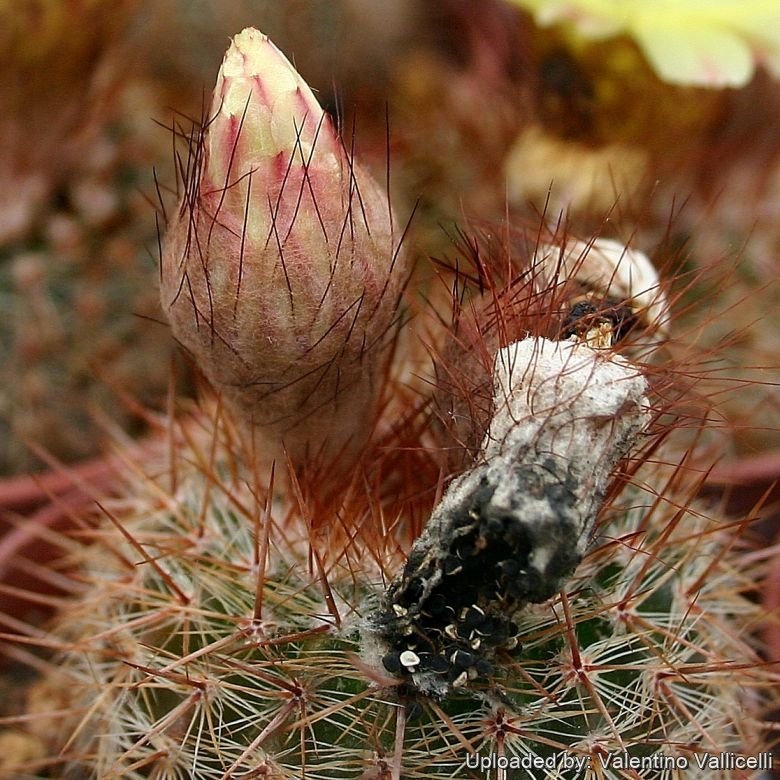
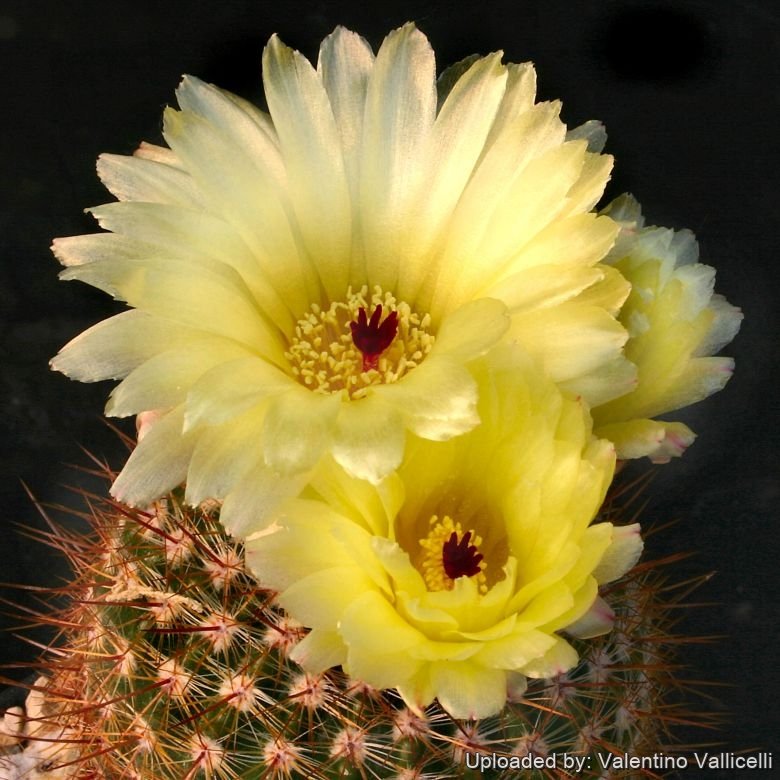
Flowers: Shiny lemon-yellow, up to 4,5 long and 5 cm in diameter. Pericarpels with green and red scales, brown wool, and dark bristles. Stigma dark red.
Blooming season: It will usually flower within 3 to 5 years in spring.
Fruits: Many seeded, with thick walls, drying and dehiscing at maturity.
Seeds: Shiny black, tuberculate.
Origin and Habitat
Native to Uruguay.
Cultivation and Propagation
This is an easy plant to cultivate. It can support quite a lot of water during the growing season. It prefers a neutral to slightly acidic mineral-based potting mix with plenty of extra grit and feed during the summer.
Watering Needs: Can support quite some water during the growing season but pot plants in winter are wet-sensitive and needs to be kept dry (rots easily if soil is wet and cold) tends to lose its roots in winter. It rots easily if soil is wet and cold. Water Best if watered with rain water. Relatively cold hardy. Usually it is recommended to over-winter this plant in a bright and warm greenhouse with at least 8-10° C a but it has proved to tolerate temperatures as low as -5° C for short periods. It is susceptible to spider mites, so it should be check once in a while for it.
Sun Exposure: Light shade to full sun, but it doesn’t like full, hot blazing sun in the central summer months.
Propagation: Seeds, cuttings or root suckers (if available). Not too difficult to raise from seed.
Notes
Notocactus schlosseri, along with N. scopa, N. scopa var. xicoi and N. sucineus, belongs to the N. scopa aggregate, and was transferred to Parodia in 1997 by David Hunt.
Bibliography
Major references and further lectures
-
Urs Eggli, Leonard E. Newton “Etymological Dictionary of Succulent Plant Names” Springer Science & Business Media, 29 June 2013
-
Keith Grantham, Paul Klaassen “The plantfinder’s guide to cacti & other succulents” Timber Press, 18 May 1999
-
Edward Anderson “The Cactus family” Timber Press, Incorporated, 2001
Source: Notocactus erubescens f. schlosseri, LLIFLE - Encyclopedia of living forms, CC-BY-SA, retrieved 2026-10-25.
Gallery