Publication: Stachelpost 7: 414- 416 (1971); Rowley in Repert. Pl. Succ., 22(RegnumVeg., 87): 11 (1973).
Description
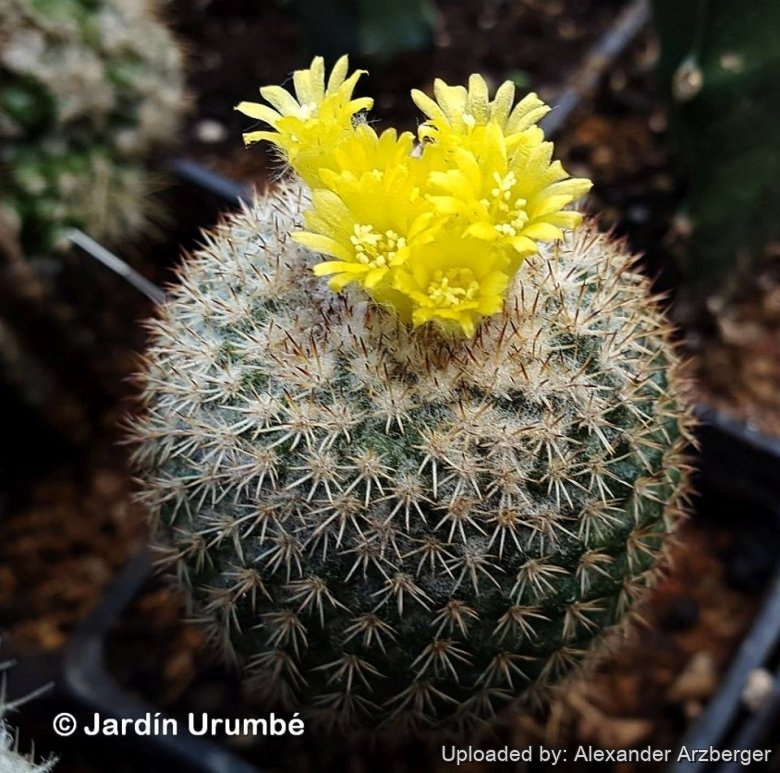
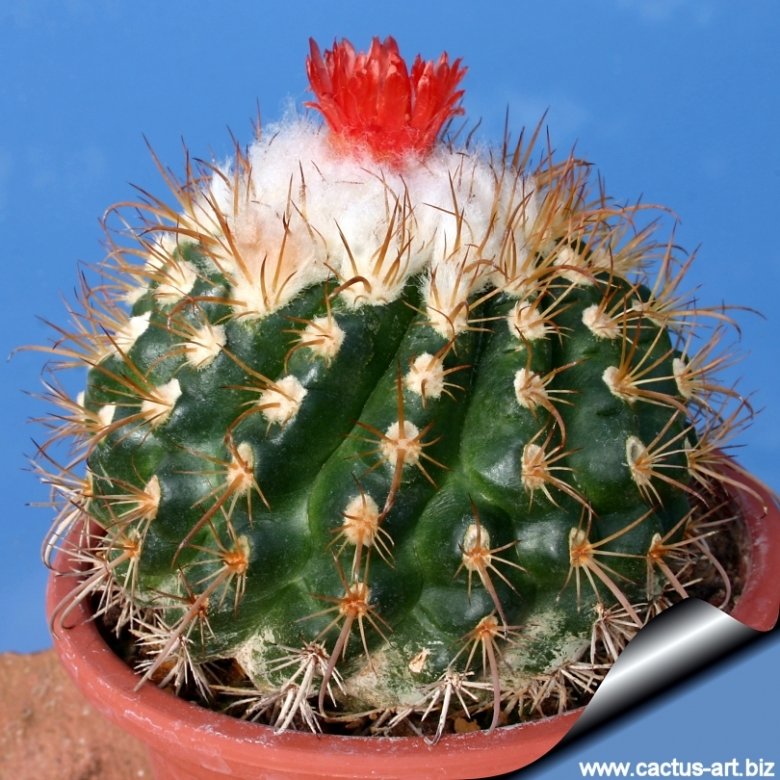
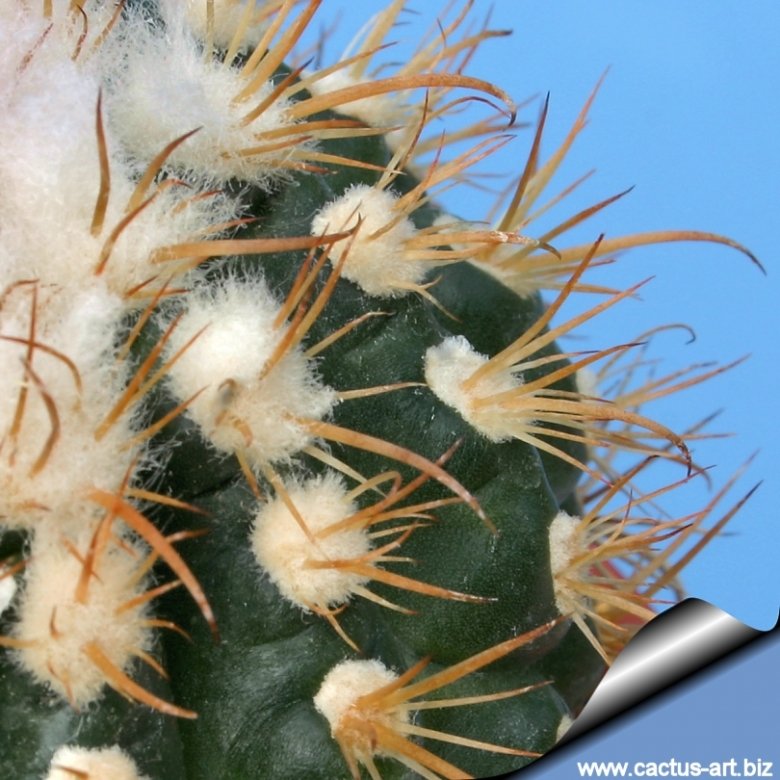
Parodia gibbulosoides Brandt (= Parodia gibbulosa Ritter ) is a low-growing cactus species forming cushions to 40 cm wide. It is similar to Parodia formosa but flowers are smaller and numerous 5 or more borne together. The stems are densely covered by short clusters of spines and the crown of the plant is completely shrouded in a thick short white wool.
Notes: Parodia gibbulosa was a provisional name used by Ritter in 1958, but even if the plants was widespread in cultivation it remained undescribed. Meanwhile Brandt validly published “P. gibbulosoides” in 1971. At last nine years later Ritter published the description of its “P. gibbulosa”, but it was already too late and this name is universally recognized as a synonym.
Stem: Spherical to shortly cylindrical 30 to 70 mm tall, 4-6 cm in diameter, pale to dark green, green.
Ribs: Completely divided into round, closely packaged tubercles only 4-7 mm wide which are arranged in 25 or more spiralling rows.
Areoles: 1.5-2 mm wide, with white wool in particularly young areoles.
Radial spines: 8-9(-11) straight, radiating, needle-like, 3-6 mm long, whitish at the tips often brownish or reddish, 1-3 upper ones darker and sometimes up to 10(-15) mm long, often longer than central spines and very like to them.
Central spines: One, erect, russet, 2-5 mm long.
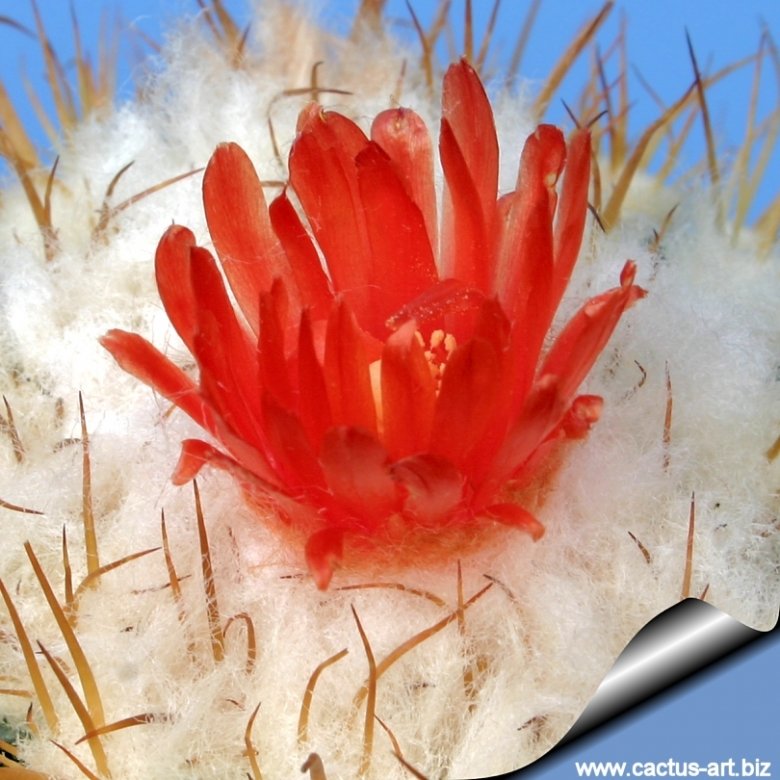
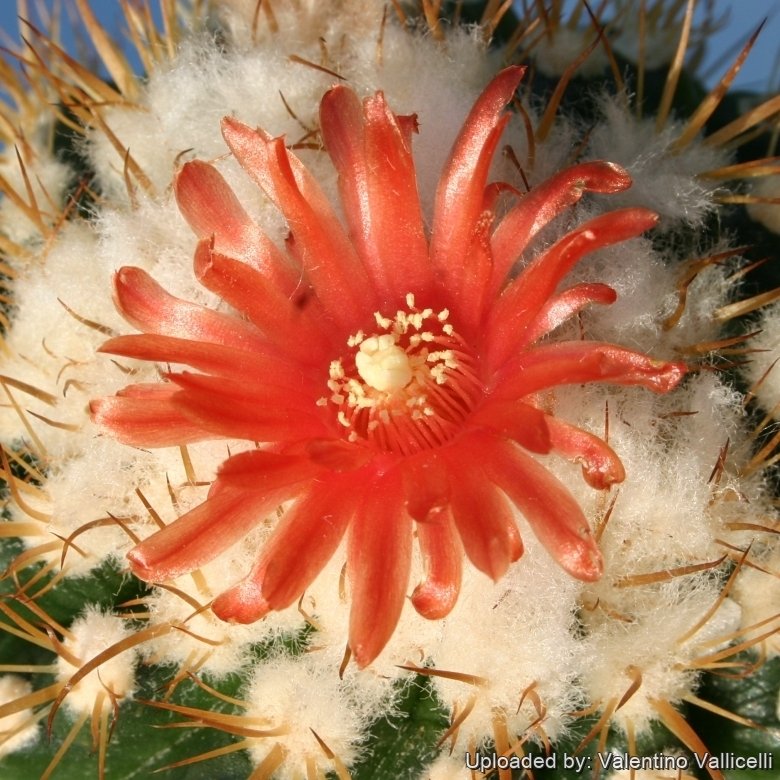
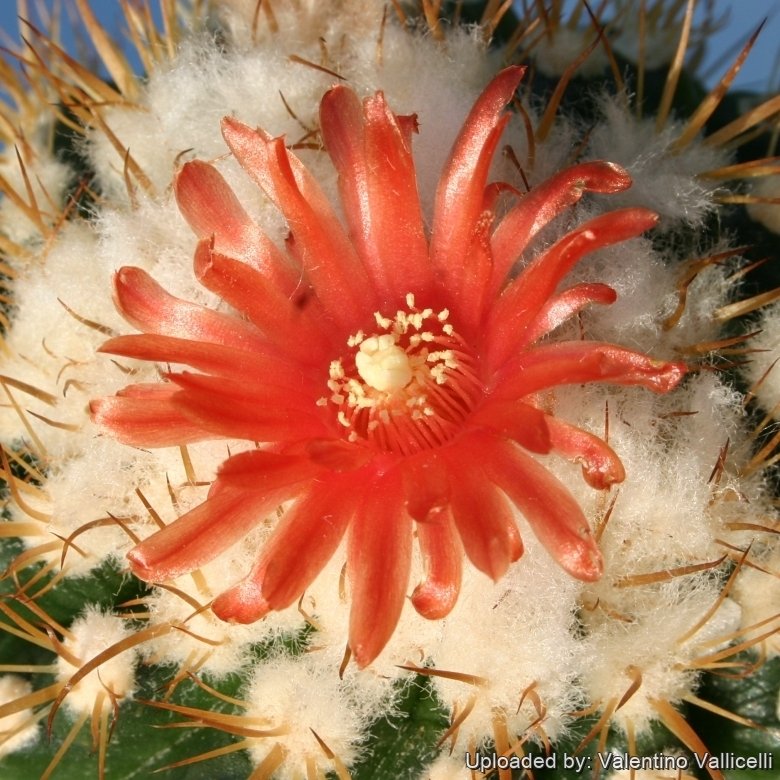
Flowers: Small, 5 or more borne together, usually about 10-18 mm wide (sometime up to 30 mm), yellow; pericarpel 2 mm wide, greenish-yellow, receptacle about 10 mm long, 4 mm wide, light yellow, with yellowish scales and whitish wool. Bristles either completely absent or rare, very fine, 6 mm long, whitish or browish and only in the upper scales. Inner petals pale yellow, about 6 mm long. Filaments 2 mm wide. Style and stigma pale yellow.
Fruits: Only 2-3.5 mm wide, tan, with whitish wool.
Blooming season: Spring-Summer.
Seeds: 0.3 mm long, 0.2 mm wide, shiny, smooth with a very small strophiole.
Origin and Habitat
Río Pilcomayo valley, Chuquisaca and adjacent areas in the Azurduy province, Bolivia
Habitat and ecology: This species grows in very inaccessible step places and ravines in the Pilcomayo River valley among riparian shrubs often on pure gravelly and sandy substrate. Blossfeldia minima and Weingartia buiningiana are also found here.
Cultivation and Propagation
Parodia gibbulosoides is an easy to grow tropical cactus, more cold tolerant than most and less fussy regarding soil conditions.
Growth rate: It is a relatively rapidly growing and easily flowering species that will make clumps given the best conditions.
Soils: It likes very porous standard cactus mix soil.
Repotting: Use pot with good drainage.
Watering: Water regularly in summer, but do not overwater (Rot prone), keep dry in winter.
Fertilization: Feed with a high potassium fertilizer in summer.
Hardiness: Reputedly sensitive to frost, but less so if kept on the dry side prior to, and during, cold weather (hardy to -5° C for short periods). However warmth throughout the year will increase the grower’s success (8-12°C during rest season).
Exposition: Outside bright but partially filtered sunlight or afternoon shade, inside it needs bright light, and some direct sun. Subject to sunburn if exposed to direct sun for too long. Tends to bronze in strong light, which encourages flowering and heavy wool and spine production.
Uses: It is an excellent plant for container growing. It always looks good and stays small. It look fine in a cold greenhouse and frame or outdoor in a rockery.
Pests & diseases: It may be attractive to a variety of insects, but plants in good condition should be nearly pest-free, particularly if they are grown in a mineral potting-mix, with good exposure and ventilation. Nonetheless, there are several pests to watch for:
- Red spiders: Red spiders may be effectively rubbed up by watering the plants from above.
- Mealy bugs: Mealy bugs occasionally develop aerial into the new growth among the wool with disfiguring results, but the worst types develop underground on the roots and are invisible except by their effects.
- Scales: Scales are rarely a problem.
- Rot: Rot is only a minor problem with cacti if the plants are watered and “aired” correctly. If they are not, fungicides won’t help all that much.
Propagation: Direct sow after last frost. Seeds germinate in 7-14 days at 21-27° C in spring, remove the glass cover gradually as the plants develops and keep ventilated, no full sun for young plants!
Bibliography
Major references and further lectures
-
Friedrich Ritter “Kakteen in Suedamerika” 2: 245-249, f. 421 1980
-
Edward Anderson “The Cactus family” Timber Press, Incorporated, 2001
-
James Cullen, Sabina G. Knees, H. Suzanne Cubey “The European Garden Flora Flowering Plants: A Manual for the Identification of Plants Cultivated in Europe, Both Out-of-Doors and Under Glass” Cambridge University Press, 11/Aug/2011
-
David R Hunt; Nigel P Taylor; Graham Charles; International Cactaceae Systematics Group. “The New Cactus Lexicon” dh books, 2006
-
Kakteen und andere Sukkulenten 38: 42-45 1987
-
Brandt F.H., “Vielfalt der Parodien”, Kakt. und and. Sukk., 21: 127-128, 1970
-
Haugg E., “Auf der Suche nach Parodia gibbulosa”, Kakt. und and. Sukk., 38: 4-6, 1987
-
Kessler H., “Die FR-Parodien”, Stachelpost, 6: 273, 1970
-
Weskamp W., “Die Gattung Parodia”, p. 152-158, 1987
-
Weskamp W., “Auf den Samen achten!”, Kakt./Sukk., 5: 1-2, 1969
-
Weskamp W., Ist das überhaupt eine Parodia?, Kakt. und and. Sukk., 21: 36, 1970
-
Weskamp W., Die Gattung Parodia Spegazzini, Kakt. und and. Sukk., 24: 150-151, 1973
From llifle page Parodia punae
Description
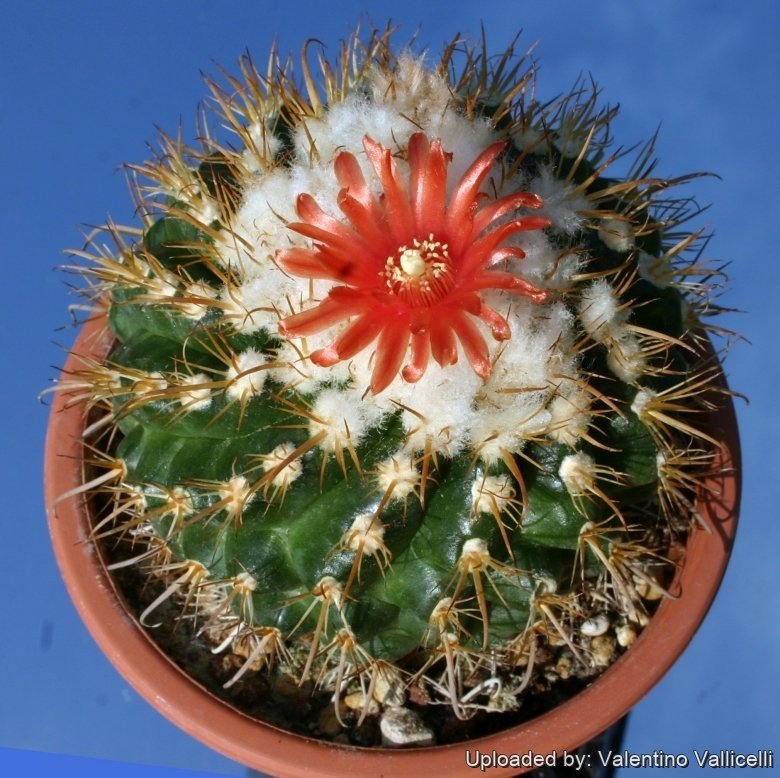
Parodia puna is a very floriferous plant, solitary or forming cushion up to 40 cm in diameter.
Stem: Globose or shortly cylindrical, dark green with a very woolly apex, up to 8 cm tall and 7 cm in diameter.
Ribs: About 17, acute with short tubercles, straight or slightly spiralling.
Areoles: Large, round with white to greyish wool that fade away as they age..
Radial spines: 8-9, reddish, light brow to dull yellow, becoming grey as they age 4-10 mm long.
Central spine: 1 to 4 stronger, of which the upper three are straight with a reddish tip, while the lower one is more long and strong, hooked often only 4-5 mm long.
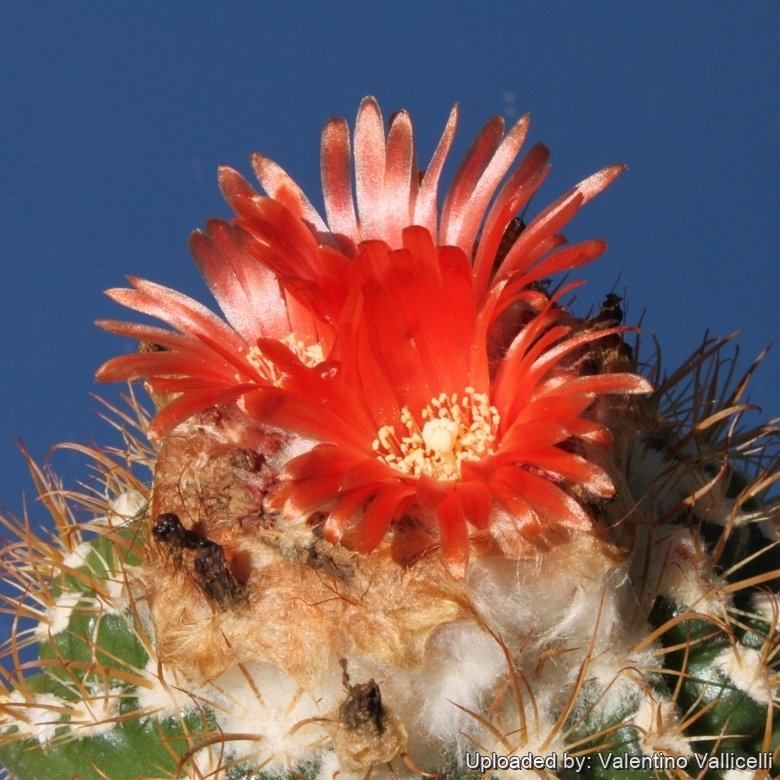
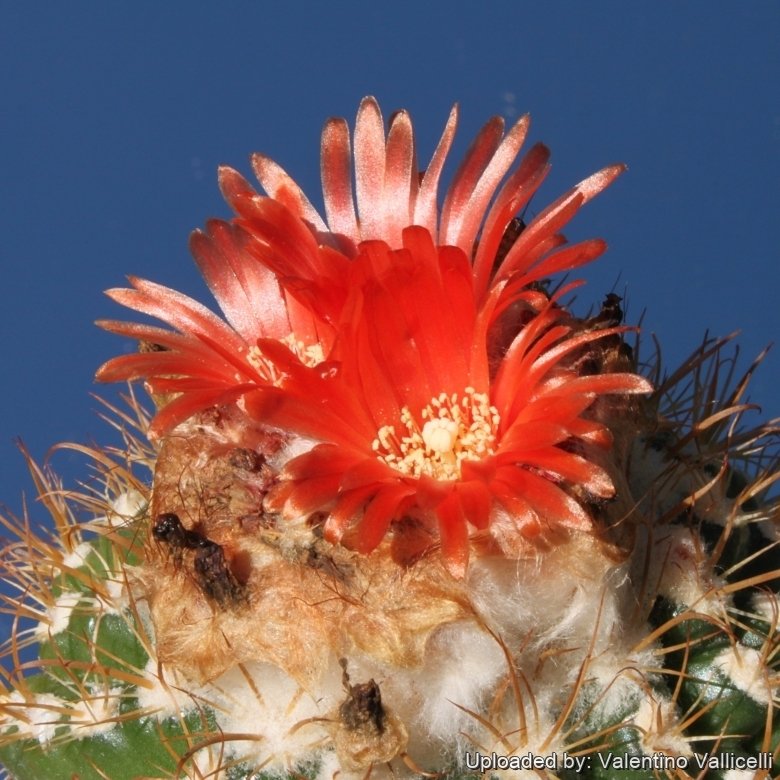
Flowers: Orange-red , 2 cm in diameter. Pericarpel and floral tube with abundant white wool and brown bristles. The filaments bear cream-yellowish anthers. Stile white-yellowish.
Blooming season: Late summer through autumn. Flowers remain open for up to six days.
Origin and Habitat
Mizque, Cochabamba, Bolivia
Habitat: Grows on the south-east and extremely hot, steep wall of a canyon with slate rock outcroppings.
Cultivation and Propagation
Needs regular water in summer. Keep rather dry in winter, tends to lose its roots in winter. Can tolerate light frost (-1C°)
Propagation: By Seeds. The seed of this plant are extremely small and must be sown on the surface of the germination substrate (not buried!!) But the seedlings after germination are so minuscule and delicate that it is quite problematic to keep them alive. So for this species it is usually used the baggy germination technique (in a sterilized pot hermetically closed in a plastic sachet)
Source: Parodia punae, LLIFLE - Encyclopedia of living forms, CC-BY-SA, retrieved 2026-10-25.
Gallery