Publication: Cactaceae Consensus Init. 6: 10. 1998
Description
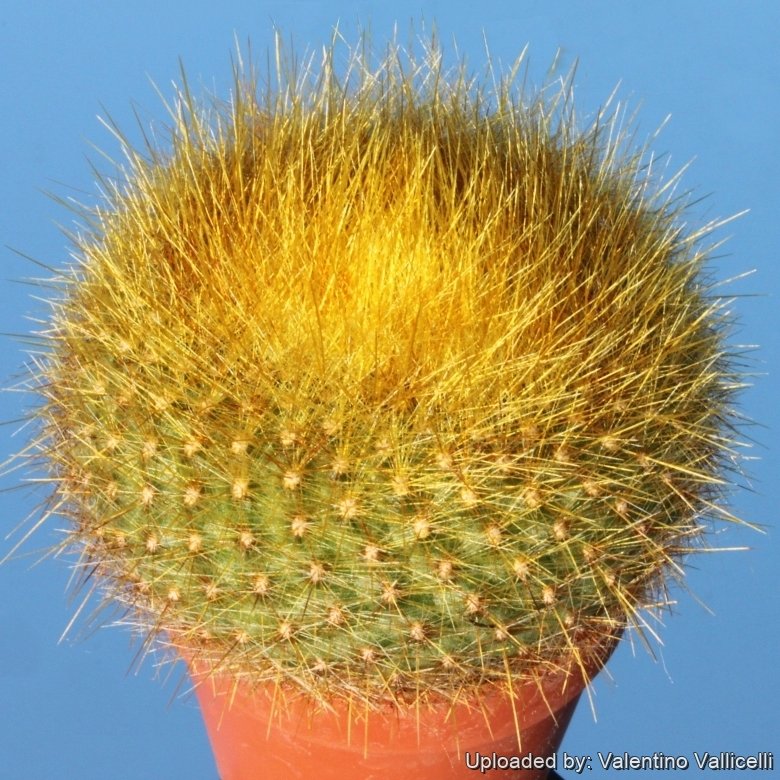
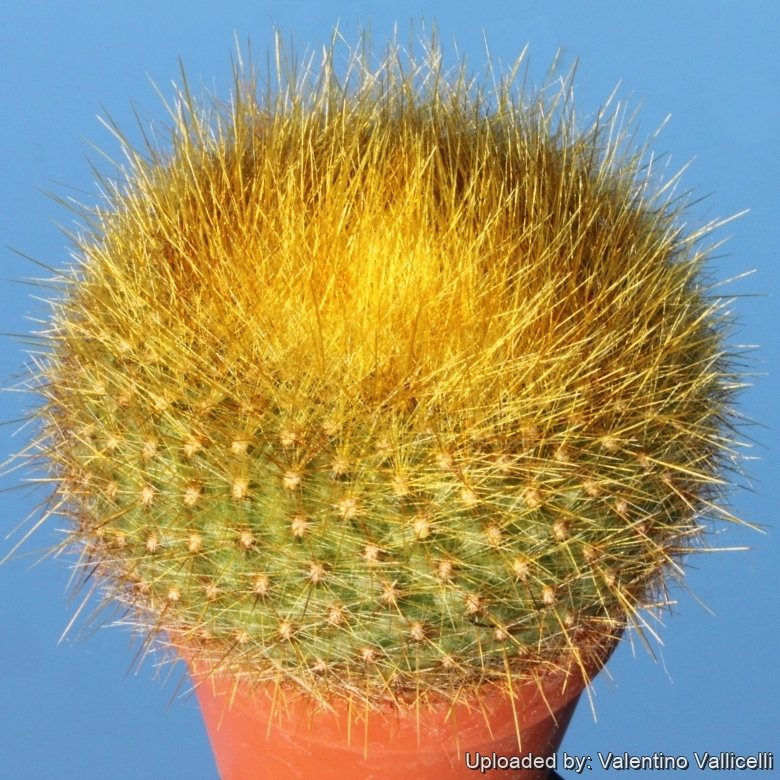
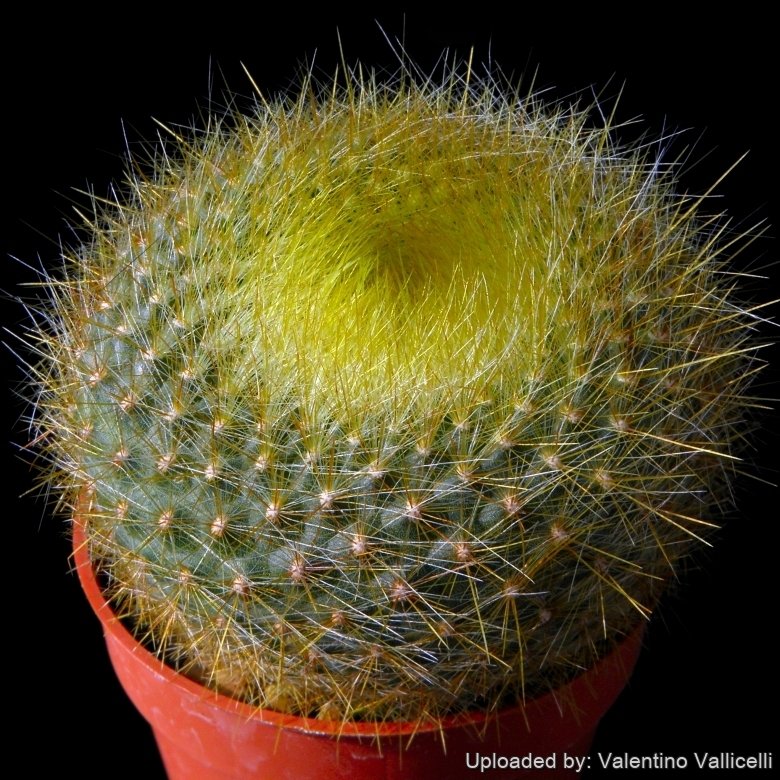
Parodia haselbergii subsp. graessneri (a.k.a. Brasilicactus haselbergii, Notocactus haselbergii) is a medium- sized solitary, fast growing cactus closely resembling Parodia haselbergii, but has as many as 60 radial spines. The spines are pale to golden yellow, occasionally brownish or nearly all white, to 2 cm or more. The flowers are small yellowish green to almost truly green, while those of Parodia haselbergii are orange-red to bright red. These cacti are self-fertile, do not offset, and have a very short floral tube. They are among the earliest Notocacti to bloom in the spring. As with P. graessneri, the growing centre tends to be on one side of the stem.
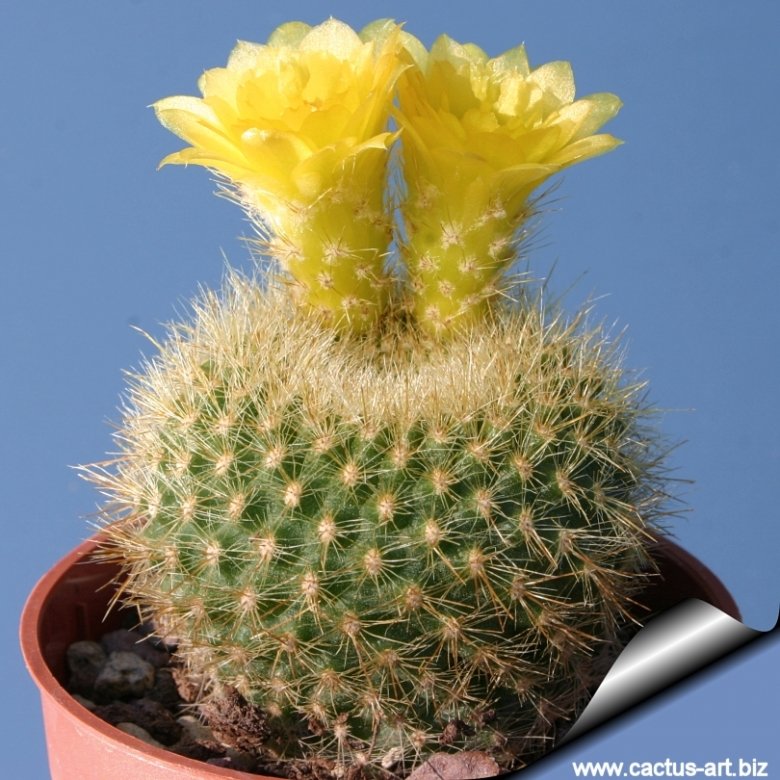
Stem: Spherical flattened or spherical and depressed at the top, deep green, almost completely hidden by dense spines, up to 10 cm tall, 15 cm in diameter. The crown of the plant is usually set at an angle to prevent water-sitting.
Ribs: More than 30 (up to 60), low arranged in spirals.
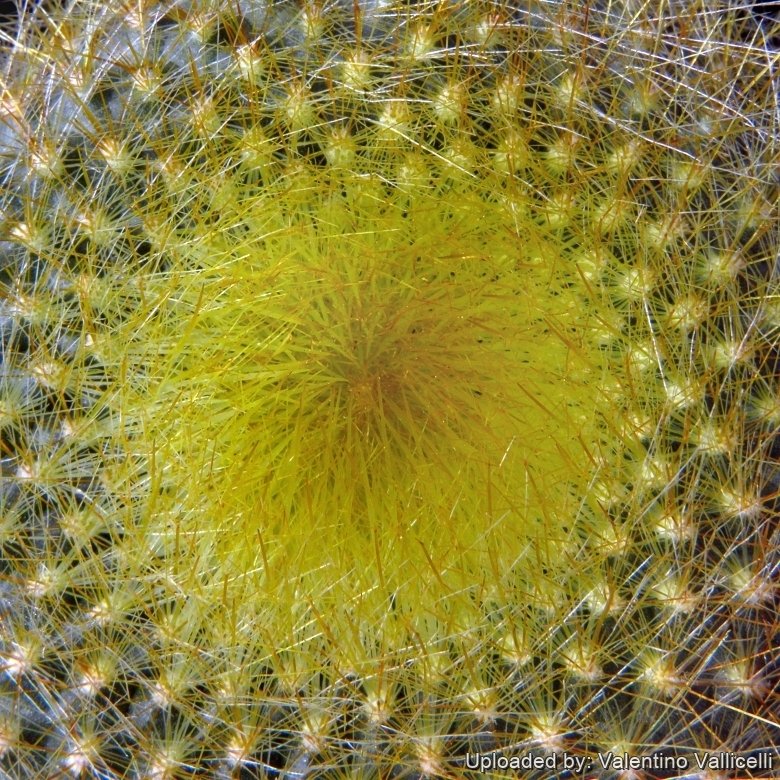
Areoles: With a short yellowish-white wool, they are arranged geometrically.
Spines: It has as many as 60 pale yellow to golden yellow spines up to 25 mm long, of which the 5 or 6 centrals are thicker, soft and bristly. Occasionally the spines are brown or near white often with darker tips. The white-spined form may be confused with Parodia haselbergii when not in flower.
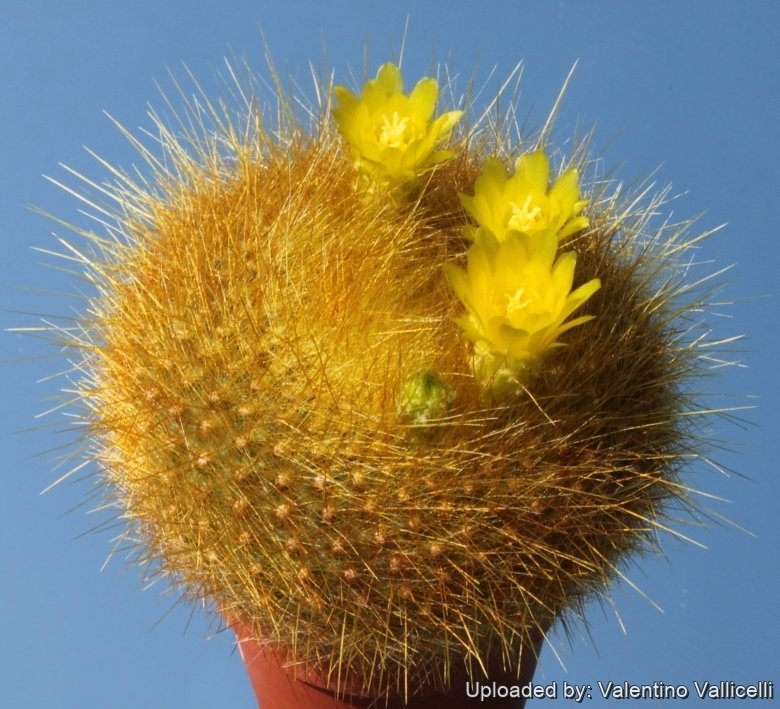
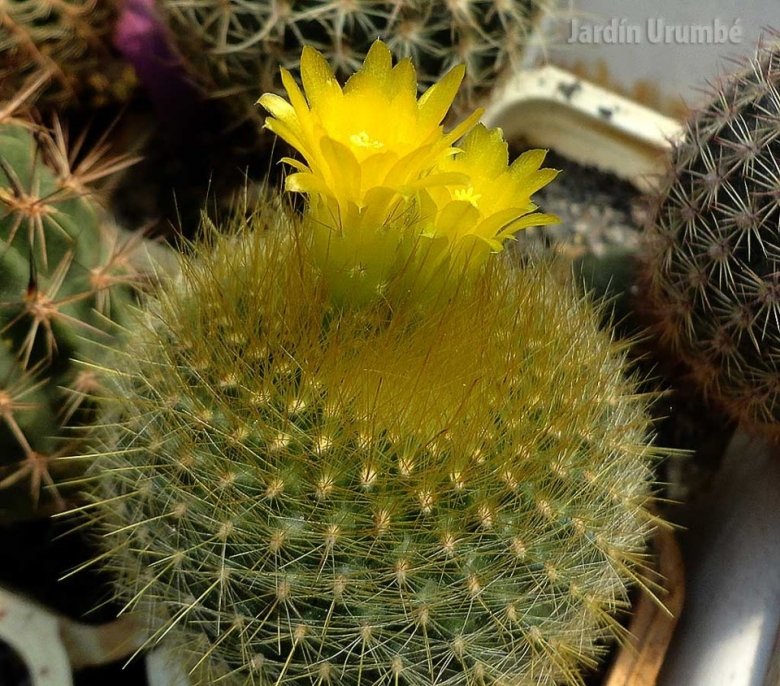
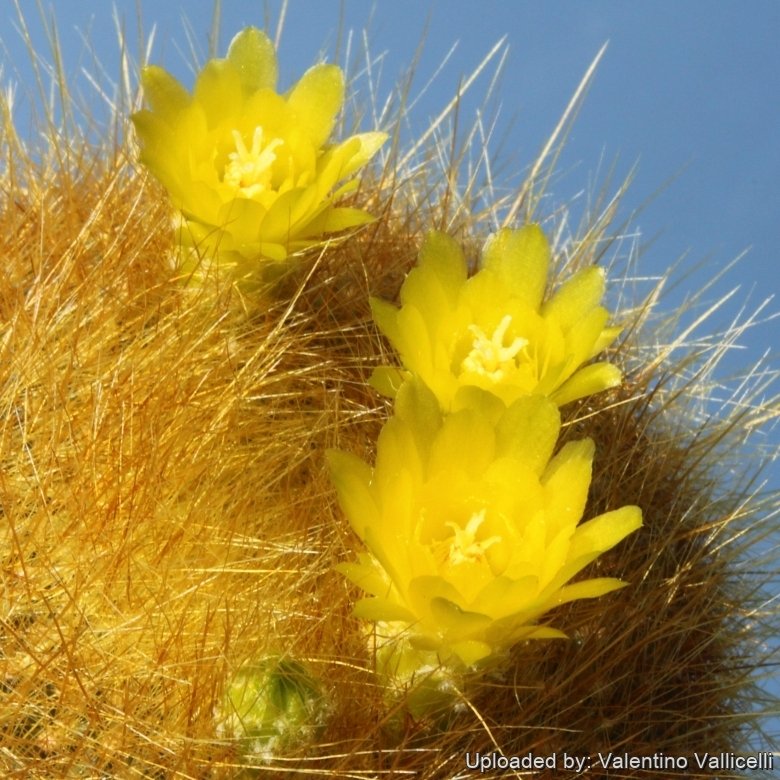
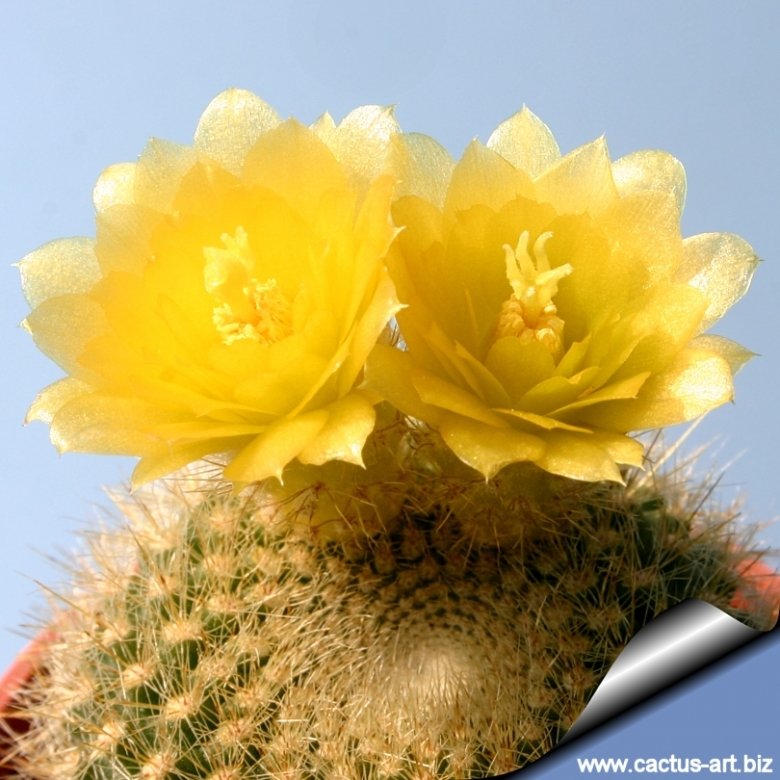
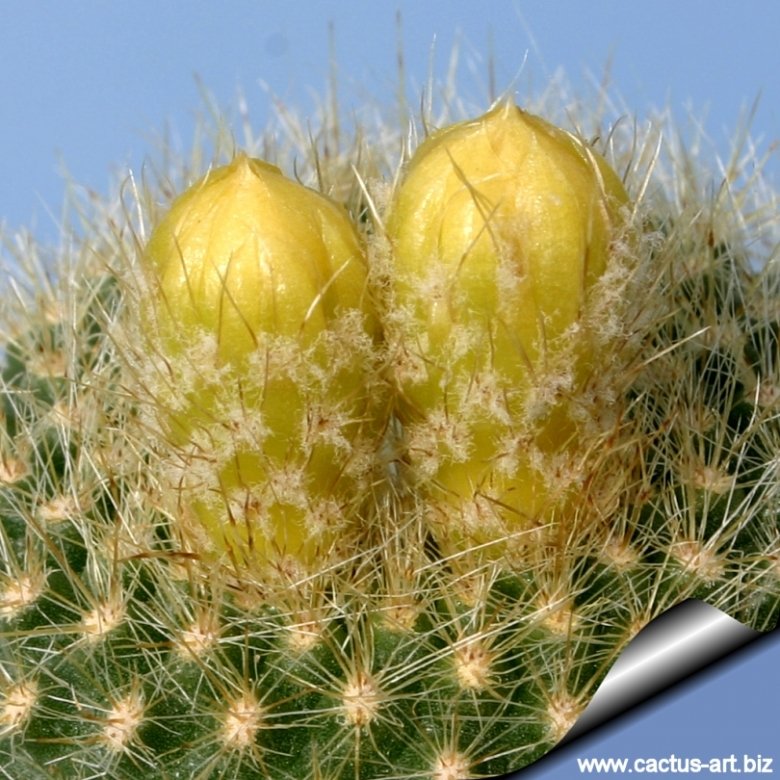
Flowers: Small yellowish green, up to 2,5 cm long and 2 cm wide and each can last one to three weeks. Petals semi-erect spreading and not closely surrounding the style, the stamens visible. Tube relatively long with clusters of bristles and some wool. It is self-sterile.
Blooming season: It flowers at the end of the winter or in early spring for a long period of time (It can last blooming to two months!). Will start flowering around 5 cm in diameter. Golden yellow or orange flowered varieties are also mentioned in cultivation.
Fruit: Spherical, about 2 cm.
Seeds: 1 by 0,5 mm, bell-shaped, widest at the hilum, reddish-brown.
Origin and Habitat
East of Rio Grande do Sul, Southern Brazil.
Cultivation and Propagation
Parodia haselbergii subsp. graessneri is an easy to grow tropical cactus.
Growth rate: It is a relatively rapidly growing and easily flowering species that will make clumps given the best conditions.
Soils: It prefers a neutral to slightly acidic mineral-based potting mix with a good drainage.
Repotting: Use pot with good drainage.
Watering: It can support quite some water during the growing season, but do not overwater (Rot prone). Pot plants in winter are wet-sensitive and need to be kept dry (rots easily if soil is wet and cold) tend to lose their roots in winter. Best if watered with rain water.
Fertilization: Feed it once during the growing season with a fertilizer specifically formulated for cactus and succulents (poor in nitrogen), including all micro nutrients and trace elements diluted to ½ the strength recommended on the label. It thrives in poor soils and need a limited supplies of fertilizer to avoid the plants developing excess vegetation, which is easily attacked by fungal diseases.
Hardiness: Usually it is recommended to over-winter this plant in a bright and warm greenhouse with at least 8-10° C , but it has proved to tolerate temperatures as low as -5° C for short periods.
Exposition: Outside bright but partially filtered sunlight or afternoon shade, inside it needs bright light, and some direct sun. Subject to sunburn if exposed to direct sun for too long. Tends to bronze in strong light, which encourages flowering and heavy wool and spine production.
Uses: It is an excellent plant for container growing. It always looks good and stays small. It look fine in a cold greenhouse and frame or outdoor in a rockery.
Pests & diseases: It may be attractive to a variety of insects, but plants in good condition should be nearly pest-free, particularly if they are grown in a mineral potting-mix, with good exposure and ventilation. Nonetheless, there are several pests to watch for:
- Red spiders: It is susceptible to spider mites, so it should be check once in a while for it. Overhead watering is helpful in controlling mites.
- Mealy bugs: Occasionally mealy bugs they develop aerial into the new growth among the wool with disfiguring results, but the worst types develop underground on the roots and are invisible except by their effects.
- Scales: Scales are rarely a problem.
- Rot: Rot it is only a minor problem with notocacti if the plants are watered and “aired” correctly. If they are not, fungicides won’t help all that much.
Propagation: Division, direct sow after last frost. Seeds germinate in 7-14 days at 21-27° C in spring, remove the glass cover gradually as the plants develops and keep ventilated, no full sun for young plants! To make a cutting twist off a branch and permit it to dry out a couple of weeks, lay it on the soil and insert the stem end partially into the soil. Try to keep the cutting somewhat upright so that the roots are able to grow downward.
Bibliography
Major references and further lectures
-
Barbara Segall “Botanica: the illustrated A-Z of over 10,000 garden plants and how to cultivate them” Mynah, 1997
-
David Hunt, Nigel Taylor “The New Cactus Lexicon” DH Books, 2006 ISBN 0953813444, 9780953813445
-
Edward F. Anderson “The Cactus Family” Timber Press, 2001
-
James Cullen, Sabina G. Knees, H. Suzanne Cubey “The European Garden Flora Flowering Plants: A Manual for the Identification of Plants Cultivated in Europe, Both Out-of-Doors and Under Glass” Cambridge University Press, 11/ago/2011
-
S. H. Scott “The Observer’s Book of Cacti and Other Succulents” F. Warne, 1958
-
California Garden, San Diego Floral Association., 1984
From llifle page Brasilicactus graessneri var. flaviflorus
Description
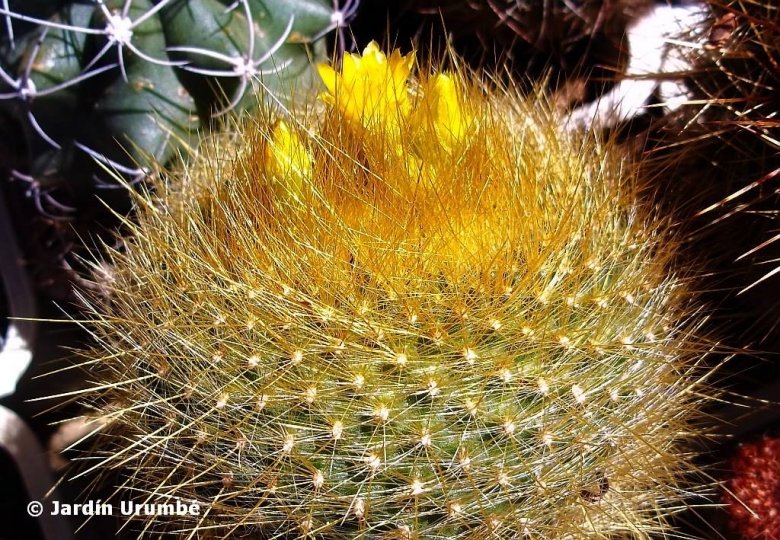
Brasilicactus graessneri var. flaviflorus is one of the morphological or local forms of Parodia haselbergii subsp. graessneri, and the two plants are not readily distinguishable, if not for bright the yellow blooms (not yellowish-green or green). More likely they are one and the same species. Most authors have dismissed Brasilicactus graessneri var. flaviflorus as perhaps not worthy of even varietal status, but it still has a value for a collector because they identify plants with particular characters.
Stem: Spherical flattened or spherical and depressed at the top, deep green, almost completely hidden by dense spines, up to 10 cm tall, 15 cm in diameter. The crown of the plant is usually set at an angle to prevent water-sitting.
Ribs: More than 30 (up to 60), low arranged in spirals.
Areoles: With a short yellowhish-white wool, they are arranged geometrically.
Spines: It has as many as 60 pale yellow to golden yellow spines up to 25 mm long, of which the 5 or 6 centrals are thicker, soft and bristly often with darker tips.
Flowers: Small yellow, up to 2,5 cm long and 2 cm wide and each can last one to three weeks. Petals semi-erect spreading and not closely surrounding the style, the stamens visible. Tube relatively long with clusters of bristles and some wool. It is self-sterile.
Blooming season: It flowers at the end of the winter or in early spring for a long period of time (It can last blooming to two months!). Will start flowering around 5 cm in diameter.
Fruit: Spherical, about 2 cm.
Cultivation and Propagation
Parodia haselbergii subs. graessneri var. flaviflora| is an easy to grow tropical cactus.
Growth rate: It is a relatively rapidly growing and easily flowering species that will make clumps given the best conditions.
Soils: It prefers a neutral to slightly acidic mineral-based potting mix with a good drainage.
Repotting: Use pot with good drainage.
Watering: It can support quite some water during the growing season, but do not overwater (Rot prone). Pot plants in winter are wet-sensitive and need to be kept dry (rots easily if soil is wet and cold) tend to lose their roots in winter. Best if watered with rain water.
Fertilization: Feed it once during the growing season with a fertilizer specifically formulated for cactus and succulents (poor in nitrogen), including all micro nutrients and trace elements diluted to ½ the strength recommended on the label. It thrives in poor soils and need a limited supplies of fertilizer to avoid the plants developing excess vegetation, which is easily attacked by fungal diseases.
Hardiness: Usually it is recommended to over-winter this plant in a bright and warm greenhouse with at least 8-10° C , but it has proved to tolerate temperatures as low as -5° C for short periods.
Exposition: Outside bright but partially filtered sunlight or afternoon shade, inside it needs bright light, and some direct sun. Subject to sunburn if exposed to direct sun for too long. Tends to bronze in strong light, which encourages flowering and heavy wool and spine production.
Uses: It is an excellent plant for container growing. It always looks good and stays small. It look fine in a cold greenhouse and frame or outdoor in a rockery.
Pests & diseases: It may be attractive to a variety of insects, but plants in good condition should be nearly pest-free, particularly if they are grown in a mineral potting-mix, with good exposure and ventilation. Nonetheless, there are several pests to watch for:
- Red spiders: It is susceptible to spider mites, so it should be check once in a while for it. Overhead watering is helpful in controlling mites.
- Mealy bugs: Occasionally mealy bugs they develop aerial into the new growth among the wool with disfiguring results, but the worst types develop underground on the roots and are invisible except by their effects.
- Scales: Scales are rarely a problem.
- Rot: Rot it is only a minor problem with notocacti if the plants are watered and “aired” correctly. If they are not, fungicides won’t help all that much.
Propagation: Division, direct sow after last frost. Seeds germinate in 7-14 days at 21-27° C in spring, remove the glass cover gradually as the plants develops and keep ventilated, no full sun for young plants! To make a cutting twist off a branch and permit it to dry out a couple of weeks, lay it on the soil and insert the stem end partially into the soil. Try to keep the cutting somewhat upright so that the roots are able to grow downward.
Bibliography
Major references and further lectures
-
Barbara Segall “Botanica: the illustrated A-Z of over 10,000 garden plants and how to cultivate them” Mynah, 1997
-
David Hunt, Nigel Taylor “The New Cactus Lexicon” DH Books, 2006 ISBN 0953813444, 9780953813445
-
Edward F. Anderson “The Cactus Family” Timber Press, 2001
-
James Cullen, Sabina G. Knees, H. Suzanne Cubey “The European Garden Flora Flowering Plants: A Manual for the Identification of Plants Cultivated in Europe, Both Out-of-Doors and Under Glass” Cambridge University Press, 11/ago/2011
-
S. H. Scott “The Observer’s Book of Cacti and Other Succulents” F. Warne, 1958
Source: Brasilicactus graessneri var. flaviflorus, LLIFLE - Encyclopedia of living forms, CC-BY-SA, retrieved 2026-10-25.
Gallery