Publication: Kakteen Orch. Rundschau Kakteen Orch. Rundschau 7(4): 61. 1982 basionym cited as Pilosocereus leninghausii F. Haage = Pilocereus leninghausi~ F. Haage
Description
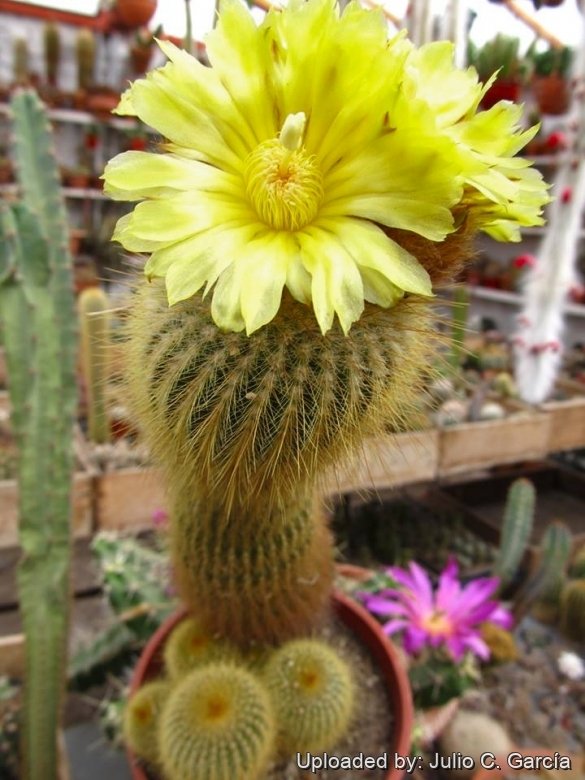
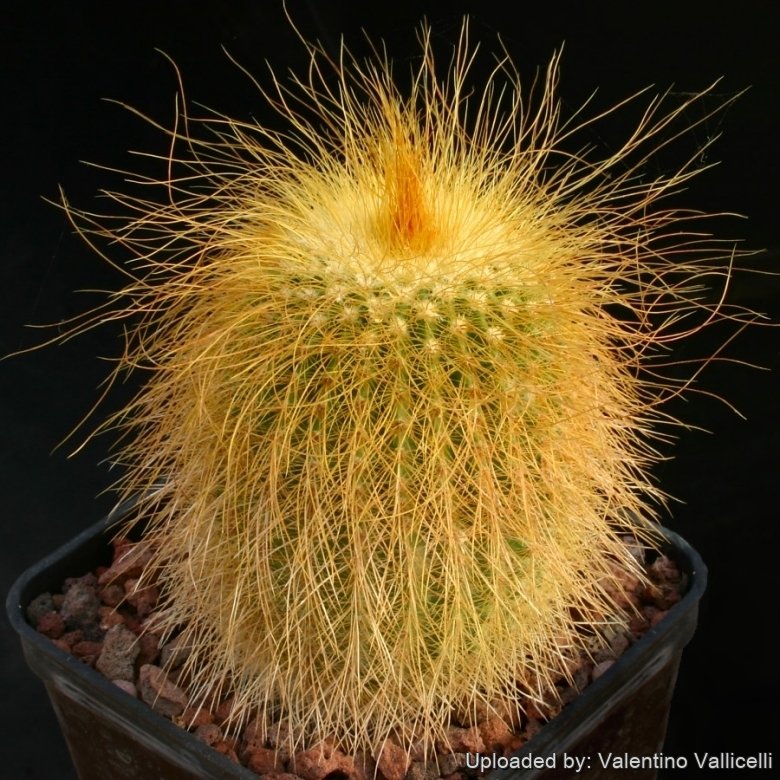
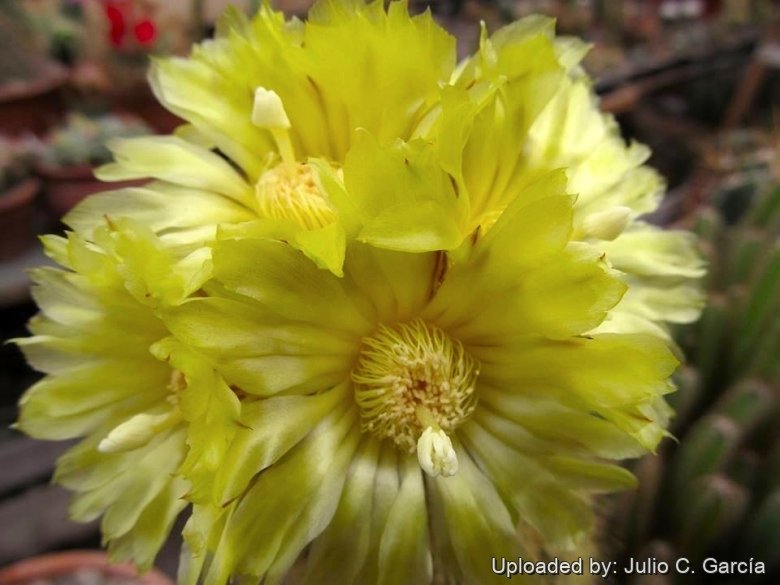
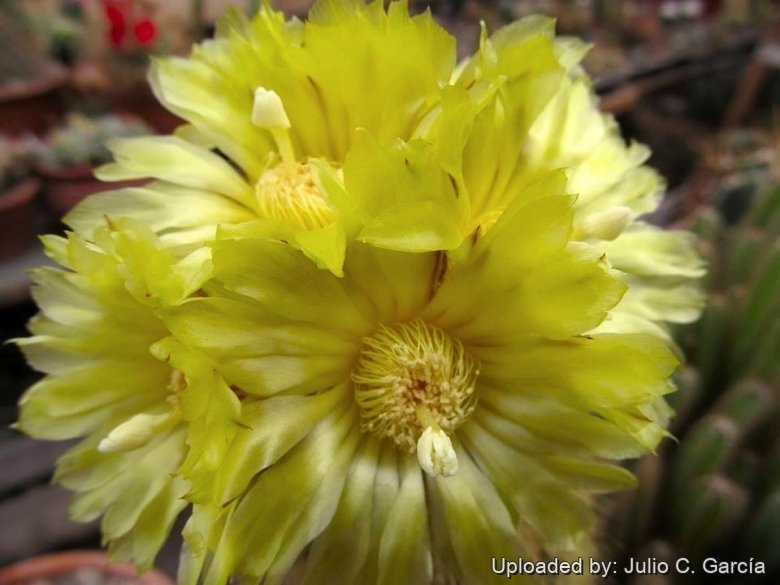
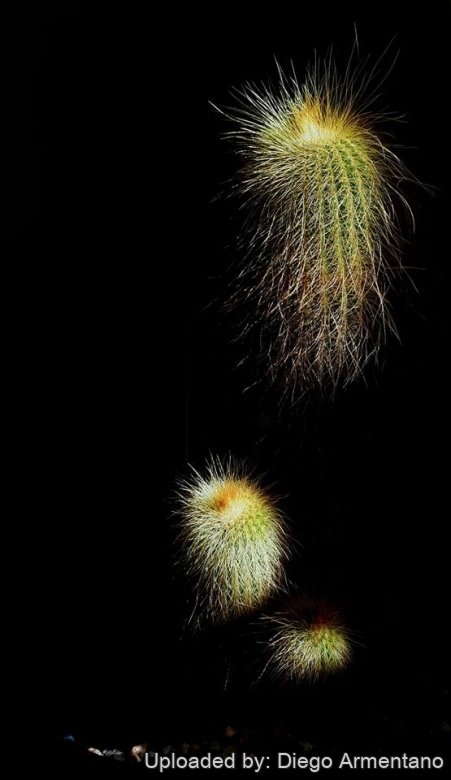
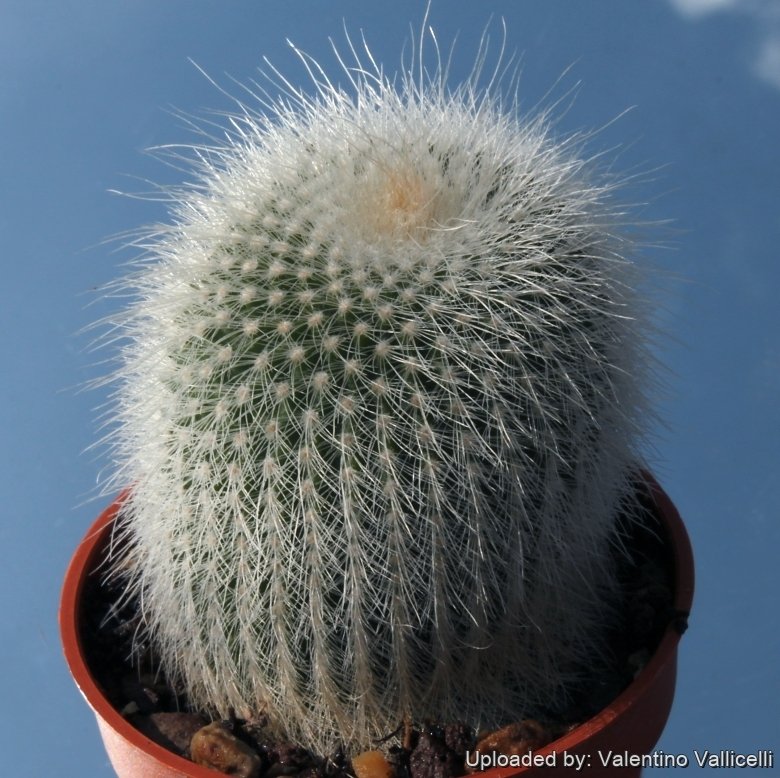
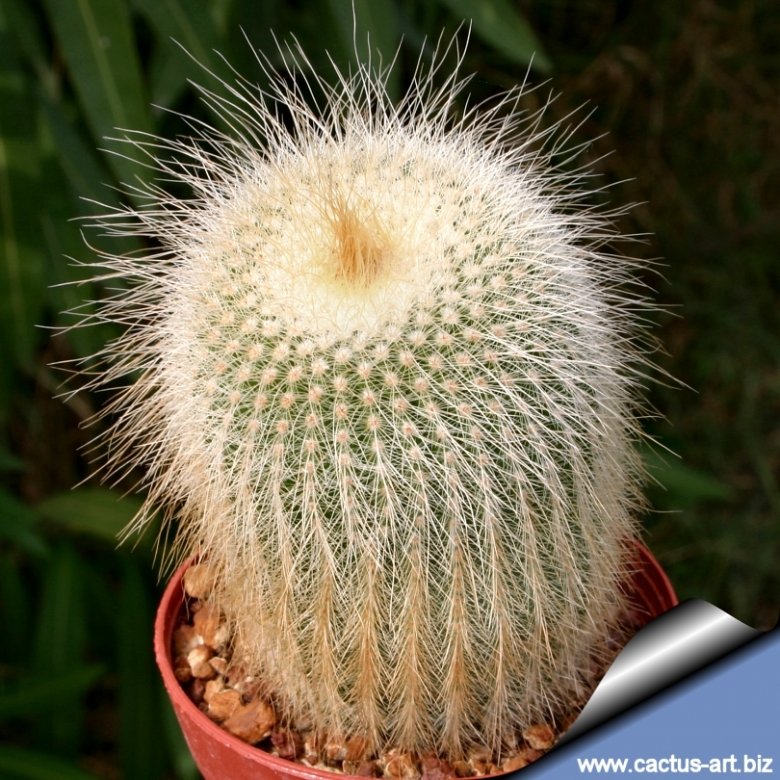
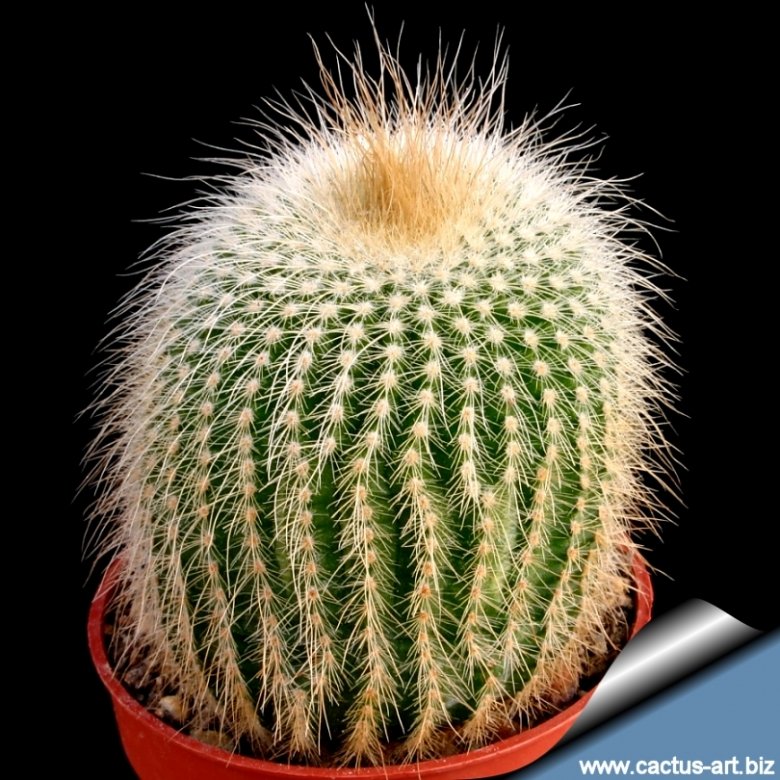
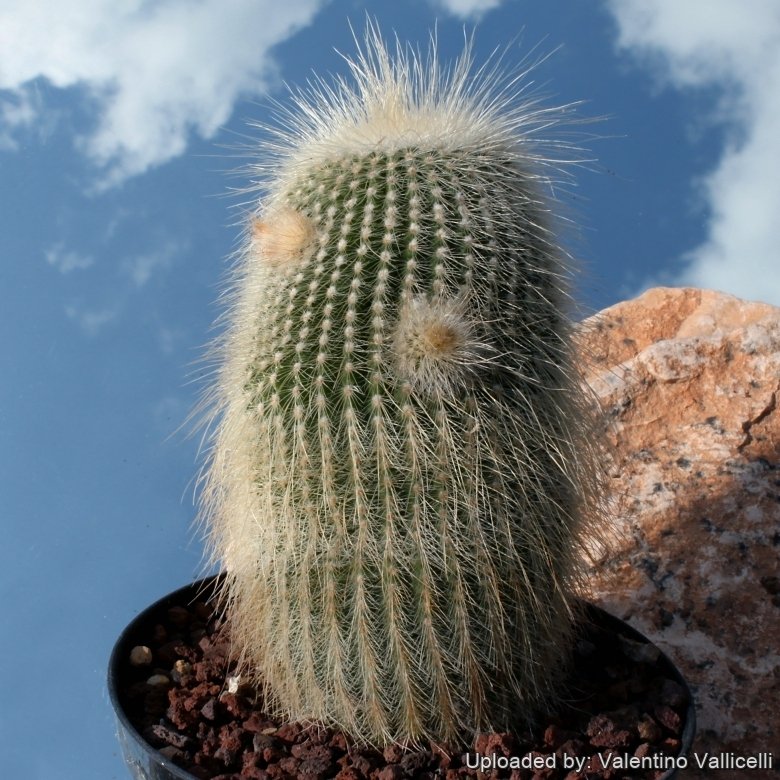
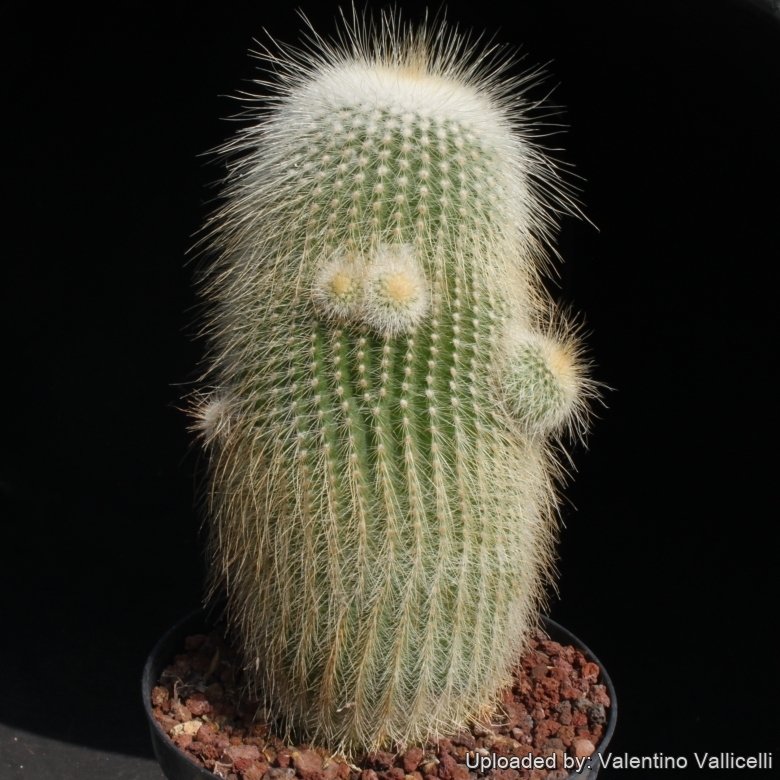
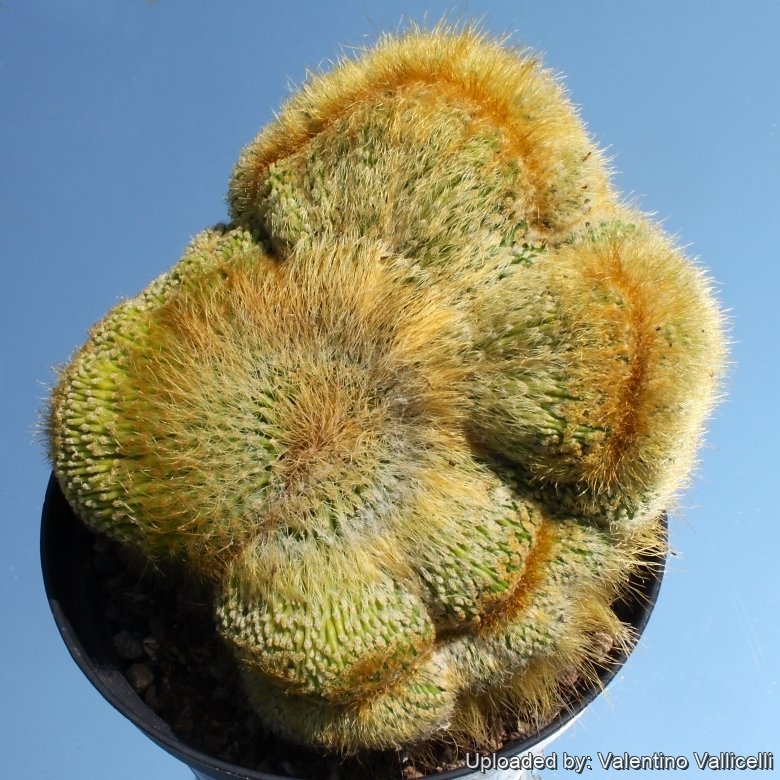
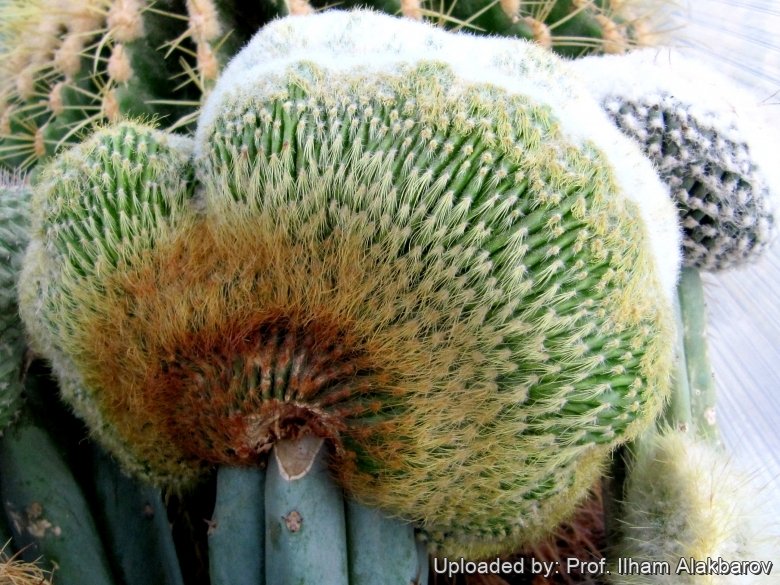
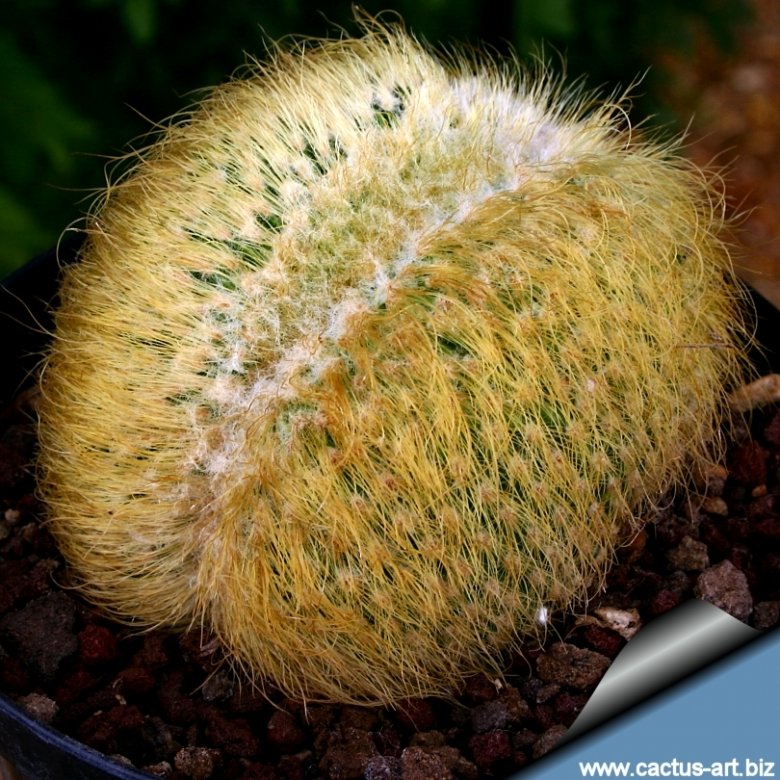
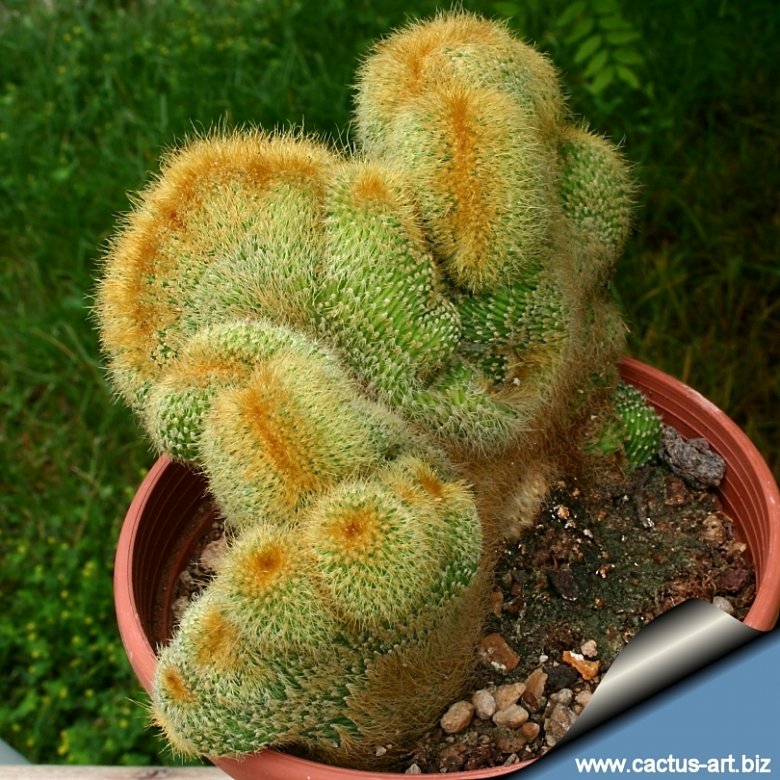
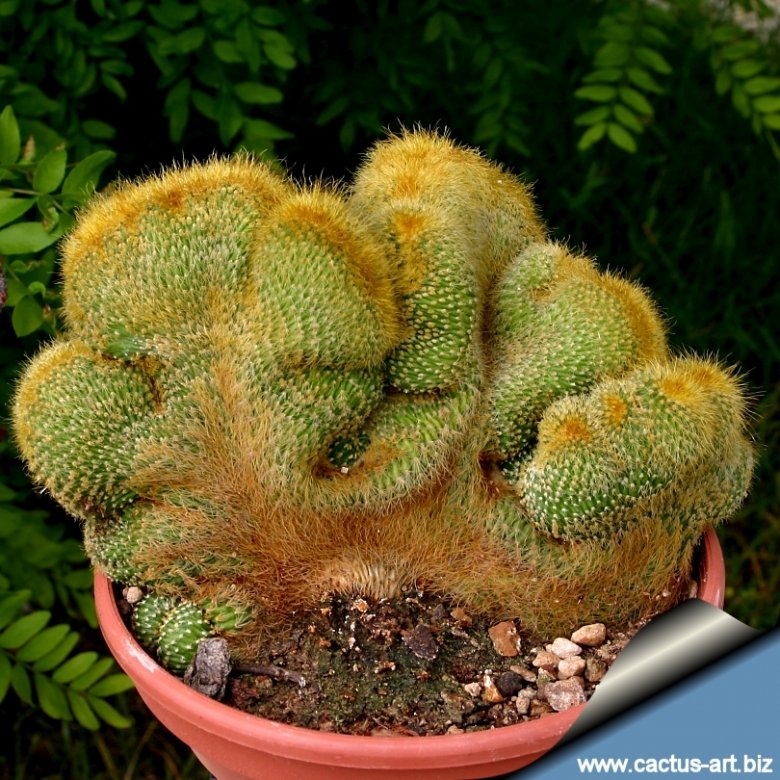
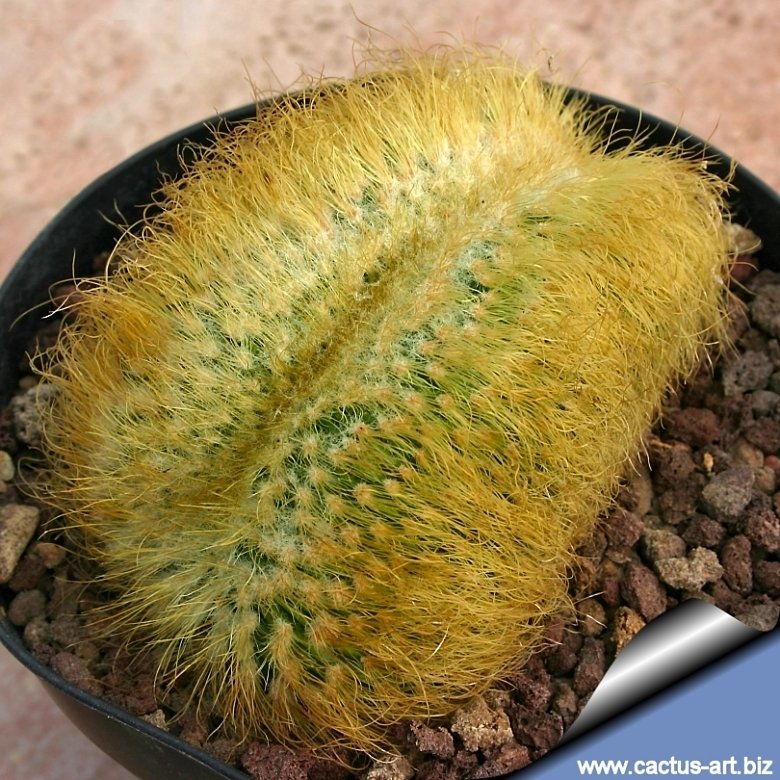
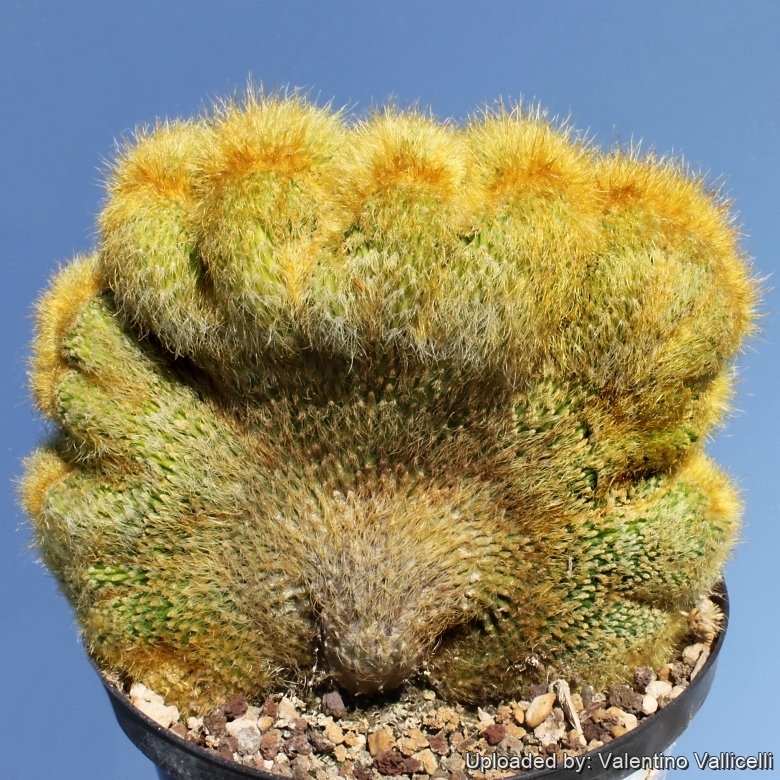
Parodia leninghausii, still known in cultivation with its old name Eriocactus leninghausii, is a very popular cactus species appreciated because glistens under a haze of harmless golden spines and will produce silky yellow flowers, with a lovely reflection in the petals only when mature (5 years or so), but the blossom in summer is worth the wait. Sometimes, they present monstruous amd cristate forms.
Habit: It is a shortly columnar cactus that branches and will start to cluster from the base as it ages.
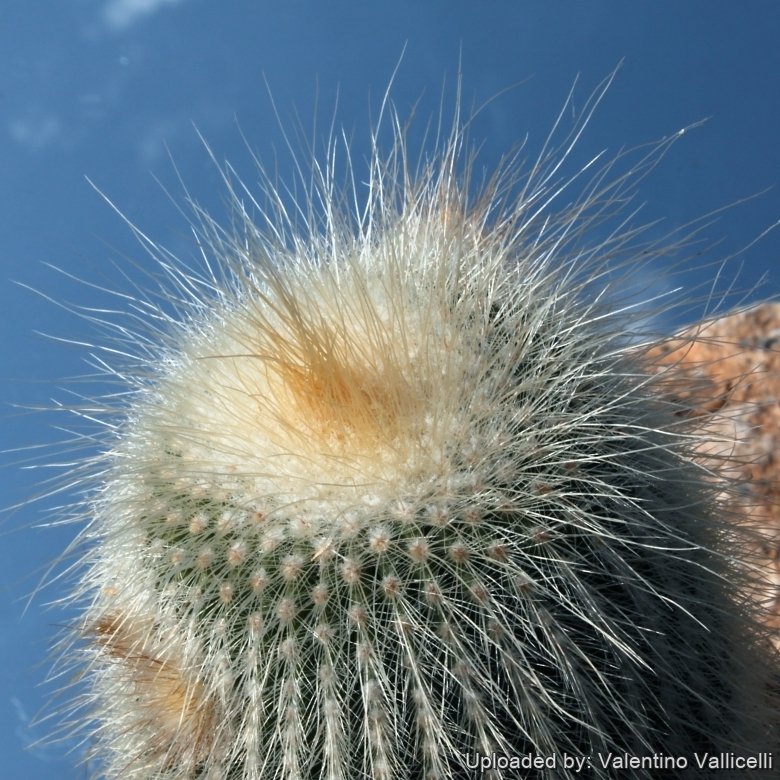
Stem: At first globular then columnar up to 60(100) cm tall, 8-12 cm in diameter, with an angled crown.
Ribs: About 30.
Spines: Harmless, golden and bristly.
Flowers: Near the top, 5-6 cm in diameter pure yellow, silky, shining with a lovely reflection in the petals.
Blooming season: It blooms only when mature (at least 20 cm tall) in Spring to late Summer. Blooms more than once a year.
Origin and Habitat
Parodia leninghausii is endemic to Rio Grande do Sul, Brazil.
Altitude: It occurs at elevations of 300-1300 meters above sea level.
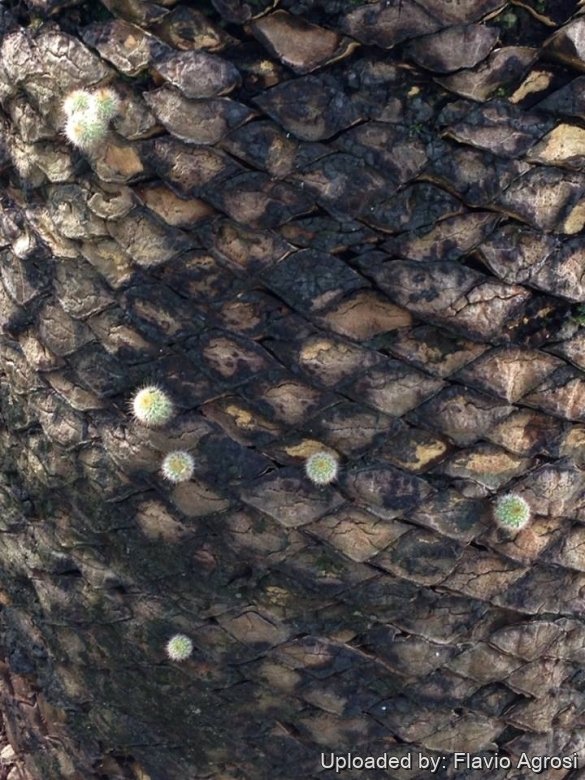
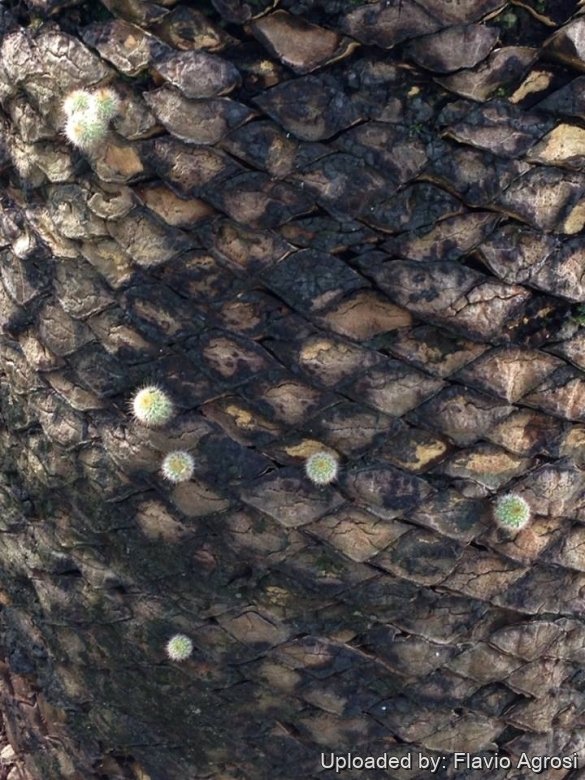
Habitat: This species grows in hilly grassland and on walls between cracks in the rocks or in the shade of larger growing plants in pine forest. This species is abundant where it occurs. Many of its subpopulations have been extirpated. It grows in one of the most temperate region of the countries with warm and cool seasons and weather can become very cold during the winter nights, often it will fall to just above freezing without harming the plants as it is also very dry. The soil there is well drained and has a fairly high organic content, derived from the decomposition of other plants.
Cultivation and Propagation
Frost Tolerant as low as -4°C (or possibly colder) but in cultivation it is best to avoid any frost when during the winter the temperature can go down to 2° C without any harm so long as the compost is very dry. During the summer it is best to keep the plants outside where the temperature can rise to over 30 C with no harm to the plant.
Allows good drainage and use a an open and free draining mineral compost that allows therefore roots to breath.
They like only a short winter’s rest and should be kept almost completely dry during the winter months, If the soil is allowed to be dry for too long root loss could follow but equally the same result would occur if the plants are both wet and cold. From March onwards the plant will begin to grow and watering should be increased gradually until late May when the plant should be in full growth.
Water regularly during the summer so long as the plant pot is allowed to drain and not sit in a tray of water. During hot weather you may need to water the plants more frequently so long as the plant is actively growing. From late September watering should be reduced to force the plant to go in to a state of semi dormancy, by October you should be back in to the winter watering regime.
Need full sun avoiding only the harshest summer sun, if kept too dark they may become overly lush and could be prone to rotting due to over watering, they will also be shy to produce flowers.
Feeding may not be necessary at all if the compost is fresh then, feed in summer only if the plant hasn’t been repotted recently. Do not feed the plants from September onwards as this can cause lush growth which can be fatal during the darker cold months.
Repotting should be done every other year or every three years, annual potting is not necessary. Do not be tempted to over pot as this will cause the unused compost to go stagnant and you may loose the plant.
Propagation: Seed sowing and cuttings.
Bibliography
Major references and further lectures
-
Tony Mace “Notocactus: a review of the genus incorporating Brasilicactus, Eriocactus and Wigginsia” Editorial Board/National Cactus & Succulent Society, 1975
-
Edward Anderson “The Cactus family” Timber Press, Incorporated, 2001
-
James Cullen, Sabina G. Knees, H. Suzanne Cubey “The European Garden Flora Flowering Plants: A Manual for the Identification of Plants Cultivated in Europe, Both Out-of-Doors and Under Glass” Cambridge University Press, 11/Aug/2011
-
David R Hunt; Nigel P Taylor; Graham Charles; International Cactaceae Systematics Group. “The New Cactus Lexicon” dh books, 2006
-
Walther Haage “Kakteen von A bis Z” Neumann Verlag, 1981
6)Larocca, J. & Machado, M. 2013. Parodia leninghausii. In: IUCN 2013. “IUCN Red List of Threatened Species.” Version 2013.1. <www.iucnredlist.org>. Downloaded on 29 October 2013.
-
Urs Eggli, Andreas Hofacker: “Validation of the Name Parodia lenninghausii (Cactaceae), with a Note on the Lectotypification and Orthography of the Name”. In: Novon. Volume 20, number 1, pages 30–32, 2010.
-
Urs Eggli, Leonard E. Newton: “Etymological Dictionary of Succulent Plant Names” Birkhäuser 2004
From llifle page Eriocactus leninghausii var. albilanatus
Description
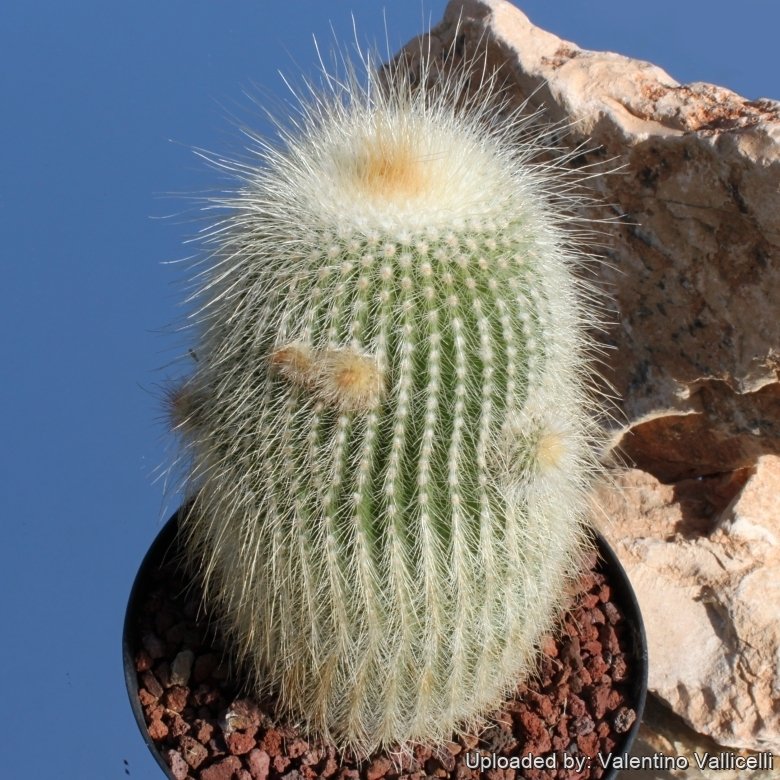
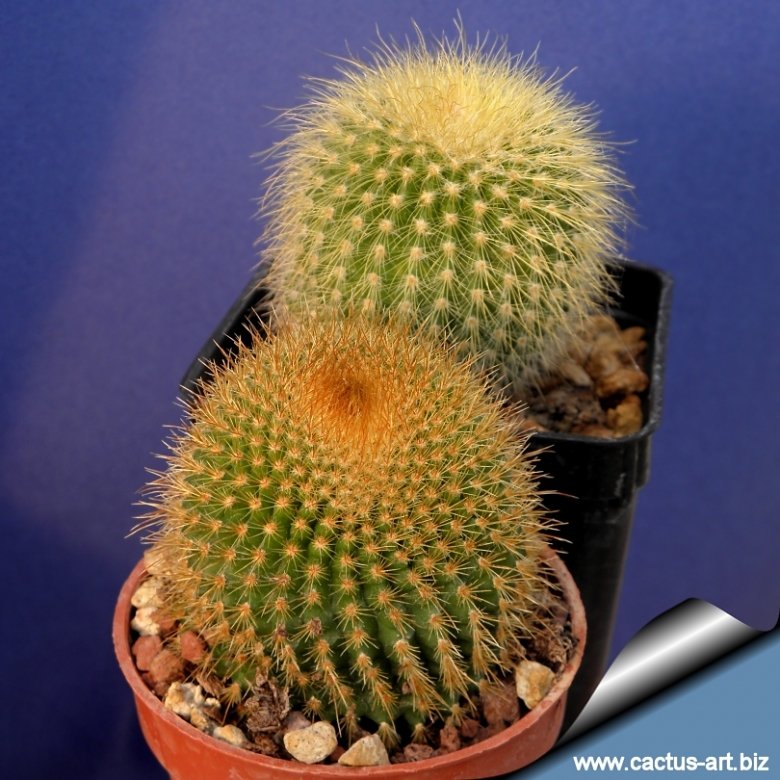
Parodia leninghausii cv. albispina best known in cultivation with its old name Notocactus leninghausii var. albispinus is the white spined variant of Parodia leninghausii distingushed from the latter by its harmless creamy-white spines and pale yellowish flowers. All the other characteristics are absolutely identical, namely size and form of stem, ribs, form size of flowers and fruit etc.
Habit: It is a columnar Cactus that branches and will start to cluster from the base as it ages.
Stem: At first globular then columnar up to 60(100) cm tall, 8-12 cm in diameter, with an angled crown.
Spines: Harmless, creamy-white and bristly.
Flowers: Near the top, 5-6 cm in diameter pale yellowish, silky, shining with a lovely reflection in the petals.
Blooming season: It blooms only when mature in Spring to late Summer. Blooms more than once a year.
Origin and Habitat
Garden origin (Nursery produced cultivar)
Habitat: The habitat where this plant come from can become very cold during the winter nights, often it will fall to just above freezing without harming the plants as it is also very dry.
Source: Eriocactus leninghausii var. albilanatus, LLIFLE - Encyclopedia of living forms, CC-BY-SA, retrieved 2026-10-25.
From llifle page Notocactus leninghausii f. cristatus
Description
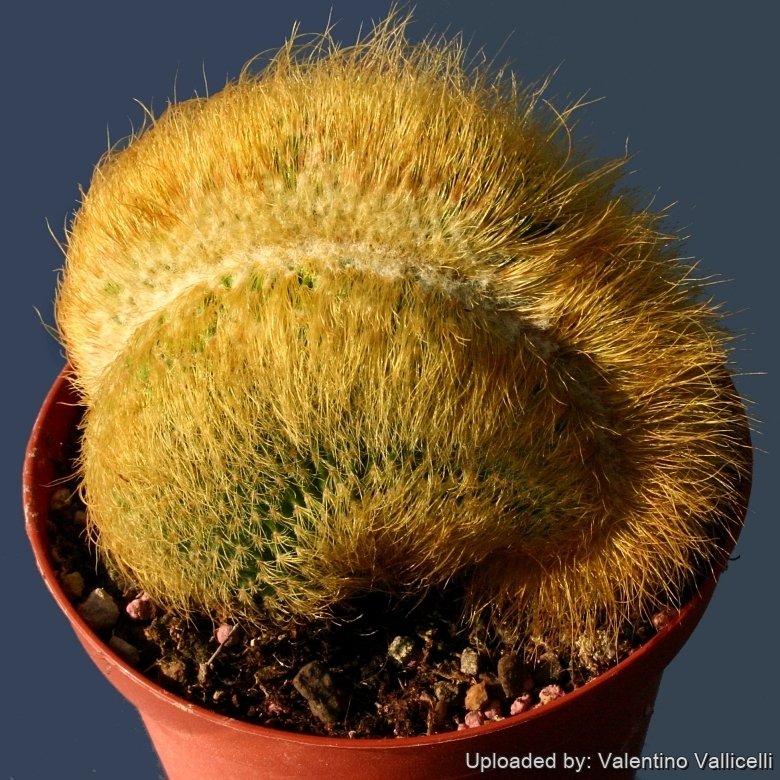
The standard Parodia leninghausii (commonly known as Notocactus leninghausii or the “Golden Ball Cactus”) is very popular and widely grown for its yellow bristly appearance, but this beautiful crested form is still rare in cactus collection. The most striking feature is the long, golden hairs it possesses, which serve to protect it from the harsh sun common to its native habitat. More precisely the long yellow hairs are actually long bristles that benefit the plant by reducing sun exposure and by trapping a layer of air next to the cactus body. This helps to cool the plant in the summer and keep it warm in the winter.
Spines: Harmless, golden and bristly.
Flowers: Near the top, 5-6 cm in diameter pure yellow, silky, shining with a lovely reflection in the petals.
Blooming season: It blooms only when mature in Spring to late Summer. Blooms more than once a year.
Origin and Habitat
Garden origin (Nursery produced cultivar)
Cultivation and Propagation
Frost Tolerant as low as -4°C (or possibly colder) but in cultivation it is best to avoid any frost when during the winter the temperature can go down to 2° C without any harm so long as the compost is very dry. During the summer it is best to keep the plants outside where the temperature can rise to over 30 C with no harm to the plant.
Allows good drainage and use a an open and free draining mineral compost that allows therefore roots to breath.
They like only a short winter’s rest and should be kept almost completely dry during the winter months, If the soil is allowed to be dry for too long root loss could follow but equally the same result would occur if the plants are both wet and cold. From March onwards the plant will begin to grow and watering should be increased gradually until late May when the plant should be in full growth.
Water regularly during the summer so long as the plant pot is allowed to drain and not sit in a tray of water. During hot weather you may need to water the plants more frequently so long as the plant is actively growing. From late September watering should be reduced to force the plant to go in to a state of semi dormancy, by October you should be back in to the winter watering regime.
Need full sun avoiding only the harshest summer sun, if kept too dark they may become overly lush and could be prone to rotting due to over watering, they will also be shy to produce flowers.
Feeding may not be necessary at all if the compost is fresh then, feed in summer only if the plant hasn’t been repotted recently. Do not feed the plants from September onwards as this can cause lush growth which can be fatal during the darker cold months.
Repotting should be done every other year or every three years, annual potting is not necessary. Do not be tempted to over pot as this will cause the unused compost to go stagnant and you may loose the plant.
Propagation: The way to multiply this cactus is by dividing the main crest in smaller pieces that can be rooted. It can also be grafted.
Source: Notocactus leninghausii f. cristatus, LLIFLE - Encyclopedia of living forms, CC-BY-SA, retrieved 2026-10-25.
From llifle page Notocactus leninghausii cv. brunispinus
Description
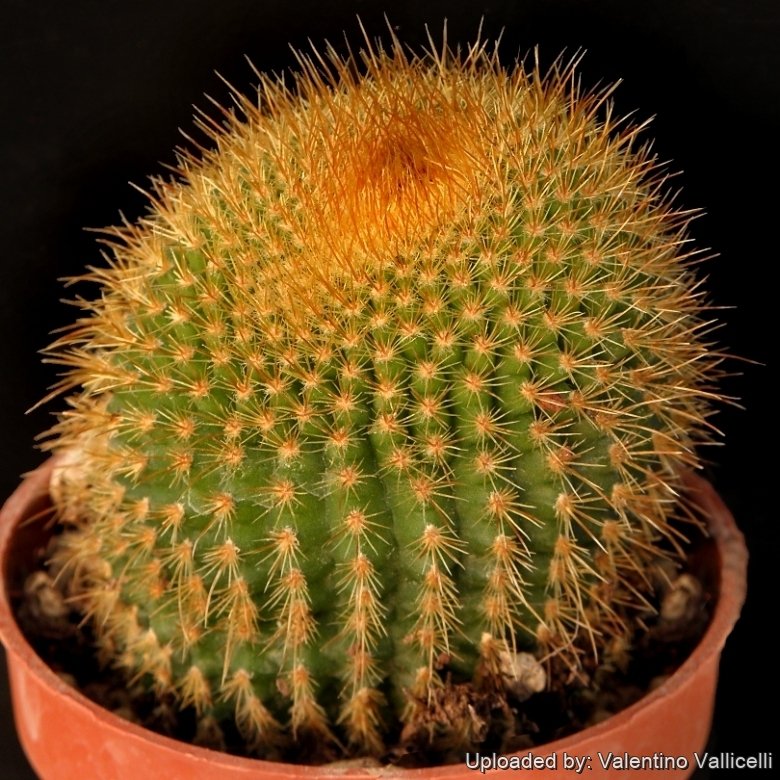
Parodia leninghausii cv. brunispina best known in cultivation with its old name Eriocactus leninghausii var. brunispinus is the brown spined variant of Parodia leninghausii distingushed from the latter by its harmless amber to brownish-red spines and golden flowers. All the other characteristics are absolutely identical, namely size and form of stem, ribs, form size of flowers and fruit etc.
Habit: It is a columnar Cactus that branches and will start to cluster from the base as it ages.
Stem: At first globular then columnar up to 60(100) cm tall, 8-12 cm in diameter, with an angled crown.
Spines: Harmless, amber to brownish-red and bristly.
Flowers: Near the top, 5-6 cm in diameter golden yellow, silky, shining with a lovely reflection in the petals.
Blooming season: It blooms only when mature in Spring to late Summer. Blooms more than once a year.
Source: Notocactus leninghausii cv. brunispinus, LLIFLE - Encyclopedia of living forms, CC-BY-SA, retrieved 2026-10-25.
Cultivars and forms (3)
Gallery