Publication: Bradleya 5: 93. 1987
Description
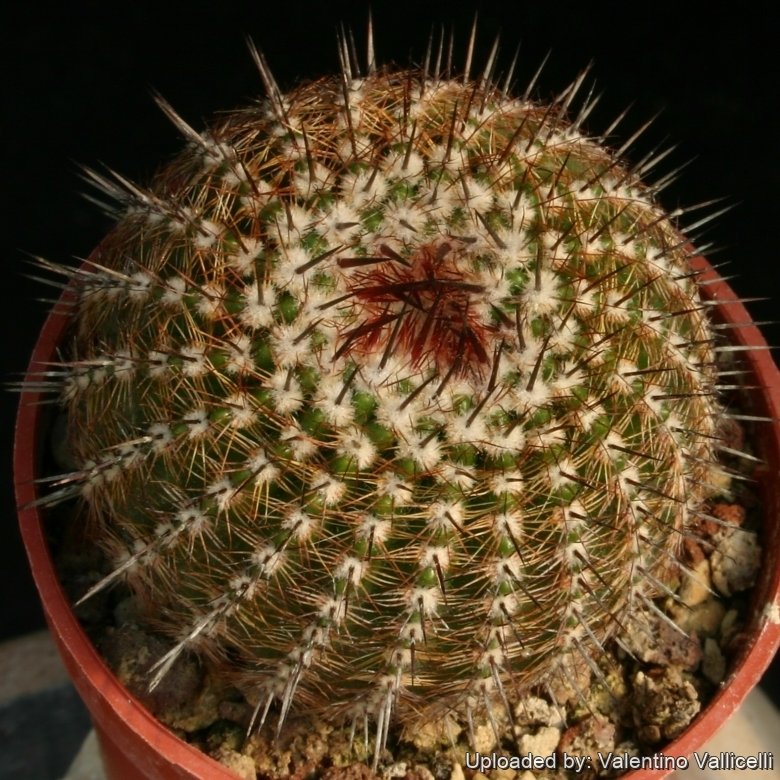
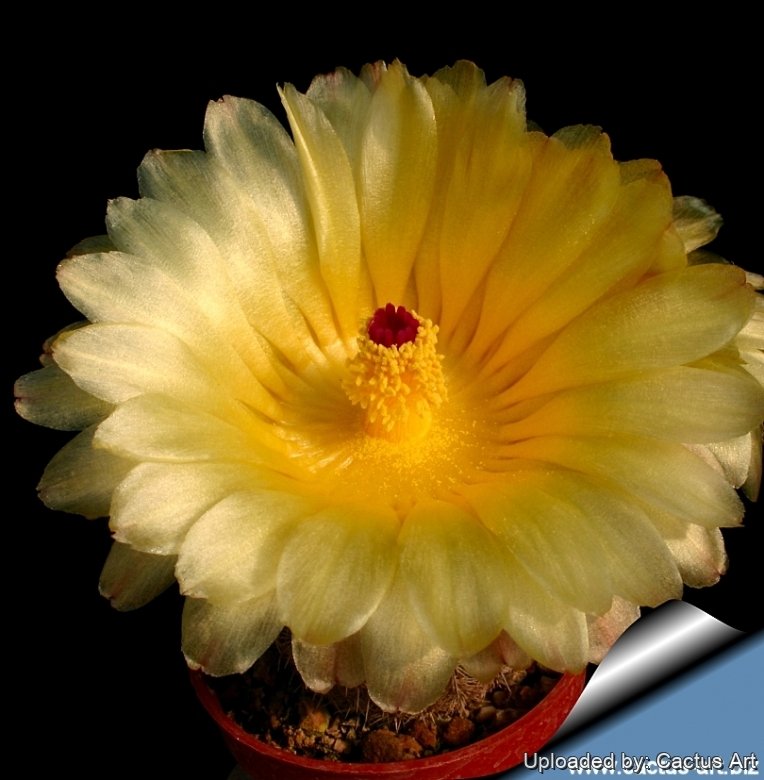
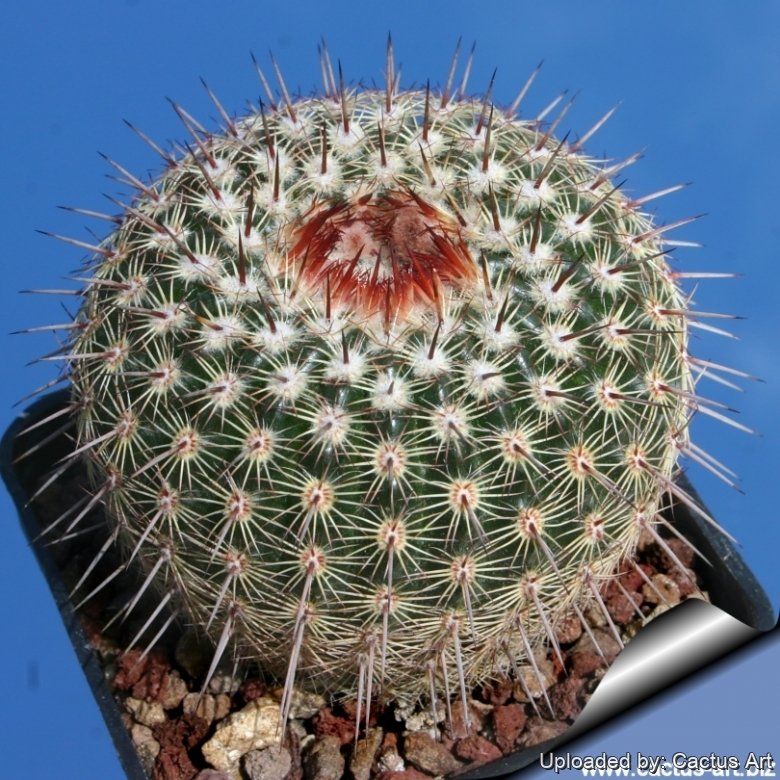
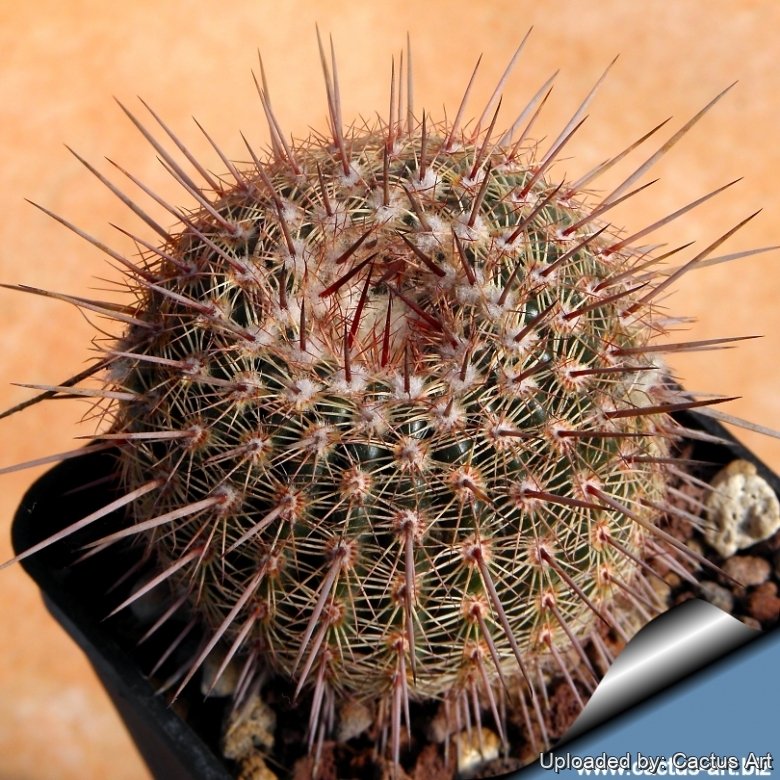
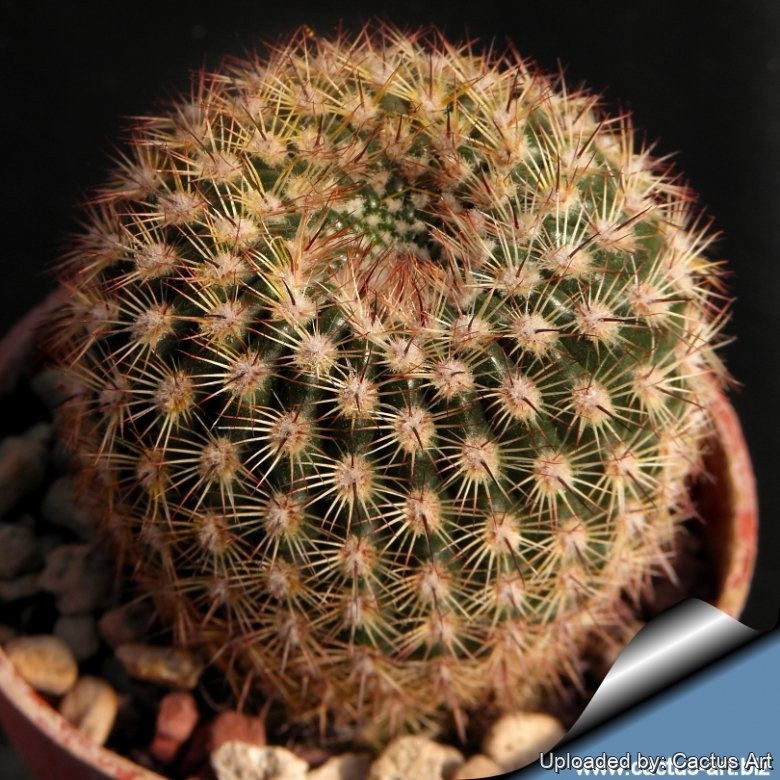
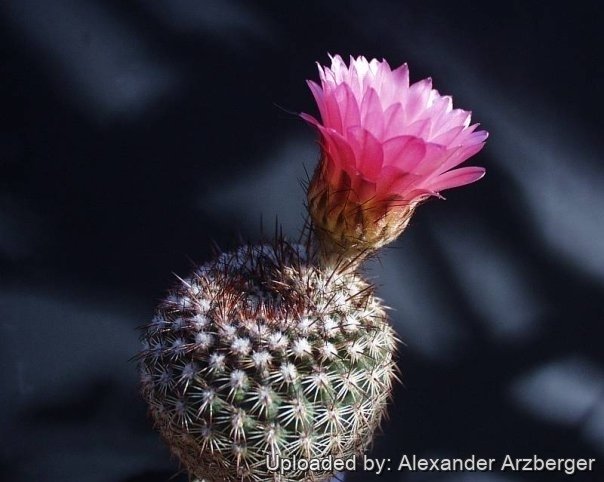
Parodia mueller-melchersii (best known as Notocactus mueller-melchersii) in contrast to most notocacti (that have almost always yellow flowers), has flowers ranging from creamy yellow to lavender. The spines are also variable ranging from yellowish-white to dark red-brown. Several of its colour and morphological variant was early classified as different independent varieties, but nowadays all this plant are considered part of a multiform species, where each variant form is linked to others by populations of plants with intermediate characteristics.
Habit: It is a perennial stem succulent. Plants usually solitary. Multiple branches may also been produced when the apex is damaged.
Stem: Globose to shortly columnar , dull green, to 8-10(-24) cm tall and 5-6 cm in diameter or slightly larger. Crown wooly and spiny.
Ribs: (18-)20-24, vertical or weakly spiralling, not distinctly tuberculate with chin-like humps below the areoles more evident near stem apex.
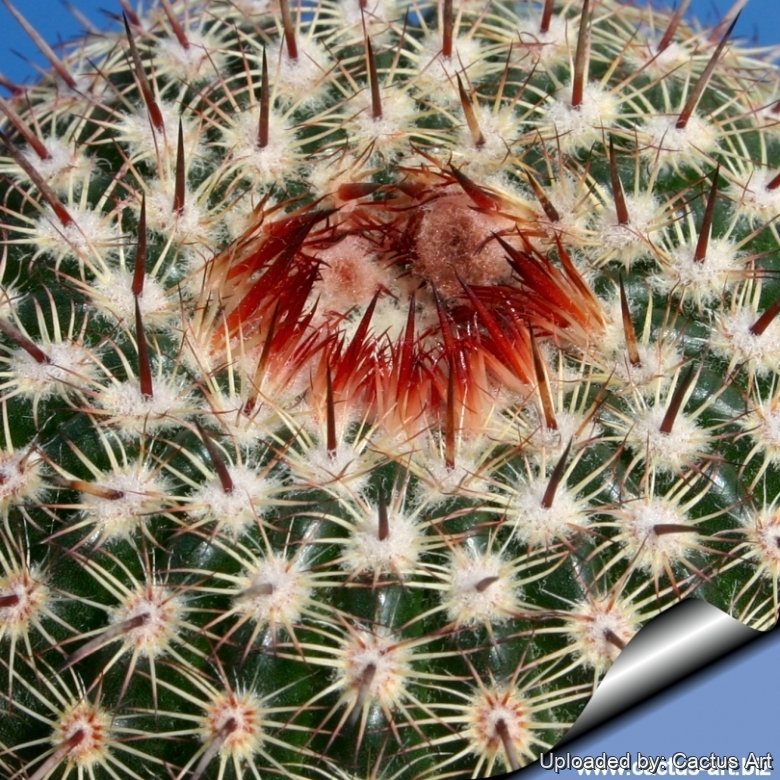
Areoles: Initially white felted .
Central spines: 1-3, straight, pointing to side or downward, 7-20 mm long straight, not flattened, stiff , horn coloured, yellowish, light brown, reddish brown or dark red with dark spots. The spine-bases are red-brown and tips are often darker.
Radial spines: 12-18, or more, slender, needle-like, diverging, pale yellow or whitish, darker-tipped 5-8 mm long.
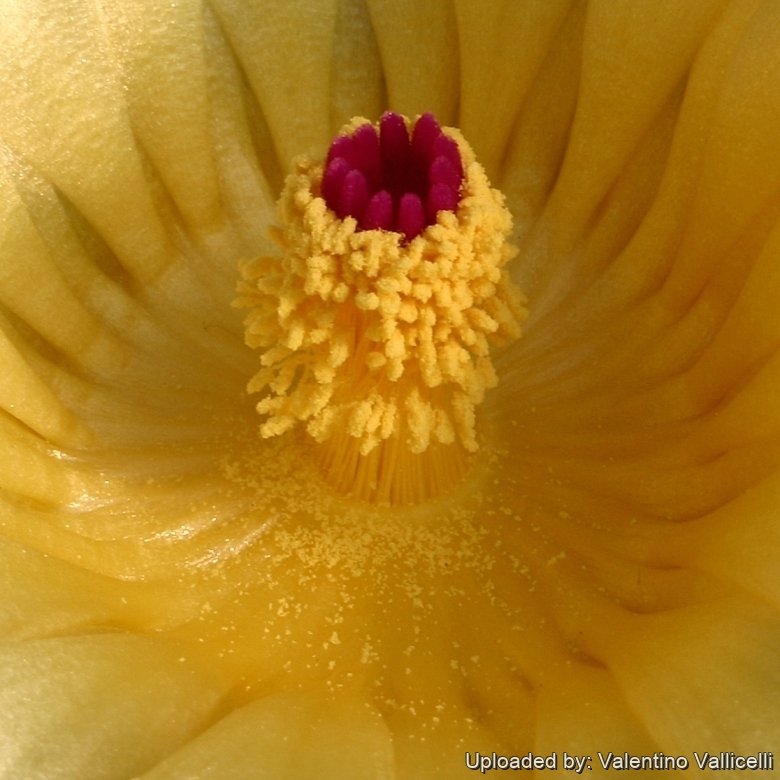
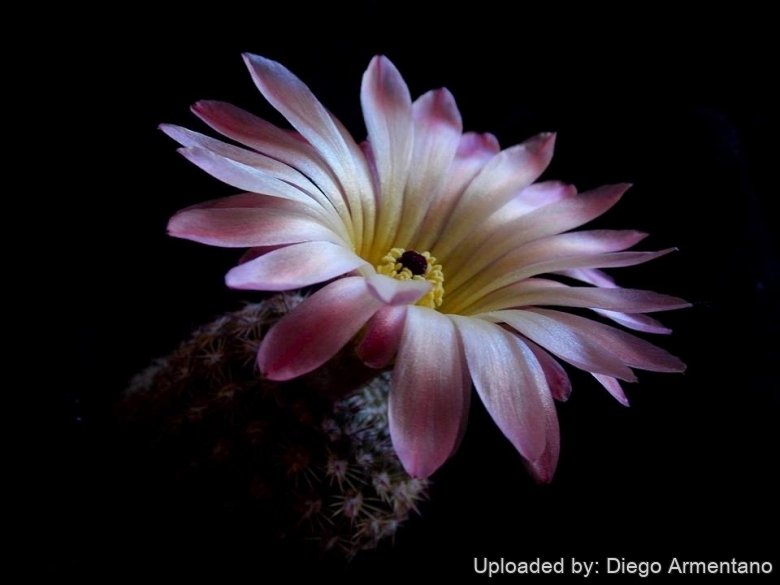
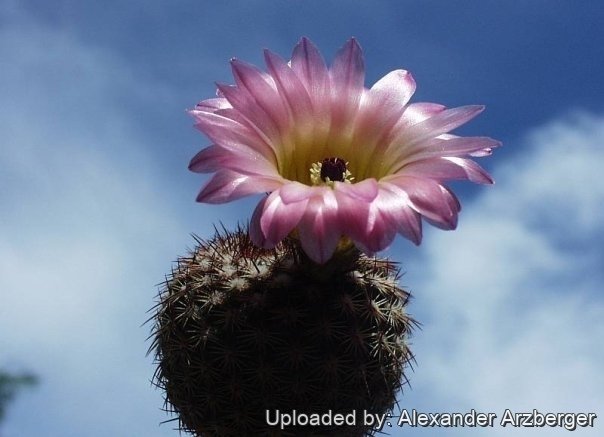
Flowers: Several produced together around the stems apex, creamy yellow, citron yellow, pink, light lavender or reddish becoming paler to yellowish in the throat or pale golden yellow, to 3-4 cm long and 5-6 cm in diameter; pericarpels and floral tubes with white wool and dark bristles. Stigma pale carmine.
Blooming season: Summer.
Fruits: Club shaped elongating at base, 1,5 cm long thin-walled.
Origin and Habitat
Uruguay and Brazil (Rio Grande do Sul). Parodia mueller-melchersii has a small range and is not abundant.
Altitude: It occurs at elevations between 150 and 300 metres above sea level.
Habitat: Grassland or pampas in rocky areas (eg. inland cliffs, mountain peaks) It is threatened by land use change for Eucalyptus plantations and cattle ranching. Several subpopulations have already disappeared, and others continue to decline.
Cultivation and Propagation
It is easy to grow. It prefers a neutral to slightly acidic mineral-based potting mix with a good drainage. It likes a warm bright location, does great in partial shade but doesn’t like full, hot blazing sun in the central summer month. Can support quite some water during the growing season but pot plants in winter are wet-sensitive and needs to be kept dry (rots easily if soil is wet and cold) tends to lose its roots in winter. Usually it is recommended to over-winter this plant in a bright and warm greenhouse with at least 8-10° C, but it has proved to tolerate temperatures as low as -5° C for short periods.
Propagation: Seeds, cuttings or root suckers (if available). Not too difficult to raise from seed.
Bibliography
Major references and further lectures
-
Tony Mace “Notocactus: a review of the genus incorporating Brasilicactus, Eriocactus and Wigginsia” Editorial Board/National Cactus & Succulent Society, 1975
-
Edward Anderson “The Cactus family” Timber Press, Incorporated, 2001
-
James Cullen, Sabina G. Knees, H. Suzanne Cubey “The European Garden Flora Flowering Plants: A Manual for the Identification of Plants Cultivated in Europe, Both Out-of-Doors and Under Glass” Cambridge University Press, 11/Aug/2011
-
David R Hunt; Nigel P Taylor; Graham Charles; International Cactaceae Systematics Group. “The New Cactus Lexicon” dh books, 2006
-
Larocca, J., Machado, M. & Duarte, W. 2013. Parodia mueller-melchersii. In: IUCN 2013. “IUCN Red List of Threatened Species.” Version 2013.1. <www.iucnredlist.org>. Downloaded on 28 October 2013.
-
H. Krainz “Die Kakteen: eine Gesamtdarstellung der eingeführten Arten nebst Anzucht- und Pflege-Anweisungen,” Parts 1-16” Franck, 1956
-
Hans Hecht “BLV-Handbuch der Kakteen” BLV-Verlagsgesellschaft, 1982
-
Haustein, Erik. “Der Kosmos-Kakteenführer.” Kosmos / Gesellschaft der Naturfreunde., Stuttgart, 1983
-
Walther Haage “Kakteen von A bis Z”, Quelle & Meyer Verlag: Heidelberg, 1986
-
Willy Cullman, Erich Gotz, Gerhard Groner “The Encyclopedia of Cacti” Alphabooks, 1986
From llifle page Notocactus eugeniae
Description
Globose cactus, up to 7 cm in diameter.
Spines: Red an white
Flowers: Blossoms are large (6 cm in diameter) and stand near the top. They are yellow with glossy petals and have a dark purple stigma. The buds are tomentose and appear during the summer.
Remarks: Notocactus eugeniae is generally included within (as a synonym of) Parodia mammulosa but quite dissimilar at a first glance. This plant is now more properly considered by synonym of Parodia mueller-melchersii (Backeb.) N.P. Taylor.
Origin and Habitat
Uruguay (Tacuarembó)
Cultivation and Propagation
It is easy to grow. It prefers a neutral to slightly acidic mineral-based potting mix with plenty of extra grit and feed during the summer. It likes a warm bright location, does great in partial shade but doesn’t like full, hot blazing sun in the central summer month. Can support quite some water during the growing season but pot plants in winter are wet-sensitive and needs to be kept dry (rots easily if soil is wet and cold) tends to lose its roots in winter. Water Best if watered with rain water. Usually it is recommended to over-winter this plant in a bright and warm greenhouse with at least 8-10° C and rather dry (it tends to lose its roots and to rot if the substrate is wet and cold) but it has proved to tolerate temperatures as low as -5° C for short periods.
Propagation: Seeds.
Bibliography
Major references and further lectures
-
Edward F. Anderson “The Cactus Family” Timber Press, 2001
-
Curt Backeberg “Cactus Lexicon” Sterling Publishing Company, Incorporated, 1978
-
Hiroshi Hirao “Colour encyclopaedia of cacti” Japan 1979 (Japanese language and script)
-
Willy Cullmann, Erich Götz (Dozent Dr.), Gerhard Gröner “The encyclopedia of cacti” Portland, OR: Timber Press, 1986
-
David Hunt, Nigel Taylor “The New Cactus Lexicon” DH Books, 2006 ISBN 0953813444, 9780953813445
-
James Cullen, Sabina G. Knees, H. Suzanne Cubey “The European Garden Flora Flowering Plants: A Manual for the Identification of Plants Cultivated in Europe, Both Out-of-Doors and Under Glass” Cambridge University Press, 11/Aug./2011
Source: Notocactus eugeniae, LLIFLE - Encyclopedia of living forms, CC-BY-SA, retrieved 2026-10-25.
From llifle page Notocactus rutilans
Description
Parodia rutilans, best known as Notocactus rutilans, is a small-growing, usually solitary, cactus species. The numerous stiff, sharp spines are varicoloured and the centrals are reddish-brown. The flowers are very showy, 5 cm long, with much white wool along the tubes, and translucent petals, salmon to carmine-red shading to egg-yolk yellow in the centre. The plants are very free-flowering and self- fertile; producing many seeds. When in flower the whole plant shimmers with color and it flowers when quite young. Two subspecies of Parodia rutilans are sometime recognized the nominate form (dull green with 2 central spines) and Subspecies veeniana (bright green with 1 central spine).
Derivation of specific name: The Latin epithet ‘rutilans’, ‘reddish-orange’, presumably refers to the the colour of the spination.
Stems: Globose, to slightly elongate or shortly cylindrical in age, dull bluish green to bright green, to 5 cm high.
Ribs: 18-24, running spirally and divided by deep furrows, with small chinlike humps.
Areoles: Densely white woolly, later less so.
Central spines: 1 or 2, light reddish brown, straight or pointing slightly downward, lower one stoutest, to 7 mm long.
Radial spines: 14-16, diverging, white to yellowish or gray, with darker tips, to 5 mm long.
Flowers: Salmon, rose or carmine red, with dark tips, buttercup yellow inside, throat paler, 3-4 cm long, to 6 cm in diameter. Pericarpels and floral tubes with white wool and reddish brown bristles.
Fruits: Up to 1.5 cm long.
Origin and Habitat
Parodia rutilans occurs in the Sierra Largo, from near the Brazilian border of Uruguay.
Bibliography
Major references and further lectures
-
Edward Anderson “The Cactus family” Timber Press, Incorporated, 2001
-
James Cullen, Sabina G. Knees, H. Suzanne Cubey “The European Garden Flora Flowering Plants: A Manual for the Identification of Plants Cultivated in Europe, Both Out-of-Doors and Under Glass” Cambridge University Press, 11/Aug/2011
-
David R Hunt; Nigel P Taylor; Graham Charles; International Cactaceae Systematics Group. “The New Cactus Lexicon” dh books, 2006
-
N. L. Britton, I. N. Rose “The Cactaceae: Descriptions and Illustrations of Plants of the Cactus Family,” Volume 3 1922.
-
Krainz, Hans (Hrsg.) “Die Kakteen” 1957-1975 Franckh’sche Verlagshandlung
-
Hans Hecht “BLV-Handbuch der Kakteen” BLV-Verlagsgesellschaft, 1982
-
Haustein, Erik. “Der Kosmos-Kakteenführer.” Kosmos / Gesellschaft der Naturfreunde., Stuttgart, 1983
-
The Cactus and Succulent Journal of Great Britain, Volume 41 Cactus & Succulent Society of Great Britain., 1979
-
Urs Eggli, Leonard E. Newton “Etymological Dictionary of Succulent Plant Names” Springer Science & Business Media, 29 June 2013
-
Walther Haage “Cacti as House Plants” Studio Vista, 1965
Source: Notocactus rutilans, LLIFLE - Encyclopedia of living forms, CC-BY-SA, retrieved 2026-10-25.
From llifle page Notocactus rutilans var. robustior
Origin and Habitat
Uruguay (Southern South America, Southern America)
Type Locality: Cerro Leon, nahe Bernabe Rivera
Source: Notocactus rutilans var. robustior, LLIFLE - Encyclopedia of living forms, CC-BY-SA, retrieved 2026-10-25.
Cultivars and forms (1)
Subspecies (1)
Gallery