Publication: J. Linn. Soc., Bot. 17: 163. 1878 [1880 publ. 1878]
Description
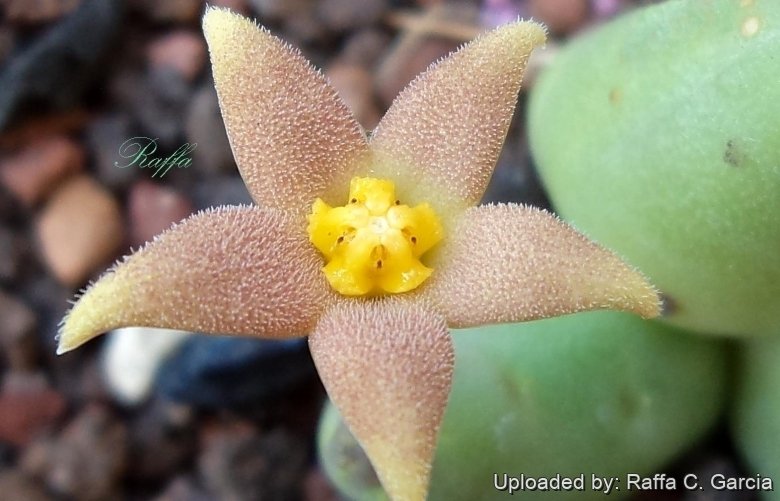
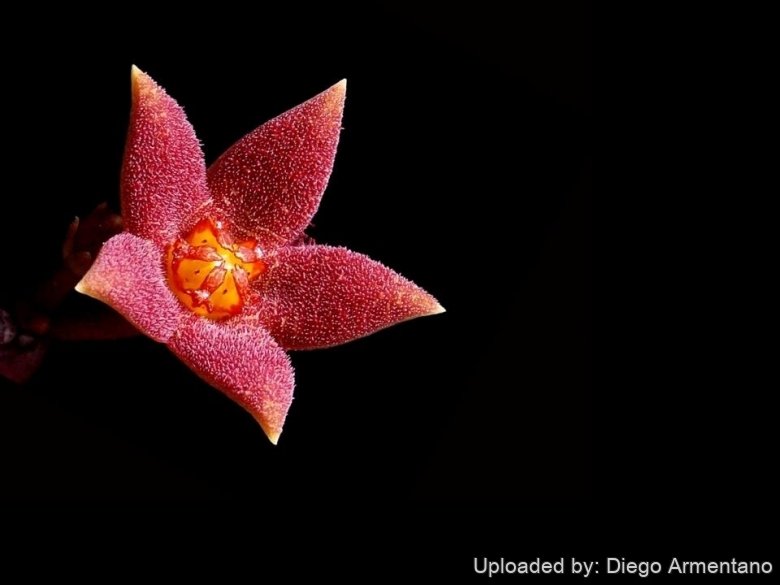
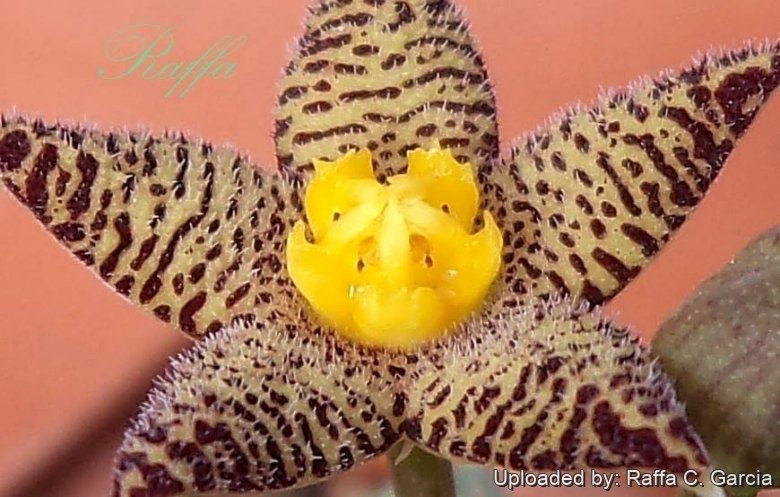
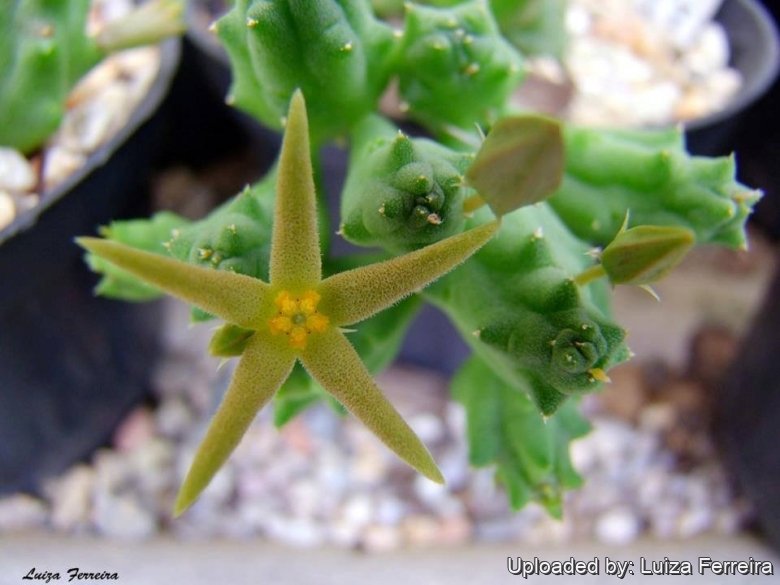
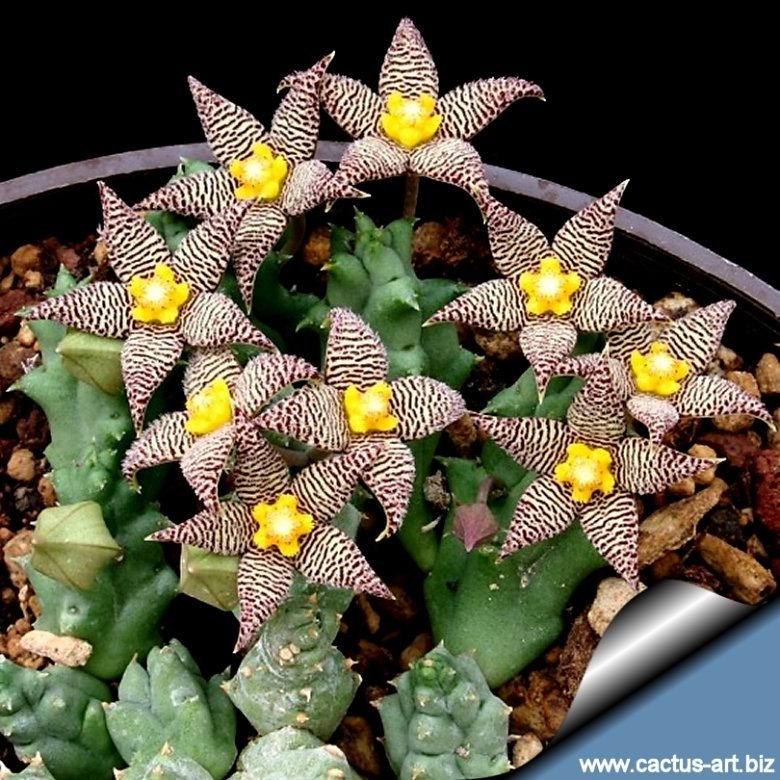
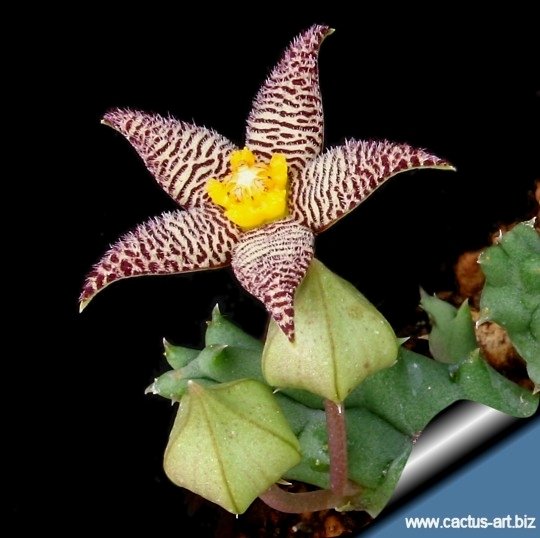
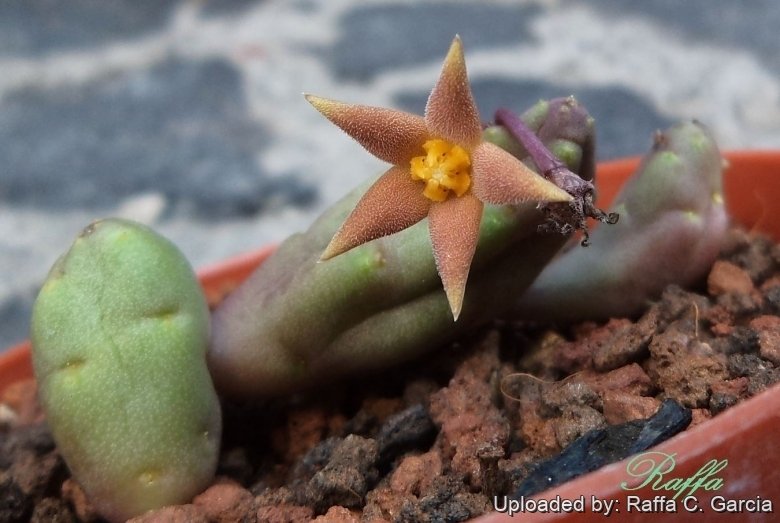
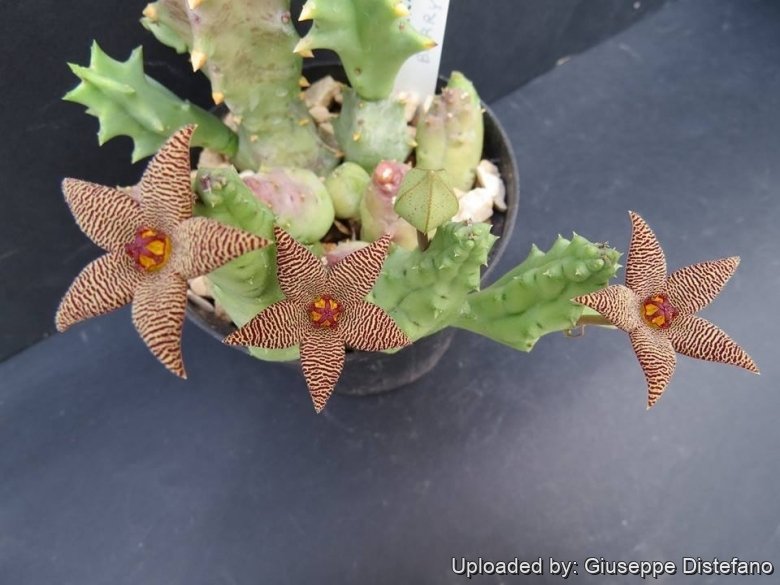
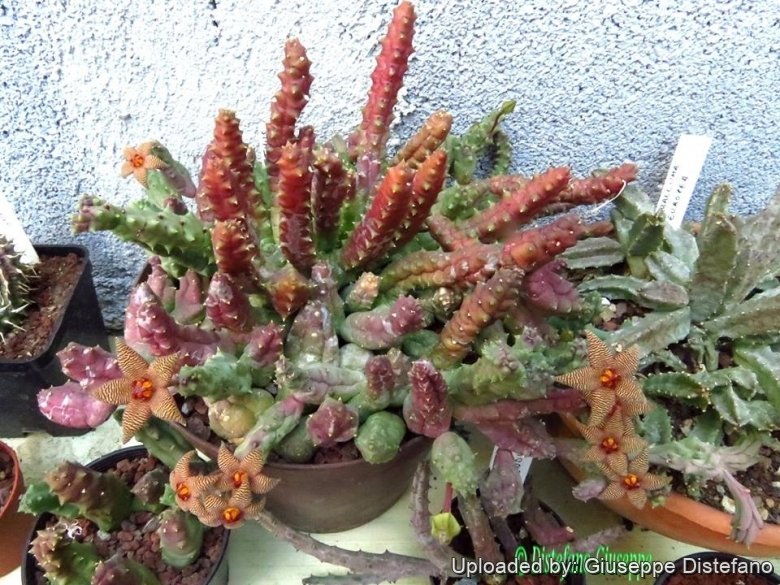
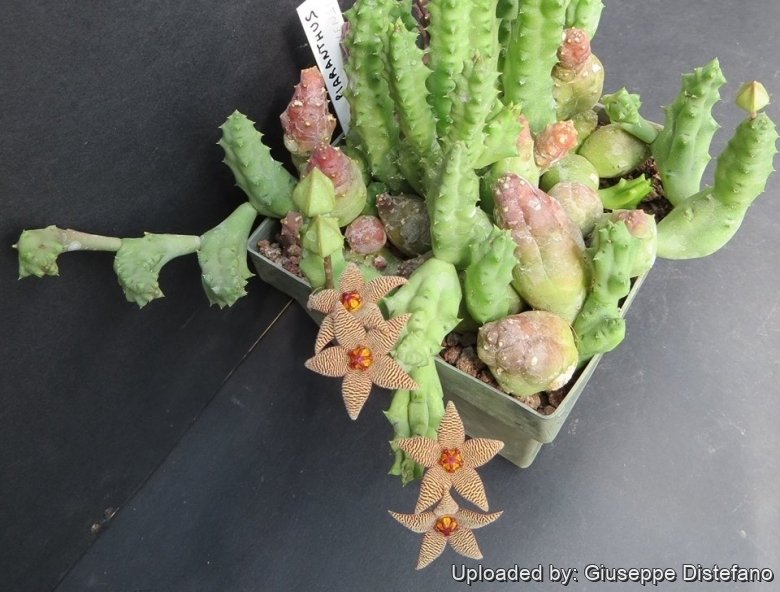
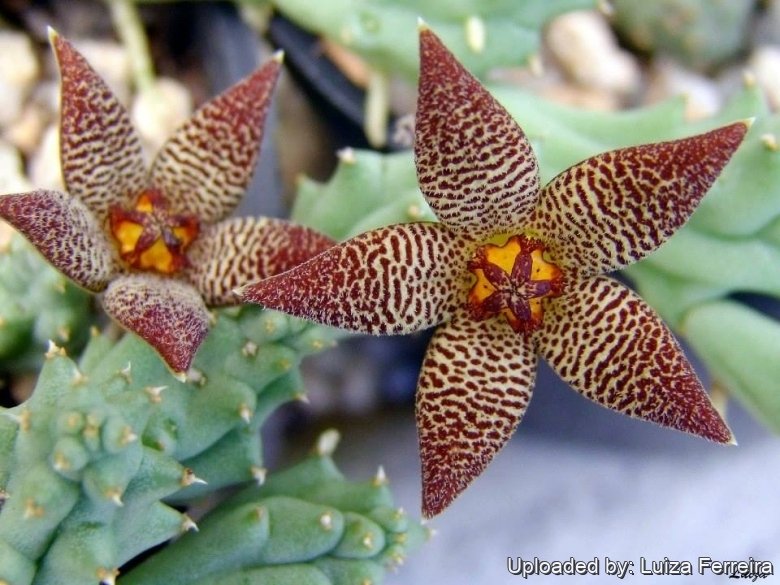
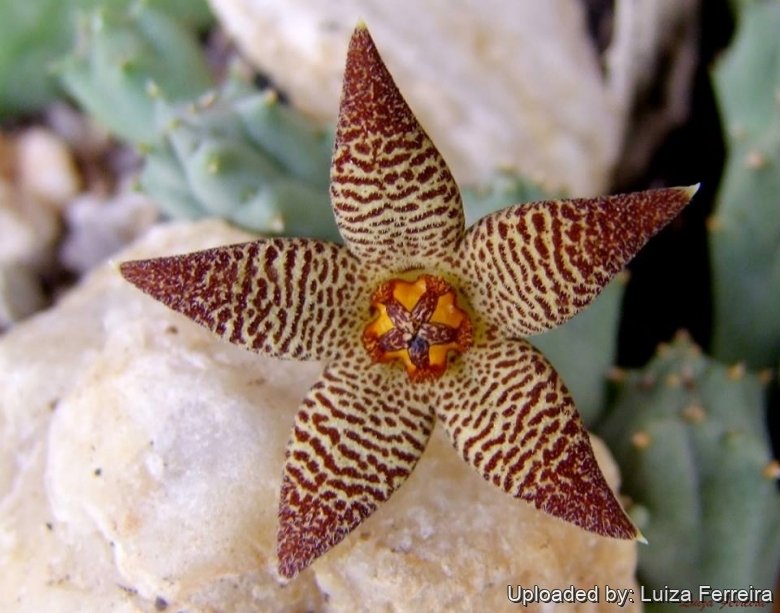
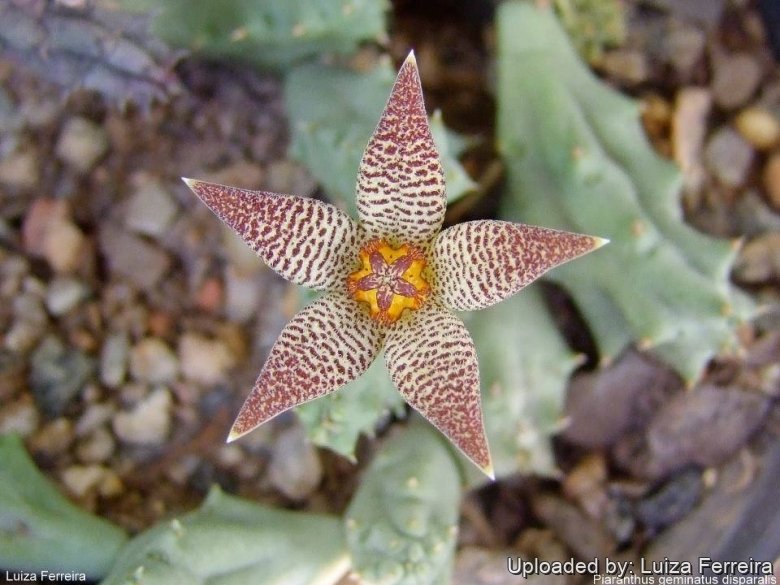
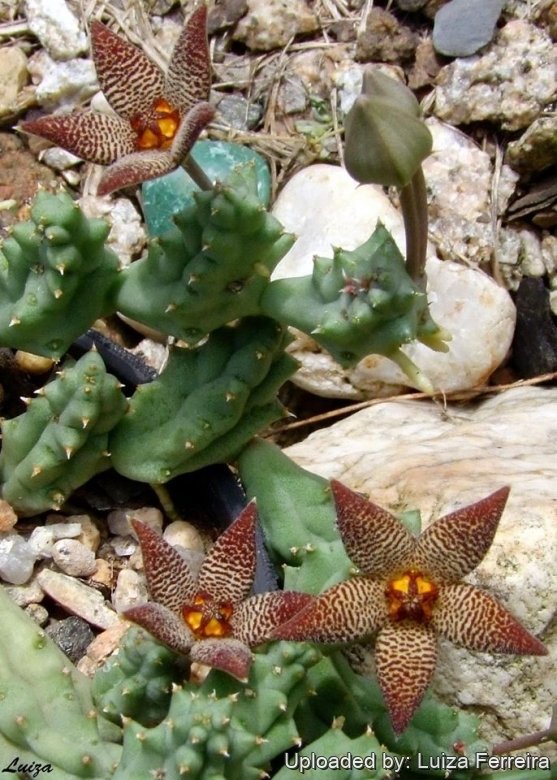
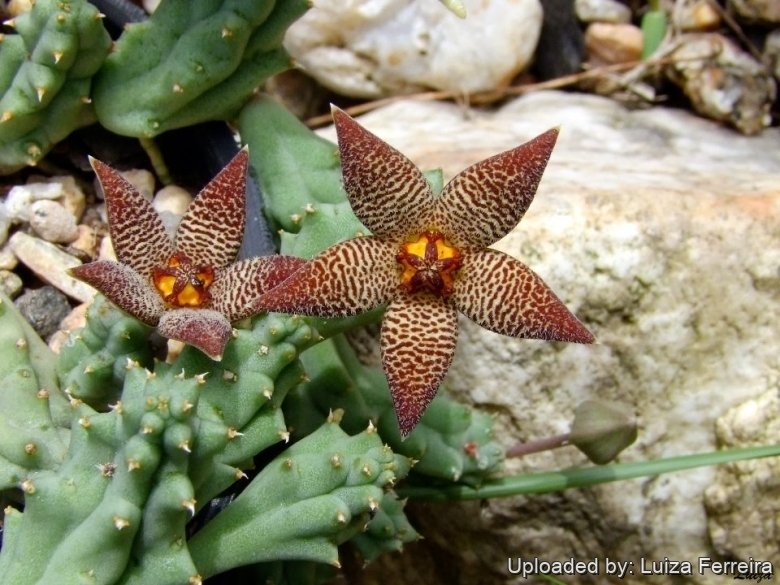
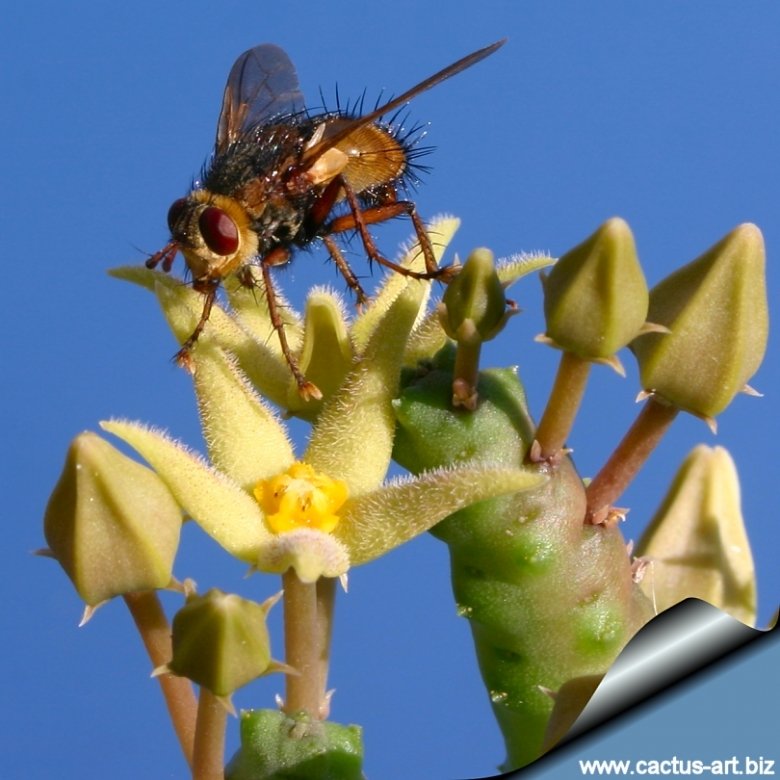
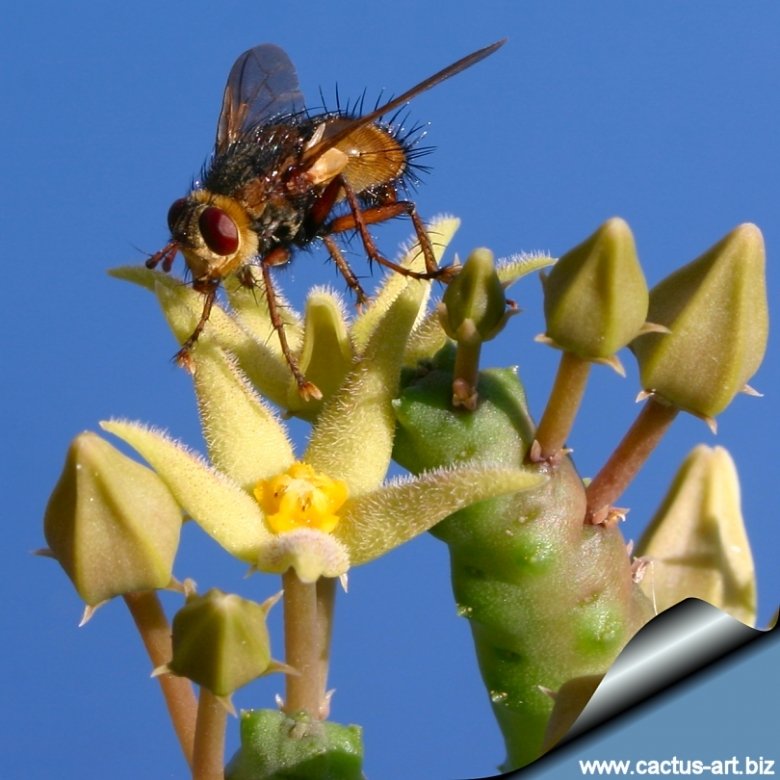
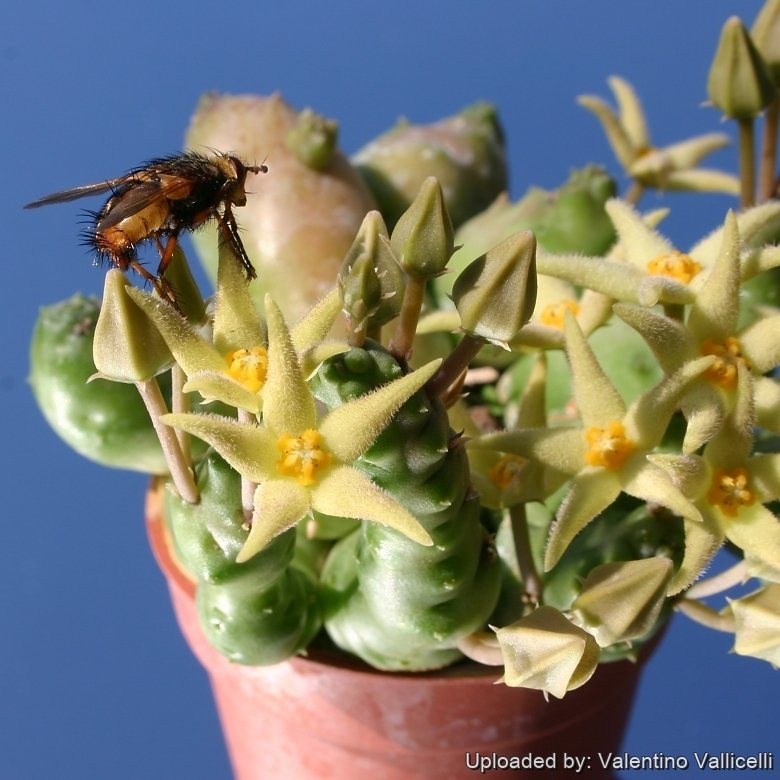
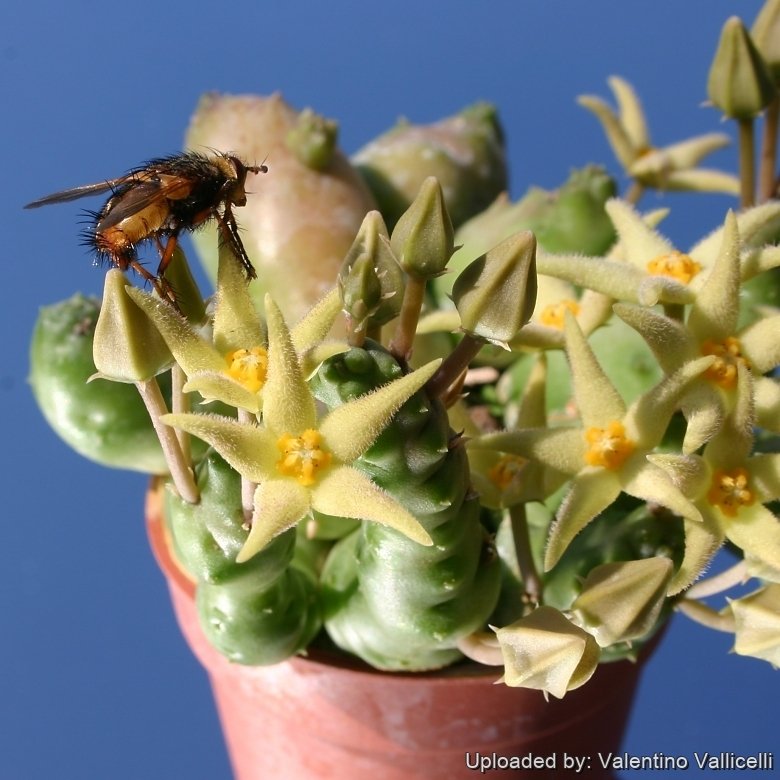
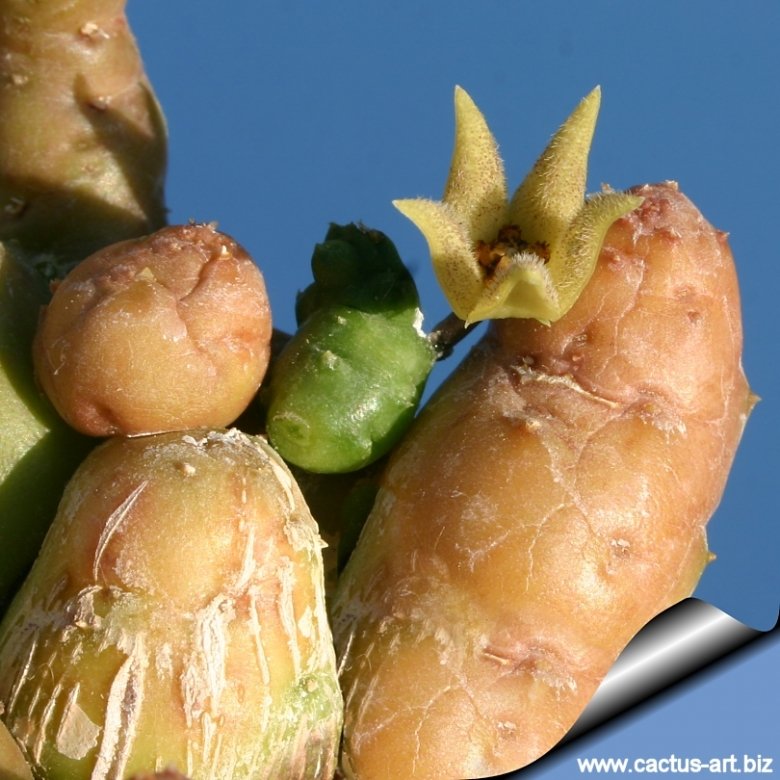
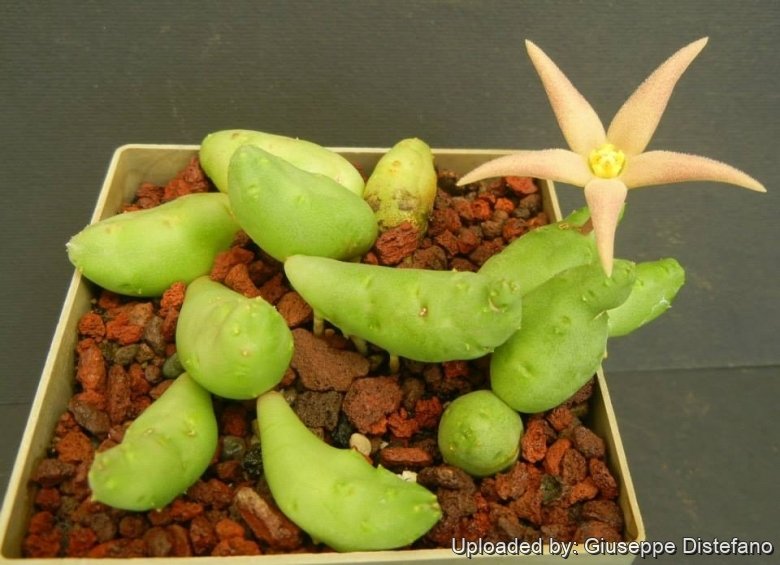
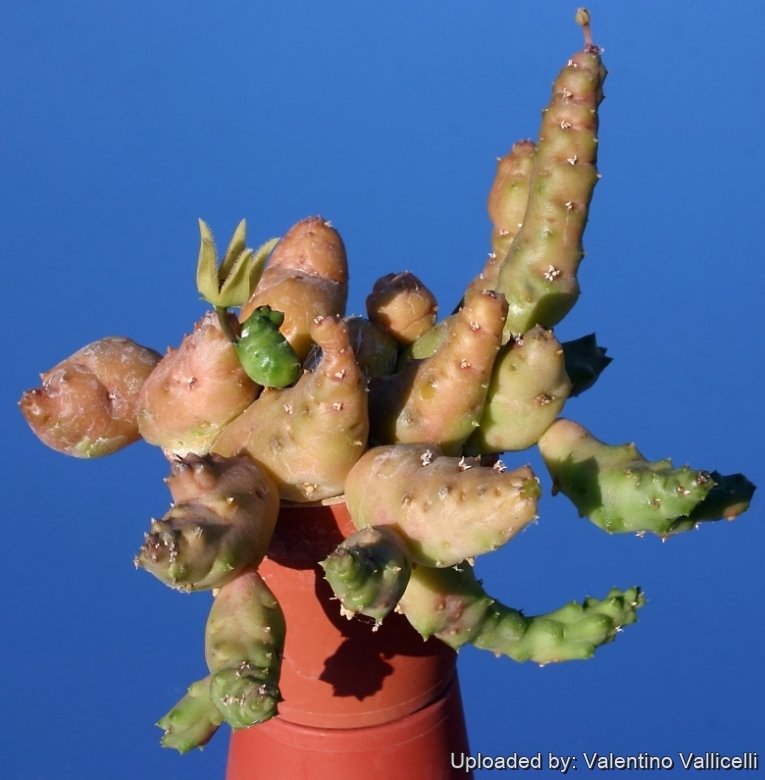
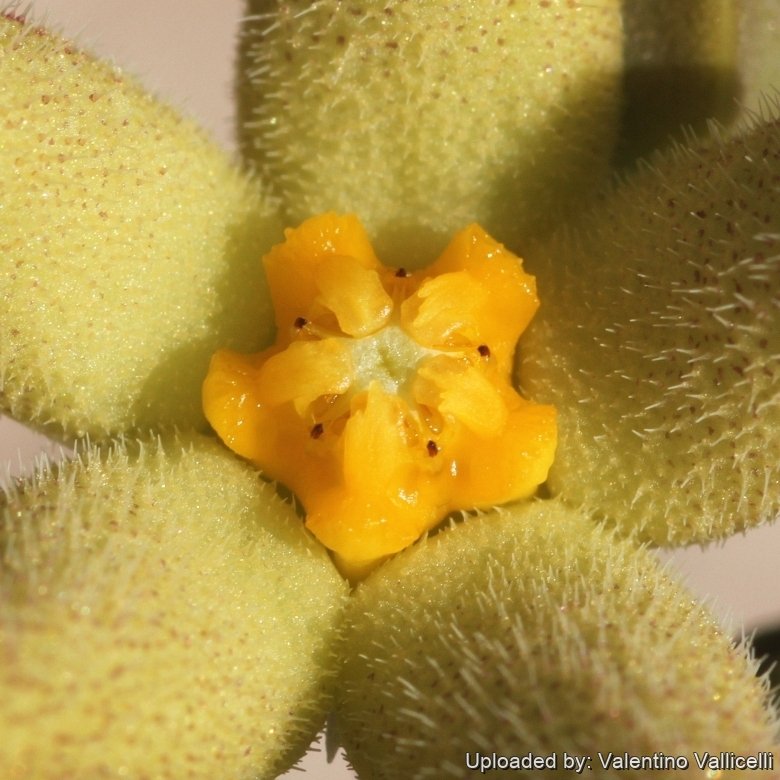
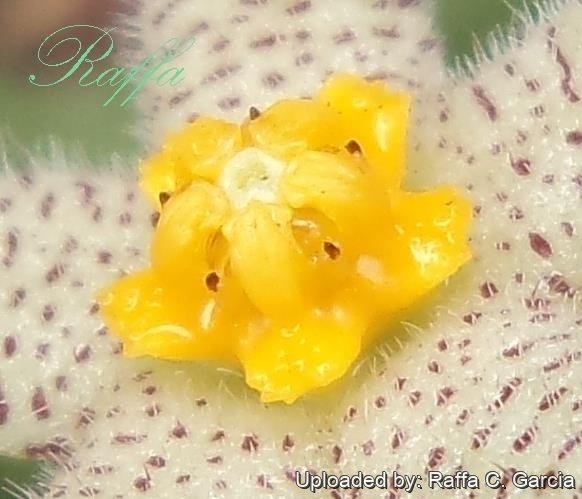
Piaranthus geminatus is a clumping and prostrate species that spread over the ground forming large cushions. Flowers are five-pointed fleshy stars varying from whitish, yellowish, reddish or bright brown, with or without brown-red dots or transverse lines sometime condensed to a more or less plain colouration. It is very variable and has received numerous unnecessary names of no botanical value, representing no more than local phenotypes.
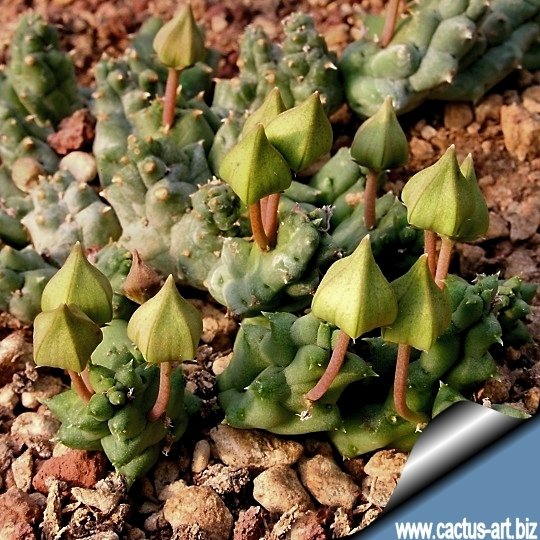
Stems: Procumbent, decumbent or ascending 1-6 (or under cultivation up to 15) cm long, 12-18(-25) mm thick, divided in short squat ovoid or cylindrical articles obtuse to obscurely 4-(5-)angled, with 2-4 minute teeth 1 mm hight, along each angle. Surface glabrous, smooth or slightly rough, light-green tips faintly purple.
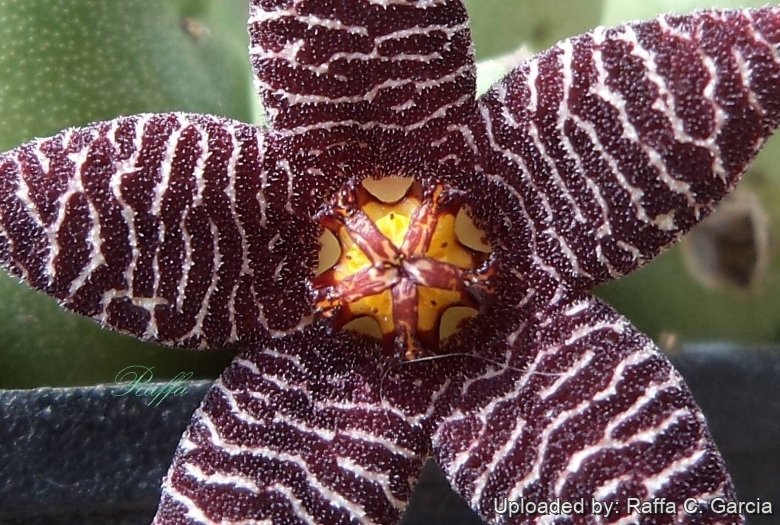
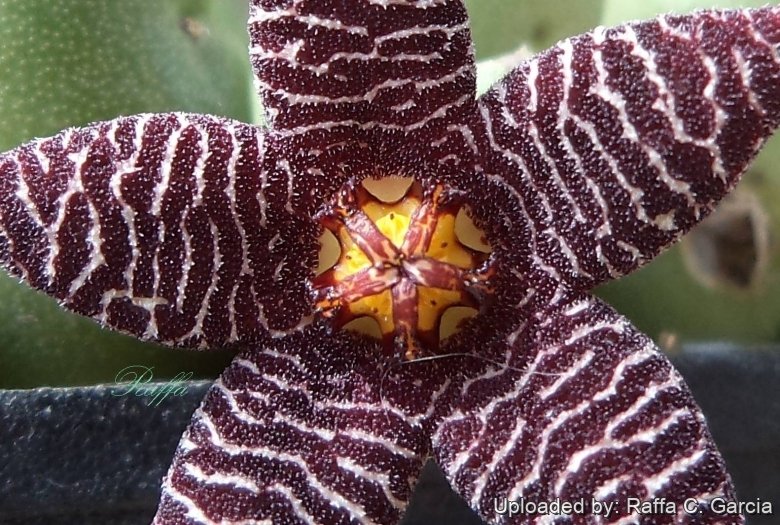
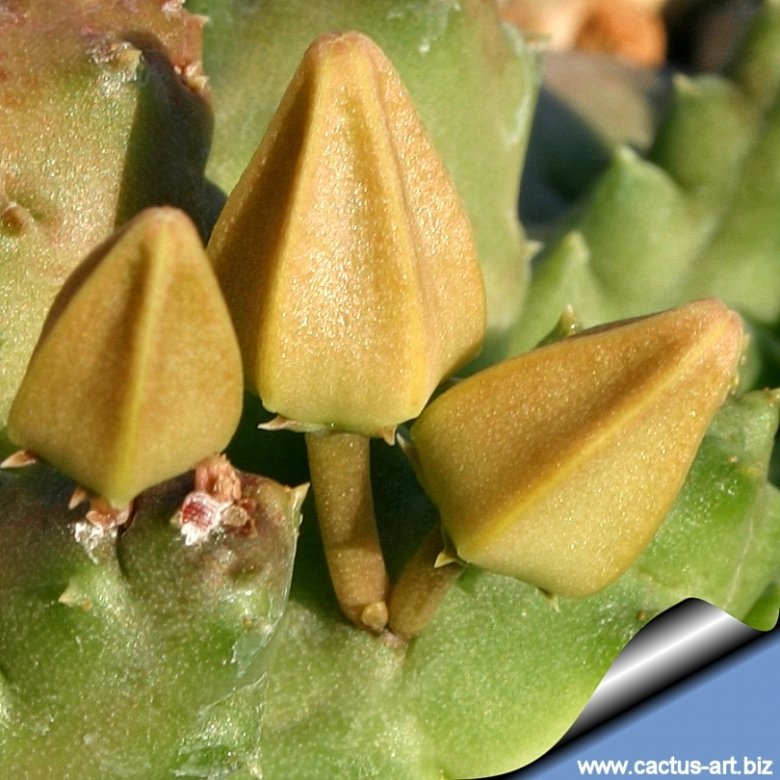
Flowers: 1 to 3 (rarely more) in a short inflorescence at the tips of the stems. Pedicels (2-)6-12(-20) mm long, x 1-2 mm in diameter, glabrous. Sepals 2-4 mm long, ovate or ovate-lanceolate, acuminate, glabrous. Corolla about 13 mm to 42 mm in diameter, star-shaped, without a tube valerian scented with fruity component, more or less pubescent. Corolla-lobes widely spreading, 10-14 mm long, about 4-5 mm broad at the base, lanceolate or gradually tapering to the acute apex, with revolute margins, glabrous on the back, and velvety all over the inner face, more or less hairy; Hairs 0.1-0-9 mm, conical, white, brown or purple, basal margins of the lobes not ciliateor very rarely with clavate hairs. Lobes colour varying from whitish, yellowish, greenish-yellow reddish or bright brown, with or without brown-red dots or transverse lines (sometime condensed to a more or less plain colouration) margin recurved. Corona 2.5-3.2 tall, 3.2-6.5 mm wide, usually yellow and unspotted. Corona-lobes about 1-2 mm x 0.5-1.2 mm, linear-lanceolate or narrowly-oblong, acute or slightly toothed at the apex, closely incumbent upon the backs of the anthers and shortly exceeding them but not connivent-erect, dorsally produced at the base into a spreading crest entire or minutely subdenticulate at the dorsal margin, flat or nearly so and not tuberculate on the top, the entire corona appearing (viewed from above) like a star with 5 short rounded lobes connected at the base, yellow. Pollinia 0.4-0.65 by 0.25-0.4 mm.
Blooming season: Produces numerous flowers simultaneously in October.
Fruits (paired follicles): 6-13 cm long.
Seeds: 3.5-4.5 long, 2-3 mm thick.
Taxonomy remarks: The genus Piaranthus is a very confusing complex of extremely nearly related species with many intermediary forms growing together in many widespread localities and they are very difficult to distinguish. Also experienced botanist found difficulty to separate and classify reliably the various species and forms.
In particular Piaranthus geminatus var. geminatus is a very variable species which now also includes the former species Piaranthus globosus, Piaranthus disparilis, and Piaranthus pillansii.
Origin and Habitat
South Africa, Eastern and Western Cape Provinces.
Cultivation and Propagation
It is an easy blooming plant when mature that require moderately watering through the growing season but enjoy plenty of water and some fertiliser in hot weather, this helps them to flower freely. Water more sparingly in winter according to temperatures. But, as with most asclepiads, it is unwise to leave them wet in cold weather. Winter care presents no problems at 5°C with plenty of light. Since roots are quite shallow, use a cactus mix or add extra perlite or pumice to regular soil potting soil. A gritty, very free-draining compost is suitable, and clay pots help the plants to dry out between watering.
Sun Exposure: Partial sun or light shade
Pest and diseases: Stapelia species vary in their susceptibility to rotting, but are generally fairly easy to grow, especially if kept pest-free. They are very susceptible to stem and root mealy bugs, and damage from these may well initiate fungal attack. If you do have problems with a stem or with basal rotting, you can reliably isolate the healthy parts, dry them off, and re-root them in moist compost.
Cultural Practices: Re-pot every 2 years
Propagation: Easiest with stem cuttings. Allow cuttings to dry a day before planting. Stems must be laid (Not buried) on gritty compost and will then root from the underside of the stems. It can also be increased from seeds sowing in spring in moist, sandy peat moss.
Potting medium: Since roots are quite shallow, use a cactus mix or add extra perlite or pumice to regular soil potting soil. A gritty, very free-draining compost is suitable, and clay pots help the plants to dry out between watering.
Notes
Pollination:
This plat are pollinated by flies (myiophilous pollination). Fly are attracted by olfactory stimuli, imitating dung or decaying organic (zoogenic or phytogenic) matter, together with mimetic colouration and, sometimes mimetic sculpturing. Nectar is present. The nectar mainly serves as optical attractant causing brilliance effects, and as visitor guide. However, nectar obviously is also a reward. In the pollination process flies carry pollinaria only at the distal parts of their proboscis, never on their legs. The pollinator spectra are similiar between of flowers in habitat and cultivated ones.
Bibliography
Major references and further lectures
-
Werner Rauh “The Wonderful World of Succulents: Cultivation and Description of Selected Succulent Plants Other Than Cacti” Smithsonian Institution Press, 1984
-
Hermann Jacobsen “A handbook of succulent plants: descriptions, synonyms, and cultural details for succulents other than Cactaceae” Volume 1 Blandford Press, 1960
-
James Cullen, Sabina G. Knees, H. Suzanne Cubey “The European Garden Flora Flowering Plants: A Manual for the Identification of Plants Cultivated in Europe, Both Out-of-Doors and Under Glass” Cambridge University Press, 11/ago/2011
-
Doreen Court “Succulent Flora of Southern Africa” CRC Press, 01/giu/2000
-
Focke Albers, Ulrich Meve “Illustrated Handbook of Succulent Plants: Asclepiadaceae: Asclepiadaceae,” Volume 4 Springer, 2002
-
Alain Campbell White, Boyd L. Sloane “The Stapelieae: an introduction to the study of this tribe of Asclepiadaceae” S. E. Haselton, printer, 1933
-
John Robert Brown “Unusual Plants: 110 Spectacular Photographs of Succulents” Abbey Garden Press, 1954
-
N. E. Brown. “Flora Capensis”, Vol 4, page 518, 1909.
From llifle page Piaranthus barrydalensis
Description
As the name implies this species comes from around the town of Barrydale in the Little Karoo region of the Western Cape Province. It is closely allied to the Piaranthus geminatus/Piaranthus foetidus complex.
Habit: Clumping and prostrate species that spread over the ground forming large cushions. Vegetatively Piaranthus is indistinguishable from Duvalia when not in flower. This is due to their having the same habitat preferences, both being mat forming under host plants.
Stems: Procumbent or ascending, divided in short cylindrical articles 4-angled, with 2-4 minute teeth along each angle. Surface smooth or slightly rough, light-green tips faintly purple.
Flowers: 1 to 3 (rarely more) in a short inflorescence.
Flowers: 13-42 mm in diameter, star-shaped, more or less pubescent, and velvety the colour of the open corolla varying from whitish to yellowish with brown-red dots or transverse lines margin recurved. Corona yellow, and red. Tube absent. Peduncles 2-20 mm long x 1-2 mm in diameter, sepals 2-4 mm long.
Blooming season: Produces numerous flowers simultaneously in October.
Taxonomy remarks: The genus Piaranthus is a very confusing complex of extremely nearly related species with many intermediary forms growing together in many widespread localities and they are very difficult to distinguish. Also experienced botanist found difficulty to separate and classify reliably the various species and forms.
Origin and Habitat
Barrydale, Little Karo, Western Cape Province, Republic of South Africa.
Bibliography
Major references and further lectures:
-
Sadly Chris Moore “Piaranthus R.Brown“ 27th May 2009 <http://www.asclepiad-exhibition.org/Notes\_Philibertia-Piaranthus\_b-g.htm\> Web. 3 Dec. 2014.
-
Hermann Jacobsen “A handbook of succulent plants: descriptions, synonyms, and cultural details for succulents other than Cactaceae” Volume 1 Blandford Press, 1960
-
James Cullen, Sabina G. Knees, H. Suzanne Cubey “The European Garden Flora Flowering Plants: A Manual for the Identification of Plants Cultivated in Europe, Both Out-of-Doors and Under Glass” Cambridge University Press, 11/ago/2011
-
Doreen Court “Succulent Flora of Southern Africa” CRC Press, 01/giu/2000
-
Focke Albers, Ulrich Meve “Illustrated Handbook of Succulent Plants: Asclepiadaceae: Asclepiadaceae,” Volume 4 Springer, 2002
-
Alain Campbell White, Boyd L. Sloane “The Stapelieae: an introduction to the study of this tribe of Asclepiadaceae” S. E. Haselton, printer, 1933
-
John Robert Brown “Unusual Plants: 110 Spectacular Photographs of Succulents” Abbey Garden Press, 1954
-
Werner Rauh “The Wonderful World of Succulents: Cultivation and Description of Selected Succulent Plants Other Than Cacti” Smithsonian Institution Press, 1984
Source: Piaranthus barrydalensis, LLIFLE - Encyclopedia of living forms, CC-BY-SA, retrieved 2026-10-26.
From llifle page Piaranthus disparilis
Description
Piaranthus disparilis is a very much smaller morphological or geographical form of the very variable Piaranthus pillansii. It differs in the smaller size and different shape of the corolla-lobes and the markings on the corolla, moreover in regard to its corona P. disparilis resembles P. geminatus but the crest of the corona-lobes is distinctly toothed, not merely minutely tuberculate. Flowers emit an “odour like bad vinegar,” according to Mr. Pillans. Up to the time of the publication of the monograph on the Asclepiadaceae by Dr. N. E. Brown in the “Flora Capensis,” this species was only known from collectings of Mr. N. S. Pillans. Piaranthus disparilis mentioned in old literature and sometimes offered in plant lists, should be fully synonymized with Piaranthus pillansii.
Stems: Creeping, consisting of distinct more or less club-shaped joints, angled, “almost cylindrical, same colour as the flowers” (Pillans) similar to those of Piaranthus comptus or Piaranthus geminatus.
Flowers: 1 to 3 in a short inflorescence, about 18 mm to 20 (or slightly more) mm in diameter, star-shaped, below the tip of stems; pedicels terete, glabrous 6-30 mm long. Sepals 2-3 mm long, lanceolate or ovate, subacuminate, recurved at the tips, glabrous. Corolla rotate, without a distinct tube nor exceding 2-5 mm long. Lobes 8-10 mm long, c. 2 mm broad at the base, lanceolate, acuminate, gradually narrowing upwards, obtuse, convex from the margins being slightly recurved, glabrous on the back, velvety-hairy above, not ciliate, “pale pinkish-purple, finely marked with transverse pale yellow lines” (Pillans). Corona-lobes 1.5 mm long, closely incumbent upon the backs of the anthers and the upper incumbent portion about 0-5 mm long, with the tips very slightly turned up, yellow, without markings, lanceolate or linear-oblong, entire or more or less distinctly 3-toothed at the apex, with the middle tooth much the longest and acute, dorsally produced at the base into a subquadrate crest, truncate and distinctly toothed at the top.
Origin and Habitat
Cape Province (Central region Laingsburg Div. between Ladismith and Laingsburg) South Africa
Habitat and origin: Piaranthus disparilis is found on shales under bushes.
Cultivation and Propagation
Piaranthus disparilis is an easy blooming plant when mature that require moderately watering through the growing season but enjoy plenty of water and some fertiliser in hot weather, this helps them to flower freely. Water more sparingly in winter according to temperatures. But, as with most asclepiads, it is unwise to leave them wet in cold weather. Winter care presents no problems at 5°C with plenty of light. Since roots are quite shallow, use a cactus mix or add extra perlite or pumice to regular soil potting soil. A gritty, very free-draining compost is suitable, and clay pots help the plants to dry out between watering.
Sun Exposure: Partial sun or light shade
Pest and diseases: Stapelia species vary in their susceptibility to rotting, but are generally fairly easy to grow, especially if kept pest-free. They are very susceptible to stem and root mealy bugs, and damage from these may well initiate fungal attack. If you do have problems with a stem or with basal rotting, you can reliably isolate the healthy parts, dry them off, and re-root them in moist compost.
Cultural Practices: Re-pot every 2 years
Propagation: Easiest with stem cuttings. Allow cuttings to dry a day before planting. Stems must be laid (Not buried) on gritty compost and will then root from the underside of the stems. It can also be increased from seeds sowing in spring in moist, sandy peat moss.
Potting medium: Since roots are quite shallow, use a cactus mix or add extra perlite or pumice to regular soil potting soil. A gritty, very free-draining compost is suitable, and clay pots help the plants to dry out between watering.
Bibliography
Major references and further lectures
-
N. E. Brown “Flora Capensis” Vol 4, page 518, 1909
-
Piaranthus disparilis in. “The Flowering Plants of Africa: A Magazine Containing Coloured Figures with Descriptions of the Flowering Plants Indigenous in Africa” - Volume 12 - Page 448, Botanical Research Institute, Department of Agricultural Technical Services, Republic of South Africa., 1932
Source: Piaranthus disparilis, LLIFLE - Encyclopedia of living forms, CC-BY-SA, retrieved 2026-10-26.
From llifle page Piaranthus globosus
Description
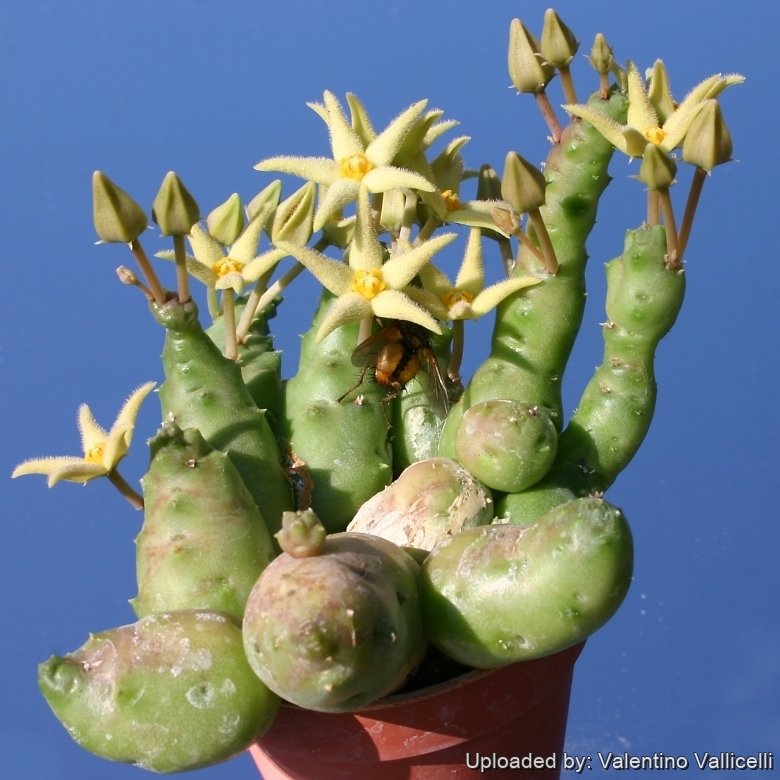
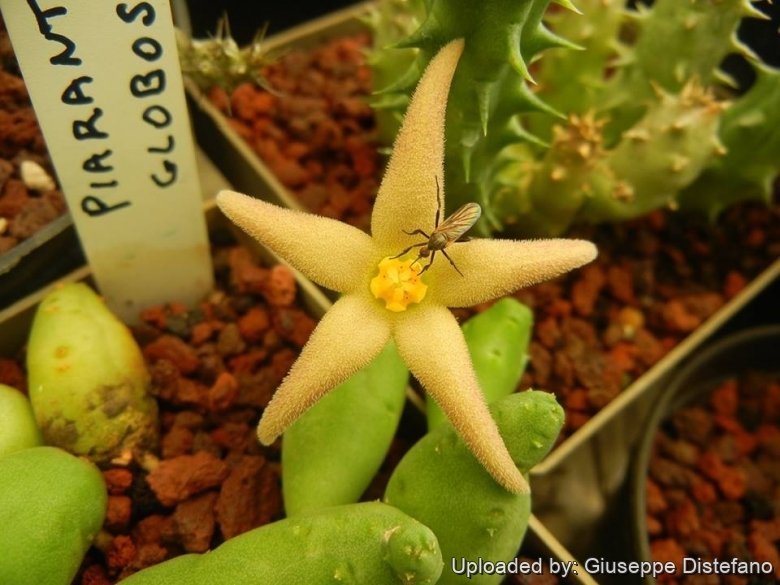
Piaranthus globosus is a clumping and prostrate species that spread over the ground forming large cushions. The name is due to the stem segments that are ovoid or globose, light green and resemble a mass of tiny potatoes.
Stems: Procumbent or ascending, divided in short squat ovoid or cylindrical articles obtuse to obscurely 4-angled, with 2-4 minute teeth along each angle. Surface smooth or slightly rough, light-green, tips faintly purple.
Flowers: 1 to 2 (rarely more) in a short inflorescence at the stem apex. Flowers are Valerian scented with fruity component about 1,3 to 2 cm in diameter, star-shaped, flat, more or less pubescent, and velvety whitish, yellowish with or (usually) without brown-red dots or transverse lines. Peduncles 2-20 mm long x 1-2 mm in diameter, sepals 2-4 mm long.
Blooming season: Produces numerous flowers simultaneously in October.
Taxonomy remarks: The genus Piaranthus is a very confusing complex of extremely nearly related species with many intermediary forms growing together in many widespread localities and they are very difficult to distinguish. Also experienced botanist found difficulty to separate and classify reliably the various species and forms.
In particular Piaranthus geminatus var. geminatus is a very variable species which now also includes the former species Piaranthus globosus, Piaranthus disparilis, and Piaranthus pillansii.
Origin and Habitat
Eastern and Western Cape Provinces (Little Karoo)
Notes
Pollination:
These plants are pollinated by flies (myiophilous pollination). Fly are attracted by olfactory stimuli, imitating dung or decaying organic (zoogenic or phytogenic) matter, together with mimetic colouration and, sometimes mimetic sculpturing. Nectar is present. The nectar mainly serves as optical attractant causing brilliance effects, and as visitor guide. However, nectar obviously is also a reward. In the pollination process flies carry pollinaria only at the distal parts of their proboscis, never on their legs. The pollinator spectra are similiar between of flowers in habitat and cultivated ones.
Bibliography
Major references and further lectures
-
Werner Rauh “The Wonderful World of Succulents: Cultivation and Description of Selected Succulent Plants Other Than Cacti” Smithsonian Institution Press, 1984
-
Hermann Jacobsen “A handbook of succulent plants: descriptions, synonyms, and cultural details for succulents other than Cactaceae” Volume 1 Blandford Press, 1960
-
James Cullen, Sabina G. Knees, H. Suzanne Cubey “The European Garden Flora Flowering Plants: A Manual for the Identification of Plants Cultivated in Europe, Both Out-of-Doors and Under Glass” Cambridge University Press, 11/ago/2011
-
Doreen Court “Succulent Flora of Southern Africa” CRC Press, 01/giu/2000
-
Focke Albers, Ulrich Meve “Illustrated Handbook of Succulent Plants: Asclepiadaceae: Asclepiadaceae,” Volume 4 Springer, 2002
-
Alain Campbell White, Boyd L. Sloane “The Stapelieae: an introduction to the study of this tribe of Asclepiadaceae” S. E. Haselton, printer, 1933
-
John Robert Brown “Unusual Plants: 110 Spectacular Photographs of Succulents” Abbey Garden Press, 1954
Source: Piaranthus globosus, LLIFLE - Encyclopedia of living forms, CC-BY-SA, retrieved 2026-10-26.
From llifle page Piaranthus pillansii
Description
Piaranthus pillansii is one of the morphological or geographical form of the very variable Piaranthus geminatus. It is a low growing succulent plant that grows in mats. It is distinguished by it flowers typically greenish yellow, pale yellow or very pale-reddish, without (or with very fine) red spots. The starry flowers up to 3-4 cm wide appears in groups of 2-3 and have a strong scent of Valerian. The corona is usually yellowish-green in colour and this colour extends to the base of the corolla-tube. The flowers in the genus have tightly replicate corolla lobes (folded back on themselves).
Stems: 1-4 cm long (to 10 cm in cultivation), 10-16 mm thick, decumbent, oblong or somewhat clavate-oblong, very obtusely 4- (rarely 5-) angled or subcylindric, glabrous, dull light green, mottled or tinted with dull purple, angles not or scarcely tuberculate, with very minute apiculus-like teeth, having a more minute tooth on each side at the base.
Flowers: Usually in pairs at the middle or upper part of the young stems, erect; pedicels 6-8 mm long, glabrous; sepals 4 mm long, lanceolate, acute, glabrous; corolla rotate, lobed nearly to the base, 30-36 mm in diameter. Lobes very spreading, 12-16 mm long, about 4-5 mm broad at the base, narrowly lanceolate, acute, convex from the margins being recurved, glabrous on the back, very shortly velvety-puberulous on the inner face, not ciliate, dull greenish-yellow, pale yellow or very pale-reddish without spots; corona-lobes rather more than 2mm long, closely incumbent upon the backs of the anthers and exceeding them, with their tips crossing each other but not becoming erect, lanceolate, acute, entire or somewhat 3-toothed at the apex, produced at the base into a truncate or very obtuse dorsal crest, minutely tuberculate or with ridges on the top, and the dorsal margin neither acute-edged nor toothed, yellow, without markings.
Taxonomy remarks: The genus Piaranthus is a very confusing complex of extremely nearly related species with many intermediary forms growing together in many widespread localities and they are very difficult to distinguish. Also experienced botanist found difficulty to separate and classify reliably the various species and forms. In particular Piaranthus geminatus var. geminatus is a very variable species which now also includes the former species Piaranthus globosus, Piaranthus disparilis, and Piaranthus pillansii.
Origin and Habitat
Coastal regions of the Cape Province, South Africa.
Habitat and Ecology: Piaranthus pillansii usually grows interlocked with the stems of shrubs, as is often seen with most members of the Stapelieae.
Bibliography
Major references and further lectures
-
N. E. BROWN.”Flora Capensis” Vol 4, page 518, 1909
-
Werner Rauh “The Wonderful World of Succulents: Cultivation and Description of Selected Succulent Plants Other Than Cacti” Smithsonian Institution Press, 1984
Source: Piaranthus pillansii, LLIFLE - Encyclopedia of living forms, CC-BY-SA, retrieved 2026-10-26.
Cultivars and forms (2)
Subspecies (1)
Varieties (1)
Gallery