Publication: Natl. Cact. Succ. J. 30(2): 31 (1975)
Description
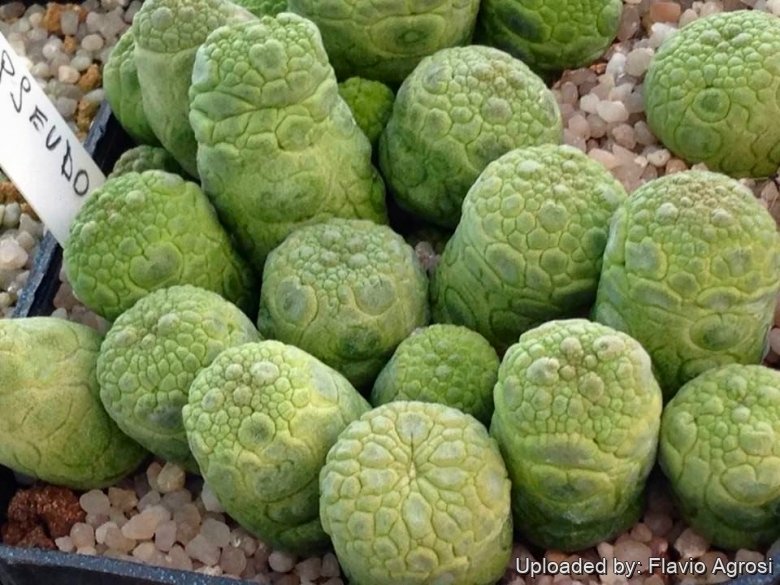
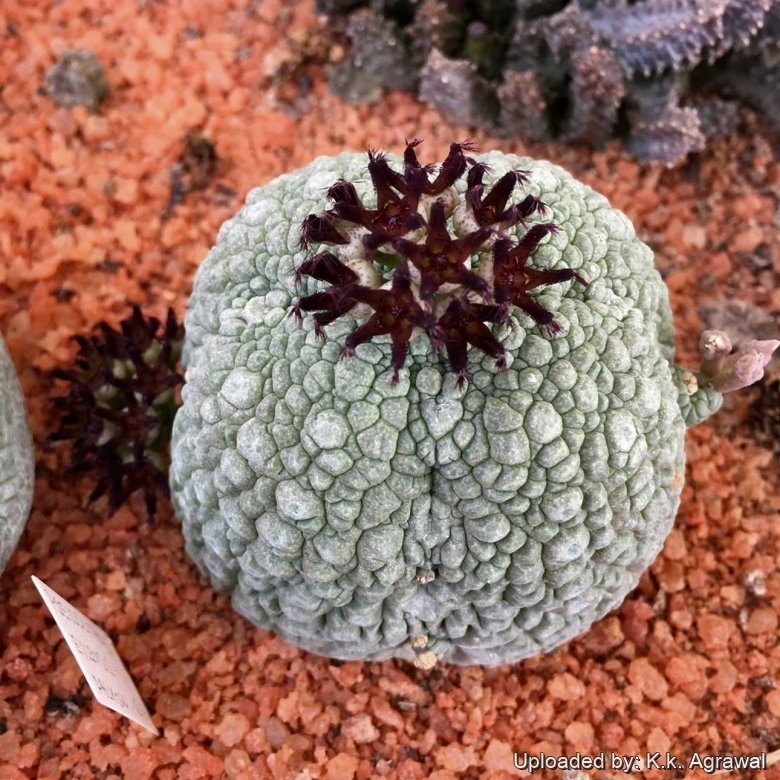
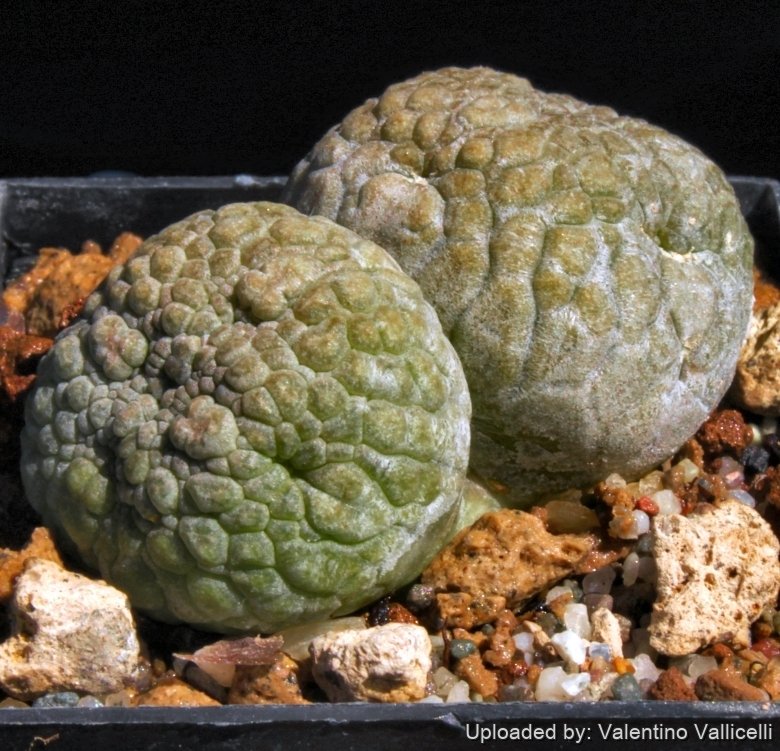
Habit: Usually single stemmed. Quite variable in shape, colour and size.
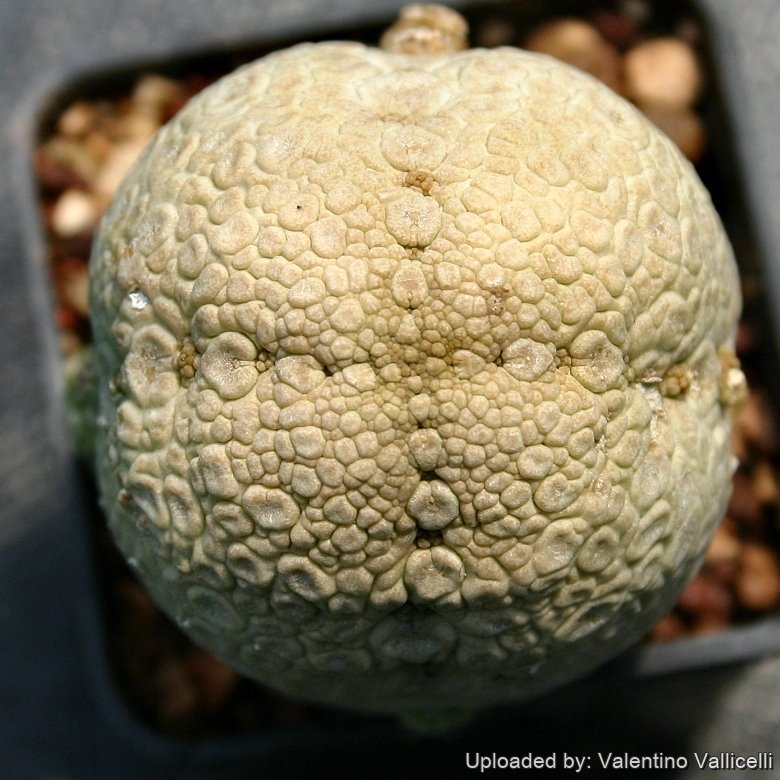
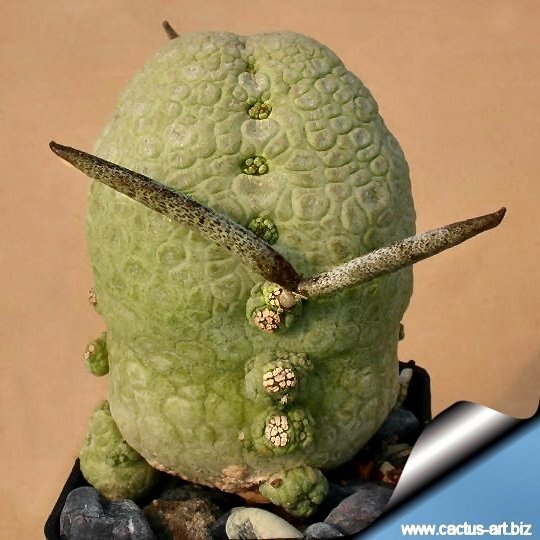
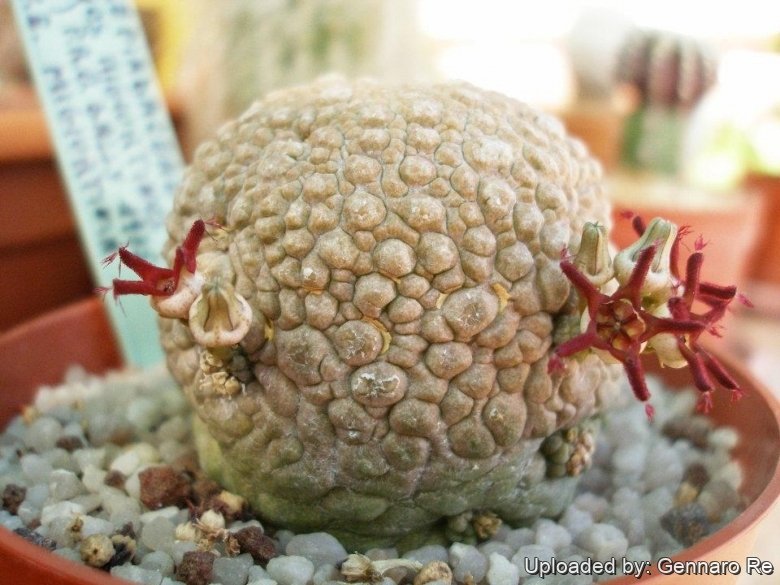
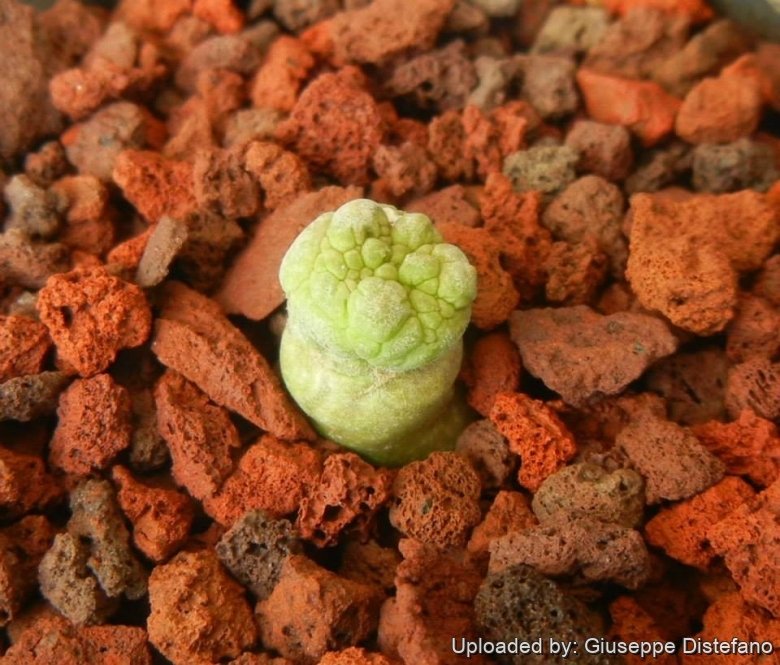
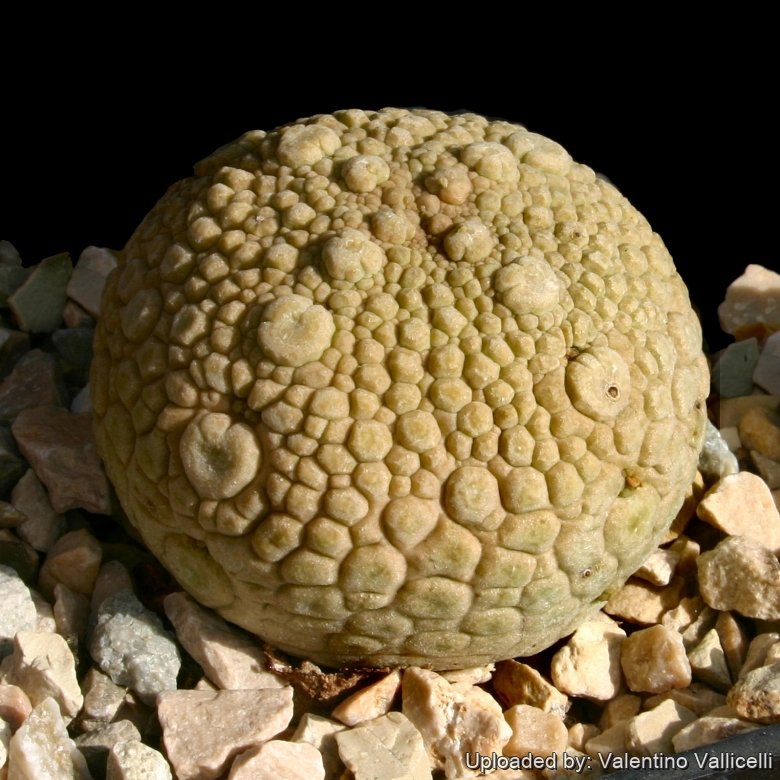
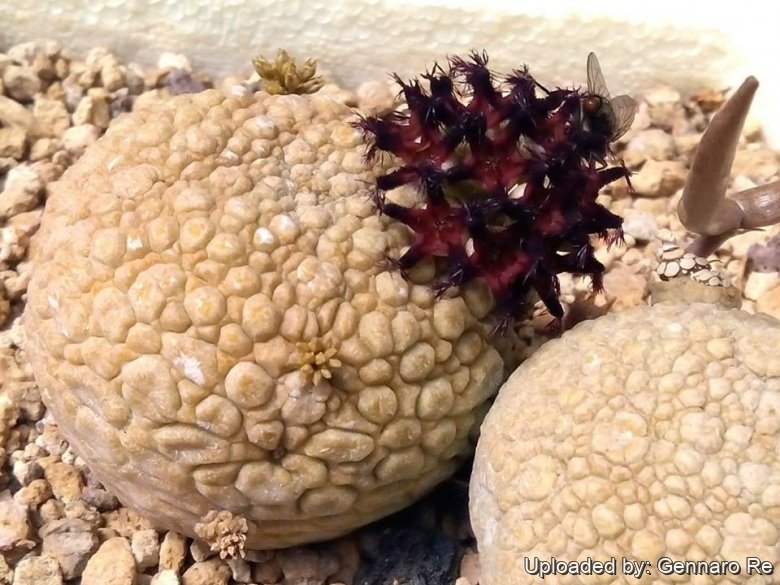
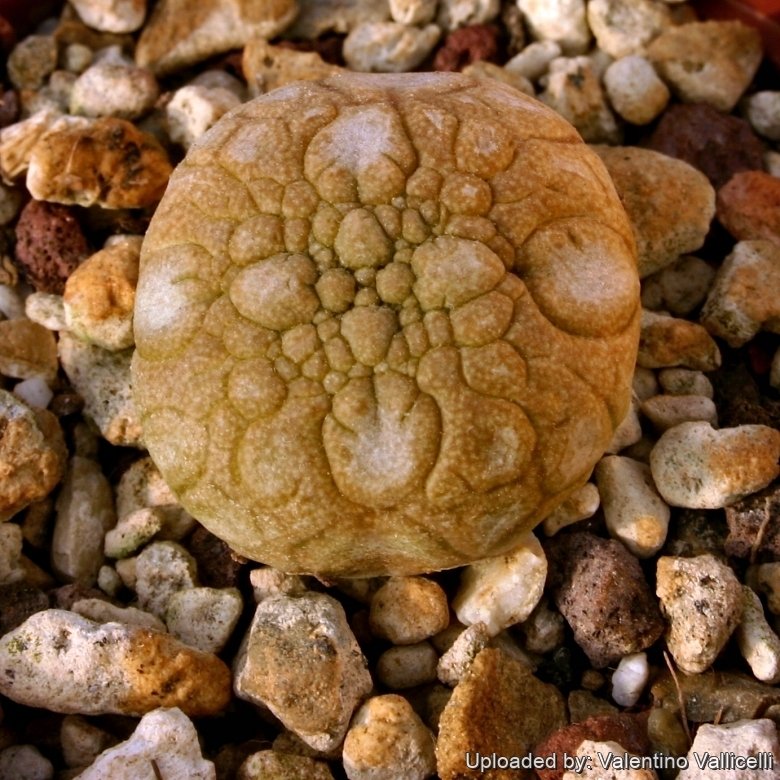
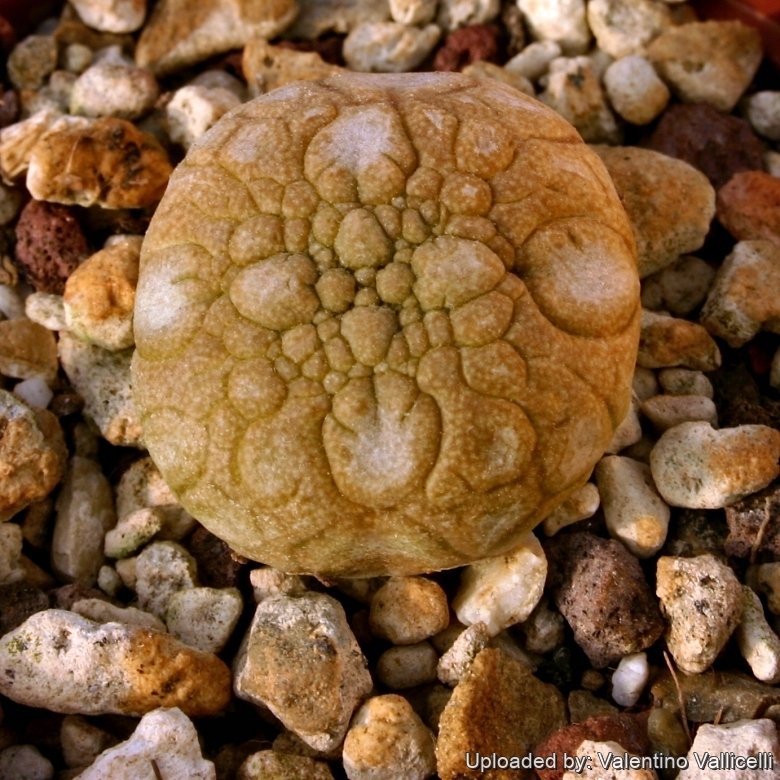
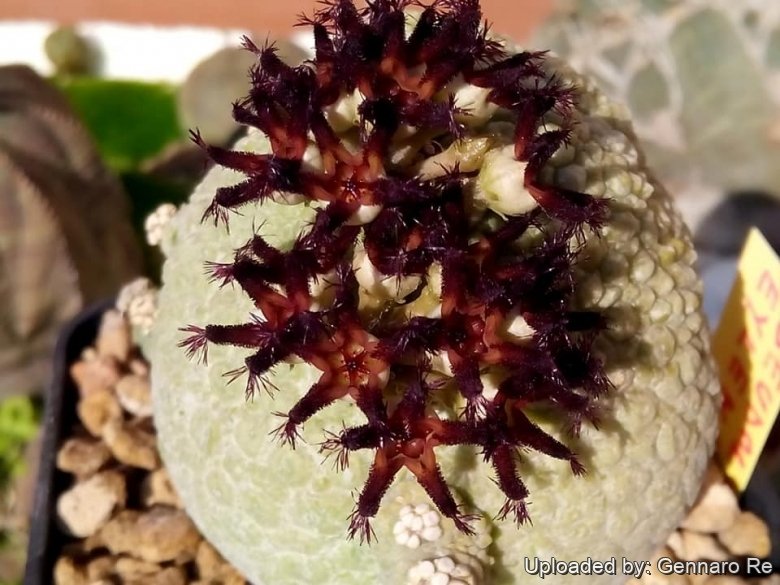
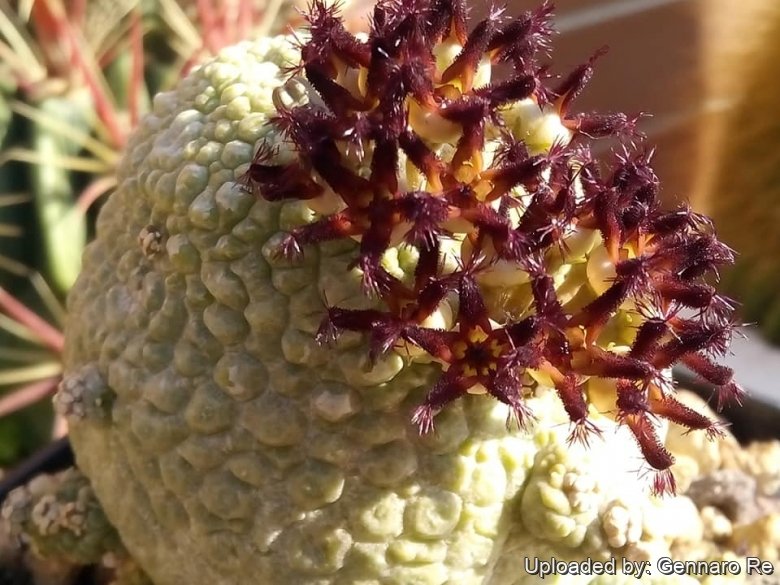
Stem: Up to six centimetres in diameter and eight centimetres in height (an old plant in cultivation may achieve a bigger size) The stem is oval and tuberculate, but some plants have an evident four-sided figure form. The colours vary from light green (in shaded environments) to clear olive/grey/green (in half sun) or reddish-brown (in full sun).
Roots: Fibrous.
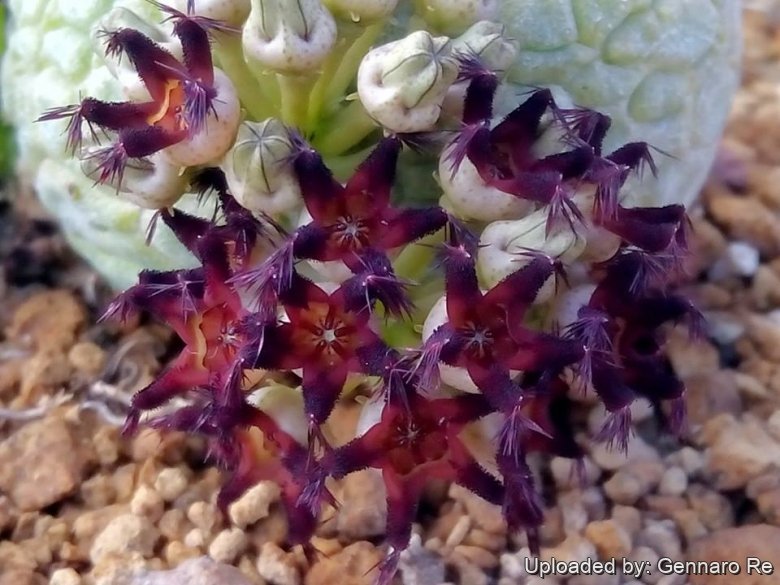
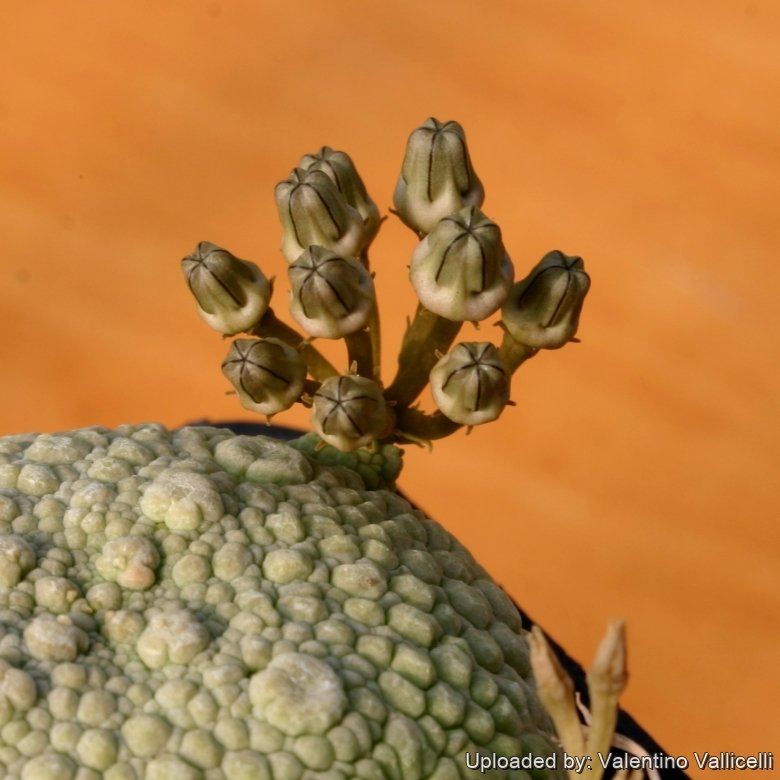
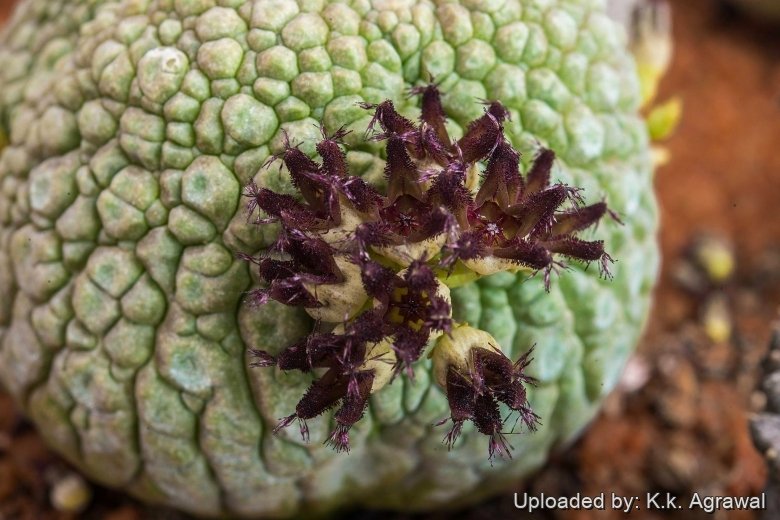
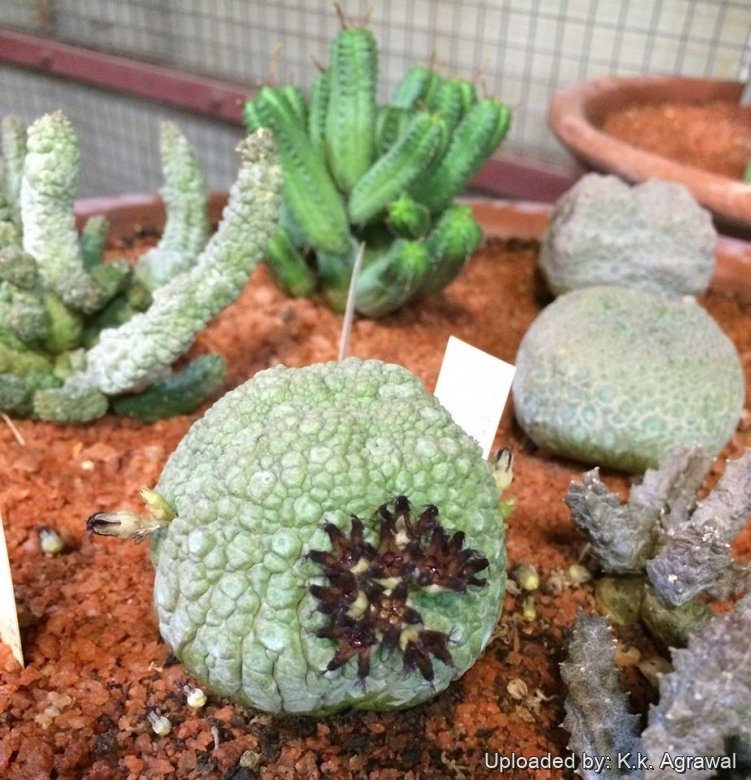
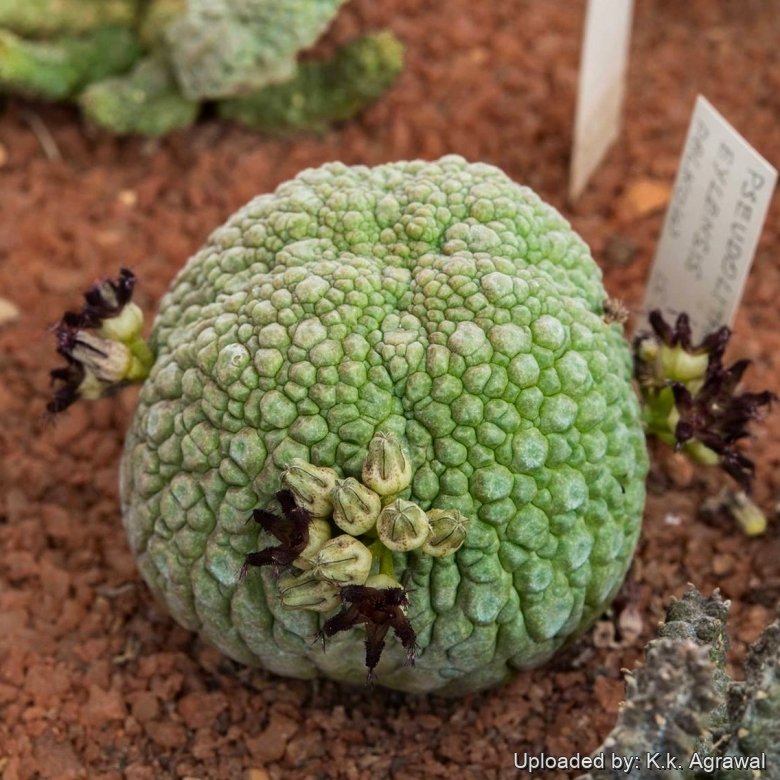
Flower: The cluster of flowers is fly pollinated and smells like rotten meat. The flowers are dark red and about 5/7 mm across.
Fruit: Seed pods contain about 15-20 seeds each.
Phenology: Blossoming time: mainly during the end of the summer on the bottom side of the plants, but it is not strange to see some flowers almost year round in a heated greenhouse.
Origin and Habitat
From the North East of Somalia
Habitat: This plant has been found in grit in a dry tropical environment with lots of sun. These plants, like most of the succulent milkweeds (stapeliads), are generally fly pollinated, and conveniently smell like rotten meat or some type of manure.
Cultivation and Propagation
Relatively easy to grow, but mistakes are costly. If rot sets in, there is practically no time, nor warning, before the plant turns to expensive mush.
It needs regular watering, especially during the hottest summer days; provide also some light watering if the green house temperatures in winter are elevated. Either excessive or very scarce watering can induce rot.
Frost Tolerance: Winter temperatures must be kept over 10° C. (But it can withstand winter night-time temperatures down to about 5°).
Sun Exposure: It has a great advantage if grown in very strong light, but sheltered from full sun.
Cultural Practices: Provide very good ventilation. It grows quite easily and fast on its own roots. It is not difficult as commonly supposed, but inaccuracies are fatal. If rot starts, the plant will almost inevitably die. This plant is a candidate for under-potting, as long as you keep it watered.
Propagation: Seeds are the only way of reproducing.
Notes
This plant has been successfully crossed with diverse Pseudolithos species and other Asclepiadaceae too. These hybridizations give rise to some very interesting cultivars.
Bibliography
Major references and further lectures
-
Urs Eggli “Illustrated Handbook of Succulent Plants: Dicotyledons” Springer Science & Business Media, 2002
-
Hermann Jacobsen “A handbook of succulent plants: descriptions, synonyms, and cultural details for succulents other than Cactaceae” Blandford Press, 1960” Timber Press, 18/May/1999
-
Focke Albers, Ulrich Meve “Illustrated Handbook of Succulent Plants: Asclepiadaceae: Asclepiadaceae” Volume 4 Springer Science & Business Media, 2002
From llifle page Pseudolithos eylensis
Description
Pseudolithos eylensis (eilensis) is different and recognizable from Pseudolithos migiurtinus or Pseudolithos cubiformis for its monstrous and irregular squat form. Many consider this to be no more than a local form or variety of Pseudolithos migiurtinus.
Habit: It as a quat domed body. Usually single stemmed.
Stem: It can grow to 12 cm in diameter and reach a height of 15 cm. The colour may vary from light green (in shaded environments) to reddish-brown (in full sun).
Flowers: Dark red to brown, with hairy petals with a lighter centre. Like the other Pseudolithos, it smells like rotting meat, and thereby attracts flies. It blooms abundantly, but pollination is only carried out by flies that are their natural pollinator. Manually it is extremely hard to obtain the fecundation of these flowers.
Origin and Habitat
Town of Eyl (or Eil) in the North East of Somalia.
Habitat: Grows in grit with little water and some sun.
Cultivation and Propagation
Relatively easy to grow, but mistakes are costly. If rot sets in, there is practically no time, nor warning, before the plant turns to expensive mush.
It needs regular watering, especially during the hottest summer days. Provide also some light watering if the green house temperatures in winter are elevated. Either excessive or very scarce watering can induce rot.
Frost Tolerance: Winter temperatures must be kept over 10° C. ( But it can withstand to winter night temperature down to about 5° )
Sun Exposure: It takes a great advantage if grown in very strong light but sheltered from full sun.
Cultural Practices: Provide very good ventilation. It grow quite easily and fast on its own roots. It is not difficult as commonly supposed, but inaccuracies are fatal. If rot starts the plant will almost inevitably die. This plant is a candidate for under-potting, as long as you keep it watered.
Propagation: Seeds are the only way of reproducing
Source: Pseudolithos eylensis, LLIFLE - Encyclopedia of living forms, CC-BY-SA, retrieved 2026-10-26.
Gallery