Publication: Kakteen Sukk. 46(11): 259, fig. 1995 As “Pymaeocereus”
Description
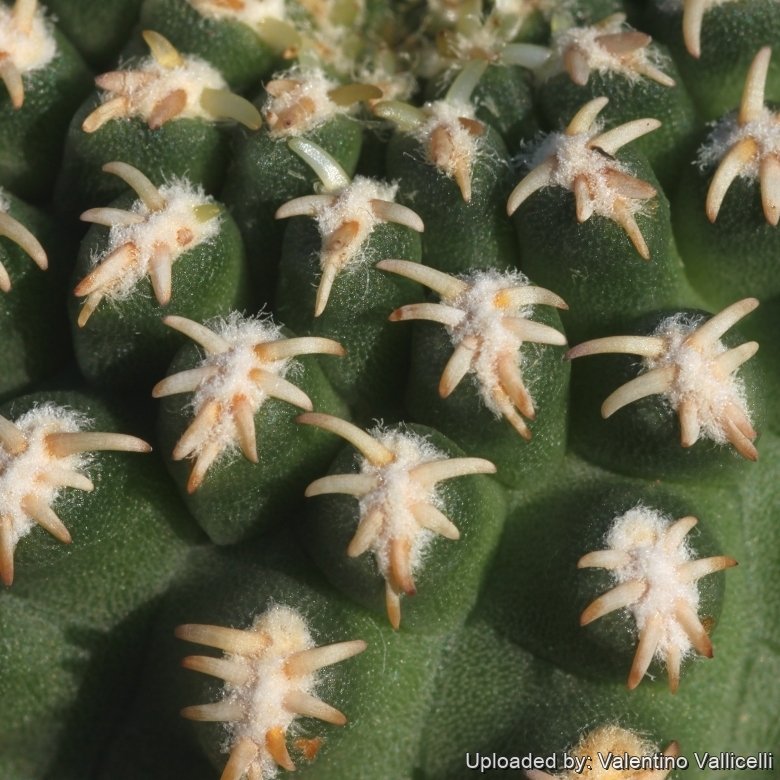
Pygmaeocereus bieblii is a fascinating little, geophytic plant with short thick spines. It usually grows solitary but occasionally (especially at hight altitude) forms small clusters or even large mats flat to the ground. It is really a particular species that looks quite different from Pygmaeocereus bylesianus, the type species of the genus.
Stem: Spherical, barely protruding from the ground, green, up to 5 cm in diameter, but larger 6-7 cm in diameter and up to 10 cm tall in favourable condition or even more in cultivation.
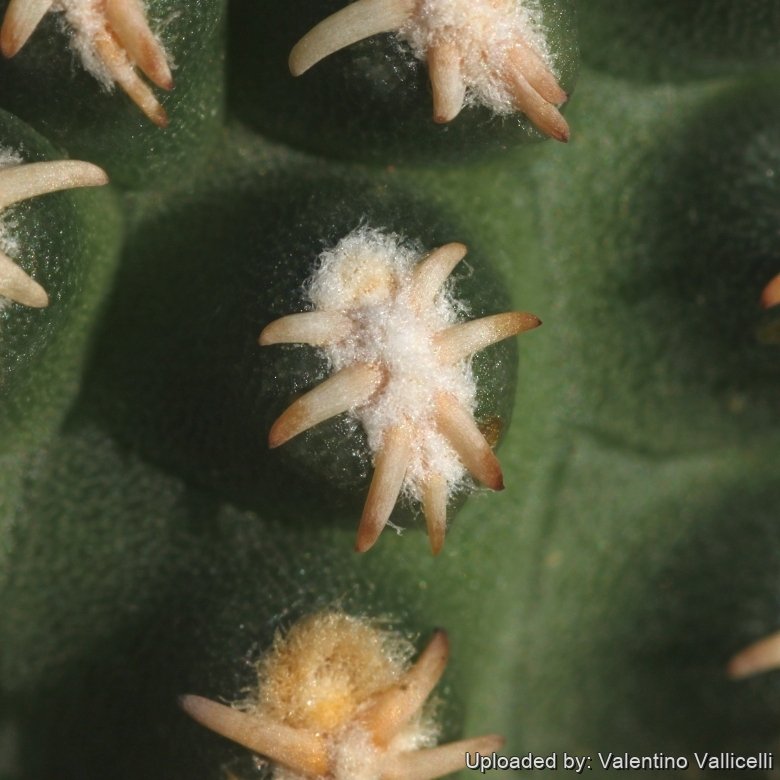
Ribs: 10-25 barely visible divided in shallow wart-like bumps.
Central spines: 2-4 mm in length and 1 mm in diameter usually absent.
Radial spines: 3-10 pectinate whitish to dark yellow about 1,5 mm long.
Flowers: Wide funnel-shaped, white 15-18 cm long , 4,5-6 cm in diameter; flower tube long and slender.
Fruit: 6-10 mm long, greenish to brownish red.
Origin and Habitat
100 km northwest of Huaraz, Ancash Province in the northern part of Cordillera Blanca, (Peru, Western South America)
Altitude: 600 to over 2000 m above sea level.
Habitat: Barren hills composed of fine broken rock.
Ecology: The stems of Pygmaeocereus bieblii retract and drive under the ground so the plants are almost unnoticeable. It is only in wet periods that these plants become visible as they absorb moisture and swell. In this areas there are many succulent plants like Espostoa nana, Melocactus peruvianus, Mila pugionifera, Haageocereus zehnderi and Neoraimondia gigantea.
Cultivation and Propagation
This mountain cactus necessitate deep pots and a well drained mineral potting mix. They are susceptible to overwatering, but need enough water during vegetation. Provide a sufficient amount of air for an healthy growth.
Frost Tolerance: They tolerate light frost -5 (-10)°C. Need to be kept in a cool place during winter rest this is important for the flowers as well as for their health. Without this cool winter period they normally wont get many buds.
Sun Exposure: Need a good amount of sun.
Propagation: Usually propagated by cuttings and grafting. Grafted plants in culture are most common and sprout strongly. But it is also feasible to root them but they grow much slower on their own roots and takes various years prior to they bloom. Seeds propagation also work well.