Publication: Bull. Misc. Inform. Kew 1937: 419 1937
Description
It is a small growing geophyte perennial herb producing vining shoots. All parts of the plant have a milky latex.
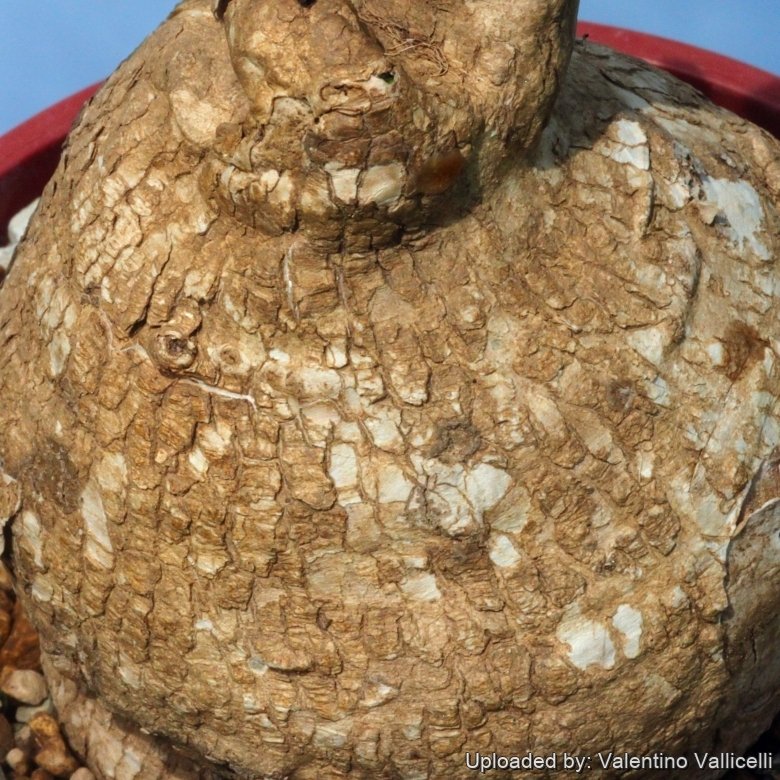
Tuberous root (Caudex): Almost always unbranched, up to 15 centimetres in diameter and 20 tall. The caudex is a partly underground water-storage organ so it is very resistant to drought. In cultivation the tuberous rootstock is raised over the ground so that it can be seen and is especially cultivated for its looks.
Stems: The stems (vines) are deciduous, more or less decumbent and partially climbing.
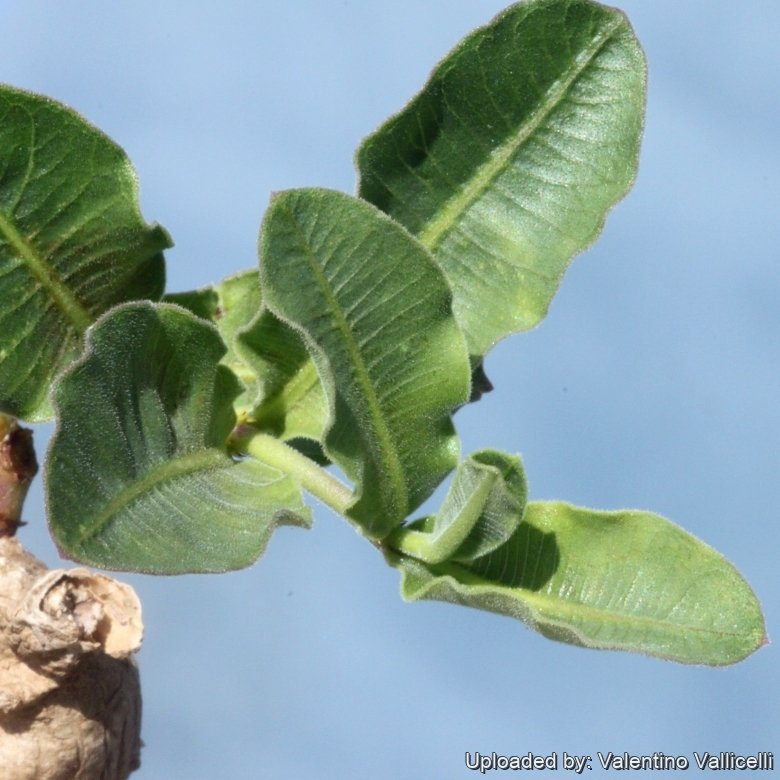
Leaves: Opposite.
Flower: Green/Purple
Fruits: Solitary pair of comparatively large horn-like pods.
Origin and Habitat
Malawi, Zimbabwe, Zambia.
Habitat: Shallow soils overlying sheet-rock in montane grassland.
Cultivation and Propagation
Raphionacme longituba is a caudiciform plant that grows well in container.
Soil: Give the plant a well drained, airy but rich growing medium which consists of non organic material such us clay, pumice, lava grit, and peat or leaf-mould.
Irrigation: It is probably a summer grower species and need a good deal of water during active growth from spring when the new leaves can be seen forming from the woody neck of the tuber and should be watered only when not dormant. In autumn the leaves begin to go yellow and drop off, so now it rests quite dry in to winter. No water should ever be allowed to stand around the roots. An error in cultivation may produce unsightly holes in the tuber.
Exposure: In cultivation the plants are usually grown in semi shade, with the tubers wholly or (preferably) partially exposed to prevent scorching and rotting of the roots.
Hardiness: It should be overwintered in the greenhouse at temperatures over 12°C (avoid letting temperatures drop lower than 5° C, but some authors suggest that it can withstand light frost at least for short periods if very dry, in these situations it will better resist if sheltered by the winter rains, seen that the humidity and low temperatures render it more sensitive to rottenness. Plants in containers however, suffered major leaf loss.
Maintenance: The dried annual stems need to be removed to keep a tidy appearance. Like quite small pots, repot in very later winter, early spring.
Reproduction: Can be reproduced by seeds.
From llifle page Raphionacme ernstiana
Origin and Habitat
Tanzania.
Type Locality: Singida Prov., 51km SW Itigi on road to Rungwa, 1390m
Source: Raphionacme ernstiana, LLIFLE - Encyclopedia of living forms, CC-BY-SA, retrieved 2026-10-26.