Publication: Bot. Jahrb. Syst. xx. Beibl. n. 51 (1895) 12.
Description
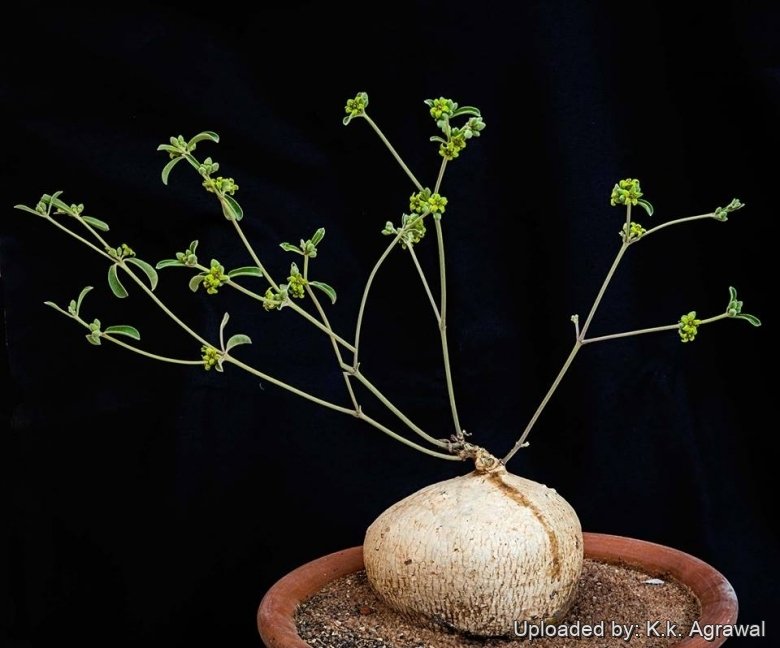
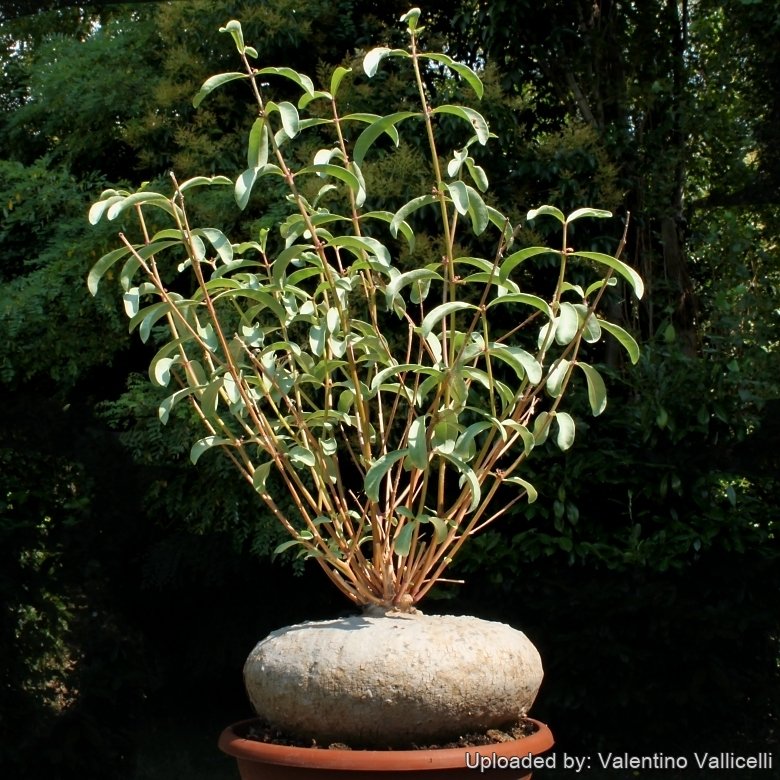
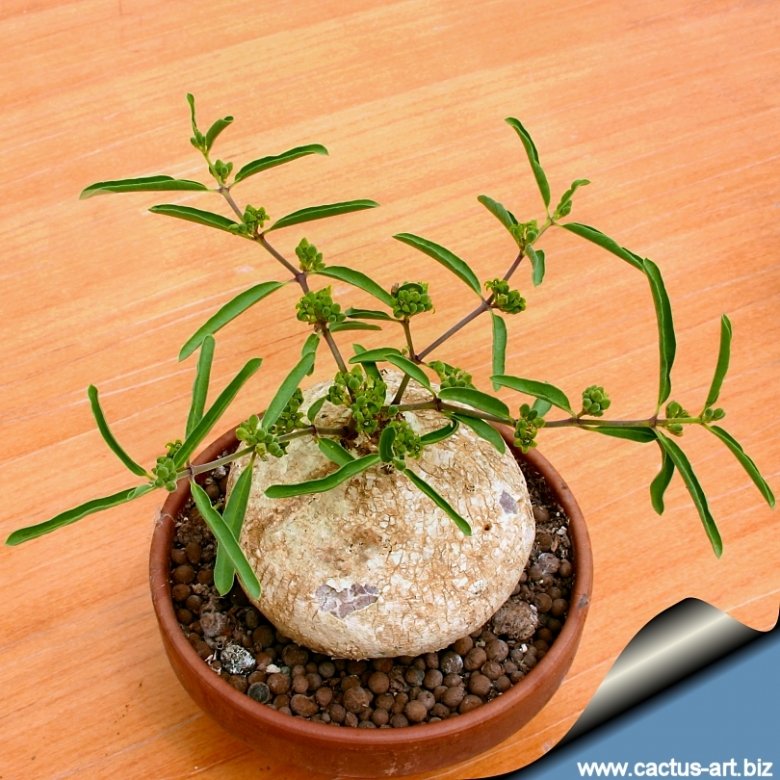
Raphionacme velutina is an erect, much-branched perennial herb with velvety-hairy stems arising from a tuberous rootstock or caudex.
Derivation of specific name: “velutina” velvety or velutinous, for the dense soft short hairs on the stems, both sides of the leaves, and on the inflorescence, including the outside of the corolla.
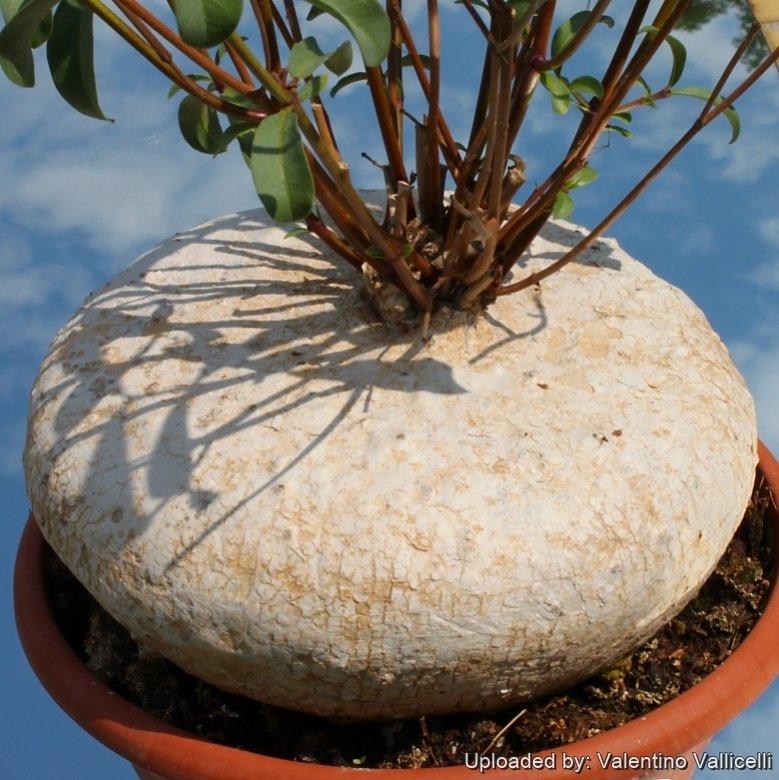
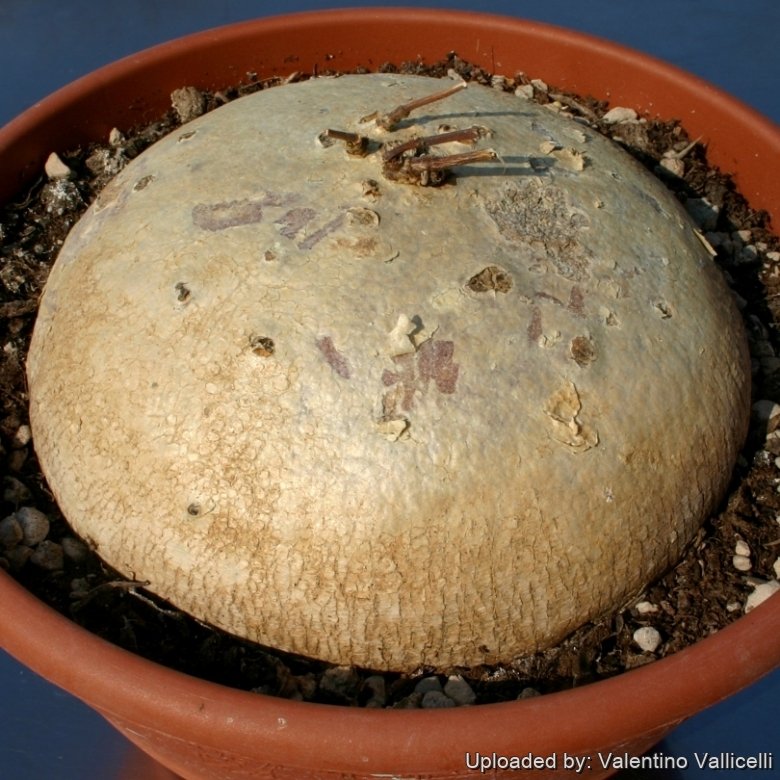
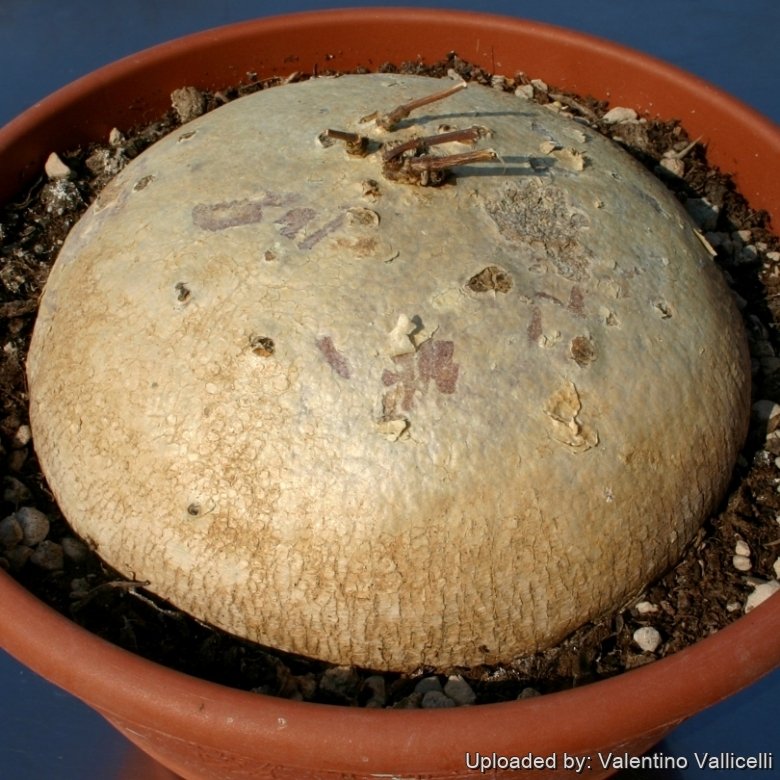
Caudex (Tuber): Big, mostly spherical-flattened or spindle-shaped, almost always unbranched, smooth, above-ground. It might grow to 30 centimetres or more in diameter.
Stems: The stems are numerous from the woody neck of the tuber,, deciduous, erect or spreading horizontally, 7-40 cm long, centimetres (occasionally longer), basally dichotomously branched and divaricate, basally woody, densely leafy. Velvety-pubescent especially when young, often purplish.
Leaves: In well-spaced pairs; petiole 2-6 mm long, spreading or ascending. Lamina narrowly ovate-elliptic, widest about middle, tapering equally to both ends, pointed, 2-7 cm long, 5-9 mm cm wide, folded lengthwise, V-shaped in cross-section, obtuse or acute, basally tappering, margins ciliate, mostly hairless and grey-green above, dotted with reddish glands, lower face darker, densely velvety and with a purplish midrib.
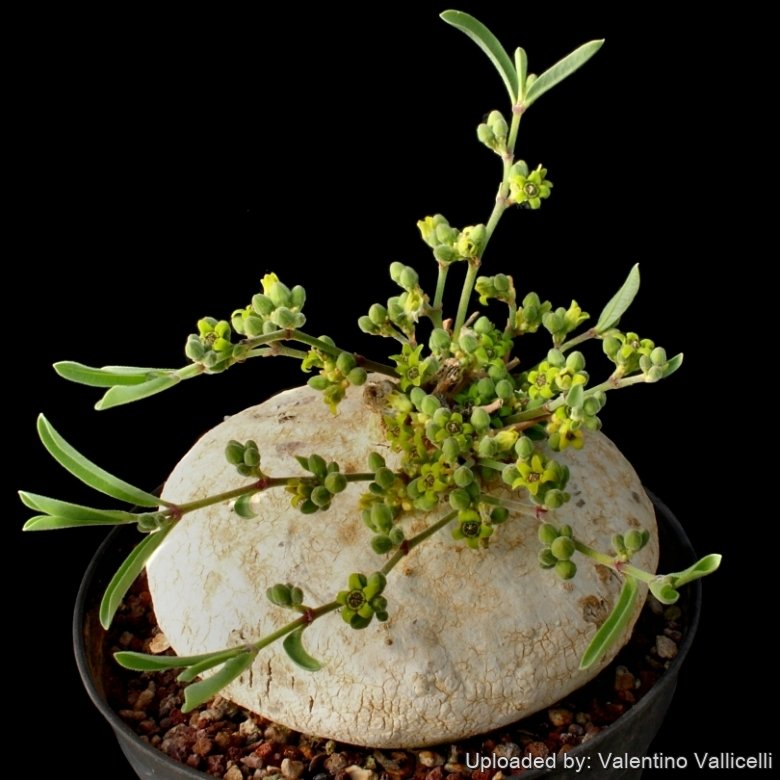
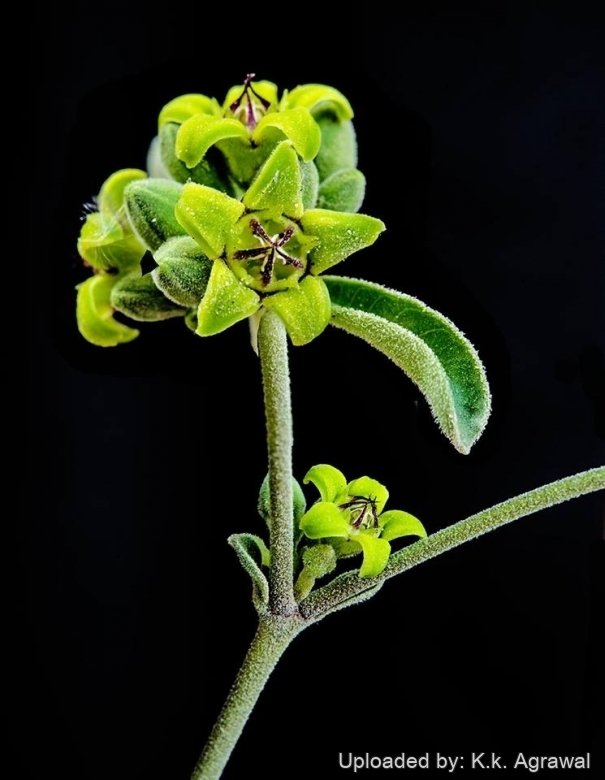
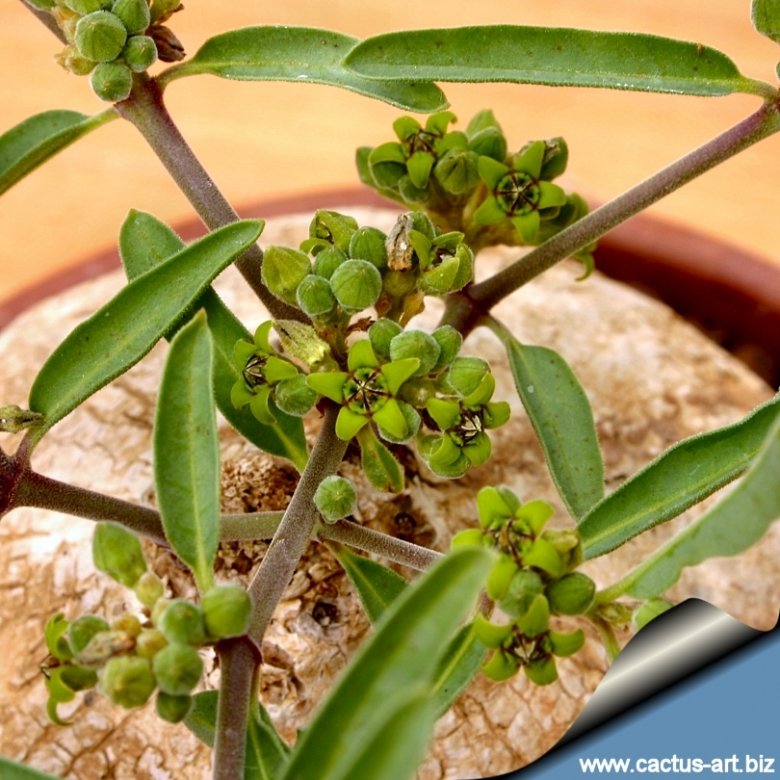
Inflorescence: Sublateral at the nodes and terminal, densely 10- to 25-flowered ± globular.. Peduncle 4-8.5 mm long. Pedicels 2-3.5 mm long, densely velvety-pubescent.
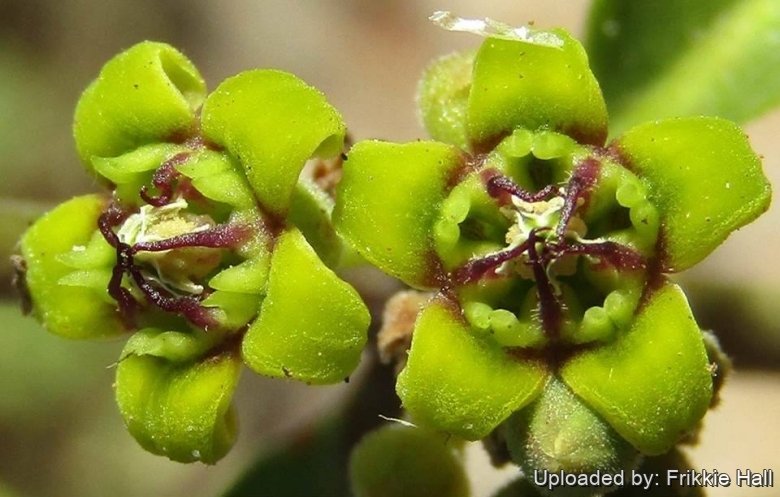
Flowers: The flowers are deciduous, pale green star-shaped with a purple centre, Ø 9 mm. Peduncle 1-2 mm long. Sepals lanceolate-triangular. 2 - 2.5 x 1 mm, acute, velvety-hairy. Corolla campanulate. Corolla tube 2 3 mm long cylindrical. Corolla lobes almost erect or spreading, oblong-ovate or oblong, 2-4 long, to 2 mm wide, obtuse, yellowish-green to green, often purplish at the base, outside velvety-pubescent, inside glabrous. Corona lobes 3-parted. appendages filiform or subulate, middle appendage erect, longest and purple 2 -3 mm long, lateral appendages subacute, ca.1.5 mm long. Anthers ovoid or lanceolate, margin somewhat undulate.
Blooming season: Spring (Oct - Dec)
Fruit: A single follicle, very narrowly ovoid or obovoid, apically slowly attenuate and ac-ute, usually 5-9 cm long, 4-6 mm in diameter tapering and more or less curved .
Similar species: This species is closely related and form a complex to Raphionacme galpinii, Raphionacme burkei and Raphionacme zeyheri and probably even conspecific.
Origin and Habitat
Angola, Botswana, Namibia, Zambia, Zimbabwe and northern South Africa(Gauteng, Eastern Cape).
Habitat and ecology: Raphionacme velutina occurrs in grassland and open woodland, mostly in drier areas.
Altitude range: 400-1700 metres above sea level.
Cultivation and Propagation
Raphionacme velutina is a caudiciform plant that grows well in container.
Soil: Give the plant a well drained, airy but rich growing medium which consists of non organic material such us clay, pumice, lava grit, and peat or leaf-mould.
Irrigation: It is probably a summer grower species and need a good deal of water during active growth from spring when the new leaves can be seen forming from the woody neck of the tuber and should be watered only when not dormant. In autumn the leaves begin to go yellow and drop off, so now it rests quite dry in to winter. No water should ever be allowed to stand around the roots. An error in cultivation may produce unsightly holes in the tuber.
Exposure: In cultivation the plants are usually grown in semi shade, with the tubers wholly or (preferably) partially exposed to prevent scorching and rotting of the roots.
Hardiness: It should be overwintered in the greenhouse at temperatures over 12°C (avoid letting temperatures drop lower than 5° C, but some authors suggest that it can withstand light frost at least for short periods if very dry, in these situations it will better resist if sheltered by the winter rains, seen that the humidity and low temperatures render it more sensitive to rottenness. Plants in containers however, suffered major leaf loss.
Maintenance: The dried annual stems need to be removed to keep a tidy appearance. Like quite small pots, repot in very later winter, early spring.
Traditional uses: Raphionacme velutina, is known to the bushmen as ‘Bi’. It is a useful plant that is particularly important as a source of water in the dry months. It flourishes all year round, and is a major source of water where a water source is not available. It’s tuber is juicy, fibrous and bitter.
Reproduction: Can be reproduced both by cuttings and seeds.
Bibliography
Major references and further lectures
-
Werner Rauh “The Wonderful World of Succulents: Cultivation and Description of Selected Succulent Plants Other Than Cacti” Smithsonian Institution Press, 1984
-
James Cullen, Sabina G. Knees, H. Suzanne Cubey “The European Garden Flora Flowering Plants: A Manual for the Identification of Plants Cultivated in Europe, Both Out-of-Doors and Under Glass” Cambridge University Press, 11/Aug/2011
-
Focke Albers, Ulrich Meve “Illustrated Handbook of Succulent Plants: Asclepiadaceae: Asclepiadaceae” Volume 4 Springer Science & Business Media, 2002
-
Hyde, M.A., Wursten, B.T., Ballings, P. & Coates Palgrave, M. (2014). “Flora of Zimbabwe: Species information: Raphionacme velutina.” http://www.zimbabweflora.co.zw/speciesdata/species.php?species\_id=145350, retrieved 25 October 2014
-
N. E. Brown. “Flora Capensis” Vol 4, page 518 1909
From llifle page Raphionacme burkei
Description
Raphionacme burkei is a small growing caudiciform, perennial herb producing trailing, vining shoots.
Caudex (Tuber): Big mostly spherical ± flattened, almost always unbranched, smooth, above-ground. It might grow to 30 centimetres or more.
Stems: The stems (vines) are numerous, deciduous, semi-erect, shrubby or partially climbing up to 45 centimetres (usually less), scarcely pubescent.
Leaves: In well-spaced pairs; petiole 2-3 mm long, blades linear-lanceolate to obovate, widest about middle, tapering equally to both ends, pointed, up to 5 cm long X 1-1,5 cm wide, usually smaller. Acute, basally tappering, margins ciliate, lower lamina face pubescent.
Flowers: Inflorescences lateral, almost from each node, sometimes also between upper leaf-axils, on short stout stalk, densely many-flowered, ± globular. The flowers are deciduous, pale green star-shaped with a purple centre, Ø 9 mm. Peduncle 1-2 mm long. Corolla lobes reflexed, narrowly triangular, about 5 mm long, densely hairy below, hairless above.
Blooming season: Summer.
Fruit: Solitary, thickly fusiform, glabrous.fruit-halves slender, up to 15 cm long x 5 mm diam, tapering to long point, often only one half developing. This species is closely related and form a complex to Raphionacme galpinii, Raphionacme velutina and Raphionacme zeyheri. The contrastingly bicoloured corona is significant for Raphionacme burkei.
Origin and Habitat
Southern Africa
Cultivation and Propagation
Raphionacme burkei is a caudiciform plant that grows well in container.
Soil: Give the plant a well drained, airy but rich growing medium which consists of non organic material such us clay, pumice, lava grit, and peat or leaf-mould.
Irrigation: It is probably a summer grower species and need a good deal of water during active growth from spring when the new leaves can be seen forming from the woody neck of the tuber and should be watered only when not dormant. In autumn the leaves begin to go yellow and drop off, so now it rests quite dry in to winter. No water should ever be allowed to stand around the roots. An error in cultivation may produce unsightly holes in the tuber.
Exposure: In cultivation the plants are usually grown in semi shade, with the tubers wholly or (preferably) partially exposed to prevent scorching and rotting of the roots.
Hardiness: It should be overwintered in the greenhouse at temperatures over 12°C (avoid letting temperatures drop lower than 5° C, but some authors suggest that it can withstand light frost at least for short periods if very dry, in these situations it will better resist if sheltered by the winter rains, seen that the humidity and low temperatures render it more sensitive to rottenness. Plants in containers however, suffered major leaf loss.
Maintenance: The dried annual stems need to be removed to keep a tidy appearance. Like quite small pots, repot in very later winter, early spring.
Traditional uses: Raphionacme burkei, is known to the bushmen as ‘Bi’. It is a useful plant that is particularly important as a source of water in the dry months. It flourishes all year round, and is a major source of water where a water source is not available. It’s tuber is juicy, fibrous and bitter.
Reproduction: Can be reproduced both by cuttings and seeds.
Bibliography
Major references and further lectures
-
Urs Eggli “Illustrated Handbook of Succulent Plants: Dicotyledons” Springer Science & Business Media, 2002
-
Werner Rauh “The Wonderful World of Succulents: Cultivation and Description of Selected Succulent Plants Other Than Cacti” Smithsonian Institution Press, 1984
3)James Cullen, Sabina G. Knees, H. Suzanne Cubey “The European Garden Flora Flowering Plants: A Manual for the Identification of Plants Cultivated in Europe, Both Out-of-Doors and Under Glass” Cambridge University Press, 11/Aug/2011
Source: Raphionacme burkei, LLIFLE - Encyclopedia of living forms, CC-BY-SA, retrieved 2026-10-26.
Gallery