Publication: Lazaroa 17: 76 1996
Description
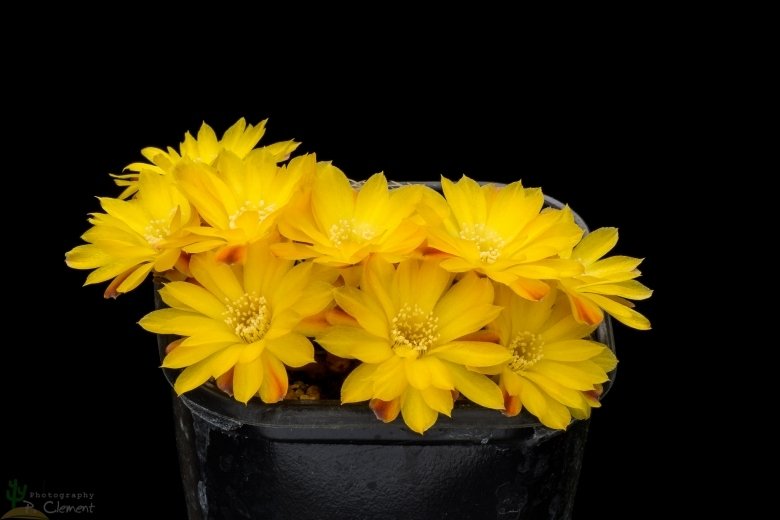
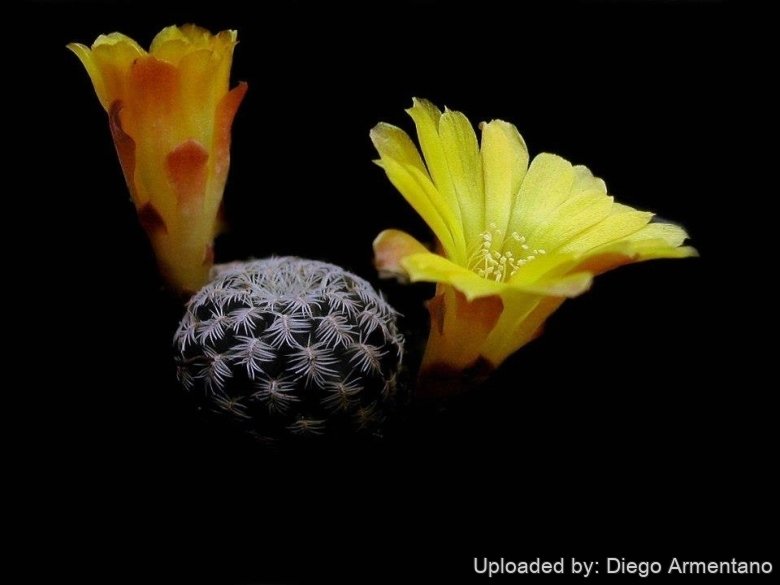
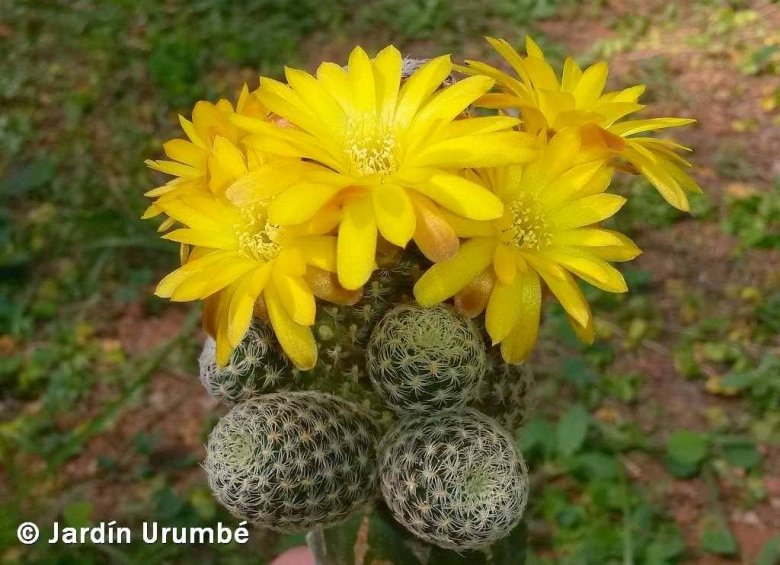
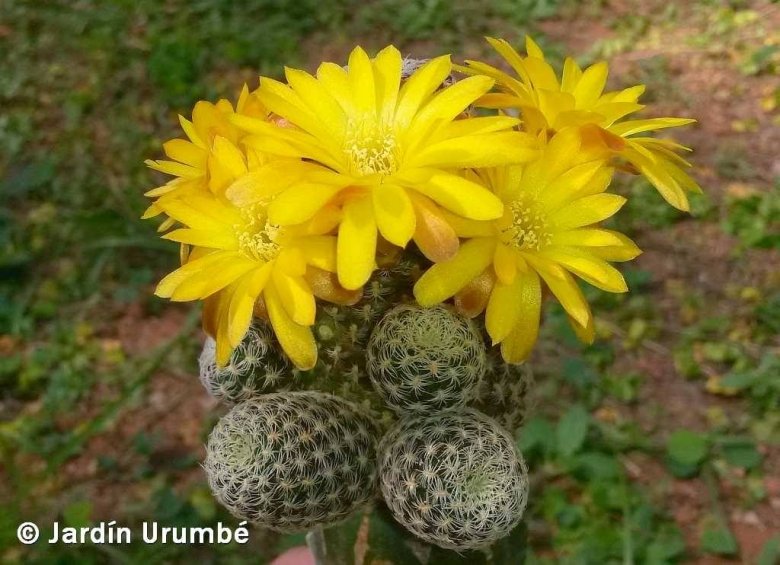
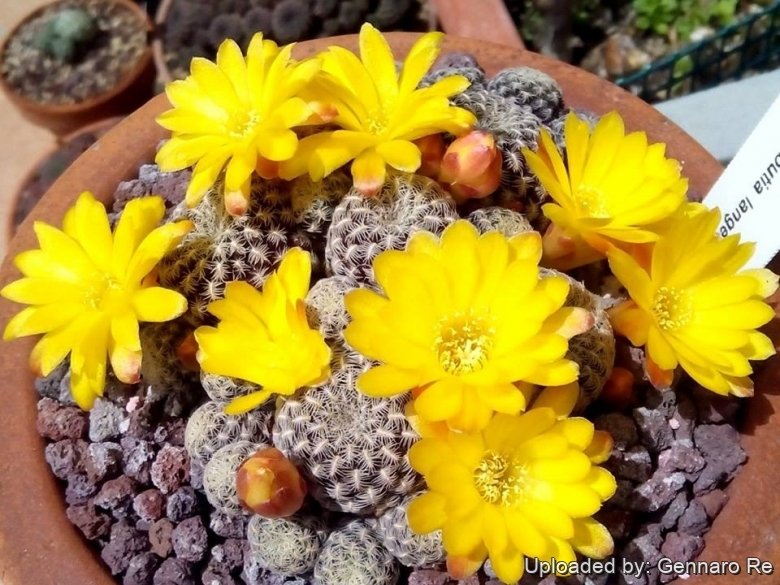
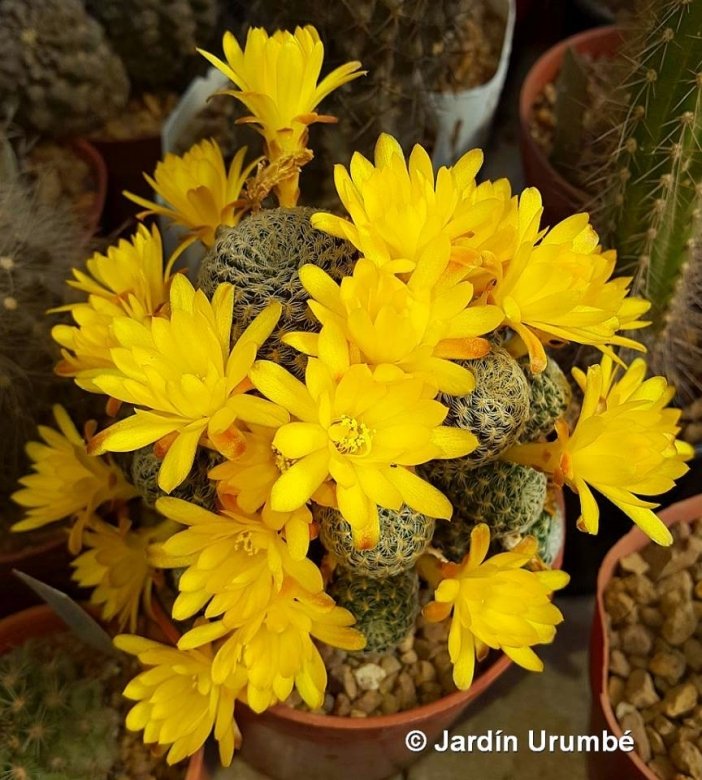
Rebutia cardenasiana (firstly described as SulcoSN’>31363’ alt=‘31362’>Rebutia cardenasiana#SN#31362’>Sulco[[Rebutia cardenasianaSN’ style=‘border:none;’> by R. Vásquez in 1975) is a beautiful yellow-flowered Sulco from Bolivia. It is a cute globular cactus with short pectinate spines related to Rebutia steinbachii, but sufficiently differentiated and considered a good species on its own.
Stems. Solitary, globose, dark green, to 5 cm high and 8 cm in diameter.
Ribs: 14, spiraling, tuberculate.
Areoles: Yellowish white.
Central spine: One, often absent.
Radial spines: Pectinate, white, yellowish or brownish 5-10 mm long.
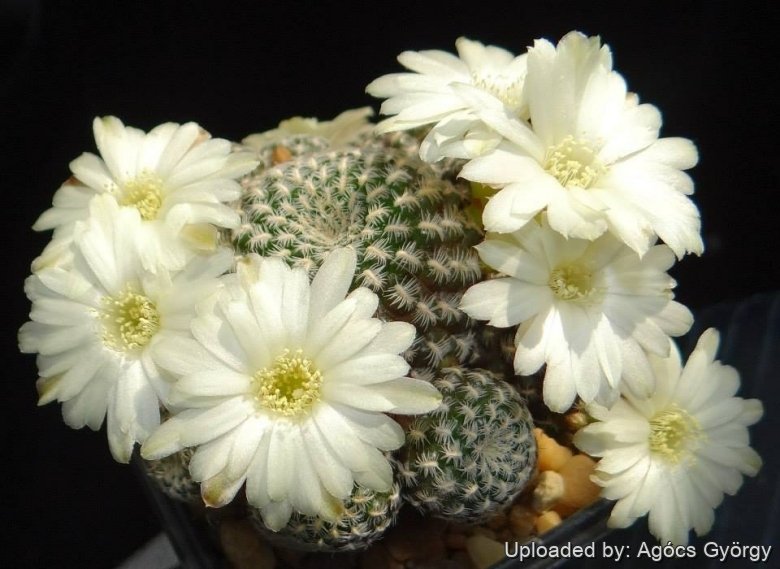
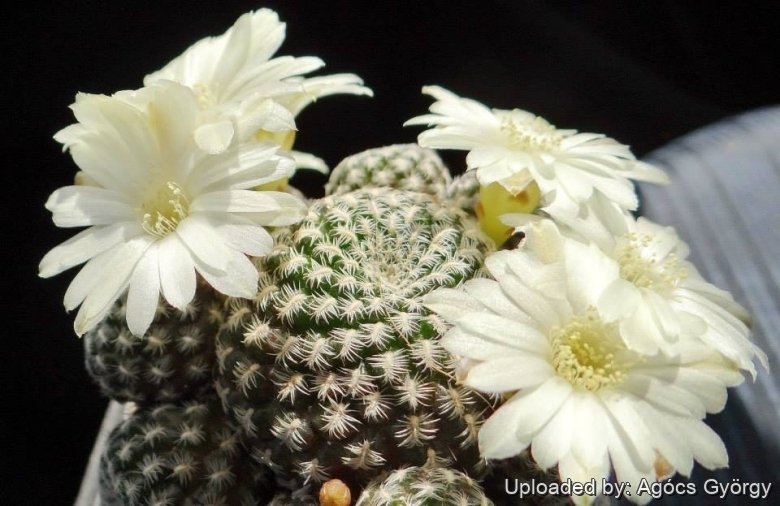
Flowers: Yellow (rarely orange or white), 2.5 cm long and in diameter.
Fruits: Globose, green.
Origin and Habitat
Rebutia cardenasiana is endemic to Cochabamba and Chuquisaca, Bolivia. The species is present in a large area, however it is unknown how abundant it is, there might be some decline in the population however, is difficult to establish how significant this is.
Altitude range: Rebutia cardenasiana grows at at elevations of 1,800-2,800 metres above sea level.
Habitat and Ecology: This species grows in seasonally dry inter-Andean valleys on sandstone outcrops. Part of the species range is affected by agriculture.
Cultivation and Propagation
This species loves a very permeable, coarse mineral soil as well as to be strictly kept dry throughout the winter quiescent period since it is very sensitive to any moisture excesses. To prevent rottenness it is also advisable to surround its root neck by very rough sand or grit, this help a fast water drainage and an appropriate air circulation. Plants are quite frost hardy -5 (-10)° C.
Watering Needs: Water moderately in the growing season, keep dry during the winter rest
Frost Tolerance: Overwinter in a cool place (at 0/10°C) this is important for the flowers as well as for plants health. Without this cool winter period they normally wont get any buds.
Sun Exposure: Needs a full sun exposure (light shadow my be useful in the hottest summer days)
Propagation: Seed, cutting, grafting.
Bibliography
Major references and further lectures
-
Lowry, M. 2013. Rebutia cardenasiana. The IUCN Red List of Threatened Species. Version 2015.2. <www.iucnredlist.org>. Downloaded on 25 July 2015.
-
James Cullen, Sabina G. Knees, H. Suzanne Cubey “The European Garden Flora Flowering Plants: A Manual for the Identification of Plants Cultivated in Europe, Both Out-of-Doors and Under Glass” Cambridge University Press, 11/Aug./2011
-
David Hunt, Nigel Taylor “The New Cactus Lexicon” DH Books, 2006
-
Edward F. Anderson “The Cactus Family” Timber Press, 2001
-
John Pilbeam “Sulcorebutia and Weingartia: A Collector’s Guide” Timber Press, 1985
From llifle page Sulcorebutia langeri
Description
Sulcorebutia langeri is a form of Rebutia cardenasiana, but not sufficiently differentiated and considered merely a local variant of the latter (if not the same). It has pectinate white spines covering the black-green stems and produces sunny yellow flowers (in profusion in spring) larger than the tiny bodies. S. langeri is one of the easier to recognize yellow-flowering Sulco, well-known bot not yet very common species in cultivation.
Derivation of specific name: It was discovered near Vallegrande by Bro. Andrew Langer of Pampa Grande.
Stem: Solitary or clustering,
Ribs: ca. 14.
Spines: 21-25, up to 3 mm long mostly white, occasionally white and brown. The spines are adpressed, pectinate and finely hairy if seen through a lens.
Flowers: Yellow and orange.
Fruits: Brown with pink scales.
Origin and Habitat
North of Vallegrande, Santa Cruz, Bolivia
Altitude range: 1900-2100 metres above sea level.
Type Locality: Department of Santa Cruz, province of Valle Grande, a few kilometers north of the settlement of Vallegrande, 2050-2100m, Bolivia.
Habitat: Andean Chaco. Thermotropical semiarid. Sulcorebutia langeri grovs on a sandstone hill of white appearance from distance in a dry forest area of Neocardenasia herzogiana and Schinopsis haenkeana. The secies is strictly endemic and insufficiently known in habitat.
Cultivation and Propagation
This species loves a very permeable, coarse mineral soil as well as to be strictly kept dry throughout the winter quiescent period since it is very sensitive to any moisture excesses, To prevent rottenness it is also advisable to surround its root neck by very rough sand or grit, this help a fast water drainage and an appropriate air circulation. Plants are quite frost hardy -5 (-10)° C.
Watering Needs: Water moderately in the growing season, keep dry during the winter rest
Frost Tolerance: Overwinter in a cool place (at 0/10°C) this is important for the flowers as well as for plants health. Without this cool winter period they normally wont get any buds.
Sun Exposure: Needs a full sun exposure (light shadow my be useful in the hottest summer days)
Propagation: Seed, cutting, grafting.
Bibliography
Major references and further lectures
-
Michael Nee “Flora de la Región del Parque Nacional Amboró Bolivia: Magnoliidae, Hamamelidae y Caryophyllidae” Editorial FAN, 2004
-
Lazaroa, Volumi 16-18 Departamento de Botánica, Facultad de Farmacia, Universidad Complutense., 1995
Source: Sulcorebutia langeri, LLIFLE - Encyclopedia of living forms, CC-BY-SA, retrieved 2026-10-25.
From llifle page Sulcorebutia langeri G245/5 km 10, Valle Grande to Mataral, Santa Cruz, Bolivia
Description
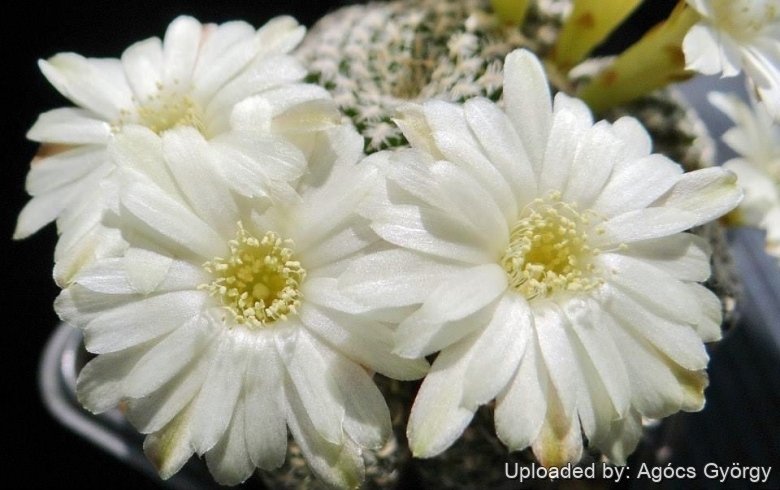
Sulcorebutia langeri G245/5 (collected at km 10, Valle Grande to Mataral, Santa Cruz, Bolivia by Willi Gertel) is a local or morphological form of Sulcorebutia langeri (Rebutia cardenasiana) with nice white flowers instead of yellow. Apart for flower colour all the other characteristics of Sulcorebutia langeri G245/5, appear to fall within the natural variation of Rebutia cardenasiana and it should be synonymized with the latter, but it has a value for a collector because they identify plants with particular characters.
Origin and Habitat
km 10, Valle Grande to Mataral, Santa Cruz, Bolivia .
Source: Sulcorebutia langeri G245/5 km 10, Valle Grande to Mataral, Santa Cruz, Bolivia, LLIFLE - Encyclopedia of living forms, CC-BY-SA, retrieved 2026-10-25.
Gallery