Publication: Cactaceae Syst. Init. 15: 10. 2003 [Apr 2003] nom. invalid.
Description
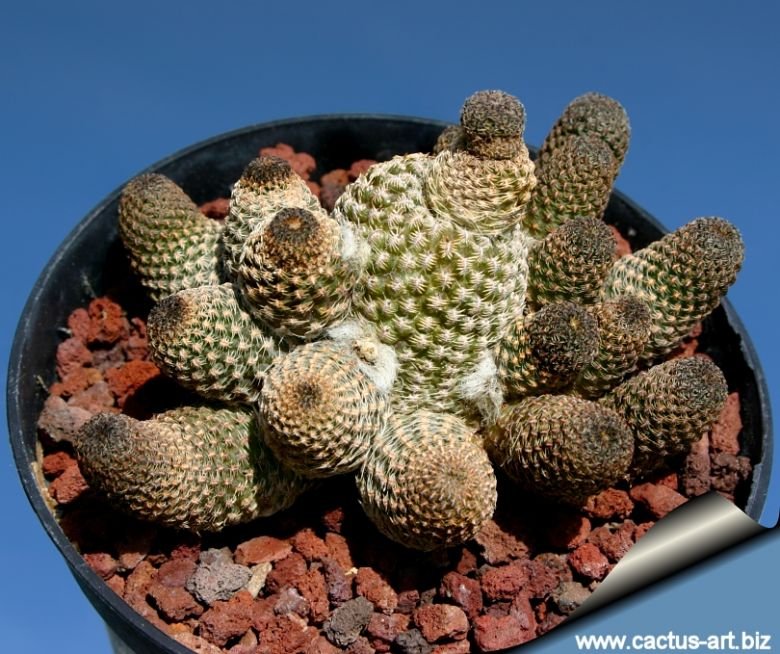
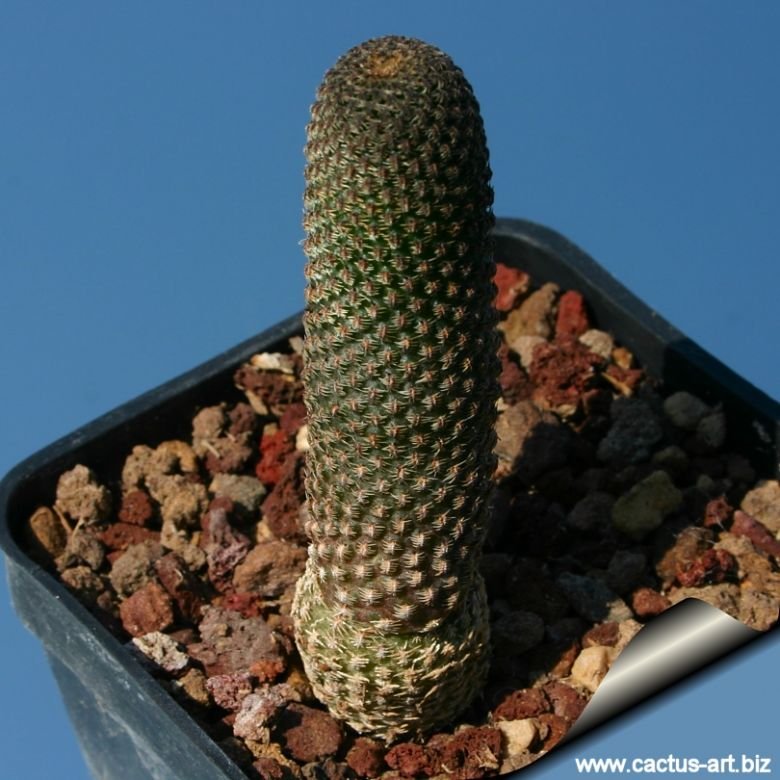
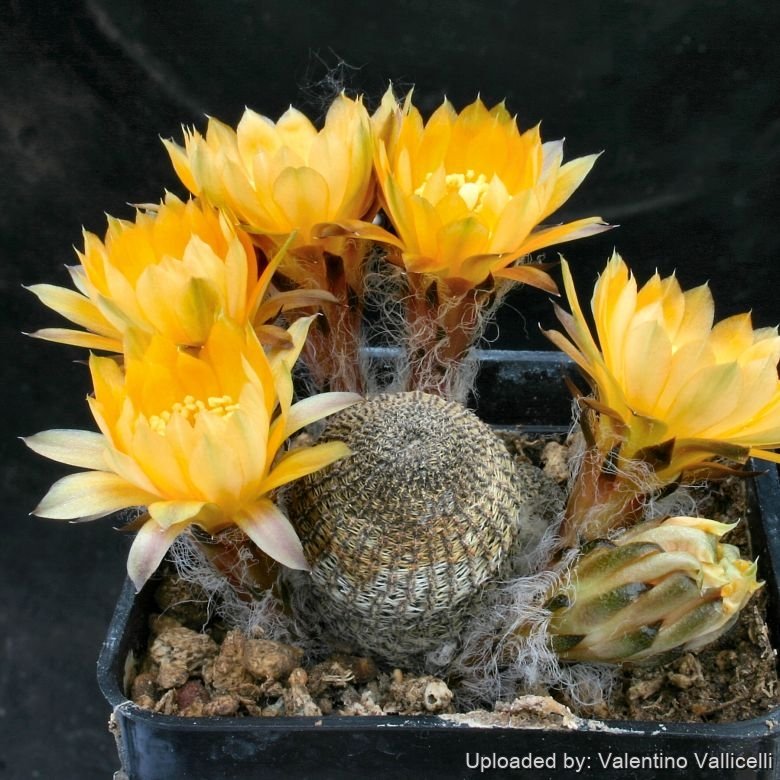
Rebutia gonjianii (Rebutia einsteinii subs. gonjianii) is a minuscule, slender, clumping cactus with thin finger-like stems branching from the base or higher in the manner of a miniature saguaro. This species is often seen lumped with Rebutia einsteinii.
Stems: Cylindrical, dark brownish-green coloured, but green in the new growth, and only about as thick as a pencil (1-1,2 cm in diameter). It would appear that in cultivation these plants grow larger, elongate and cluster more vigorously than in habitat.
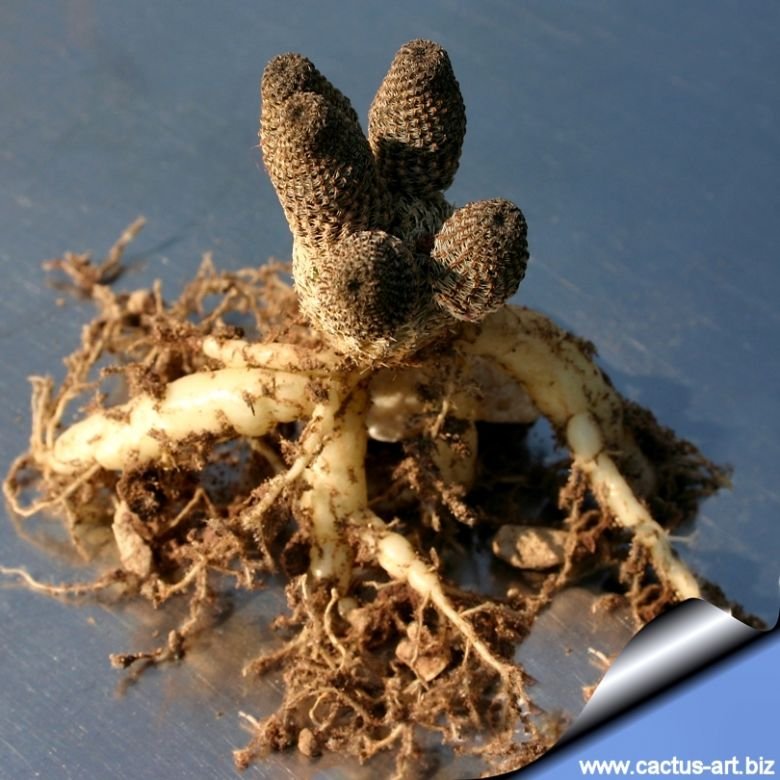
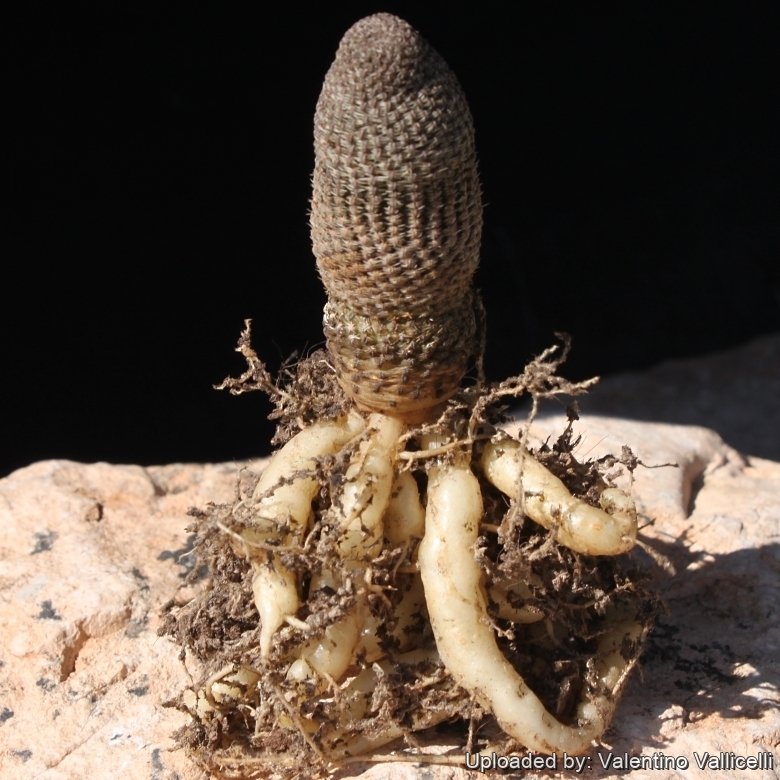
Root: Thick, fleshy taproot.
Areoles: Thin, elogate, brown felted.
Spines: Tiny, pectinated less than 1 mm long.
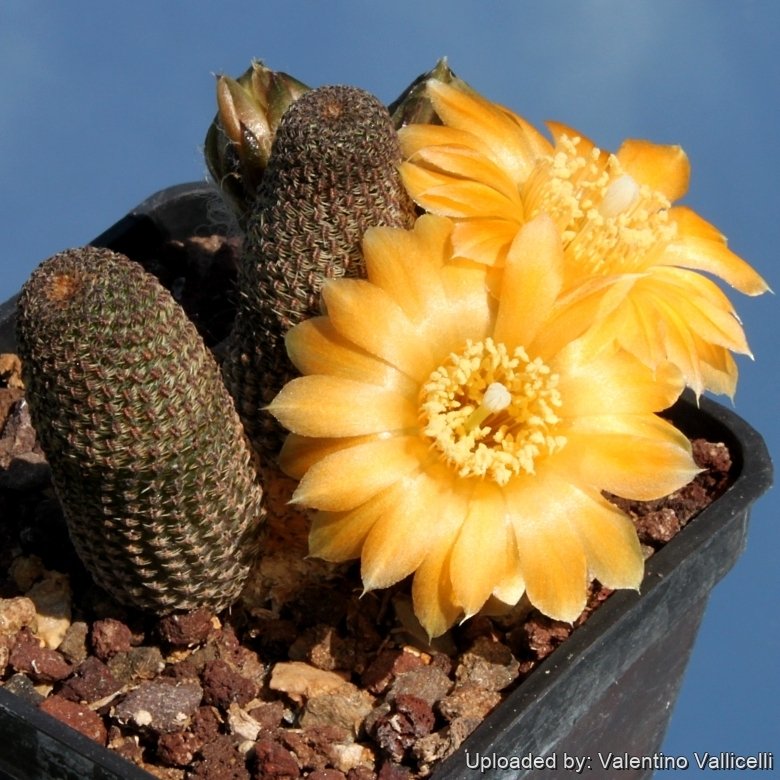
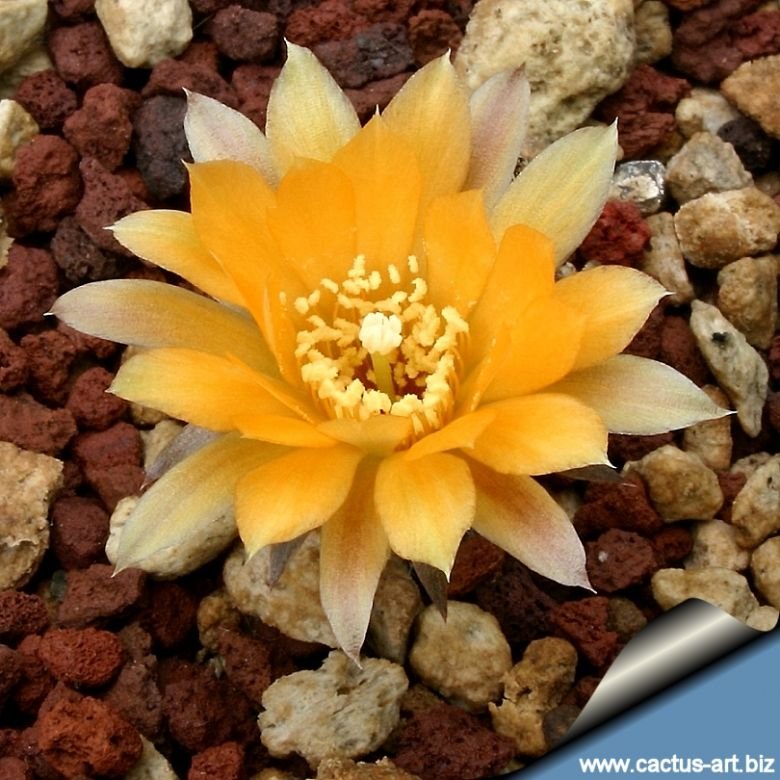
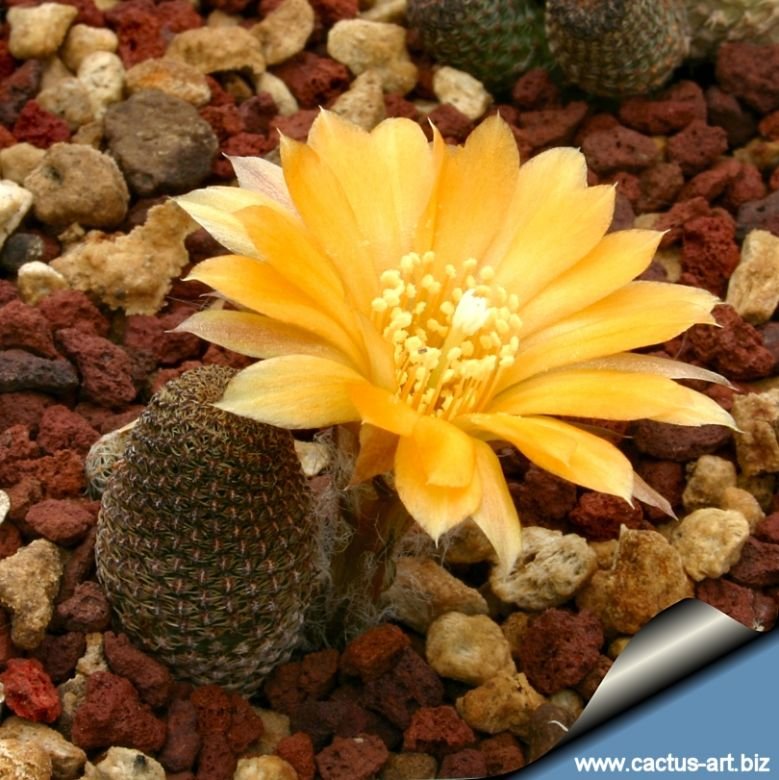
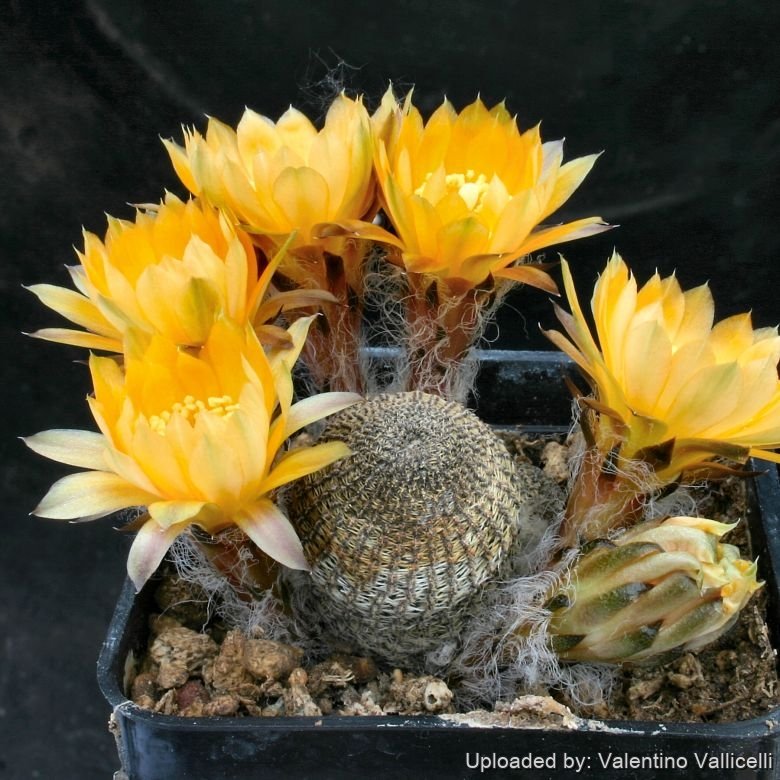
Flowers: Large yellow, with a tinge of orange or brownish-yellow, from near stems bases.
Blooming Season: Blooms profusely in spring.
Origin and Habitat
North-east Argentina (Jujuy, Salta), south east Bolivia
Type locality: A cuatro horas a mula oeste de Huacalera, Tilcara (Jujuy, Argentina)
Cultivation and Propagation
This species is probably the most difficult Rebutia to grow on its own (tuberous) roots, and it is often grown grafted. It tends to rot if too wet, and is best kept in a somewhat sheltered location. Careful waterings helps to keep the plant compact. Grow it in a very open mineral mix, (lots of pumice). Keep dry in winter. Hardy to -4°C for a short period. Rebutias grow in nature at high altitudes, and do not thrive well at high temperatures in cultivation. They will often go dormant in mid-summer and resume growth again when the weather cools in late August. They can tolerate amazingly low temperatures for long periods of time. All species can take frost, even when not bone dry. It is generally accepted that plants kept at too high a temperature, or watered too much during the winter rest period, will not bloom the following year. Give them an airy spot, and ensure good drainage. It is better that they be repotted regularly. Pots should be only slightly larger than the plant and root system.
The roots can break during repotting, and it is best to leave the compost dry for a while after repotting, to avoid rot. Repotting will increase the number and size of stems, and will increase the number of flowers produced. Repot yearly until reaching about 3 cm in size, then every two or three years will suffice. Repotting is best done at the end of winter, but can be done at other times, too. All plants, especially the young ones, are susceptible to red spider mites.
Propagation: By seeds or offsets (If available). The stems of larger grafted specimens can be rooted, but grow quite slowly. It makes sense to keep some stock plants for future propagation, or to replace the eventaul plant that rots or dies
From llifle page Rebutia eichlami var. gonzalesii f. cristata
Description
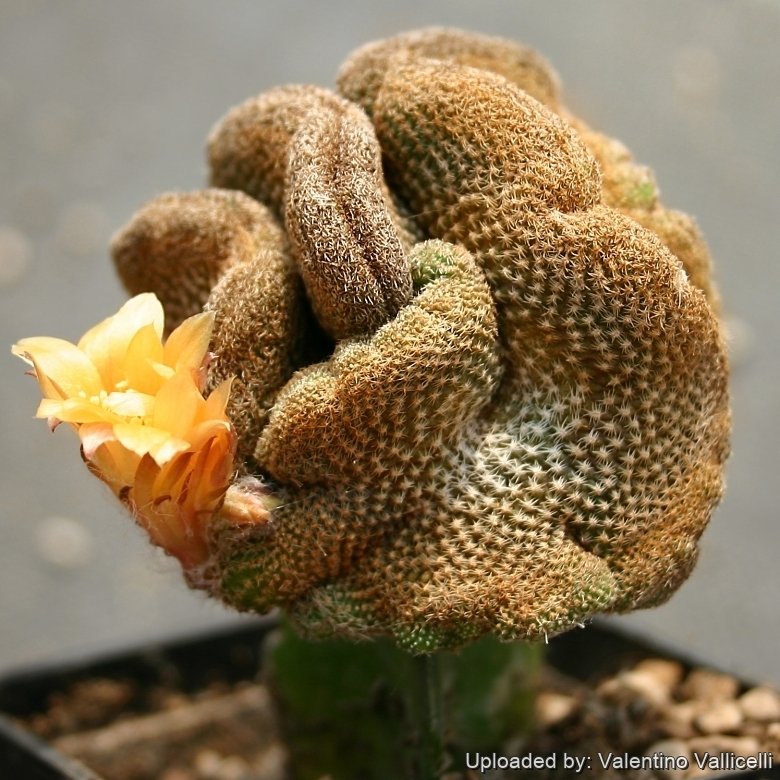
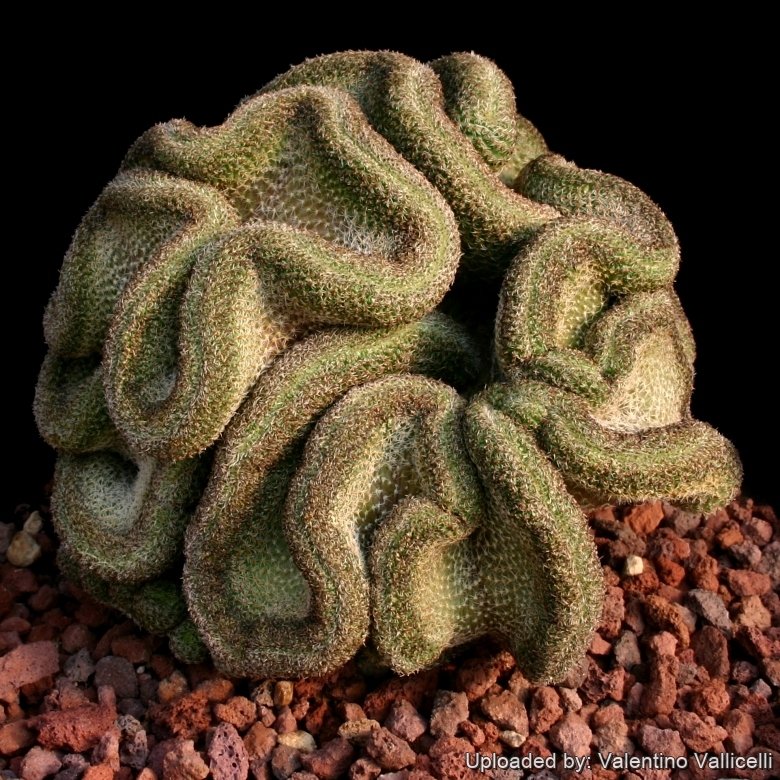
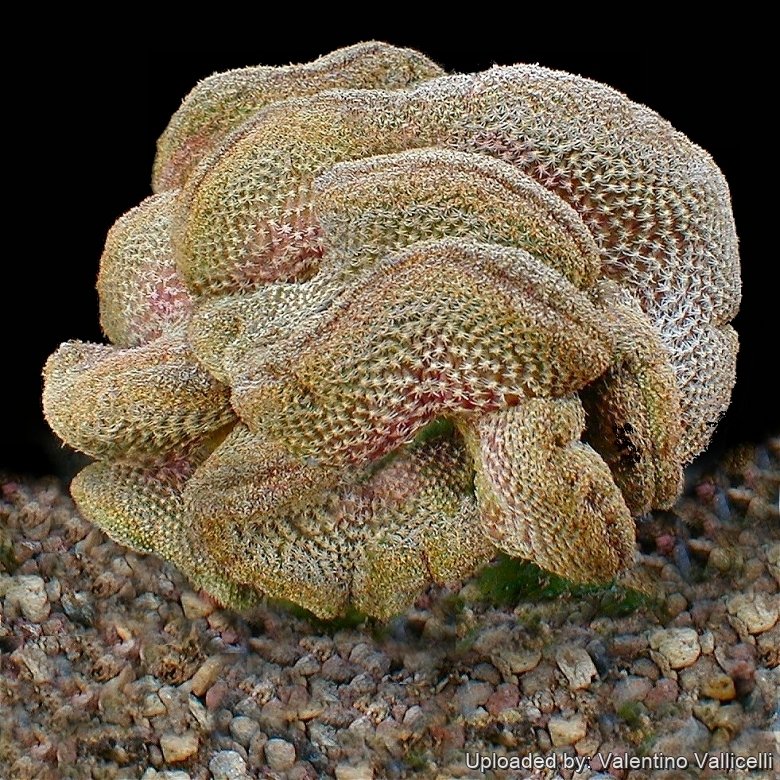
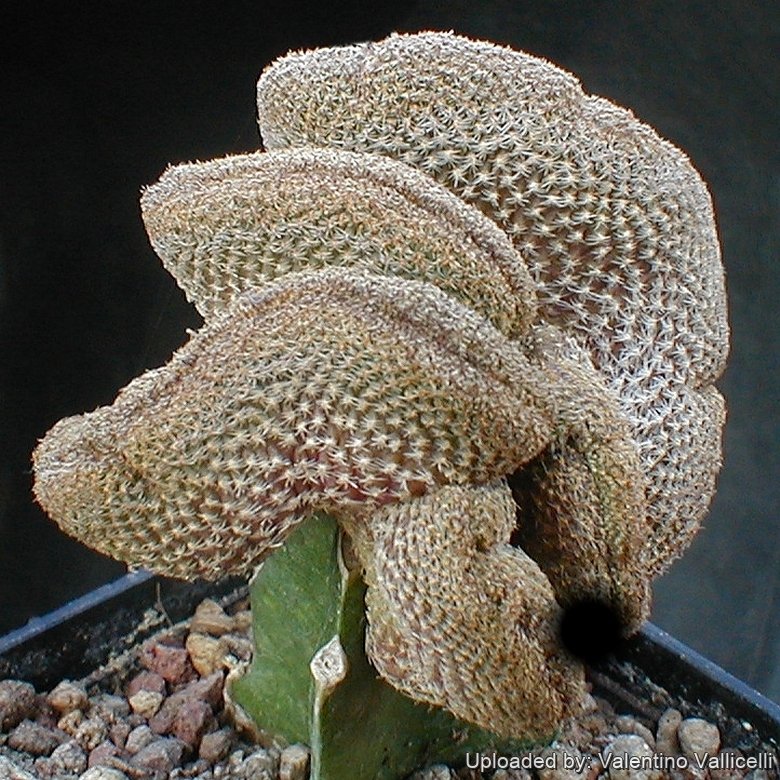
Rebutia gonjianii (Rebutia einsteinii subs. gonjianii) is a minuscule, slender, clumping cactus with thin finger-like stems branching from the base or higher in the manner of a miniature saguaro. The crested form Rebutia gonjianii f. cristata - despite to its beauty - is still very rare and sought after by collectors, for its unique features.
Root: Has a large, fleshy tap root below the surface of the compost.
Stem: Fan shaped, thin, only about 5-10 mm thick, forming tiny brain-shaped mounds, and dark brownish-green coloured, but green in the new growth.
Areoles: Thin, elogate, brown felted.
Spines: Tiny, pectinated less than 1 mm long.
Flowers: Large yellow, with a tinge of orange or brownish-yellow, from near stems bases.
Blooming Season: Blooms in spring.
Origin and Habitat
Garden origin (Nursery produced cultivar)
Cultivation and Propagation
Although regarded as a choice and difficult plant is not too difficult in a greenhouse, although grows quite slowly. It is usually seen as a grafted plant but grows very well on its own roots too.
Soil: Use mineral well permeable mineral soil with little organic matter (peat, humus).
Exposure: They need a good amount of light shade to full sun this help to keep the plants healthy, although slow growth.
Watering: Water sparingly from March till October (weekly during summertime, if the weather is sunny enough) , with a little fertilizer added. Less or no water during cold winter months, or when night temperatures remain below 10° to prevent root loss. It is sensitive to overwatering (rot prone).
Fertilization: Feeding may not be necessary at all if the compost is fresh then, feed in summer only if the plant hasn’t been repotted recently. Do not feed the plants from September onwards as this can cause lush growth which can be fatal during the darker cold months.
Hardiness: Keep perfectly dry in winter at temperatures from 5 to 15 degrees centigrade. (but it is relatively cold resistant and hardy to -5° C, or possibly colder for short periods) In the rest period no high atmospheric humidity!! (Temperature Zone: USDA 9-11)
Propagation: Grafting or cuttings. Plants are usually grafted onto column-shaped cacti but proved to be able to produce their own roots if degrafted. Cuttings will root better in hot weather. Cuttings must be kept quite dry to root. Large crested piece must be placed on the soil surface without burying the plant base down in the soil.
Source: Rebutia eichlami var. gonzalesii f. cristata, LLIFLE - Encyclopedia of living forms, CC-BY-SA, retrieved 2026-10-25.
Gallery