Publication: Bradleya 5: 94 (1987)
Description
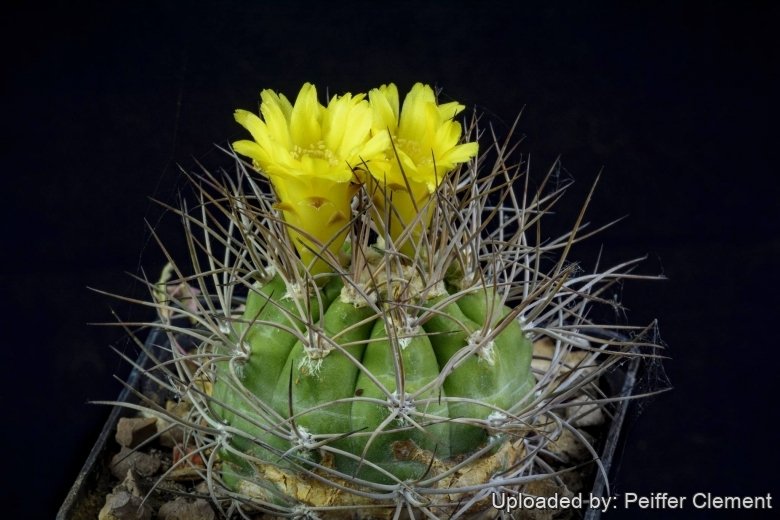
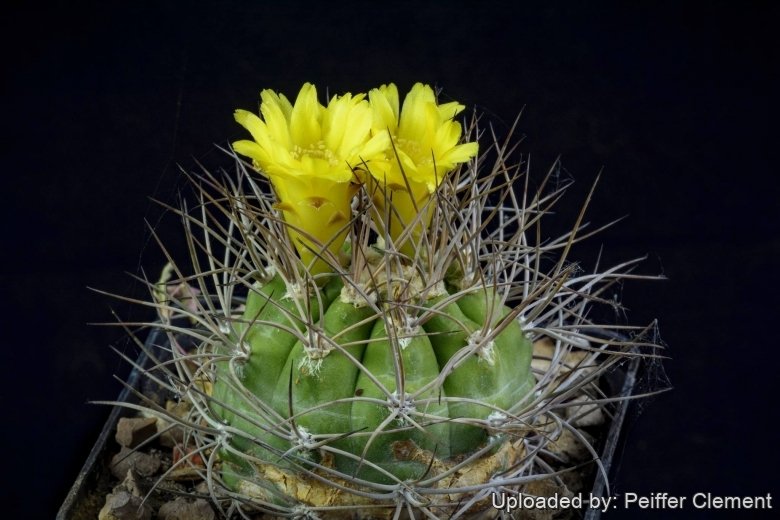
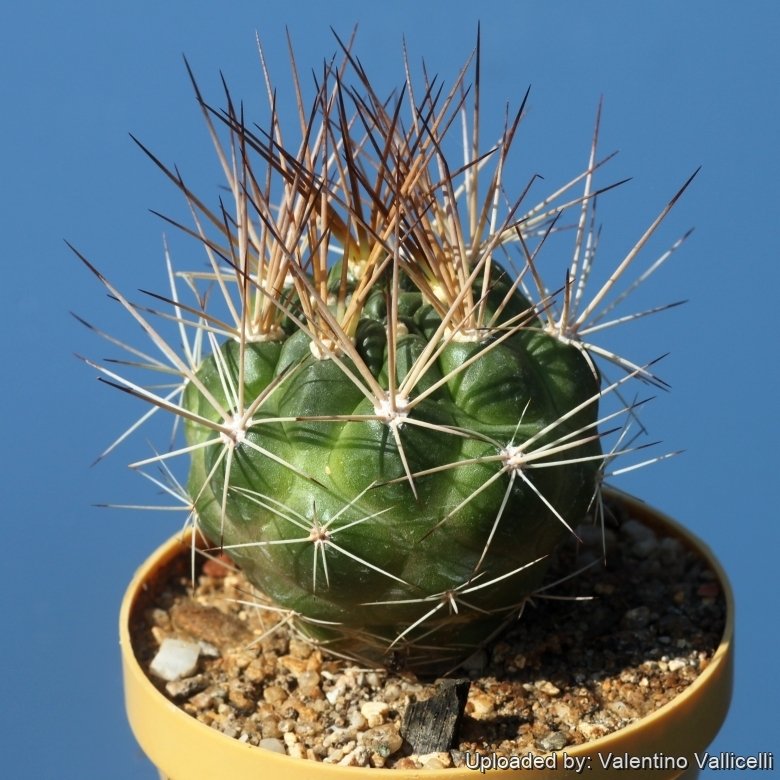
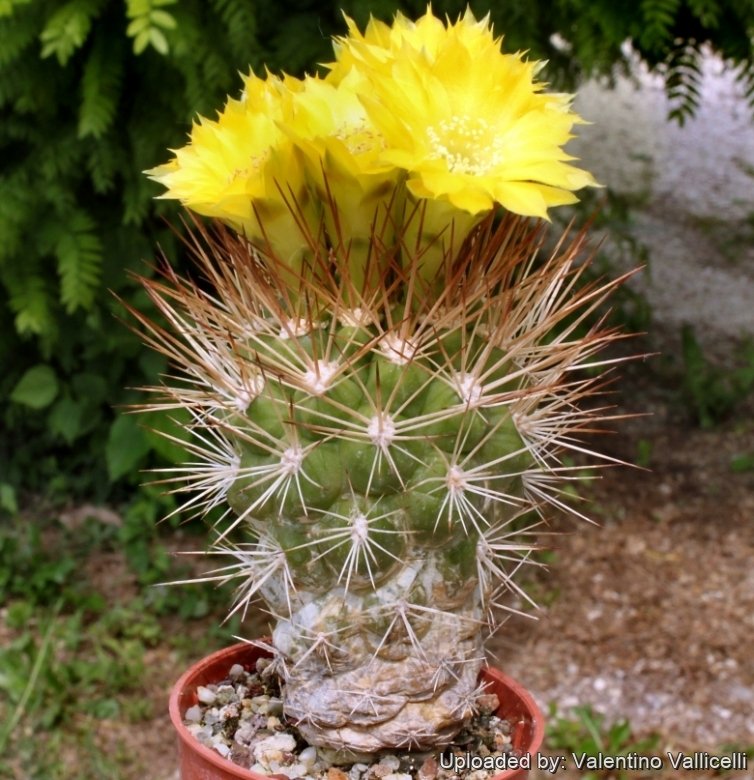
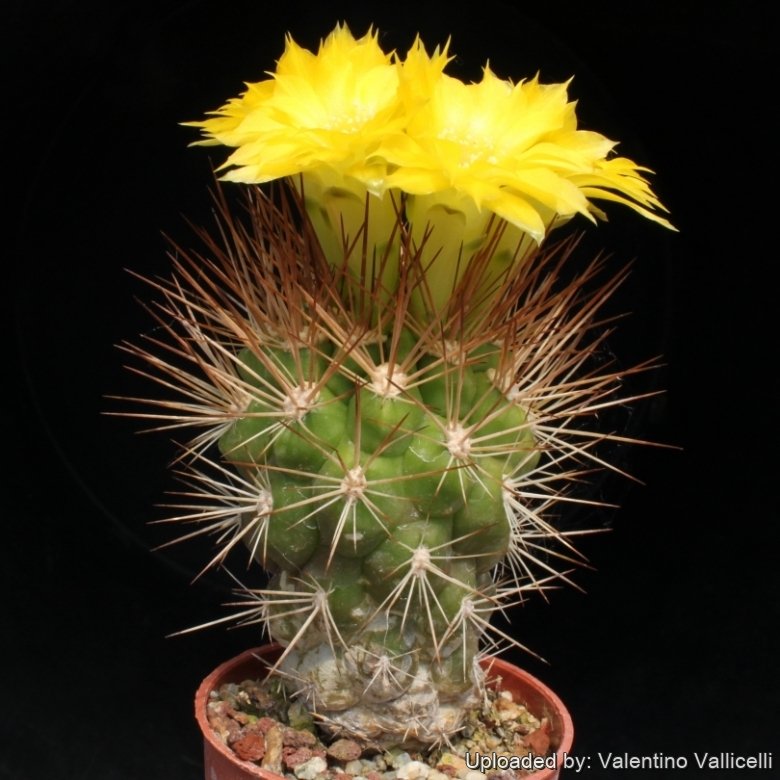
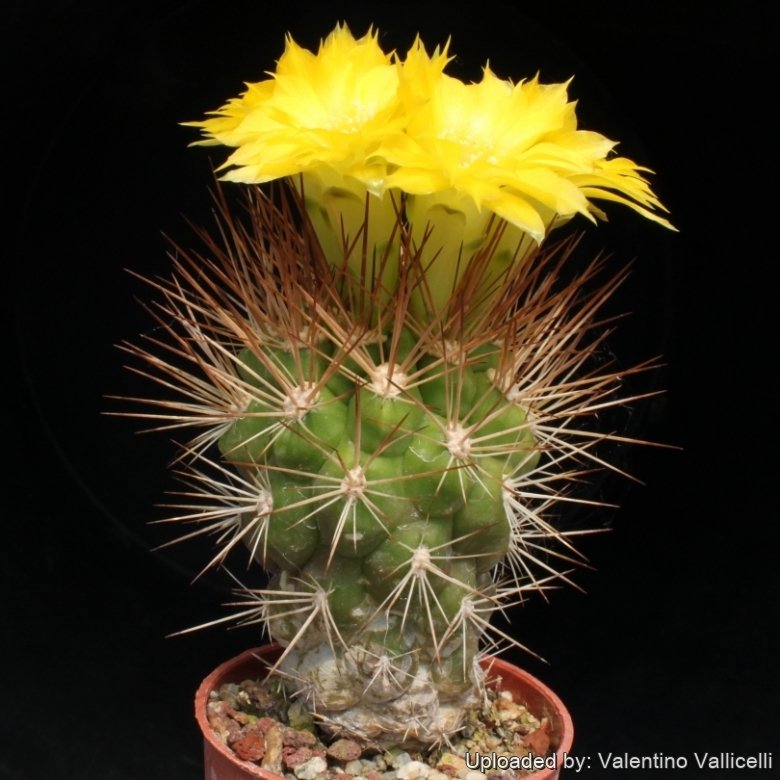
Rebutia fidaiana, much better known under its old name Weingartia fidaiana, is a very spiny and usually simple cactus sometime branched.
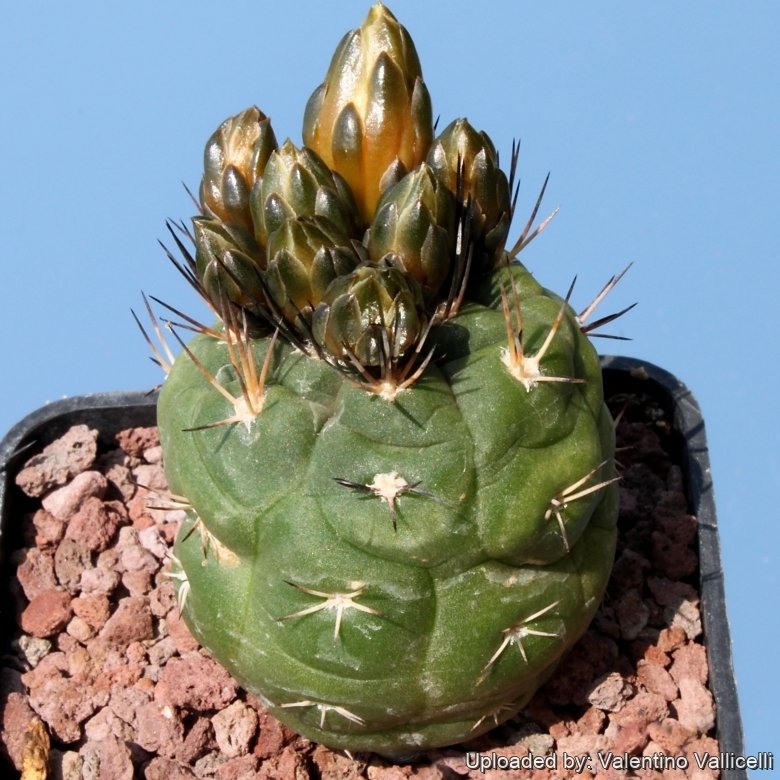
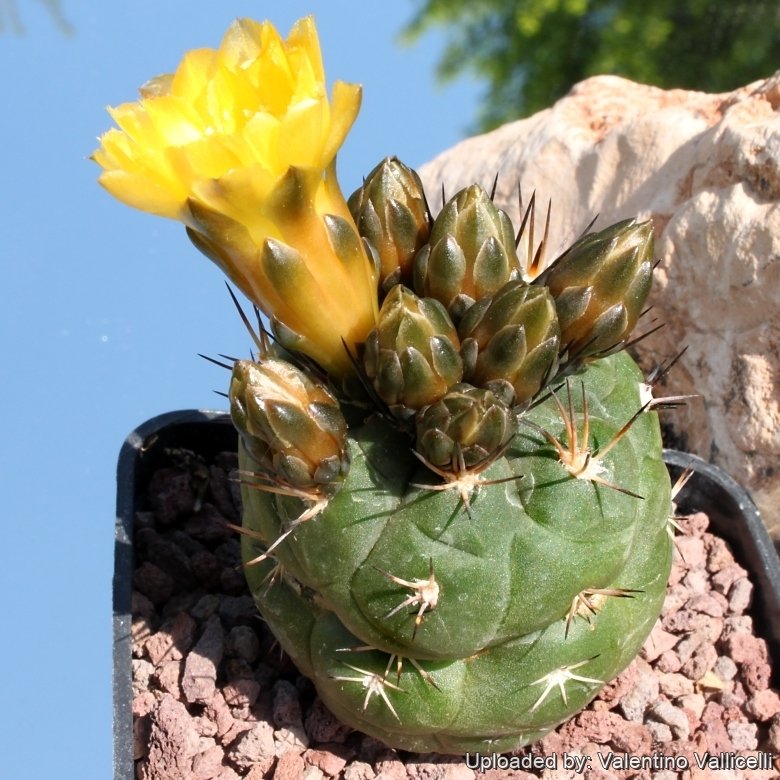
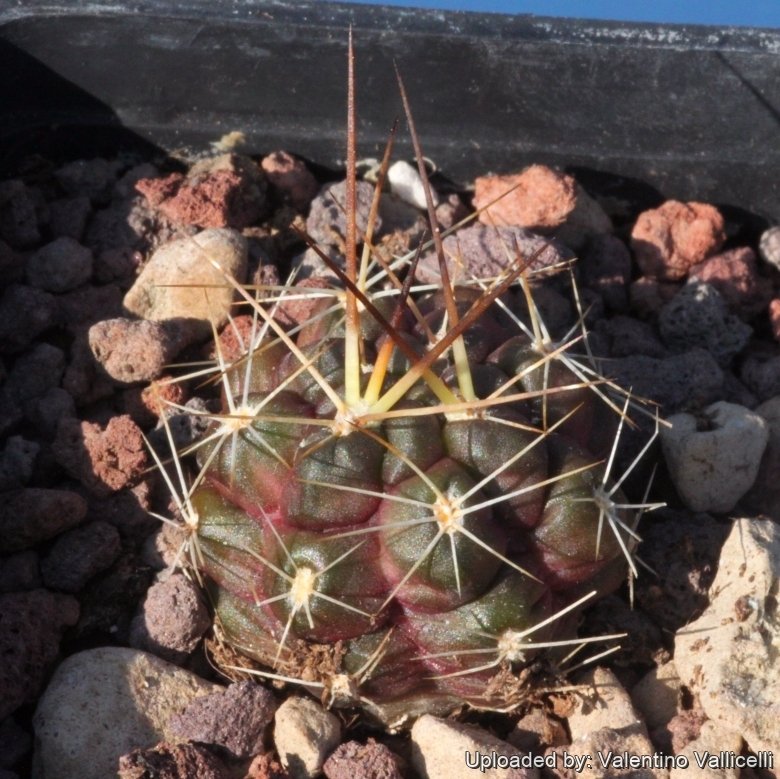
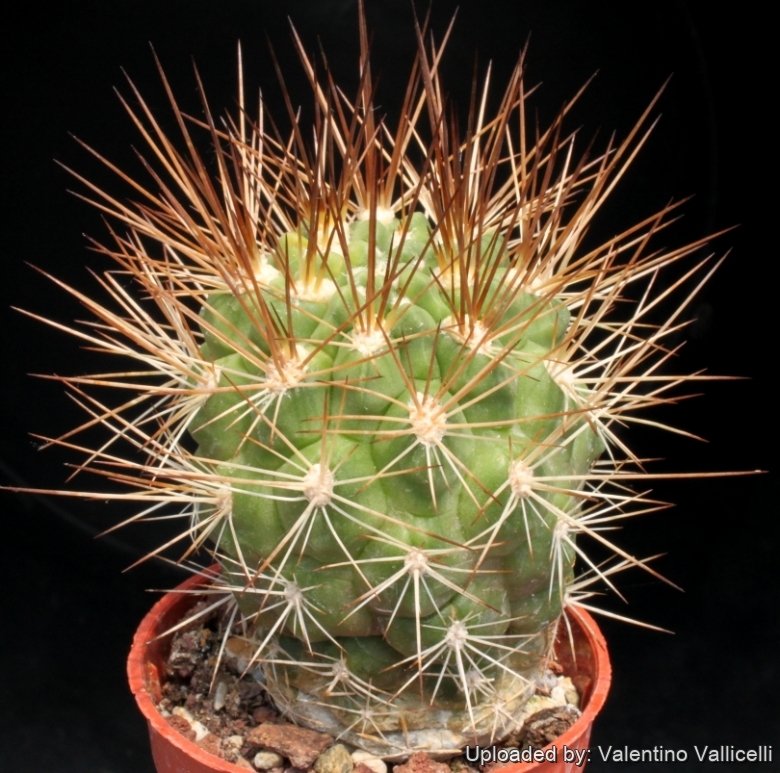
Stem: About 10 to 30(-70) cm tall, 6 to 20 cm in diameter, spherical to short-columnar, yellowish-green to grey-green to purple tinged and connected though a thin neck to the strong tuberous root.
Ribs: 7-10, completely divided into round spiraling tubercles.
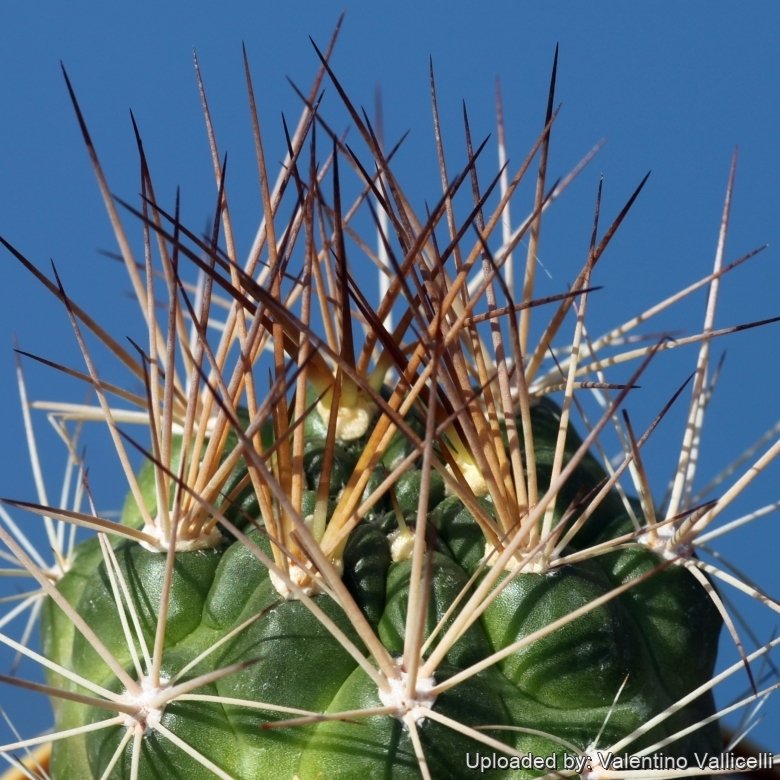
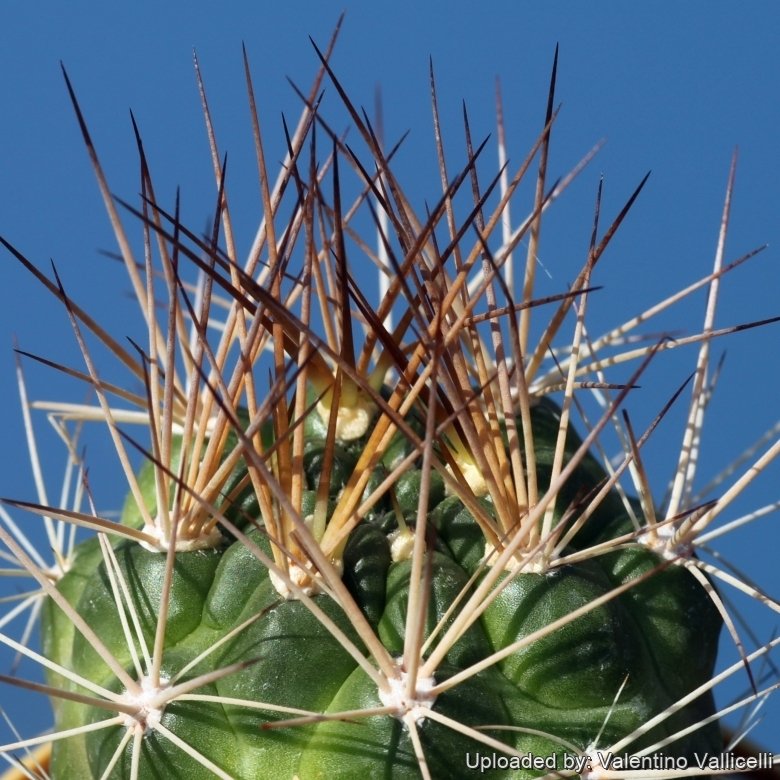
Areole: Large, felted and somewhat raised.
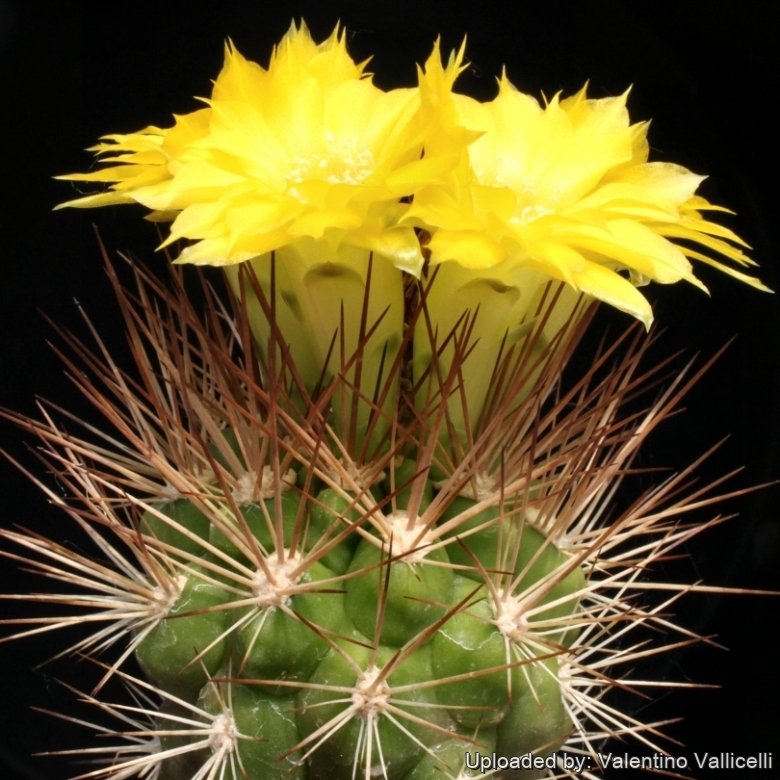
Spines: Very dense, acicular, straight or curved, spreading or bundled, thin, rigid to somewhat elastic, interlacing and almost completely covering the stem, not easily distinguishable as centrals and radials creamy-grey, straw-coloured, brownish or black.
Central pines: 3-4, up to 6(-12) cm long.
Radial spines: 7-9 similar to the central up to 4(-7) cm long.
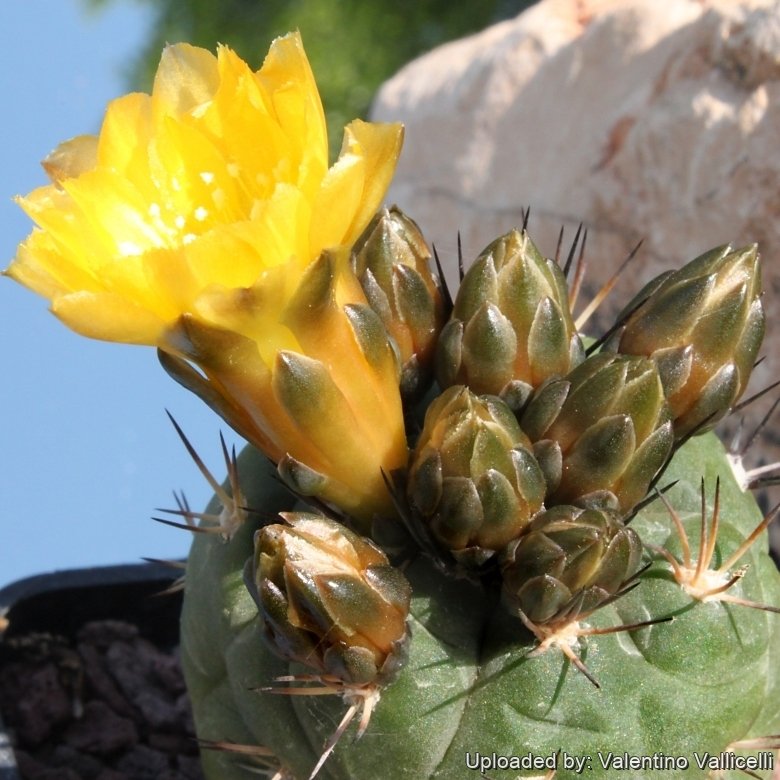
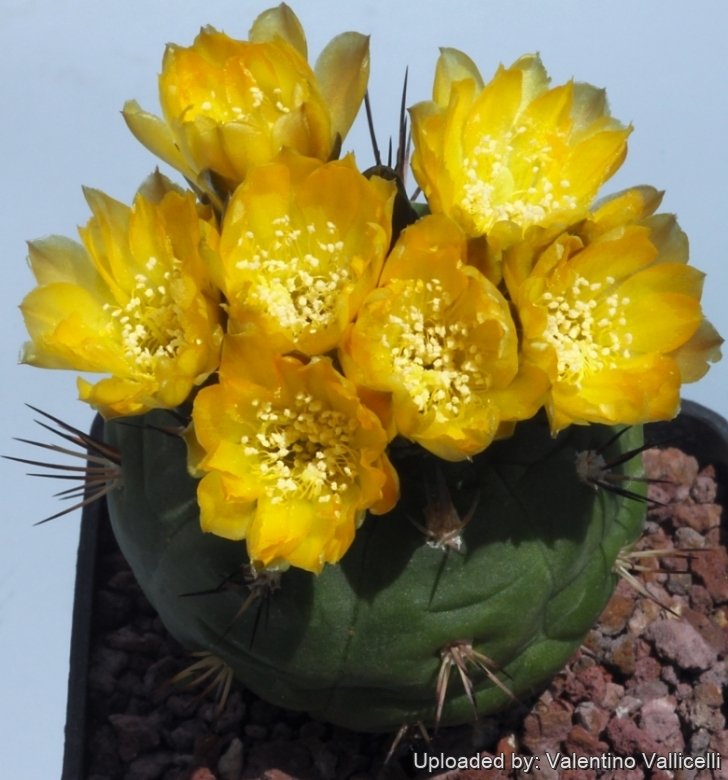
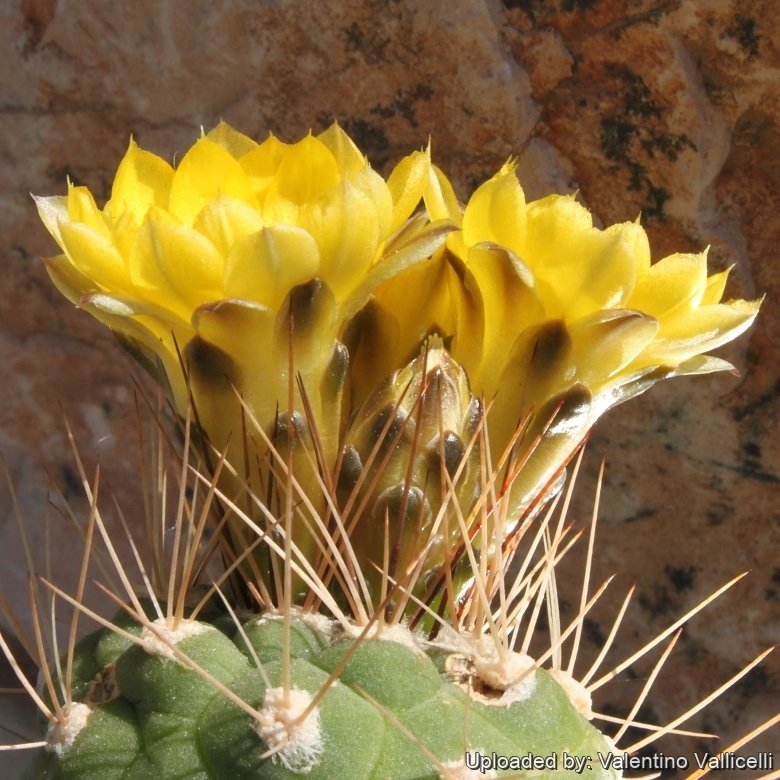
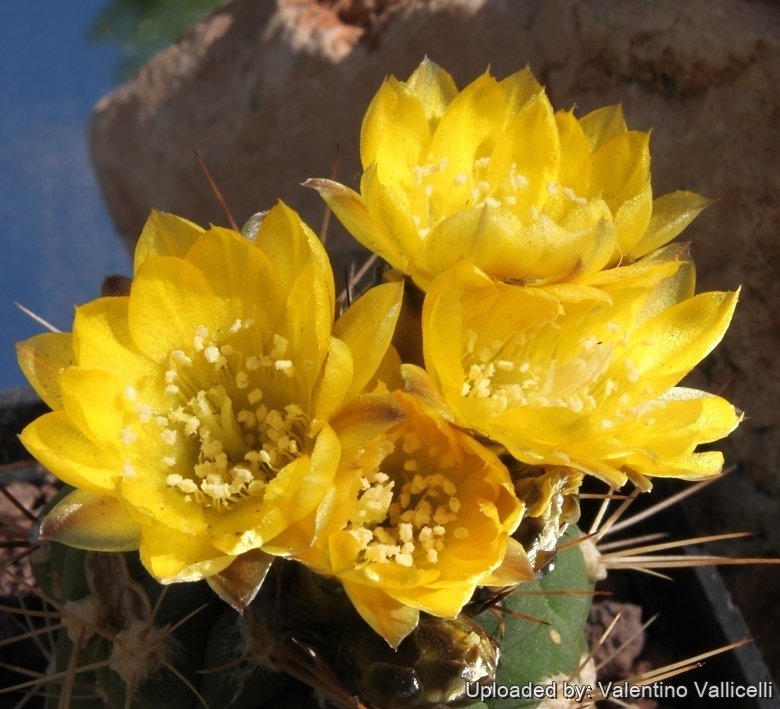
Flowers: One per areole nearly apical, approx 4- 5 cm tall 3,5-4,5 cm in diameter, narrow funnel-shaped with short tube, tepals yellow (occasionally white, ochre or red) with a neat staminal throat ring.
Blooming season: Spring to early summer and remain open for five or six days.
Fruit: Small, depressed spherical-ovoidal or teardrop-shaped, olive green, reddish or tannish-brown, thin-skinned and dry at maturity, dehiscing basally or on the side, with few seeds.
Seed: Cap-shaped, nearly as broad as long, black, finely areolate-papillale.
Origin and Habitat
Southern Bolivia (Potosí and Tarija) and northern Argentine (Jujuy)
Altitude: from 2600 to 4000 meters
Habitat: It grows on high altitude in an almost lifeless rocky soil in the Puna-comunity vegetation. The climate conditions are extremely dry, with scarce rains.
Note: The indigenous word “Puna” indicate the western region up to 4500 m that extends from the Peru, going throughout Bolivia to the Argentinean North. Delimited at west by a costal chain of high volcanic picks and by the Cordillera mountainous chain to the east. The Argentinean Puna is the natural continuation of the Bolivian highland.
Cultivation and Propagation
Full sun to light shade, Water regularly in summer but do not overwater. Keep dry or slightly moist in winter at a minimum temperature of 5°C (But Hardy to -4°C or less). This mountain cactus - because of the elongated fat taproot - necessitate deep pots and a well drained mineral potting mix. It is better that they are repotted regularly. Repotting will increase size of stems and the number of flowers produced. Repot yearly until reaching about 100 mm in size, then every two or three years will suffice. Repotting is best done at the end of winter but can be done at other times. Do not water for a couple of weeks after repotting to reduce risk of root rot via broken roots. Need a sufficient amount of air.
Pest & diseases: Keep their roots free of mealy bugs, as fungal attack often occurs as a result of damage to stems by insects. A layer of grit on the surface of the compost prevents moisture from accumulating around the base of the stems and minimise the chance of fungal attack on the roots.
Propagation: Usually by seeds, but also offsets (seldom available), and grafting . Grafted plants in culture are most common and sprout easily. But it is also feasible to root them but they grow much slower on their own roots and takes various years prior to they bloom.
Bibliography
Major references and further lectures
-
James Cullen, Sabina G. Knees, H. Suzanne Cubey “The European Garden Flora Flowering Plants: A Manual for the Identification of Plants Cultivated in Europe, Both Out-of-Doors and Under Glass” Cambridge University Press, 11/Aug./2011
-
David Hunt, Nigel Taylor “The New Cactus Lexicon” DH Books, 2006
-
Edward F. Anderson “The Cactus Family” Timber Press, 2001
-
Augustin K.: “Weingartia: history, description and reclassification.” Cactus & Co. 7. (2): 91-126, 2003
-
Ritter Fr.: “Kakteen in Südamerika” Spangenberg, 1980
-
Anderson E. F.: “The Cactus Family” Timber Press, Portland, Oregon, 2001
From llifle page Gymnocalycium westii
Description
Weingartia westii is a very spiny and usually simple cactus.
Stem: About 10 to 20 cm tall, 6 to 20 cm in diameter, spherical to short-columnar, yellowish-green, grey-green or purple tinged and connected though a thin neck to the strong tuberous root.
Ribs: Completely divided into round spiralling tubercles.
Areole: Large, felted and somewhat raised.
Spines: Very dense, acicular, spreading, thin, elastic, interlacing and almost completely covering the stem, not easily distinguishable as centrals and radials creamy-grey, straw-coloured to brownish..
Central pines: 3-4, up to 6 cm long.
Radial spines: 7-9 similar to the central up to 4 cm long.
Flowers: One per areole nearly apical, approx 4- 5 cm tall 3,5-4,5 cm in diameter, narrow funnel-shaped with short tube, tepals yellow (occasionally white) with a neat staminal throat ring.
Blooming season: Spring to early summer and remain open for five or six days.
Fruit: Small, spherical-ovoidal or tear-drop-shaped, olive green to tannish-brown, thin-skinned at maturity, dehiscing basally or on the side, with few seeds.
Seed: Cap-shaped, nearly as broad as long, black, finely areolate-papillale.
Origin and Habitat
South of Bolivia departments of Chuquisaca and Potosi
Altitude: 3000 to 3950 meters.
Tipe locality: Cuchu Ingenic, 25 miles south of Potosi.
Bibliography
Major references and further lectures
-
James Cullen, Sabina G. Knees, H. Suzanne Cubey “The European Garden Flora Flowering Plants: A Manual for the Identification of Plants Cultivated in Europe, Both Out-of-Doors and Under Glass” Cambridge University Press, 11/Aug./2011
-
David Hunt, Nigel Taylor “The New Cactus Lexicon” DH Books, 2006
-
Edward F. Anderson “The Cactus Family” Timber Press, 2001
-
Augustin K.: “Weingartia: history, description and reclassification.” Cactus & Co. 7. (2): 91-126, 2003
-
Ritter Fr.: “Kakteen in Südamerika” Spangenberg, 1980
-
Anderson E. F.: “The Cactus Family” Timber Press, Portland, Oregon, 2001
-
Urs Eggli, Leonard E. Newton: “Etymological Dictionary of Succulent Plant Names” Springer, Berlin/Heidelberg 2010
Source: Gymnocalycium westii, LLIFLE - Encyclopedia of living forms, CC-BY-SA, retrieved 2026-10-25.
From llifle page Sulcorebutia lecoriensis
Description
Rebutia fidaiana var. leocoriensis, much better known as Weingartia leocoriensis, is a local or morphological form of Rebutia fidaiana distinguished for the flowers that are slightly different and also the spines are longer and radiate more outwardly than the regular R. fidaiana.
Habit: It is a very spiny cactus solitary or forming clumps.
Stem: Up to 30 cm tall and 15 cm in width, spherical to to short cylindrical, yellowish-green to grey-green.
Ribs: Completely divided into round spiralling tubercles.
Areoles: Roundish, yellowish or creamy white and quite large.
Spines 13-14 up to 5 cm long, very dense, acicular, straight, needle-shaped, spreading, interlacing and almost completely covering the stem, not easily distinguishable as centrals and radials variable in colour from greyish, straw to pale-brownish.
Flowers: 3 cm long yellow. They are produced especially in a ring near the very tips of the stems.
Blooming season: The flowers are produced in early summer and remain open for five or six days.
Fruit: Spherical to elongate, small tannish-brown.
Roots: Large, tuberose connected to the plants stem with a constricted neck.
Origin and Habitat
Dep. Chuquisaca and Potosi, Bolivia.
Altitude: 3000-3400 metres above sea level.
Source: Sulcorebutia lecoriensis, LLIFLE - Encyclopedia of living forms, CC-BY-SA, retrieved 2026-10-25.
Cultivars and forms (4)
Gallery