Publication: Kakteen Sukk. 21: 29, figs. 1970
Description
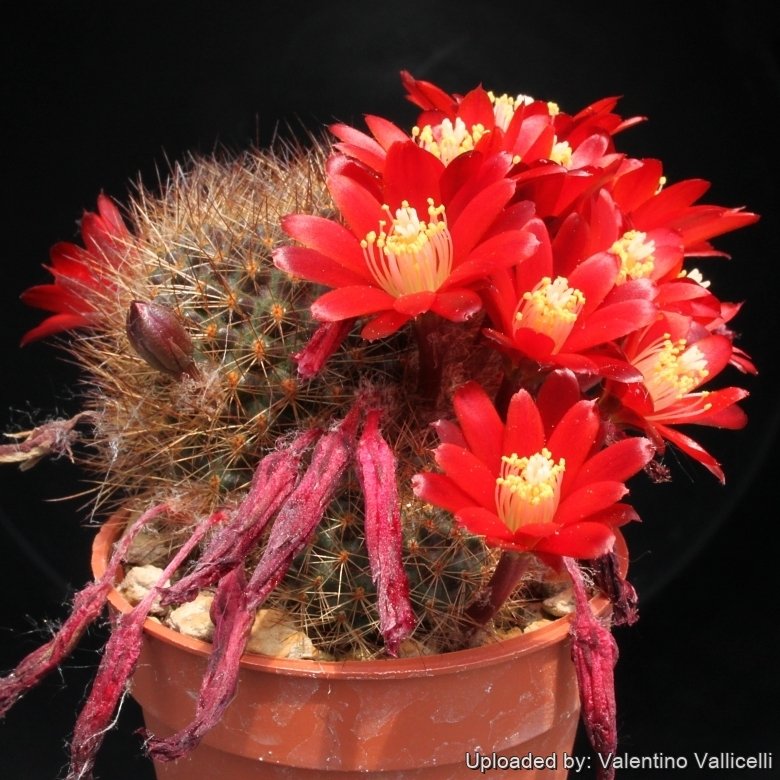
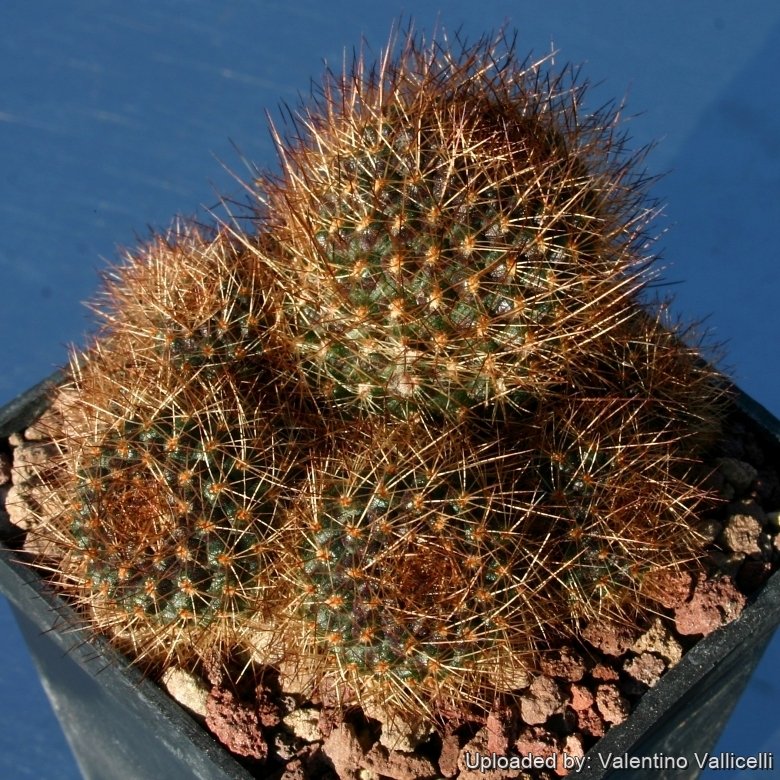
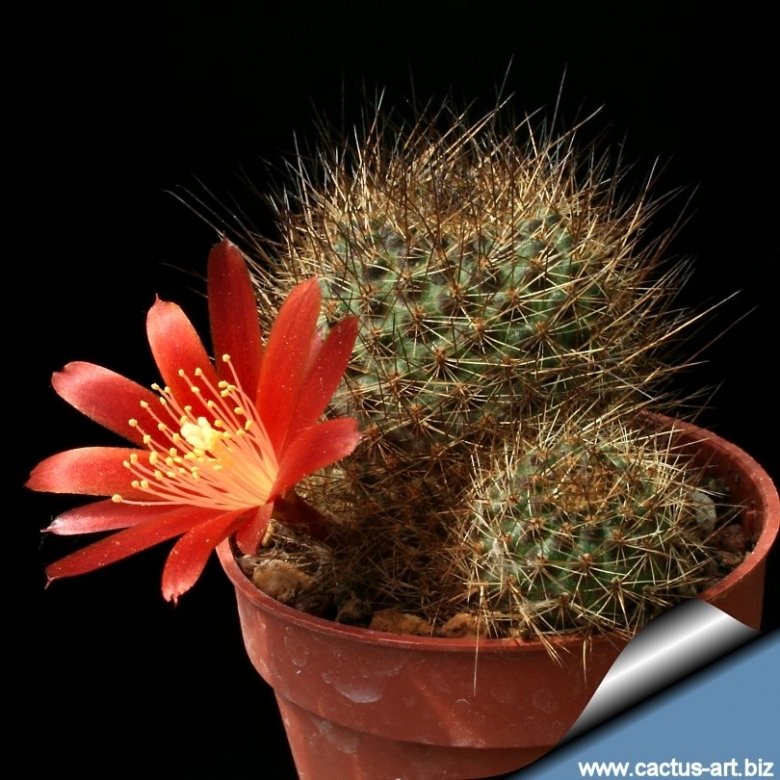
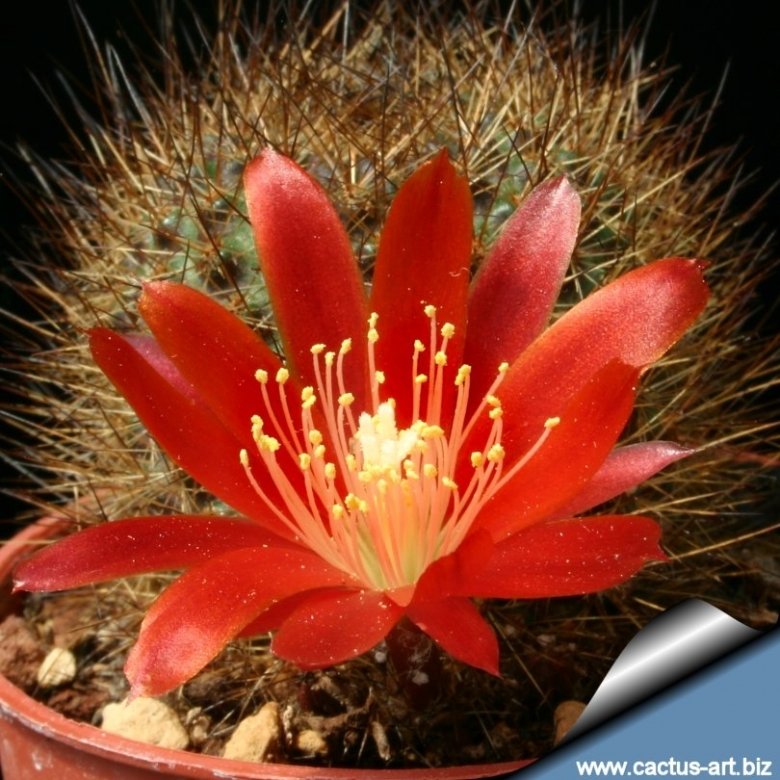
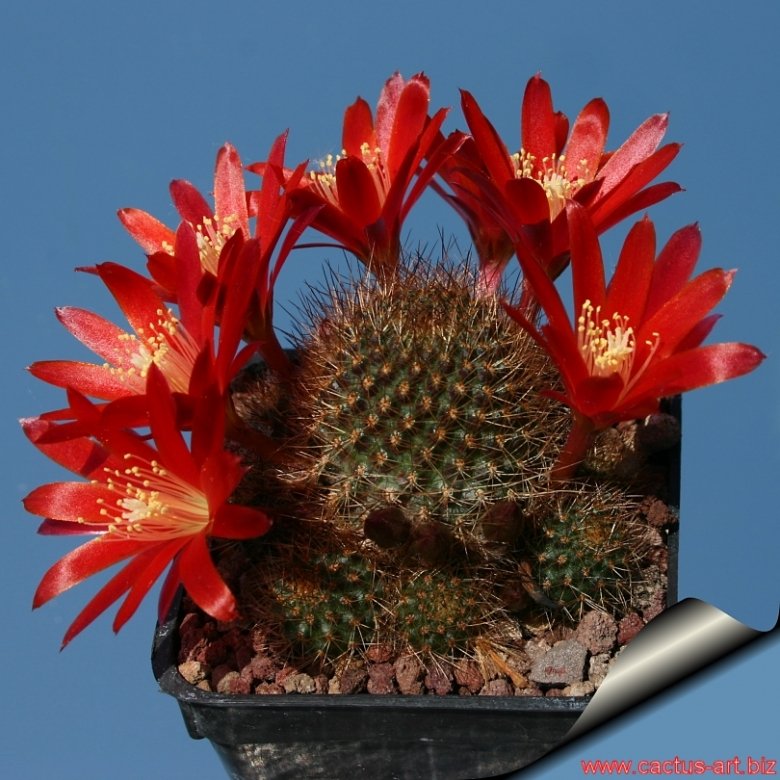
Rebutia fulviseta is a dark green bodied, mat forming cactus of rather small subcylindric heads, the epidermis, especially on the tubercles, becomes bronzed purple in full sunlight. Probably a very decorative variety of Rebutia deminuta. Its has characterized by brown-felted areoles, bears bristly brown spines and has small dark red flowers with white filaments. Maximum dimensions 6 cm tall, 10 cm wide ( in cultivation).
Stem: Globular or vaguely elongated, 1 cm in diameter, 1,5 cm tall. The epidermis is very dark tan, green, or brown, almost black, with the a reddish-violet nuance.
Ribs: Up to 16 tuberculate and spiralling.
Areoles: Round or oval, with a brown indumentum.
Spines: 10-12 radials and 1-3 centrals, about 6-10 mm long, Thin, divergent, tawny or reddish-brown with darker tips, that give to the plant its characteristic bristled-up form.
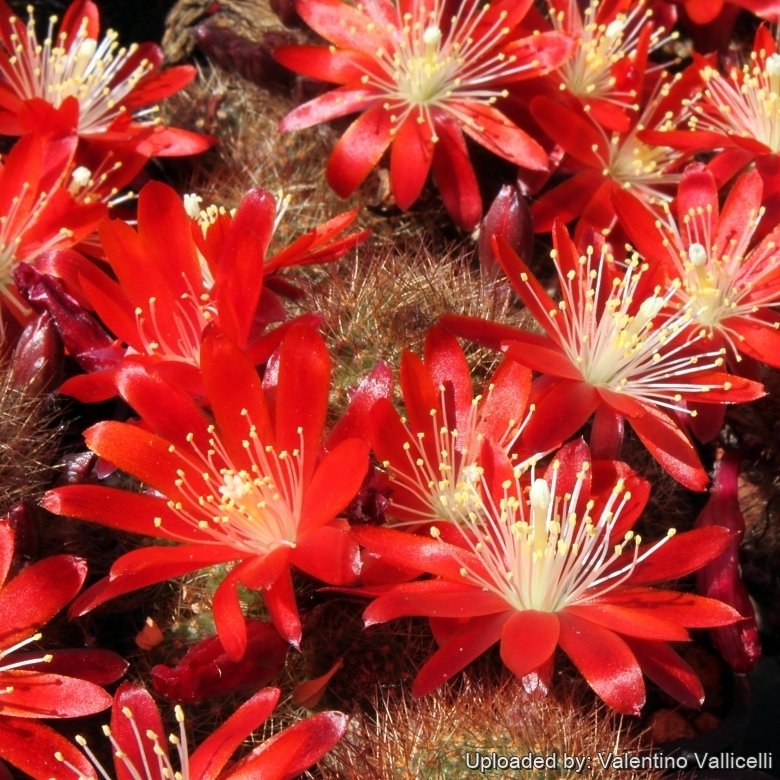
Flowers: Funnel-shaped, thin-petaled (spidery), dark red, ca. 2,5 cm in diameter and length, arising from the base of the stem, with a long stretched out pistil and showy white stamens. Pericarp darker violet-red and tube with the scales bearing white woolly hairs and bristles.
Blooming time: Diurnal in spring.
Fruit: Spherical, dark red, up to 4 mm.
Origin and Habitat
Bolivia (Tarija, Arque, near Padcaya) and Argentina (Salta, Santa Victoria to Caspala, to Santa Ana, to the east from Humahuaca).
Altitude range: Around 2200 metres above sea level.
Cultivation and Propagation
Needs a very bright exposure but not direct sun. Water regularly in summer but do not over-water. Keep dry in winter. Hardy to -4°C.
It is better that they be repotted regularly. Repotting will increase the number and size of stems, and will increase the number of flowers produced. Repot yearly until reaching about 40-50mm in size, then every two or three years will suffice. Repotting is best done at the end of winter, but it can be done at other times, too. Do not water for a couple of weeks after repotting, to reduce risk of root rot via broken roots.
Propagation: Offsets, seeds
Bibliography
Major references and further lectures
-
Edward Anderson “The Cactus family” Timber Press, Incorporated, 2001
-
James Cullen, Sabina G. Knees, H. Suzanne Cubey “The European Garden Flora Flowering Plants: A Manual for the Identification of Plants Cultivated in Europe, Both Out-of-Doors and Under Glass”} Cambridge University Press, 11/Aug/2011
-
David R Hunt; Nigel P Taylor; Graham Charles; International Cactaceae Systematics Group. “The New Cactus Lexicon” dh books, 2006
-
Donald, John Donald “The Classification of the Rebutias” Ashingtonia, vol. 2 1975
Gallery