Publication: Kakteenkunde 1937, 2.
Description
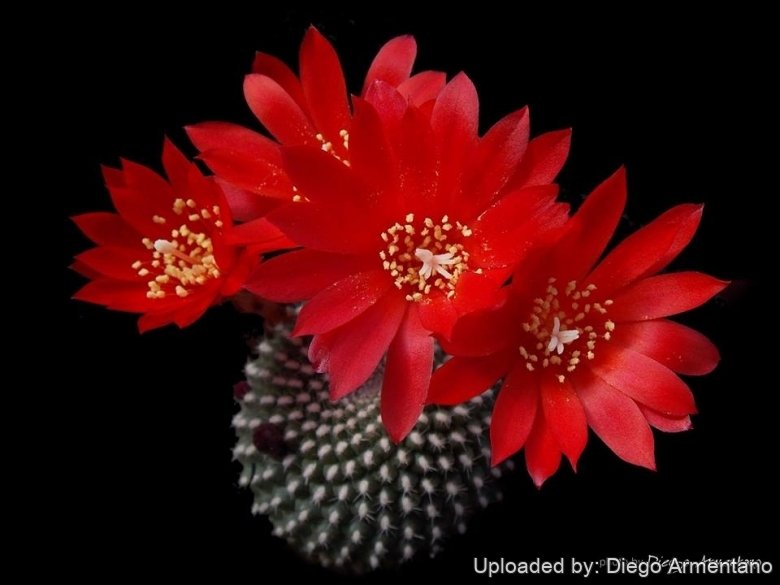
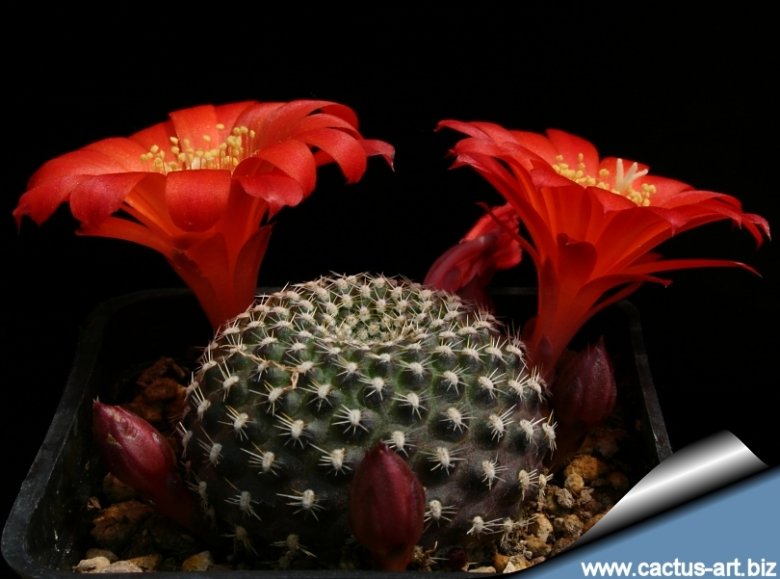
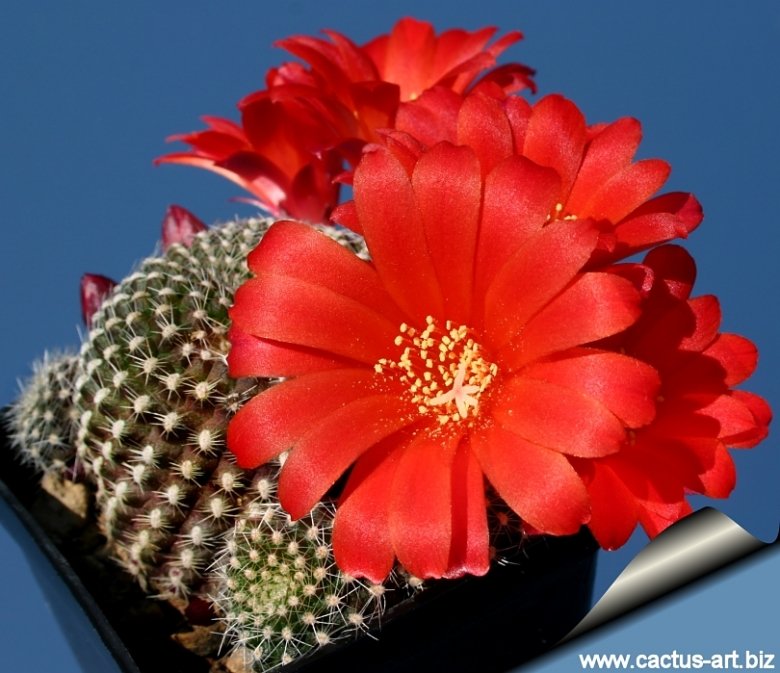
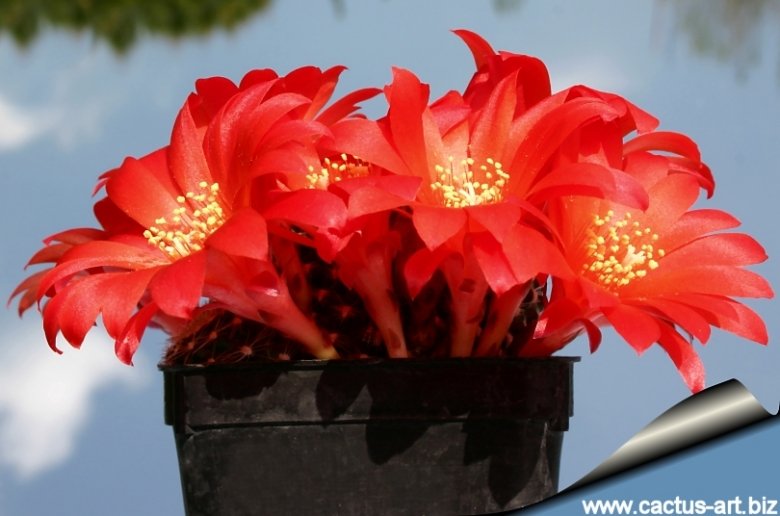
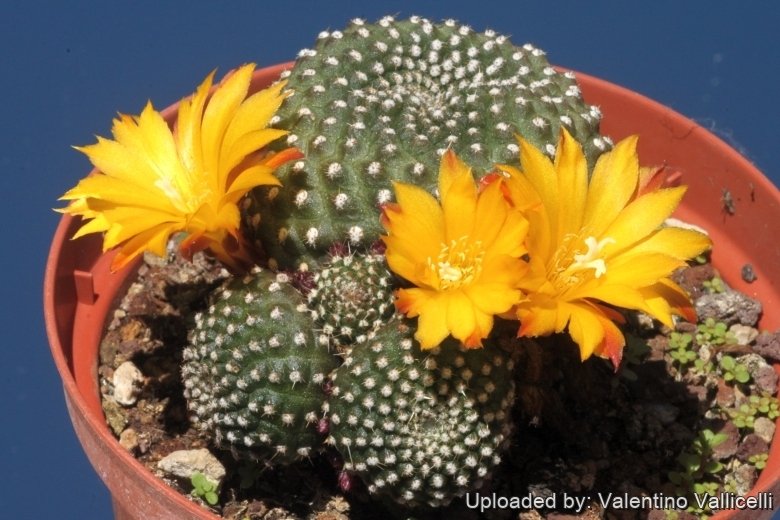
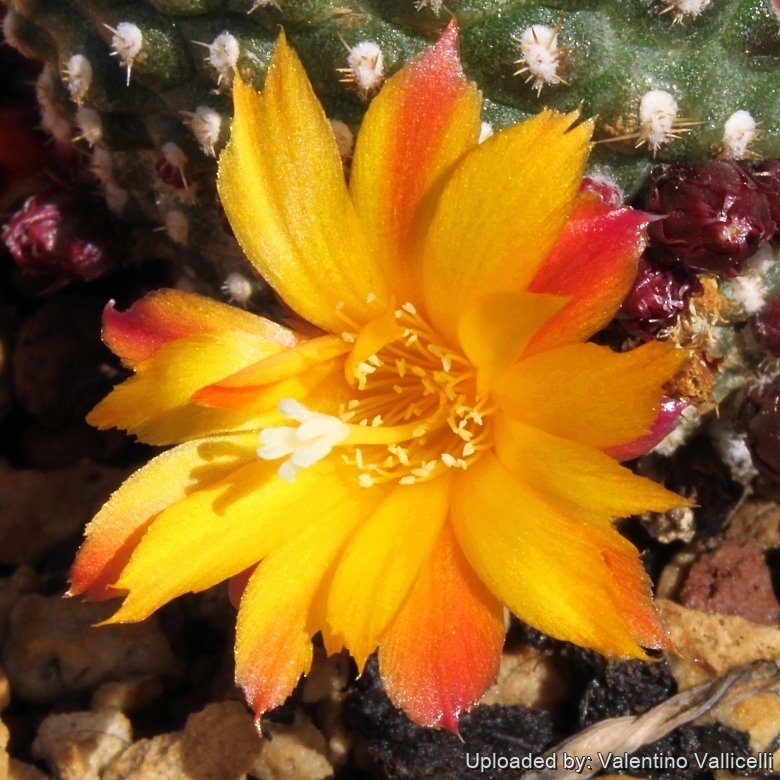
Rebutia marsoneri is a small and very free flowering cactus species with bright yellow to bright orange blooms. The spines are thin and bristly and varies considerably in length depending on clones. The species is strictly related and often synonymized with Rebutia minuscula.
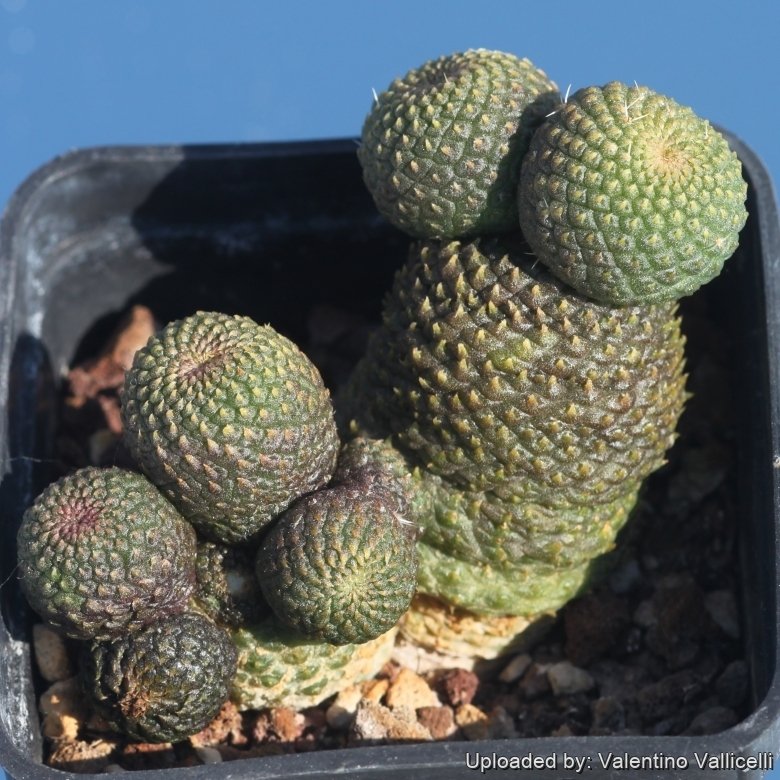
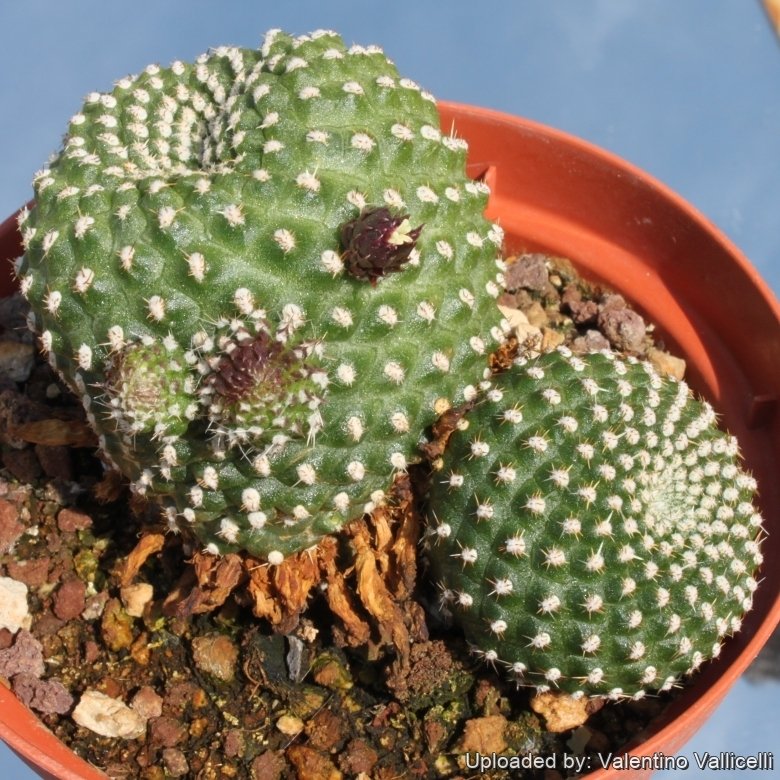
Habit: It is a solitary or clumping globular cactus that begins to offset in about its third or fourth year, eventually making a moderately tight clump. It can grow clumps 10-15 cm wide.
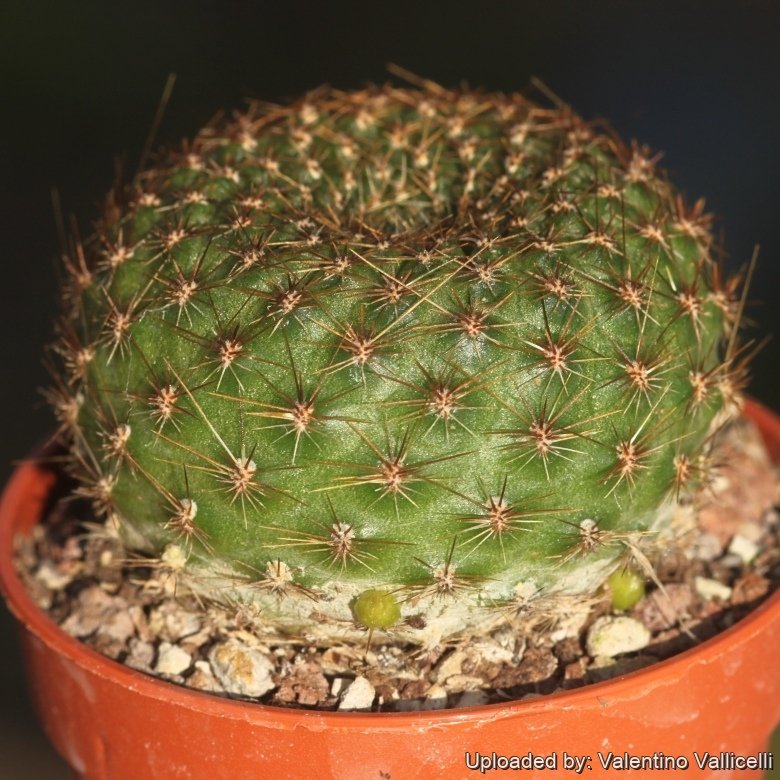
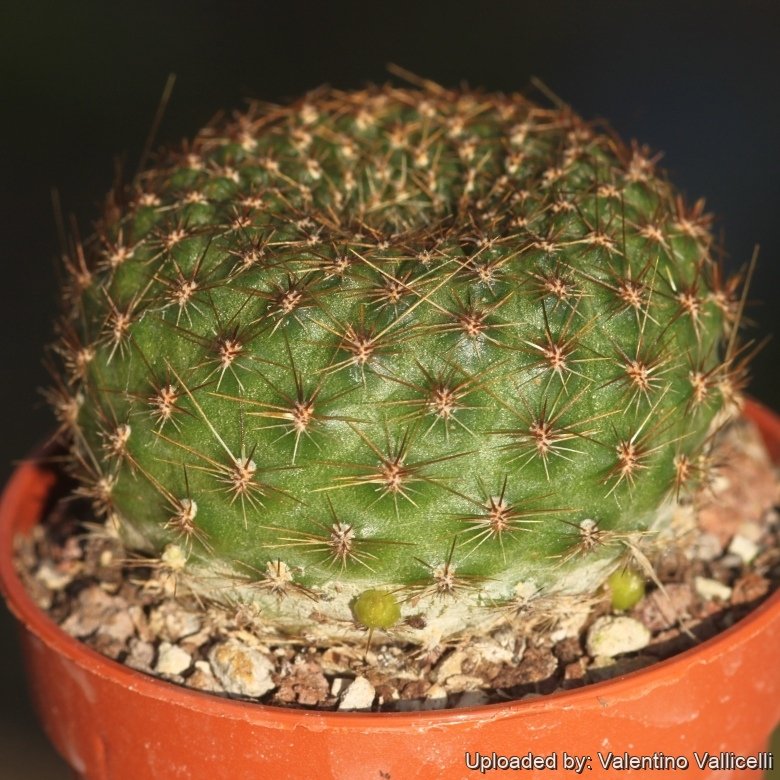
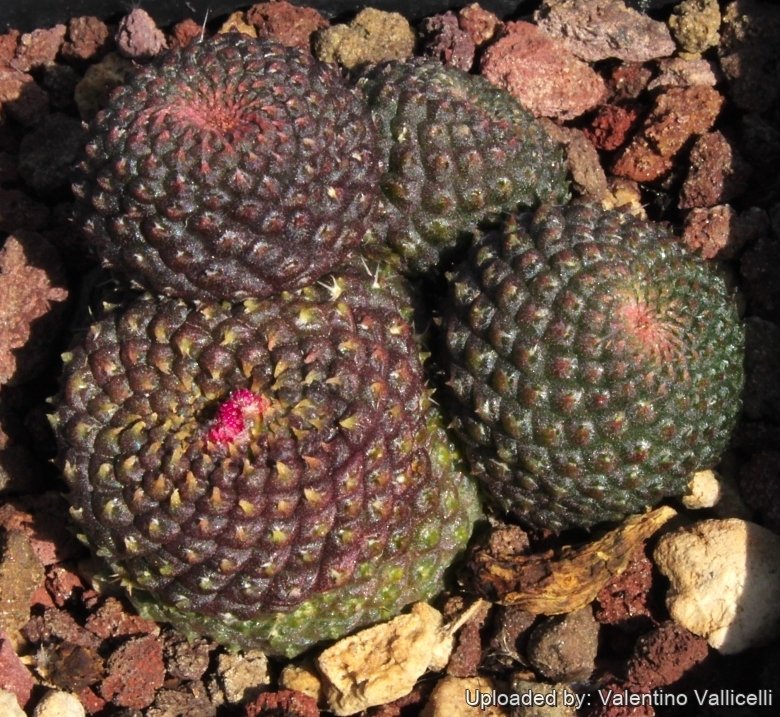
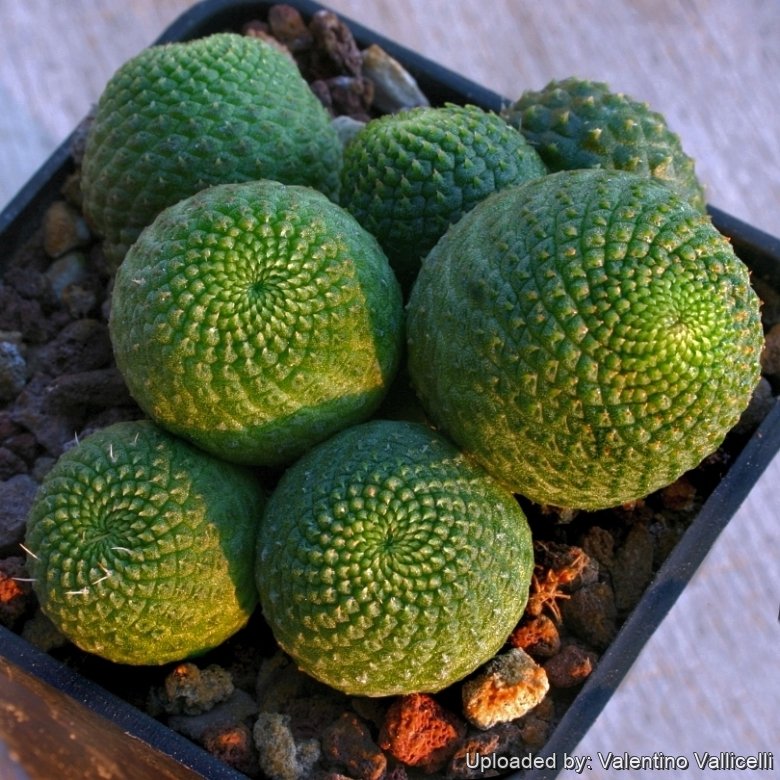
Stem: Symmetrically, depressed globose, 4-6(-7) cm in diameter and 4-6(-10) cm tall, light green to dark green, although it becomes grey as it ages.
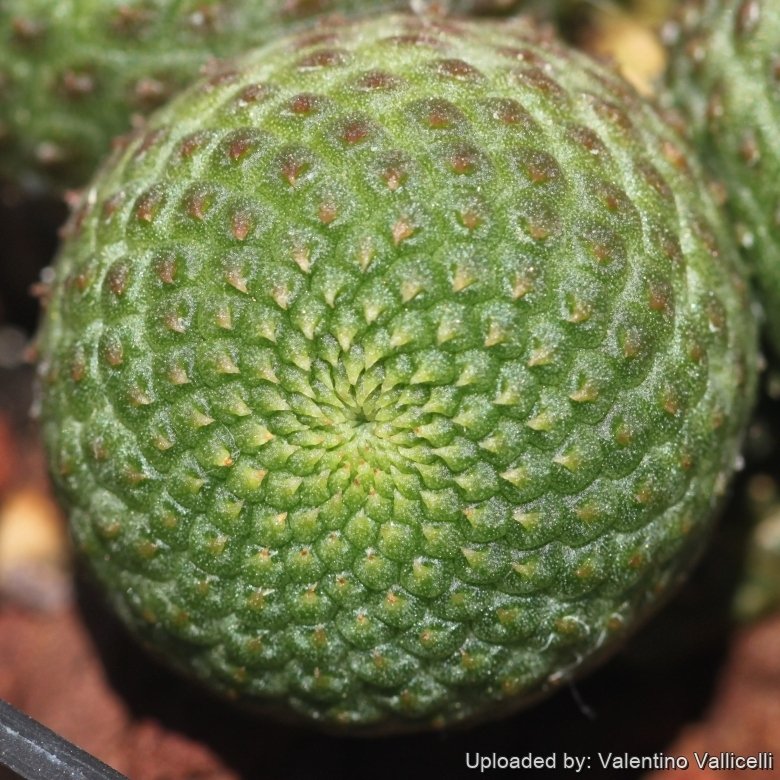
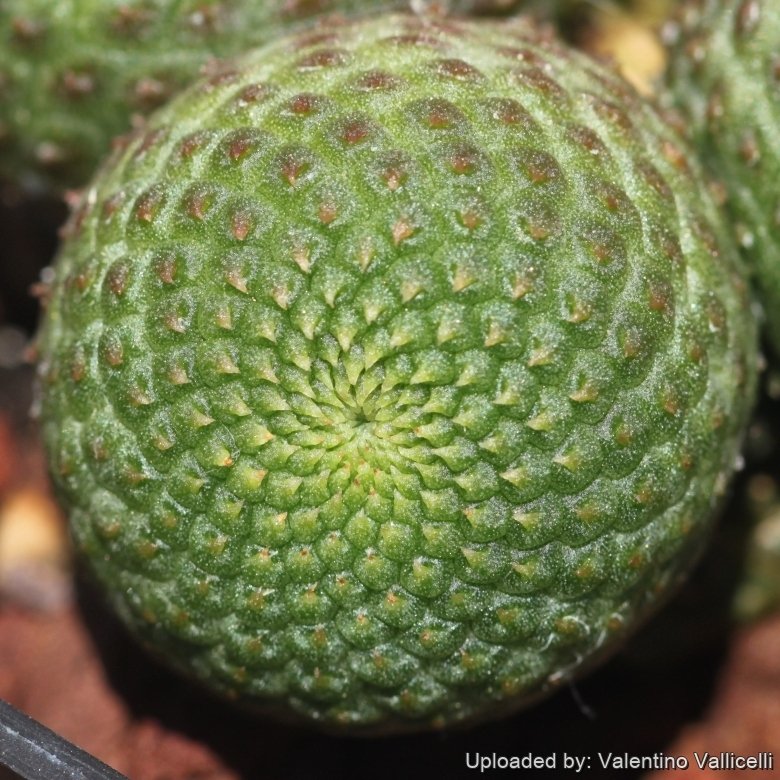
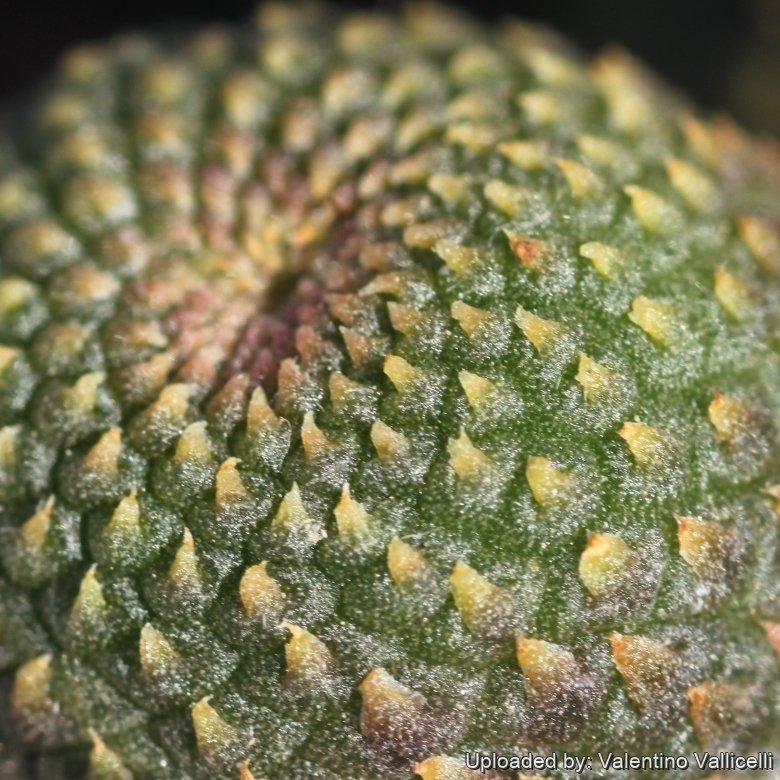
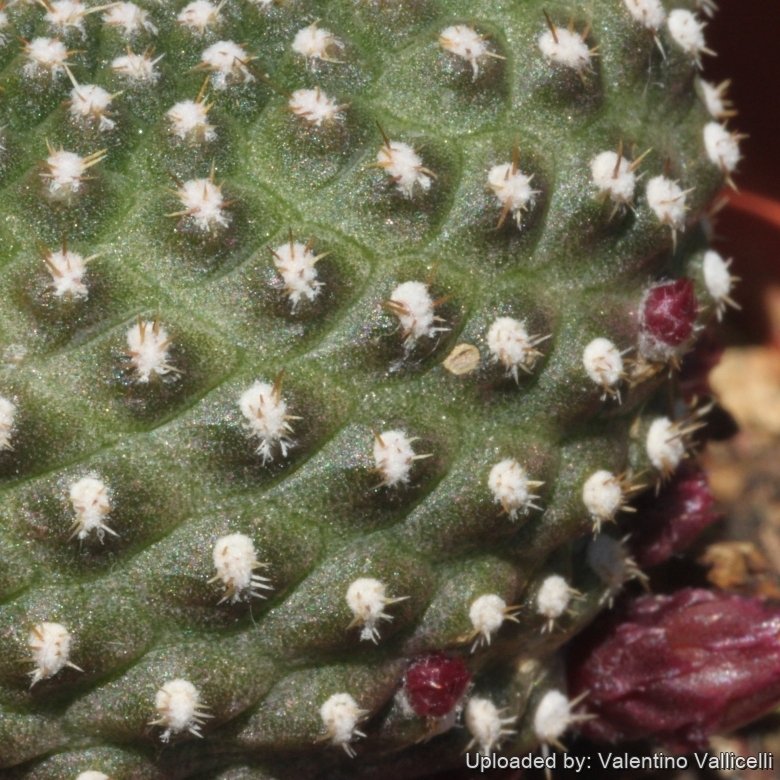
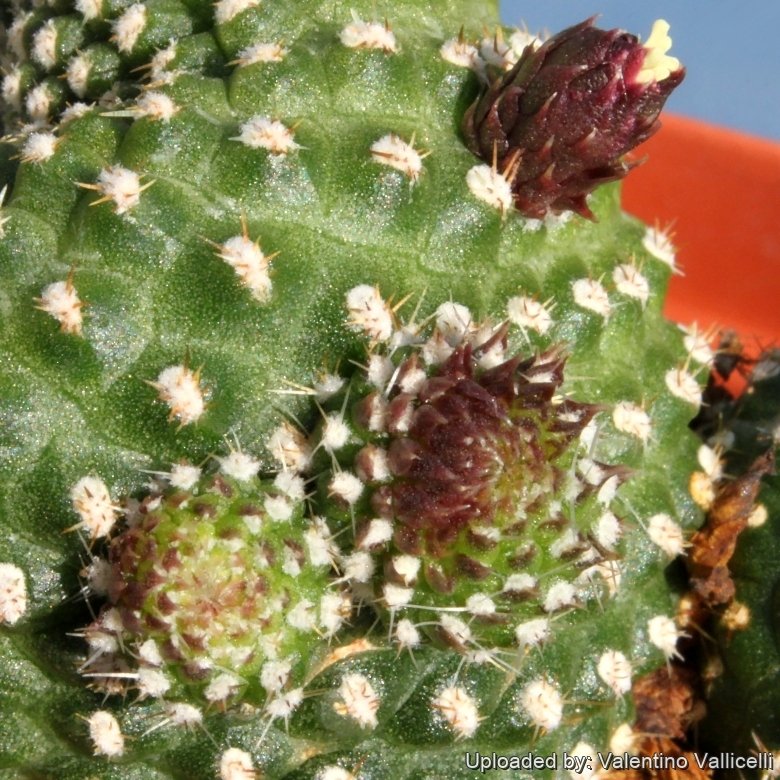
Tubercles: Low, rounded in two downward spirals, in ratio 8:13.
Areoles Small, round, brownish white.
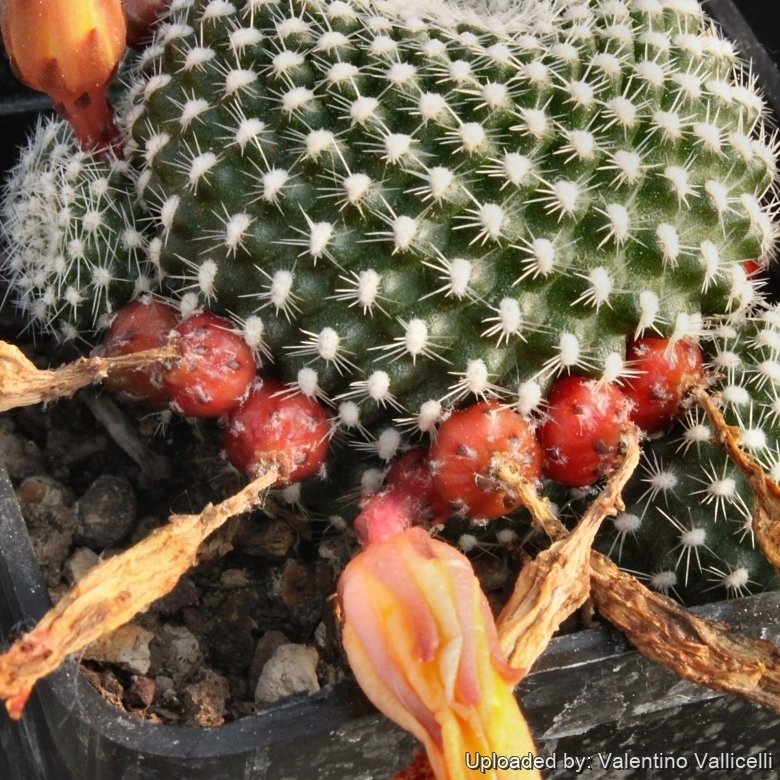
Spines: Up to 30(-35) in a nestshaped cluster, very thin, short bristle-like, flexible to somewhat stout, brownish to golden yellow to white, usually with dark tips, variable in length from 3 to 15 mm long and often inconspicuous.
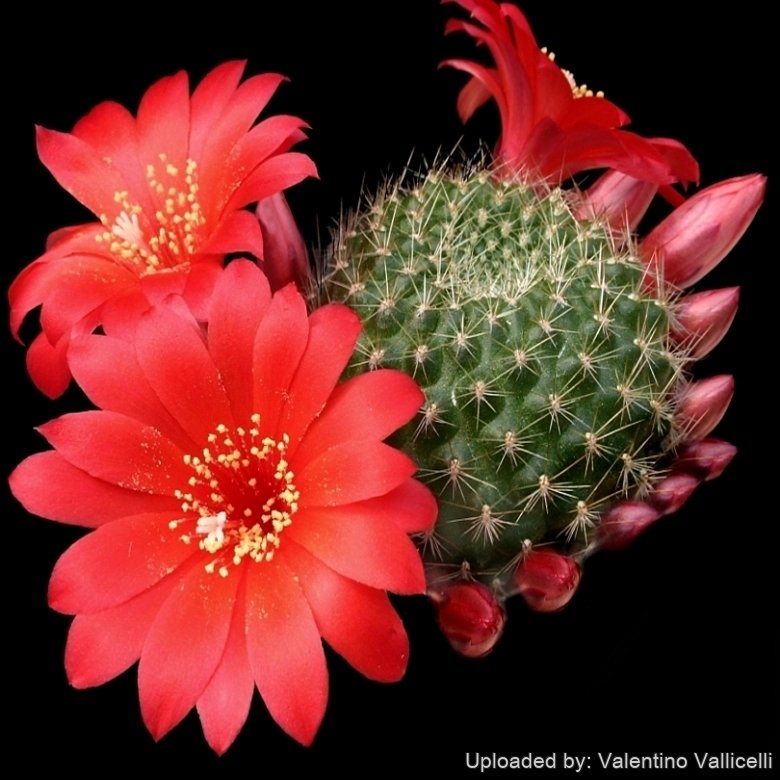
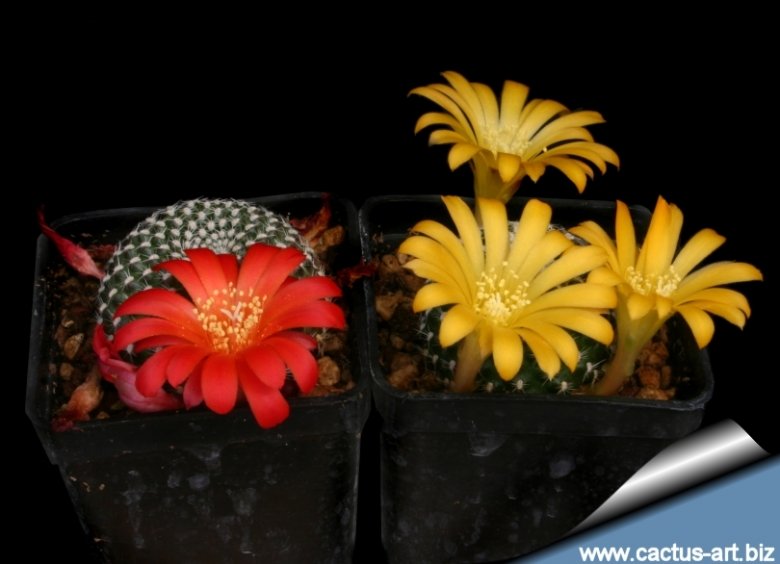
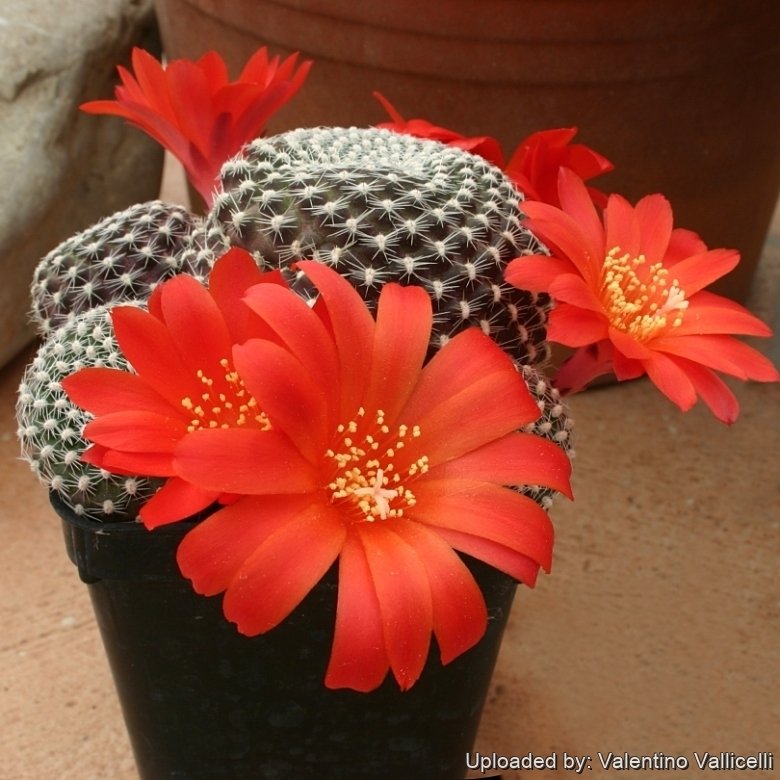
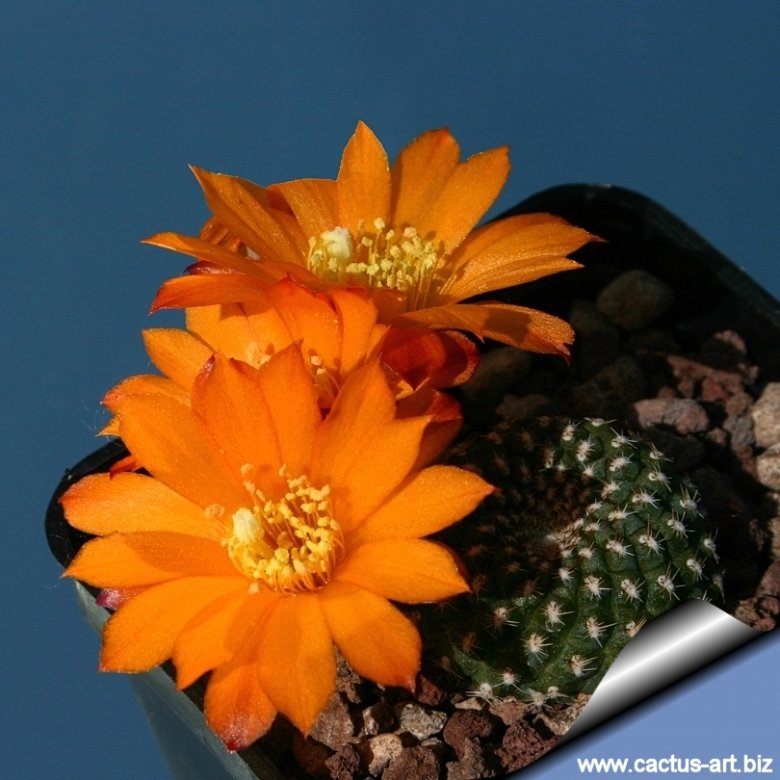
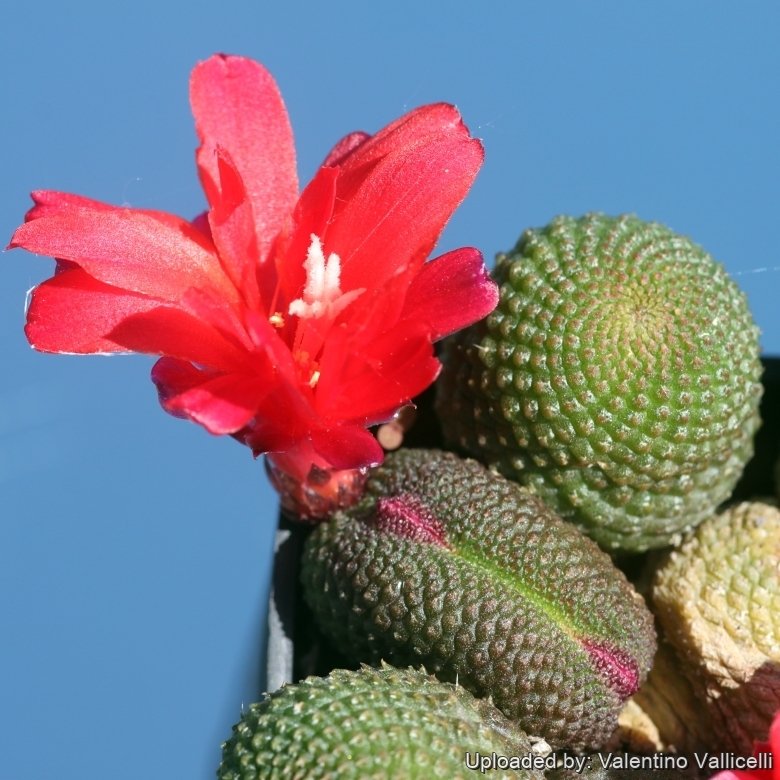
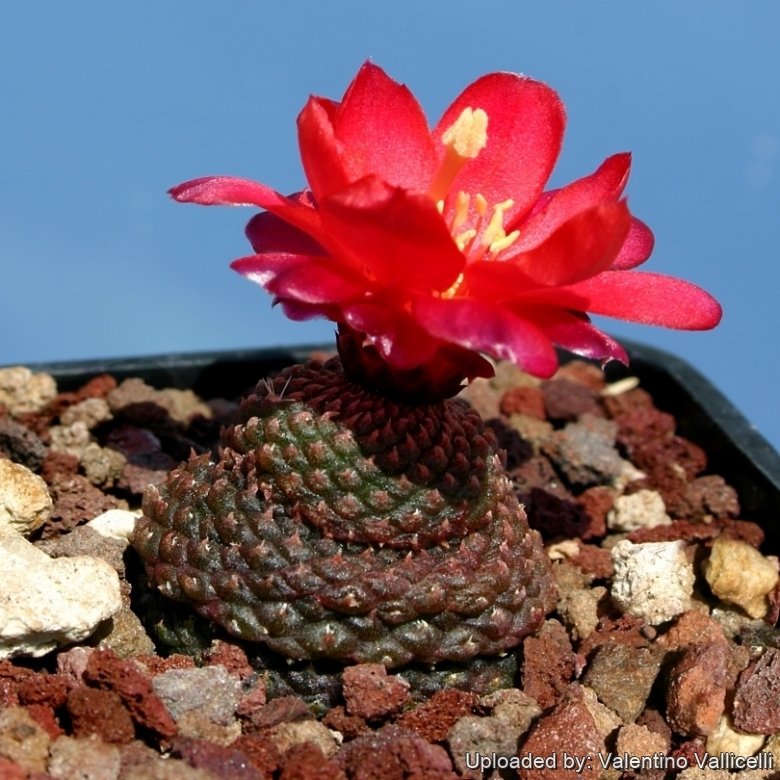
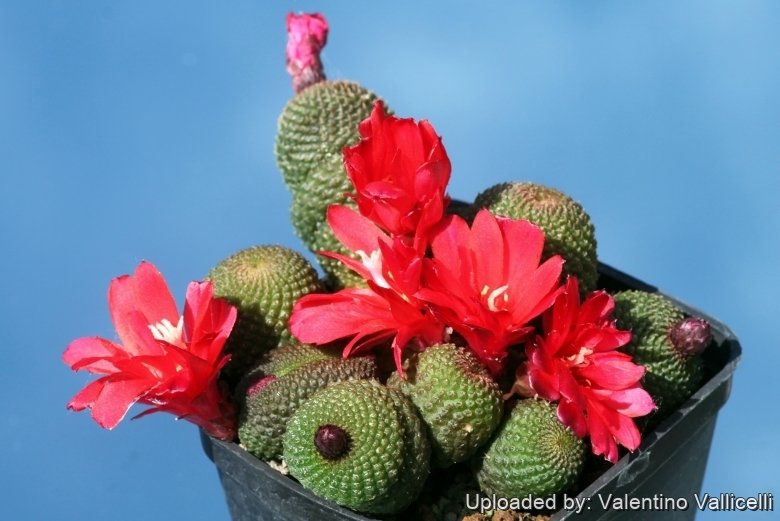
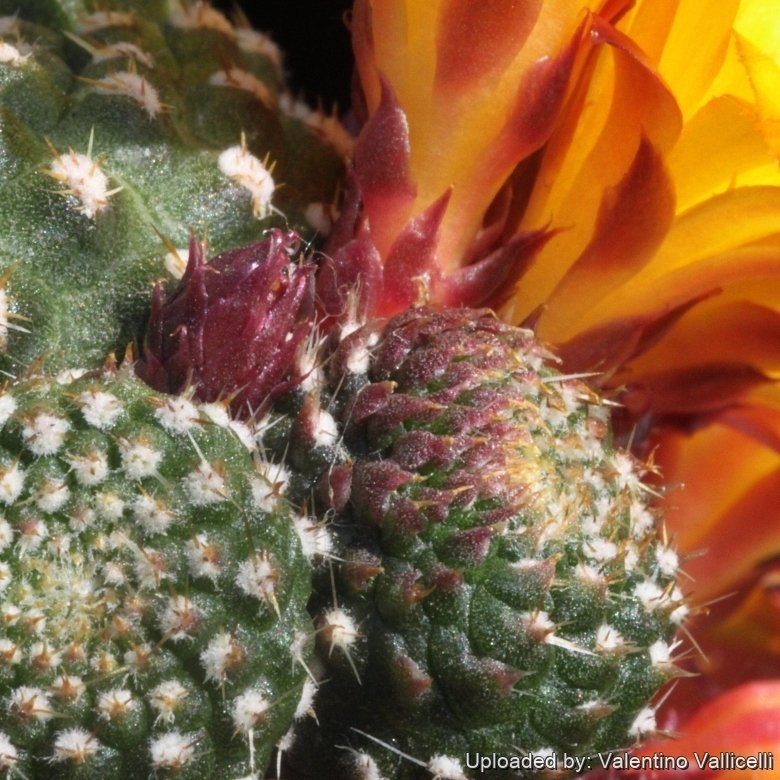
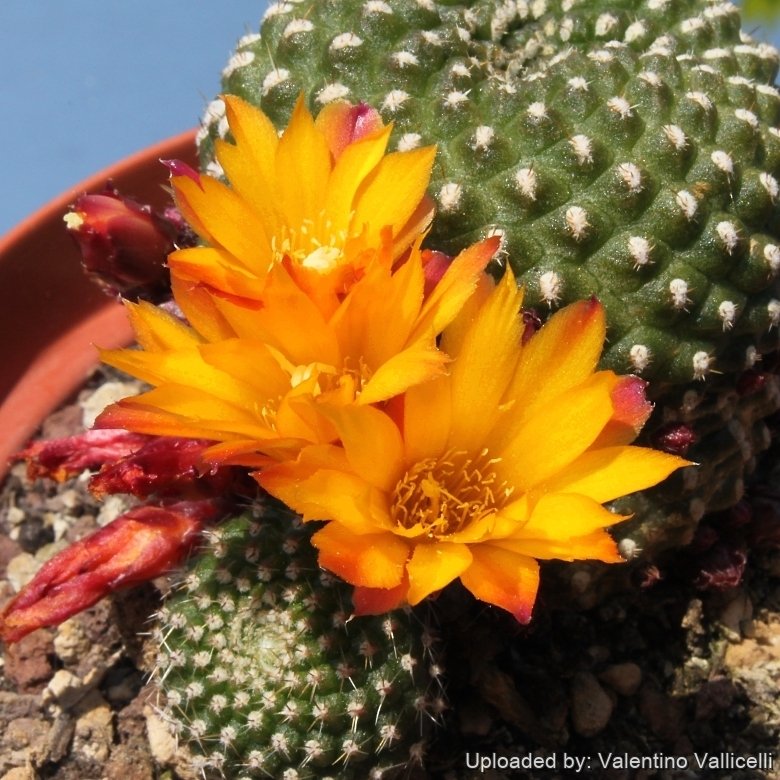
Flowers: Rebutia marsoneri develops a larger crop of flowers from the base of each head, resulting in a superb display in mid season. The “normal” form has bright golden yellow to orange or orange-red flowers 35-45 mm long, 30-35 mm in diameter.
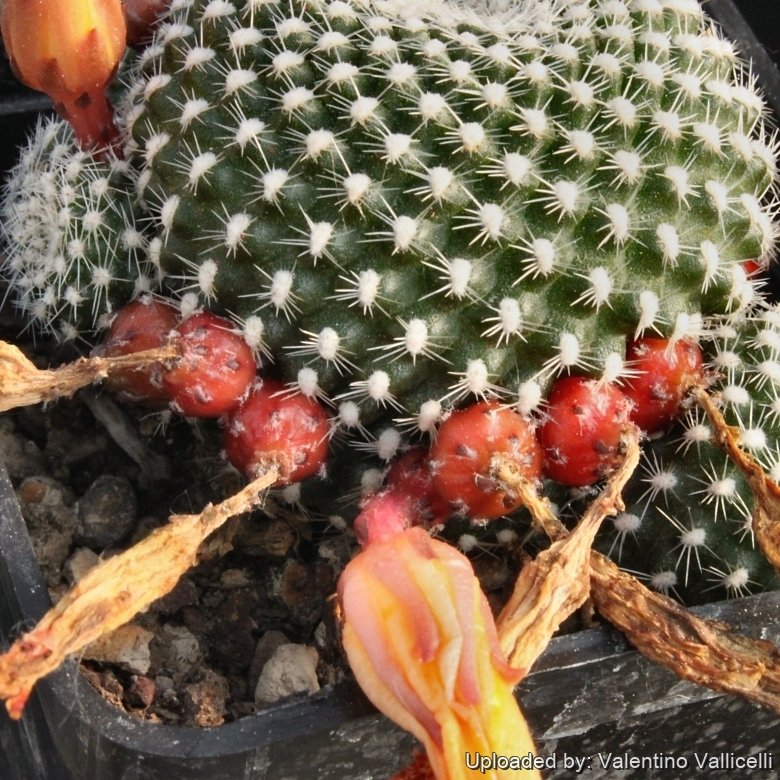
Fruits: Globose, brownish, to 5 mm in diameter.
Blooming season: It is usually one of the earliest rebutias to flower in spring and has a very long lasting and continuous blooming period.
Origin and Habitat
Jujuy to Salta (Argentina)
Habitat and Ecology: The species grows in yunga forest on rocky outcrops. It is a rugged area with the high peaks separated by deep valleys, this has resulted in numerous localized forms of these plants, a factor that has resulted in their classification and nomenclature (scientific names) being in a bit of a chaotic state. The major threats are illegal collection and land use change due to agriculture and farming.
Cultivation and Propagation
Full sun to light shade. Water regularly in summer but do not over-water. Keep dry in winter. Hardy down to -4°C.
It is better that they be repotted regularly. Repotting will increase the number and size of stems, and will increase the number of flowers produced. Repot yearly until it reaches about 100 mm in size, then every two or three years will suffice. Repotting is best done at the end of winter, but it can be done at other time, too. Do not water for a couple of weeks after repotting, in order to reduce risk of root rot via broken roots.
Propagation:: Offsets, seeds
Bibliography
Major references and further lectures
-
Edward Anderson “The Cactus family” Timber Press, Incorporated, 2001
-
James Cullen, Sabina G. Knees, H. Suzanne Cubey “The European Garden Flora Flowering Plants: A Manual for the Identification of Plants Cultivated in Europe, Both Out-of-Doors and Under Glass” Cambridge University Press, 11/Aug/2011
-
David R Hunt; Nigel P Taylor; Graham Charles; International Cactaceae Systematics Group. “The New Cactus Lexicon” dh books, 2006
-
Curt Backeberg “Die Cactaceae: Handbuch der Kakteenkunde” Gustav Fischer Verlag, Stuttgart New York 1982–1985
-
Backeberg, Curt; “Das Kakteenlexikon” p. 384, 1966
-
Donald, John Donald; “The Classification of the Rebutias” Ashingtonia, 2: 43, 1975
-
Hlinecký, Antonín; “Rod Rebutia K. Schumann”; Fričiana, 5/36: 9, 1965
-
Krainz, Hans; “Rebutia minuscula K. Schumann; Die Kakteen”, CVc, 15.7.1960
-
Pilbeam, John; “Rebutia”, Cactus File Handbook No. 2. Cirio Publishing, Southampton, 1997
-
Demaio, P., Lowry, M., Ortega-Baes, P., Perea, M. & Trevisson, M. 2013. Rebutia minuscula. In: IUCN 2013. “IUCN Red List of Threatened Species.” Version 2013.2. <www.iucnredlist.org>. Downloaded on 06 January 2014.
-
Willy Cullmann, Erich Götz, Gerhard Gröner “Kakteen” edn 5 - Stuttgart Eugen Ulmer, 1984
-
Clive Innes “Complete Handbook of Cacti and Succulents” Van Nostrand Reinhold Company, 01/dic/1981.
From llifle page Rebutia calliantha var. krainziana
Description
Clumping globular cactus, up to 7 cm in diameter and up to 10cm tall. It can grow clumps 10-15cm wide. The specially notable characteristics of this cactus are its dark stem colour, emphasized by the small, white areoles, and its large, intensely red, yellow throated flowers, reminding one of red daisies. Rebutia krainziana has now been lumped under R. marsoneri as a synonym of Rebutia marsoneri.
Stem: Up to 5 cm, globose, dark green, that begins to offset in about its third or fourth year, eventually making a moderately tight clump, with the individual stems standing out a little on their own.
Tubercles: In two downward spirals, in ratio 8:13.
Spines: Small, snow-white, very thin, very short, and soft, but they can still poke.
Flowers: A larger crop of flowers, 3.5 cm wide, develops from the base of each head, resulting in a superb display in mid season. The ”normal” form has bright orange-red flowers, however other flower colours have recently been seen on the market. The new flowers form ranges in shades from dark red, to orange, yellow or white, and at first they were thought to be hybrids, but they also could be simply natural colour variations.
Blooming season: It is usually one of the earliest rebutias to flower in spring.
Origin and Habitat
Unknown, probably horticultural.
Cultivation and Propagation
Full sun to light shade. Water regularly in summer but do not over-water. Keep dry in winter. Hardy down to -4°C.
It is better that they be repotted regularly. Repotting will increase the number and size of stems, and will increase the number of flowers produced. Repot yearly until it reaches about 100 mm in size, then every two or three years will suffice. Repotting is best done at the end of winter, but it can be done at other time, too. Do not water for a couple of weeks after repotting, in order to reduce risk of root rot via broken roots.
Propagation: Offsets, seeds
Source: Rebutia calliantha var. krainziana, LLIFLE - Encyclopedia of living forms, CC-BY-SA, retrieved 2026-10-25.
From llifle page Rebutia krainziana var. albiflora
Description
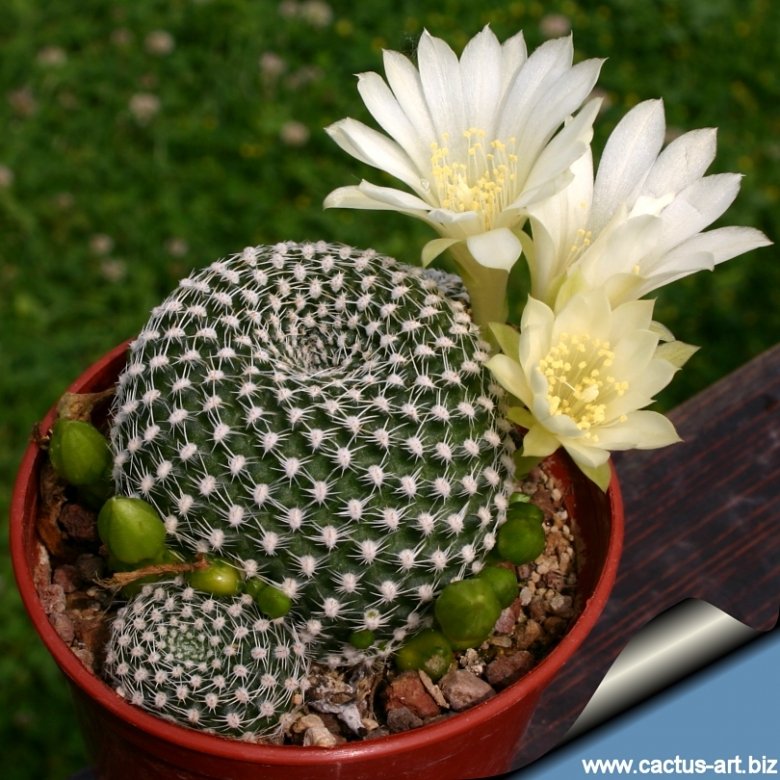
Habit Clumping globular cactus, up to 7 cm in diameter up to 10 cm tall. It can grow in clumps 10-15 cm wide. The especially notable characteristics of this cactus are its dark stem colour, emphasized by the small, white areoles, and its large, intensely red, yellow-throated flowers reminding one of red daisies.
Stem: Up to 5 cm Globose, dark green, that begins to offset in about its third or fourth year, eventually to make a moderately tight clump with the individual stems standing out a little on their own.
Tubercles: In two downward spirals, in ratio 8:13.
Spines: Small, snow-white, very thin, very short, and soft, but can still poke.
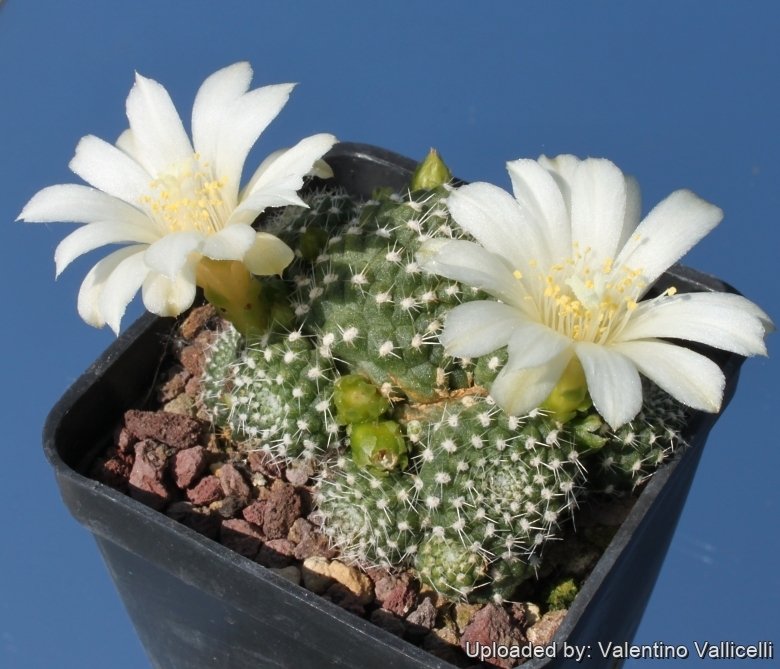
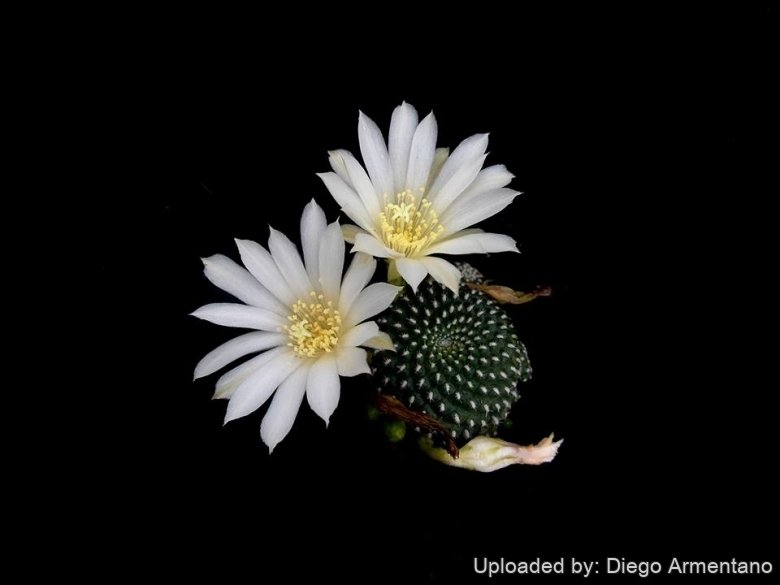
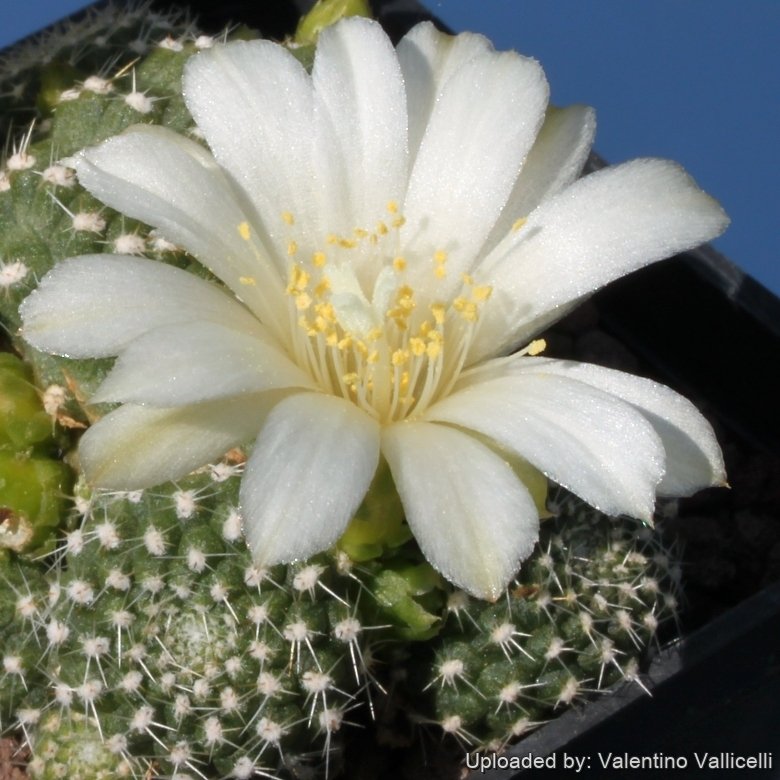
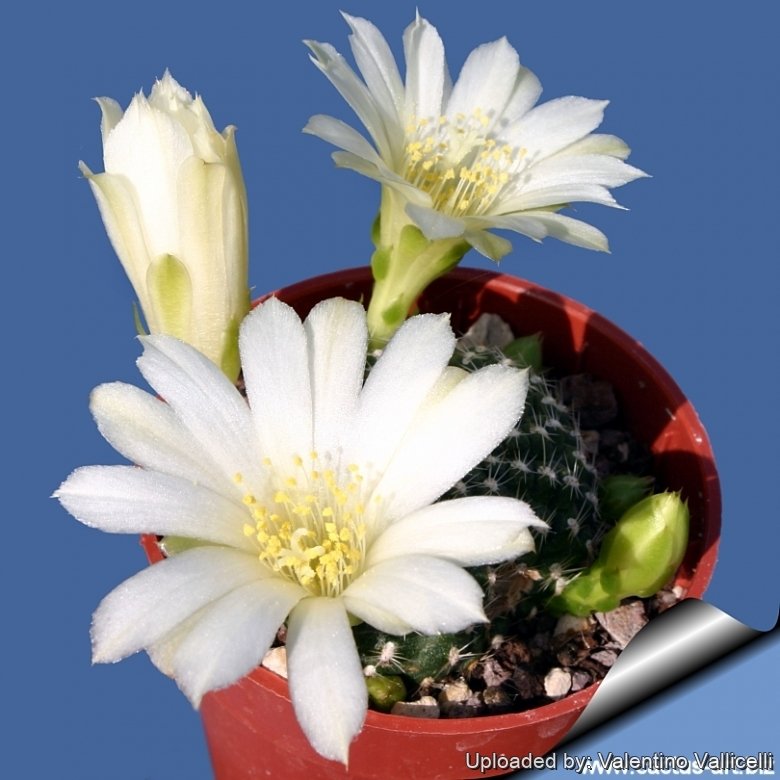
Flowers: A larger crop of pure white flowers, 3.5 cm wide, develops from the base of each head, resulting in a superb display at mid season.
Blooming season: It is usually one of the earliest rebutias to bloom in spring.
Origin and Habitat
Unknown, probably horticultural, but its ancestor is most likely from the Jujuy Province of Argentina.
Cultivation and Propagation
Full sun to light shade. Water regularly in summer, but do not over-water. Keep dry in winter. Hardy to -4°C.
It is better that they be repotted regularly. Repotting will increase the number and size of stems, and will increase the number of flowers produced. Repot yearly until they reach about 100 mm in size, then every two or three years will suffice. Repotting is best done at the end of winter, but it can be done at other times, too. Do not water for a couple of weeks after repotting, to reduce the risk of root rot via broken roots.
Propagation: Offsets, seeds
Source: Rebutia krainziana var. albiflora, LLIFLE - Encyclopedia of living forms, CC-BY-SA, retrieved 2026-10-25.
From llifle page Rebutia krainziana f. monstruosa cristata
Description
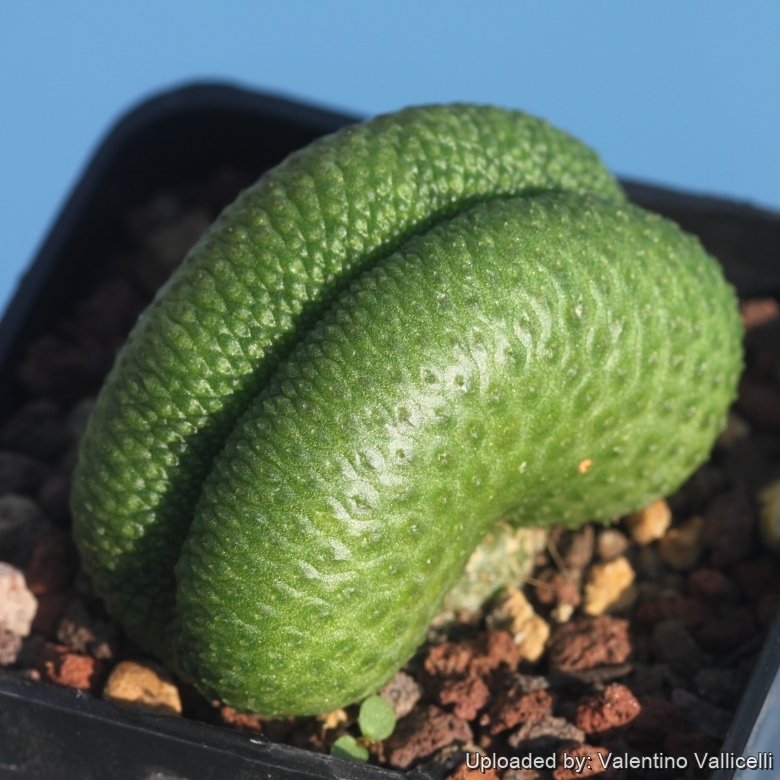
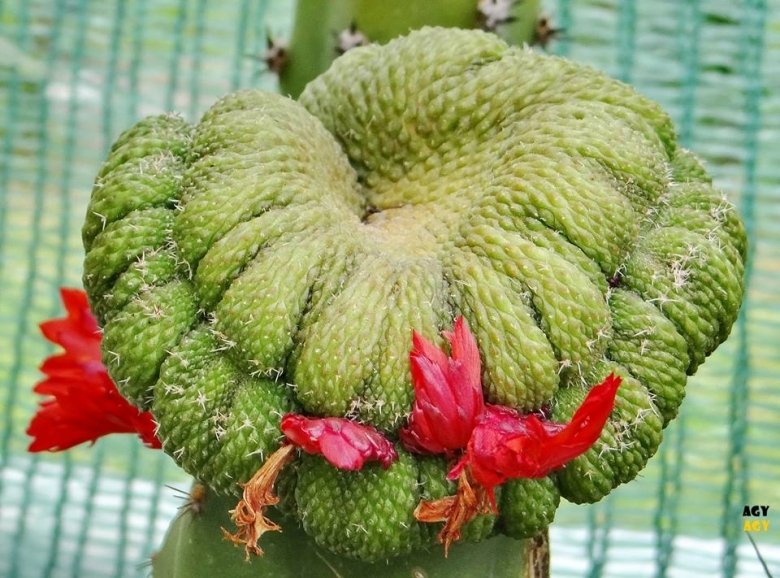
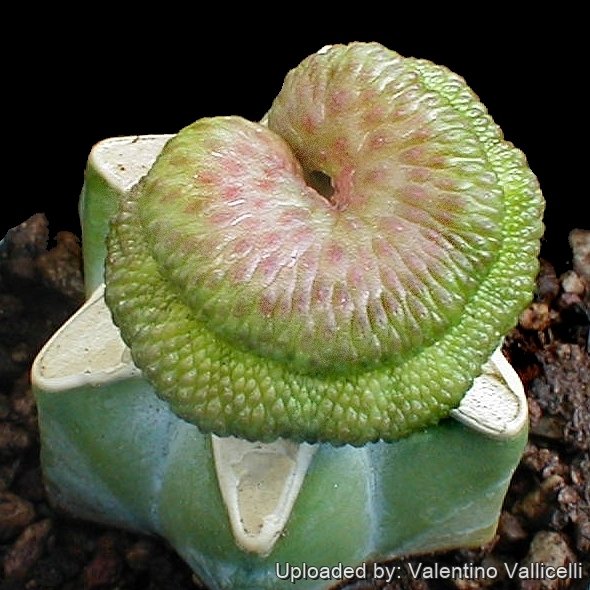
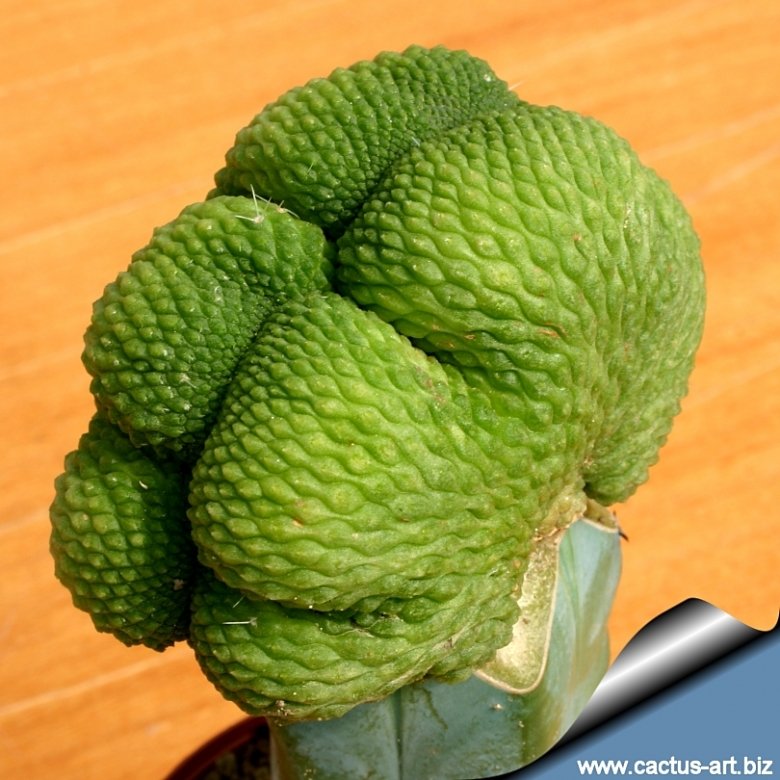
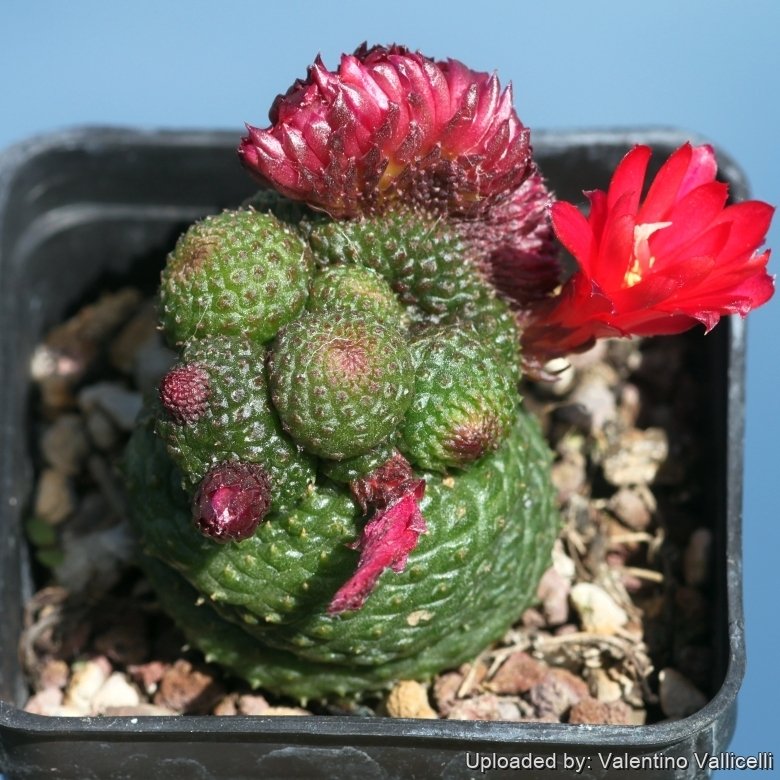
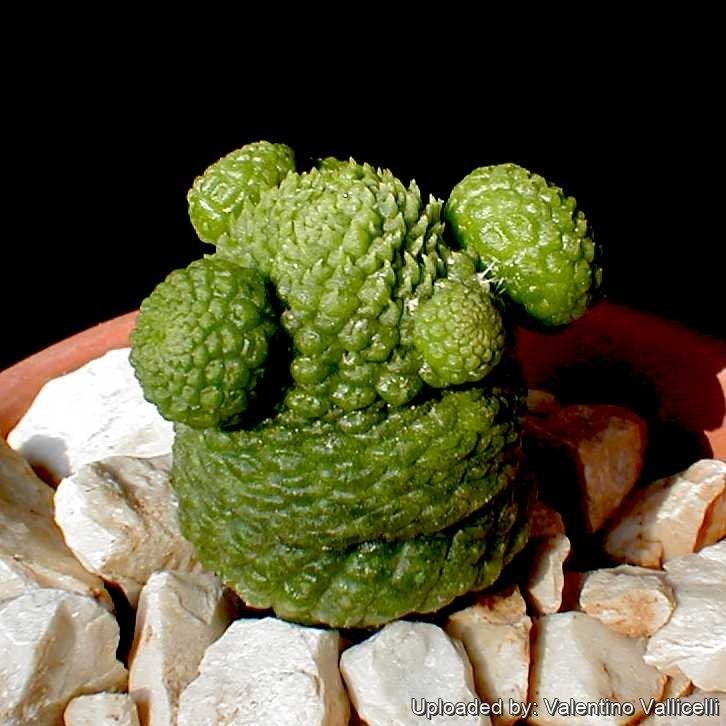
It is an unusual crested form (forma mostruosa) with smother shining green epidermis and mauve tones if exposed to sun.
Origin and Habitat
Garden origin (Nursery produced cultivar)
Cultivation and Propagation
It is an easy plant to grow. Full sun to light shade. Water regularly in summer but do not over-water. Keep dry in winter. Hardy down to -4°C.
It is better that they be repotted regularly. Repotting is best done at the end of winter, but it can be done at other time, too. Do not water for a couple of weeks after repotting, in order to reduce risk of root rot via broken roots.
Propagation:: Cuttings or grafting.
Source: Rebutia krainziana f. monstruosa cristata, LLIFLE - Encyclopedia of living forms, CC-BY-SA, retrieved 2026-10-25.
From llifle page Rebutia krainziana f. monstruosa
Description
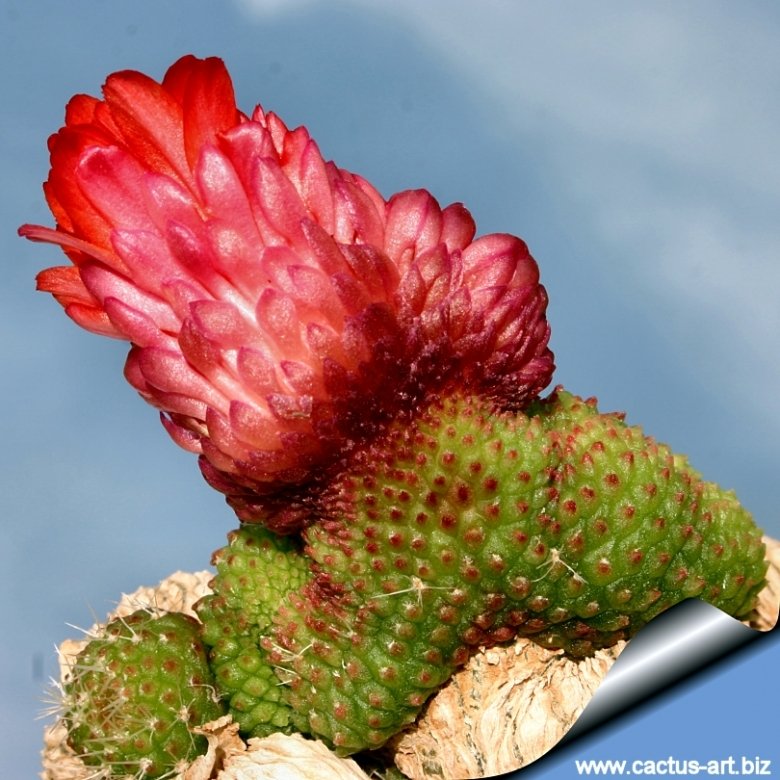
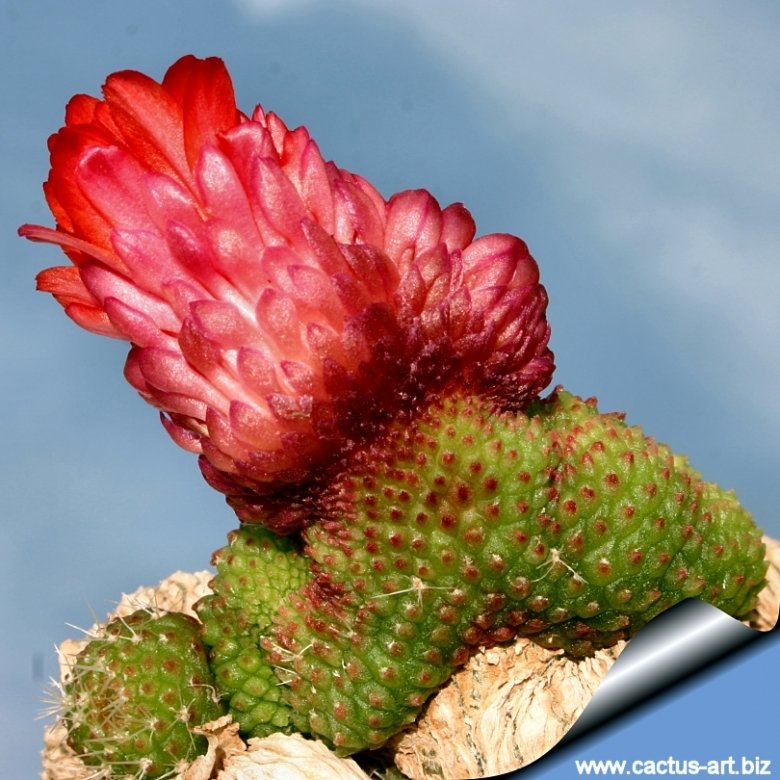
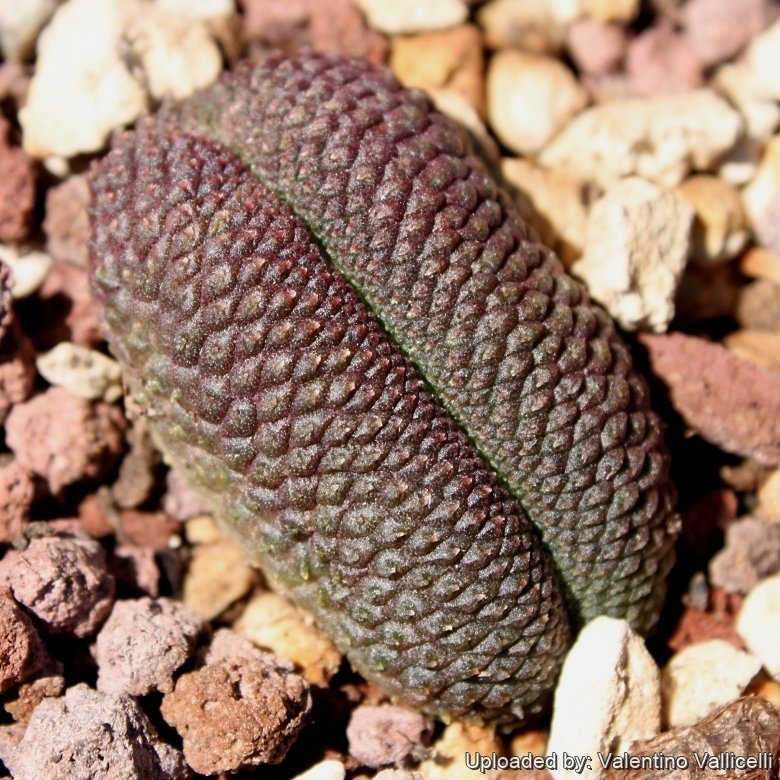
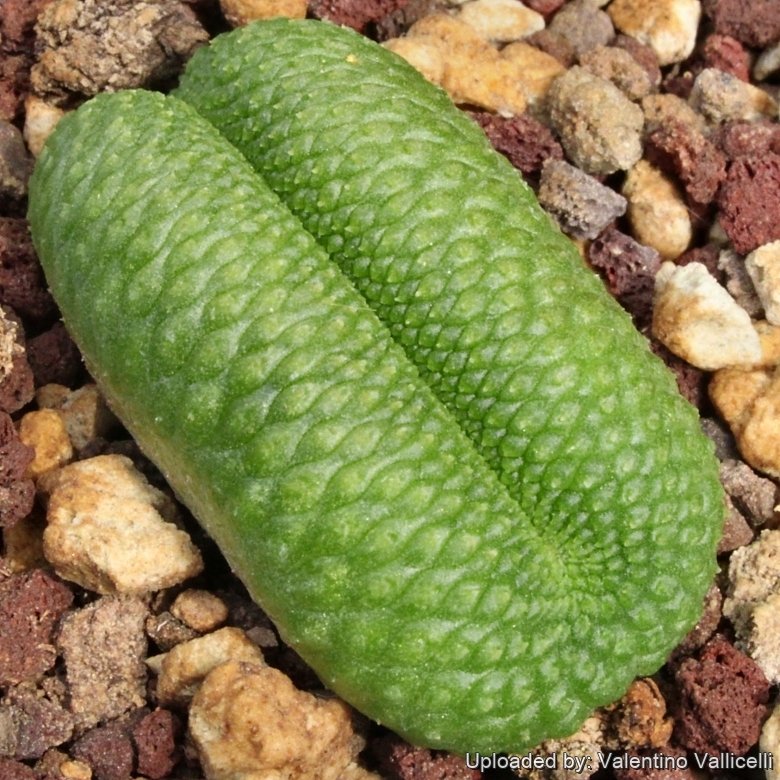
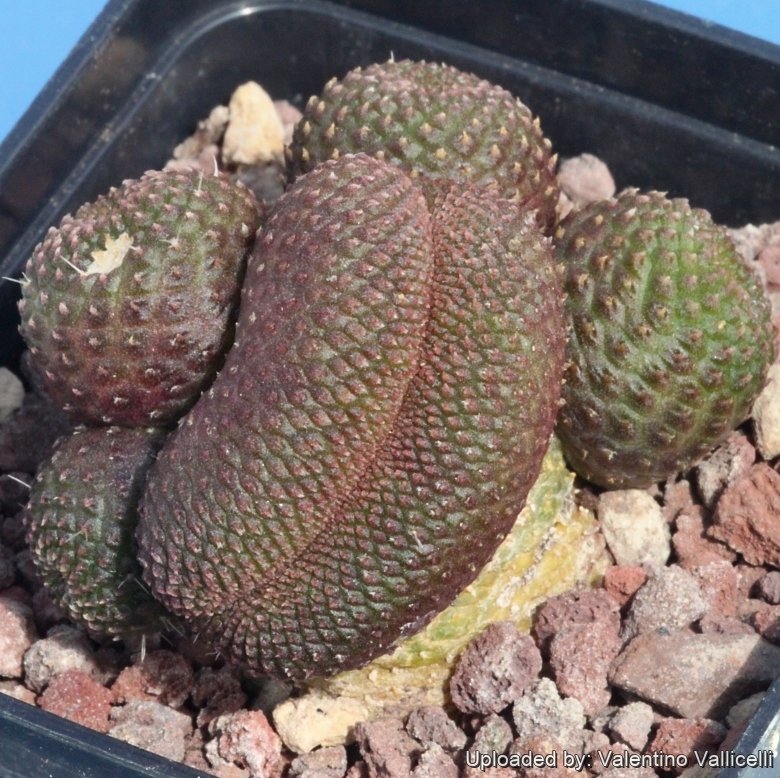
Clumping globular cactus, up to 5 cm in diameter, and up to 7 cm tall. It can slowly form clumps. The specially notable characteristics of this cactus is its green naked stem that will turn a lovely purple tinge in full sun.
But the most peculiar trait of this plant are the vestigial leaves subtending the small areoles on each tubercle. This is an ancestral trait not manifested in the normal plant. This trait is revealed thanks to a mutation that permits this odd cultivar to show the characteristic of bearing leaves, reminding us of an ancient era when its cacti ancestors were normal leafed plants.
Stem: Up to 5 cm, globose, dark green, that begins to offset in about its third or fourth year, eventually making a moderately tight clump, with the individual stems standing out a little on their own.
Tubercles: In two downward spirals in ratio 8:13.
Leaves: A small green scale-like leaf subtends each areole at the tubercles tip.
Spines: Usually absent or very few small, snow-white, very thin, very short and soft, irregularly scattered on the plant stems..
Flowers: Bright red, up to 3.5 cm wide, developing from the base or at the tip of each head, resulting in a superb display.
Blooming season: It is usually one of the earliest rebutia’s to bloom in spring.
Cultivation and Propagation
Full sun to light shade. Water regularly in summer but do not over-water. Keep dry in winter.
Hardy to -4°C.
It is better that they be repotted regularly. Repotting is best done at the end of winter, but can be done at other times, too. Repotting every two or three years will suffice. Do not water for a couple of weeks after repotting, to reduce risk of root rot via broken roots. The size of stems will increase the number of flowers produced.
Propagation: By grafting or offsets.
Source: Rebutia krainziana f. monstruosa, LLIFLE - Encyclopedia of living forms, CC-BY-SA, retrieved 2026-10-25.
From llifle page Rebutia calliantha var. breviseta
Description
Rebutia krainziana var. breviseta is a minor variety, differing only from the type plant in having shorter, all white spines.
Source: Rebutia calliantha var. breviseta, LLIFLE - Encyclopedia of living forms, CC-BY-SA, retrieved 2026-10-25.
From llifle page Rebutia krainziana cv. brevispina
Description
Rebutia krainziana cv. brevispina is a mutant cultivar with very sort spines. The specially notable characteristics of this cactus are the dark stem colour, emphasized by small white areoles and the bright orange flowers. But the most peculiar trait of this plant are the vestigial leaves subtending the small areoles on each tubercle. This is an ancestral trait not manifested in the normal plant. This trait is revealed thanks to a mutation that permits this odd cultivar to show the characteristic of bearing leaves, reminding us of an ancient era when its cacti ancestors were normal leafed plants.
Habit: It is a clumping globular cactus forming clusters up to 15 cm tall and wide.
Stem: Individual stems up to 6 cm tall, globose, dark green, that begins to offset in about its third or fourth year, eventually making a moderately tight clump, with the individual stems standing out a little on their own.
Tubercles: In two downward spirals, in ratio 8-13.
Spines: Extremely reduced, straw-coloured, very thin, very short, and soft, but they can still poke.
Flowers: Orange or yellow, 3,5 cm wide, develops from the base of each head, resulting in a superb display in mid season.
Blooming season: it is usually one of the earliest rebutias to flower in spring.
Source: Rebutia krainziana cv. brevispina, LLIFLE - Encyclopedia of living forms, CC-BY-SA, retrieved 2026-10-25.
Gallery