Publication: Cactaceae Consensus Init. 4: 8. 1997 [Oct 1997]
Description
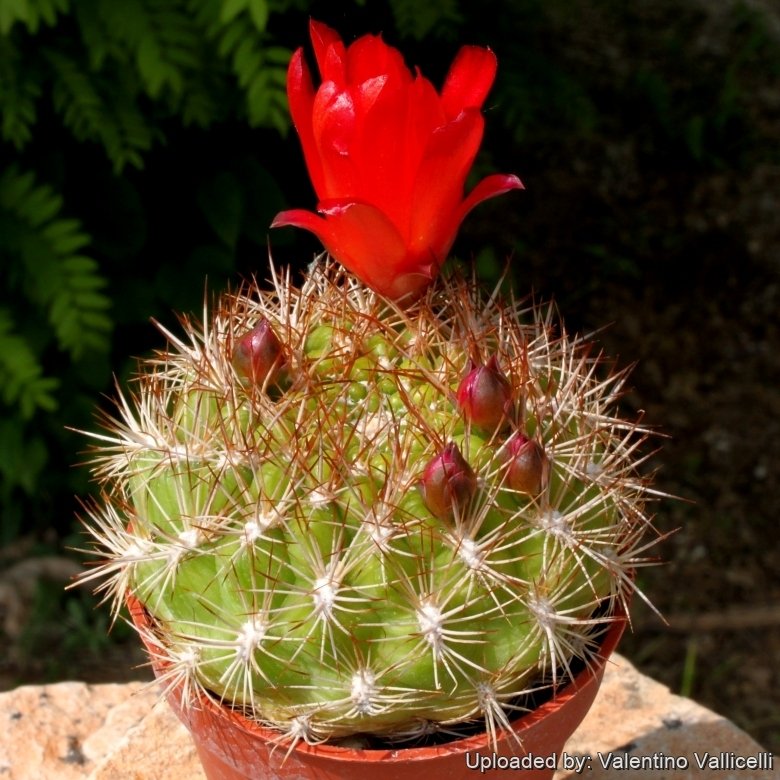
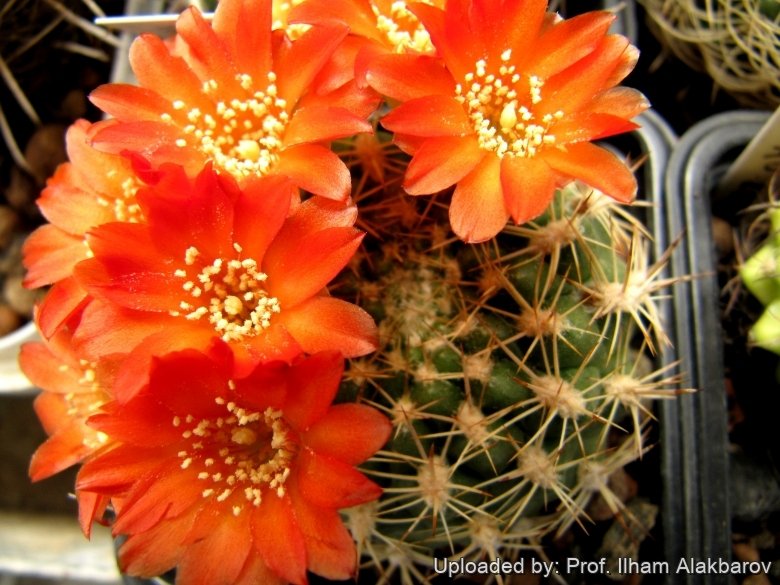
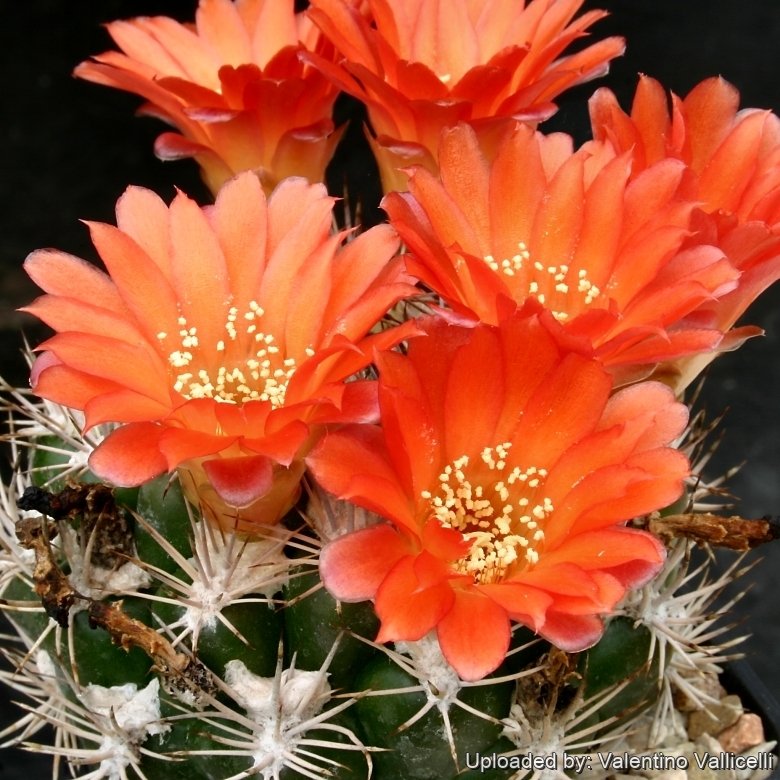
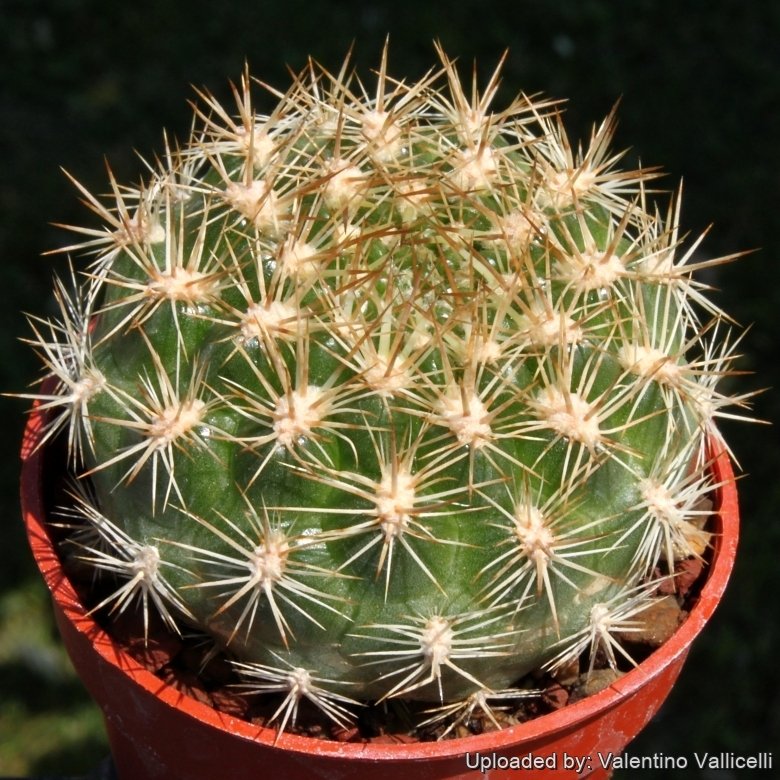
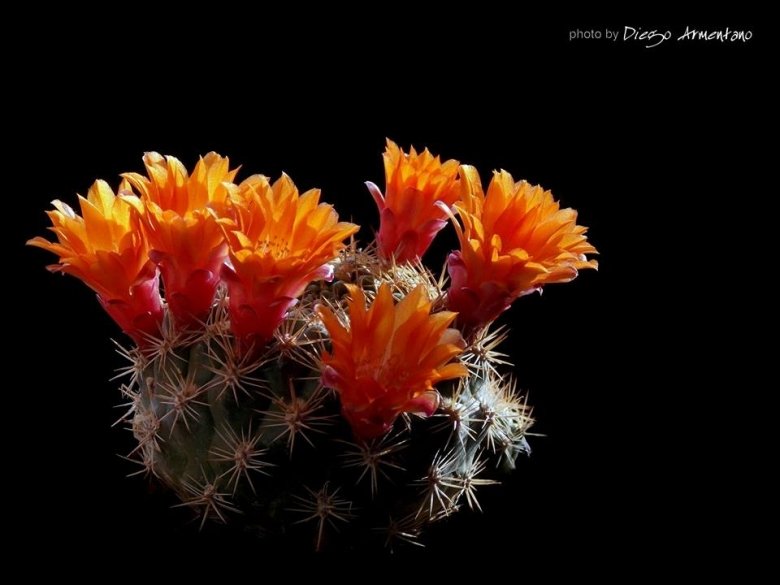
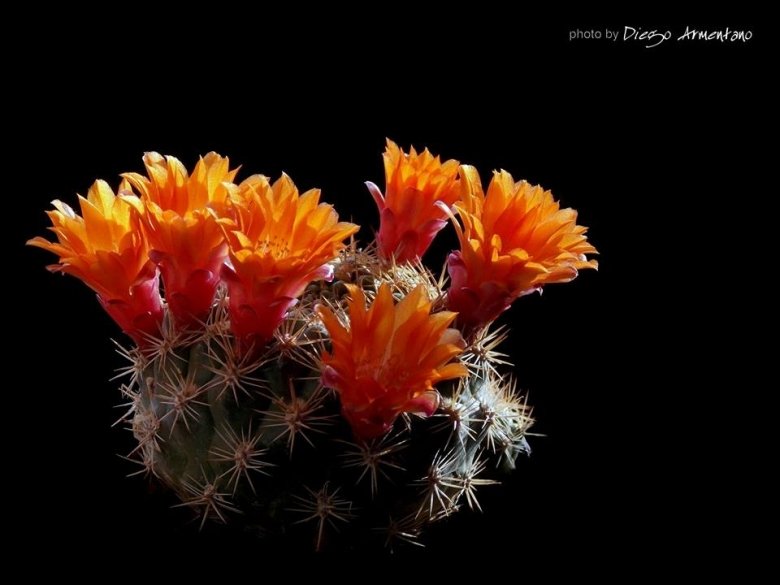
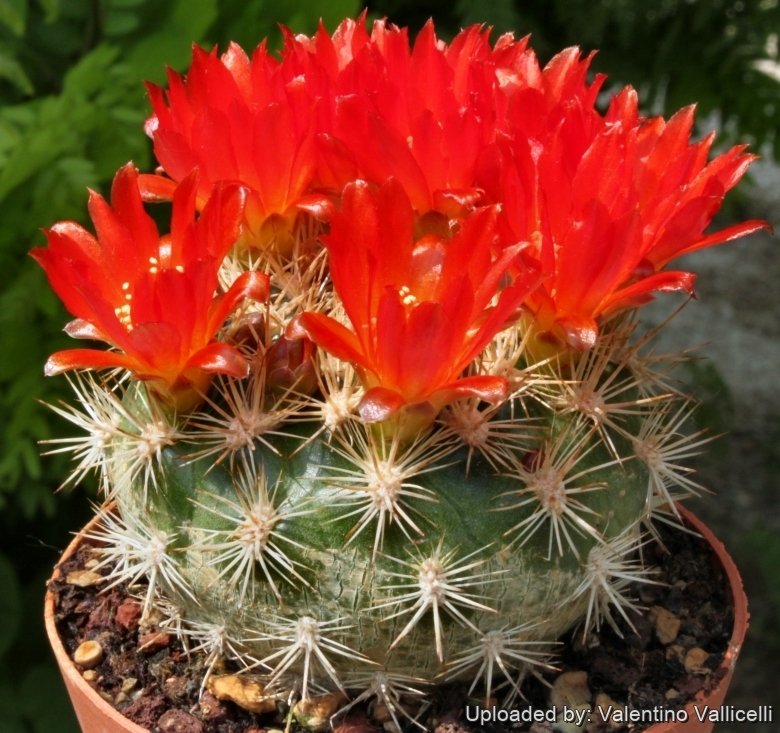
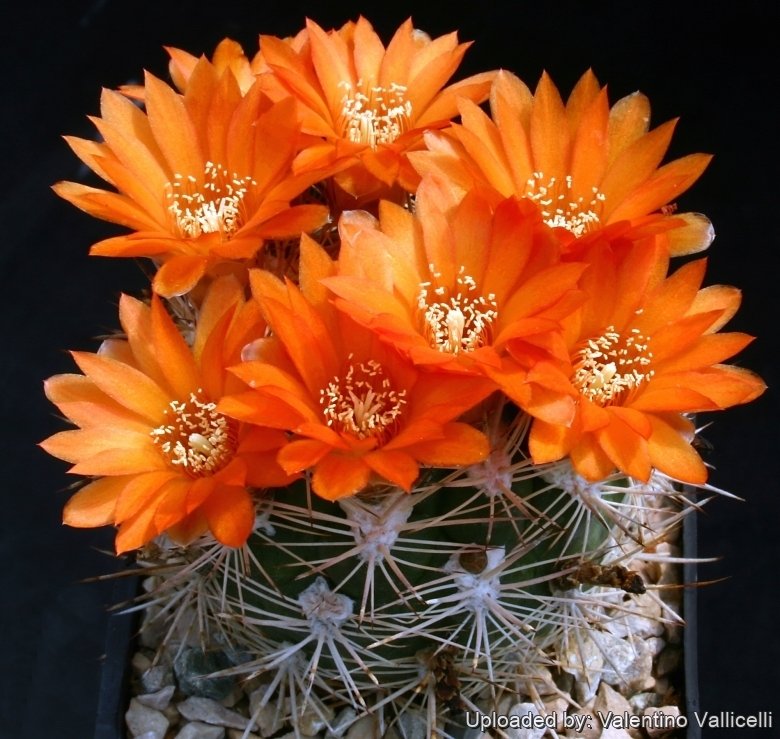
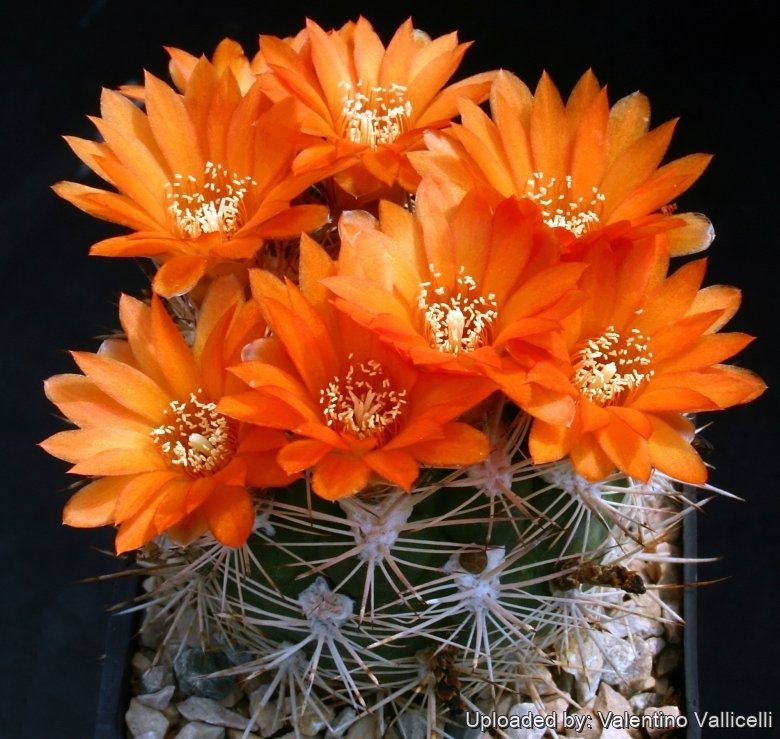
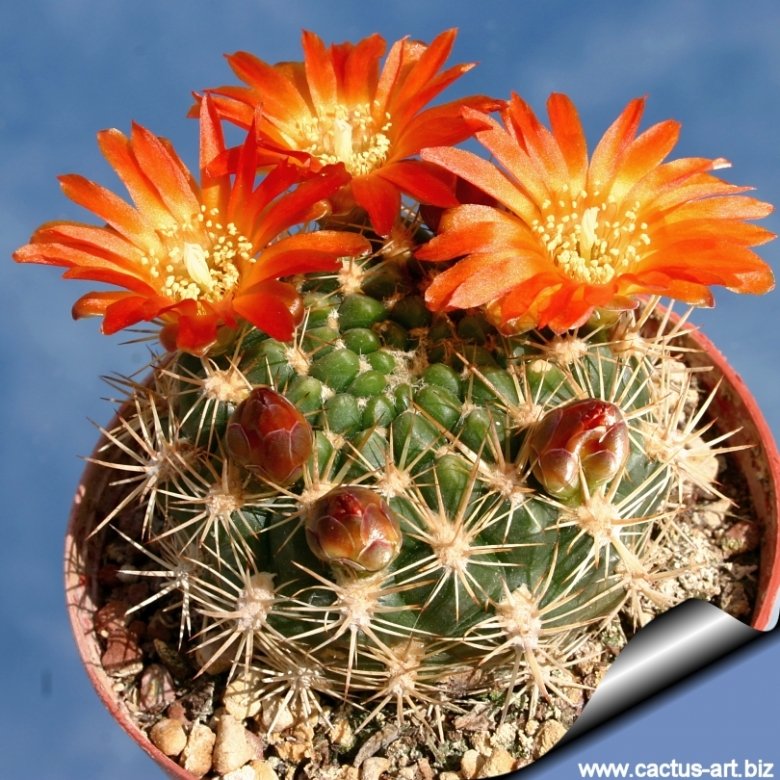
Rebutia trolli best known as Weingartia trolli, is a heavy bloomer characterized by bright orange to orange-scarlet flowers.
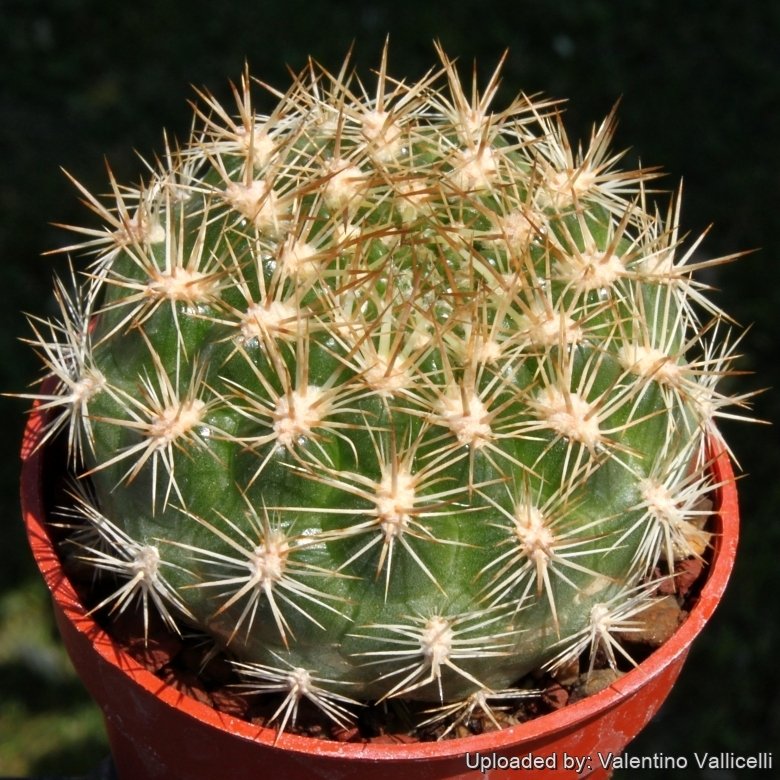
Stem: Usually solitary, globose to short cylindrical up to 10 cm wide, 20 cm tall.
Ribs:16 to 18 tuberculate, often spiraling.
Central spines: 2 to 8 up to 2 cm long.
Radial spines: 16 to 24 yellowish with brown tips, about 1 cm long.
Flowers: Usually orange or red (sometime dull yellow) approx. 2-3 cm. long, 2.5cm in diameter, they are produced (unusually) all over the body of the plant especially in a ring near the very tips of the stems differing from other rebutias in that its flowers appear very near the meristem as opposed to the lower, stem side and base locations of those others. As well, on this and a few other ex Weingartia species, one areole can produce up to 4 flowers.
Blooming season: The flowers are produced in early summer and remain open for five or six days.
Origin and Habitat
Origin: Collected in the Andes mountains near Tulma south west from Sucre City, Chuquisaca, Bolivia.
Cultivation and Propagation
In culture it is without problems, easy to grow, very attractive and regularly shows its beautiful flowers, if provided with an adequate winter rest period.
Growth rate: It is a pretty slow grower.
Soil: Grow it in an open mineral, sandy-gritty cactus compost and provide a very good drainage.
Repotting: It is better that they are repotted regularly. Repotting will increase size of stems and the number of flowers produced. Repot yearly until reaching about 100 mm in size, then every two or three years will suffice. Repotting is best done at the end of winter but can be done at other times. Do not water for a couple of weeks after repotting to reduce risk of root rot via broken roots.
Pots: It needs a relatively shallow pot to accommodate its fibrous roots and provide a very good drainage. It may stay in the same pot for many years.
Moisture: It is sensitive to over-watering (rot prone), and needs good drainage. In the winter keep it cool, and absolutely dry conditions. In summer keep it well watered when it’s hot. They are really not very demanding and regular watering in their growing season creates healthy disease resistant plants that will flower better.
Special need: Provide very good ventilation. Nearly all problems occur as a result of overwatering and poor ventilation, especially when weather conditions are dull and cool or very humid.
Fertilization: Light fertilizer seems to boost its growth whenever additional water is given. Feed it during the growing season with a fertilizer specifically formulated for cactus and succulents (high potash fertilizer with a dilute low nitrogen), including all micro nutrients and trace elements diluted to ½ the strength recommended on the label. It thrive in poor soils and needs a limited supplies of fertilizer to avoid the plant developing excess vegetation, which is easily attacked by fungal diseases.
Exposure: Needs full sun. To achieve the best spine density give these plants lots of sun.
Hardiness: Keep dry or slightly moist in winter at a minimum temperature of 5°C (But Hardy to -4°C or less). In mild climate they grow well when planted freely outside in well-drained soil.
Pest and diseases: Occasionally these plants are infested by mites and mealy-bugs, but all known garden pests can be kept to a minimum by simply ensuring optimal growing conditions and healthy plants.
Use: It can be cultivated outdoors in raised beds and terraces. It do well in pots as well.
Propagation: Seeds. The seeds can be sown in pots of fine, well-drained sandy soil, any time during the spring when temperatures are warm. Cover the seeds with a fine layer of grit and water from below with a fungicide to prevent damping off. For the 1-2 weeks cover the pots with a sheet of glass/clear perspex to keep the humidity levels high. Remove the glass and replace it with light shade-cloth and mist once or twice a day for the next two weeks after which most seeds should have germinated. From then on mistings can be reduced to every second and then every third day as the little plants grow. The seedlings should not be disturbed until they are well rooted after which they can be planted separately in small pots.
Notes
All the 60 species of genus Weingartia have been transferred to synonymy status under the genus Rebutia; about 45 or so of them as synonyms of two species, Rebutia canigueralii and Rebutia neocumingii. The genus Weingartia was always considered difficult to differentiate from Gymnocalycium, Neowerdermanniana, and Sulcorebutia and its name has had a very eventful history which evidently continues in controversy today.
Bibliography
Major references and further lectures
-
Edward Anderson “The Cactus family” Timber Press, Incorporated, 2001
-
James Cullen, Sabina G. Knees, H. Suzanne Cubey “The European Garden Flora Flowering Plants: A Manual for the Identification of Plants Cultivated in Europe, Both Out-of-Doors and Under Glass” Cambridge University Press, 11/Aug/2011
-
David R Hunt; Nigel P Taylor; Graham Charles; International Cactaceae Systematics Group. “The New Cactus Lexicon” dh books, 2006
Gallery