Publication: Cactaceae (Britton & Rose)
Description
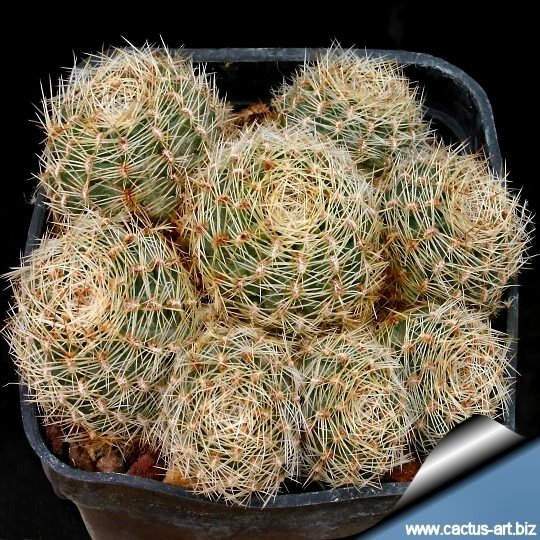
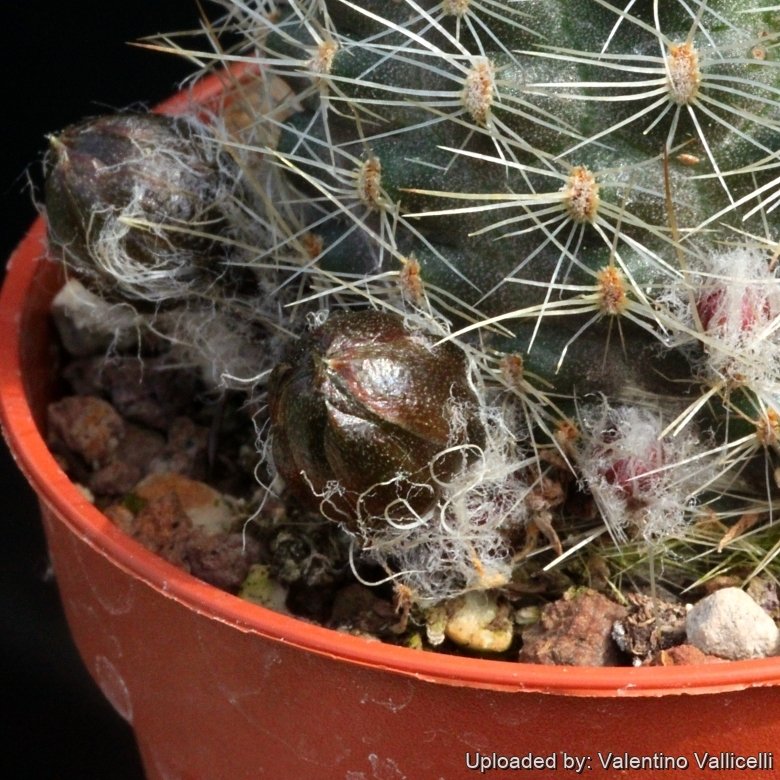
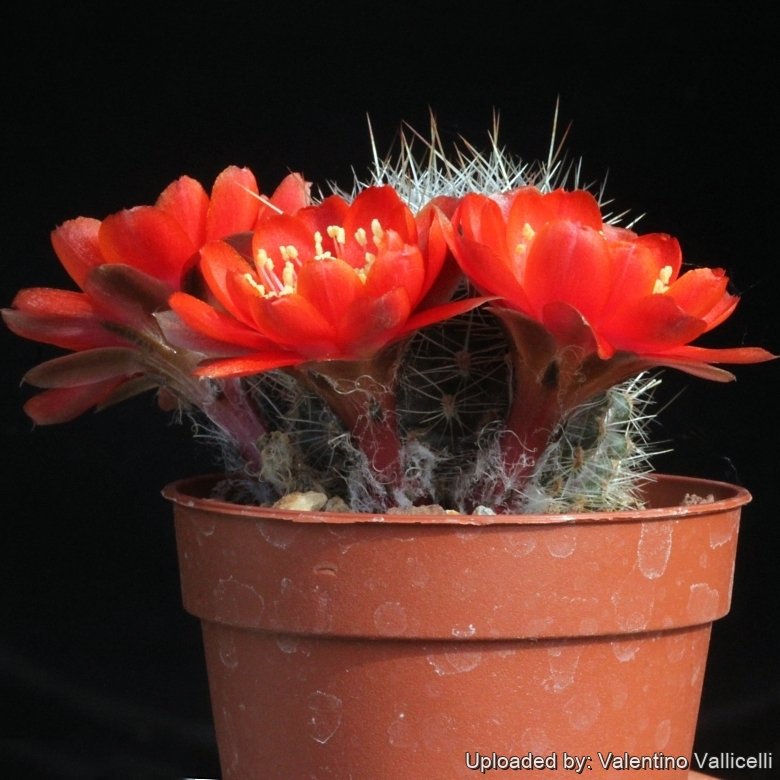
It is a small cactus, mostly offsetting
Stem: Tiny, depressed-spherical to oblong 2-3 cm wide, 1,5-2,5 cm tall (but usually more in cultivation)
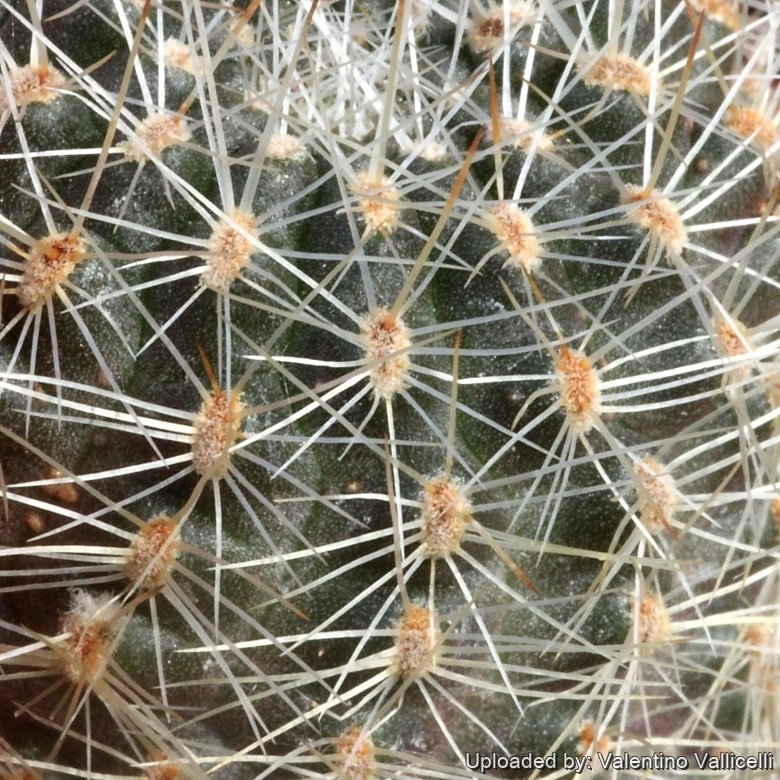
Ribs: 10 to 12, low, often spiralled and tubercled.
Roots: Thick and long tap-root.
Spines: About 8 acicular, bristle-like pale whitish, yellow or brown up to 4 mm long.
Areoles: Gold
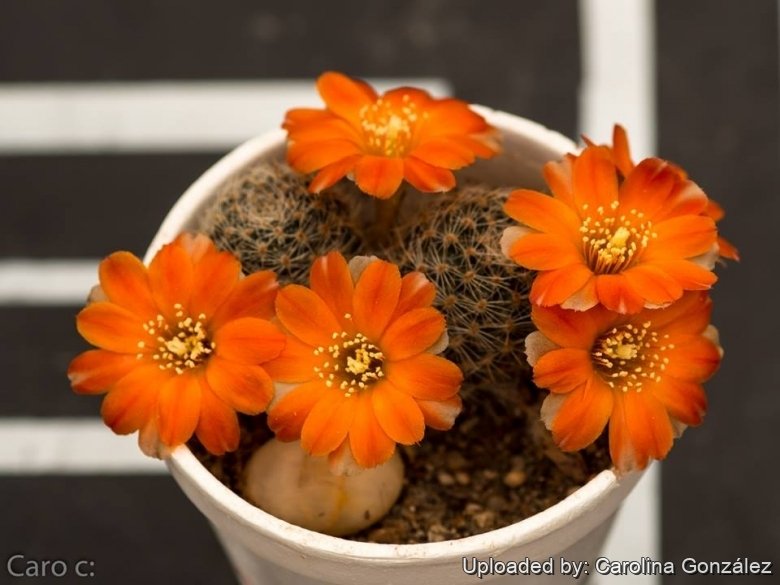
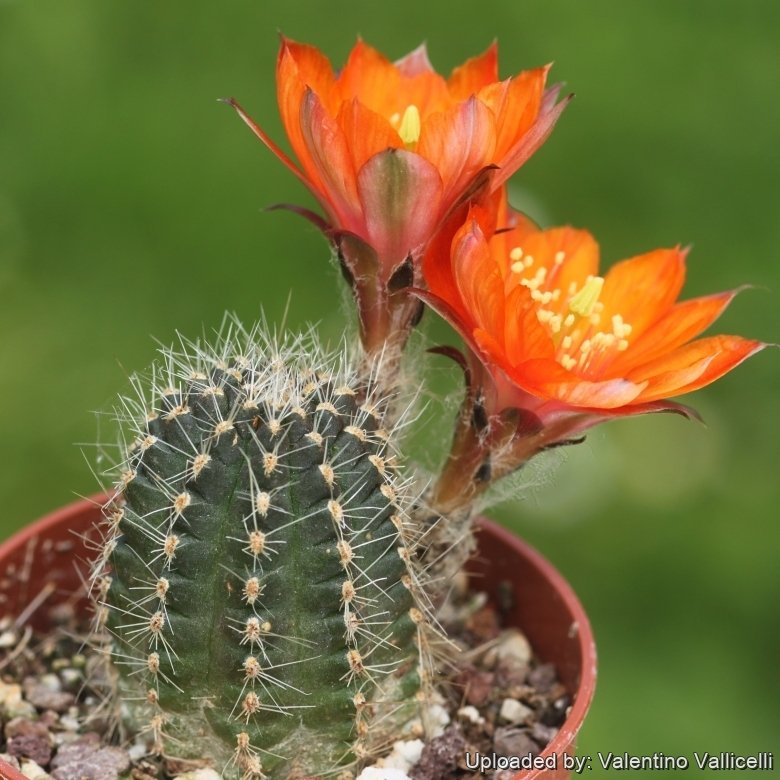
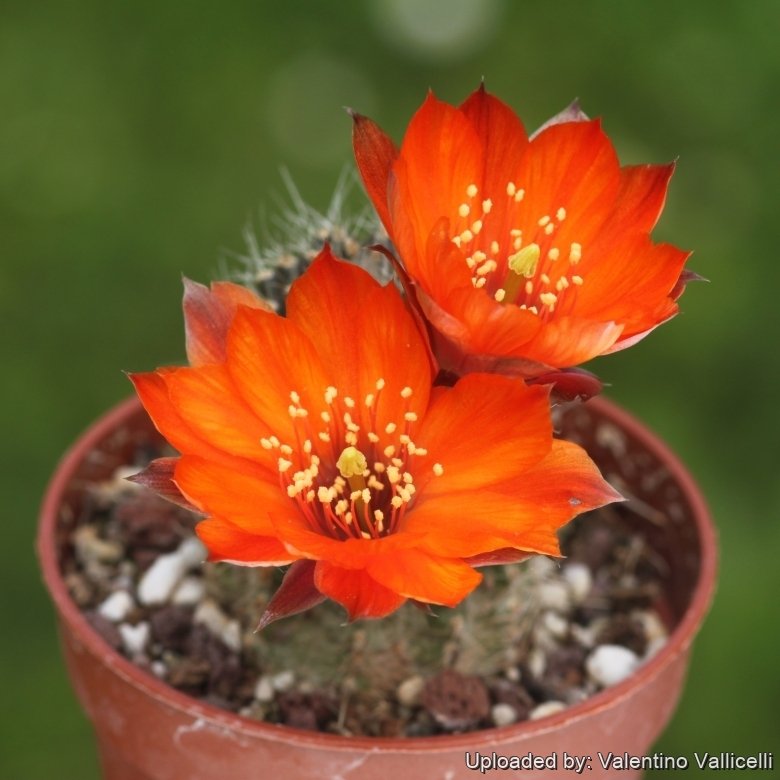
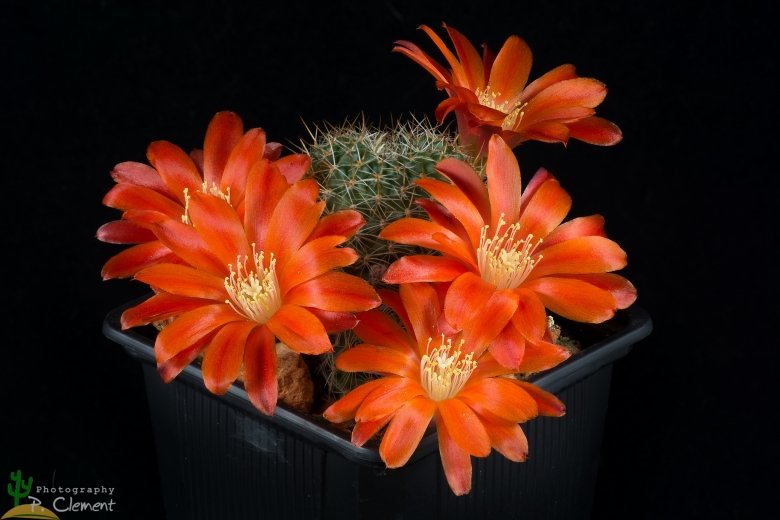
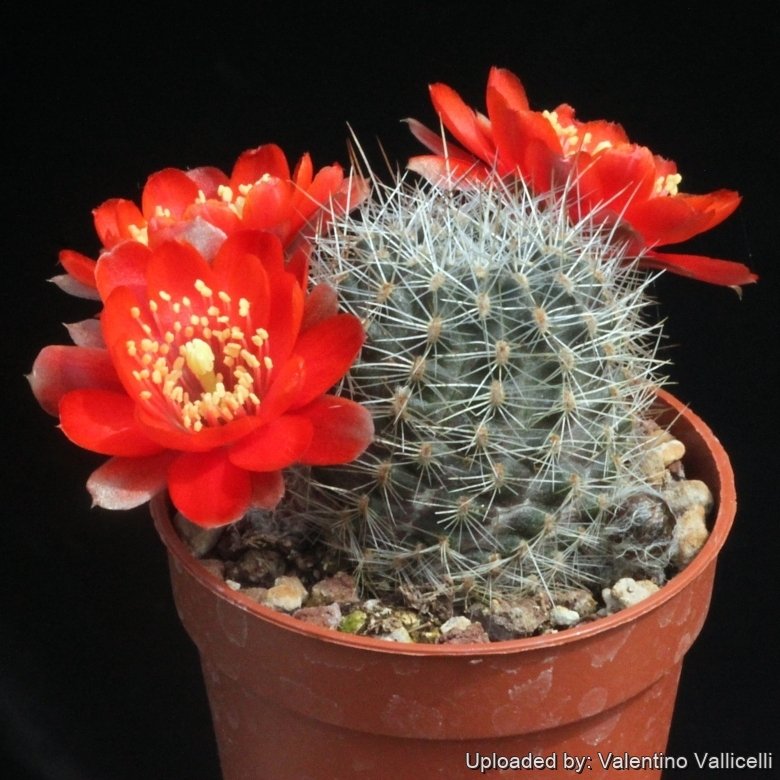
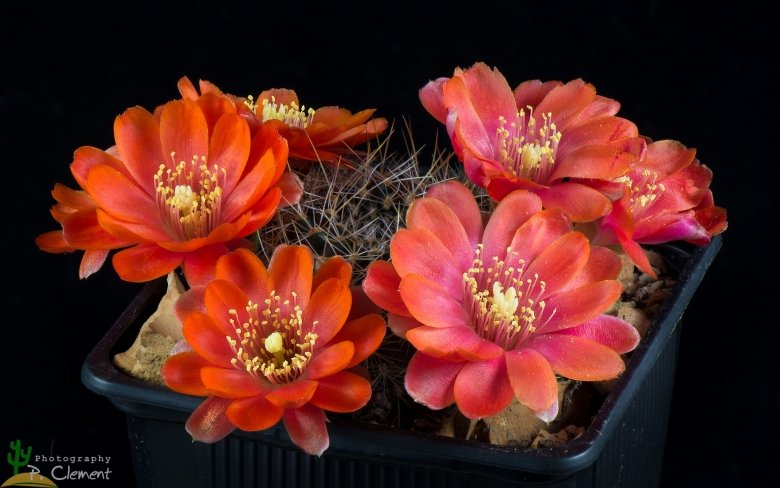
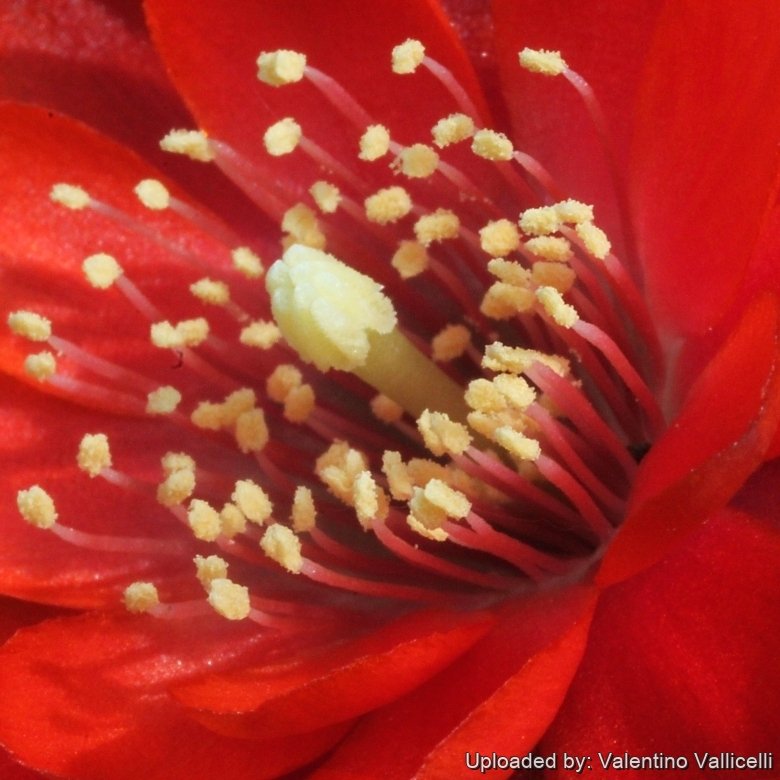
Flowers: From the side at the base of the plant, short, erect, funnel-shaped, in shades of orange to red. Outer tepals oblong, apiculate; inner tepals rounded.
Origin and Habitat
Bolivia.
Habitat: Grows on high mountains.
Cultivation and Propagation
Full sun to light shade, Water regularly in summer but do not overwater (the root system is rot prone) Keep dry in winter Hardy to -4°C.
It is better that they are repotted regularly. Repotting will increase the number and size of stems and will increase the number of flowers produced. Repot yearly until reaching about 100mm in size, then every two or three years will suffice. Repotting is best done at the end of winter but can be done at other times. Do not water for a couple of weeks after repotting to reduce risk of root rot via broken roots.
Propagation: Offsets, seeds
From llifle page Digitorebutia christinae
Description
Rebutia christinae is a clumping cactus, with tiny stems.
Stem: Tiny, depressed-spherical to oblong up to 5 cm wide (but usually more in cultivation)
Ribs: 10 to 12, low, often spiralled and tubercled.
Roots: Thick and long tap-root.
Spines: About 8 acicular, bristle-like pale yellow-brown up to 4 mm long.
Areoles: Gold
Flowers: From the side at the base of the plant, short, erect, funnel-shaped, in shades of intensive orange. Outer tepals oblong, apiculate; inner tepals rounded.
Origin and Habitat
Tarija, Bolivia.
Habitat: Rebutia christinae grows on high mountains.
Source: Digitorebutia christinae, LLIFLE - Encyclopedia of living forms, CC-BY-SA, retrieved 2026-10-25.
From llifle page Digitorebutia costata
Description
Rebutia steinmannii var. costata, formerly described as Rebutia costata by Werdermann in 1934, is one of the innumerable forms of the widespread and morphologically variable Rebutia steinmannii. It is a small cactus distinguished from the type species for its 8 or 9 straight ribs (a low count for this species). The names Rebutia steinmannii var. costata is not accepted by many botanists that treat it as synonym, but it still has a value for a collector because they identify plants with particular characters.
Stem: Deep green, about 3 cm tall and 2 cm wide in cultivation.
Ribs: 8-9 straight vertical.
Spines: 11-12 usually all radial, 7 mm long, with with an occasional similar central spine (greyish-brown, thin, bristle-like).
Flowers: 3 to 3.5 cm long and wide, orange-red, edged carmine, vividly coloured.
Origin and Habitat
Bolivia (La Paz, Potosi and Tarija) and Argentina (Jujuy)
Altitude range: Around 3600-3800 metres above sea level.
Bibliography
Major references and further lectures
- John Pilbeam “Rebutia” Cirio Pub. Services, 01 May 1997
Source: Digitorebutia costata, LLIFLE - Encyclopedia of living forms, CC-BY-SA, retrieved 2026-10-25.
From llifle page Rebutia poecilantha
Description
Rebutia poecilantha is a controversial specie with bright crimson flowers collected at north of Camargo, in bolivia by F. Ritter (field number FR1139). It appears to be a redundant or dubious name used to indicate a plant included in Rebutia steinmannii, which is now considered a synonym (Hunt 1992). However, plants cultivated and sold under that name have nothing to do with Rebutia steinmannii, but rather with Rebutia spegazziniana. Whatever view one adopts, it is a very nice plant and it will be worth for a place in every cactus collection.
Stem: Spherical or slightly elongated, solitary or clustered, up to 45 mm in diameter with long tap-root. Epidermis green.
Ribs: 11-13, deeply notched to near the base, 3-5 mm high. Tubercles, rounded.
Areoles: Oval 2-3 mm long, 2 mm wide, on the tubercles, brownish to reddish 2-4 mm apart.
Radial spines: 10-14, spreading sideways,3-5 mm long, needle-like, rough, straight,with a thickened brown base, the finer ones white, the coarser ones yellow-brown, dark-pointed.
Central spines: Often wanting, sometimes 1-2, thicker, 6-10 mm long, brown.
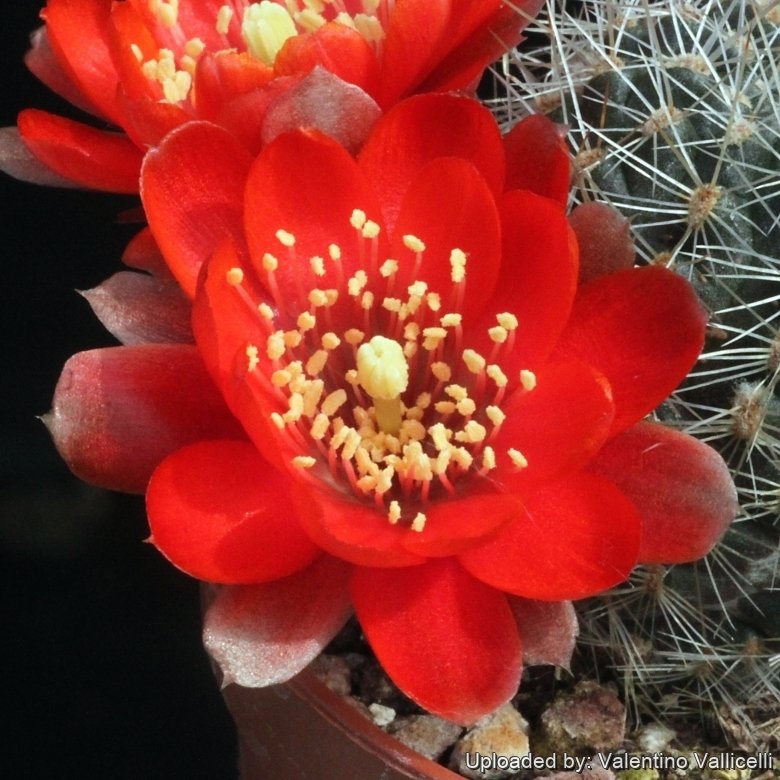
Flowers: Diurnal, borne on the stems’ side near ground level, up to 40 mm long and wide almost scentless. Pericarpel 5 mm long and thick, at base reddish brown becoming green above, covered with white wool and abundant white bristles. Scales triangular, small, green about 7 mm long and 3 mm thick. Nectary, funnel-shaped, 2 mm long. Tube funnel-shaped 8 mm long, inside pale greenish, outside likewise, the pericarpel. Inner perianth segments, 18-20 mm long, 7-8 mm wide, spatula-shaped, above slightly jagged with a pointed tip, crimson to purple, edged orange red. Outer perianth-segments, shorter, pointed, more linear, purple with white-green tips, the outermost with white-green stripes. Stamens very pale purple, almost white above, 7-10 mm long. Anthers pale yellow. Style very pale green, free part 16 mm long, with very pale greenish-yellow stigma-lobes.
Fruits: About 6 mm in diameter coloured and clothed as a the pericarpel.
Seeds: 1.2mm long, 1 mm wide, dark brown, slightly tuberculate with a large basal hilum.
Origin and Habitat
North of Camargo, Chuquisaca, Bolivia.
Cultivation and Propagation
It is easy to grow and recommended for beginners. Prefer gritty, porous mix with a pH slightly on the acidic side. Full sun to light shade, Water regularly in summer but do not overwater (the root system is rot prone) and allow the pot to dry out between waterings. Keep dry in winter Hardy to -4°C it will take low temperatures when dry and do require a winter rest period. This species will occupy a small flower pot comfortably and remain a manageable sized house plant.
Pest and disease: This plants are subject to mealy-bug attack and to fungus and rot problems brought about by overwatering and high humidity.
Propagation: Seed or offsets.
Bibliography
Major references and further lectures
-
Ritter, Friedrich “Kakteen in Südamerika”, 2: 597, 1980
-
David Hunt “Cites Cactaceae Checklist” Royal Botanic Gardens, Kew, 1992
Source: Rebutia poecilantha, LLIFLE - Encyclopedia of living forms, CC-BY-SA, retrieved 2026-10-25.
From llifle page Mediolobivia huarinensis
Description
Rebutia huarinensis is a small cactus, mostly offsetting
Stem: Tiny, depressed-spherical to oblong 2-3 cm wide, 1,5-2,5 cm tall (but usually more in cultivation)
Ribs: 10 to 12, low, often spiralled and tubercled.
Roots: Thick and long tap-root.
Spines: About 8 acicular, bristle-like pale whitish up to 4 mm long.
Areoles: Gold.
Flowers: From the side at the base of the plant, short, erect, funnel-shaped, in shades of red. Outer tepals oblong, apiculate; inner tepals rounded.
Origin and Habitat
Huari, Bolivia
Habitat: Rebutia huarinensis grows on high mountains at around 3200 metres above sea level.
Bibliography
Major references and further lectures
-
Edward Anderson “The Cactus family” Timber Press, Incorporated, 2001
-
James Cullen, Sabina G. Knees, H. Suzanne Cubey “The European Garden Flora Flowering Plants: A Manual for the Identification of Plants Cultivated in Europe, Both Out-of-Doors and Under Glass” Cambridge University Press, 11/Aug/2011
-
David R Hunt; Nigel P Taylor; Graham Charles; International Cactaceae Systematics Group. “The New Cactus Lexicon” dh books, 2006
-
N. L. Britton, J. N. Rose “The Cactaceae. Descriptions and Illustrations of Plants of the Cactus Family.” Volume 4, The Carnegie Institution of Washington, Washington 1923, page. 41
-
Curt Backeberg “Die Cactaceae: Handbuch der Kakteenkunde” Gustav Fischer Verlag, Stuttgart New York 1982–1985
Source: Mediolobivia huarinensis, LLIFLE - Encyclopedia of living forms, CC-BY-SA, retrieved 2026-10-25.
From llifle page Rebutia marieae
Origin and Habitat
Jujuy (Argentina Northwest, Southern South America, Southern America)
Source: Rebutia marieae, LLIFLE - Encyclopedia of living forms, CC-BY-SA, retrieved 2026-10-25.
Cultivars and forms (3)
Gallery